Day: June 9, 2025
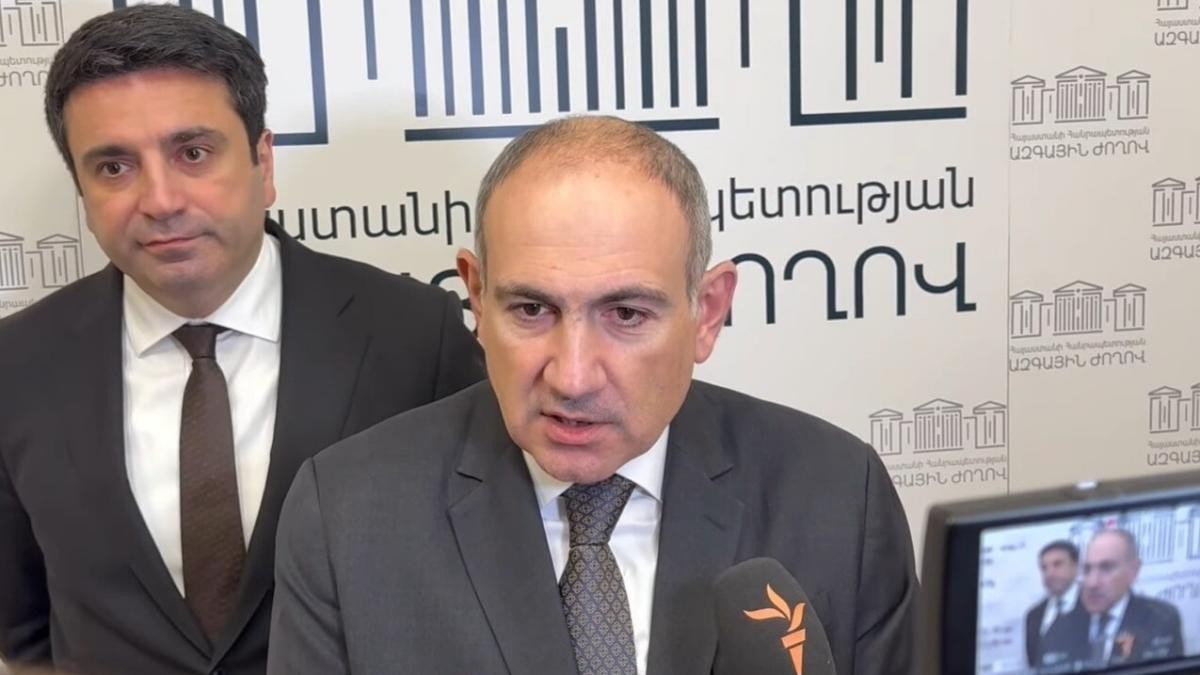
“The statement made by Vladimir Medinsky, Assistant to the President of the Russian Federation, during an interview with the Russia Today channel on June 9, distorting the facts regarding the past Armenia-Azerbaijan conflict and presenting the Karabakh region as a disputed territory, is regrettable and surprising.”
Georgia’s Ministry of Internal Affairs announced a major reshuffle on June 10, involving some high-level promotions, departmental shifts, and mostly transfers of regional police chiefs.
The changes follow the appointment of Geka (Gela) Geladze as the GD Interior Minister. Geladze succeeded Vakhtang Gomelauri, who had held top positions in the Georgian Dream for a decade. Gomelauri was subject to international sanctions from the U.S., Ukraine, Lithuania, Latvia, and Estonia.
Vazha Siradze, the sanctioned head of the Patrol Police, has been appointed to lead the Tbilisi Police Department, replacing Lasha Gogniashvili, who took the post in April.
Teimuraz Kupatadze, who has headed the Central Criminal Police Department since 2022, has been appointed chief of the Security Police.
Davit Kiknadze, previously Kupatadze’s deputy, was promoted to lead the Central Criminal Police Department.
Levan Maisuradze, deputy head of the Tbilisi Police Department, will succeed Siradze as Patrol Police chief.
Lasha Gogniashvili, whom Vazha Siradze replaced in Tbilisi, will now head the Kakheti Police Department.
Teimuraz Kalandadze, who has led the Kakheti Police Department, will now head the Mtskheta-Mtianeti Police Department.
Levan Kvitsiani has been appointed chief of the Kvemo Kartli Police Department.
Guram Natsvlishvili, formerly chief of the Kvemo Kartli Police Department, has been appointed to lead the Samtskhe-Javakheti Police Department.
Ramaz Tatarashvili, who previously led the Samtskhe-Javakheti Police Department, has been appointed to head the Imereti Police Department.
Zaza Tskhakaia, former chief of the Imereti Police Department, has been transferred to lead the Guria Police Department. Guria Police was previously led by Lasha Gogniashvili, who was recently assigned to Tbilisi and is now being replaced by Siradze.
Kakhaber Muradashvili, deputy head of the Tbilisi Police Department, will now lead the Shida Kartli Police Department.
“The personnel changes in the Ministry of Internal Affairs serve the further strengthening and development of the system,” the ministry said in a statement.
Also Read:
- 04/06/2025 – Prosecutor General Gabitashvili Tapped Next Chief Auditor as Kavlashvili Returns to Finance Ministry
- 10/04/2025 – Consolidating Autocracy? GD Reshuffle Leaves Experts Guessing
- 04/04/2025 – Adjara Police Chief Grigol Beselia Resigns Amid Local Government Reshuffle
- 02/04/2025 – GD Cabinet Reshuffled
- 30/01/2025 – GD President Awards Sanctioned MIA Officials with Order of Honor

Azerbaijani cargo to undergo customs checks in Armenia
Chairman of Armenia’s State Revenue Committee, Eduard Hakobyan, stated that if Yerevan and Baku reach an agreement on unblocking transport routes, Azerbaijani goods will undergo customs inspection. He explained to journalists that the same risk assessment system used at the Armenian-Georgian and Armenian-Iranian borders will be applied on the Armenian-Azerbaijani border as well.
Armenia presented its proposals to Azerbaijan in October 2024, following the Pashinyan-Aliyev meeting in Kazan. However, Prime Minister Nikol Pashinyan only disclosed the details a few days ago during the “Yerevan Dialogue” international conference.
He said there was a “concrete proposal”. Under this initiative, Azerbaijani cargo would be transported through Armenian territory to Nakhchivan using Armenian locomotives.
According to political analyst Areg Kochinyan, cargo transit through Armenian territory would take place “without Azerbaijanis entering Armenia”. This, he said, is meant to ease Baku’s security concerns.
“The Armenian train operator would cross the border, attach the [Azerbaijani] cargo to an Armenian locomotive, which would then travel across Armenian territory. Upon reaching the border with Nakhchivan, the cargo would be detached and handed over to the Azerbaijani side,” Kochinyan explained.
- Tango without partner: why Azerbaijan holds back on peace deal with Armenia
- Baku purchased over $2 billion worth of weapons in 2024: Armenian expert explains why
- Opinion: Armenia must use its trump card on road unblocking issue
- Opinion: ‘Unblocking communications in Caucasus carries risks’
“We are ready,” says head of Armenia’s Revenue Committee
“Our task is to organise customs control under any circumstances. If we’re talking about unblocking and opening borders, we must be prepared for these scenarios. And we are ready,” emphasised Eduard Hakobyan, head of the State Revenue Committee.
He announced that the Armenian side has the necessary equipment “to adapt to any situation and carry out customs checks.”
Hakobyan did not specify what the Armenian authorities mean by a simplified regime for the transit of Azerbaijani goods, but he said a risk assessment system is in place. This allows customs to evaluate “certain indicators” and route cargo via green, yellow, or red channels:
“For example, green means that the cargo can cross the border without any issues — typically when the declaration is filled out in advance and the cargo poses no risk.”
Hakobyan added that the automated clearance system is still undergoing testing:
“As a result of analysing indicators, low-risk cargo is granted automatic clearance into the country. There is never a case where we are unaware of what exactly is crossing the border.”
“Unblocking will open new opportunities” – Pashinyan
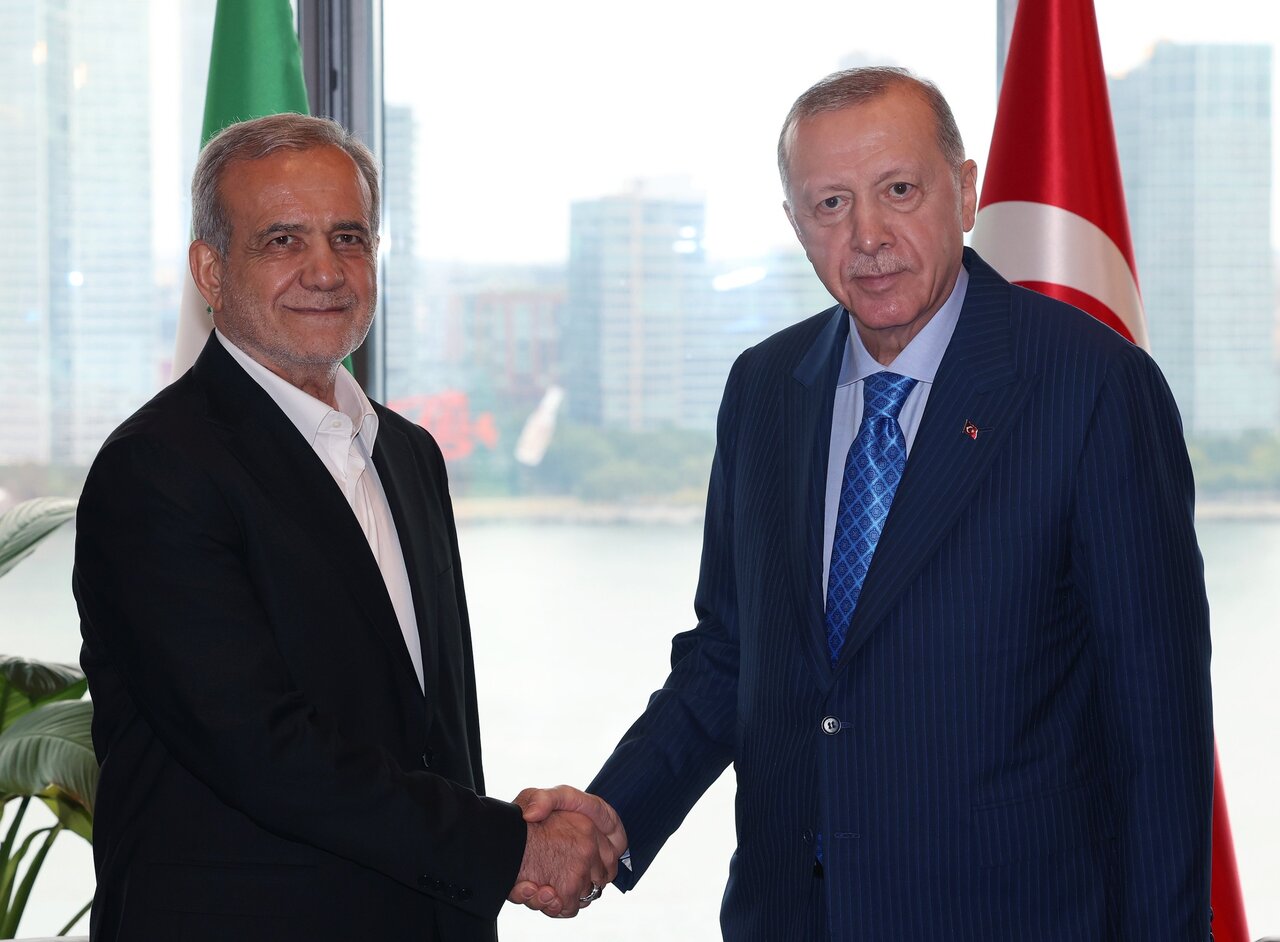
In his speech at the “Yerevan Dialogue” conference, Armenia’s Prime Minister focused in detail on the unblocking of regional transport routes. He recalled Armenia’s initiative – the Crossroads of Peace project – emphasising that it is a concrete proposal for reopening links, both for bilateral routes with Azerbaijan and for international and transit transport:
“This is a very important project for overcoming crises in global supply chains. When our roads with Azerbaijan and Turkey are opened, it will create a new opportunity to connect East and West, North and South.”
According to Pashinyan, Armenia has offered clear solutions for freight transport arrangements, but Azerbaijan is “hesitating”:
“For us, having such connectivity is crucial. We are saying: goods from Azerbaijan to Azerbaijan via Armenia, and from Armenia to Armenia via Azerbaijan, must move with respect for the territorial integrity, sovereignty, and jurisdiction of each country. This is an official proposal. It’s on the table. And the moment Azerbaijan agrees, we are ready to move to the implementation phase.”

Expert commentary
Political analyst Areg Kochinyan says that passport and customs control is non-negotiable and insists that oversight on reopened roads is essential:
“However, this control can be greatly simplified. For example, many cargo shipments entering Armenia are declared in advance electronically. This allows the authorities to know the contents of the cargo before it even enters Armenian territory.”
According to Kochinyan, modern technologies already exist globally—devices that can inspect cargo while a train is still in motion:
“In this way, the Armenian side retains the ability to monitor cargo transit through its territory, and the Azerbaijani freight can continue its journey without stopping.”
Kochinyan also addressed Azerbaijan’s objection to the principle of reciprocity in this matter.
He said Baku justifies its demand for “special conditions” by arguing that, unlike Armenia, which is accessible from all sides, Nakhichevan is an exclave that cannot be accessed from Azerbaijan’s main territory:
“But there’s a strong counterargument here: Nakhichevan isn’t a true enclave—it’s an exclave, surrounded not by one but by three countries. Who said Armenia must provide a special road? Let Azerbaijan try to secure exclusive transit through Iran’s territory. Let’s see if they succeed.”
Azerbaijan is currently constructing a bypass road through Iran. Yerevan has repeatedly stated that it is ready to offer Baku the same conditions as Tehran. However, Azerbaijan continues to demand an extraterritorial route, which Baku refers to as the “Zangezur Corridor”—a term also supported by Ankara.
Kochinyan stressed the importance of Azerbaijan issuing an official response to Armenia’s unblocking proposals—whether positive or negative—in order to break the current deadlock.
At the same time, he noted that Armenia still has work to do. Specifically, he advised the government to further refine and detail its “Crossroads of Peace” project—moving beyond the conceptual level and providing concrete figures for trade volumes and other metrics.
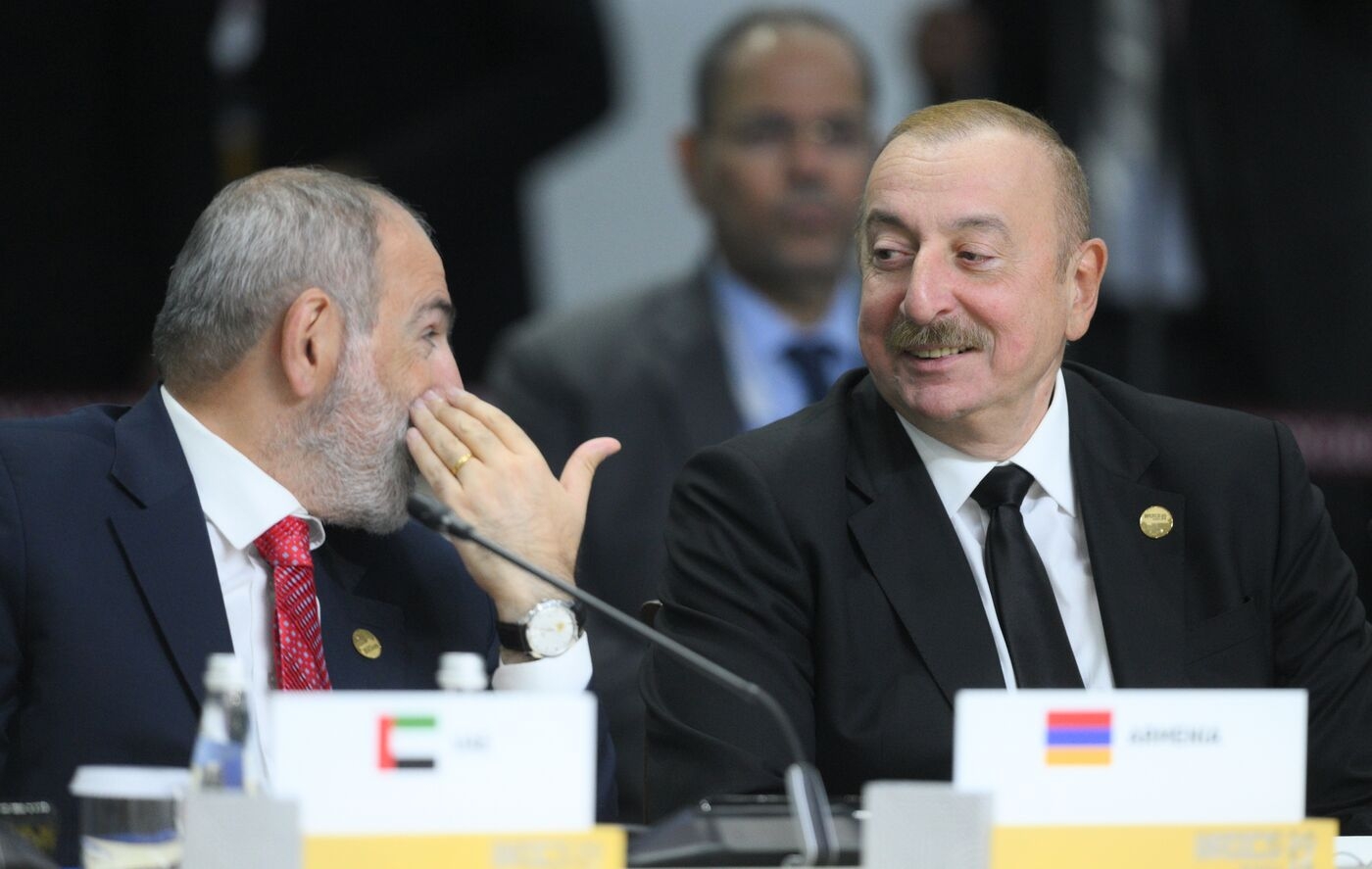
Political analyst Robert Gevondyan believes it was no coincidence that Armenian Prime Minister Nikol Pashinyan revealed the details of Armenia’s unblocking proposal during the international “Yerevan Dialogue” conference. He points out that representatives of countries with close ties to Azerbaijan, such as Hungary, were in attendance:
“This was a demonstration that Armenia is proposing mutually beneficial mechanisms. If solutions are found, the beneficiaries won’t just be Armenia, Azerbaijan, and Turkey — other countries will gain as well. This includes Hungary, a key trading partner of Azerbaijan.”
According to Gevondyan, unless infrastructure is unblocked and borders reopened, Azerbaijan will continue applying pressure on Armenia to some degree:
“They want more than just a transport route — they want to assert dominance over Armenia. This is where the demand for extraterritoriality comes in.”
The analyst believes it is essential to engage all interested international actors to increase pressure on Azerbaijan in this matter. However, he notes that the United States and other partners only intervene “when they have time and resources to spare.”