
Monetizing conscription: Armenia’s dangerous gamble with national security The Armenian Weekly
Day: June 3, 2025
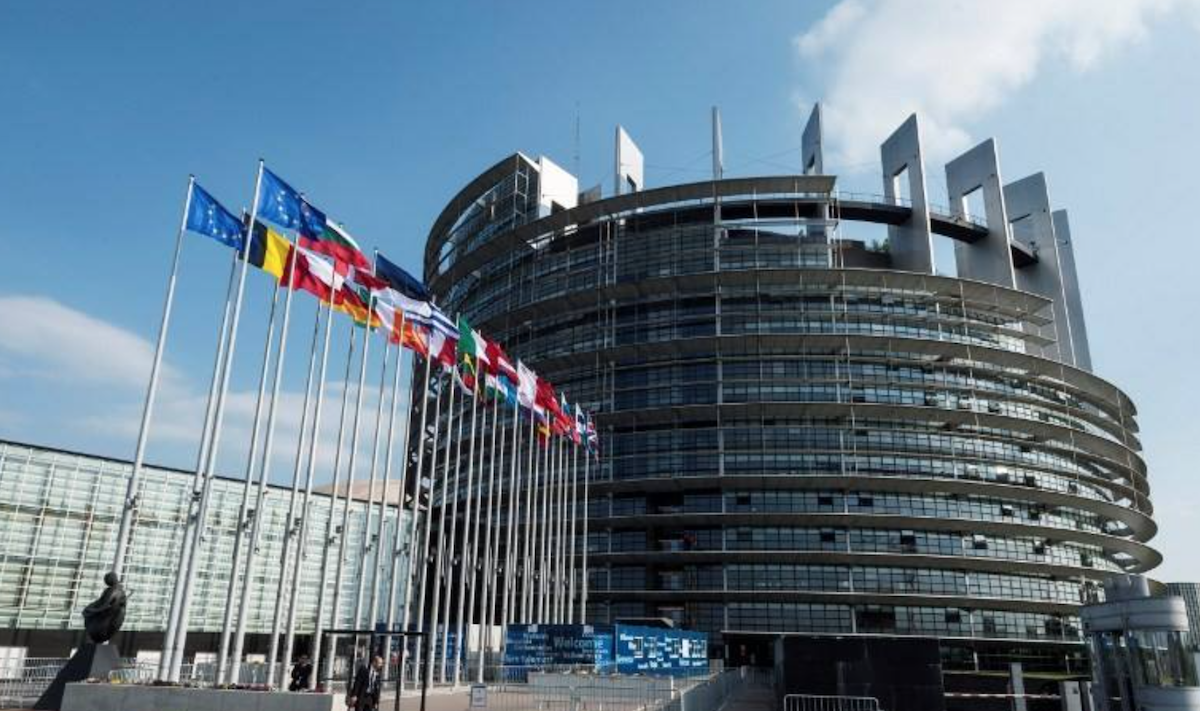
The European Parliament’s Subcommittee on Human Rights (DROI) held a session on June 3 to debrief MEPs following their May 26-28 working trip to Georgia. The meeting featured statements from MEPs as well as accounts by representatives of Georgian civil society and media.
During their 3-day visit to Georgia, the DROI delegation, consisting of five MEPs -Nacho Sanchez Amor, Rasa Jukneviciene, Adrián Vázquez Lázara, Matthieu VALET, and Catarina Vieira – held meetings with various groups, including representatives of media and civil society organisations, families of political prisoners, as well as President Salome Zurabishvili and members of the pro-Western opposition.
The visit’s purpose was “to show support for pro-EU civil society organisations, and to assess the human rights and fundamental freedoms situation in the country, not least in the light of its EU membership candidate status.”
During the June 3 extraordinary meeting, Spanish MEP Nacho Sánchez Amor (S&D), who chaired the mission, criticized the recent legislation passed by the GD parliament, calling it “completely contrary” to what is happening in the EU. He said that the Georgian authorities are trying to manipulate public opinion and spread disinformation about the European bloc. He also highlighted that civil society faces “repressive actions” and that, without foreign support, some human rights NGOs in Georgia risk closure.
Lithuanian MEP Rasa Juknevičienė (EPP), who also took part in the trip and addressed the Independence Day rally on Tbilisi’s Rustaveli Avenue on May 26, praised the Georgian people, calling them “heroes to very many Europeans.”
“During the cold winter, they were in the streets fighting for the European future of Georgia, waving European flags,” the MEP said, adding that “sometimes, I feel that those people are more pro-European than many Europeans.” She noted that the situation in Georgia is getting worse every day, and that it is “more and more close to what finally [happened] in Belarus.” Juknevičienė also urged the EU member states to impose sanctions, “especially on those who are responsible for oppression and everything we see in the country.”
“The only way out of the crisis is a new, fair, and free election,” she concluded.
Spanish MEP Adrián Vázquez Lázara (EPP) briefly recounted the mission’s work. He said that the country is not heading in the right direction and that Georgia’s civil society must receive as much help as possible from Europe.
Following their speeches, the floor was given to three Georgian representatives. First came writer Lasha Bugadze, who said that Putin must be defeated and “all his satellites in my country must be punished.”
Next spoke journalist Beka Korshia, who dedicated part of his address to jailed journalist Mzia Amaghlobeli, whom he called a “political prisoner” facing “absurd charges.”
“I’m a journalist from Georgia. I say journalist, but lately, they just mean someone who has not been arrested yet,” Korshia said, introducing himself. “Right now, my country has 65 political prisoners,” the journalist said, noting that “this number has changed three times while I was writing this text.”
The third Georgian speaker was Keti Kerashvili, the sister of the detained protester Irakli Kerashvili. Kerashvili referred to the arrested demonstrators as “the conscience of our country,” and said that the people will not surrender and will fight against authoritarianism “until the last drop of strength.”
“We will speak, sing, protest, vote, and stand up until the struggle is won,” Kerashvili noted.
MEP Sanchez asserted that the European Union’s “only leverage” in such a deteriorating situation in Georgia is to impose personal sanctions on the authorities because “the only thing they care about is their own businesses and enjoying democratic life in our countries.”
At the end of the session, it was noted that the European Parliament’s Foreign Affairs Committee will adopt a document on June 4 concerning political developments in Georgia. The document has been tabled by MEP Rasa Juknevičienė.
Also Read:
European Parliament considers Georgia sanctions
On 4 June, the European Parliament’s Foreign Affairs Committee is set to adopt a document once again calling for the dismissal of mid- and lower-level officials within the Georgian Dream government. Radio Free Europe/Radio Liberty has obtained the final version of the committee’s consolidated report.
The 14-page report notes that Georgia was granted EU candidate status under specific conditions, and that during the rule of Georgian Dream, the country has not only failed to make progress in priority areas but has in fact regressed.
The report refers to the 2024 parliamentary elections as “fraudulent” and describes them as a “turning point towards an authoritarian regime.” According to the authors, it was after these elections that “state institutions and mechanisms safeguarding democracy were unlawfully captured.”
The committee expresses concern over the “growing number of political prisoners” and calls for their release. It makes special mention of Mzia Amaglobeli, founder of the independent outlets Batumelebi and Netgazeti, who, the report states, is being held in pre-trial detention on false charges.
The document also addresses the electoral situation, stating that the current “political and constitutional crisis” can only be resolved through new parliamentary elections. These should be held in the coming months under improved electoral conditions, with an independent election administration and the presence of both international and domestic observers.
The committee further stresses that it does not recognise the government formed by Georgian Dream following the “fraudulent parliamentary elections” of 26 October 2024, and labels Georgia a “state captured by the illegitimate regime of the Georgian Dream party.”
The committee also:
- Condemns the dismissal of up to 700 civil servants since December 2024 for their support of pro-European protests;
- Denounces the regular use of manipulative narratives, disinformation, and conspiracy theories about the European Union by senior party figures, MPs, and government-aligned media;
- Highlights Bidzina Ivanishvili’s responsibility for the events unfolding in the country, and names Irakli Kobakhidze, Shalva Papuashvili, Vakhtang Gomelauri, Kakha Kaladze, and Irakli Garibashvili as also bearing responsibility;
- Urges the European Union, in cooperation with other jurisdictions—particularly the United Kingdom—to freeze the financial assets of Bidzina Ivanishvili;
- Condemns the obstruction by the governments of Hungary and Slovakia of EU Council decisions to impose sanctions on Ivanishvili, and criticises the Hungarian government’s attempts to legitimise Georgian Dream.
The European Parliament’s Foreign Affairs Committee also commented on the upcoming local elections scheduled for autumn, describing them as “another test” for Georgian democracy. The committee calls on the opposition to seize this opportunity to “reflect the will of the Georgian people in support of democracy and the rule of law.”
Moreover, the committee urges that the municipal elections be held in an improved electoral environment, with an “independent and impartial” election administration.
In this context, the committee expresses deep concern over the further deterioration of the electoral system and calls on the EU High Representative to consider imposing additional individual sanctions if the municipal elections “are not conducted in a manner that meets the criteria for free and fair elections.
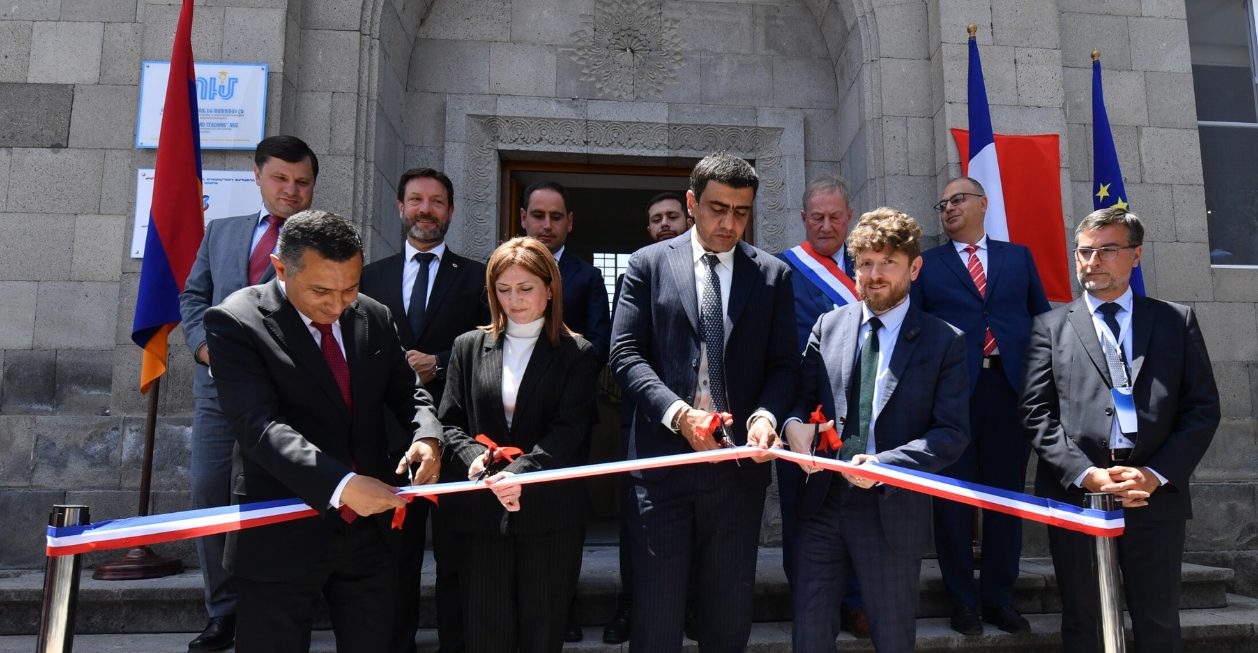
Honorary French consulate opens in southern Armenia
On 2 June, an office of the Honorary Consul of France opened in the town of Goris in Armenia’s Syunik Province. According to the parliamentary majority, France’s diplomatic presence near the border began to be discussed after Azerbaijan’s incursion into Armenia’s sovereign territory in September 2022.
However, there is no official explanation as to why Paris chose to open an honorary consulate office—rather than a general consulate—which holds a lower diplomatic status. Typically, such offices serve humanitarian and cultural, rather than political, functions.
Nevertheless, it is clear that France has a growing interest in Syunik. The 5th Armenia-France Decentralised Cooperation Forum is also currently taking place in Goris.
“Goris is a city building peace in the region. It has always stood at a crossroads and is focused on peacebuilding. Goris will once again become a crossroads. Our presence here is important,” said France’s ambassador to Armenia, Olivier Decottignies.
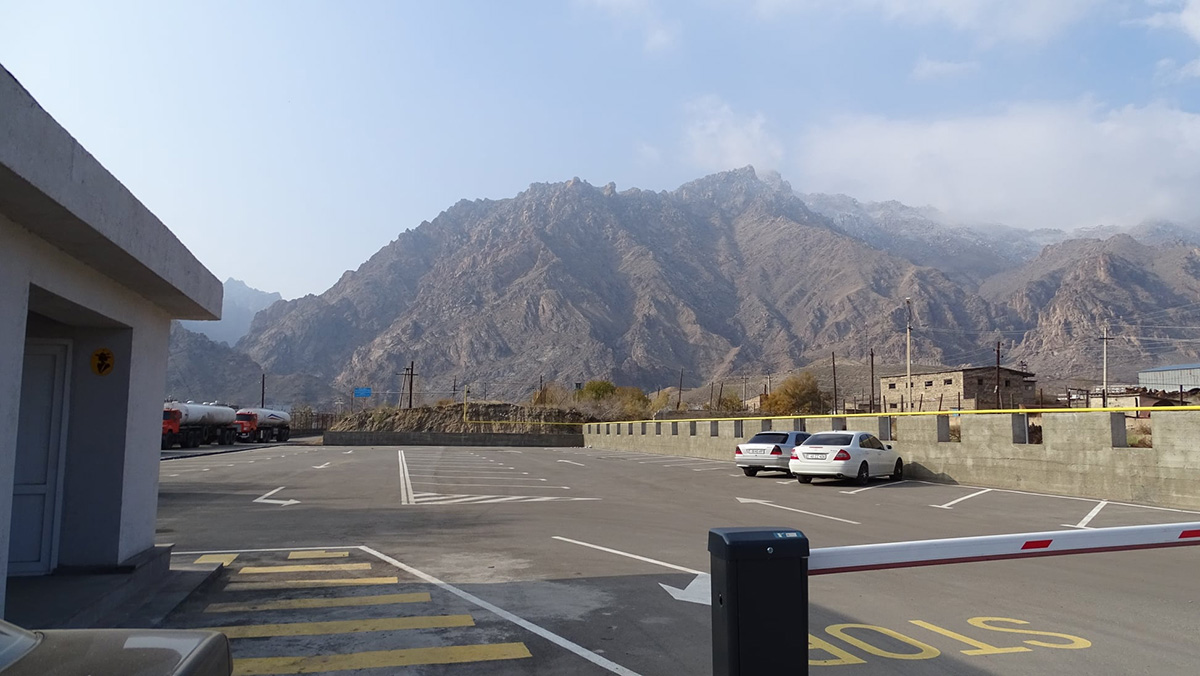
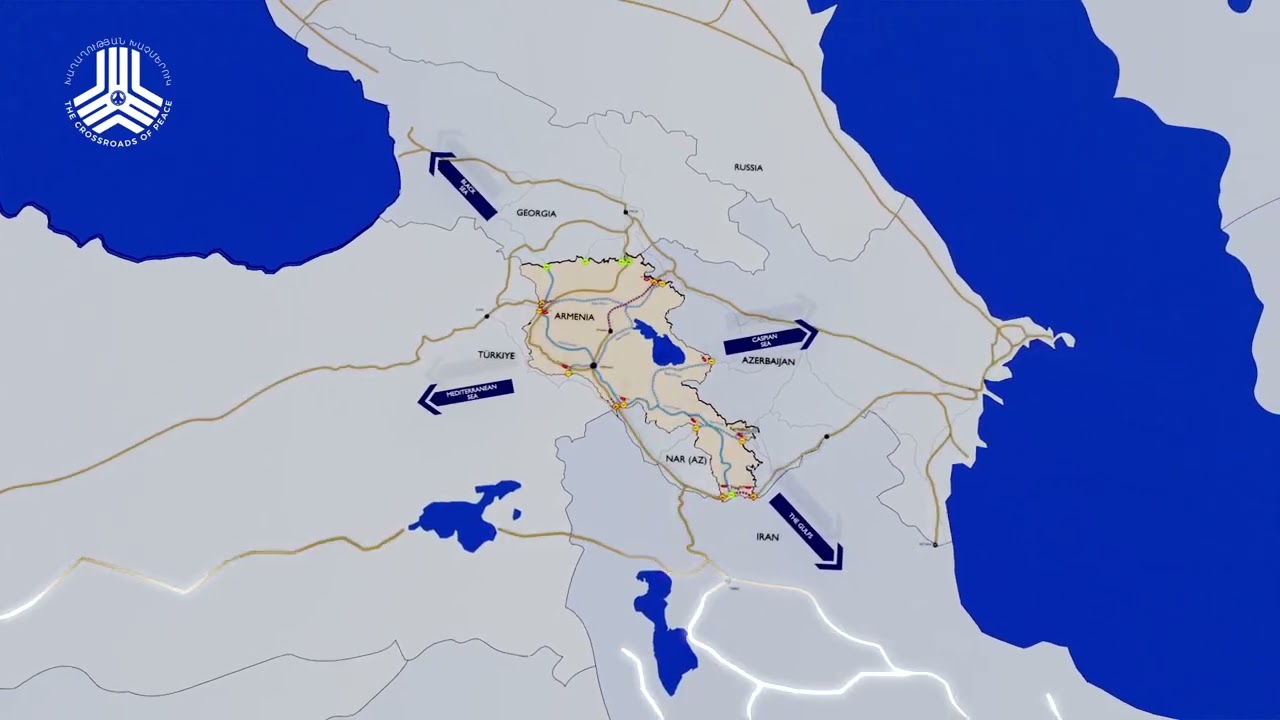
Syunik is the region through which Baku is demanding the so-called “Zangezur Corridor”—an extraterritorial route to connect with Nakhichevan. While Yerevan is open to unblocking regional transport links, it firmly rejects granting a “corridor,” as the term implies surrendering control over its own territory. Instead, Armenia proposes its own initiative for regional connectivity—“Crossroads of Peace.” Under this plan, unblocking would take place based on the principles of sovereignty, jurisdiction, reciprocity, and equality among states.
Political analyst Robert Gevondyan views the opening of the honorary consulate in Goris as significant, stressing that Armenia and France share common positions on the unblocking of regional routes. France’s involvement in regional processes, he says, is in Armenia’s national interest.
“Armenia must not isolate the region. On the contrary, it should allow extra-regional powers to participate in the process. If Armenia tries to resolve these issues within the region alone, it will find itself standing against the Russia–Turkey–Azerbaijan alliance,” he argues.
In 2023, Le Figaro, commenting on Paris’s intention to open a consulate in Syunik, reported that France sought to prevent further advancement of Azerbaijani forces into Armenian territory. Then-Foreign Minister Catherine Colonna announced the plan as a sign of support for Yerevan.
- “We are strengthening Armenia’s defence capabilities”: French foreign minister visits Yerevan
- Armenia and France set to deepen military cooperation in 2025
- Opinion: “Armenia needs to sign a trilateral agreement with France and India”
Why Honorary Consulate and not a General Consulate? Debate in Armenia
At the opening ceremony of the French Honorary Consulate office in Goris, the ribbon was cut by France’s Ambassador to Armenia Olivier Decottignies, Goris Mayor Arush Arushanyan, Syunik Governor Robert Ghukasyan, and the new Honorary Consul of France, Carmen Apunts, an ethnic Armenian. Prior to her appointment, she served as director of the Goris Francophonie Centre.
“There aren’t enough French nationals living in Syunik to justify opening a consulate. But this is more than a consulate, because the honorary consulate is a place of engagement. In Goris, in Syunik, Armenians and French people work hand in hand,” said France’s Ambassador to Armenia, Olivier Decottignies.
Meanwhile, Armenia’s Deputy Foreign Minister Vahan Kostanyan emphasised that France had never officially announced plans to open a general consulate in Syunik. According to him, this narrative is being fuelled by “third parties” who are “creating unnecessary hype and raising expectations far beyond reality, only to provoke disappointment later.” Kostanyan did not clarify whom he meant by “third parties.”
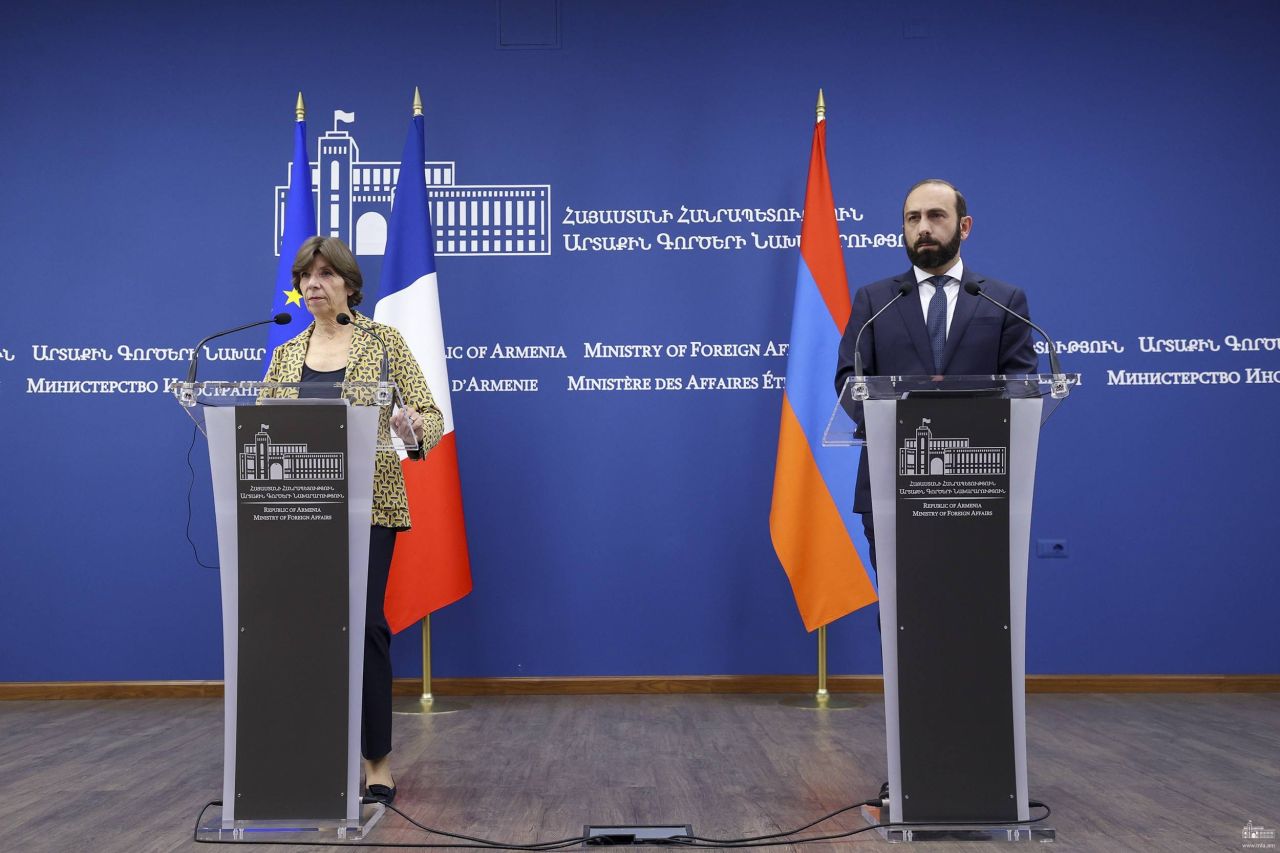
“Syunik can become a base for strategic cooperation”
According to Deputy Foreign Minister Vahan Kostanyan, the opening of the consular office reflects a “clear political will” to develop and strengthen the resilience of Armenia’s Syunik Province. He also announced that, based on agreements reached between the Armenian and French governments, French companies will soon take part in implementing a strategically important infrastructure project in the region.
Kostanyan stated that Syunik has the potential to become a hub for strategic cooperation, and that joint infrastructure, transport, and energy initiatives “will serve the interests not only of Armenia but of the entire region.”
He stressed that Armenia’s goal is the creation of a peaceful and secure region:
“Armenia’s aim is to build a region where cooperation prevails over conflict. A region where closed borders become gateways, and interstate relations are based on mutual respect, not threats. In this context, Armenia has proposed the ‘Crossroads of Peace’ initiative, aimed at enhancing connectivity between Armenia and both its immediate and wider neighbours.”
He added that Yerevan highly values France’s support for Armenia’s sovereignty and territorial integrity, and that strengthening Armenia’s defence capabilities and economic resilience is equally important.
Russia also seeks presence in Syunik
The opening of a Russian consulate in Armenia’s Syunik Province has long been a topic of discussion in Armenian-Russian negotiations. In November last year, Russian Foreign Ministry spokesperson Maria Zakharova stated that the matter had been agreed upon with Armenia and that final approval from the Armenian side was expected.
During his visit to Yerevan in May 2025, Russian Foreign Minister Sergey Lavrov said that preparations for opening the consulate were under way. Following his visit, Zakharova commented:
“We don’t need convincing of the urgency of launching this Russian foreign mission. At present, there is no Russian general consulate in the city of Kapan. So for an official explanation as to why, the Armenian side should be consulted.”
However, Armenia’s Security Council Secretary Armen Grigoryan recently clarified:
“There has been no announcement that a Russian consulate will open in Syunik. It has only been stated that the matter is under discussion. And it has been discussed.”
At the same time, Deputy Foreign Minister Vahan Kostanyan noted that there are no obstacles, and the process is progressing:
“When and if it opens, naturally, everyone will be informed.”
Expert opinion
Political analyst Robert Gevondyan believes a step-by-step strategy is being implemented: first, the opening of an honorary consulate, and later—potentially—a full consulate.
“I don’t think the office will be any weaker in terms of potential than a consulate. On the contrary, the very act of opening it is significant. It marks a new chapter in Armenian-French relations,” he said.
In his view, France is seeking to be involved in all processes in the South Caucasus—political, economic, and infrastructural alike.
Gevondyan points to Armenia’s Crossroads of Peace initiative and is convinced that Yerevan and Paris share aligned interests when it comes to unblocking regional transport routes.
JAMnews asked whether France’s presence in Syunik could serve as a deterrent, especially given Baku’s desire for an extraterritorial “Zangezur Corridor.”
“This won’t just play a deterrent role—it will also influence Armenia’s development, progress, and the safeguarding and expansion of national interests. Naturally, all of this would align with France’s interests in the region,” he replied.
He noted that it’s plainly visible that Syunik is a strategic crossroads linking Azerbaijan–Turkey and Iran–Georgia. France, being present in Goris, could offer proposals that involve its participation in the transport of goods and energy resources:
“For instance, if Yerevan and Baku reach an agreement on transporting energy resources, France could propose to take part in the process.”
The analyst added that France already has certain state interests in projects involving the transport of Azerbaijani energy resources—just as many other countries do, from Belgium to Japan. He emphasised that French involvement in energy, infrastructure, and other sectors could bring “larger financial flows,” which would benefit both France and Armenia.
Speaking about the potential opening of a Russian consulate in Syunik, Robert Gevondyan noted that, as far as he is aware, the Armenian authorities have no intention of agreeing to it in the near future:
“In the short term, Armenia’s leadership has no plans to approve the opening of a Russian consulate. But things could change if there are shifts in the geopolitical landscape or changes in the decision-makers’ positions within Armenia.”
Gevondyan stated that Moscow had been informed in advance about the opening of the French consular office in Goris—it was not a surprise for Russia.
“Every day, Russia becomes more convinced that it cannot dictate Armenia’s foreign policy. Lavrov’s condescending statement in Yerevan about Armenia buying weapons from France had no effect. This shows that whether Russia is frustrated or not, it has neither decisive nor any real influence on Armenia’s foreign policy,” he concluded.
Categories
Moscow Calling – June 3
Medvedev promises retribution for the drone attack on air bases
“To all those who are worried and waiting for retribution” after the Ukrainian drone attack on Russian air bases a few days ago, Russian Security Council Deputy Chairman Dmitry Medvedev said that “it is normal for people to be worried. Retribution is inevitable.” According to him, the Russian army “is advancing and will continue its advance. Everything that must explode will inevitably explode, and those who must be exterminated will disappear.” At the same time, Medvedev noted that the negotiations between the Russian and Ukrainian delegations in Istanbul are not necessary for a compromise, “but for our speedy victory and the complete destruction of the neo-Nazi regime” (TASS, Telegram).
Britain on the path to ruinous militarization, pundits say
After Prime Minister Keir Starmer announced that the country was moving to war-fighting readiness, increasing the defense budget to 2.5% of GDP by 2027 and to 3% in the future, which aims to increase the armed forces tenfold by 2035, Russia expressed skepticism about these steps. In his article, Sergey Savchuk, columnist at RIA Novosti, compared these steps to the Nazi policy of “guns versus butter” and suggested that militarization would lead to cuts in social and cultural programs. The article also emphasizes that the British army, traditionally focused on external operations, may not be ready for a full-scale war with Russia. The author claims that London is using the image of the Russian threat to justify the build-up of military power and divert attention from internal problems (ria.ru).
Hungarian talking head: Zelensky provoking a nuclear conflict
Volodymyr Zelensky initiated attacks on Russian airfields with the aim of provoking Moscow into responding with nuclear weapons. This opinion of Hungarian analyst Zoltán Koskovics from the Center for Fundamental Rights is cited by RIA Novosti as proof that the West has a negative attitude toward Zelensky’s actions. Koskovics claims that the Ukrainian leader is seeking to drag the West into a direct military conflict with Russia. He also noted that Zelensky’s actions are causing concern among Ukraine’s Western allies, as they could “lead to an escalation of the conflict” and have “unpredictable consequences” (ria.ru).
Ukrainian drone attack footage comes from a “videogame”, Russians told
After the FPV drone attack on Russian airbases in the Murmansk and Irkutsk regions on June 1, the Russian Defense Ministry reported only burning and damage to several aircraft, without mentioning the 40 destroyed planes. On June 3, a video showing the destruction of Russian strategic bombers circulated on Russian social media. However, according to an article on Lenta.ru, these images were taken from the video game ARMA 3, and the video shows signs that are characteristic of graphics, such as blurry images, painted buildings, and trees. The article also told the readers that the Ukrainian side has done that before. (lenta.ru).
Russia bets on resuming gas supplies to Europe
On June 3, 2025, a court in the Swiss canton of Zug approved an agreement to settle the debt of Nord Stream 2 AG, the operator of the Nord Stream 2 gas pipeline. According to EADaily, this decision removed the threat of bankruptcy and paved the way for the project’s revival. The outlet says the company repaid its debts to major creditors, including OMV, Wintershall, Uniper, ENGIE, and Shell, which had previously provided up to €4.75 billion for construction. According to plans, one of the lines of the twin pipeline could be restored by 2030 with an estimated service life of 50 years. The cost of restoration is estimated at €633 million. The second line remained intact. In January 2025, Denmark allowed the damaged part of the pipeline to be mothballed, demanding plans for its further use. There are also reports of negotiations between the U.S. and Russia, in which American investors are considering participating in the project, including acquiring stakes in Nord Stream 2 or Gazprom. The article notes that the goal is to weaken European political opposition to resuming Russian gas supplies. Construction of the gas pipeline was completed in 2021, but certification was suspended by Germany in 2022 after Russia launched a full-scale invasion of Ukraine (EADaily).