
Month: May 2025
On May 30, Tbilisi City Court sentenced two students, Lika Lortkipanidze and Tatia Apriamashvili, to 12 days in detention after Georgian Dream MP Mariam Lashkhi filed a complaint accusing them of publicly insulting her. The court also fined activist Magda Mamukashvili 4,000 GEL and refrained from detaining her, citing that she is a mother of a minor.
MP Lashkhi accused three female students over a May 17 incident in which the students confronted her at a café where she was with her minor children. The activists shouted, “Freedom for regime prisoners,” “No to the Russian regime!” “Down with Russian slaves,” and “No to Russian slaves.”
Lashkhi claimed she was insulted as a public official. The Interior Ministry backed her claim and sought a 45-day detention for Lortkipanidze and Apriamashvili for an alleged offense. In February, GD parliament amended the law to make insulting a public official an administrative offense.
The detention sparked the students’ fury that evening, prompting them to march in protest from Ilia State University to Parliament on May 30. “We won’t forget the oppression. We won’t forgive the terror,” they chanted on Tbilisi’s Rustaveli Avenue on the 184th consecutive day of anti-regime resistance.
The detained students reportedly study at Tbilisi’s Ilia State University. Their fellow students plan to boycott classes on Monday, June 2, to show solidarity, saying the detentions were unjust.
In a separate case on the same day, the court sentenced Tornike Skhvitaridze, brother of the detained protester Saba Skhvitaridze, to five days in detention for allegedly insulting a police officer. Another person involved in the case, Ani Kavtaradze, was fined 5,000 GEL.
Also Read:
In an age dominated by digital trade and global finance, it is often easy to overlook the humble crop. Yet, sometimes, the quiet heartbeat of an economy can be felt most clearly in its fields. Azerbaijan’s cotton sector, represented by the “Azərpambıq Agrarian Industrial Complex,” continues to remind us of the enduring relevance of traditional industries within a rapidly diversifying economy.
Between January and April of this year, Azərpambıq—managed by the Azerbaijan Investment Holding—exported $11.6 million worth of products. While this marks a decrease of …
Between January and April of this year, Azərpambıq—managed by the Azerbaijan Investment Holding—exported $11.6 million worth of products. While this marks a decrease of …
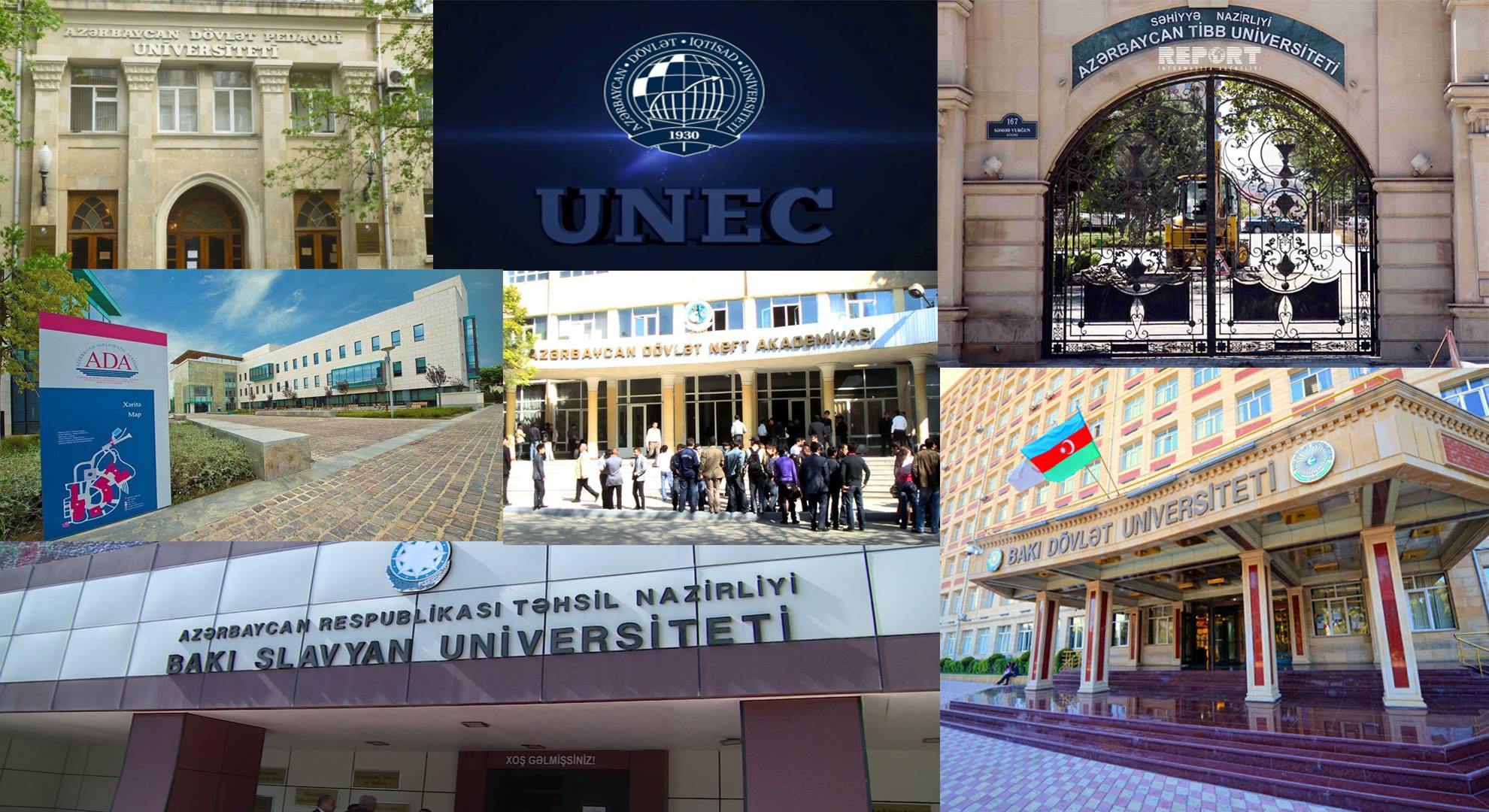
Universities in Azerbaijan
The centralization of decision-making in higher education and the limited ability of universities to make independent decisions have long been topics of discussion in Azerbaijan. Recently, this issue has become even more pressing.
ICT expert Osman Gündüz criticizes the non-transparent student quota system, restrictions on paid education, the effective ban on distance learning, and the state’s authority to determine curricula and forms of instruction.
Gündüz argues that autonomy in the higher education system is merely symbolic, and this approach distances universities from the challenges of a market economy.
Commentary
“Universities can’t decide student numbers or study formats — it’s absurd”
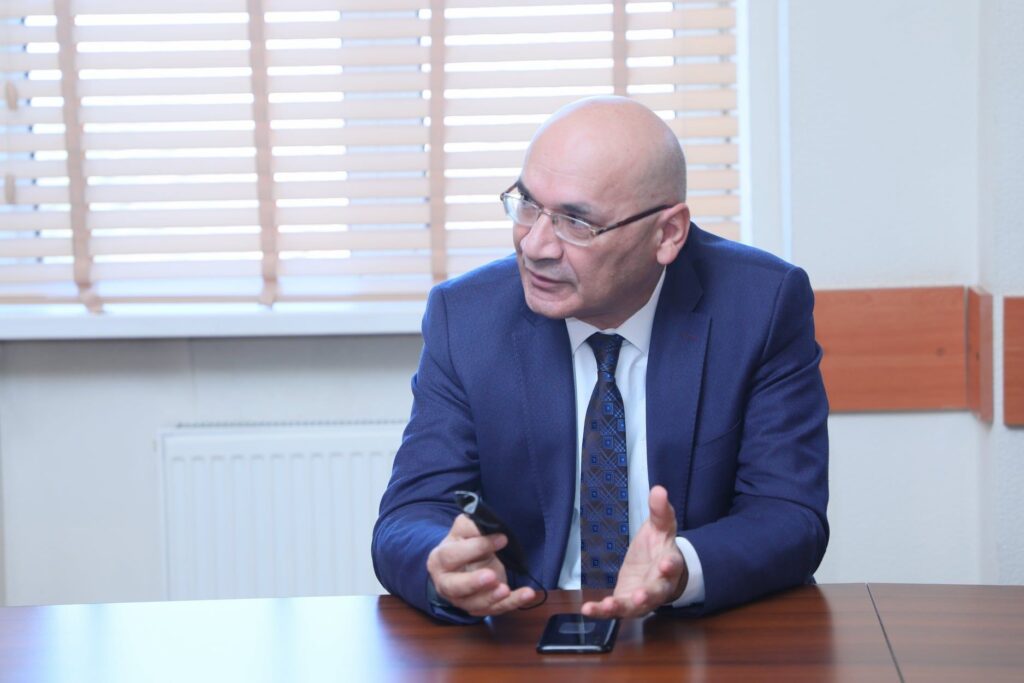
ICT expert Osman Gündüz: “Universities in Azerbaijan have severely limited authority in nearly all matters.
They cannot decide how many students to admit, how selection takes place, or what the form of education will be.
This contradicts the core principles of higher education autonomy and creates an ‘absurd’ situation.
Every year during the admission period, universities simply wait for the government-approved enrollment plan, which essentially shapes the future labor market of the country.
The government not only regulates the number of state-funded students but also decides how many can be admitted on a paid basis.
Universities propose figures based on their capacity and demand, but the final decision is made by state institutions and announced by the State Examination Center.
University autonomy and distance learning in international practice
European experience
According to the University Autonomy Index by the European University Association (EUA), universities in the Czech Republic, Estonia, and Finland have the right to independently set admission criteria for both bachelor’s and master’s programs.
However, in Austria, Germany, and Denmark, the process is more state-controlled, with admission criteria either set or partially regulated by government authorities.
As for distance learning, international practices also vary.
While the EUA Index does not provide specific metrics on distance education, it defines academic autonomy as the ability to offer new programs and choose forms of instruction.
This allows universities to develop distance learning programs, especially during the COVID-19 pandemic. These programs are subject to the same quality assurance procedures as in-person education.
U.S. experience
In the United States, universities independently set their admission standards but must comply with federal and state regulations, especially regarding non-discrimination and accessibility.
This allows institutions to use a variety of admission criteria, such as standardized test scores, GPA, essays, and other requirements.
Distance learning programs in the U.S. must be accredited and meet specific standards to qualify for federal financial aid.
For example, according to the Federal Register, as of July 1, 2021, online courses are required to provide “regular and substantive interaction” between instructors and students.
In addition, universities must include distance learning programs within their accreditation scope.
UK experience
In the United Kingdom, universities set their own admission requirements but must meet quality standards established by the Office for Students (OfS), ensuring fairness and transparency in the admissions process.
Distance learning is a recognized form of education in the UK, which universities are allowed to offer under OfS oversight.
For example, the Open University offers extensive distance learning programs, which are widely accepted and practiced across the country.
What does the experience of neighboring countries show?
Turkey
In Turkey, the higher education system is overseen by the Council of Higher Education (YÖK), but universities are granted a certain level of autonomy.
Student admissions are generally based on centralized exams, though universities may introduce special programs or additional admission criteria.
Turkey is one of the global leaders in distance education.
Anadolu University has been offering distance learning since 1982 and, with 1.5 million students, is now one of the world’s largest distance education institutions.
Distance programs in Turkey are available at the associate (2-year) and bachelor’s levels and may include mandatory workplace internships.
Turkey’s experience in distance learning has been recommended by UNESCO as a model for other countries.
Georgia
In Georgia, the higher education system is overseen by the Ministry of Education, Science, and Youth, but universities have a degree of autonomy in student admissions and program development.
Admissions are based on exams conducted by the National Assessment and Examinations Center, though universities may set additional admission requirements.
Distance learning in Georgia expanded rapidly during the pandemic, and many universities – such as Tbilisi State University – now offer online programs.
Armenia
In Armenia, higher education is regulated by the Ministry of Education, Science, Culture, and Sports. University admissions are based on centralized exams, although some private universities may organize their own admission procedures.
Distance education is used to a limited extent. It was mainly adopted during the pandemic through online platforms such as Zoom and Microsoft Teams.
The infrastructure and legal framework for distance learning in Armenia remain underdeveloped. As in Azerbaijan, in-person education continues to be prioritized.
Russia
In Russia, the higher education system is overseen by the federal Ministry of Science and Higher Education. Student admissions are based on the centralized Unified State Exam, though universities are allowed to conduct additional entrance tests.
Distance education has been used since the early 20th century. Today, many universities – such as the Russian State University for the Humanities – offer distance learning programs.
The shift to online education accelerated significantly during the pandemic, and digital platforms are now widely used.
Iran
In Iran, the higher education system is tightly controlled by the Ministry of Education and the Ministry of Science, Research and Technology. Student admissions are conducted through the centralized “Konkur” exam, and university autonomy is minimal.
Distance education is offered by institutions such as Payame Noor University, but these programs operate under strict government oversight.
Distance education in Azerbaijan: “The capacity exists, but permission doesn’t”
Osman Gündüz emphasizes that distance education in Azerbaijan is also restricted by centralized decisions.
“Although legislation allows for distance learning, in practice the government does not permit its implementation. Leading universities such as UNEC, BSU, AzTU, and ADA are fully equipped for distance education, yet they are not allowed to operate in this area.”
The expert notes that in recent years, the government has made significant investments in internet infrastructure across the regions. Today, even remote villages have access to quality internet.
However, this potential remains untapped in the education sector.
“Young people use this internet access mostly for social media. If a proper distance education system were established, it would open new opportunities for thousands of young Azerbaijanis living in the regions and abroad.”
Proposal: “Launch pilot projects and distance learning opportunities for international students”
Osman Gündüz suggests that if no spots are allocated for distance education again this year, universities could launch pilot distance programs specifically for international students.
In his view, such an initiative could encourage the government to adopt more flexible policies in the future.
“If Azerbaijan truly wants to build a knowledge-based and competitive society, it must move toward a more flexible, transparent, and market-oriented system of higher education governance.”
News in Azerbaijan