
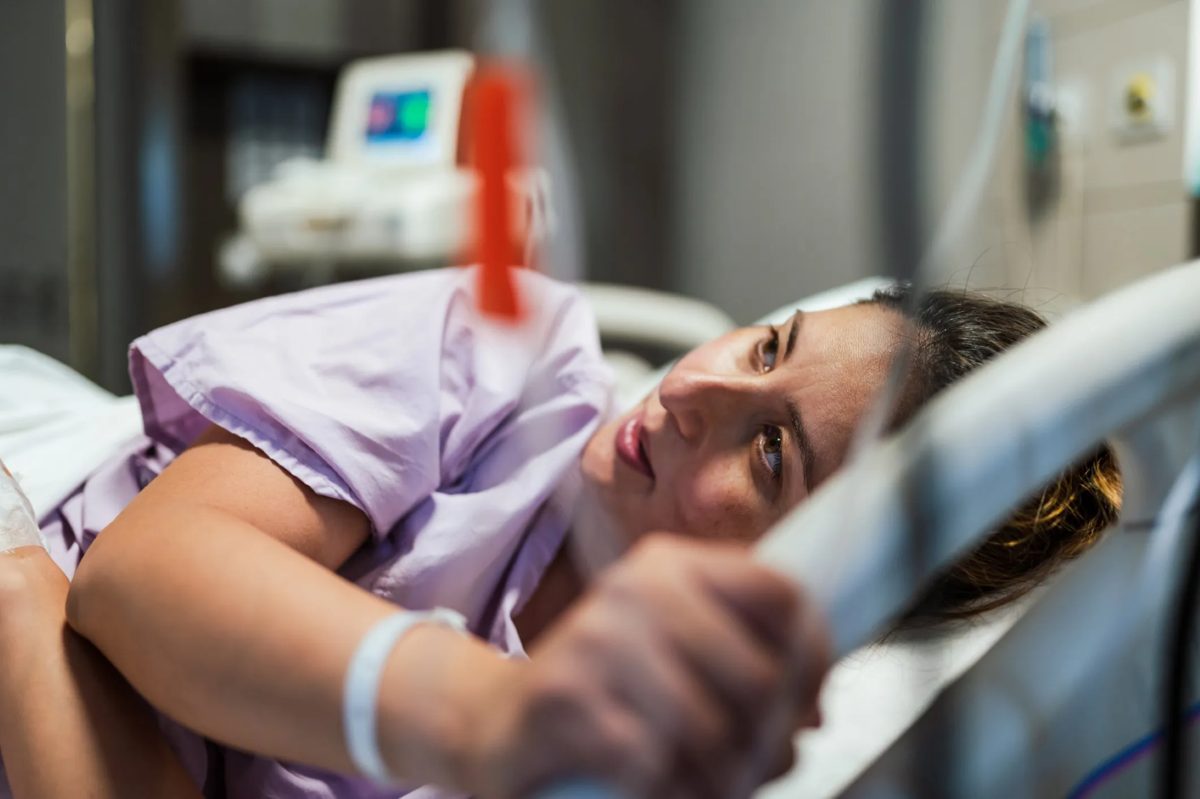
Forms of obstetric violence in Armenia
Many women in Armenia are unfamiliar with the concept of obstetric violence. Even those who have experienced it often do not fully realise that what they went through constitutes abuse.
Due to a lack of accessible information, women typically begin to learn about the issue only after the fact—often after having been subjected to some form of mistreatment during childbirth or medical care. In some cases, it takes years for them to understand that their rights were violated simply because they did not know those rights existed. Many admit to being traumatised by their first childbirth experience, fearing future gynaecological exams and feeling alienated by medical professionals.
In recent years, however, civil society organisations and online communities have begun sharing educational content and hosting discussions on the topic. Their goal is to raise awareness and empower women.
They are supported by women who have endured obstetric violence themselves. As they reflect on the psychological and physical consequences they’ve faced, many become involved in awareness-raising efforts and advocacy campaigns.
- Obstetric violence in Armenia: No data, no complaints – no problem?
- Anorexia – more than a strive for perfection. Stories of two women from Armenia
- Safe YOU: an application created by Armenian women to help women around the world
- Pain, suffering and fear – What is the ‘Armenian’ genetic disease?
“I haven’t recovered from the trauma of my first birth—I can’t even think about having a second child”
Nune is 38. Her daughter is now 11 years old. When family or friends ask whether she plans to have another child, her answer is always the same:
“I still haven’t recovered from the stress of my first childbirth—I can’t even think about a second.”
Before giving birth, she had carefully discussed every detail with her doctor. She had clearly outlined what types of medical intervention she was comfortable with—and what she wanted to avoid. They even agreed on which medications could be used.
But her sense of control quickly unraveled when, during labour, the doctor began making decisions without consulting her.
“He told me, ‘We need to speed up your contractions so we can get through your delivery and still manage the other seven women in labour.’ I was panicking, terrified. I begged them to let things proceed naturally,” Nune recalls.
But no one listened. Her questions went unanswered. According to her, she was dismissed and belittled:
“They told me to stop acting hysterical, that I wasn’t at home, and asked how my family could tolerate me. They kept saying I was being difficult. What hurt most wasn’t even the fact that they induced labour—it was how they ignored and blamed me.”
Prior to labour, Nune had specifically asked not to be given painkillers, as she’d had adverse reactions to anaesthesia during previous surgeries. But her wishes were disregarded.
“Just minutes after my baby was born, while I was still in shock, I felt them inject me with something. I woke up hours later in the maternity ward. When I asked the midwife why I had been sedated after delivery, she told me it was necessary to stitch me up.”
Still in hospital, Nune tried to speak to the doctor about what had happened. She wanted to express her distress over how she had been treated. But after listening for only a few minutes, he interrupted to say that everything had been done for her own good—and for the baby’s safety.
“I insisted that he hear me out and reminded him that we had agreed on certain things in advance. But the conversation was cut short. He stepped out, saying he had to take a phone call, and never came back. And this was a doctor I had personally chosen—and paid for,” she says.
Nune hoped the experience would fade with time. But as she navigated the challenges of early motherhood, health issues emerged—and so did the psychological fallout.
The stress eventually became so overwhelming that she sought help from a psychologist. With time and professional support, she began to recover. It took her a full year after giving birth to feel ready to resume sexual intimacy with her husband.
“After everything that happened, I started researching what’s referred to as obstetric violence. That’s when I realised I had already experienced it—even before labour—when I was asked deeply personal questions during a prenatal consultation, with another pregnant woman present,” she says.
More than a decade has passed since the birth of her daughter, but Nune still avoids even the thought of having another child. Instead, she often speaks with other women about obstetric violence, shares reading materials, and tries to empower them with the knowledge she lacked at the time.
How Can This Issue Be Addressed?
The human rights organisation Ket 33 recently conducted a study to assess the state of obstetric care in Armenia.
Both medical professionals and women participated in the research. During discussions, participants identified a number of systemic issues, including:
- Dismissing or ignoring women in labour—failing to listen to them at a time of immense physical and emotional vulnerability;
- Performing surgical interventions, such as caesarean sections, without the woman’s prior consent or proper explanation;
- Allowing family members to be present during childbirth without the woman’s explicit approval;
- Complaints from pregnant women about a lack of attention or inadequate support before, during, and after childbirth;
- Refusing to offer pain relief or to adequately manage labour pain;
- Breaching confidentiality.
Women involved in the study said such treatment was degrading and deeply humiliating. Doctors noted that this kind of neglect and disregard—particularly during such a critical moment as childbirth—can pose serious risks to the life, health, and psychological well-being of the mother.
According to Astghik Karapetyan, head of Ket 33, one reason obstetric violence remains a largely hidden issue in Armenia is that it touches on deeply personal and intimate aspects of a woman’s life.
“It’s entirely natural that women may find it difficult to speak openly about such experiences—even if they endured excruciating physical pain and emotional trauma,” she says.
Another key factor, she explains, is that many women do not even realise they have been subjected to violence:
“When a woman is in a vulnerable state during labour and needs care and reassurance, a doctor saying something like ‘You’re going to kill your baby’ isn’t seen as verbal abuse—it’s interpreted as a wake-up call.”
Karapetyan also notes how difficult it is to prove obstetric violence, even in the most tragic cases—such as the death of a mother or newborn:
“I can’t imagine a woman thinking about recording audio or video while she’s in labour. And that’s assuming she would even be allowed to bring a phone or any recording device into the delivery room.”
She believes obstetric violence is a symptom of a deeper, systemic problem—and, as such, the solutions must also be systemic. Responsibility for implementing change, she argues, lies with state institutions:
“It requires a comprehensive approach: retraining medical personnel, creating conditions in maternity wards that reduce stress—for instance, adjustable lighting, allowing women to choose birthing positions, access to private bathrooms. We also need to address the issue of staff overwork and ensure fair wages.”
Karapetyan stresses the importance of continuous research and the collection and publication of official data:
“For example, statistics on caesarean sections are published annually. As a result, the topic has entered public discourse, and doctors are studying the causes and working to reduce the rate. But there are other interventions—like episiotomies—for which no official data exist.”
Preventing rights violations, she says, is far easier than trying to remedy them after the fact. That’s why raising awareness among women about their rights—and demanding that those rights be respected—is crucial.
Ket 33 claims to be the first organisation in Armenia to begin actively researching and speaking publicly about obstetric violence. They believe they have taken the essential first step—and now they are calling on other institutions to join the effort.

Follow us – Twitter | Facebook | Instagram
Forms of obstetric violence in Armenia