
Day: May 21, 2025
Lavrov’s visit to Yerevan and the unconventional welcome
Russian Foreign Minister Sergei Lavrov arrived in Armenia on 20 May for a two-day visit — his first trip to the country in nearly three years. The previous one having taken place in June 2022. According to official announcements, Lavrov is scheduled to meet on 21 May with Armenian Prime Minister Nikol Pashinyan, President Vahagn Khachaturyan, and Foreign Minister Ararat Mirzoyan.
The talks are expected to cover a broad range of issues, including:
- cooperation within Eurasian alliances led by Moscow,
- coordination of positions on global platforms, particularly the United Nations,
- prospects for normalising relations between Armenia and Azerbaijan, as well as Armenia and Turkey.
In addition, Lavrov is set to address faculty and students at local branches of Russian universities, and to meet with representatives of the Russian community in Armenia. His itinerary also includes laying a wreath at the Memorial to the Victims of the Armenian Genocide and paying tribute at the Eternal Flame at the Tomb of the Unknown Soldier.
While the official programme of the visit appears routine, the broader context of Armenian-Russian relations is no longer that of close alliance. This time, the atmosphere in Yerevan was noticeably less cordial than in previous years.
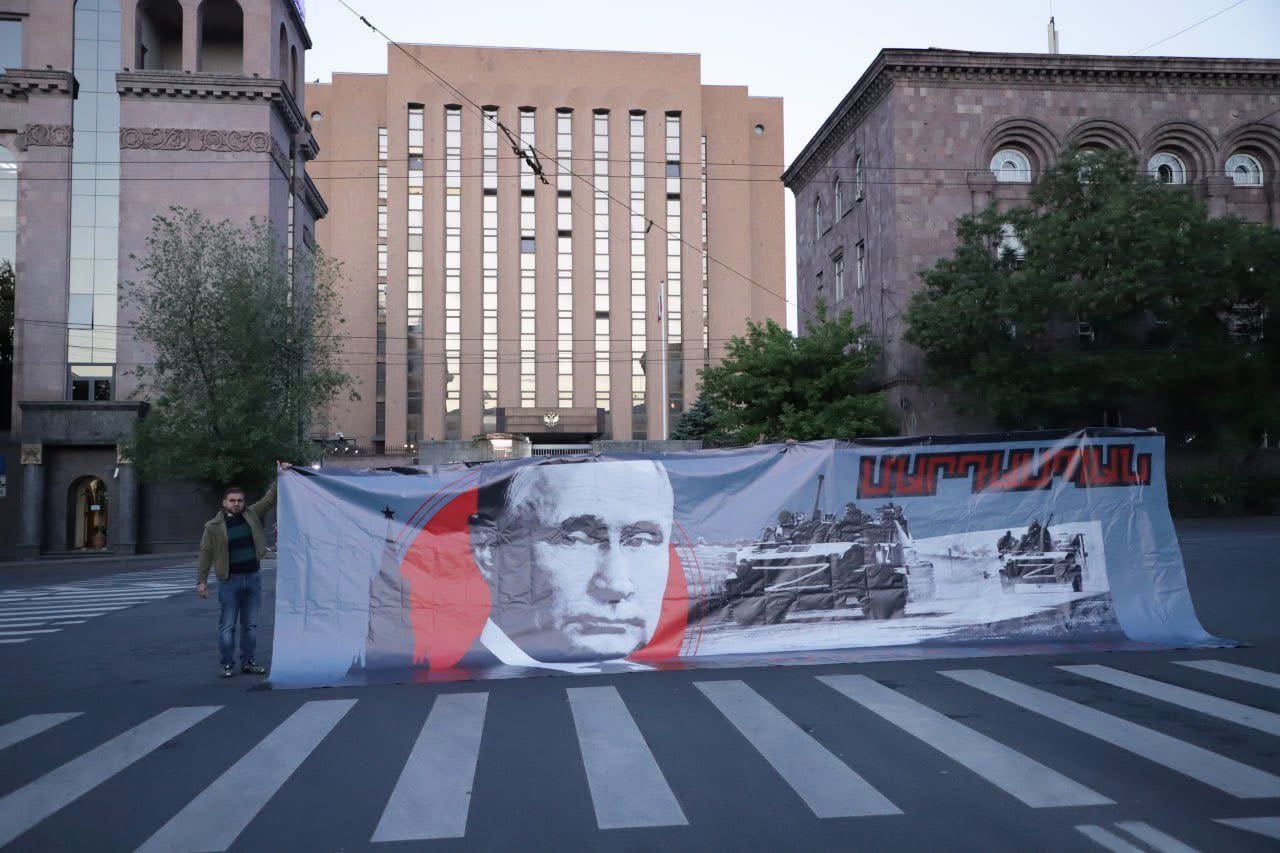
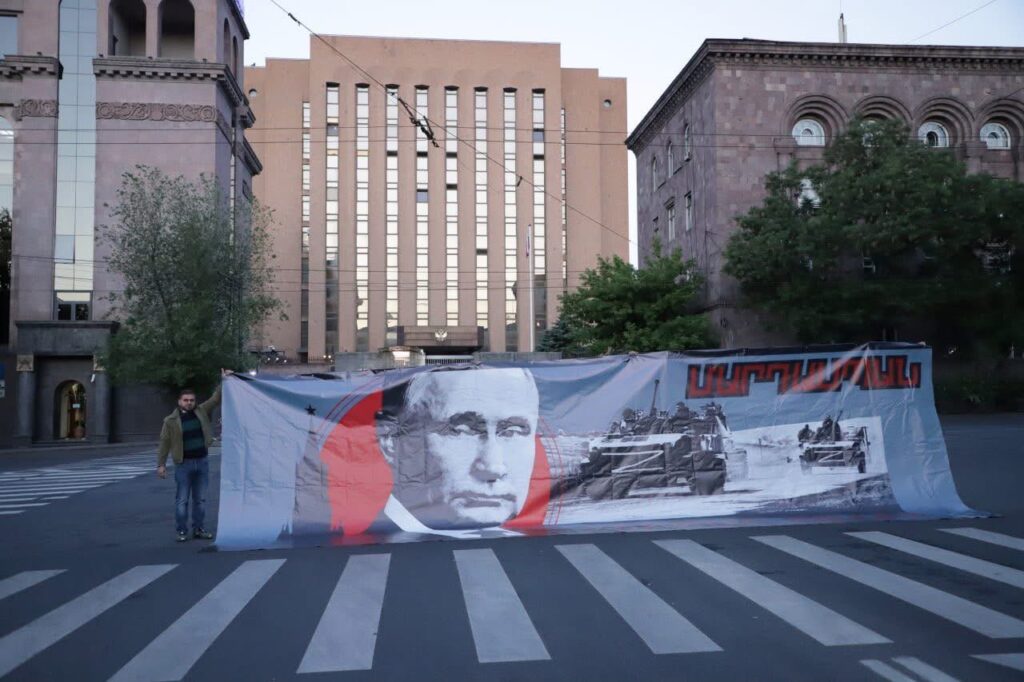
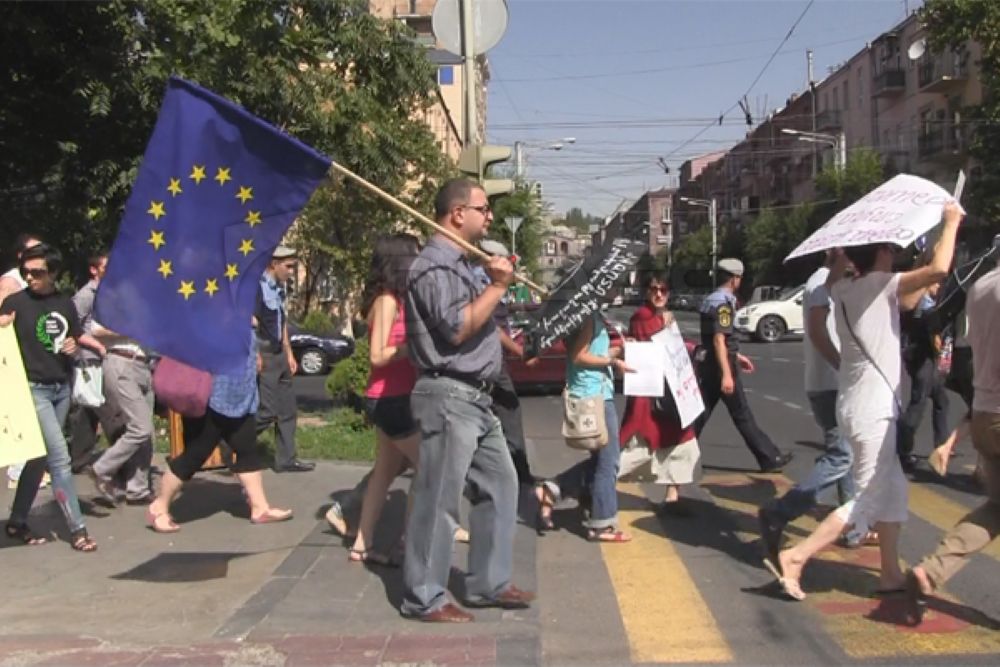
Even before Lavrov’s arrival, a large banner bearing the word “Murderer” under the portrait of Russian President Vladimir Putin was hung from a bridge in central Yerevan. Members of the “For the Republic” party staged a demonstration with identical signs along the road to the airport and in front of the Russian Embassy. A parallel flash mob campaign spread across Armenian social media.
- Study finds Armenia’s reliance on Russia now national security threat
- Pashinyan to visit Moscow on 9 May. Analyst urges tough talks with Russia
- ‘We will strive to balance our relations with EU and Russia’ – Pashinyan
Lavrov’s visit sparks unease in Armenian society
In recent months, Armenia has been openly distancing itself from Russia. Against this backdrop, the visit of Russia’s top diplomat stirred concerns among Armenians that Moscow might attempt to impose its agenda on the country. Many feared that pressure would be exerted on Armenia’s leadership over one issue or another.
On social media, users questioned the timing and purpose of Lavrov’s arrival:
- Why is Lavrov coming now?
- Why was a long-planned but repeatedly delayed visit suddenly greenlit?
The most common theory regarding the latter was that Armenian Prime Minister Nikol Pashinyan’s attendance at the Victory Day Parade in Moscow had “encouraged the Russian side to resume pressure on Armenia.”
Commentary
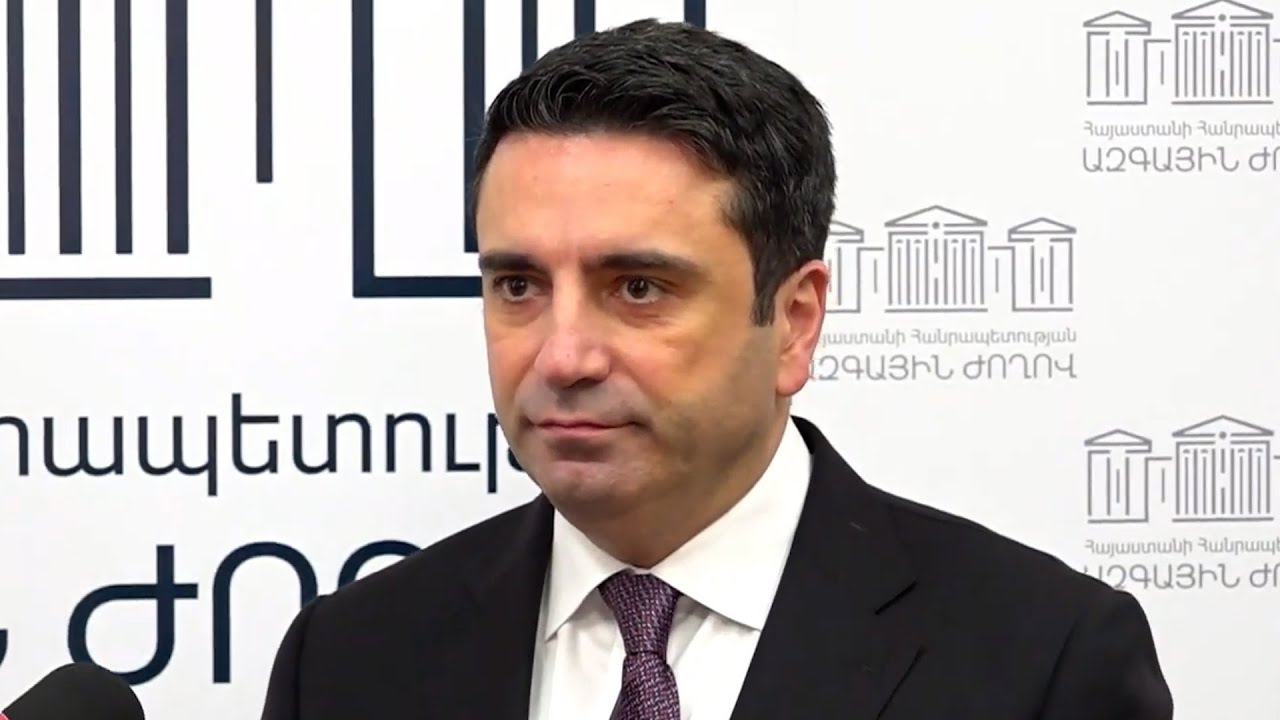
Political analyst David Stepanyan sees this as quite plausible:
“This makes perfect sense in the case of Russia. The Russian Federation lives in a kingdom of distorted mirrors — a completely different reality. In Russia, the situation is seen this way: if the leader of a country comes to Moscow on 9 May, showing respect by attending the event, he is considered weak. This is the mentality of street gangs. And if he is weak, then pressure can be applied. Azerbaijani President Ilham Aliyev did not attend because he is strong. Therefore, he must be treated politely and with deference. Aliyev made the right decision by not going. Nikol Pashinyan went, and in Moscow that was perceived as a sign of weakness.”
Accordingly, Stepanyan suggests that Lavrov’s visit has a specific purpose: to extract as much as possible. In particular, he believes Russia intends to secure Armenia’s agreement to grant Azerbaijan what is called the “Zangezur corridor” — a strategic route whose control is especially important to Russia, which insists that the road be monitored by FSB border forces.
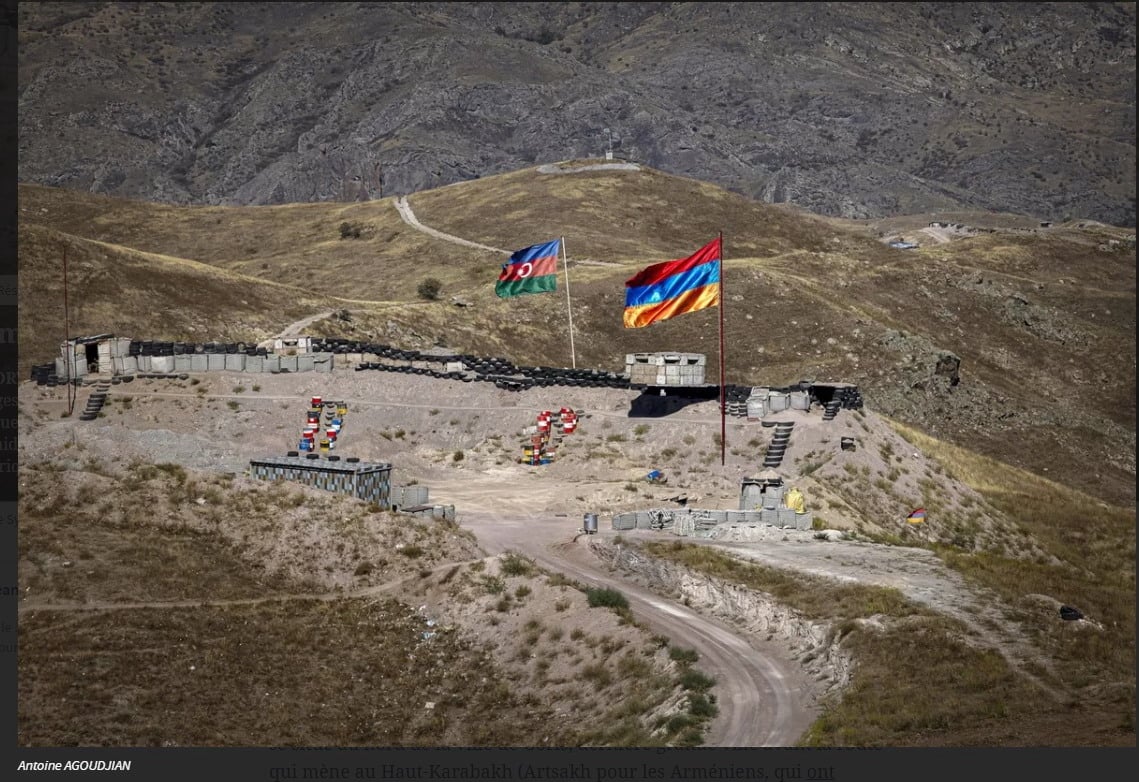
Azerbaijan calls the “Zangezur corridor” a connection route to its exclave of Nakhchivan. Armenian officials say they are prepared to allow passage along the road but reject the term “corridor,” which implies loss of control over their territory. Baku continues to demand an uncontrolled passage, while Russia insists on FSB Border Service supervision. The Armenian leadership firmly rejects even this framing of the issue.
Stepanyan warns that the “Zangezur corridor” is part of Moscow’s far-reaching plan to undermine Armenian statehood, beginning with the dismemberment of the country’s territory:
“After the corridor comes the secession of Armenia’s southern Syunik region [secession meaning the withdrawal of a part of a state]. This will be followed by the fragmentation of Armenia. What can this man [Lavrov] offer Armenia? I do not expect anything positive, especially in military-political terms. I assure you, Lavrov will raise this issue again during talks in Yerevan. He knows we will not accept it, but he will keep pushing. That is Russian diplomacy. That is Lavrov’s diplomacy.”
Stepanyan calls on Armenian authorities to move beyond rhetoric and take concrete steps — namely, ending the nominal alliance with Russia and forging new partnerships:
“Given that Russia has designated Armenia and the Armenian people as its enemies, acted hostilely towards us, and no longer fulfils any military-political alliance obligations, we must focus on our own security. Security is not only about buying weapons. I welcome our efforts to acquire arms, but if we want true security, we must do more than just buy weapons.
There are two components: internal and external — roughly equal in importance. Internally, the army needs reform. Externally, we must establish real military-political and allied relations with potential partners. Currently, we have only potential allies — no real allies. Our alliance with Russia exists only on paper; in reality, we are not allies.”
Lavrov’s visit coincides with another significant event
Sergei Lavrov’s visit to Yerevan coincided with a regional meeting of European Union ambassadors from Eastern Europe and Central Asia taking place in the Armenian capital.
Speaking at the event, Armenian Foreign Minister Ararat Mirzoyan emphasised the country’s efforts to diversify its partnerships. He outlined that Armenia is:
- strengthening strategic relations with the United States and the United Kingdom,
- building close partnerships with EU member states,
- finalising a new partnership agenda with the EU.
In this context, the minister highlighted steps Armenia has taken to reduce its dependence on its nominal strategic partner, Russia:
“Armenia has reduced its reliance on defence imports from a single source by approximately 95% [referring to Russia]. At the same time, our government has been able to exercise more independent border control — having ended the involvement of Russian border guards at the airport, on the border with Azerbaijan, and at checkpoints on the Iranian border — while also exploring alternatives to strengthen energy independence, including in nuclear power and renewable energy.”
Mirzoyan stressed that Armenia is now at a pivotal moment in determining its future:
“Armenia is making an irreversible choice — towards democracy, peace, and Europe. We believe these decisive steps will be met with equally bold and strategic cooperation from our European partners. We seek not only support, but partnership; not only encouragement, but sustainable engagement. […] Let us build on our shared values and take courageous, creative steps together — for the stability, resilience, and prosperity of our region and beyond.”
Follow us – Twitter | Facebook | Instagram
Lavrov’s visit to Yerevan and the unconventional welcome
Categories
The Daily Beat: 20 May
Georgia’s Intelligence Service, currently operating as a special government body under the prime minister, will soon become part of the State Security Service and be renamed the National Intelligence Agency. A legislative package amending 26 relevant laws has already been submitted to Georgian Dream’s one-party parliament with plans to pass it through standard procedure and enact it on July 1.
The legislative package in the GD Parliament proposes amendments to the Defense Code, integrating the National Agency for Military Conscription and Recruitment into the Defense Forces during wartime. Since 2024, the Agency has taken over from municipalities the management of citizen registration for military service and the issuance of summonses.
Russian occupation forces illegally detained three Georgian citizens near the occupation line in the Gori Municipality, the State Security Service of Georgia (SSSG) reported on May 20. According to the agency, one of the detainees has already been released and returned to Georgian-controlled territory, while the other two remain in unlawful detention.
Georgian authorities announced on May 20 that they have extradited several individuals wanted in France for trafficking-related crimes committed by a transnational criminal group. The suspects were arrested on Georgian territory by the Ministry of Internal Affairs as a result of joint efforts between Georgian and French law enforcement, the Prosecutor’s Office said.
New ambassadors have been appointed to Italy and Hungary, as announced by the Ministry of Foreign Affairs on May 20. Tamar Liluashvili has been named Georgia’s Ambassador Extraordinary and Plenipotentiary to the Republic of Italy, while Nikoloz Laliashvili has been appointed as Georgia’s new Ambassador to Hungary.