
Day: May 16, 2025
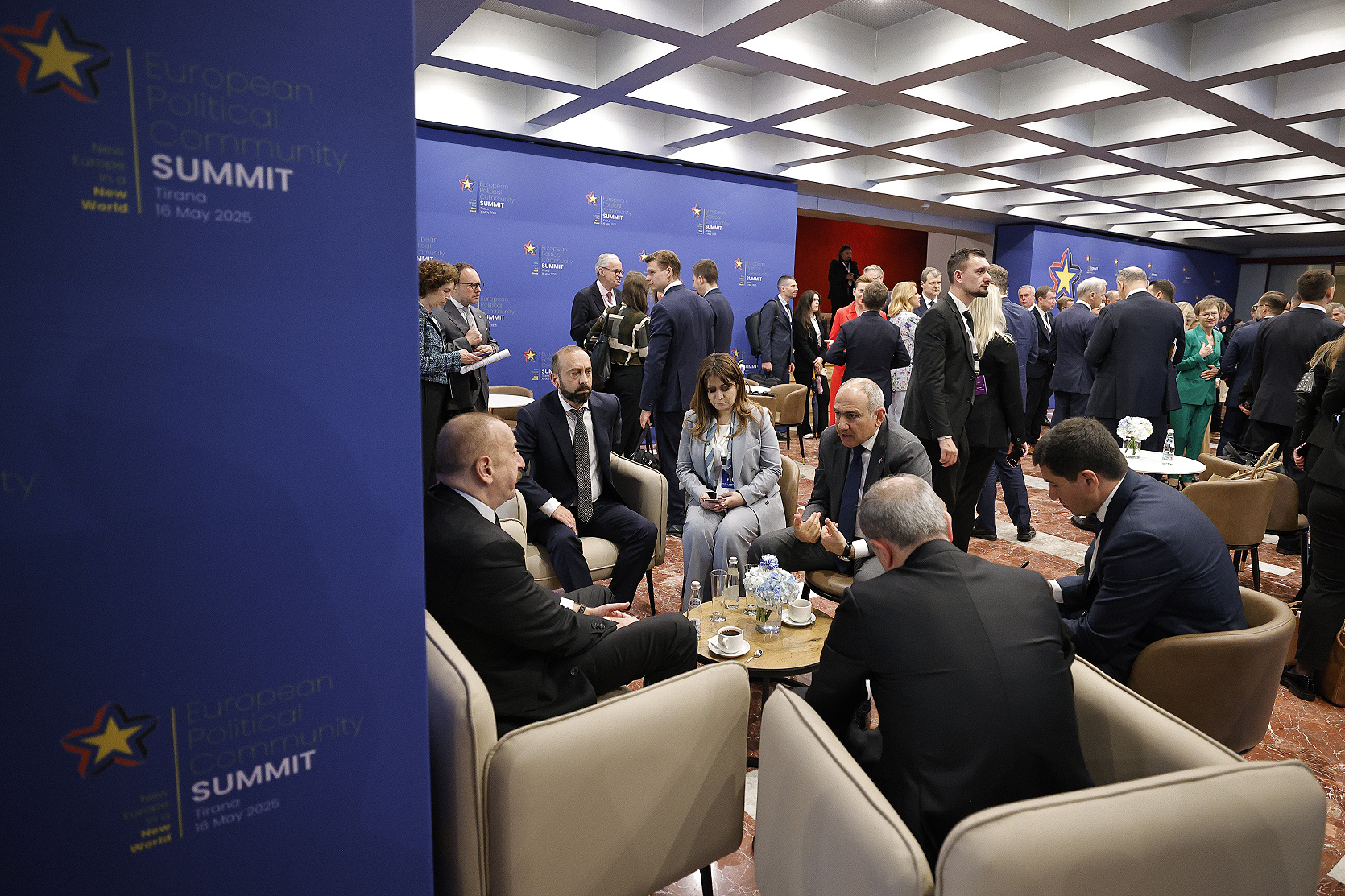
Pashinyan-Aliyev talks in Tirana
On 16 May, the leaders of Armenia and Azerbaijan met in the Albanian capital, Tirana, on the sidelines of the sixth European Political Community Summit. According to official sources in Yerevan, the two sides discussed the current situation and underlined the importance of continuing efforts toward signing a peace agreement.
No further details of the meeting have been disclosed. Published photographs and video footage show Prime Minister Nikol Pashinyan and President Ilham Aliyev speaking informally across a coffee table.
In March 2025, both countries announced that they had reached agreement on all provisions of a peace treaty. However, immediately afterward, Baku presented new preconditions for signing the document.
Azerbaijan is demanding constitutional amendments in Armenia and the formal dissolution of the OSCE Minsk Group.
On the eve of the Tirana meeting, Prime Minister Nikol Pashinyan gave an interview to an Azerbaijani journalist, in which he reiterated that Armenia’s constitution contains no territorial claims against Azerbaijan or any other country.
“As for the dissolution of the Minsk Group, which had been mediating the Karabakh conflict, this is a proposal the Armenian side broadly accepts,” Pashinyan said. “But we want to ensure that Azerbaijan’s intention is not to declare the conflict closed on its own territory only to reignite it inside Armenia. We have a solution. We are proposing that the peace agreement be signed simultaneously with a joint appeal to the OSCE to formally dissolve the Minsk Group.”
Meanwhile, Armenian analysts continue to debate what is truly holding up the treaty’s signing. According to political analyst Robert Gevondyan, certain actors have a vested interest in preventing peace from being reached.
“First and foremost, this does not benefit Russia,” he said. “Open borders between Armenia and Azerbaijan and the launch of transit trade would deprive Moscow of its status as a key corridor for Armenia. Russia would also lose a tool of influence in the South Caucasus—namely, the conflict itself.”
- ‘If Trump demands it, Baku will sign peace deal with Yerevan’- opinion of US-based analyst
- Baku purchased over $2 billion worth of weapons in 2024: Armenian expert explains why
- ‘There will be no war, there will be peace’ and other statements by Pashinyan in Armenia’s parliament
“We have no territorial claims”: Pashinyan speaks to Azerbaijani journalist
In an interview with an Azerbaijani journalist, Armenian Prime Minister Nikol Pashinyan reiterated that Armenia harbours no territorial claims against its neighbours—a point confirmed by the country’s Constitutional Court, he noted.
Pashinyan also stressed that Baku’s main concerns are already addressed within the draft peace agreement itself. Specifically, the document includes the following provisions:
- Armenia and Azerbaijan mutually recognise each other’s territorial integrity and sovereignty, based on the Alma-Ata Declaration, acknowledging that the administrative borders of the former Soviet republics have become international boundaries;
- Both countries declare that they have no territorial claims against one another and commit not to raise such issues in the future;
- Neither party may invoke its domestic legislation to justify non-compliance with the terms of the peace treaty.
“If these concerns are genuine,” Pashinyan said, “then the quickest way to resolve them is to sign the peace agreement.”
Responding to a question regarding the OSCE Minsk Group, the Prime Minister expressed readiness to issue a joint statement on its dissolution on the day the peace agreement is signed.
“Let us sign the peace agreement and, at the same hour, on the same day, and in the same place, submit a joint declaration to the OSCE on disbanding the Minsk Group structures. Such a step would be a powerful gesture toward building trust and stability in the region,” he said.
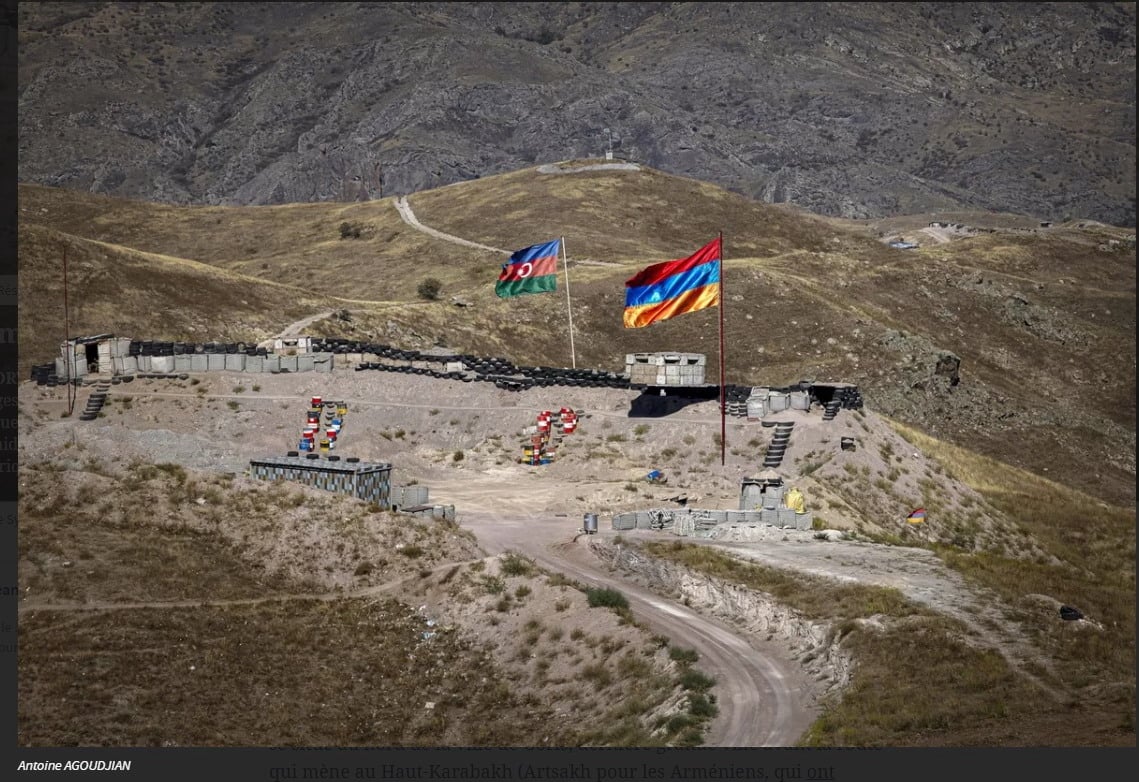
Fresh accusation from Baku in response to Pashinyan’s remarks
Baku has already responded to Prime Minister Nikol Pashinyan’s recent statements. Azerbaijani Foreign Ministry spokesperson Aykhan Hajizade reiterated his country’s longstanding position without amendment:
“Amending the Constitution of Armenia—which poses a direct threat to Azerbaijan’s national security—is the primary condition for peace and a legitimate right of Azerbaijan to demand.”
Hajizade went further, accusing Pashinyan of attempting to “mislead” the international community.
“Even the coat of arms referenced in Article 21 of Armenia’s Constitution reflects the Republic of Armenia’s territorial claims against its neighbours,” he stated.
Hajizade was referring to the depiction of Mount Ararat on Armenia’s coat of arms—an iconic mountain located within the borders of modern-day Turkey.

EU says Armenia and Azerbaijan are close to reaching agreement
“Azerbaijan and Armenia are very close to reaching an agreement. I believe it is in everyone’s interest to sign this peace treaty. One less conflict in the world would be a good outcome,” said EU High Representative for Foreign Affairs and Security Policy, Kaja Kallas, speaking in Tirana.
The European Union has expressed hope that Armenia and Azerbaijan will sign the agreed text of the peace treaty as soon as possible. European Commission President Ursula von der Leyen issued a statement citing her recent meetings with the Armenian Prime Minister and the Azerbaijani President.
“The EU is ready to invest in regional connectivity – and bring the whole region closer together and closer to our Union,” she wrote on her X microblog.
Commentary
Political analyst Robert Ghevondyan believes it is evident that Azerbaijan is not genuinely pursuing peace. He also points to interference from other countries, particularly Russia, as a major obstacle to the signing of the agreement.
“There are numerous and well-founded assumptions that Russia is actively working to obstruct the signing of the agreement currently on the negotiating table,” Gevondyan said. “After all, there could be an alternative version of the treaty that Moscow finds more acceptable.”
According to Ghevondyan, the current draft “leaves Russia on the sidelines.” He also suggests that the early withdrawal of Russian peacekeepers from Karabakh may be linked to the ongoing peace process:
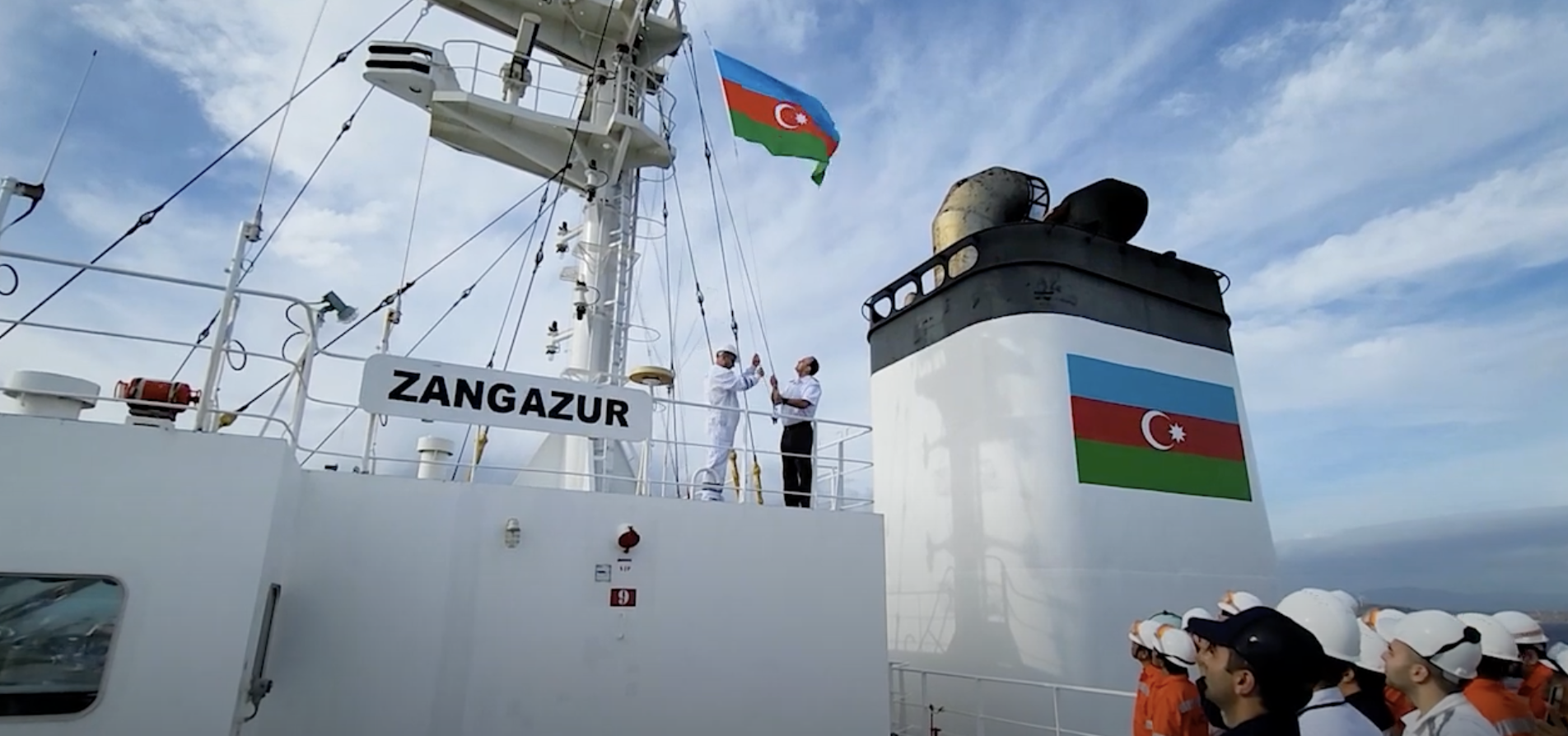
“It is possible that Azerbaijan promised Russia it would not sign a treaty with Armenia—or at least not until Armenia agrees to, for example, a Russian presence in the so-called Zangezur corridor.”
The corridor in question refers to a transport route intended to connect mainland Azerbaijan with its exclave, Nakhchivan. Armenia has expressed readiness to allow such a route, but strongly opposes the use of the term “corridor,” which it sees as implying a loss of sovereignty. Russia, for its part, reportedly seeks to control the road, a demand the Armenian government considers unacceptable.
Ghevondyan notes a growing alignment between Moscow and Baku on certain strategic issues, which he attributes to shifting geopolitical dynamics.
He argues that Azerbaijan’s position in the region was strengthened by the 2020 war in Karabakh and the mass exodus of ethnic Armenians from Nagorno-Karabakh in 2023. These developments have made Baku a key partner not only for Russia, but also for major global actors—from the West to China.
He also points to increased Russia-Azerbaijan cooperation as a consequence of Moscow’s deteriorating relations with the West following its invasion of Ukraine and the ensuing sanctions.
“Baku exports energy resources under the Azerbaijani label,” Gevondyan said, “but in reality, they are Russian. The ultimate recipient of the revenues is Russia.”
Follow us – Twitter | Facebook | Instagram
Pashinyan-Aliyev talks in Tirana
Zaza Shatirishvili, Georgian Dream ideologue widely known to be Bidzina Ivanishvili’s close confidante, suggests that the ruling government curb the accredited diplomatic corps in Georgia because, he claims, the country cannot live with the “constant turmoil” they create.
“The Georgian government must move beyond mere rhetoric and take effective action to curb the revolutionary and anti-Georgian activities of the accredited ‘diplomatic corps,’ because it is impossible for this country to constantly live with quakes and tremors,” writes the GD propagandist in his lengthy letter, permeated with anti-Western narratives and conspiracy theories. The letter, published on May 15, accuses the U.S. and other Western embassies in Georgia of having attempted revolutions and of stirring up unrest and destabilization in the country.
Shatirishvili, a frequent guest on pro-government TV channels who is considered a mouthpiece for the founder of the ruling party, suggests two steps for Georgian Dream to take.
First, he says the GD government should establish a specific staff size quota for embassies. “This quota must be within a reasonable framework,” he writes. He argues that this move will “automatically result in diplomatic missions removing individuals who are not actually employees of their respective foreign ministries, but rather of intelligence services.”
As a second step, Sharitishvili suggests that the GD government restrict some of the embassies’ activities. “The government should require embassies to act according to strictly prescribed diplomatic rights and prohibit them from engaging in any other behind-the-scenes activities, funding funds and NGOs, conducting unknown trainings and activities, which are directly anti-Georgian work,” he writes.
“It’s understandable that the government is successfully dealing with any kind of foreign influence today,” says the GD mouthpiece, “But for the country to finally calm down, all aspects of public and political life must return to their work and disarm themselves of the malign influences that keep Georgia in a constant state of turmoil.”
Shatirishvili believes his proposed moves “will finally and forever return the ambassadors and embassies within the framework of their rights.”
As a close confidant of Bidzina Ivanishvili, Shatirishvili is widely seen as the ruling party’s ideological mouthpiece.
New Letter, Old Conspiracy Theories
The aforementioned suggestions conclude a lengthy letter by Shatirishvili, whom the GD government-controlled media outlets describe as a “philosopher.” The letter, published on May 15, primarily targets the U.S. Embassy in Georgia and former Ambassador Kelly Degnan, while also mentioning the diplomatic mission of the EU, as well as the embassies of the Baltic and Scandinavian states and Poland, accusing them of various “anti-Georgian” activities, including attempts to foment revolutions, incite unrest and destabilize the host country.
“There’s an American joke: ‘The only country that will never have a coup is the United States of America. The reason is simple: there is no American embassy there.’” With this opening, the letter takes its first swipe at the U.S. Embassy, accusing it of “supporting” and “organizing” the 2003 Rose Revolution in Georgia, leading to the United National Movement coming to power, which the letter describes as a “nine-year dictatorship, people’s killings, business racketeering, stirring up the war in our own country, and losing territories” – echoing precisely the points that the GD often emphasizes in its UNM-bashing.
Claiming the U.S. Embassy and its “affiliated” organizations, including Kmara [Enough] and the Liberty Institute, were behind the coordination of the Rose Revolution, Shatirishvili says, “Twenty-two years have passed since that ominous day, yet neither the United States of America nor its embassy in Georgia has altered its nature and goals,” adding, “Unfortunately, the country once called a strategic partner is constantly trying to sweep our country into the wind and fire of revolution, unrest and destabilization, and restore to power that political group which followed their instructions meticulously, without a word.”
The GD ideologue says accredited ambassadors in Georgia are “anything but diplomats.” He adds, “Most of them, especially those designated as ‘diplomats’ from countries controlled by the ‘deep state’ that is, informal oligarchic influences, rudely interfere in the country’s internal affairs, fully coordinate with radical political parties, and, even more, under the directives of their patrons, exercise full control over the so-called opposition.” As an example, Shatirishvili cites Giorgi Gakharia, now an opposition leader, but once the ruling GD’s fierce prime minister. Shatirishvili references Gakharia’s recent testimony before the GD parliament’s temporary investigative commission, and claims that, when Gakharia recounted the events leading up to the arrest of Nika Melia, then leader of the UNM, he revealed communication with Ambassador Degnan, “and the next day after that meeting, the former prime minister committed an unprecedented act of treason against his team and, with the aim to bring down the government, resigned.”
Continuing to accuse the former U.S. ambassador of “constantly trying to pressure” the Georgian government, Shatirishvili then targets the local election monitor ISFED, accusing it of “manipulating” the parallel vote tabulation during the 2020 parliamentary elections. He claims that what was actually a minor error by ISFED sparked a “political crisis.” “And while the Ambassador knew all of this, she still hid this scandalous fact,” he says.
The letter shifts to the start of Russia’s full-scale war in Ukraine, and, in line with GD’s propaganda narrative about Western efforts to drag Georgia into the war, Shatirishvili claims that Degnan played “one of the key roles” in pushing to open a “second front” in Georgia. Shatirishvili criticizes Degnan for seeking a meeting with Bidzina Ivanishvili at the time, claiming the Ambassador “demanded his return to politics and the taking of anti-Georgian steps.”
The letter then turns to recurring to this day allegations by GD and its State Security Service of Georgia (SSSG) regarding training courses held by Peter Ackerman, whom it describes as a “specialist” in organizing revolutions and coups in various countries. Shatirishvili claims Ackerman was brought to Georgia by the U.S. Embassy and held controversial training sessions with NGOs. In 2023, the SSSG claimed that CANVAS, a Serbian CSO that organized the training, was inciting violent unrest in Georgia. CANVAS denied the claims.
The letter then targets other Western embassies in Georgia, including those of the EU, the Baltic states, Poland, and the Scandinavian countries – all of which, it claims, have been involved in “no less dangerous work” than Kelly Degnan. “Georgia’s legitimate government may often point out in a diplomatic and gentle manner that diplomats known for anti-Georgian activities should stay within the framework of their rights, but it is obvious that these calls have no effect,” the letter warns.
Then, the author presents “the biggest problem” with the way embassies are structured. Claiming that around 350 people work at the U.S. Embassy, Shatirishvili implies that this number is too much. ” In his estimate “…even one-fifth of that number is unnecessary for honest diplomatic work.”
The GD propagandist claims on the U.S. Embassy, “Besides those doing purely diplomatic work, the Embassy employs coordinators in various areas who oversee and control media, NGOs, and various funds, organize trainings, often spread their preferred propaganda and agitation through covert means, and roughly interfere in education, medicine, agriculture and other key sectors.”
It adds, “Often, they carry out these actions through the funds and non-governmental organizations that they had founded and [then] bankrupted. Ultimately, when they deem it necessary, they pit the people they have brought up and nurtured against the government while distancing themselves and framing the situation as a ‘civil society protest.’”
Shatirishvili insists that other embassies – pointing to the EU, Baltic states, Scandinavian countries, and “specific European embassies” – work “with similar methods,” but “on a smaller scale.” These “diplomatic missions,” the GD propagandist adds, are controlled by the “deep state,” which he defines as “informal oligarchic governance.” He also says, “If there is still doubt in America about whether the ‘deep state’ still governs or if Trump managed to seize power, there is no such doubt in Europe,” adding, “The EU ambassador is indeed a servant of the ‘deep state’ and acts exactly as the informal rulers and oligarchs instruct him.”
It is after these unfounded, conspirational claims that the letter suggests two steps: for the GD government to take concrete action to impose quotas on embassy staff and to prohibit them from engaging in activities such as funding NGOs…
GD Picks Up the Roadmap?
The ruling party representatives were quick to pick up on the messages voiced by Shatirishvili. Although attacks on Western ambassadors are nothing new, the GD leadership’s latest statements go further in their aggressive tone and lecturing on the roles and boundaries of diplomats and diplomatic missions. EU Ambassador Paweł Herczyński and German Ambassador Peter Fischer were the first to come under GD’s fire in this context.
While declining to give a “concrete response” to Shatirishvili’s letter, GD Prime Minister Irakli Kobakhidze told journalists there is a “bad practice” in Georgia of ambassadors and embassies being “directly involved in political processes,” which, he said, is not their business.
“There is a Vienna Convention, which prohibits diplomatic missions and their representatives from engaging in local political processes,” Kobakhidze lectured, repeating the frequently voiced accusation against EU Ambassador Herczyński, whose actions he said were “opposite” to these rules, claiming the diplomat was engaged in the 2024 pre-election campaign.
“Just several days before the elections, he directly called on Georgian voters to support the radical opposition,” Kobakhidze added. “It was a blatant call. He openly said the policy of Georgian Dream was bad and urged voters to go to the polls to change that policy. The EU ambassador made a clear political, even electoral, call, which is a serious violation of the Vienna Convention,” Kobakhidze insisted.
Although Kobakhidze remarked that Herczyński’s action failed to impact Georgian Dream’s victory, albeit controversial, he called it “very tragic” for the EU’s image itself in the eyes of Georgians. “Discrediting EU institutions to this degree should not happen before Georgian society,” he said. He added, “Since 2012, the Georgian people have watched European and American bureaucrats attempt to reinstate a bloody political force – the collective UNM.”
In a separate comment, Kobakhidze also said, “I’m sure that Mr. Herczyński wants to be an ambassador in Georgia, but unfortunately, the ‘deep state’ does not allow him.”
It is likely that other GD members will parrot the upgraded message box as well.
“It, of course, raises concern that some diplomats are making inappropriate, non-diplomatic, and sometimes even hostile statements, openly supporting and encouraging radical activism and, even more, the revolutionary agendas of these radicals,” GD parliament vice speaker Nino Tsilosani said, quoted by IPN. In this comment, she also targeted Herczyński. Tsilosani, disappointed, said that Herczyński’s remarks about sanctioning GD officials were “at the very least, unfriendly.”
In parallel, GD’s attacks on German Ambassador Peter Fischer continue, as the diplomat openly criticizes the party’s anti-democratic actions. When Fischer commented to journalists today, May 16, that if Georgia truly wants to join the EU, it is not a bad idea to speak poorly about the organization, GD parliament speaker Shalva Papuashvili responded by lecturing the Ambassador on being open to criticism and not silencing dissent. Accusing Fischer of attacking “representatives elected by the Georgian people,” he added, “Such attacks must stop.”
What Now?
Shatirishvili urged the Georgian Dream government to move beyond empty rhetoric and take real action. But with just one day since the roadmap letter’s release, it’s too early to tell if the now-routine insults will escalate into the expulsion of unwanted diplomats or other measures.
“They [GD] received new instructions from their patrons to arbitrarily expel Western diplomats from Georgia. Russia, and the Soviet Union before that, used the same method to expel American and European diplomats,” wrote Salome Samadashvili, a former diplomat and member of the opposition Lelo party, in response to Shatirishvili’s letter.
“They have no intention of ‘normalizing’ with the West in their agenda,” she concluded.
Also Read:
- 15/05/2025 – Kobakhidze Describes Current US-Georgia Relations as “Active-Negative”
- 14/05/2025 – Papuashvili Chronicles “Five Revolution Attempts” in Annual Report to GD Parliament
- 14/03/2025 – Georgian Dream Strongmen Double Down on Deep State Conspiracy Narrative
- 25/02/2025 – Kobakhidze Slams EU Ambassador as “Complicit in Violence”