Categories
South Caucasus News

Textile production in Armenia: once powerhouse, now developing


Textile production in Armenia

Textile production in Armenia

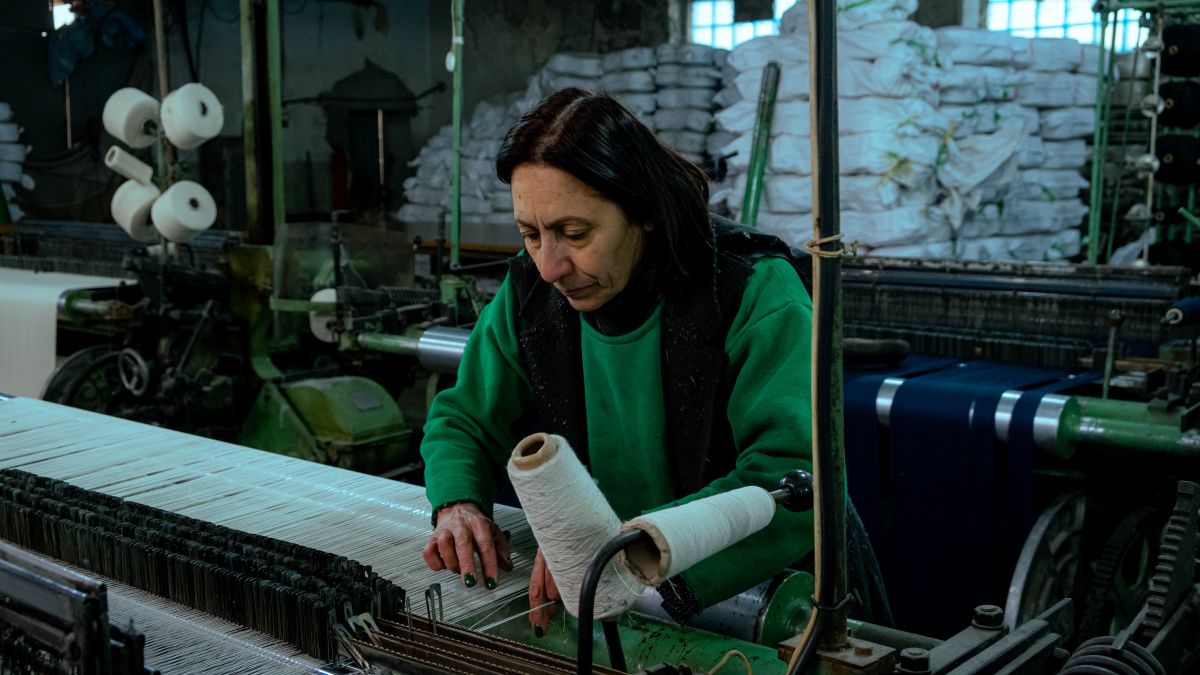
In recent years, Armenia’s textile industry has become one of the country’s comparatively less developed economic sectors — a sharp contrast to the Soviet era, when it was a powerful industry with significant export volumes. In an effort to revive and grow the sector to its full potential, the government has designated textile production as a strategic export sector.

This status brings state support for manufacturers, including customs incentives for imported production equipment, subsidised loans, and tax breaks.

Textile manufacturing is also one of the few economic sectors that provides high levels of employment for women — over 90% of the workforce is female. Today, Armenia has around 260 textile companies employing 7,400 people — a modest figure considering the industry’s former capacity.

Only a handful of major firms manage to export their products. Small and medium-sized businesses face intense domestic competition and a host of other challenges.

Producers discuss the difficulties they encounter — and how they are trying to overcome them.


Fabric producer discusses challenges facing his business

Andranik Khachatryan has nearly 40 years of experience in the textile industry. For many years, he headed one of the workshops at the Soviet-era Kamvol (Worsted) Combine — once a major production facility. He recalls that back then, the plant employed around 3,000 people. Today, only a few companies in Armenia have the capacity to produce at scale and export.

Andranik decided to invest the knowledge he had accumulated over the years into his own production. He has just six machines, but his workshop manages to produce a considerable volume of fabric.

“Our limitations aren’t just about the number of machines, but also about skilled personnel. At the moment, all our employees are women over the age of 65. There are no younger specialists, because there are no opportunities for them to gain professional training. In the past, we had vocational schools, and their graduates would enter the workforce,” he says.
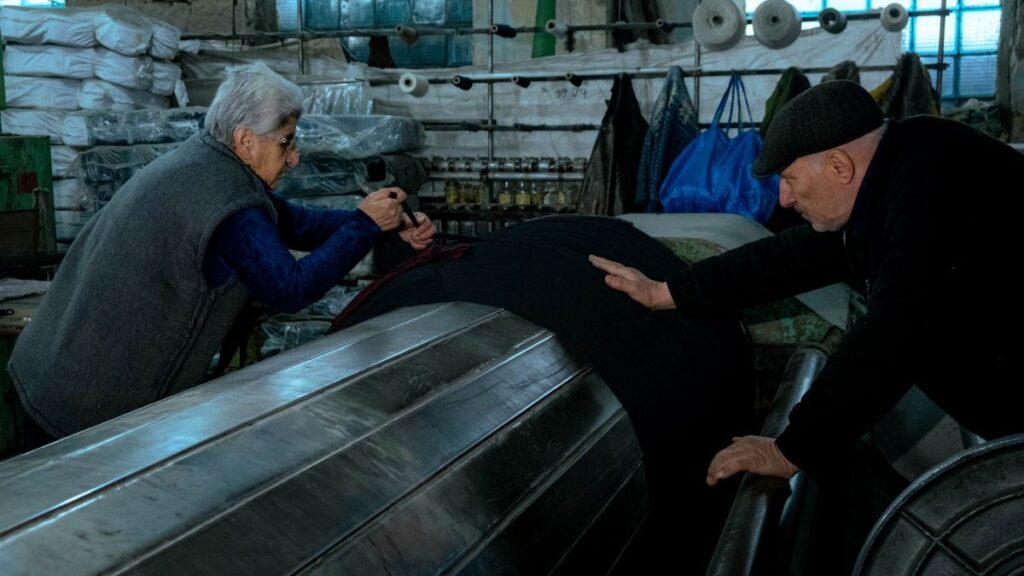
Andranik Khachatryan assists an employee at his workshop. Photo: JAMnews

He explains that large factories don’t face a critical shortage of specialised workers — much of their production is automated. But for small and medium-sized businesses using outdated equipment, the lack of trained specialists will become a serious issue within a few years.

Andranik’s workshop uses both locally produced and imported threads, mainly from China. He says he has no trouble selling his products — around ten types of fabric sell quickly on the Armenian market. His main buyers are garment factories, mining companies, and printing houses.

“Still, it’s hard for a producer to survive and stay competitive. For example, business is quite slow right now because there are factors affecting buyers’ confidence and sales — I’m talking about the political situation, taxes and duties, rising prices,” he says.

He adds that tensions rise among textile producers whenever political circles begin actively discussing the potential reopening of the border with Turkey.

Andranik is convinced that if that happens, Turkey would quickly flood the Armenian market. In that case, small and medium-sized businesses would be forced to shut down, unable to compete. He believes only the largest local manufacturers might be able to hold their ground against Turkish companies — though even that is uncertain.
Clothing producer on selling through online platforms

Small-scale manufacturers have found a solution to one of their key challenges — selling their products on the local market — by turning to online sales platforms.

Alina Kasyan runs a small clothing business from the basement of her home. She employs just four women and specialises in children’s clothing. Most of her raw materials are imported and paid for in foreign currency, which creates difficulties when exchange rates fluctuate.

“It took me a long time to find a supplier abroad offering a reasonable price. But I’ve been in business for three years now and I’m really satisfied. It’s not easy to sell clothing in Armenia. Opening a physical shop doesn’t make sense for us — we don’t produce enough volume. Eventually, I realised that selling online was the way to go,” she explains.

For several months now, she has been working with the online platform Wildberries, with a monthly turnover of nearly one million drams (about $2,577).

“Even though the income is modest, I’m determined to grow the business. I plan to buy two more sewing machines soon and hire two more employees. My goal is slow but steady growth — I want the business to survive even during crises. My employees share this mindset — they’re willing to work for modest pay if it means having stable jobs. I try to motivate them. When sales are good, I offer bonuses or an extra day off,” she says.
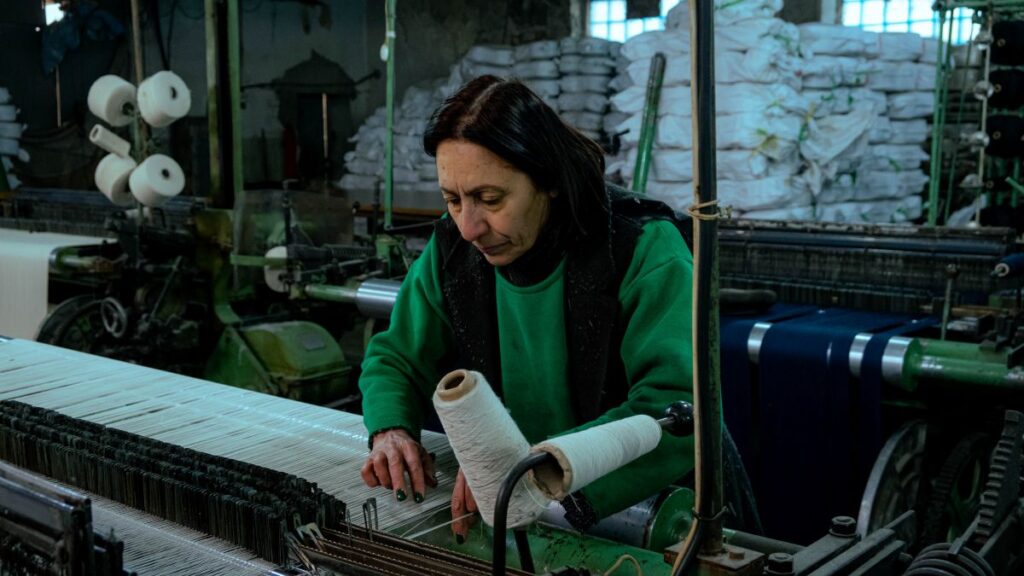
Employee at a textile workshop. Photo: JAMnews

According to Alina, the market is full of uncertainties, and even the slightest political or economic upheaval in the country affects their operations:

“It may sound strange, but the mandatory declaration process for citizens — which at first glance has nothing to do with us — impacted our sales. In January, we sold only three items via our Facebook page, whereas in January last year we sold goods worth 700,000 to 800,000 drams [$1,800–2,060]. Still, I’ve always been helped by optimism. If you have a good product, people will find out about you, and you’ll carve out your place in the market.”

Young specialists lack sufficient training

In Armenia, two universities and several colleges offer programmes that could prepare specialists for the textile industry.

However, textile manufacturers say they are dissatisfied with the level of training provided. They believe that graduates enter the workforce with insufficient knowledge for real production work.

At the end of 2024, Economy Minister Gevorg Papoyan met with representatives of the textile industry. He assured them that the government would continue supporting the sector’s growth, including maintaining tax and customs incentives. To improve local workers’ skills, international experts will also be brought in for training.


Categories
South Caucasus News

President Ilham Aliyev allocates funds for restoration of Pir Hasan shrine – Trend News Agency


President Ilham Aliyev allocates funds for restoration of Pir Hasan shrine  Trend News Agency

Categories
South Caucasus News

World Bank forecasts crude slide: oil exporters face fiscal reckoning


By historical standards, a Brent crude price of $64 per barrel might not sound alarming. But when seen through the lens of recent trends and the broader global economic landscape, the World Bank’s revised oil price forecast carries a message that policymakers — particularly those in oil-exporting economies — can’t afford to ignore.

According to the Bank’s April update, the average price of Brent crude oil is expected to decline to $64 per barrel in 2025, down from around…


Categories
South Caucasus News

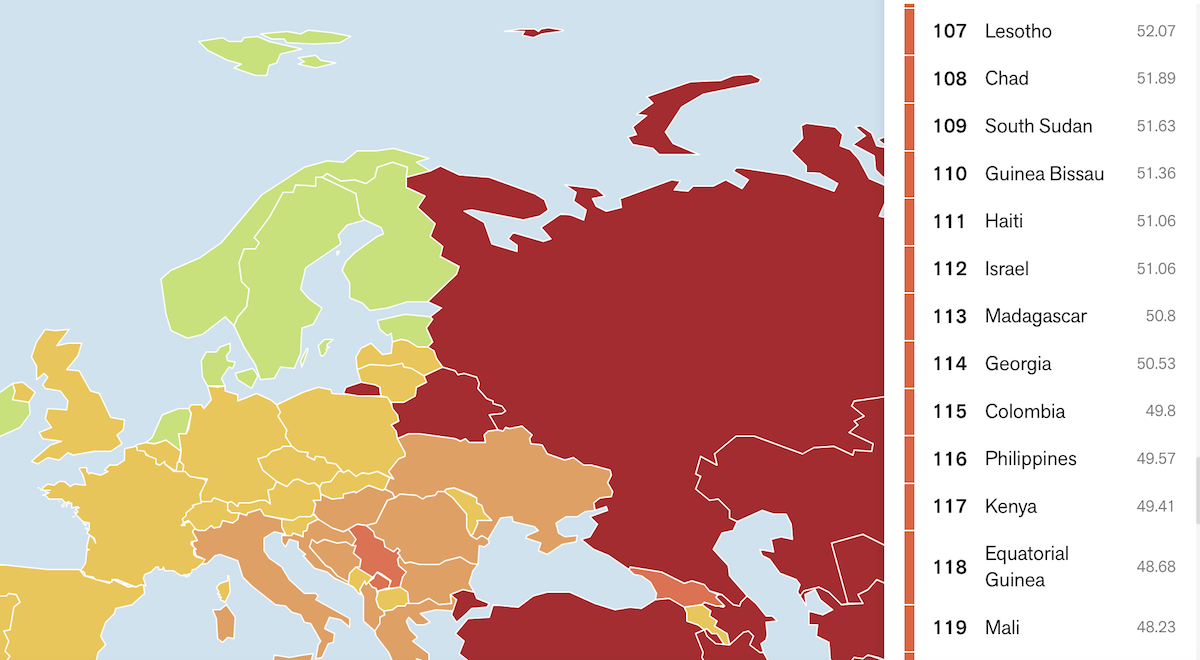
Georgia’s ranking drops in Press Freedom Index – Reporters Without Borders


Georgia’s press freedom ranking declines

Georgia’s press freedom ranking declines

Reporters Without Borders (RSF) has published its annual World Press Freedom Index. Compared to last year, Georgia’s position has worsened — the country dropped 11 places, now ranking 114th.

The report also highlights the repressive actions of the Georgian Dream government and the pressure it exerts on independent and opposition media outlets.

The report emphasises that Georgian Dream has failed to implement EU recommendations that are essential for the country’s EU integration process. According to Reporters Without Borders, media owners often exert control over editorial content, citing the example of Rustavi 2, which shifted its editorial line after being returned to a former owner.

“The environment remains hostile to independent and opposition media, with verbal and physical attacks on journalists becoming more frequent. The adoption of the ‘foreign agents’ and ‘family values’ laws marginalises journalists, imposes censorship, and further shrinks the space for free expression,” the report states.

The report also mentions Georgia’s Public Broadcaster, which “has come under government influence.” According to the authors, the country has been in a deep political crisis since the 2024 elections, amid which a “power struggle for control over television channels” has emerged.

Journalists face not only censorship but also violence. The report highlights cases of attacks on media workers, including by high-ranking officials and during election campaigns.

Media outlets are also grappling with economic hardship. The report stresses the underdevelopment of Georgia’s advertising market, particularly affecting print and online publications, many of which rely heavily on funding from Western donors.

“The financial situation of independent media has further deteriorated due to the adoption of the ‘foreign agents’ law, which harms outlets supported by the West, as well as changes to advertising legislation that hinder fair competition with state-subsidised media,” the report notes.

Reporters Without Borders also highlight the continued imprisonment of Netgazeti and Batumelebi founder Mzia Amaghlobeli and the detention of Batumelebi cameraman Guram Murvanidze.

“Mzia Amaghlobeli, a well-known and respected journalist, was unlawfully detained on 11 January and remains in prison. Her case has come to symbolise the current wave of repression in Georgia — a country once seen as a beacon of democracy in the Caucasus region. She is being harshly prosecuted for her profession, after reflexively slapping a police chief in the middle of a crowd.

She is charged with a serious crime — assaulting a police officer — even though there is no clear legal definition of ‘assault’. The fact that her actions were provoked is being ignored. She poses no threat to society, yet remains in custody, significantly weakened by a hunger strike,” said Jeanne Cavelier, head of the Eastern Europe and Central Asia desk at Reporters Without Borders, in a statement to Civil Georgia.


Categories
South Caucasus News

Netflix video player in Chrome – how to seek? – Stack Overflow


I have been unable to figure out how to do a video seek (automatically advance to a certain point in the video) in the Netflix video player running in Chrome. The currentTime property can be read b…

Categories
South Caucasus News

Azerbaijani companies eye dual listing on London Stock Exchange


Azerbaijani companies may soon enter the prestigious London Stock Exchange (LSE), as discussions are underway to explore dual listings and foreign capital access for firms based in Azerbaijan, Azernews reports, citing the Baku Stock Exchange (BSE).

Categories
South Caucasus News

Georgia will stay on Ireland’s list of safe countries – despite growing political unrest – MSN


Georgia will stay on Ireland’s list of safe countries – despite growing political unrest  MSN

Categories
South Caucasus News

AzInTelecom partners with Gcore to launch ‘AzInCloud’ Platform in Azerbaijan


“AzInTelecom” LLC, part of the Azerbaijan Transport and Communication Holding (AZCON), has launched the new “AzInCloud” platform in collaboration with “Gcore,” one of Europe’s largest technology companies, Azernews reports.

Categories
South Caucasus News

Syrian security forces and Druze gunman deploy in a Damascus suburb, after days of clashes


Categories
South Caucasus News

Russia resumes direct flights to Abkhazia | Reactions from Georgia


Direct flights from Russia to Abkhazia

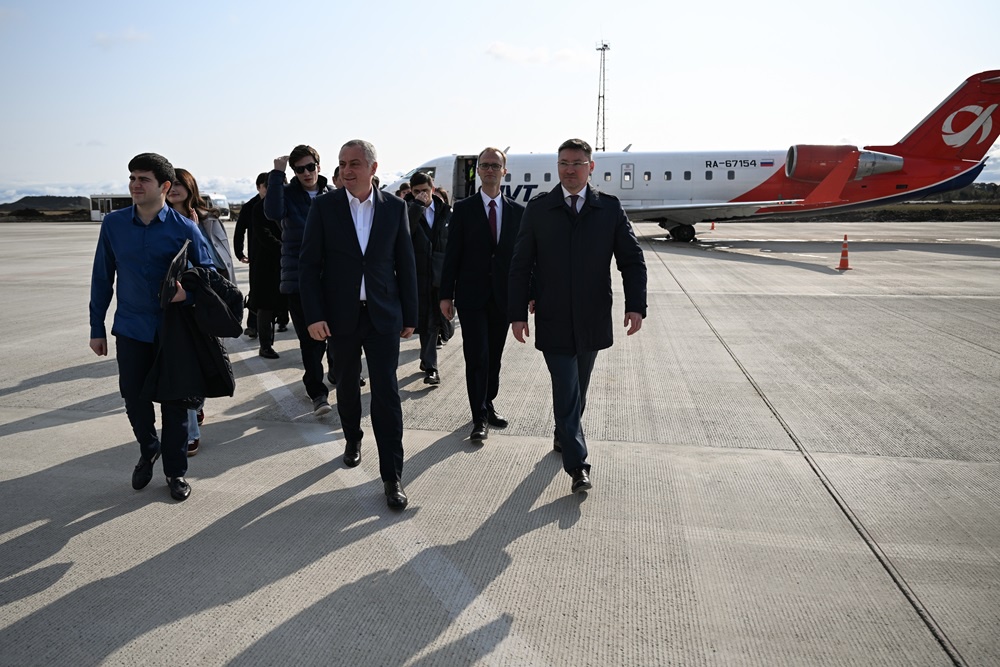
On May 1, for the first time since the 1993 war, a flight from Moscow landed at the recently restored airport in Sukhumi. The flight departed from Moscow’s Vnukovo Airport and marked the resumption of air travel to occupied Abkhazia after more than three decades.

The airline that operated the inaugural flight is ЮВТ Аэро, which is currently under EU sanctions. Other airlines that have scheduled regular flights to Sukhumi are also subject to EU sanctions.

The issue of Sukhumi Airport has long been a point of discussion across Russian, Georgian, and Abkhazian political circles. In Tbilisi, both the airport’s restoration and the reestablishment of direct flights between Moscow and Sukhumi have triggered widespread political and public reactions.

In this article, we’ve gathered the most important and noteworthy responses — how did Tbilisi react to the resumption of air travel from Russia to Abkhazia?

Official institutions

Georgian Civil Aviation Agency

On May 1, Georgia’s Civil Aviation Agency issued a statement declaring that flights between Russia and occupied Abkhazia are “not certified” and constitute a “violation of international norms and Georgian legislation.”

“In the current circumstances, with the Abkhazia region under occupation, Georgia’s aviation authorities are unable to exercise oversight over aviation safety and security,” the statement said.

Ministry of Foreign Affairs

Georgia’s Ministry of Foreign Affairs also responded to the launch of flights. In its statement, the ministry expressed concern over Russia’s “unlawful activation” of Sukhumi Airport and the initiation of air travel in the occupied region of Abkhazia.

According to the ministry, the Russian airline’s operation of flights to occupied Abkhazia constitutes a grave violation of Georgia’s sovereignty and territorial integrity.

The statement further emphasized that the flights between Russia and Abkhazia also represent a serious breach of both the United Nations Charter and the Convention of the International Civil Aviation Organization (ICAO), to which both Georgia and the Russian Federation are parties.

Politicians

Levan Davitashvili.  Direct flights from Russia to Abkhazia

Levan Davitashvili

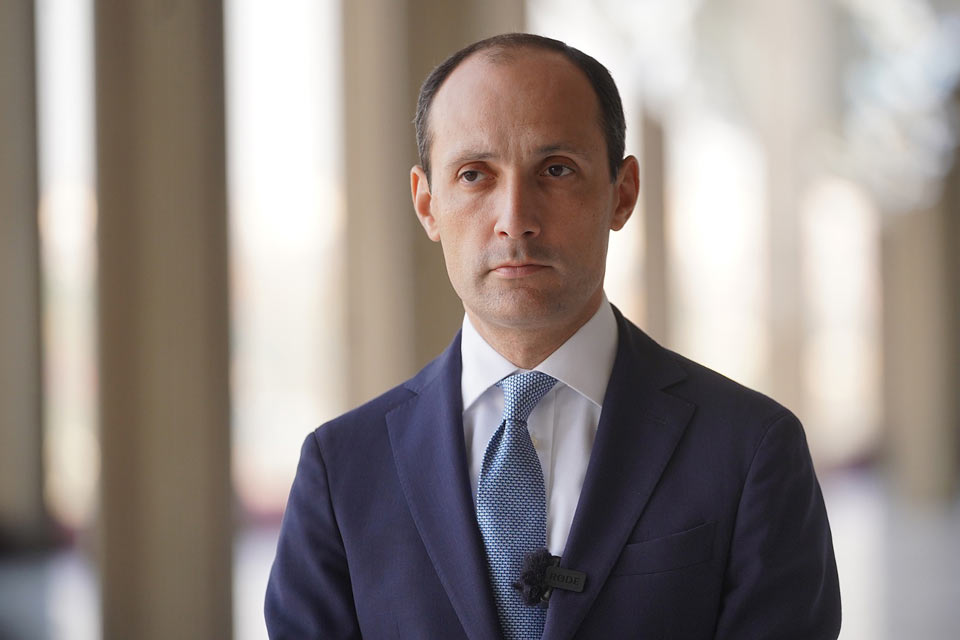
Georgia’s First Vice Prime Minister and Minister of Economy, Levan Davitashvili, also addressed the resumption of air travel between Russia and Abkhazia, stating that Georgia condemns the operation of Sukhumi Airport in violation of international norms.

“Companies that violate the Law on Occupation are not permitted to operate in Georgia. All instruments at our disposal have been used. However, in cases where sanctioned companies proceed with operations, we will have no means to influence them — this is an objective reality,” Davitashvili said.

The Georgian Dream party leader further added that Georgia has always clearly stated its position regarding the occupied territories, and “this is well understood by the Russian side as well.”

Teona Akubardia. Direct flights from Russia to Abkhazia

Teona Akubardia

Teona Akubardia, a member of the opposition party Gakharia – For Georgiacriticized the government’s response, stating that when Ivanishvili’s Georgian Dream declares war on the West and the so-called “party of war,” its claims about strengthening and defending sovereignty become even more blatantly false.

“Naturally, Georgian Dream greets this new dimension of the annexation of part of our country by a real enemy with silent consent,” Akubardia said.

Jemal Gamakharia. Direct flights from Russia to Abkhazia

Jemal Gamakharia

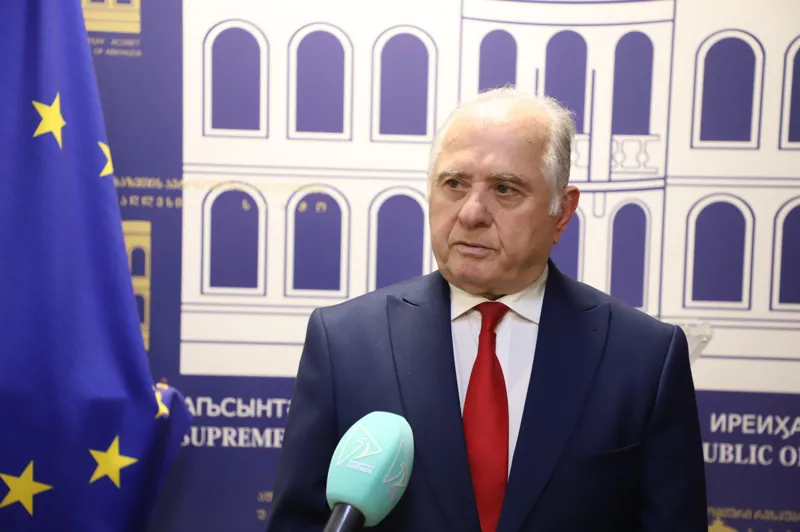
According to the Chairman of the Supreme Council of the Autonomous Republic of Abkhazia (in exile) Jemal Gamakharia, the Sukhumi airport is a Russian airport and part of the broader annexation process.

“I am convinced that its primary use will be military rather than civilian. Georgia, the European Union, and NATO must intervene based on their own interests to halt its operation,” Gamakharia said.

Experts and Civil Society

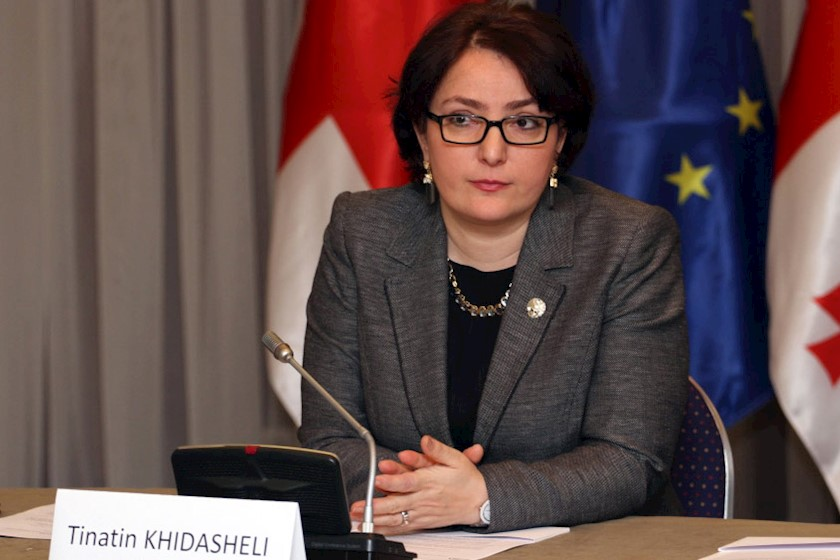
Tina Khidasheli, founder of the Civic Idea organization.  Direct flights from Russia to Abkhazia

Tina Khidasheli

Tina Khidasheli, founder of the Civic Idea organization and former defense Minister, stated that if Georgian Dream had any sense of national dignity, it would respond to the resumption of air travel to Abkhazia by suspending all flights between Georgia and Russia.

“This is the only appropriate measure under such circumstances. Then let the Russians decide what they prefer — for seven people to fly to Sukhumi, or for seven thousand to use the rest of Georgia’s airports for the purposes they currently serve,” Khidasheli said.

Organizations working on conflicts

A joint statement was issued by several organizations and an independent expert working on conflict issues. The organizations criticized the Georgian government’s inaction. According to the statement, Russian airlines continue to operate freely in Georgia, and the Georgian Dream government has numerous tools at its disposal to exert pressure on Russia — failing to use them is described as “a crime.”

“We demand that the so-called Georgian Dream government take appropriate measures to stop Russia’s ongoing annexation. We also call on pro-Western opposition parties to intensify pressure on the occupying state with the involvement of our strategic partners, in order to halt this continuing annexation process,” the statement reads.

Zaza Bibilashvili, head of the Chavchavadze Center.

Zaza Bibilashvili

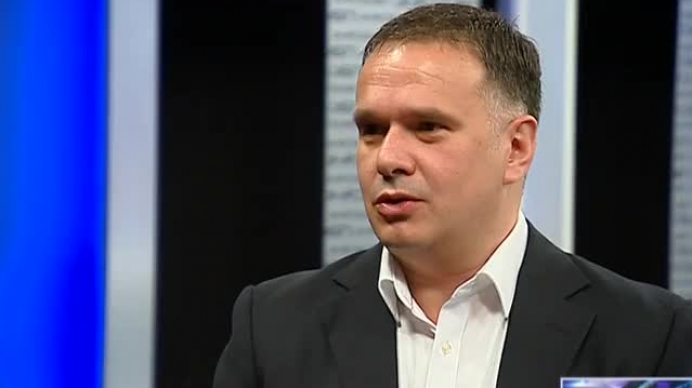
Zaza Bibilashvili, head of the Chavchavadze Centerstated that flights between Abkhazia and Russia could not have resumed without the consent of Georgian Dream.

“Sukhumi Airport was closed during Shevardnadze’s time, and now Georgian Dream has ‘achieved’ its reopening under their rule,” Bibilashvili said.

He also criticized Georgia’s State Security Service, claiming that Abkhazia is not treated as a real issue by the agency. “When someone is kidnapped, what do they do? They release a statement and activate the ‘hotline.’ Is this a press center or a security agency?”

Bibilashvili concluded by saying, “the state’s security has been compromised, as it now serves the comfort of one family and the geopolitical interests of a particular state — and that state is not Georgia.”

Paata Zakareishvili

Paata Zakareishvili

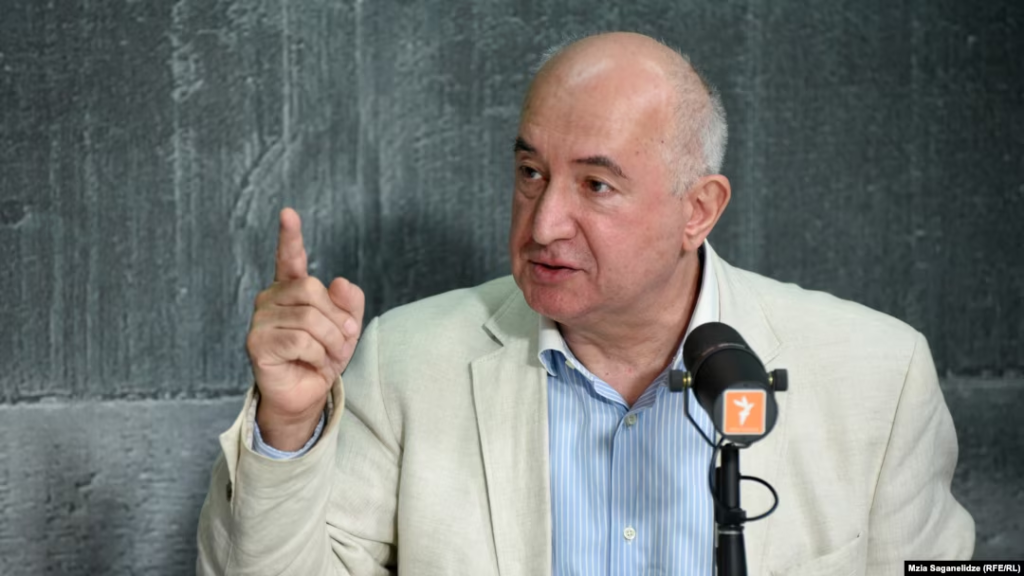
Conflict studies specialist Paata Zakareishvili believes that the planes will mostly operate cargo flights. Zakareishvili explains Moscow’s interest in rehabilitating the Sukhumi airport by pointing to Russia’s invasion of Ukraine and the subsequent sanctions.

“They only started seriously talking about this airport after Russia’s invasion of Ukraine. Before that, Russia itself claimed it was unprofitable, since the Sochi airport was available. But once the war began and southern Russian airports were closed, this issue began to be actively discussed, and the airport was fairly quickly restored following the appropriate decision,” Zakareishvili says.

The conflict expert also commented on Georgia’s role and reaction in this matter: “Most likely, it is a collaboration. I’m almost certain that if Georgia makes a strong statement, it would be easy for Lavrov to say: ‘Excuse me, my friends, your interests are involved here too — part of the money is going into your pockets.’ I’m sure Georgia knows exactly how Russia would respond if it suddenly makes tough statements — about the flights, and about the terminal in Gali. I think Georgian companies and firms have an interest in this, and these are some sort of joint projects.”