
Some of the terror crimes committed by the Armenian state against the population of Azerbaijan have been revealed
Day: February 11, 2025
‘#KashPatel orchestrating…’: #Durbin accuses #Trump‘s #FBI pick of covertly directing #bureau #firings | 🔴 Catch the day’s latest news here ➠ https://t.co/fUJhOiYamT 🗞️ pic.twitter.com/omEL2Sfbvn
— Economic Times (@EconomicTimes) February 12, 2025
Our public discourse as a community is often serious—and for good reason. The future of the Armenian homeland, assimilation in the diaspora and our political disunity are just a few of our constant concerns. For a people talented enough to prosper but ever mindful of the survival journey, there never seems to be enough time to enjoy what we have developed as a civilization. The threats and challenges seem to consume us. However, sustaining our commitment also requires us to take the time to laugh, to enjoy and to remember.
Nostalgia, in the correct doses, helps us recall the people and experiences that shaped us. It personalizes our collective history, and we pass down these moments to succeeding generations as part of our family stories. Each of us has the ability to overlay our personal history onto the general history of our global nation. This is what builds sustainable identity. While our families’ experiences during the genocide are a common theme, our lives in this country, the Middle East and Armenia offer a more contemporary perspective on how we build identity in response to global events.
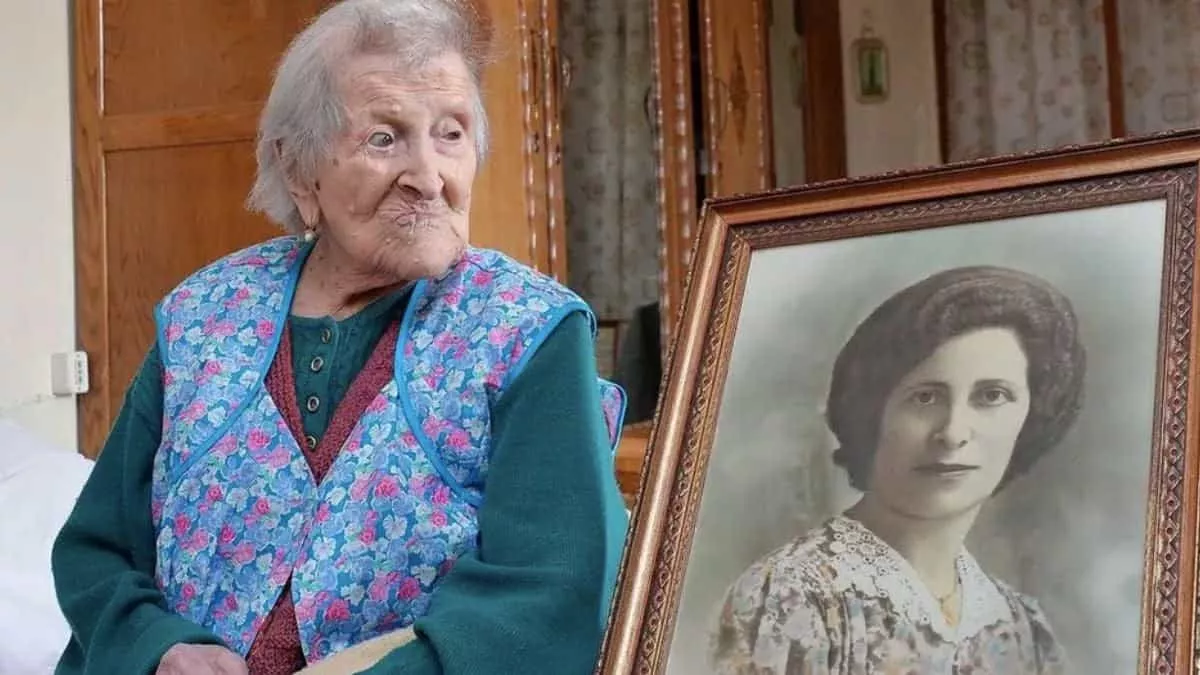
My generation, commonly referred to as baby boomers, was particularly fortunate to have grandparents who were part of the survivor generation. Grandparents are an essential element in the uniqueness of the Armenian family. They instill the foundations of our ethnic and religious identity. They usually have a special relationship with their grandchildren, opening doors to knowledge. In sharing a particular story about my grandparents, it is my hope that you will find a common theme of remembrance—one that warms your heart and can be passed down to your own children and grandchildren.
Like many of you, we grew up adoring our grandparents. In addition to their kindness and love, their wonderful accents reminded us of our connection to the Armenian homeland. Each had stories of survival that they were naturally reluctant to share but wavered under the urging of their beloved grandchildren. Our parents were essential, but our grandparents held a special bond—they were our vanguard for family and ethnic identity. My maternal grandparents were such examples. Both arrived in this country before the genocide. Grandpa Takvor, born in the Dardanelles, escaped harrowing circumstances to reach these shores. Grandma Nevart emigrated from Cyprus as a child. They met, married and settled in New Britain, Connecticut, becoming charter members of St. Stephen’s Armenian Church.
Grandpa was an original trustee, and Grandma was very active in the Armenian Relief Society and church guild. For 50 years, Grandpa ran his own shoe cobbler and repair business. I was amazed that he was able to support a family of three children with that business through the Great Depression and a World War. Grandma worked in a garment factory to help with the family’s needs. They purchased a three-decker home in New Britain, living on the first floor—a home we visited frequently and where we built incredible memories.
New Britain is a densely populated community with many two and three-family homes. Yet, our grandparents’ backyard offered serenity from the busy streets. It seems like all our grandparents’ yards were perceived as more entertaining, with amenities we didn’t have in our “modern” homes. This was our magic kingdom. The three decker was on a fairly narrow city lot, but literally every square foot was utilized. The front yard was small and hedge trimmed to the sidewalk. We hardly ever spent time in the front. The backyard was our sanctuary.
A long driveway to the garage ran along the right side of the property. A side porch served as the main access, and the backyard was divided into two sections. Near the back of the house were two grassed and hedged areas, divided by a sidewalk that led to a rose trellis that served as the entrance to the “Garden of Eden.” This area was lined on the left by tall hedges that offered walled privacy. We called Grandpa’s backyard the Garden of Eden because he had planted every imaginable fruit tree in his backyard—apples, peaches, plums and cherries, to name a few.
Along the driveway, 125 feet of Concord grape vines provided a perfect border, their bounty turned into jelly, preserves and refreshing summer juice by Grandma. A vegetable garden flourished alongside, providing us with a great yield for family gatherings. At the center stood a large apple tree, shading us from the sun while also providing shelter from the rain. Beneath it, Grandpa built a fireplace for kebabs, strategically placing chairs around it. It was here where I first listened to his wisdom and humor while many lamb kebab dinners were prepared. Grandma Nevart would come out with her apron on (didn’t all our grandmothers wear aprons all day?) to check on the grilling and time the pilaf’s readiness.
At the rear of the property adjacent to the garage was Grandpa’s chicken coup, which provided us with fresh eggs. The reddish soil of Connecticut remains vivid in my memory—I recall helping my grandfather till the land or pull weeds. Sometimes, my sisters and I would climb the tenant stairwell to help Grandma hang laundry on the clothesline, but to be honest, more often than not, we were mischievously peering down from above.
We were taught to greet and hug our grandparents before starting any of our youthful adventures. This was never an issue because we loved being with them. Inevitably, we would excuse ourselves to the backyard where a world of excitement and challenges awaited us. We probably felt most comfortable because the area was secure and “cozy”—largely shaded, except for the garden areas, with natural borders on both sides.
Our parents were happy because we were safe. We were thrilled with the freedom. There was always something to do in the garden. Grandpa had laid a network of water pipes that created easy access for hoses to water the plants and trees. Aside from the “chores,” there was ample opportunity to learn—whether about cooking, family history or simply to relax with the “adults.” Often, after dinner, when the adults stayed inside, we had the garden to ourselves, playing until darkness fell.
Our grandparents brought a bit of the old country with them into their backyards. All of these gardens grew eggplant long before it became fashionable in American cuisine. String beans were a common staple for fasulia stew. Our parents emulated their parents, which is why the backyard garden is still prevalent in Armenian homes. In the midst of this natural beauty, our grandparents would tell us stories of their youth and how they came to Connecticut.
On Sundays, we always went to church. My grandfather was a gentleman who would walk the 125 feet up the driveway to get the car and pick up Grandma and the rest of us at the side porch. St. Stephen’s only has street parking, so it was my good fortune to stay in the car with Grandpa after the drop off and park the car. It was always a proud moment for me to walk into church holding his hand. After church, we would return to their home and the backyard sanctuary.
Thankfully, many of the current generation have loving relationships with their grandparents. I feel a bit of sadness when I come across Armenian families challenged by distance. It is particularly impactful when one considers the influence of grandparents in this turbulent world.
Regardless of location, we have many common themes: the garden, the fire pit, the comfort, the stories and a bit of our past preserved. What I have learned from those wonderful memories is not just nostalgia.
I have been to many “grandparents’ backyards” over the years. Regardless of location, we have many common themes: the garden, the fire pit, the comfort, the stories and a bit of our past preserved. What I have learned from those wonderful memories is not just nostalgia. It was a lesson in values and establishing our personal foundation. During times of adversity, I think often of those who provided the love, comfort and security that grew our self-esteem and confidence. It is true that we had fun and built great memories. It is equally true that these backyards are where the generational transfer of values took place. This is why our memories of these times endure.
Several years ago, my son and I took my mom and her sister back to New Britain to visit the places of their youth. The house was still there, with the backyard reasonably intact. But about two years ago, I returned and was astonished to discover that the house was destroyed by a fire—the backyard, now an empty lot. I walked through the lot, mentally mapping out where certain landmarks once stood. The only reference point was the pole where the grapevines began.
Yet, as I stood in the emptiness, I realized that the “Garden of Eden” was intact in my memory. Yes, the land may now be barren, waiting for the next generation, but I could still see the fire pit, the garden and the fruit trees, smell the kebab and hear my grandparents’ voices. Those are experiences deeply etched within my memory and have an eternal place in my heart. I would encourage each of you to recall those moments in your youth, consider their impact and share them with your families.
Each generation has unique experiences that significantly influenced their lives. This was one of our moments. Share it with others. It will warm your heart, inspire others and strengthen your family identity. While we deal with the struggles of our current reality, take the time to laugh and remember. It will energize your soul.
Author information

The post The mystique of our grandparents’ backyards appeared first on The Armenian Weekly.