
Putin offers ‘comments and assessments’ on Armenia’s EU aspirations https://t.co/Z1hXpUugRb
Armenian Prime Minister Nikol Pashinyan and Russian President Vladimir Putin have held a telephone conversation, during which they have discussed Yerevan’s approval of a draft law that…— Michael Novakhov (@mikenov) January 20, 2025
Day: January 20, 2025
 |
Michael_Novakhov shared this story from |
Armenian Prime Minister Nikol Pashinyan and Russian President Vladimir Putin have held a telephone conversation, during which they have discussed Yerevan’s approval of a draft law that would see the commencement of Armenia’s EU negotiations.
On Friday, both Pashinyan’s office and the Kremlin published statements about the call, with Armenia publishing a relatively shorter version of the statement, compared to Russia’s.
According to a statement from Pashinyan’s office, the two leaders ‘discussed the results’ of Armenia’s presidency of the Eurasian Economic Union (EAEU) in 2024, ‘upcoming activities within the framework of the EAEU, as well as a number of issues on the Armenia–Russia bilateral agenda’.
The Russian side noted that the call took place at Armenia’s behest, and that they ‘acknowledged the tangible, practical impact’ of the joint work within the EAEU, including for the Armenian economy.
The statement concluded with a paragraph noting that Pashinyan had ‘explained the situation with Yerevan’s recent steps in its relations with the European Union’, and that in response, Putin ‘offered his comments and assessments’.
The Armenian government’s approval of a draft law which would begin Armenia’s process of joining the EU swiftly stirred Russia’s disapproval in the recent weeks since it was announced.
Several high-ranking Russian officials, including Russian Deputy Prime Minister Alexei Overchuk and Foreign Minister Sergey Lavrov, noted that Armenia’s accession to the EU is ‘incompatible’ with its EAEU membership, and reminded Armenians of the benefits the country receives as part of its membership to the economic bloc.
Overchuk said that Moscow considered Yerevan’s approval of the bill to be ‘the beginning of Armenia’s withdrawal from the EAEU’.
Armenia’s energy security
The Kremlin’s statement noted that the Russian and Armenian leaders also discussed issues related to the energy sector, noting that the two discussed ‘several current aspects of further deepening integration, primarily in the energy sector’.
The issue was also included in the Strategic Partnership Charter signed by Armenia and the US last week. The Charter noted that ‘Armenia and the United States intend to explore opportunities to increase and diversify Armenia’s energy production and supplies’.
‘This includes the development of a civil nuclear power program with the highest standards for nuclear safety, security, and nonproliferation; efforts to enhance energy security and efficiency, including through a significant increase in the share of renewables in Armenia’s energy mix; and measures to increase Armenia’s energy connectivity to regional and European markets’.
In July 2024, the head of Armenia’s Security Council said that Yerevan and Washington are in ‘substantive’ negotiations to build a new nuclear power plant in Armenia.
However, months earlier, Armenia also courted Russia’s state-owned nuclear agency Rosatom in December 2023 to discuss the extension of the Metsamor nuclear power plant until 2036, with talks ‘ongoing’ about building a new reactor at the aging facility.
Freefall of bilateral relations
Despite Russian officials stating that the development of a strategic partnership with the US was Armenia’s sovereign right, they nonetheless criticised the decision.
Lavrov also admitted that bilateral relations between Armenia and Russia are ‘not without difficulties’, but said that ‘dialogue continues’.
Last week also saw another crisis in Armenian and Russian relations, as the Armenian Foreign Ministry announced that Russia’s Ambassador to Armenia had been summoned and handed a letter of protest concerning a programme aired on Russia’s state-run TV outlet, in which statements were made against Armenia’s sovereignty and territorial integrity.
High-Tech Industries Minister Mkhitar Hayrapetyan then suggested that the programme could be banned in Armenia.
Russian Foreign Ministry spokesperson Maria Zakharova stated that Armenia’s ‘reaction is puzzling because we are talking about the statements of a journalist’, adding that they had heard from Yerevan that Armenia is committed to freedom of speech.
242 articles•0 Followers
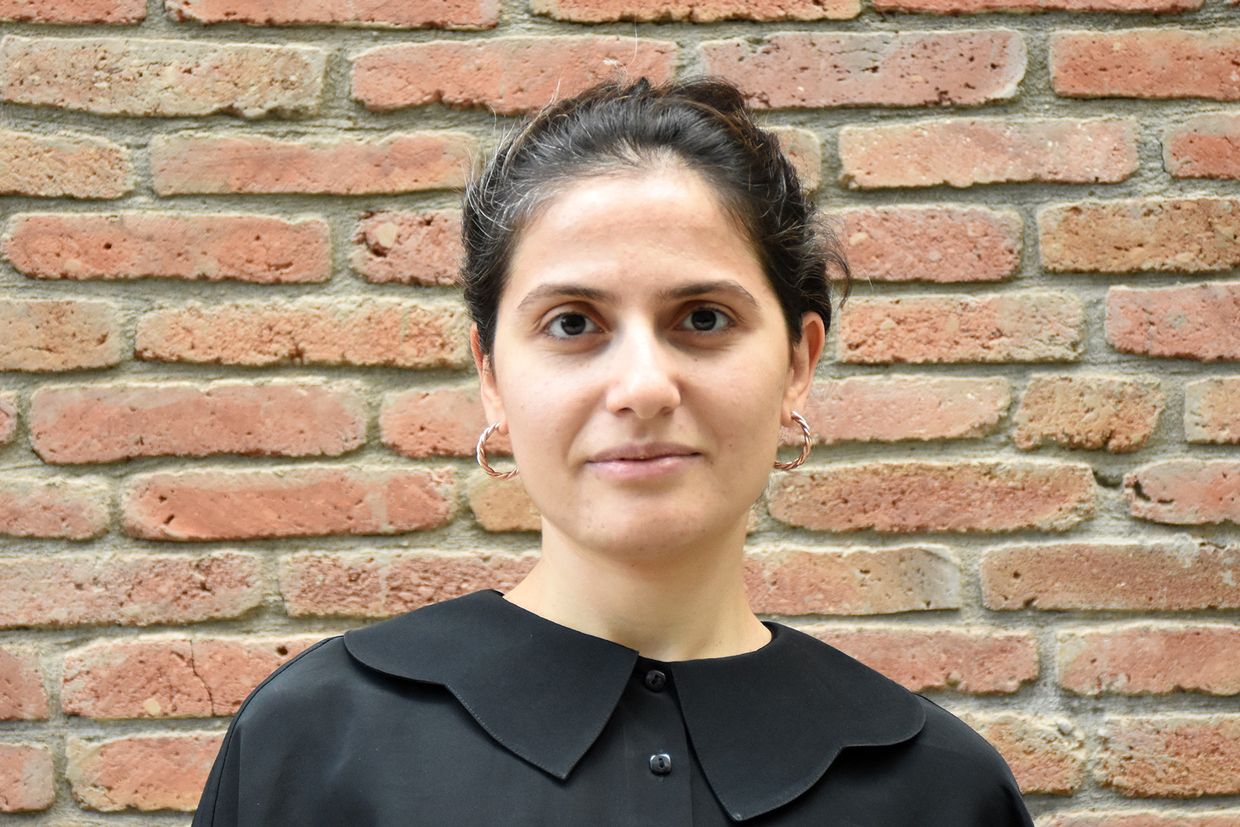
A journalist since 2016, Arshaluys specialises in fact-checking and open-source investigations, with a focus on the Nagorno-Karabakh conflict, politics, and social and gender issues. She is also a strong advocate for media literacy and closely follows Armenia’s media landscape.
The World Economic Forum (WEF) is set to hold its 2025 Annual Meeting from January 20 to 24 in Davos-Klosters, Switzerland. Under the theme “Partnering for a Smarter Century,” the forum aims to bring together nearly 3,000 leaders from over 130 countries, including 350 government representatives and 60 heads of state and government.
❗️It’s not a “struggle for independence” of #Azerbaijan in Jan. 1990. These’re monstrous massacres of #Armenians. A whole week (!) the Kremlin didn’t react to the crimes of 🇦🇿 bandits. It’s only on 20.01.1990 that Soviet troops entered #Baku to stop the rampaging, mad crowd. pic.twitter.com/GZsSG8QPo6
— Karina Karapetyan (@KarinaKarapety8) January 20, 2025
Georgian Dream regime PM Irakli Kobakhidze has vowed to inflict a “decisive blow” to what he calls “liberal fascism” and “radicals” in 2025.
“2025 will be critically important for our internal politics. We must deliver a decisive blow to the radicals in our country. Radicalism… pic.twitter.com/7KbHzzSR49
— Formula NEWS | English (@FormulaGe) January 20, 2025
Emma Baghdasarova, a former resident of Baku and now a U.S. citizen, recounts the Baku pogroms of January 1990:
After the Sumgait [pogroms], when people started leaving Sumgait, beatings began in Baku – here and there. But it wasn’t yet like what happened in 1990. This was the… https://t.co/94ozKj70Yz pic.twitter.com/LRQ9X51TTN
— Ararat Petrosyan (@araratpetrosian) January 20, 2025