Categories
South Caucasus News

Opinion: Reforms in Abkhazia are inevitable, and Moscow must take this into account


Russia resumes electricity supplies to Abkhazia

Russia resumes electricity supplies to Abkhazia

A few months after cutting off Abkhazia’s “humanitarian electricity” and opting to sell power at market prices, Russia has reversed its stance. Starting December 23, Abkhazia will once again receive free electricity from Russia, helping to alleviate the energy deficit and reducing rolling blackouts from 10 hours a day in December to just four hours.

“Abkhazia is a country close to us. We recognize it as a state. They are our neighbors, and we wish them stability, prosperity, and happiness—naturally, alongside us,” stated Dmitry Peskov, the Kremlin’s spokesperson, commenting on Abkhazia’s energy crisis.

Russia’s generous gesture followed an appeal by Badra Gumba, the acting president of Abkhazia. However, JAMnews’ Abkhaz editor, Inal Khashig, believes there is no connection between the two events.

Inal Khashig:

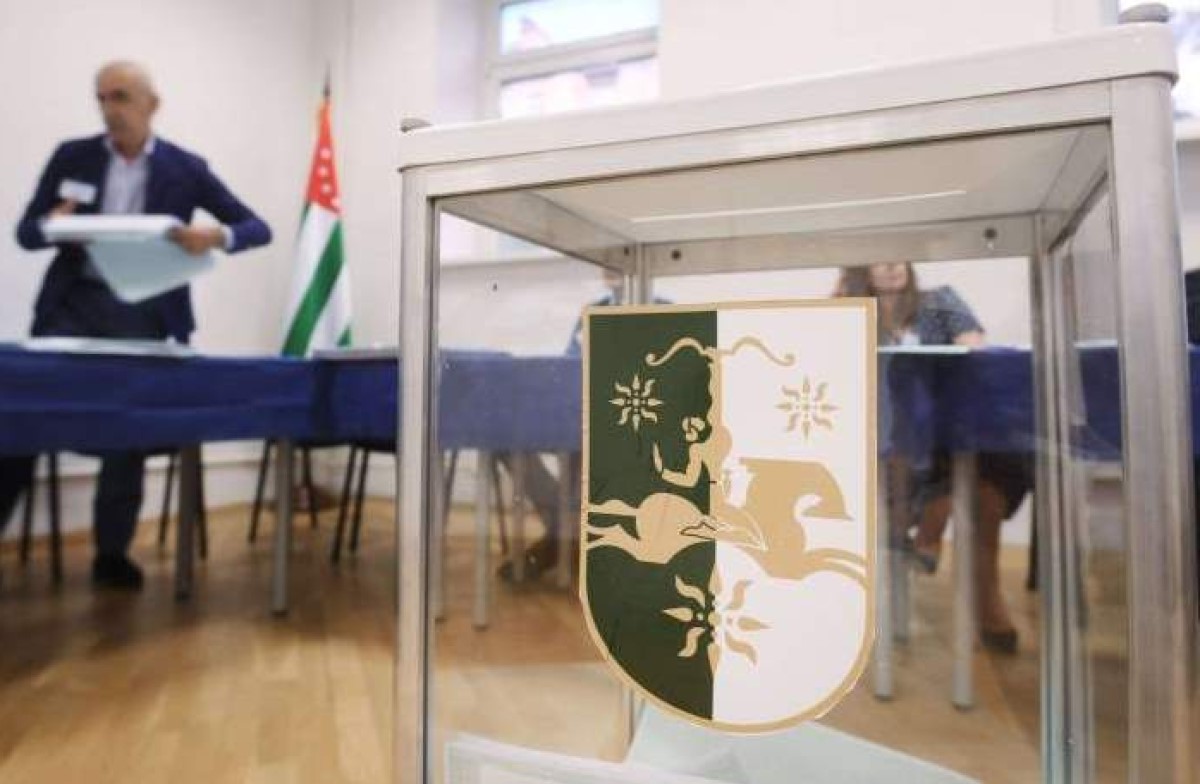
Pro-government Abkhaz media unanimously claim that Russia restored energy supplies to Abkhazia thanks to Badra Gumba, whom Moscow is backing in the upcoming presidential elections scheduled for February 2025.

The opposition, of course, disputes this, arguing that the Kremlin’s decision was made earlier, even before Gumba’s official appeal. However, in my opinion, this claim sounds rather unconvincing.

In the previous elections of 2020, the Kremlin seemed largely indifferent to whom the Abkhaz people would elect as their president, as there are no politicians in Abkhazia inherently disloyal to Russia. But now the situation is different. Moscow’s approach has shifted significantly, and it is clearly betting on Badra Gumba, viewing him as the successor to former President Aslan Bzhania, who made numerous promises to Russia but failed to deliver on them.


Moscow likely hopes that Badra Gumba will succeed where Bzhania failed—pushing through agreements and legislation beneficial to Russia but unpopular among Abkhazians.

However, it would be wrong to assume that the Kremlin is ignoring the sentiments prevailing in Abkhaz society. Even if Badra Gumba is elected as the new president, he will not be able to govern as Aslan Bzhania did, assuming he could make decisions unilaterally without broader approval. Gumba will find it impossible to pass unpopular laws without facing the same fate as Bzhania, who was ousted.

But it’s not just about Gumba—whoever takes the presidential seat, things cannot continue as they were. The presidency in Abkhazia clearly needs a reset. Reforms are inevitable. This is a public demand, a societal expectation that the new president will have to heed. And Moscow must take this into account.


Terms, place names, opinions and ideas suggested by the author of the publication are their own and do not necessarily coincide with the opinions and ideas of JAMnews or its individual employees. JAMnews reserves the right to remove comments on posts that are deemed offensive, threatening, violent or otherwise ethically unacceptable.

Russia resumes electricity supplies to Abkhazia


Categories
South Caucasus News

Azerbaijan’s customs revenue spikes


The State Customs Committee of Azerbaijan has shared information regarding the budget revenues through the customs line for the period from January to November 2024, Azernews reports.

Categories
South Caucasus News

President Ilham Aliyev approves charter and procedure using funds of Azerbaijan Business Development Fund – decree – Trend News Agency


President Ilham Aliyev approves charter and procedure using funds of Azerbaijan Business Development Fund – decree  Trend News Agency

Categories
South Caucasus News

Former Armenian ombudswoman unleashes Turkophobic propaganda to hamper peace process


Armenia’s unstable political structure and internal conflicts always make it a source of fuel for foreign and domestic opposition groups to ignite a conflict in the South Caucasus. Since the disputes are mostly focused on territorial claims and ethnic minorities, the topic is constantly interpreted in different forms on the agenda, and even at the international level, unjust and groundless accusations of different parties cause serious agitation.

Categories
Selected Articles

New Evidence of Alleged FBI Malfeasance Emerges in Sex Cult Founder’s Case


Michael_Novakhov
shared this story
.

New evidence has emerged that allegedly shows the FBI manufactured and planted evidence to secure the conviction of NXIVM sex cult founder Keith Raniere, according to the latest appeal for his release.

Raniere was convicted in October 2020 of racketeering, sex trafficking, forced labor conspiracy, and wire fraud conspiracy and was sentenced to 120 years in prison. He was also fined $1.75 million.

If the FBI were shown to have acted improperly, it could have implications beyond the case if Congress investigates, as well being a blow to public trust in an agency that is already expected to face a major shake-up after Donald Trump takes office early next year.

Evidence of government malfeasance, provided in the appeal documents, included more than 100 photos planted across a digital camera memory card and backup hard drive, according to court documents filed in the Second Circuit Court of Appeals Oct. 28 as part of an appeal seeking a new trial. Evidence also included property search records that contained anomalies and improprieties – revealing a staged crime scene, according to court records filed in the Eastern District of New York on Nov. 28 as part of a motion to vacate the original sentence.

“The search of 8 Hale (a property where Raniere had resided) was deliberately and fraudulently staged and that search scene collection photographs were also deliberately staged,” wrote Mark Daniel Bowling, a former FBI agent and former agent for the Department of Energy’s Office of Inspector General, one of the experts hired by Raniere’s legal team.

“Further, I agree that at least four of the nine search team members were complicit in this fraudulent conduct, with two of them as key orchestrators,” he added. “During my nearly 20 years in the FBI, I have never seen a search executed with this level of corrupt and illegal behavior,” added Bowling referring to the search on March 27, 2018.

The FBI declined comment to Newsweek on the case.

Raniere’s legal team has hired seven digital forensic experts, four of whom are former FBI examiners, and a former FBI crime scene and senior evidence technician photographer for the new appeal.

How was Raniere Convicted?

Raniere founded NXIVM as what he called a self-help group in the 1990s and was accused of creating a sex cult known as DOS within the organization. Its female members said they served as “slaves” and “masters.” Multiple women testified that they joined DOS after being told it was a “women’s empowerment” group. They said they later discovered they would be expected to have sex with Raniere, send him nude photos and have his initials branded onto their bodies.

One piece of evidence was an alleged late discovery, 11 months after the search was conducted, by agents of more than a dozen images of a female that the FBI said was a minor, based on the photo’s metadata showing it was taken in 2005, when the female was under age 18. The woman, with the pseudonym Camila, said in a victim impact statement she had a sexual relationship with Raniere.

Within a few weeks of when the photo evidence and child pornography charges were filed, Raniere’s five codefendants all took plea deals, making it harder for his defense to argue for his innocence.

What are the Allegations of Malfeasance?

However, the experts now hired by the defense say in a report that the photo metadata had been changed to make it appear that Camila was under 18 when the pictures were taken, while Raniere’s lawyers say she was a legal adult when a relationship began.

Raniere’s lawyers previously filed a motion for a new trial alleging malfeasance by the FBI on the grounds of the allegedly manufactured photo evidence, which was rejected in April by Judge Nicholas Garaufis of the Eastern District of New York. They filed a new appeal on that case in October.

In its own filing responding to the defense’s motion for a hearing on a new trial the government admitted that an unidentified FBI photo technician had accessed critical and unpreserved evidence, which the defense’s experts say was an unprecedented act that taints the evidence.

“If he’s not a digital forensic examiner, why is he taking a piece of digital forensic evidence and plugging it into his machine?” asked Micah Sturgis, an independent forensics expert and owner of Sturgis Forensics LLC, who reviewed the reports by the seven forensic experts for Newsweek but is not involved in the case. He reviewed the initial and subsequent reports by the former FBI experts for the initial motion for a new trial, and the government’s own filing in response to the motion for a new trial which was denied and is now pending appeal.

“I’m sure that violates the FBI policy,” Sturgis added. “That would definitely violate any type of local law enforcement policy … It appears to me that the FBI has altered the images, or they have changed the evidence to fit their narrative.”

Sturgis worked as a digital forensic expert for law enforcement for 10 years and was trained by the U.S. Secret Service at the National Computer Forensic Institute. He said he was limited in his assessment because he didn’t have access to the original evidence, but he knows the agents who drafted the defense’s reports personally and by reputation and he believes them.

Sturgis said he was surprised that the judge didn’t give more credence to the report by the former FBI agents as part of the motion for a new trial and alongside the new search findings, in the motion to vacate the original sentence.

“When you’ve got that and it’s being shoved in your face by seven experts, and a judge turns his nose up at it, that entire judicial system needs to be brought into question,” he said.

What Happened in the Search?

Kenneth DeNardo, a 23-year veteran of the FBI who worked as a senior evidence technician and photographer for the evidence response team and is now among the experts paid by Raniere’s defense said he has “never seen a search with this magnitude of malfeasance.”

He alleged that FBI agents had pre-filled the list of personnel on the scene and one agent signed off as several other agents, against agency protocol. He also said that an agent pre-filled the evidence recovery log for the search at 8 Hale before even arriving to conduct the search. FBI protocol requires evidence logs be filled out on site to ensure an accurate real-time record of the search, but this didn’t happen at 8 Hale.

“This is evidenced by crossed-out entries on a later page of the log that correspond to items already listed on an earlier page, albeit in a different sequence, revealing a pre-choreographed effort to fit a predetermined narrative rather than the required real-time documentation. This constitutes evidence fabrication,” he wrote.

He cites multiple other problems with the search, including the fact that a dog was apparently present (a paw was photographed at the scene), despite never being logged as part of the search. Such oversights are serious violations of protocol that indicate an overall pattern of inaccuracy and falsification, DeNardo said.

He said it appears that FBI agents “choreographed” finding key evidence in an upstairs room right away, instead of starting the search with the first room downstairs, per standard FBI procedure. DeNardo said that agents manufactured a scene on a bookshelf by adding and arranging items including two uncollected books on sex trafficking. DeNardo said he also believes one camera was planted on the scene because it was staged on a countertop and photographed, but never taken into evidence.

Another camera, the one allegedly used to take photos of Camila, was discovered almost a year after the search and has an unknown origin, because it was not clearly visible in any FBI photograph taken on the property, according to DeNardo’s report.

The Digital Evidence

The latest court filings also go into more detail outlining what it said were major problems with the digital material that the FBI said it had found within law enforcement’s evidence 11 months after the search of the Hale property.

The case against Raniere was built on two key pieces of digital evidence: a camera card and an external hard drive, said J. Richard Kiper, a retired FBI special agent and computer forensic examiner and instructor who produced a report for the defense on the digital forensic evidence.

Prosecutors said that Raniere used the camera and its card to take explicit photographs of women, including of Camile when she was allegedly 15.

But Kiper and the other experts say the camera card was likely altered between April 11, 2019, and June 11, 2019, while in FBI custody.

According to FBI practice, no examination of electronic evidence can take place before a forensic image (exact copy) has been made of the device by the CART (Computer Analysis Response Team) lab. However, on September 19, 2019, an FBI examiner took the camera card out of evidence control for “review” before CART had processed the evidence, according to court documents. This is a major violation of chain-of-custody standards, Kiper said.

On the same day the camera card was accessed without a write-blocker, which meant it could have been manipulated, the experts said.

“Them taking an SD card that’s in question, and that’s important evidence, and plugging it into a computer that’s not write-blocked – that right there is enough, in my opinion, to have tainted everything. If they allow that to happen there, what more have they done?” Sturgis said.

Kiper said that’s because there was no write-blocker, it could not be determined what was originally on that memory card.

What’s Next?

The FBI has until March 2025 to respond to the filing from Raniere’s legal team.

In the meantime, Sturgis says this evidence could have ramifications far beyond Raniere’s case, particularly if Congress decides to step in and examine the allegations.

“If the FBI manufactured evidence in this case, then the American people need to be concerned with their freedoms and what can happen to them if they’re being investigated by the FBI,” he said. “At what point do you lose complete trust in our federal government or our state government or even our local government?”

Sen. Sheldon Whitehouse (D-RI), the chair of the subcommittee on federal courts, oversight, agency action, and federal rights, declined to comment on the allegations that the FBI had engaged in major malfeasance.


Categories
South Caucasus News

CSOs Decry Abuses in Georgia’s Criminal Justice System, Call for Accountability


Civil society organizations have released a comprehensive joint statement detailing significant concerns about the criminal procedures against detained individuals in Georgia. The monitoring report highlights disturbing trends, including allegations of severe psychological and physical abuse of detainees, judicial bias and a lack of accountability for law enforcement officials accused of violence, torture and inhuman treatment.

According to the statement, more than 30 people have been detained on criminal charges, with many subjected to the harsh preventive measure of detention. “However, no law enforcement officials have been arrested for their alleged role in the violence, inhuman treatment and torture of hundreds of protesters and journalists,” said Nino Lomjaria, founder of the CSO European Orbit of Georgia. “At the same time, members of an informal gang that abused the youth have been released on bail by the court”.

According to Lomjaria, the protesters and their lawyers speak of a number of violations in the conduct of the investigation and proceedings.

“Among other things, they point to the facts of illegal searches of personal and residential premises, cases of ill-treatment by police officers during and after detention.

Some of the detainees speak of severe psychological pressure and physical punishment after detention (for example, the cases of Saba Skhvitaridze, Revaz Kiknadze, Nika Katsia, Aleko Elisashvili and others).

The protesters are being prosecuted under Articles 225 (participation in group violence), 187 (damage to property), 353 Prima (assault on police officers), 18-229 (preparation of an explosion), 156 (persecution), 260 (possession of drugs in large quantities) of the Criminal Code. The above articles provide for imprisonment (4 to 6 years, 7 to 11 years, 8 to 20 years) and some provide for life imprisonment.

It is noteworthy that two participants of the protest were arrested on charges of illegal possession of a particularly large amount of narcotics. The lawyer of one of the detainees states that the police illegally searched the person returning from the protest without witnesses and without video recording and found drugs, while the other detainee points to both the presence of drugs and the degrading treatment and pressure after the arrest,” said Nino Lomjaria.

In addition, CSOs highlighted a number of procedural violations in the judicial process, including the issuance of identical indictments by the prosecution that failed to establish individual culpability, relying instead on general references to group violence. They pointed to errors in arrest records, such as discrepancies in the time and place of arrests, and violations of detention conditions.

Londa Toloraia, one of the leaders of My Vote, noted that some defendants were reportedly repeatedly arrested outside the yards of detention centers shortly after being released from administrative detention. Imprisonment was used against all detainees who reported inhumane treatment. In a number of cases, investigations are carried out on an urgent basis or at night, which is not necessary.

Londa Tolaraia noted that all those arrested have been remanded in custody, while members of informal gang groups have been released on bail by the prosecution with the support of the court.

Judicial bias was another major focus of the statement. Toloraia pointed to “suppressed evidence”, lack of transparency in hearings, and judges uncritically adopting prosecution arguments without sufficient justification. “Judges allegedly offer no rationale for severe preventive measures like imprisonment,” she said.

The joint statement named several judges suspected of acting under political influence, describing them as individuals “acting at the behest of the ruling party”. The judges turn a blind eye to defence evidence, ask leading questions, etc. and are biased in favour of the prosecution. The judges identified are Tamar Mchedlishvili, Irakli Khuskivadze, Davit Kurtanidze, Lela Maridashvili, Levan Kolbaia, Nana Shamatava and Davit Mgeliashvili.

Toloraia stressed that the principle of public hearings had also been violated, as the hearings were held in small rooms, despite the high public interest in these cases.

Civil society organisations called for immediate accountability, an independent investigation into the alleged abuses and measures to ensure a fair and transparent judicial process.

Also Read:


Categories
South Caucasus News

Azerbaijan increases pomegranate export volume


The Azerbaijan State Customs Committee has released information on the volume of pomegranate exports for January-November 2024, Azernews reports.

Categories
South Caucasus News

Public Broadcaster Rejects Employees’ Calls for Daytime News Coverage, Cites Technical Issues


Dozens of employees staged a brief protest outside Georgia’s Public Broadcaster on December 23, demanding management allow for daytime coverage of social, economic, and political issues rather than continuing to air movies during daylight hours.

The protestors claim they have approached the broadcaster’s management twice on the matter: first with a verbal request, which was immediately rejected, and later through a formal letter. According to the employees, the management responded by citing “technical issues” as the primary reason for the lack of daytime news broadcasts.

“We, the employees of the Public Broadcaster, understand our professional responsibility to the country, especially in these challenging times,” the employees wrote in a statement. “We believe it is essential for our work to be accountable to the public, ensuring that our next steps and plans remain transparent.”

Vasil Ivanov-Chikovani, a journalist and host at the broadcaster said “We have the human resources, as well as the technical infrastructure, to create new programs. What we lack, is the will and resolve to set the right tasks.” Other employees also emphasized the technical feasibility of the proposal. “With determination and will, we believe it’s technically possible to broadcast several hours a day,” stated the journalist.

The protest highlights ongoing tensions within Georgia’s Public Broadcaster regarding its role in providing timely and relevant coverage to the public, especially during critical moments. The first wave of protests began on December 1, when the broadcaster failed to cover the violent crackdown by police on peaceful demonstrators, raising concerns about its commitment to reporting on important national events.

That days, scores of protesters blocked the traffic in front of the Georgian Public Broadcaster (GBP) on the evening of December 1 after the channel’s leadership refused to meet them. In a marked escalation, they called for the resignation of the channel’s director, Tinatin Berdzenishvili, and the Board Chair, Vasil Maglaperidze. The protesting citizens demand open access to live broadcasts and the possibility for the opposition leaders and President Salome Zurabishvili to speak. GBP said later, that it was ready to give the floor to President Zurabishvili “even today.”

As a result of the protests, the GPB allowed some air time for the civil society representatives in the following days and broadcast the interview with President Salome Zurabishvili.

GPB is widely accused of broadcasting Georgian Dream propaganda and not giving airtime to the opposition views. Maglaperidze is a former deputy chair of the ruling Georgian Dream. The channel was previously accused by watchdogs of heavy bias, several journalists alleged censorship.

Also Read:


Categories
South Caucasus News

President of Tajikistan congratulates President Ilham Aliyev


The President of the Republic of Tajikistan, Emomali Rahmon, has sent a congratulatory letter to the President of Azerbaijan, Ilham Aliyev.

Categories
South Caucasus News

US Embassy: Azerbaijan attempts to distract from fact that there are more than 300 political prisoners in the country – Armenia News


US Embassy: Azerbaijan attempts to distract from fact that there are more than 300 political prisoners in the country  Armenia News