
What’s Next For Georgia’s Presidential Crisis As Inauguration Day Nears Radio Free Europe / Radio Liberty
Day: December 21, 2024
What’s Next For Georgia’s Presidential Crisis As Inauguration Day Nears Radio Free Europe / Radio Liberty
What’s Next For Georgia’s Presidential Crisis As Inauguration Day Nears Radio Free Europe / Radio Liberty
What’s Next For Georgia’s Presidential Crisis As Inauguration Day Nears Radio Free Europe / Radio Liberty
A showdown is looming over Georgia’s presidency as the December 29 inauguration day approaches for far-right politician and former soccer star Mikheil Kavelashvili. He was appointed by the country’s electoral college, which is dominated by members of the ruling party. But the country’s current Western-friendly president, Salome Zurabishvili, has called the appointment “illegitimate” and says she’ll refuse to leave office after Kavelashvili is sworn in. As protests against the ruling party continue, it’s unclear what will happen if she attempts to stay in her post.
What’s Next For Georgia’s Presidential Crisis As Inauguration Day Nears Radio Free Europe / Radio Liberty
A showdown is looming over Georgia’s presidency as the December 29 inauguration day approaches for far-right politician and former soccer star Mikheil Kavelashvili. He was appointed by the country’s electoral college, which is dominated by members of the ruling party. But the country’s current Western-friendly president, Salome Zurabishvili, has called the appointment “illegitimate” and says she’ll refuse to leave office after Kavelashvili is sworn in. As protests against the ruling party continue, it’s unclear what will happen if she attempts to stay in her post.
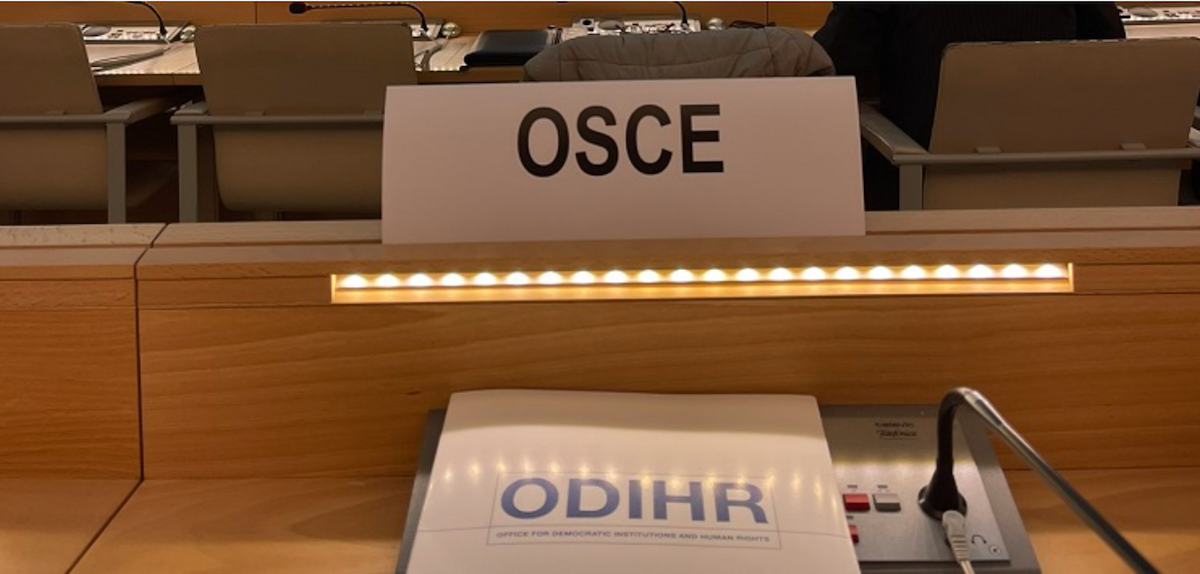
OSCE sounds alarm on Georgia election
The ODIHR/OSCE has released its final report on Georgia’s parliamentary elections, describing the process as taking place against an “alarming backdrop.” The organization highlighted concerns over the political environment and fairness of the elections.
However, the OSCE has refrained from issuing a decision on recognizing or rejecting the election results, an outcome widely anticipated by the Georgian public.
“In line with its mandate, ODIHR does not recognize or endorse elections. Instead, ODIHR provides a comprehensive and impartial assessment of the electoral process […] and this enables voters to form their own judgments about the quality of the election,” the report reads.
The election has sparked mass protests across the country, with thousands rallying against alleged irregularities. Four opposition groups—three coalitions and one party—entering parliament have unanimously declared the election process fraudulent, rejecting the legitimacy of the new parliament and refusing to accept their mandates. Georgian President Salome Zourabichvili has also condemned the elections as rigged, calling the newly elected parliament and its decisions illegitimate.
The full report can be found here
Key points of the report
Before the elections:
● Steps were taken to undermine the independence of institutions involved in the electoral process.
● High-ranking officials, including mayors, actively campaigned for the ruling party, blurring the line between the party and the state.
● Voters were presented with a wide range of choices, with 18 party lists, and most could freely campaign.
● However, financial incentives for certain groups and the misuse of state resources gave the ruling party an undue advantage.
● There was limited oversight of campaign financing.
● The election administration managed technical preparations in a timely and efficient manner. Contributing to transparency, the CEC held regular live-streamed sessions and promptly published its decisions and other relevant materials online.
● However, its decision-making at times lacked collegiality, with opposition members reporting insufficient information sharing and marginalization.
Legal framework
● Overall, the legal framework provides an adequate basis for conducting democratic elections.
● However, frequent revisions to the legal framework, some made shortly before the elections and without broad cross-party support, undermined its stability and raised concerns about the potential for political manipulation.
● Specifically, the abolition of gender quotas and changes to the composition of the Central Election Commission noted as a step backward.
● Many ODIHR EOM interlocutors expressed concerns about the election administration’s impartiality, citing recent amendments that gave the ruling party control over CEC member selection, removed consensus requirements, and led to perceived ties between non-partisan members and the ruling party.
Election day
● While procedurally election day was generally orderly administered, it was marked by a tense environment due to widespread indications of pressure on voters, numerous reports of voters feeling pressured, voter tracking primarily by ruling party structures and affiliates, overcrowding at many polling stations, and frequent breaches of vote secrecy.
● Overcrowded polling stations and visible marks on ballots further compromised the secrecy of the vote.
● Procedural errors were noted, such as improper handling of unused ballots.
● Despite the introduction of electronic voting technology, concerns were raised that stakeholders had access to results and technical documentation before the election day.
Media environment
● The media environment was polarized, heavily biased, with limited impartial news coverage.
● The rhetoric during the election campaign was divisive.
● State-controlled media disproportionately covered the ruling party, undermining voters’ ability to make an informed choice.
Post-election
● Over 1,200 complaints were filed, but most were dismissed. This, combined with limited judicial accountability, undermined public trust in the electoral process.
● The opposition alleged voter bribery, misuse of voter data, and violations, but faced obstacles in accessing detailed voter lists to support these claims.
● Allegations of voter intimidation, vote-buying, and violations led opposition parties to reject the election results.
● Following the elections, mass protests took place and were repeatedly dispersed violently. Numerous arrests were made, with reports of abuse against protesters and journalists, violating international commitments guaranteeing the right to freedom of assembly.

The OSCE emphasizes that the Georgian authorities must address these issues to safeguard democratic principles.
“Numerous issues noted in our final report negatively impacted the integrity of these elections and eroded public trust in the process,” said Eoghan Murphy, who headed ODIHR’s 2024 election observation mission to Georgia. “To safeguard the democratic principles currently at stake in Georgia, it is imperative that the authorities urgently address all concerns.”
The report stresses that, in line with its mandate, ODIHR does not recognize or endorse elections. Instead, ODIHR provides a comprehensive and impartial assessment of the electoral process based on universal principles, international obligations, and the commitments to hold democratic elections made by all OSCE states.
This enables voters to form their own judgments about the quality of the election.
“Such an assessment enables voters to form their own judgment on the quality of the elections,” the report states.
The report also offers recommendations to improve the quality of elections, including proposed legislative changes.
“This will increase the transparency and integrity of the electoral process in Georgia for the benefit of all,” the report concludes.
OSCE sounds alarm on Georgia election
Categories
“AbzasMedia” Trial Has Begun
The trial of seven journalists arrested in connection with the criminal case related to the publication “AbzasMedia” has commenced. The case is being heard at the Baku Serious Crimes Court, chaired by Rasim Sadikhov, with Novruz Karimov and Leyla Asgerova-Mammadova serving as members of the judges’ panel.
The accused journalists are Ulvi Hasanli, the director of “AbzasMedia”; Sevinj Vagifgizi (Abbasova), the editor-in-chief; Mahammad Kekalov, the deputy director; Hafiz Babali, an editor at Turan News Agency; journalists Nargiz Absalamova and Elnara Gasimova; and economist and Radio Azadliq employee Farid Mehralizade. The trial is part of a broader investigation that includes charges related to alleged corruption and illegal activities exposed by the journalists.
The trial’s preparatory hearing took place on December 17, 2024, and it was revealed that a significant portion of the seats designated for attendees had been occupied by outsiders. It was claimed that about 20 of these individuals were those who had taken exams for judicial positions or were present for internships.
The accused journalists objected to this, stating that the hall was deliberately filled with unnecessary people while their family members and supporters were left outside. They demanded the removal of these individuals. Additionally, media representatives who had come to observe the proceedings were not allowed entry, with an order issued specifically barring journalists from attending the session.
As the trial began, Sevinj Vagifgizi objected to two of the three judges on the panel, Rasim Sadikhov and Novruz Karimov, citing their history of issuing politically-motivated rulings. Vagifgizi argued that Sadikhov had been involved in sentencing human rights defender Intigam Aliyev to seven and a half years in prison in 2014-2015, a decision later found to violate the European Convention on Human Rights.
She stated that this demonstrated Sadikhov’s lack of independence and his role in political repression. Vagifgizi also accused Novruz Karimov of being involved in illegal activities during his tenure at the National Security Ministry (NSM) and later as a judge, where he allegedly issued unlawful verdicts in politically-charged cases, including the prosecution of journalist Parviz Hashimli. Vagifgizi emphasized that these judges had been involved in corruption and that they should not be presiding over her case.
The third judge, Leyla Asgerova-Mammadova, was mentioned by Vagifgizi as someone whose background was unknown to the defense team, with the hope that she would not become complicit in what they perceived as an unjust process.
The objections raised by the accused journalists were supported by other defendants, including Farid Mehralizade, who declared that judges like Sadikhov and Karimov were not needed in the country. Despite these objections, the court did not uphold them, and the trial proceeded with the judges in place.
During the hearing, the personal details of the accused journalists were clarified, and their rights and responsibilities were outlined. The judge informed the court that Ramil Abbasov, an official from the State Tax Service, was acting as the civil claimant, as the agency had filed a civil lawsuit against the journalists.
This civil case was in addition to the criminal charges against them. The court’s physical layout featured a glass booth divided into two sections. Three female journalists—Sevinj Vagifgizi, Nargiz Absalamova, and Elnara Gasimova—were placed in the smaller section, while the other four accused individuals were seated in the remaining portion.
Defense lawyers condemned this arrangement, describing it as inhumane, and requested that the journalists be allowed to sit next to their attorneys for proper consultation. The court granted this request, allowing the journalists to sit beside their legal representatives for the duration of the proceedings.
The defense lawyers then raised several motions, including a request to terminate the criminal case, or if that was not possible, to release the accused on house arrest or with bail. Lawyer Javad Javadov, representing Farid Mehralizade, argued that his client had no connection to the “AbzasMedia” case and believed his arrest was related to his work with Radio Free Liberty’s Azerbaijani service.
He further requested that Mehralizade be placed under house arrest, as he was not a flight risk and had family ties, including a newborn child. Hafiz Babali’s lawyer, Rasul Jafarov, also argued that his client had not committed any criminal acts and highlighted Babali’s health problems, including a Group III disability due to eye and foot issues. Jafarov pointed out that medical records from the Ombudsman’s Office confirmed these health issues. Other lawyers, such as Fakhraddin Mehdiyev, referred to the accused journalists as “knights who expose corruption,” emphasizing their role in uncovering state corruption.
In response, journalist Hafiz Babali told the court that all seven defendants had been punished for their investigative work exposing corruption. He stated that the public had been shaken by their arrests and that their investigations into corruption had been misinterpreted as criminal activities. Babali also explained that their bank accounts were thoroughly checked and no illegal activities were found.
He asserted that they were victims of political and legal repression. Babali criticized the judicial system, stating that the law prohibited judges from knowingly issuing unlawful decisions, but that these judges had done so intentionally. Farid Mehralizade echoed this sentiment, adding that “AbzasMedia” had been at the forefront of exposing corruption and that Azerbaijan’s law enforcement agencies were punishing those who exposed wrongdoing, not those who committed it.
Despite the defense’s motions and arguments, the judges, led by Rasim Sadikhov, did not grant any of the requests. The next hearing in the trial has been scheduled for December 28, 2024.
The arrests of the “AbzasMedia” journalists began on November 20, 2023, with Ulvi Hasanli and Mahammad Kekalov being detained first, followed by Sevinj Vagifgizi. Investigative journalist Hafiz Babali, along with Nargiz Absalamova, Elnara Gasimova, and Farid Mehralizade, were arrested shortly after. They face charges under Article 206.3.2 of the Criminal Code for smuggling by a group of persons, but the charges were later escalated to include illegal entrepreneurship, money laundering, tax evasion, and more, carrying penalties of up to 12 years in prison.
Following Ulvi Hasanli’s arrest on November 20, 2023, a search was conducted at the “AbzasMedia” office, where it was claimed that 40,000 euros were found. However, Hasanli denied the allegations, insisting that the money was planted by those who claimed to have found it. The accused journalists maintain their innocence, arguing that they are being punished for exposing corruption, including the business dealings of several high-ranking officials, including members of the President’s family. Government representatives, however, insist that the arrests were based on concrete evidence of criminal activity.
The post “AbzasMedia” Trial Has Begun appeared first on MEYDAN.TV.