
The State Customs Committee of Azerbaijan released the volume of exported ferrous metals and products, Azernews reports.
Day: December 21, 2024
Categories
“AbzasMedia” Trial Has Begun
The trial of seven journalists arrested in connection with the criminal case related to the publication “AbzasMedia” has commenced. The case is being heard at the Baku Serious Crimes Court, chaired by Rasim Sadikhov, with Novruz Karimov and Leyla Asgerova-Mammadova serving as members of the judges’ panel.
The accused journalists are Ulvi Hasanli, the director of “AbzasMedia”; Sevinj Vagifgizi (Abbasova), the editor-in-chief; Mahammad Kekalov, the deputy director; Hafiz Babali, an editor at Turan News Agency; journalists Nargiz Absalamova and Elnara Gasimova; and economist and Radio Azadliq employee Farid Mehralizade. The trial is part of a broader investigation that includes charges related to alleged corruption and illegal activities exposed by the journalists.
The trial’s preparatory hearing took place on December 17, 2024, and it was revealed that a significant portion of the seats designated for attendees had been occupied by outsiders. It was claimed that about 20 of these individuals were those who had taken exams for judicial positions or were present for internships.
The accused journalists objected to this, stating that the hall was deliberately filled with unnecessary people while their family members and supporters were left outside. They demanded the removal of these individuals. Additionally, media representatives who had come to observe the proceedings were not allowed entry, with an order issued specifically barring journalists from attending the session.
As the trial began, Sevinj Vagifgizi objected to two of the three judges on the panel, Rasim Sadikhov and Novruz Karimov, citing their history of issuing politically-motivated rulings. Vagifgizi argued that Sadikhov had been involved in sentencing human rights defender Intigam Aliyev to seven and a half years in prison in 2014-2015, a decision later found to violate the European Convention on Human Rights.
She stated that this demonstrated Sadikhov’s lack of independence and his role in political repression. Vagifgizi also accused Novruz Karimov of being involved in illegal activities during his tenure at the National Security Ministry (NSM) and later as a judge, where he allegedly issued unlawful verdicts in politically-charged cases, including the prosecution of journalist Parviz Hashimli. Vagifgizi emphasized that these judges had been involved in corruption and that they should not be presiding over her case.
The third judge, Leyla Asgerova-Mammadova, was mentioned by Vagifgizi as someone whose background was unknown to the defense team, with the hope that she would not become complicit in what they perceived as an unjust process.
The objections raised by the accused journalists were supported by other defendants, including Farid Mehralizade, who declared that judges like Sadikhov and Karimov were not needed in the country. Despite these objections, the court did not uphold them, and the trial proceeded with the judges in place.
During the hearing, the personal details of the accused journalists were clarified, and their rights and responsibilities were outlined. The judge informed the court that Ramil Abbasov, an official from the State Tax Service, was acting as the civil claimant, as the agency had filed a civil lawsuit against the journalists.
This civil case was in addition to the criminal charges against them. The court’s physical layout featured a glass booth divided into two sections. Three female journalists—Sevinj Vagifgizi, Nargiz Absalamova, and Elnara Gasimova—were placed in the smaller section, while the other four accused individuals were seated in the remaining portion.
Defense lawyers condemned this arrangement, describing it as inhumane, and requested that the journalists be allowed to sit next to their attorneys for proper consultation. The court granted this request, allowing the journalists to sit beside their legal representatives for the duration of the proceedings.
The defense lawyers then raised several motions, including a request to terminate the criminal case, or if that was not possible, to release the accused on house arrest or with bail. Lawyer Javad Javadov, representing Farid Mehralizade, argued that his client had no connection to the “AbzasMedia” case and believed his arrest was related to his work with Radio Free Liberty’s Azerbaijani service.
He further requested that Mehralizade be placed under house arrest, as he was not a flight risk and had family ties, including a newborn child. Hafiz Babali’s lawyer, Rasul Jafarov, also argued that his client had not committed any criminal acts and highlighted Babali’s health problems, including a Group III disability due to eye and foot issues. Jafarov pointed out that medical records from the Ombudsman’s Office confirmed these health issues. Other lawyers, such as Fakhraddin Mehdiyev, referred to the accused journalists as “knights who expose corruption,” emphasizing their role in uncovering state corruption.
In response, journalist Hafiz Babali told the court that all seven defendants had been punished for their investigative work exposing corruption. He stated that the public had been shaken by their arrests and that their investigations into corruption had been misinterpreted as criminal activities. Babali also explained that their bank accounts were thoroughly checked and no illegal activities were found.
He asserted that they were victims of political and legal repression. Babali criticized the judicial system, stating that the law prohibited judges from knowingly issuing unlawful decisions, but that these judges had done so intentionally. Farid Mehralizade echoed this sentiment, adding that “AbzasMedia” had been at the forefront of exposing corruption and that Azerbaijan’s law enforcement agencies were punishing those who exposed wrongdoing, not those who committed it.
Despite the defense’s motions and arguments, the judges, led by Rasim Sadikhov, did not grant any of the requests. The next hearing in the trial has been scheduled for December 28, 2024.
The arrests of the “AbzasMedia” journalists began on November 20, 2023, with Ulvi Hasanli and Mahammad Kekalov being detained first, followed by Sevinj Vagifgizi. Investigative journalist Hafiz Babali, along with Nargiz Absalamova, Elnara Gasimova, and Farid Mehralizade, were arrested shortly after. They face charges under Article 206.3.2 of the Criminal Code for smuggling by a group of persons, but the charges were later escalated to include illegal entrepreneurship, money laundering, tax evasion, and more, carrying penalties of up to 12 years in prison.
Following Ulvi Hasanli’s arrest on November 20, 2023, a search was conducted at the “AbzasMedia” office, where it was claimed that 40,000 euros were found. However, Hasanli denied the allegations, insisting that the money was planted by those who claimed to have found it. The accused journalists maintain their innocence, arguing that they are being punished for exposing corruption, including the business dealings of several high-ranking officials, including members of the President’s family. Government representatives, however, insist that the arrests were based on concrete evidence of criminal activity.
The post “AbzasMedia” Trial Has Begun appeared first on MEYDAN.TV.
Nearly two thousand Georgian businesses have signed a petition calling for new elections, and more are expected to join as the political crisis fueled by Georgian Dream’s foreign policy U-turn and police repression continues to disrupt the economy.
Over 1,800 companies, including leading supermarket chains such as SPAR, local branches of Big Four accounting firms such as EY, PwC, and KPMG, communications and transport giants such as MagtiCom, and other top brands, are registered on the Free Business online platform. The platform was launched in December as discontent over Georgian Dream’s foreign policy moves and repression peaked.
“The crisis has transcended the boundaries of party politics and put the country in social and political danger,” the platform’s joint statement said. Coming weeks after the widely disputed October parliamentary elections, the statement says “the most pragmatic way” to de-escalate tensions is to “schedule new elections and release those arrested during the recent developments.”
Some companies have taken a different route to show solidarity with the ongoing protests. Georgia’s two major commercial banks, TBC Bank and the Bank of Georgia, announced on December 19 that they had jointly allocated GEL 5 million (USD 1.8 million) to support citizens and small and micro-businesses affected by the ongoing events.
In a separate announcement, TBC Bank and TKT.ge, Georgia’s leading events portal, also said that they will buy out tickets for theater, opera, and conservatory events until January 1, 2025, to financially back artists, some of whom went on strike.
Solidarity Funds Popping Up
The moves come as nationwide protests enter their fourth week and businesses, artists, and other citizens face financial disruptions, including numerous cancellations of Christmas/New Year’s events as the year draws to a close. Various solidarity funds have been set up to help those who have incurred damages due to the crisis.
These include a fund set up by ex-Prime Minister Nika Gilauri to support those injured or fined during protests and civil servants dismissed for political reasons. The University of Georgia has also set up a fund to support civil servants who quit or were fired because of their political views, and there is a strike fund run by the Gildia, the trade union for cultural and media workers, to help gig workers. Other initiatives, such as the fund run by journalist Nanuka Zhorzholiani, have been operating since the spring protests against the Foreign Agents Law.
A protest march was also held on December 20, calling banks to freeze loan payments to workers who decide to strike. Earlier, up to two hundred small and large companies that usually participate in the annual municipal Christmas markets refused to be represented at this year’s celebrations in protest to Mayor Kakha Kaladze, who is also Georgian Dream Secretary-General.
There are signs of pressure and boycotts impeding the government business as usual: the Ministry of the Interior had to buy lunch for police officers on its own amid protests after its USD 100,000-thousand call for services collapsed since no company responded. Previously, citizens called for boycotting the restaurants that supplied lunch-boxes to riot police.
Fearing Broader Economic Implications
The initiatives come amid fears of more profound economic effects if the crisis remains unresolved.
“The country’s economy is in a pretty serious crisis, and we have fewer tools at our disposal,” Goga Melikidze, former chief investment officer of the Georgian Pension Fund who recently moved into private consulting, told Business Media Georgia on December 20. “We are holding the [Georgian] Lari rate like crazy, and we don’t know what effect it will have tomorrow.”
The Georgian national currency has slipped recently, with the USD/GEL rate falling from 2.74 on November 28, when the protests began, to 2.81 on December 20. The currency has fluctuated sharply during this period, which many attribute to heavy intervention by the Georgian central bank (NBG), whose independence is believed to have been compromised since it was headed by Georgian Dream loyalist Natia Turnava.

The bank has yet to publish the current state of its international reserves. Georgian Dream Prime Minister Irakli Kobakhidze assured on December 17 that there had been only “minor interventions” recently.
But the alarm bells started ringing before November 28. The drastic drop in Georgia’s international reserves in the run-up to October elections, to their lowest level since early 2021, was cited as one of the reasons for Fitch Ratings, the international credit rating agency, revising Georgia’s outlook to “negative” on December 6, while affirming its long-term foreign currency issuer default rating (IDR) at BB (elevated vulnerability to default). Other reasons cited for the outlook revision were the protracted political crisis following the October parliamentary and December presidential elections and Tbilisi’s strained relations with Western partners.
Foreign Direct Investments already showed a sharp year-on-year drop in the third quarter of 2024. The decision of the donor government and agencies to stop direct funding to the Georgian government projects also affects the financial credibility.
Such changes, Melikidze fears, could ultimately lead to “an inflationary climate, pressure on the GEL exchange rate, and higher interest rates.”
“We are on the slope of the economic crisis, where we can slip quickly, and it will be hard to get out of later,” the expert asserted, noting that, unlike past economic crises, this one stands out for its domestic origins.
The outlook appears even bleaker as key Western powers move to impose sanctions, including economic restrictions, on Georgian officials.
Georgian commercial banks routinely implemented Western sanctions. However, when the U.S. decided to sanction ex-prosecutor Otar Partskhaladze, the National Bank of Georgia moved to shield Partskhaladze, a crony of Georgian Dream patron Bidzina Ivanishvili, by introducing a rule to allow implementation only after a local court order. Several National Bank board members quit in protest, and the commercial banks affirmed that they would still implement the sanctions regime.
It remains to be seen whether their determination to do so will last as the circle of sanctioned officials widens and may, at some point, include billionaire Bidzina Ivanishvili, patron of the Georgian Dream. The failure to implement a sanctions regime may expose the commercial banks to knock-on sanctions, which may prove disastrous, especially for the publicly traded ones.
Nini Gabritchidze
Categories
“AbzasMedia” Trial Has Begun
The trial of seven journalists arrested in connection with the criminal case related to the publication “AbzasMedia” has commenced. The case is being heard at the Baku Serious Crimes Court, chaired by Rasim Sadikhov, with Novruz Karimov and Leyla Asgerova-Mammadova serving as members of the judges’ panel.
The accused journalists are Ulvi Hasanli, the director of “AbzasMedia”; Sevinj Vagifgizi (Abbasova), the editor-in-chief; Mahammad Kekalov, the deputy director; Hafiz Babali, an editor at Turan News Agency; journalists Nargiz Absalamova and Elnara Gasimova; and economist and Radio Azadliq employee Farid Mehralizade. The trial is part of a broader investigation that includes charges related to alleged corruption and illegal activities exposed by the journalists.
The trial’s preparatory hearing took place on December 17, 2024, and it was revealed that a significant portion of the seats designated for attendees had been occupied by outsiders. It was claimed that about 20 of these individuals were those who had taken exams for judicial positions or were present for internships.
The accused journalists objected to this, stating that the hall was deliberately filled with unnecessary people while their family members and supporters were left outside. They demanded the removal of these individuals. Additionally, media representatives who had come to observe the proceedings were not allowed entry, with an order issued specifically barring journalists from attending the session.
As the trial began, Sevinj Vagifgizi objected to two of the three judges on the panel, Rasim Sadikhov and Novruz Karimov, citing their history of issuing politically-motivated rulings. Vagifgizi argued that Sadikhov had been involved in sentencing human rights defender Intigam Aliyev to seven and a half years in prison in 2014-2015, a decision later found to violate the European Convention on Human Rights.
She stated that this demonstrated Sadikhov’s lack of independence and his role in political repression. Vagifgizi also accused Novruz Karimov of being involved in illegal activities during his tenure at the National Security Ministry (NSM) and later as a judge, where he allegedly issued unlawful verdicts in politically-charged cases, including the prosecution of journalist Parviz Hashimli. Vagifgizi emphasized that these judges had been involved in corruption and that they should not be presiding over her case.
The third judge, Leyla Asgerova-Mammadova, was mentioned by Vagifgizi as someone whose background was unknown to the defense team, with the hope that she would not become complicit in what they perceived as an unjust process.
The objections raised by the accused journalists were supported by other defendants, including Farid Mehralizade, who declared that judges like Sadikhov and Karimov were not needed in the country. Despite these objections, the court did not uphold them, and the trial proceeded with the judges in place.
During the hearing, the personal details of the accused journalists were clarified, and their rights and responsibilities were outlined. The judge informed the court that Ramil Abbasov, an official from the State Tax Service, was acting as the civil claimant, as the agency had filed a civil lawsuit against the journalists.
This civil case was in addition to the criminal charges against them. The court’s physical layout featured a glass booth divided into two sections. Three female journalists—Sevinj Vagifgizi, Nargiz Absalamova, and Elnara Gasimova—were placed in the smaller section, while the other four accused individuals were seated in the remaining portion.
Defense lawyers condemned this arrangement, describing it as inhumane, and requested that the journalists be allowed to sit next to their attorneys for proper consultation. The court granted this request, allowing the journalists to sit beside their legal representatives for the duration of the proceedings.
The defense lawyers then raised several motions, including a request to terminate the criminal case, or if that was not possible, to release the accused on house arrest or with bail. Lawyer Javad Javadov, representing Farid Mehralizade, argued that his client had no connection to the “AbzasMedia” case and believed his arrest was related to his work with Radio Free Liberty’s Azerbaijani service.
He further requested that Mehralizade be placed under house arrest, as he was not a flight risk and had family ties, including a newborn child. Hafiz Babali’s lawyer, Rasul Jafarov, also argued that his client had not committed any criminal acts and highlighted Babali’s health problems, including a Group III disability due to eye and foot issues. Jafarov pointed out that medical records from the Ombudsman’s Office confirmed these health issues. Other lawyers, such as Fakhraddin Mehdiyev, referred to the accused journalists as “knights who expose corruption,” emphasizing their role in uncovering state corruption.
In response, journalist Hafiz Babali told the court that all seven defendants had been punished for their investigative work exposing corruption. He stated that the public had been shaken by their arrests and that their investigations into corruption had been misinterpreted as criminal activities. Babali also explained that their bank accounts were thoroughly checked and no illegal activities were found.
He asserted that they were victims of political and legal repression. Babali criticized the judicial system, stating that the law prohibited judges from knowingly issuing unlawful decisions, but that these judges had done so intentionally. Farid Mehralizade echoed this sentiment, adding that “AbzasMedia” had been at the forefront of exposing corruption and that Azerbaijan’s law enforcement agencies were punishing those who exposed wrongdoing, not those who committed it.
Despite the defense’s motions and arguments, the judges, led by Rasim Sadikhov, did not grant any of the requests. The next hearing in the trial has been scheduled for December 28, 2024.
The arrests of the “AbzasMedia” journalists began on November 20, 2023, with Ulvi Hasanli and Mahammad Kekalov being detained first, followed by Sevinj Vagifgizi. Investigative journalist Hafiz Babali, along with Nargiz Absalamova, Elnara Gasimova, and Farid Mehralizade, were arrested shortly after. They face charges under Article 206.3.2 of the Criminal Code for smuggling by a group of persons, but the charges were later escalated to include illegal entrepreneurship, money laundering, tax evasion, and more, carrying penalties of up to 12 years in prison.
Following Ulvi Hasanli’s arrest on November 20, 2023, a search was conducted at the “AbzasMedia” office, where it was claimed that 40,000 euros were found. However, Hasanli denied the allegations, insisting that the money was planted by those who claimed to have found it. The accused journalists maintain their innocence, arguing that they are being punished for exposing corruption, including the business dealings of several high-ranking officials, including members of the President’s family. Government representatives, however, insist that the arrests were based on concrete evidence of criminal activity.
The post “AbzasMedia” Trial Has Begun appeared first on MEYDAN.TV.
https://t.co/gFiGpAHpC2#NewsAndTimes #NT #TNT #News #Times #World #USA #POTUS #DOJ #FBI #CIA #DIA #ODNI #Trump #TrumpNews #TRUMPISTAN #Israel #Mossad #Netanyahu #Ukraine #NewAbwehr #OSINT #Putin #Russia #GRU #Путин #Россия #SouthCaucasus #Bloggers
–https://t.co/T8CxfQzy8o…— Michael Novakhov (@mikenov) December 21, 2024
Pashinyan welcomes Macron’s ‘efforts to establish peace in South Caucasus’https://t.co/9DC542kfs5#Report #ReportAz #ReportNewsAz #Azerbaijan #Pashinyan #Macron #SouthCaucasus pic.twitter.com/UcsKGxV4Bi
— Report News Agency (@reportaznews) December 21, 2024
In the heart of Garabagh, the district of Khajaly stands as a poignant symbol of resilience and remembrance. Once a site of unimaginable tragedy, Khajaly is now witnessing a new chapter of hope and renewal. Following a decisive one-day Anti-Terror operation in 2023, Khajaly was liberated from 30 years of occupation. Today, it is welcoming its IDPs back home, as tireless restoration and reconstruction efforts continue.
Categories
“AbzasMedia” Trial Has Begun
The trial of seven journalists arrested in connection with the criminal case related to the publication “AbzasMedia” has commenced. The case is being heard at the Baku Serious Crimes Court, chaired by Rasim Sadikhov, with Novruz Karimov and Leyla Asgerova-Mammadova serving as members of the judges’ panel.
The accused journalists are Ulvi Hasanli, the director of “AbzasMedia”; Sevinj Vagifgizi (Abbasova), the editor-in-chief; Mahammad Kekalov, the deputy director; Hafiz Babali, an editor at Turan News Agency; journalists Nargiz Absalamova and Elnara Gasimova; and economist and Radio Azadliq employee Farid Mehralizade. The trial is part of a broader investigation that includes charges related to alleged corruption and illegal activities exposed by the journalists.
The trial’s preparatory hearing took place on December 17, 2024, and it was revealed that a significant portion of the seats designated for attendees had been occupied by outsiders. It was claimed that about 20 of these individuals were those who had taken exams for judicial positions or were present for internships.
The accused journalists objected to this, stating that the hall was deliberately filled with unnecessary people while their family members and supporters were left outside. They demanded the removal of these individuals. Additionally, media representatives who had come to observe the proceedings were not allowed entry, with an order issued specifically barring journalists from attending the session.
As the trial began, Sevinj Vagifgizi objected to two of the three judges on the panel, Rasim Sadikhov and Novruz Karimov, citing their history of issuing politically-motivated rulings. Vagifgizi argued that Sadikhov had been involved in sentencing human rights defender Intigam Aliyev to seven and a half years in prison in 2014-2015, a decision later found to violate the European Convention on Human Rights.
She stated that this demonstrated Sadikhov’s lack of independence and his role in political repression. Vagifgizi also accused Novruz Karimov of being involved in illegal activities during his tenure at the National Security Ministry (NSM) and later as a judge, where he allegedly issued unlawful verdicts in politically-charged cases, including the prosecution of journalist Parviz Hashimli. Vagifgizi emphasized that these judges had been involved in corruption and that they should not be presiding over her case.
The third judge, Leyla Asgerova-Mammadova, was mentioned by Vagifgizi as someone whose background was unknown to the defense team, with the hope that she would not become complicit in what they perceived as an unjust process.
The objections raised by the accused journalists were supported by other defendants, including Farid Mehralizade, who declared that judges like Sadikhov and Karimov were not needed in the country. Despite these objections, the court did not uphold them, and the trial proceeded with the judges in place.
During the hearing, the personal details of the accused journalists were clarified, and their rights and responsibilities were outlined. The judge informed the court that Ramil Abbasov, an official from the State Tax Service, was acting as the civil claimant, as the agency had filed a civil lawsuit against the journalists.
This civil case was in addition to the criminal charges against them. The court’s physical layout featured a glass booth divided into two sections. Three female journalists—Sevinj Vagifgizi, Nargiz Absalamova, and Elnara Gasimova—were placed in the smaller section, while the other four accused individuals were seated in the remaining portion.
Defense lawyers condemned this arrangement, describing it as inhumane, and requested that the journalists be allowed to sit next to their attorneys for proper consultation. The court granted this request, allowing the journalists to sit beside their legal representatives for the duration of the proceedings.
The defense lawyers then raised several motions, including a request to terminate the criminal case, or if that was not possible, to release the accused on house arrest or with bail. Lawyer Javad Javadov, representing Farid Mehralizade, argued that his client had no connection to the “AbzasMedia” case and believed his arrest was related to his work with Radio Free Liberty’s Azerbaijani service.
He further requested that Mehralizade be placed under house arrest, as he was not a flight risk and had family ties, including a newborn child. Hafiz Babali’s lawyer, Rasul Jafarov, also argued that his client had not committed any criminal acts and highlighted Babali’s health problems, including a Group III disability due to eye and foot issues. Jafarov pointed out that medical records from the Ombudsman’s Office confirmed these health issues. Other lawyers, such as Fakhraddin Mehdiyev, referred to the accused journalists as “knights who expose corruption,” emphasizing their role in uncovering state corruption.
In response, journalist Hafiz Babali told the court that all seven defendants had been punished for their investigative work exposing corruption. He stated that the public had been shaken by their arrests and that their investigations into corruption had been misinterpreted as criminal activities. Babali also explained that their bank accounts were thoroughly checked and no illegal activities were found.
He asserted that they were victims of political and legal repression. Babali criticized the judicial system, stating that the law prohibited judges from knowingly issuing unlawful decisions, but that these judges had done so intentionally. Farid Mehralizade echoed this sentiment, adding that “AbzasMedia” had been at the forefront of exposing corruption and that Azerbaijan’s law enforcement agencies were punishing those who exposed wrongdoing, not those who committed it.
Despite the defense’s motions and arguments, the judges, led by Rasim Sadikhov, did not grant any of the requests. The next hearing in the trial has been scheduled for December 28, 2024.
The arrests of the “AbzasMedia” journalists began on November 20, 2023, with Ulvi Hasanli and Mahammad Kekalov being detained first, followed by Sevinj Vagifgizi. Investigative journalist Hafiz Babali, along with Nargiz Absalamova, Elnara Gasimova, and Farid Mehralizade, were arrested shortly after. They face charges under Article 206.3.2 of the Criminal Code for smuggling by a group of persons, but the charges were later escalated to include illegal entrepreneurship, money laundering, tax evasion, and more, carrying penalties of up to 12 years in prison.
Following Ulvi Hasanli’s arrest on November 20, 2023, a search was conducted at the “AbzasMedia” office, where it was claimed that 40,000 euros were found. However, Hasanli denied the allegations, insisting that the money was planted by those who claimed to have found it. The accused journalists maintain their innocence, arguing that they are being punished for exposing corruption, including the business dealings of several high-ranking officials, including members of the President’s family. Government representatives, however, insist that the arrests were based on concrete evidence of criminal activity.
The post “AbzasMedia” Trial Has Begun appeared first on MEYDAN.TV.
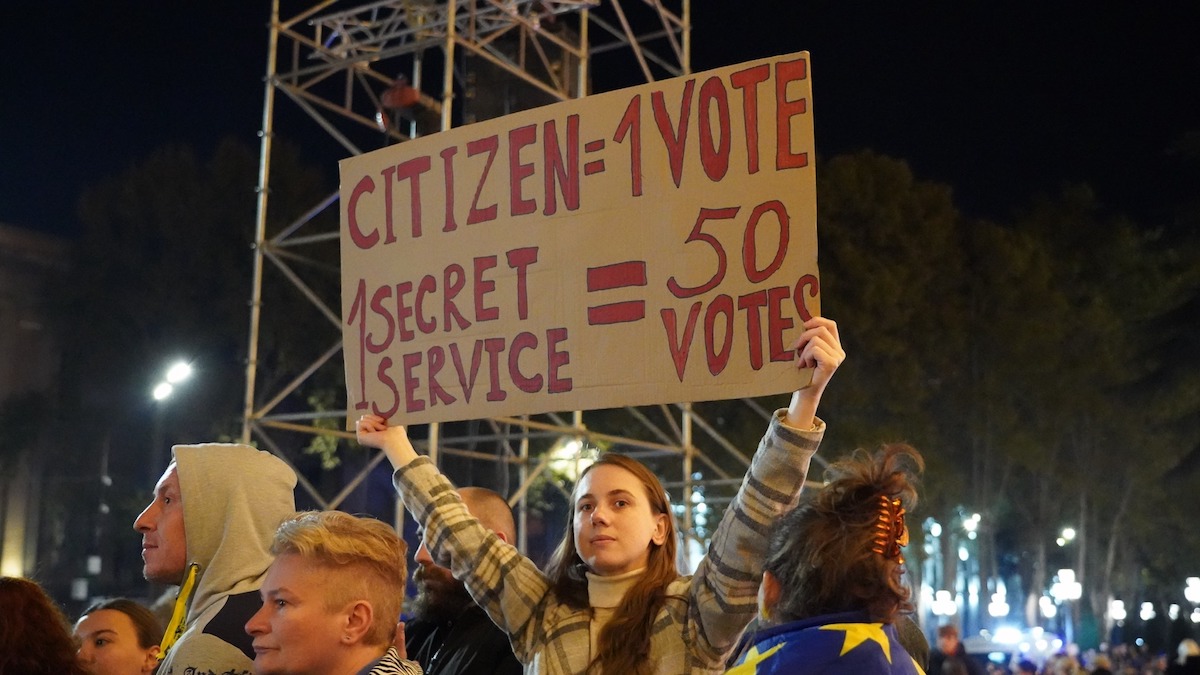
Georgian opposition welcomes OSCE election report
On December 20, four opposition groups in Georgia issued a statement agreeing with the critical OSCE/ODIHR report on the parliamentary elections held on October 26. “The elections failed to ensure the constitutional right of citizens to vote,” the opposition statement said.
The statement was signed by the “For Change” coalition, the “National Movement — Unity,” the “Strong Georgia” coalition, and the “For Georgia — Giorgi Gakharia” party. All four groups secured seats in parliament following the October 26 elections but declared the elections rigged and refused to take up their mandates. These elections triggered mass protests across the country.
The 2024 elections received the most negative assessment in history from the OSCE regarding elections held in Georgia, the statement added.
The parties highlight the following violations and negative circumstances mentioned in the report:
⇒ New laws modeled after Russian legislation negatively impacted fundamental freedoms and civil society;
⇒ Politicization of institutions involved in the electoral process for electoral gain;
⇒ Pressure and intimidation of voters, preventing many from expressing their true preferences on election day due to fear of reprisals;
⇒ Widespread violations of voting secrecy, including video recording of the voting process to control voters’ choices, undermining public trust in the elections;
⇒ Inadequate handling of complaints and lack of effective legal remedies in the post-election period;
⇒ Violent suppression of protests, including arrests and mistreatment of participants;
⇒ Polarization and instrumentalization of the media, limiting voters’ ability to make informed choices;
⇒ Insufficient monitoring of political financing and significant resource imbalance favoring the ruling party;
⇒ Specific pressure on public servants;
⇒ Ineffectiveness of mechanisms to address electoral violations.
Statement by four opposition forces
“The illegitimate government of Georgia, led by Bidzina Ivanishvili, has been deceiving Georgian voters since October 26 by claiming that the final OSCE/ODIHR report could legitimize the power usurpation by ‘Georgian Dream.’
In reality, the published conclusions and comprehensive recommendations from the OSCE/ODIHR have confirmed the illegitimacy of the election results, providing grounds for holding new parliamentary elections.
The OSCE/ODIHR report specifies that the organization’s mandate does not include determining the legitimacy of elections. It can only assess the electoral process’s compliance with international standards.
When an organization that does not typically use such terminology in its findings feels compelled to emphasize this fact in its report, thereby raising the question of election legitimacy, it indicates a lack of legitimacy.
Regarding the assessment of the electoral process itself, which falls within the OSCE/ODIHR’s mandate, the organization gives a sharply negative evaluation, highlighting numerous violations, including the fundamental principle of voting secrecy.
The OSCE report unequivocally notes a lack of voter trust in the electoral process, evidenced by the post-election political crisis, mass protests, and their violent suppression, violating citizens’ fundamental rights.”
The OSCE/ODIHR has published its final report on the October 26 parliamentary elections in Georgia, stating that the elections took place against a troubling backdrop.
● The report highlights violations of voting secrecy and voter intimidation. The elections were not conducted in accordance with OSCE/ODIHR recommendations and standards, the report states.
● It emphasizes that recent legislative changes negatively affected fundamental freedoms and civil society, reduced the independence of institutions involved in the electoral process, and increased pressure on voters.
● These issues, along with violations observed on election day, affected some voters who feared becoming victims of reprisals during the voting process, the report notes.
● The OSCE/ODIHR also observed that post-election complaints were inadequately addressed, leading to limited legal remedies. The report also stresses that the violent dispersal of protests and mass arrests raised serious concerns about compliance with international commitments to freedom of peaceful assembly.
● The OSCE underscores that Georgian authorities must address these issues to uphold democratic principles.
Georgian opposition welcomes OSCE election report