
In the UK, Fyodor Dostoevsky’s novella White Nights has recently gained unexpected popularity, becoming the fourth best-selling book in the category of translated literature, Azernews reports.
Day: December 20, 2024
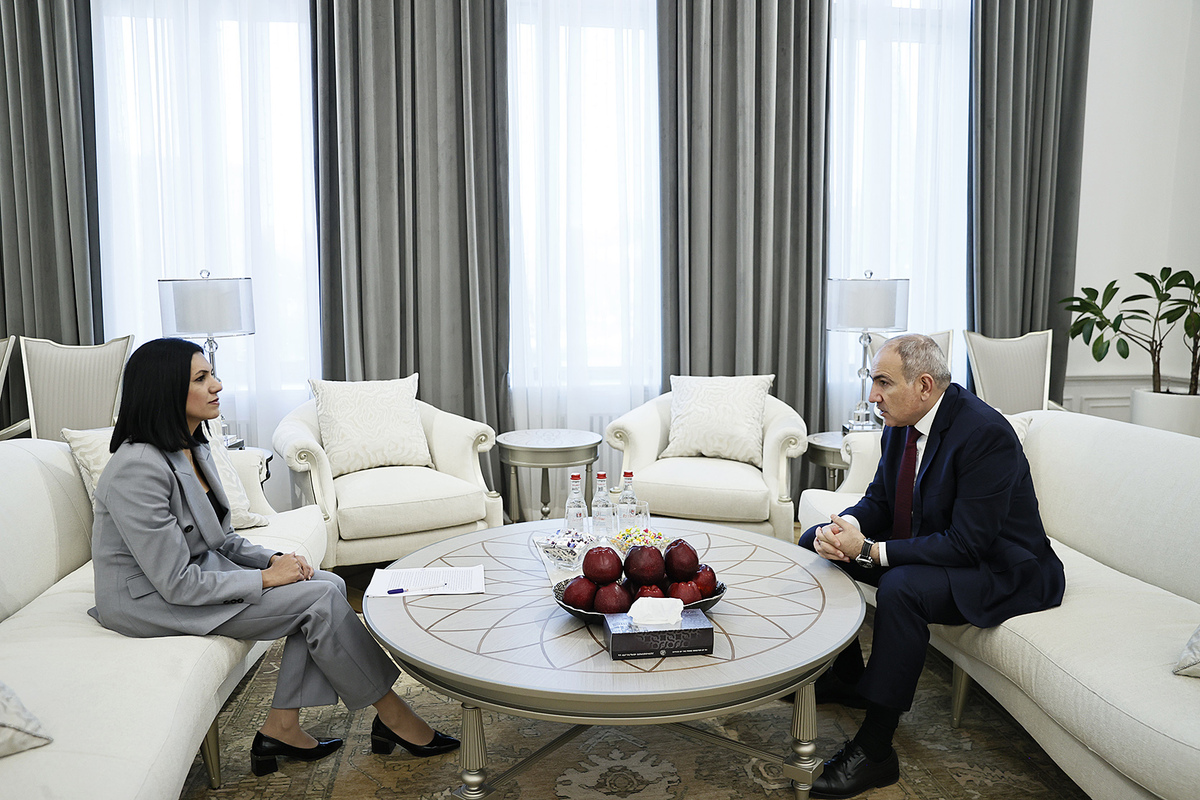
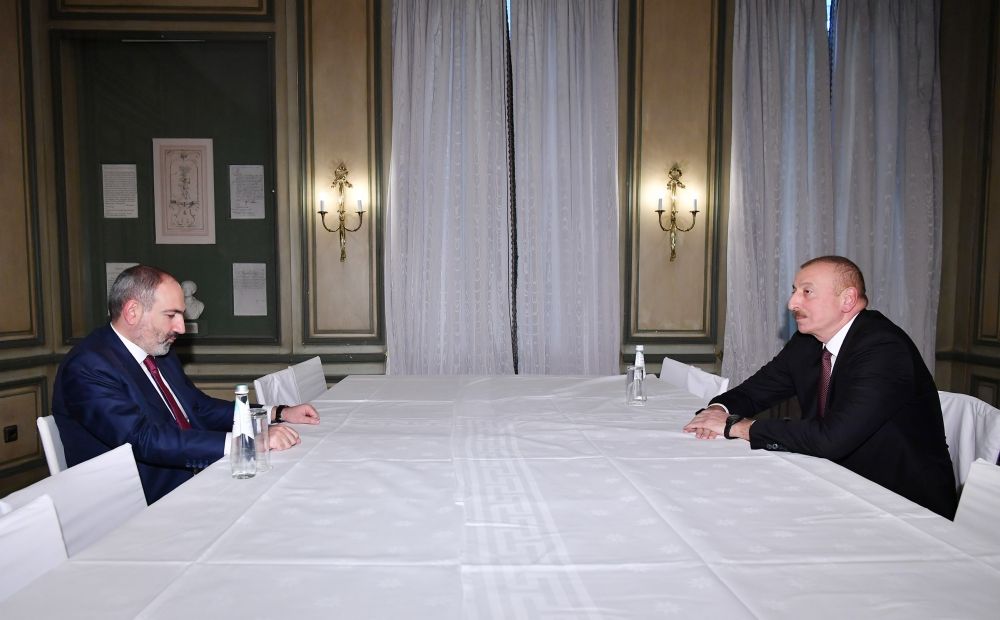
Pashinyan-Aliyev remote dialogue
“I can guarantee that Armenia has no intention, goal, or plan to attack Azerbaijan. It will not go down this path. If Azerbaijan has no intention to attack Armenia, then the likelihood of escalation in the region is zero,” said Armenia’s Prime Minister in an interview with Armenpress. In the interview, Nikol Pashinyan responded to recent statements made by Azerbaijan’s President.
In an interview with the Russian outlet RIA Novosti, Ilham Aliyev claimed that third countries are arming Armenia, and that these threats “are quite serious.” However, he believes that Armenia cannot sustain an arms race, even though it receives support not only from Paris but also from Washington:
“We are conveying, and will continue to convey, to Armenia’s sponsors, the so-called Soros people in Washington, that this must stop. And if it continues, we want to make sure that no one has any complaints against us later.”
This statement highlighted the risks of escalation, including for the Armenian authorities, according to political analyst Akop Badalyan. This is also evident from Pashinyan’s “operational response” to Aliyev’s interview.
“Creating a military corridor through Armenia’s territory, the so-called ‘Zangezur Corridor,’ is a serious geopolitical issue. Baku cannot make such decisions on its own. But it can become a tool for its implementation. In terms of a local border military operation, Baku can make independent decisions and may take advantage of favourable international circumstances for this,” Badalyan emphasized in his commentary for JAMnews.
- Aliyev unwilling to pursue peace or strategic deal with Armenia: expert in Yerevan
- “Armenia could present a counter-demand”: analyst on “Western Azerbaijan” narrative
- “Armenia isn’t militarizing but raising cost of attacking it”: opinion
Aliyev: “Armenia will not withstand arms race with us”
In his interview, the President of Azerbaijan focused extensively on the weaponry that Armenia is purchasing.
“The weapons that Macron’s government is supplying to Armenia are offensive, lethal weapons that pose a practical threat to Azerbaijan,” he said.
According to him, Armenia’s rapid rearmament has led to Azerbaijan’s military budget for 2025 being a record amount, around five billion dollars. Aliyev also mentioned that this is a “disastrous” path:
“Firstly, Armenia will not withstand the arms race with us, despite receiving most of its weaponry from the West for free or on credit, which will, of course, later be written off. But even in this case, they will not withstand the arms race with us.”
He advised the Armenians not to forget the outcomes of the second Karabakh war and the “counter-terrorism operation” in September 2023, which resulted in all ethnic Armenians being forced to leave their homes in Nagorno-Karabakh:
“They must understand that, despite the maximum support from Macron’s regime and the U.S. State Department, here, on the ground, if they plan another provocation against us, no one will help them.”
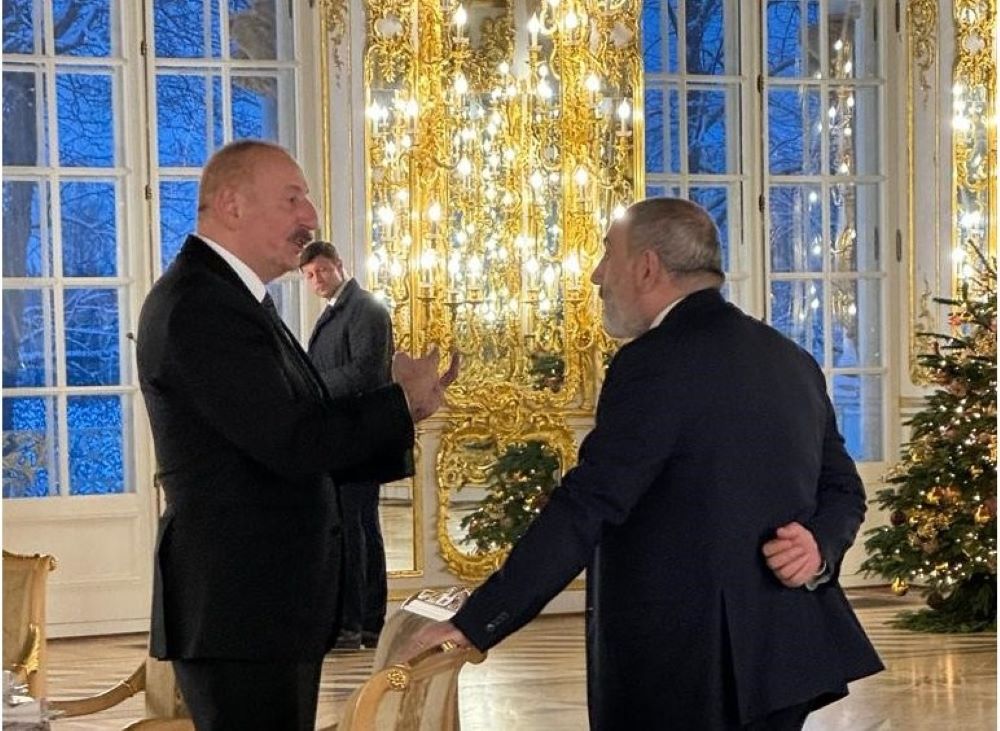
Pashinyan: “Armenia is arming itself to protect its borders”
In response to Aliyev, Armenian Prime Minister Nikol Pashinyan stated that Armenia is not in an arms race with any country:
“We are acquiring weapons solely to protect Armenia’s borders and territorial integrity, that is, for defensive purposes. Our goals are transparent. We are being told that for defensive purposes, we should only acquire defensive weapons. But it is impossible to organize defense with only defensive means.
Let’s assume Armenia acquires state-of-the-art air defense and EW systems [electronic warfare systems]. But how should we protect ourselves from ground attacks? Of course, with artillery, of course, with missiles, and of course, with other means of destruction. Azerbaijan is also acquiring non-defensive weapons. Does this mean it is pursuing a revanchist policy?”
He emphasized that army reforms are Armenia’s legitimate right, not a threat to Azerbaijan. Pashinyan reminded that official Yerevan has unambiguously recognized Azerbaijan’s territorial integrity and sovereignty over Soviet Azerbaijan:
“And we expect that Azerbaijan, like us, will recognize the territorial integrity of the Republic of Armenia in accordance with the agreements we have reached and refrain from a policy of threats.”
The Prime Minister reminded that Azerbaijan’s military budget is three times higher than Armenia’s military expenditures.
“Against this backdrop, accusing us of arming ourselves is at least unfair. We even proposed to Azerbaijan to create a bilateral arms control mechanism. But Azerbaijan has not responded to this so far,” he stated.
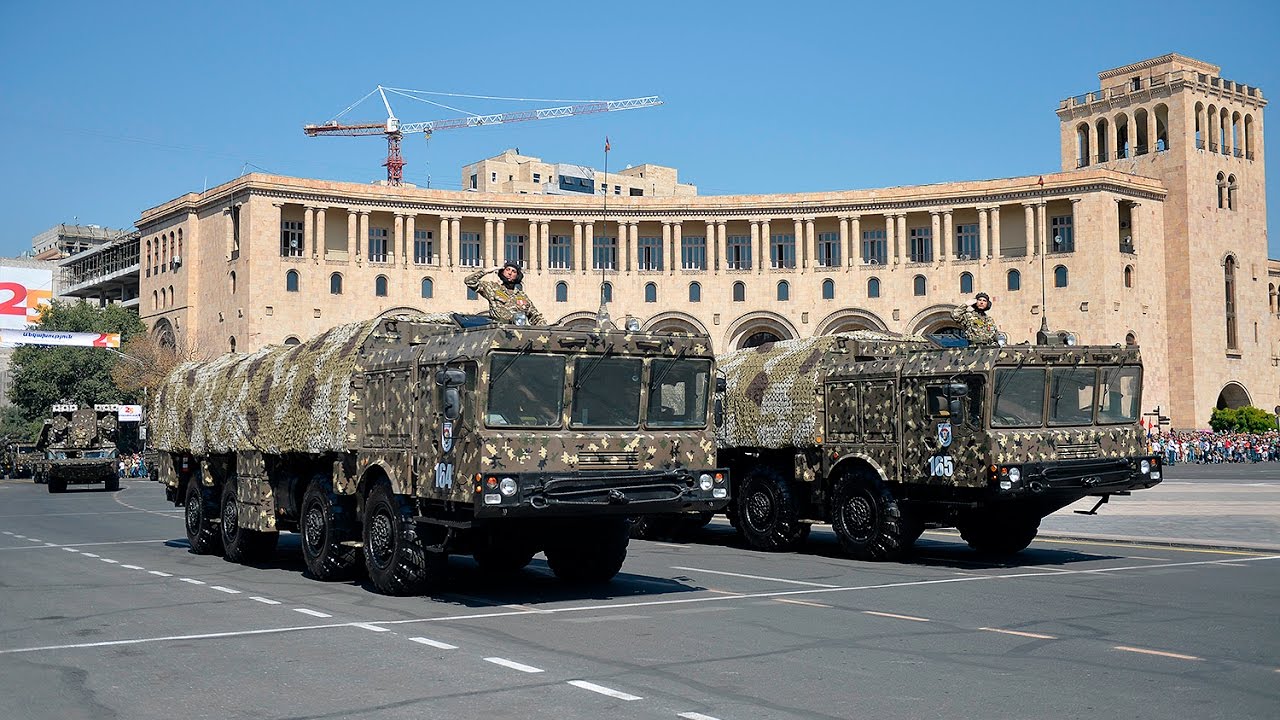
Pashinyan-Aliyev ‘dialogue’ on unresolved provisions of the peace treaty
Aliyev has officially declassified that the unresolved provisions of the peace treaty, or more specifically, Baku’s demands, are:
- The exclusion of third-country representatives from the border (which implies the withdrawal of the EU observer mission monitoring from the Armenian side);
- The refusal to file lawsuits in international courts.
In response, Pashinyan reminded his position on the issue of not placing representatives of other countries on the border. He stated that this is possible in areas where delimitation has already been carried out. The Prime Minister confirmed his viewpoint:
“This is logical. Since the risk of escalation in these areas is significantly reduced due to delimitation. If not, it is reduced to a minimum. Therefore, after full delimitation of the border, there will be no need for the presence of third-party forces on any section of the Armenia-Azerbaijan border. The Republic of Armenia proposes this logic.”
As for the mutual abandonment of lawsuits in international courts, Aliyev stated that “it would be mutually acceptable.” He explained that Azerbaijan had calculated “the damage caused by years of occupation,” amounting to “more than $150 billion.”
The Armenian Prime Minister did not respond to the statement regarding financial claims but said that the idea of withdrawing lawsuits is acceptable and logical after the signing of a peace treaty:
“However, there are two nuances. One is that there should be a clear perspective for resolving individual humanitarian claims discussed in bilateral formats at international forums. Secondly, there should be clarity that after withdrawing disputes from international platforms, the parties should not raise the same issues again or exacerbate the agenda of bilateral relations, turning them into a constant source of escalation. I mean, disputes should not only be removed from international judicial instances but also from the disputes themselves.”
Political analyst Akop Badalyan
Aliyev’s statements about Armenia’s arms purchases are aimed not only at limiting possible acquisitions, but also at preparing the ground for another escalation under the guise of a preventive operation, says political analyst Akop Badalyan. He believes these words also reflect an intention to create conditions for further conflict.
Badalyan is confident that Aliyev continues his long-standing policy of a maximalist approach toward Armenia:
“This is expressed not only in territorial claims and political ambitions regarding Armenia. It reflects the following logic: to make all sorts of demands on Armenia, using any pretext.”
According to Badalyan, Baku sees an unpredictable international situation that will continue in the coming months due to discussions about Ukraine and the power transition in the United States. This encourages Azerbaijan’s authorities to take advantage of the situation:
“I think there is a real risk of escalation. Aliyev believes that situations may arise where there is a window for the use of force, and he will be able to resolve certain issues. The scale of those issues will depend on the situation.”
Badalyan suggests that Baku will escalate to improve its positions before the next stage of border delimitation:
“Azerbaijan clearly has demands on Armenia that are difficult to realize through political consent. To achieve these, it intends to use force. This concerns both enclaves and border areas, where Azerbaijan wants to secure strategic positions under the pretext of conducting delimitation.”
The analyst believes that Aliyev linking the withdrawal of lawsuits to “occupation and compensation of $150 billion” is political blackmail:
“Azerbaijan is trying to pressure Armenia on all fronts. It is taking advantage of the moment when the old world order is not functioning, and the process of forming a new one is continuing in an uncertain and unpredictable manner.”
Akop Badalyan is still unsure about what might be acceptable for Armenia in the context of withdrawing lawsuits. The expert believes all the details, possibilities, and risks need to be examined:
“The circumstances of individual lawsuits could be of concern to Yerevan, in the sense that Azerbaijan might officially withdraw from international lawsuits but still ‘work behind the scenes’ through individual claims.”
He believes these issues can and should only be discussed if a balanced process is formed and real guarantees for peace are in place.
Categories
“AbzasMedia” Trial Has Begun
The trial of seven journalists arrested in connection with the criminal case related to the publication “AbzasMedia” has commenced. The case is being heard at the Baku Serious Crimes Court, chaired by Rasim Sadikhov, with Novruz Karimov and Leyla Asgerova-Mammadova serving as members of the judges’ panel.
The accused journalists are Ulvi Hasanli, the director of “AbzasMedia”; Sevinj Vagifgizi (Abbasova), the editor-in-chief; Mahammad Kekalov, the deputy director; Hafiz Babali, an editor at Turan News Agency; journalists Nargiz Absalamova and Elnara Gasimova; and economist and Radio Azadliq employee Farid Mehralizade. The trial is part of a broader investigation that includes charges related to alleged corruption and illegal activities exposed by the journalists.
The trial’s preparatory hearing took place on December 17, 2024, and it was revealed that a significant portion of the seats designated for attendees had been occupied by outsiders. It was claimed that about 20 of these individuals were those who had taken exams for judicial positions or were present for internships.
The accused journalists objected to this, stating that the hall was deliberately filled with unnecessary people while their family members and supporters were left outside. They demanded the removal of these individuals. Additionally, media representatives who had come to observe the proceedings were not allowed entry, with an order issued specifically barring journalists from attending the session.
As the trial began, Sevinj Vagifgizi objected to two of the three judges on the panel, Rasim Sadikhov and Novruz Karimov, citing their history of issuing politically-motivated rulings. Vagifgizi argued that Sadikhov had been involved in sentencing human rights defender Intigam Aliyev to seven and a half years in prison in 2014-2015, a decision later found to violate the European Convention on Human Rights.
She stated that this demonstrated Sadikhov’s lack of independence and his role in political repression. Vagifgizi also accused Novruz Karimov of being involved in illegal activities during his tenure at the National Security Ministry (NSM) and later as a judge, where he allegedly issued unlawful verdicts in politically-charged cases, including the prosecution of journalist Parviz Hashimli. Vagifgizi emphasized that these judges had been involved in corruption and that they should not be presiding over her case.
The third judge, Leyla Asgerova-Mammadova, was mentioned by Vagifgizi as someone whose background was unknown to the defense team, with the hope that she would not become complicit in what they perceived as an unjust process.
The objections raised by the accused journalists were supported by other defendants, including Farid Mehralizade, who declared that judges like Sadikhov and Karimov were not needed in the country. Despite these objections, the court did not uphold them, and the trial proceeded with the judges in place.
During the hearing, the personal details of the accused journalists were clarified, and their rights and responsibilities were outlined. The judge informed the court that Ramil Abbasov, an official from the State Tax Service, was acting as the civil claimant, as the agency had filed a civil lawsuit against the journalists.
This civil case was in addition to the criminal charges against them. The court’s physical layout featured a glass booth divided into two sections. Three female journalists—Sevinj Vagifgizi, Nargiz Absalamova, and Elnara Gasimova—were placed in the smaller section, while the other four accused individuals were seated in the remaining portion.
Defense lawyers condemned this arrangement, describing it as inhumane, and requested that the journalists be allowed to sit next to their attorneys for proper consultation. The court granted this request, allowing the journalists to sit beside their legal representatives for the duration of the proceedings.
The defense lawyers then raised several motions, including a request to terminate the criminal case, or if that was not possible, to release the accused on house arrest or with bail. Lawyer Javad Javadov, representing Farid Mehralizade, argued that his client had no connection to the “AbzasMedia” case and believed his arrest was related to his work with Radio Free Liberty’s Azerbaijani service.
He further requested that Mehralizade be placed under house arrest, as he was not a flight risk and had family ties, including a newborn child. Hafiz Babali’s lawyer, Rasul Jafarov, also argued that his client had not committed any criminal acts and highlighted Babali’s health problems, including a Group III disability due to eye and foot issues. Jafarov pointed out that medical records from the Ombudsman’s Office confirmed these health issues. Other lawyers, such as Fakhraddin Mehdiyev, referred to the accused journalists as “knights who expose corruption,” emphasizing their role in uncovering state corruption.
In response, journalist Hafiz Babali told the court that all seven defendants had been punished for their investigative work exposing corruption. He stated that the public had been shaken by their arrests and that their investigations into corruption had been misinterpreted as criminal activities. Babali also explained that their bank accounts were thoroughly checked and no illegal activities were found.
He asserted that they were victims of political and legal repression. Babali criticized the judicial system, stating that the law prohibited judges from knowingly issuing unlawful decisions, but that these judges had done so intentionally. Farid Mehralizade echoed this sentiment, adding that “AbzasMedia” had been at the forefront of exposing corruption and that Azerbaijan’s law enforcement agencies were punishing those who exposed wrongdoing, not those who committed it.
Despite the defense’s motions and arguments, the judges, led by Rasim Sadikhov, did not grant any of the requests. The next hearing in the trial has been scheduled for December 28, 2024.
The arrests of the “AbzasMedia” journalists began on November 20, 2023, with Ulvi Hasanli and Mahammad Kekalov being detained first, followed by Sevinj Vagifgizi. Investigative journalist Hafiz Babali, along with Nargiz Absalamova, Elnara Gasimova, and Farid Mehralizade, were arrested shortly after. They face charges under Article 206.3.2 of the Criminal Code for smuggling by a group of persons, but the charges were later escalated to include illegal entrepreneurship, money laundering, tax evasion, and more, carrying penalties of up to 12 years in prison.
Following Ulvi Hasanli’s arrest on November 20, 2023, a search was conducted at the “AbzasMedia” office, where it was claimed that 40,000 euros were found. However, Hasanli denied the allegations, insisting that the money was planted by those who claimed to have found it. The accused journalists maintain their innocence, arguing that they are being punished for exposing corruption, including the business dealings of several high-ranking officials, including members of the President’s family. Government representatives, however, insist that the arrests were based on concrete evidence of criminal activity.
The post “AbzasMedia” Trial Has Begun appeared first on MEYDAN.TV.
After the U.S. Department of Treasury imposed sanctions on two senior Georgian officials, namely Vakhtang Gomelauri, the Minister of Internal Affairs, and Mirza Kezevadze, Deputy Head of the Special Task Department, under the Global Magnitsky Act, the U.S. State Department said it is “also taking further steps to impose visa restrictions on additional Georgian individuals and their family members, including law enforcement and security officials who were involved in the violence against protesters, and municipal government officials who abused their power to restrict fundamental freedoms, including the right to vote without coercion or intimidation.”
The press statement by the State Department notes that this action “builds on visa actions announced last week, expands U.S. sanctions imposed on Georgian officials in September, and complements actions taken by the UK today and actions taken in recent days by several other European countries.” The individuals – subject to these restrictions have not been named by the State Department.
“The United States strongly condemns the ongoing, brutal, and unjustified violence against Georgian citizens,” the statement says. “We stand with the people of Georgia and remain committed to promoting accountability for those complicit in human rights abuses and undermining their democratic future.”
Update: Washington, DC based correspondent Alex Raufoglu reported that on December 20 the State Department Deputy Spokesperson Patel confirmed that December 19 visa restrictions “apply to approximately a dozen individuals.” He further noted that “since the policy was implemented in May 2024, the Department has taken steps to impose visa restrictions on over 100 Georgian individuals.”
This news was updated on December 20, at 22:25 to include the information on the number of the individuals designated by the US State Department on December 19.
Also Read:
- 19/12/2024 – UK Sanctions Senior Georgian Authorities, Including Minister of Interior
- 19/12/2024 – Helsinki Commission: If GD Prevails in Seizing Power, Georgia Will Turn into Power Projection Venue for Autocrats
- 17/12/2024 – Senator Cardin Calls for U.S. Magnitsky Sanctions on GD Over Brutal Crackdown on Protesters
- 02/12/2024 – Senators Shaheen, Risch Express Concern Over Violence in Georgia, Call on U.S. Sanctions Against GD Gov’t
In its final report on the observation of the 26 October parliamentary elections in Georgia, the OSCE Office for Democratic Institutions and Human Rights (ODIHR) said the elections were generally “well-administered”, but took place amidst “serious concerns” about the impact of recently adopted legislation on fundamental freedoms and civil society, steps to diminish the independence of institutions involved in the election process, and pressure on voters, “which combined with election day practices compromised the ability of some voters to cast their vote without fear of retribution.” The report also stresses the lack of post-election legal remedies.
Preparations for the elections were “well managed”, according to the report. However, a plethora of deficiencies are mentioned throughout the document, both before, on the day of and after the elections. The report notes the uneven level playing field stating: “The ruling party held a significant financial advantage over its competitors in terms of state funding, private donations, and campaign spending.”
“Contestants were generally able to campaign freely”, the report says. However, it says that on election day frequent compromises to the secrecy of the vote, several procedural inconsistencies, and reports of pressure and intimidation, including through the recording of the process, negatively impacted public trust in the process, ODIHR notes.
In addition to fear of retribution, especially among public sector employees and the economically vulnerable citizens, the repot says that “in numerous cases, 24 per cent of observations, vote secrecy was potentially compromised due to the manner of ballot insertion into ballot boxes, inadequate polling station layouts, and marks visible on the back of ballots.”
The document notes that the “ruling party representatives frequently video-recorded the voting process, which may have had an intimidating effect on voters.”
ODIHR states that “the counting process revealed procedural omissions, including improper handling of unused ballots, failure to announce votes aloud, and inconsistencies in determining ballot validity. Handling of results protocols at District Election Commissions (DECs) was inconsistent.”
Following the release of preliminary results, the opposition rejected the outcome, citing irregularities such as voter intimidation, vote buying, and alleged foreign interference. ODIHR notes that in the days following the elections, citizen observer organizations and the opposition claimed that these irregularities pointed to coordinated manipulation, while the government, the ruling party, and the CEC denied these claims.
The report notes that “over 1,200 complaints were filed by parties and observer organizations, but most were dismissed by DECs after limited investigation, with courts upholding the majority of these decisions following minimal scrutiny of the cases.” Furthermore, the report says, appeals against electoral results submitted to the CEC, courts, and the Constitutional Court were also dismissed.
The document states: “Overall, the handling of post-election day complaints by election commissions and courts undermined the right to due process, failed to provide an effective remedy, and did not comprehensively address widespread concerns about the integrity of election results.”
In its assessment of post-election developments and complaints, ODIHR found also that “the forcible suppression of protests and numerous arrests caused grave concerns about compliance with international commitments to freedom of peaceful assembly.”
The official press release of the organization quotes Eoghan Murphy, who headed ODIHR’s 2024 election observation mission to Georgia who said: “Numerous issues noted in our final report negatively impacted the integrity of these elections and eroded public trust in the process. To safeguard the democratic principles currently at stake in Georgia, it is imperative that the authorities urgently address all concerns.”
Priority Recommendations
According to the document the priority recommendations by the organization include preventing voter intimidation, pressure on public employees, vote buying, and electoral violence; undertaking a comprehensive legislative review to align the legal framework with international standards; revising the appointment process for election commission members to prevent dominance by any single political party and fully ensure efficiency; developing clear regulations for political finance oversight; introducing measures to ensure the independence of the media regulatory body; ensuring efficiency and transparency in election dispute resolution; allowing for citizen observers to operate without pressure or intimidation; and guaranteeing vote secrecy through procedural safeguards.
ODIHR notes that “in line with its mandate, ODIHR does not recognize or endorse elections. Instead, ODIHR provides a comprehensive and impartial assessment of the electoral process based on universal principles, international obligations, and the commitments to hold democratic elections made by all OSCE states.
ODIHR says it “stands ready to assist in addressing immediate post-election concerns and working to improve future elections by addressing the recommendations contained in this and previous reports, including through a comprehensive review of the electoral legislation.”
More to follow…