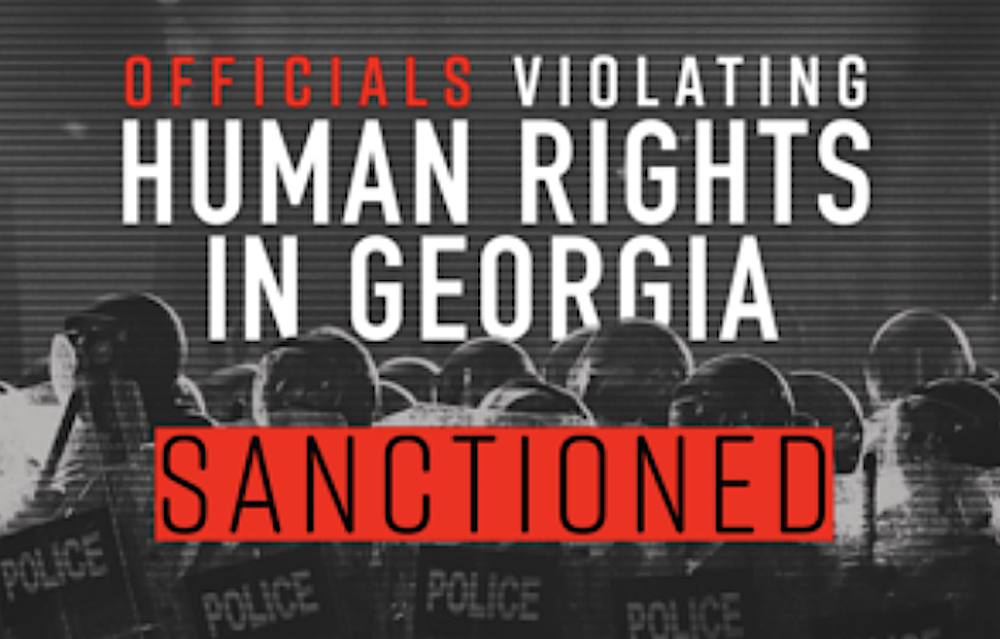
Georgia’s Minister for Interior and Director of the Tbilisi Police Department among five individuals sanctioned for violating human rights in Georgia.
Sanctions follow action taken by the UK government last week to immediatelysuspend all UK programmesupport to Georgian government, including defence cooperation, and restrict engagement with Georgian Dream.
The UK has sanctioned five senior individuals responsible for violent attacks against journalists and peaceful protestors in Georgia, in coordinated action with the United States.
“Georgia’s authorities began a systematic crackdown on demonstrations, civil society, media and opposition figures following public opposition to Georgian Dream’s decision to pause the country’s move towards a European future.
The decision undermines a core component of Georgia’s constitution and is widely viewed as the latest step by Georgian Dream which makes Georgia more vulnerable to the Kremlin.
Individuals designated today, which include the Georgian Minister and Deputy Minister for Internal Affairs and three high-ranking police chiefs, face UK travel bans and asset freezes, excluding them from the UK and its economy.
These measures further protect UK national security, one of the strong foundations upon which the Government’s missions are delivered, by working with international partners to prevent harm; deter and disrupt threats; and respond effectively to incidents.
The shocking violence inflicted upon protestors, opposition leaders and journalists is an egregious attack on democracy, and the Georgian people’s right to exercise their fundamental freedoms.
Our action today shows that the UK stands with the people of Georgia and will consider all options to ensure those responsible are held to account.
Individuals sanctioned today are:
Vakhtang Gomelauri – Minister of Internal Affairs
Aleksandre Darakhvelidze – Deputy Minister of Internal Affairs
Sulkhan Tamazashvili – Tbilisi Police Department Director
Zviad Kharazishvili – Chief of the Special Tasks Department
Mileri Lagazauri – Deputy Head of the Special Tasks Department
Following parliamentary elections in October, riot police have used water cannons, tear gas and rubber bullets to disperse peaceful protestors, with reports of individuals being targeted and beaten which have been verified by the Public Defender (Ombudsman) of Georgia.
UN experts have condemned the pattern of repression and human rights violations in Georgia. The Organisation for Security and Co-operation in Europe (OSCE), in which Georgia is itself a participating State, has called this suppression a serious breach of the right of freedom of assembly.
In June, the UK paused its annual flagship strategic dialogue, the ‘Wardrop Dialogue’, with Georgia in response to an increase in anti-western rhetoric and the adoption of Kremlin-inspired laws which restrict media freedoms and limit equality for the Georgian people.
The program for the production of fifth-generation F-35 multirole fighters, which were intended to rearm not only the United States Air Force but also the air forces of all NATO countries, has failed. This was stated by journalist Dan Fraser of Responsible Statecraft, Azernews reports.
On December 19, the 2nd International Defense Exhibition “Vietnam Defence Expo 2024” began in Hanoi, Socialist Republic of Vietnam. A delegation from the Ministry of Defense Industry of the Republic of Azerbaijan (MSN) attended the official opening ceremony of the event, Azernews reports.
The trial of seven journalists arrested in connection with the criminal case related to the publication “AbzasMedia” has commenced. The case is being heard at the Baku Serious Crimes Court, chaired by Rasim Sadikhov, with Novruz Karimov and Leyla Asgerova-Mammadova serving as members of the judges’ panel.
The accused journalists are Ulvi Hasanli, the director of “AbzasMedia”; Sevinj Vagifgizi (Abbasova), the editor-in-chief; Mahammad Kekalov, the deputy director; Hafiz Babali, an editor at Turan News Agency; journalists Nargiz Absalamova and Elnara Gasimova; and economist and Radio Azadliq employee Farid Mehralizade. The trial is part of a broader investigation that includes charges related to alleged corruption and illegal activities exposed by the journalists.
The trial’s preparatory hearing took place on December 17, 2024, and it was revealed that a significant portion of the seats designated for attendees had been occupied by outsiders. It was claimed that about 20 of these individuals were those who had taken exams for judicial positions or were present for internships.
The accused journalists objected to this, stating that the hall was deliberately filled with unnecessary people while their family members and supporters were left outside. They demanded the removal of these individuals. Additionally, media representatives who had come to observe the proceedings were not allowed entry, with an order issued specifically barring journalists from attending the session.
As the trial began, Sevinj Vagifgizi objected to two of the three judges on the panel, Rasim Sadikhov and Novruz Karimov, citing their history of issuing politically-motivated rulings. Vagifgizi argued that Sadikhov had been involved in sentencing human rights defender Intigam Aliyev to seven and a half years in prison in 2014-2015, a decision later found to violate the European Convention on Human Rights.
She stated that this demonstrated Sadikhov’s lack of independence and his role in political repression. Vagifgizi also accused Novruz Karimov of being involved in illegal activities during his tenure at the National Security Ministry (NSM) and later as a judge, where he allegedly issued unlawful verdicts in politically-charged cases, including the prosecution of journalist Parviz Hashimli. Vagifgizi emphasized that these judges had been involved in corruption and that they should not be presiding over her case.
The third judge, Leyla Asgerova-Mammadova, was mentioned by Vagifgizi as someone whose background was unknown to the defense team, with the hope that she would not become complicit in what they perceived as an unjust process.
The objections raised by the accused journalists were supported by other defendants, including Farid Mehralizade, who declared that judges like Sadikhov and Karimov were not needed in the country. Despite these objections, the court did not uphold them, and the trial proceeded with the judges in place.
During the hearing, the personal details of the accused journalists were clarified, and their rights and responsibilities were outlined. The judge informed the court that Ramil Abbasov, an official from the State Tax Service, was acting as the civil claimant, as the agency had filed a civil lawsuit against the journalists.
This civil case was in addition to the criminal charges against them. The court’s physical layout featured a glass booth divided into two sections. Three female journalists—Sevinj Vagifgizi, Nargiz Absalamova, and Elnara Gasimova—were placed in the smaller section, while the other four accused individuals were seated in the remaining portion.
Defense lawyers condemned this arrangement, describing it as inhumane, and requested that the journalists be allowed to sit next to their attorneys for proper consultation. The court granted this request, allowing the journalists to sit beside their legal representatives for the duration of the proceedings.
The defense lawyers then raised several motions, including a request to terminate the criminal case, or if that was not possible, to release the accused on house arrest or with bail. Lawyer Javad Javadov, representing Farid Mehralizade, argued that his client had no connection to the “AbzasMedia” case and believed his arrest was related to his work with Radio Free Liberty’s Azerbaijani service.
He further requested that Mehralizade be placed under house arrest, as he was not a flight risk and had family ties, including a newborn child. Hafiz Babali’s lawyer, Rasul Jafarov, also argued that his client had not committed any criminal acts and highlighted Babali’s health problems, including a Group III disability due to eye and foot issues. Jafarov pointed out that medical records from the Ombudsman’s Office confirmed these health issues. Other lawyers, such as Fakhraddin Mehdiyev, referred to the accused journalists as “knights who expose corruption,” emphasizing their role in uncovering state corruption.
In response, journalist Hafiz Babali told the court that all seven defendants had been punished for their investigative work exposing corruption. He stated that the public had been shaken by their arrests and that their investigations into corruption had been misinterpreted as criminal activities. Babali also explained that their bank accounts were thoroughly checked and no illegal activities were found.
He asserted that they were victims of political and legal repression. Babali criticized the judicial system, stating that the law prohibited judges from knowingly issuing unlawful decisions, but that these judges had done so intentionally. Farid Mehralizade echoed this sentiment, adding that “AbzasMedia” had been at the forefront of exposing corruption and that Azerbaijan’s law enforcement agencies were punishing those who exposed wrongdoing, not those who committed it.
Despite the defense’s motions and arguments, the judges, led by Rasim Sadikhov, did not grant any of the requests. The next hearing in the trial has been scheduled for December 28, 2024.
The arrests of the “AbzasMedia” journalists began on November 20, 2023, with Ulvi Hasanli and Mahammad Kekalov being detained first, followed by Sevinj Vagifgizi. Investigative journalist Hafiz Babali, along with Nargiz Absalamova, Elnara Gasimova, and Farid Mehralizade, were arrested shortly after. They face charges under Article 206.3.2 of the Criminal Code for smuggling by a group of persons, but the charges were later escalated to include illegal entrepreneurship, money laundering, tax evasion, and more, carrying penalties of up to 12 years in prison.
Following Ulvi Hasanli’s arrest on November 20, 2023, a search was conducted at the “AbzasMedia” office, where it was claimed that 40,000 euros were found. However, Hasanli denied the allegations, insisting that the money was planted by those who claimed to have found it. The accused journalists maintain their innocence, arguing that they are being punished for exposing corruption, including the business dealings of several high-ranking officials, including members of the President’s family. Government representatives, however, insist that the arrests were based on concrete evidence of criminal activity.
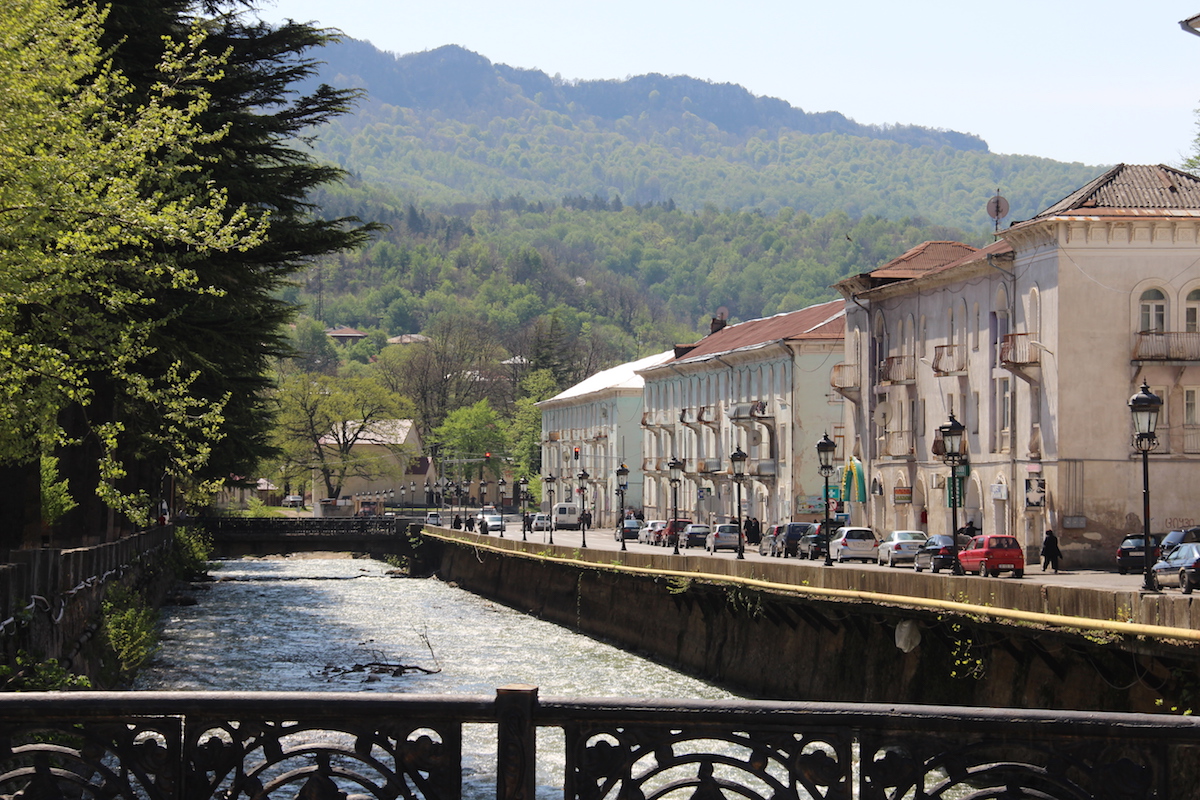
Chiatura is a city in Western Georgia known for its manganese ore extraction and processing, which causes significant environmental harm. However, with the support of the European Union and the Caucasus Environmental NGO Network (CENN), the villages of Zodi and Darkveti near the city managed to partially address the issue by treating one hectare of land with special fertilizers to protect it from desertification.
Manganese from Chiatura
Manganese mining in Chiatura began back in 1879 during the Russian Empire, and it became even more intensive after the Sovietization of Georgia.
Until the 1990s, Chiatura was the main supplier of manganese to the Soviet Union, with significant amounts also exported to Eastern European countries.
Despite extensive mining, Chiatura still has some of the largest manganese reserves in Europe—about 215 million tons.
However, along with generating income, manganese extraction causes significant harm. In Chiatura’s villages, residents say the soil is gradually drying out, erosion is intensifying, the risk of landslides is increasing, and the land is becoming unsuitable for agriculture and habitation.
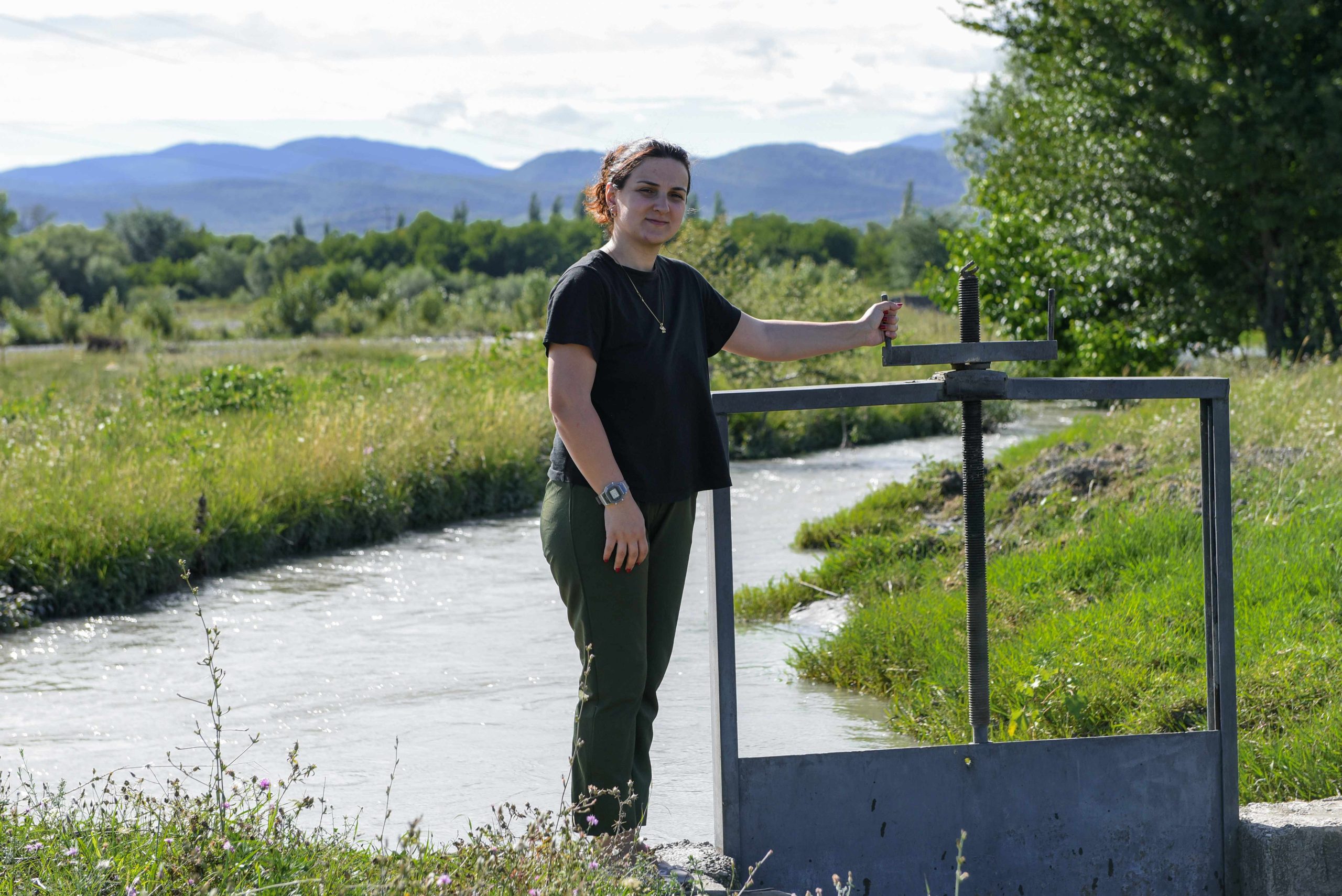
“As a result of manganese mining, the soil becomes depleted over time, making the land unfit for growing anything. And since even grass stops growing, it can no longer be used as pasture,” explains Teona Kapanadze, a member of the local organization Mkhardamkhar.
Last year, in 2023, this organization began seeking funds to address the problem. Coincidentally, CENN announced a small grants competition as part of the “Georgia’s Climate Program” during that time.
Чhe four-year “Georgia’s Climate Program” is being implemented with financial support from the European Union by the organization CENN, in collaboration with the Kakheti Regional Development Foundation (KRDF), the Chiatura Union (ACU), the Association for the Development of Agro-Tourism in Racha-Lechkhumi and Kvemo Svaneti (RLS-ADA), and the Union of Young Teachers (YPU).
The project, covering four regions of Georgia – Guria, Imereti, Kakheti, and Racha-Lechkhumi and Kvemo Svaneti – aims to strengthen civil society and promote human rights and fundamental freedoms, with a focus on access to water and a healthy environment.
“Mitigating the effects of climate change by reducing soil degradation” was the name of the project submitted by the Mkhardamkhar organization to the grant competition, which it won.
After that, major work began in Chiatura.
Soil study and restoration
Teona says that they first studied the soil, and after receiving the initial results, decided to start with two villages—Zodi and Darkveti. The goal was to restore the soil and protect it from desertification.
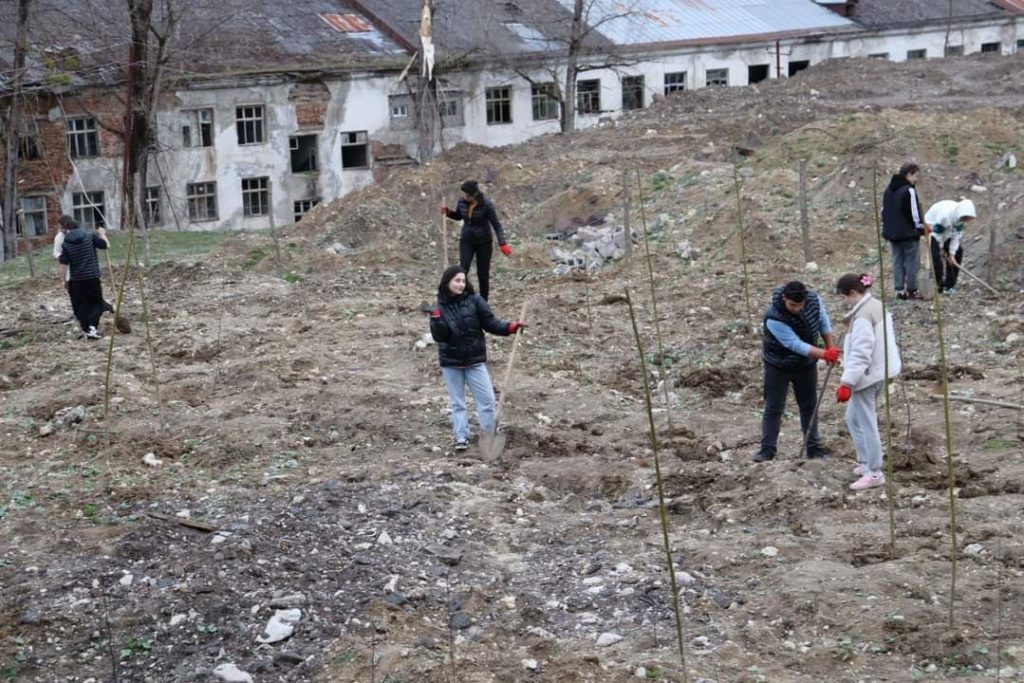
Soil restoration process. Photo: Teona Kapanadze
Teona explains how the process was carried out:
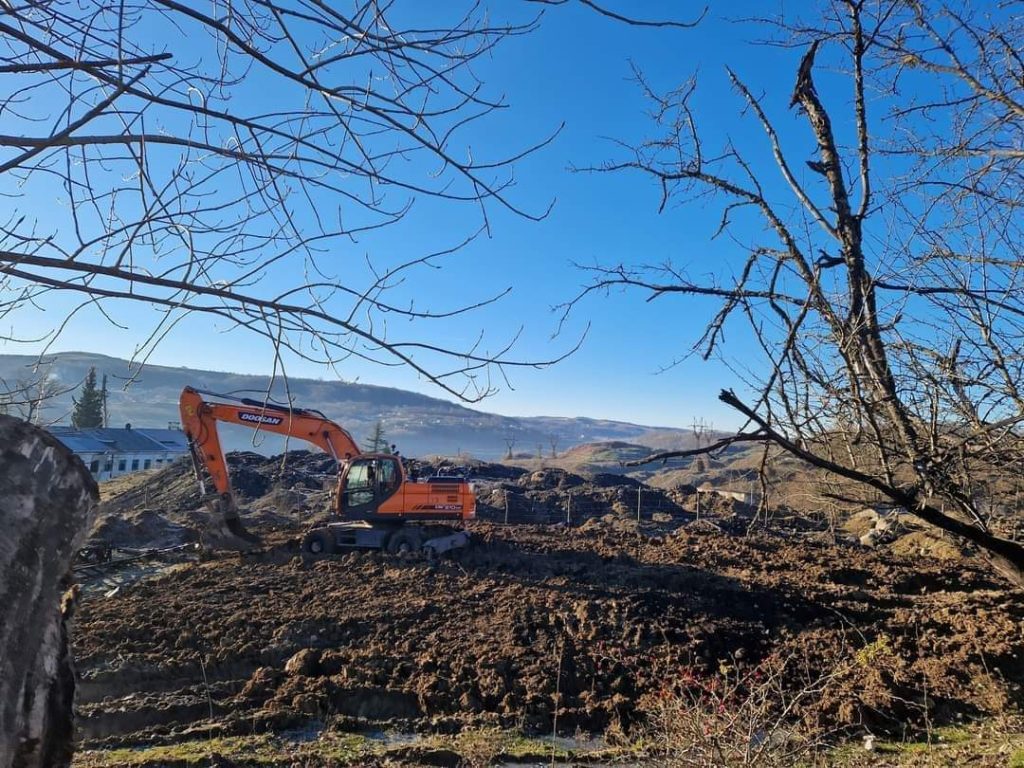
“First, we level the soil using specialized equipment. The next step is preparing fertile soil. For this, we often use river silt as well as bio-fertilizers. Then grass is planted, or even better, tree seedlings.”
Based on laboratory studies, the type of bio-fertilizer recommended for the specific soil was identified and selected, providing enrichment and essential nutrients for the seedlings.
Afterward, acacias, cypresses, and other trees were planted here.
Improving the situation will take many years, but the initial work has already had some positive effects on both the soil and the environment.
Teona Kapanadze describes the process of reclaiming degraded soil:
“Over time, as the root systems of plants develop, the restoration process begins, and the soil gradually becomes fertile again. Seedlings are mainly selected based on their adaptability to the local climate.
As the root system develops, it penetrates deeply into the soil, forming roots and stabilizing the soil.
As a result, the soil becomes denser, the processes of decay and erosion slow down and eventually stop, which, in turn, halts landslide activity.”
In the villages of Zodi and Darkveti, land plots damaged before 2007 have been restored. However, there are still large areas that remain damaged and in need of rehabilitation.
Trainings for youth
In addition to carrying out practical work, the project also aimed to raise environmental awareness among the local population, especially the youth. To achieve this, several training sessions were held, one of which focused on climate change.
Planting vegetation. Photo: Teona Kapanadze
One of the participants in the training was 16-year-old Lizi Mezvenishvili from the village of Tsirkvali. Lizi and her friends also took part in the land reclamation work. After planting the seedlings, they came every week throughout the summer to water and care for them.
“It was a very pleasant feeling. We bonded, worked together, and helped each other. We all remember those days very well,” Lizi shares.
The girl says that most of her peers learn interesting information about environmental issues through this type of informal education:
“Although geography textbooks have entire sections dedicated to environmental protection, schools still don’t pay enough attention to this topic. But now everyone is concerned about the environment we live in. Everyone is worried, for instance, about the dirt flowing along the roads, polluted air, and contaminated water.”
Advocacy campaign for allocating funds to local budget
The project also included advocacy campaigns aimed at bringing soil maintenance and restoration issues to the local agenda.
To achieve this, the organization “Mkhardamkhar” and the regional Climate Action Group (CAG) prepared a special petition through which local residents requested the allocation of funds in the local budget for soil restoration.
Their request was granted — the 2024 local government budget allocated 30,000 lari (approximately $10,000) for this purpose.
According to Teona, reclamation work was indeed carried out on certain plots this year. She believes that, based on this experience, the issue will remain a priority in local budgets for the coming years.
This article was written as part of the Georgia Climate Action Project, funded by the European Union and implemented by CENN in collaboration with the Kakheti Regional Development Foundation (KRDF), the Chiatura Union (ACU), the Association for Agrotourism Development of Racha-Lechkhumi and Kvemo Svaneti (RLS-ADA), and the Young Pegagogue’s Union (YPU). The project aims to strengthen civil society and promote human rights in four target regions of Georgia—Guria, Imereti, Kakheti, and Racha-Lechkhumi and Kvemo Svaneti—with a focus on the right to access water and a healthy environment.
On December 18, one of the de facto deputies of the occupied Abkhazian region, Vakhtang Golandzia, was shot dead in the middle of an armed confrontation between two other de facto deputies, while the debate was going on in the de facto parliament on banning crypto-mining in the region.
The confrontation took place between Adgur Kharazia and Kan Kvarchia, near the so-called parliament building, during which Kharazia pulled out his pistol and intended to shoot Kvarchia. Golandzia stepped in to resolve the situation, but was shot instead. A bullet also hit Kvarchia’s hand. He is currently undergoing an operation.
It is not clear what prompted the confrontation and whether it was connected to the issue of crypto-mining discussions in the de-facto legislature, although the confrontation did begin during the discussion on the de facto law.
Abkhazia’s de facto parliament has moved to advance restrictions to ban cryptocurrency mining and amend the so-called Criminal Code to criminalize cryptocurrency mining. The measure aims to address severe energy shortages caused by mining activities, which are putting excessive pressure on the region’s power grids.
Abkhazia has had a ban on cryptocurrency mining since 2018, complemented by a temporary ban on the import of mining equipment since 2020. Administrative fines and confiscation of equipment have been used as enforcement tools. The new draft of the so-called law extends these restrictions, prohibiting the mining, trading, use, and advertising of cryptocurrencies, as well as the import of mining equipment, in order to ensure the rational use of the region’s limited energy resources.
De facto parliament speaker Lasha Ashuba underscored the necessity of such extraordinary measures, citing the ongoing electricity crisis as a matter of public interest. He emphasized that earlier efforts to curb mining through tightened regulations had proven ineffective, prompting the development of stricter norms.
The 11th summit of the D8 Economic Cooperation Organization has commenced in Cairo, with Azerbaijani Prime Minister Ali Asadov representing the country at the event.
On December 19, President Salome Zurabishvili gave an interview to TVP World, a Polish Public TV Broadcaster, in which she talked about the current situation in Georgia, the need for increased EU support for Georgian resistance, Georgian Dream’s propaganda and manipulation, Russia’s “electoral war” strategy, and her future plans as her mandate expires.
President Salome Zurabishvili spoke of the European Union’s moral and political support for Georgia, acknowledging in particular the strong backing from the Baltic States, Poland, Germany, and French President Emmanuel Macron, who provided “a rare direct allocation to the population.” While recognizing the challenges of achieving consensus among 27 countries, she stated the need for more decisive action.
She warned that the situation in Georgia goes beyond “democratic backsliding,” describing it instead as “the imposition of a Russian model” on a country that was once a democratic leader in the region. Zurabishvili argued that Russia “has been testing new methods, such as using elections as an instrument to consolidate their proxies”, as a strategic alternative to military intervention, which has failed in places like Ukraine and Syria.
Zurabishvili urged the EU to understand and confront this “electoral war” strategy. She asserted that the Georgian population remains united, with 80% still supporting European integration, and people taking to streets to defend this choice. She criticized the ruling party for its ability to “intimidate” and control large parts of the population and institutions. Referring to the recent elections, she stated: “It’s clear that the elections were very much stolen,” and called for a more robust European response to address the manipulation of Georgia’s democratic processes.
She said that the GD is using all kinds of propaganda and manipulation to paint a picture of its legitimacy. The President also spoke about some EU representatives who, willingly or unwillingly, are legitimizing the GD government despite the established electoral fraud. She mentioned the visit of the Hungarian Prime Minister, which was “deliberate” and “agreed in advance between the [Georgian] ruling party and the leadership of Hungary”. However, the President emphasized that there is another kind of legitimization that happens involuntarily, such as the handshake between the EU Ambassador or the meetings of the Secretary General of the Council of Europe with GD officials. who [Secretary General Alain Berset] she said “is not well prepared for the type of really Soviet, Russian-like propaganda” to project different kind of reality.
She noted that such meetings are and will be used by the GD party as propaganda and manipulation, and that it is a “Soviet, Russian-like propaganda, which uses everything to project a different reality.” In that context she noted that CoE Secretary General [Alain Berset who is currently visiting Tbilisi and has met with GD officials and Bidzina Ivanishvili], is “not well prepared for” such propaganda.
President Zurabishvili touched on the issue of the president electedunder the Georgian Dream government, describing the process as illegitimate. She argued that the parliament, which violated constitutional requirements, and the elections, which she said were “stolen,” undermine any legitimacy for such a president. She said that this president would be used “to counter” her and erode her legitimacy as a symbol of state continuity and the last independent institution in Georgia.
Addressing her future plans, Zurabishvili firmly stated, “There is no question about leaving Georgia. I’m there.” She dismissed comparisons to exiled opposition leaders like Svetlana Tikhanovskaya or others recognized internationally after being forced abroad. “I need to be supported now in my country, together with my population,” she emphasized. Acknowledging the risks of living under what she called a “police state, criminal state, and Russian-type state,” Zurabishvili expressed a sense of duty to stay and fight for Georgia’s independence and democratic future. Reflecting on her family’s history of fleeing Russian occupation, she declared, “I’m not going to do that,” signaling her commitment to remain in Georgia despite the challenges.
In addition, the President highlighted the need to assess the extent of Russia’s control over GD, describing their governance as following a “Russian model.” She suggested that the degree of their alignment with Moscow remains uncertain and should be tested by international partners, particularly through targeted American sanctions on the elite surrounding GD patron Bidzina Ivanishvili. Zurabishvili emphasized the importance of the U.S. engagement, urging the new administration to look at Georgia where they don’t want to have another crisis; or “have a government serving interests not only of Russia, but Iran” and other destabilizing actors, and prioritize stability and security in the Black Sea and across the Caucasus.
Lastly, while speaking about what Georgia needs from the EU now, Zurabishvili stressed: “Support the Georgian population and help us to get the only way out that is a peaceful way out of this situation- elections, free and fair elections, that will return Georgia on its European path. It’s not a revolution. Georgian Dream will probably stay, to the extent and with the percentage that it deserves really in the population, and then we can have a coalition government. That’s the normal path … for normal European Georgia.”