
Aliyev Lists Demands To Armenia Ազատություն Ռադիոկայան
Day: December 18, 2024
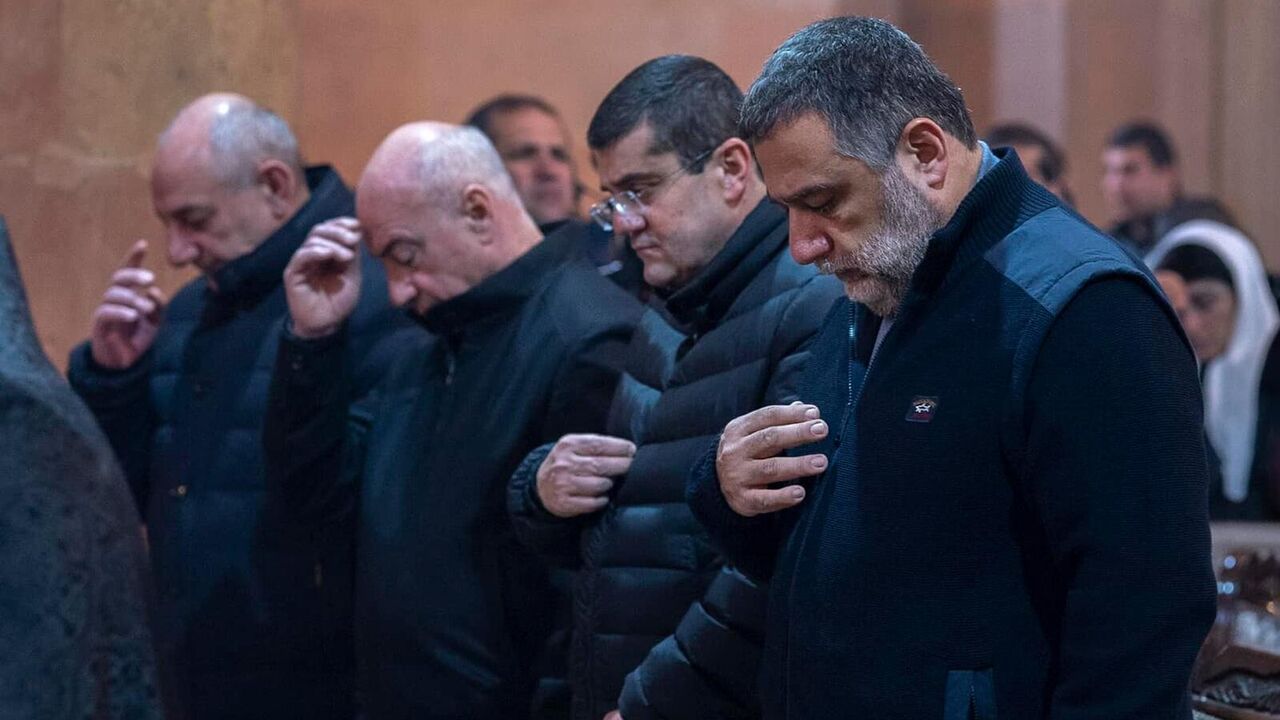
What will happen to ex-NKR officials
The Baku Military Court will hear the cases of former military and political leaders of the unrecognized Nagorno-Karabakh Republic currently held in Baku prisons, according to Azerbaijan‘s General Prosecutor’s Office. Former State Minister Ruben Vardanyan faces 45 charges, though the specifics remain undisclosed. Officials in Baku have cited “Azerbaijan’s national security” as the reason for withholding details. According to Vardanyan’s legal team, he could face life imprisonment.
Other detainees are reportedly charged with serious crimes, including organizing genocide, terrorist acts, and deporting civilians.
Armenian human rights advocates warn of severe violations of the rights of all former Nagorno-Karabakh leaders. They claim the detainees are denied legal representation, access to complete translations of the charges against them, and their right to a fair trial has been breached.
- What could push Baku to sign peace agreement with Armenia?
- Pashinyan’s response to Putin’Armenia has passed the point of no return’
- A year after Armenians’ exodus from Nagorno-Karabakh: Current situation and perspectives from Yerevan
Reports from Azerbaijan raise concerns among human rights activists
According to Azerbaijan’s APA news agency, the country’s Prosecutor General has already approved the indictments, and the cases have been forwarded to the Baku Military Court.
Eight former officials are facing charges: former presidents Arkadi Ghukasyan, Bako Sahakyan, and Arayik Harutyunyan; parliament speaker Davit Ishkhanyan; former state minister Ruben Vardanyan; former commander of the Defense Army Levon Mnatsakanyan; former deputy commander Davit Manukyan; and former foreign minister Davit Babayan. They were arrested following the two-day war in 2023 and the decree dissolving the former unrecognised Nagorno-Karabakh Republic (NKR). The detentions occurred as the Armenian population was leaving Nagorno-Karabakh.
After the Azerbaijani Prosecutor General’s statement, Armenian human rights advocates expressed concerns that Baku may have filed charges against other Armenians as well.
“Based on substantial grounds suggesting that many individuals suspected in connection with these investigative episodes, as well as witnesses, are located in the Republic of Armenia, the Prosecutor General’s Office of the Republic of Azerbaijan invites the relevant Armenian authorities to cooperate,” the statement reads.
Charges and evidence remain confidential
The new charges against former state minister Ruben Vardanyan reportedly involve violations of 20 different articles of Azerbaijan’s Criminal Code. However, the charges and evidence remain undisclosed. Previously, Azerbaijan accused Vardanyan of “financing terrorism, creating illegal armed groups, and illegally crossing the Azerbaijani border.”
Vardanyan’s lawyers issued a statement claiming the new charges are based on over 25,000 pages of materials, compiled into 100 volumes in the Azerbaijani language.
The defense team emphasized that the “so-called evidence is being concealed.” Both Vardanyan and his lawyer are allowed limited access to the materials, without proper translation or the ability to take notes:
“All of this is justified under ‘national security considerations.’”
Ruben Vardanyan’s family has called on the international community and democratic nations to “put an end to the violations” of his rights. They described the new charges as “an affront to justice.” The family’s statement also alleges that “the charges were brought by the Aliyev regime to justify a secret trial that cannot be independent or impartial.”
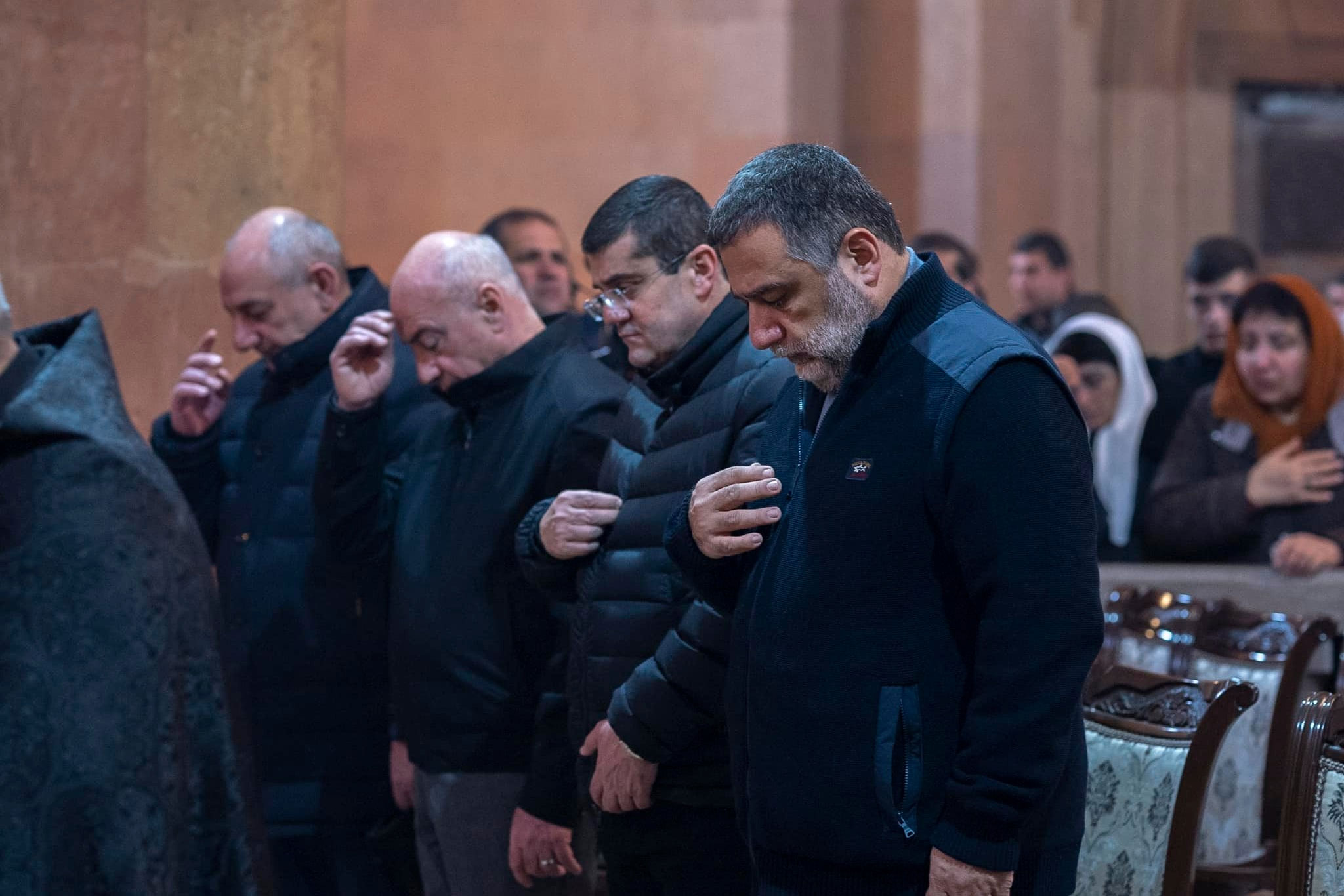
“Ruben Vardanyan – political prisoner”
Recently, Ruben Vardanyan’s American lawyer, international legal consultant Jared Genser, was interviewed by Radio Liberty’s Azerbaijani service. He stated that the Aliyev administration has consistently denied his requests to visit Baku and meet with his client. Genser also reported that he has received no evidence refuting claims that Vardanyan has been subjected to torture in prison.
According to Vardanyan’s family, in April, when he announced a hunger strike, he was placed in solitary confinement. There, he was deprived of water, sleep, and contact with the outside world, kept under constant lighting, and forced to stand for extended periods.
Azerbaijani authorities denied these accusations but have not allowed Genser to assess the situation firsthand. In June, Genser and Vardanyan’s family filed a complaint with the UN Committee Against Torture, demanding condemnation of the inhumane treatment.
Jared Genser argues that Vardanyan is a political prisoner, targeted for openly criticizing Aliyev and opposing his policies.
“Let me illustrate how absurd the charges against Mr. Vardanyan are. He is a co-founder of the Aurora humanitarian initiative, which awards individuals or organizations working to make the world a better place. It is laughable that his humanitarian work is being used as evidence against him. Yet, it is presented as proof that he financed illegal terrorist activities and armed groups in Nagorno-Karabakh,” Genser emphasized.
The Aurora Humanitarian Initiative, co-founded by Ruben Vardanyan in 2016, aims to address humanitarian challenges globally. Its flagship project is the Aurora Prize for Awakening Humanity, awarded to individuals whose courage and actions have had a significant positive impact on vulnerable communities.
To date, Aurora has supported 430 projects in 56 countries, reportedly positively affecting the lives of approximately 3.4 million people in dire need.
The initiative and prize are named “Aurora” in honor of Arshaluys Martikyan (later known as Aurora Mardiganian), a survivor of the Armenian Genocide. After her rescue and relocation to the United States, she authored Ravished Armenia, which was later adapted into a silent film of the same name by director Oscar Apfel, with Aurora portraying herself.
Expert commentary
Human rights advocate Siranush Sahakyan describes the charges against Ruben Vardanyan as a case of legal absurdity:
“All the crimes committed by Azerbaijan in Nagorno-Karabakh are now being attributed to Ruben Vardanyan. For instance, torture, enforced disappearances, planning aggressive war, incitement, and so on.”
Siranush Sahakyan, who represents Armenian detainees held in Azerbaijani prisons at the European Court of Human Rights (ECHR), also highlights the issue of these trials proceeding without international involvement:
“The right to defense has been violated. The atmosphere of Armenophobia and hatred towards Armenia constrains all participants in these judicial processes.”
Among the eight former officials being tried in Baku, only Vardanyan has a dedicated legal team. The others are represented by local public defenders, and according to Sahakyan, obtaining information about their cases is even more challenging:
“Information is limited. Of course, it is supplemented by proceedings at the ECHR. I believe we need to wait. In my view, the scope of charges will likely expand to include other officials as well.”
President of Azerbaijan Ilham Aliev criticized his French counterpart Emmanuel Macron for getting involved in Georgia, saying: “You can see Macron’s ears sticking out, he is restless in his own country, and he has to get involved in Georgia.” In a lengthy interview with one of the key Russian propagandists and a Director General of the Russian state-controlled and funded TV network Russia Today, Dmitry Kiselyov, which was broadcast live on December 18, Aliev discussed developments in Georgia, slammed President Biden’s administration and USAID, and spoke about the South Caucasus region, among other issues.
Asked about his assessment of the developments in Georgia, Ilham Aliev said: “I see that the situation in Georgia is stabilizing and we are happy about that.” He added: “Georgia is our most important partner and close friend. Our peoples have lived in peace and harmony for many centuries. Therefore, destabilization or the threat of destabilization in Georgia is as harmful for Azerbaijan as it is for Georgia”.
He then noted: “Therefore, for our part, we are striving towards and doing everything to ensure that the situation in Georgia is politically stable and that Georgia develops successfully.”
In this context he denounced the “external influence” saying: “It has turned out that there are thousands of NGOs working in Georgia that receive funding from the West, and there are tens of thousands of people, if not more, who work in these organizations or receive salaries there.”
Recalling the Azerbaijani experience in this regard, he said: “And we know what it is, because there was a period here in our country when the same grant-makers and grant-eaters felt free to act as they wished, but we stopped it. And that is why any grant that is given by any structure, whether it is Azerbaijani or foreign, has to be registered and the relevant authorities decide whether to allow it or not.”
He noted that “aid should be unobtrusive,” adding that President Biden’s administration will go down in history for its intrusiveness. He complained that USAID insists on helping while we say: “Thank you, we don’t need your help.” He added: “USAID wants to help, but for some reason not where we need it”. Responding to Kiselyov’s comment that Russia had banned USAID altogether, he said: “Did you ban it? Well, you did the right thing.”
Speaking about the funding of media and civil society organizations from abroad, he said: “That is why we have put things in order here. For example, Azerbaijani media cannot be financed by foreign sources, not even by 1%. Well, what for? We do not finance media in the USA, do we? So, why should then they finance our media? They are already pouring mud on our people and our country day and night, and casting shadow on our victory over Armenia through their handy resources, such as Voice of America and Radio Liberty.”
Allegedly referring to the Foreign Agents’ law, and Aliev noted: “Therefore, it seems to me that a certain time was lost in Georgia to streamline this,” and lamented that this was done somewhat late: “And when it was done, as they say, the train had already departed”
Azerbaijani President then noted: “But it is good that now the situation is moving towards stability. And again you see, Macron’s ears sticking out, the man is restless in his own country, and he has to get involved in Georgia.” (In the interview he further criticized France for its policies in the former colonies, slamming French President for “colonialist” policies and speaking at length about the “hideous face of French colonialism.”)
Commenting further on Georgia, he said that the issue of Georgia “is much bigger than it seems, it is a battle for the Caucasus, if I may say so.” He went on: ” Armenia, it is clear where it is going. It has de-facto withdrawn from the CSTO and, according to our verified information, the only reason why it has not yet de-jure withdrawn from the CSTO is that they have not yet received a signal from the State Department. As soon as they get it, they will leave.”
He then noted that “Azerbaijan is an independent player, qualified enough and able to stand up for itself”. And he concluded: “Therefore, Georgia is an important factor in the struggle for the Caucasus. What will it be like – will it be traditional, based on our Caucasian values?”
Also Read:
- 13/12/2024 – President Macron Reassures Georgians, Tells to Take the Reins of their European Future
- 11/12/2024 – Macron Scolds Ivanishvili, Calls for Inclusive Dialogue
- 09/12/2024 – President Zurabishvili Visits France
- 07/11/2024 – Macron, Scholz and Tusk: No EU Accession Talks Unless Georgia Reverses its Current Course