
Verdacht der Bestechlichkeit und Bestechung: Zwei bekannte Unionspolitiker müssen vor Gericht. Sie sollen Geld aus Aserbaidschan angenommen haben. via @merkur_de https://t.co/xCN1IllplT
— Notes from Georgia/South Caucasus (Hälbig, Ralph) (@SouthCaucasus) December 14, 2024
Day: December 14, 2024
Anthony Blinken: “She returned knowing that she might be arrested on arrival.”
The U.S. Department of State awarded Sevinj Vagifgizi, the editor-in-chief of AbzasMedia, with the “Champions of Combating Corruption” award.
Sevinj is known for her work on corruption investigations, and she is currently imprisoned.
In his speech, U.S. Secretary of State Antony Blinken highlighted Sevinj’s devotion over the past decade in exposing government abuses.
“She is also the one awardee who is not with us this afternoon. In November 2023, Sevinj flew home from an overseas country amid a crackdown on Azerbaijani independent media. She returned knowing that she might be arrested on arrival. She was. Now, more than a year later, she remains in detention. Prior to her arrest Sevinj wrote and I quote, ‘I don’t feel fear anymore. I know what they can do. It does not stop me. It is more important to be useful to the people. People need us’”
-Antony Blinken
Blinken also expressed gratitude to the ten anti-corruption champions for their courage. He said it was an honor to partner with them in this fight. The Department of State created the “Champions of Combating Corruption” award in 2021 to recognize individuals who have made significant progress in fighting corruption and to show the U.S. government’s solidarity with them.
This year’s award recipients include journalists, human rights defenders, judges, and even government officials who have facilitated major institutional changes. Other awardees include Jorge Mora Cortes from Colombia, Matrika Daxal from Nepal, Altin Dumani from Albania, Srbukhy Galyan from Armenia, Carl Irani from Lebanon, Marr Nyang from Gambia, Javier Enrique Caraballo Salazar from Panama, Didar Smagulov from Kazakhstan, and Jimmy Spyre Ssentongo from Uganda. Blinken emphasized that each recipient made a difficult decision to help their own citizens and all the people around the world, and their dedication, along with those of others, we are in a better place now.
AbzasMedia, the organization behind Sevinj’s work, has also faced significant challenges. Six of its employees, including the general manager Ulvi Hasanlı, assistant Muhammad Kekalov, editor Sevinj Vagifgiz, reporters Nargiz Absalamova and Elnara Gasimova, and investigative journalist Hafız Babali, have been arrested. These individuals are facing charges of smuggling, with some detained since November 2023.
On May 31, 2024, journalist and economist Farid Mehralizade from the “Azadlig” radio station was arrested, and a search was conducted at his home. He was accused under Article 206.3.2 of the Penal Code, which concerns smuggling by a group of individuals who had previously made secret agreements. The Khatai District Court decided to detain him for security reasons. On the same day, AbzasMedia issued a statement declaring that Mehralizade had no connection to the media organization.
Following this, each of the detainees in the AbzasMedia case was faced with additional serious charges related to financial matters. Since November 2023, nearly 20 journalists and social activists have been arrested in Azerbaijan on smuggling charges. None of these individuals have been charged based on their professional activities or political affiliations.
According to local human rights organizations, there are currently around 300 political prisoners in Azerbaijani prisons. Authorities typically assert that no one has been detained solely for political reasons related to their professional activities. However, both local and international human rights organizations believe these arrests are politically motivated, and they are calling for the release of the detainees and the withdrawal of the charges against them.
The post Sevinj Vagifgizi honored as anti-corruption champion appeared first on MEYDAN.TV.

Mikheil Kavelashvili elected president
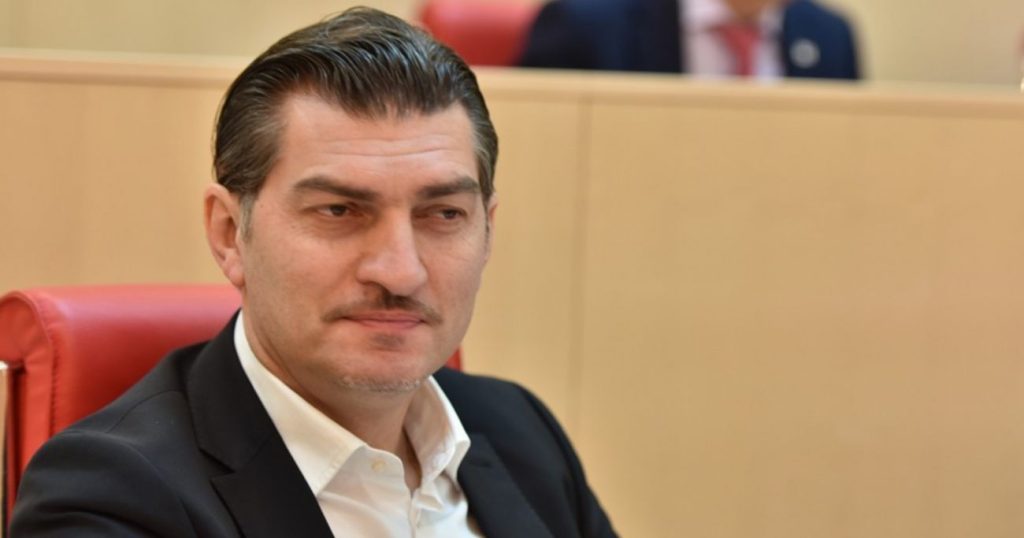
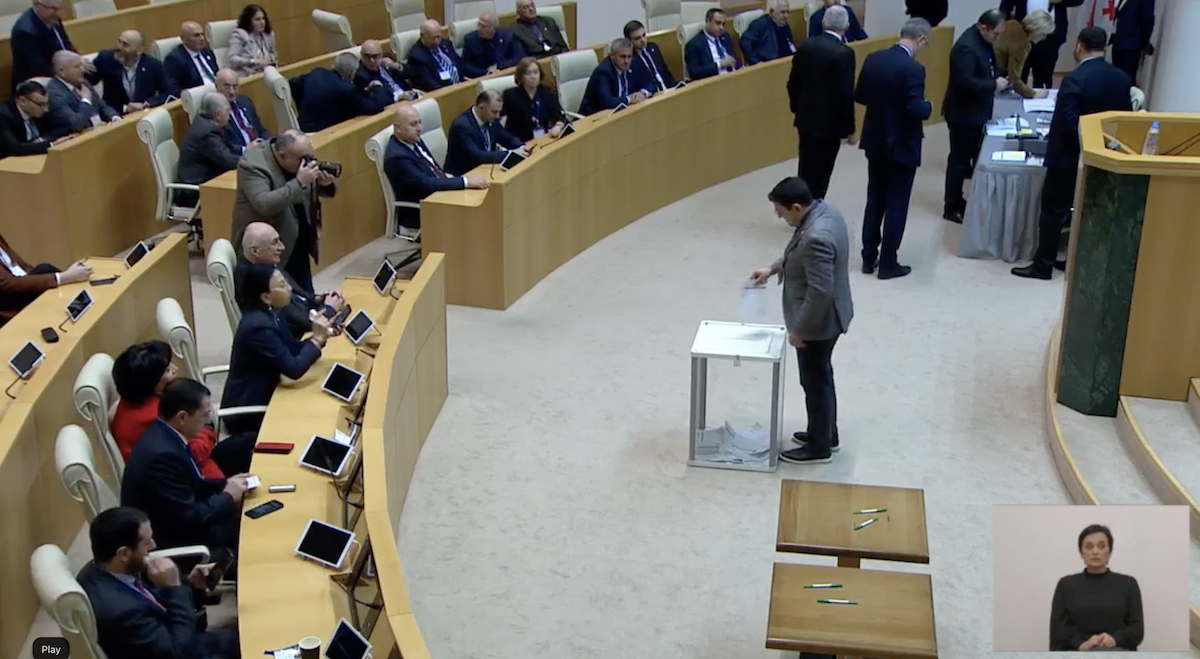
At midday on 14 December, the voting process in the electoral college for Georgia’s presidential election concluded. There was only one candidate—Mikheil Kavelashvili, personally nominated by Bidzina Ivanishvili, the honorary chairman of the ruling Georgian Dream party and an oligarch. He received 224 out of 225 votes from members of the college, all of whom represented the ruling team.
The sole vote Kavelashvili did not receive came from MP Ada Marshania. She stated that she would not support him and believed the ruling team had “chosen the wrong candidate.”
Thus, Mikheil Kavelashvili became Georgia’s sixth president.
There is a significant issue with these elections in Georgia. For the first time, the president was not chosen through a nationwide vote but by a special electoral college. By law, this college consists of 300 members, 150 of whom are parliamentary deputies. However, all four opposition groups (three alliances and the “Gakharia – For Georgia” party) that entered parliament in the 26 October elections declared that the elections were rigged, the parliament illegitimate, and therefore incapable of making any decisions, including electing the president.
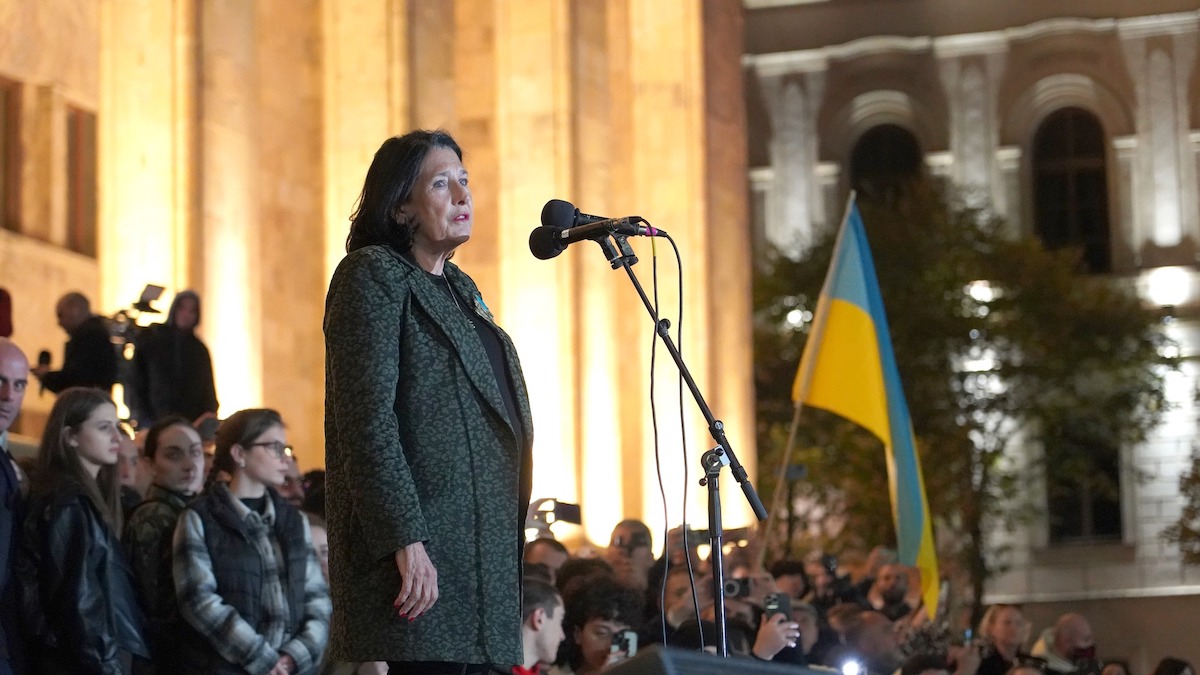
The opposition, along with Salome Zourabichvili herself, asserts that until new parliamentary elections are held, she remains the legitimate president of Georgia and, in fact, the only legitimate institution in the country. She continues to serve as the Commander-in-Chief of the Defence Forces and the nation’s highest representative in foreign relations.
For over two weeks, mass protests have been ongoing in Tbilisi and other Georgian cities. People are demonstrating against the government’s decision to halt Georgia’s European integration process until 2028 and are demanding new parliamentary elections.
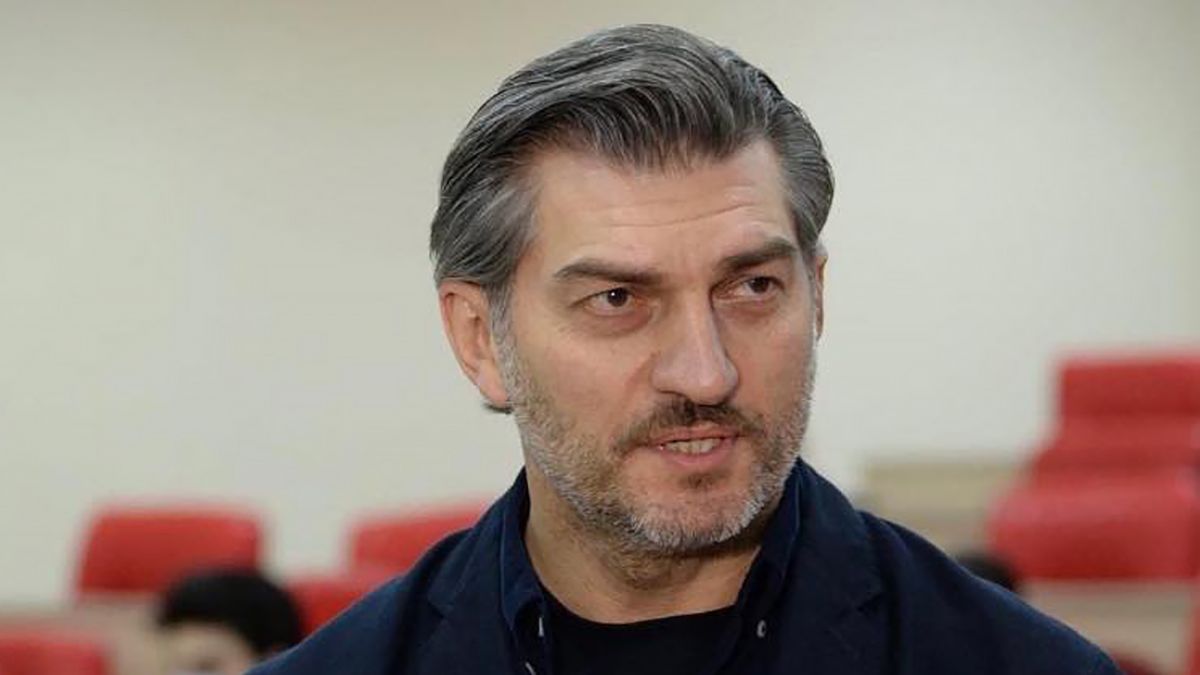
Who is Mikheil Kavelashvili?
Kavelashvili is a former footballer who played at various times for the Alania team in Vladikavkaz (North Ossetia, Russia), Dinamo Tbilisi, Manchester City, and several other European clubs.
Kavelashvili was a deputy in the previous parliament and a member of the political movement “People’s Power.” This political force was founded by loyal deputies from the Georgian Dream party and is known for its particularly harsh anti-Western rhetoric.
In Georgian society and media, there is particular outrage that a person without higher education and with a career limited to professional football has become president.
“Georgia hasn’t had such a patriotic and mentally balanced president in 30 years,” said Prime Minister Irakli Kobakhidze from the ruling party, congratulating Kavelashvili.
Mikheil Kavelashvili was present in the hall when the election results were announced but chose not to make any remarks.
Mikheil Kavelashvili elected president
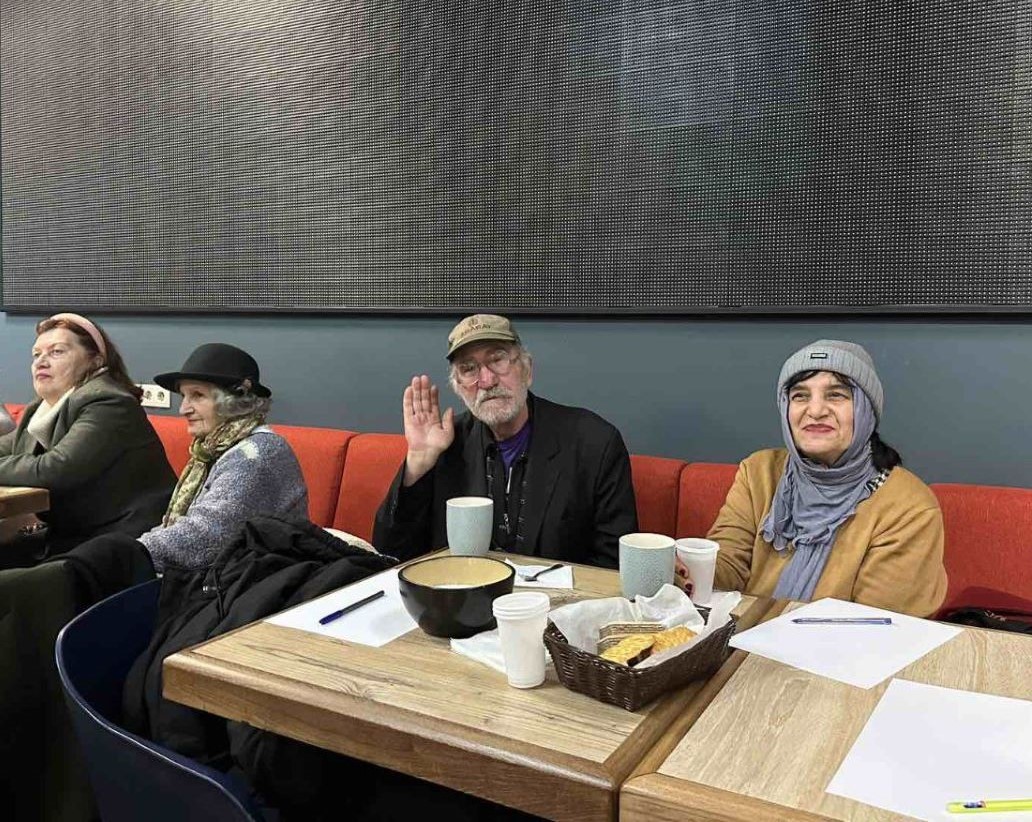
Alzheimer’s and dementia programs in Armenia
Armenia offers programs for individuals with memory issues, Alzheimer’s disease, and dementia. Memory Cafés operate in Yerevan, Gyumri, and Vanadzor, where patients engage in memory restoration exercises and games in a relaxed environment. For those unable to visit the cafés, specialists from Alzheimer’s Care Armenia provide home visits, conduct assessments and offer art therapy, color therapy, and other treatments.

- The fate of Armenia’s abandoned pensioners
- “Preventing dementia”: Armenia launches new program
- Every life matters: how people and animals save each other
- More tenderness than in youth: Stories of couples who have been together for half a century
“It’s like I no longer have mother to talk to, hug me, or ask how I am”
Twice a week, Kristine Kazaryan takes her mother to a Memory Café. Shushan Vardanyan is 68 years old, and her daughter hopes that the café’s atmosphere, the games, and the specialized exercises will help restore her memory.
“She’s been in this condition for two years. After having COVID, we noticed changes in her behavior. We saw delays in her speech, and she started forgetting important events. She became indifferent to everything. She stopped asking how we were or what was new to us. Lately, she doesn’t seem interested in us at all. But she used to be such a warm person. Now, she’s completely different, as if she’s not my mother anymore.
Sometimes she even confuses her sons with her brothers, not recognizing her own children. But, for some reason, she always recognizes me. I can’t explain it, but she remembers me,” says Kristine Kazaryan.
Shushan Vardanyan has dementia. A woman who spent years working at the Yerevan Research Institute of Mathematical Machines now struggles to solve the simplest math problems. Because of her memory loss, her family doesn’t let her go out alone.
“One time, we barely managed to find her and bring her home. But she remembers and knows that we need to come to the ‘Memory Café.’ I sit and watch over her for two hours. Sometimes she becomes very active, and then suddenly, she’ll sit down and stare blankly into space.
Before, if I didn’t call her in the morning, she would tell everyone, ‘Why hasn’t my daughter called? Is something wrong?’ But now, she’s completely indifferent. I could go years without calling, and she wouldn’t ask where I was or what’s happened to me. It feels like I no longer have a mother to talk to, hug me, or ask how I am,” Kristine shares.
Раньше, если бы я ей утром не позвонила, она всем говорила, почему дочь не звонит, не случилось ли чего. А теперь она совершенно равнодушна. Хоть годами не звони – она не скажет, где ты, что с тобой. Словно у меня больше нет мамы, чтоб поговорила со мной, обняла, спросила, как я», – говорит Кристинэ.

Exercises over coffee
Armenia has four such cafés: three in Yerevan and two in Gyumri. There is also a club in Vanadzor that serves a similar purpose. All of them are designed to support people with memory impairments. The program is implemented with the support of the Hrayr Ohanyan Family Foundation.
Over coffee and tea, regular attendees, who have already formed friendships, are occasionally joined by new participants. At the “Memory Café,” they are guided by a psychologist and a social worker from the organization. Together, they interact, take part in games, and engage in activities that positively impact memory and cognitive functions.
За чашкой кофе и чая собираются уже подружившиеся люди, к которым периодически присоединяются новые участники. В «Кафе памяти» с ними работают психолог и социальный работник организации. Они общаются между собой, участвуют в играх, оказывающих положительное влияние на память и когнитивные функции.

Mariam Badalyan, a social worker at the “Memory Café,” explains that the group used to only include participants aged 65 and older. Now, a second café has opened, welcoming people as young as 45.
“Today, 18 people attended. We have regular patients, as well as individuals on a waiting list. They wait for a call, and as soon as a spot opens up, I invite them. Participants come twice a week for two hours. The group composition changes regularly. Some participants don’t have any diagnosed conditions but show early signs of potential issues. This process needs to be prevented,” says Badalyan.
She observes positive cognitive changes in many participants, reflected in their behavior and speech:
“And there’s an important point. The patient may not show significant improvement, but if we don’t see a decline in their condition and the disease doesn’t progress, that is already a victory.”

Home visit program for patients
This year, Alzheimer’s Care Armenia launched the Healthy Brain project, supported by a global grant from the Davos Collaboration. As part of the program, a team of specialists—including a social worker, a doctor, and a physical therapist—visits individuals who cannot attend the Memory Café.
Ophelia Kamavosyan, Head of Communications and Public Relations at the organization, explains how they assist the families of patients:
“Relatives often find themselves in a difficult situation because they don’t know what to do. On top of that are the enormous financial burdens. Someone in the family usually has to stop working because such patients cannot be left alone at home. They might leave the house or do something unsafe. They need constant supervision every minute. Physical, mental, and cognitive exercises are crucial—they help patients remain active and retain their abilities for as long as possible.”
The beneficiaries of the home visits are elderly people with Alzheimer’s disease and dementia. In 70% of cases, these diagnoses are accompanied by other conditions, such as diabetes or hypertension, which often contribute to the development of dementia.
Бенефициары домашних визитов – пожилые люди с болезнью Альцгеймера и деменцией. У 70 процентов из них этот диагноз сочетается с сопутствующими заболеваниями. Например, сахарным диабетом или гипертонией, на фоне которых и развивается деменция».

Art therapy at home
Psychologist and physiotherapist Lilit Frangyan explains that in cases of comorbid conditions, often after a stroke, certain areas of the brain, including the hippocampus responsible for memory, are damaged. Sometimes blood vessels become blocked, but due to their proximity to critical brain centers, surgery is not an option for doctors.
“And so the person is forced to live with this, suffering from memory loss. If they cannot orient themselves in time and space, recognize loved ones, or perform the simplest tasks, self-care becomes impossible. Every action we take relies on memory and experience. Such individuals require constant care,” she says.

Patients visited by Alzheimer’s Care Armenia specialists are over 60 years old, with some aged 86, 93, and 94.
“Alzheimer’s is specifically a memory disorder. It develops as an independent disease. Dementia develops after Alzheimer’s disease. That is, if someone has Alzheimer’s, they may also develop dementia. Dementia can also be a standalone condition that arises due to comorbidities. Medications used for hypertension and diabetes can trigger secondary dementia,” explains the doctor.
She adds that Alzheimer’s disease can also develop due to emotional trauma, depression, injuries, or mechanical damage:
“My patient yesterday couldn’t remember anything—neither the past nor the present. I work with him through art therapy. We draw, listen to music. I try to engage him through developmental games. We work on motor skills, do exercises to enhance neuroplasticity, and use color therapy. These individuals often experience distorted color perception. It becomes hard for them to navigate and see clearly.
Additionally, some patients have hearing issues. A few wear hearing aids. Patients with speech degradation struggle to articulate clearly, making it difficult for their relatives to understand them.”
.

Lilit visits three to six patients daily. Currently, they have around a thousand patients. An individual plan is developed for each patient, depending on the degree of functional impairment and the complexity of the condition. The number of visits is determined accordingly.
She assures that patients recognize and even look forward to seeing her:
“They might not remember my name, but when I enter, they recognize me and sense that a familiar person has come. Their friendly smile and movement toward me say it all. Many even hug me. You can tell they’ve missed someone. Usually, relatives warn me, ‘Don’t tell mom (or dad) that you’re a doctor,’ because they’re afraid of people in white coats. I don’t wear a medical coat when I visit and try to earn their trust. Establishing a psychological connection is essential. We talk, I test them, ask questions. Gradually, there comes a moment when I realize the patient sees me as someone close to them.”

They need warmth and attention
The doctor advises families to always keep photos and family albums nearby.
“They need to see them to avoid forgetting. I tell them, don’t wait for my visit—work with them yourselves. Show them pictures of their children and grandchildren. Ask them who’s in the photo. Involve them as much as possible in your daily household tasks. They need to feel useful. Of course, I mean light tasks. Just as you encourage and motivate a child, you need to support these individuals in the same way.”
Lilit Frangyan explains elderly indifference as a result of dopamine deficiency—the hormone that the body stops producing over time.
“A person’s activity is directly linked to their dopamine levels. You need to be very gentle with them, to be their ‘sunshine.’ We need to help them take small steps, to replace dopamine. Otherwise, they won’t see the point in simple activities, like going for a walk. When does a person lose the desire to try? When they feel they are facing difficulties. For example, after repeatedly getting confused while preparing a meal—forgetting what comes next. Cooking involves many actions, and for someone with dementia, it’s harder than solving a math problem.”
Lilit believes that stereotypes still exist in society, leading families of such patients to hide their struggles:
“I ask them, why haven’t you visited a neurologist yet? This requires teamwork: a neurologist, a specialist, a psychologist, and, if a lot of time has been lost, even a psychiatrist. The earlier we turn to a neurologist, the more manageable the progression of the disease will be. With the right treatment, the situation becomes more controllable. We can improve the quality of life for these individuals.”

Anthony Blinken: “She returned knowing that she might be arrested on arrival.”
The U.S. Department of State awarded Sevinj Vagifgizi, the editor-in-chief of AbzasMedia, with the “Champions of Combating Corruption” award.
Sevinj is known for her work on corruption investigations, and she is currently imprisoned.
In his speech, U.S. Secretary of State Antony Blinken highlighted Sevinj’s devotion over the past decade in exposing government abuses.
“She is also the one awardee who is not with us this afternoon. In November 2023, Sevinj flew home from an overseas country amid a crackdown on Azerbaijani independent media. She returned knowing that she might be arrested on arrival. She was. Now, more than a year later, she remains in detention. Prior to her arrest Sevinj wrote and I quote, ‘I don’t feel fear anymore. I know what they can do. It does not stop me. It is more important to be useful to the people. People need us’”
-Antony Blinken
Blinken also expressed gratitude to the ten anti-corruption champions for their courage. He said it was an honor to partner with them in this fight. The Department of State created the “Champions of Combating Corruption” award in 2021 to recognize individuals who have made significant progress in fighting corruption and to show the U.S. government’s solidarity with them.
This year’s award recipients include journalists, human rights defenders, judges, and even government officials who have facilitated major institutional changes. Other awardees include Jorge Mora Cortes from Colombia, Matrika Daxal from Nepal, Altin Dumani from Albania, Srbukhy Galyan from Armenia, Carl Irani from Lebanon, Marr Nyang from Gambia, Javier Enrique Caraballo Salazar from Panama, Didar Smagulov from Kazakhstan, and Jimmy Spyre Ssentongo from Uganda. Blinken emphasized that each recipient made a difficult decision to help their own citizens and all the people around the world, and their dedication, along with those of others, we are in a better place now.
AbzasMedia, the organization behind Sevinj’s work, has also faced significant challenges. Six of its employees, including the general manager Ulvi Hasanlı, assistant Muhammad Kekalov, editor Sevinj Vagifgiz, reporters Nargiz Absalamova and Elnara Gasimova, and investigative journalist Hafız Babali, have been arrested. These individuals are facing charges of smuggling, with some detained since November 2023.
On May 31, 2024, journalist and economist Farid Mehralizade from the “Azadlig” radio station was arrested, and a search was conducted at his home. He was accused under Article 206.3.2 of the Penal Code, which concerns smuggling by a group of individuals who had previously made secret agreements. The Khatai District Court decided to detain him for security reasons. On the same day, AbzasMedia issued a statement declaring that Mehralizade had no connection to the media organization.
Following this, each of the detainees in the AbzasMedia case was faced with additional serious charges related to financial matters. Since November 2023, nearly 20 journalists and social activists have been arrested in Azerbaijan on smuggling charges. None of these individuals have been charged based on their professional activities or political affiliations.
According to local human rights organizations, there are currently around 300 political prisoners in Azerbaijani prisons. Authorities typically assert that no one has been detained solely for political reasons related to their professional activities. However, both local and international human rights organizations believe these arrests are politically motivated, and they are calling for the release of the detainees and the withdrawal of the charges against them.
The post Sevinj Vagifgizi honored as anti-corruption champion appeared first on MEYDAN.TV.