
I warmly congratulate Mikheil Kavelashvili on his election as President of Georgia.
Armenia looks forward to strengthening our strategic partnership and advancing cooperation across all levels. Wishing him every success in this vital role! 🇦🇲 🇬🇪
— Nikol Pashinyan (@NikolPashinyan) December 14, 2024
Day: December 14, 2024
I warmly congratulate Mikheil Kavelashvili on his election as President of Georgia.
Armenia looks forward to strengthening our strategic partnership and advancing cooperation across all levels. Wishing him every success in this vital role! 🇦🇲 🇬🇪
— Nikol Pashinyan (@NikolPashinyan) December 14, 2024
Anthony Blinken: “She returned knowing that she might be arrested on arrival.”
The U.S. Department of State awarded Sevinj Vagifgizi, the editor-in-chief of AbzasMedia, with the “Champions of Combating Corruption” award.
Sevinj is known for her work on corruption investigations, and she is currently imprisoned.
In his speech, U.S. Secretary of State Antony Blinken highlighted Sevinj’s devotion over the past decade in exposing government abuses.
“She is also the one awardee who is not with us this afternoon. In November 2023, Sevinj flew home from an overseas country amid a crackdown on Azerbaijani independent media. She returned knowing that she might be arrested on arrival. She was. Now, more than a year later, she remains in detention. Prior to her arrest Sevinj wrote and I quote, ‘I don’t feel fear anymore. I know what they can do. It does not stop me. It is more important to be useful to the people. People need us’”
-Antony Blinken
Blinken also expressed gratitude to the ten anti-corruption champions for their courage. He said it was an honor to partner with them in this fight. The Department of State created the “Champions of Combating Corruption” award in 2021 to recognize individuals who have made significant progress in fighting corruption and to show the U.S. government’s solidarity with them.
This year’s award recipients include journalists, human rights defenders, judges, and even government officials who have facilitated major institutional changes. Other awardees include Jorge Mora Cortes from Colombia, Matrika Daxal from Nepal, Altin Dumani from Albania, Srbukhy Galyan from Armenia, Carl Irani from Lebanon, Marr Nyang from Gambia, Javier Enrique Caraballo Salazar from Panama, Didar Smagulov from Kazakhstan, and Jimmy Spyre Ssentongo from Uganda. Blinken emphasized that each recipient made a difficult decision to help their own citizens and all the people around the world, and their dedication, along with those of others, we are in a better place now.
AbzasMedia, the organization behind Sevinj’s work, has also faced significant challenges. Six of its employees, including the general manager Ulvi Hasanlı, assistant Muhammad Kekalov, editor Sevinj Vagifgiz, reporters Nargiz Absalamova and Elnara Gasimova, and investigative journalist Hafız Babali, have been arrested. These individuals are facing charges of smuggling, with some detained since November 2023.
On May 31, 2024, journalist and economist Farid Mehralizade from the “Azadlig” radio station was arrested, and a search was conducted at his home. He was accused under Article 206.3.2 of the Penal Code, which concerns smuggling by a group of individuals who had previously made secret agreements. The Khatai District Court decided to detain him for security reasons. On the same day, AbzasMedia issued a statement declaring that Mehralizade had no connection to the media organization.
Following this, each of the detainees in the AbzasMedia case was faced with additional serious charges related to financial matters. Since November 2023, nearly 20 journalists and social activists have been arrested in Azerbaijan on smuggling charges. None of these individuals have been charged based on their professional activities or political affiliations.
According to local human rights organizations, there are currently around 300 political prisoners in Azerbaijani prisons. Authorities typically assert that no one has been detained solely for political reasons related to their professional activities. However, both local and international human rights organizations believe these arrests are politically motivated, and they are calling for the release of the detainees and the withdrawal of the charges against them.
The post Sevinj Vagifgizi honored as anti-corruption champion appeared first on MEYDAN.TV.
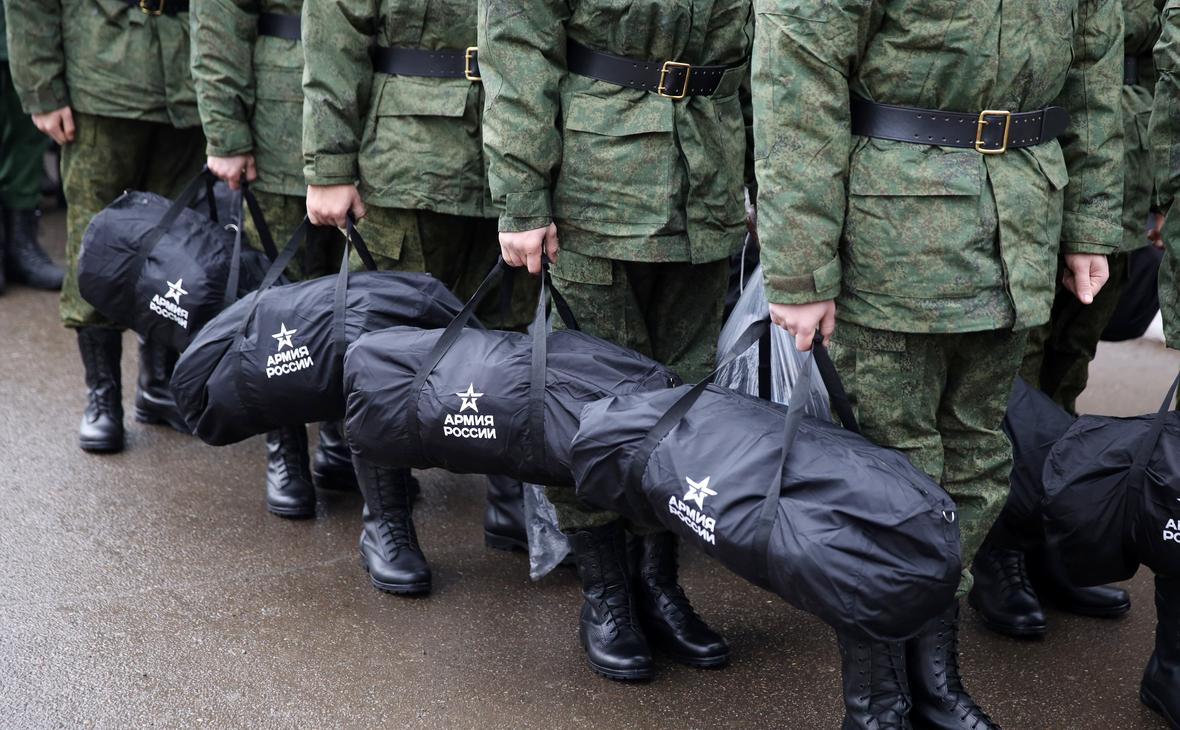
Abkhaz students drafted to fight in Ukraine
Young men from Abkhazia studying at Russian universities are being registered with military enlistment offices. This rule has always existed, but it is only now being enforced, raising concerns among parents that their sons could be sent to fight in Russia’s war on Ukraine. The Abkhaz government is powerless to intervene but sees this not only as a threat but also as a reason for cautious optimism.
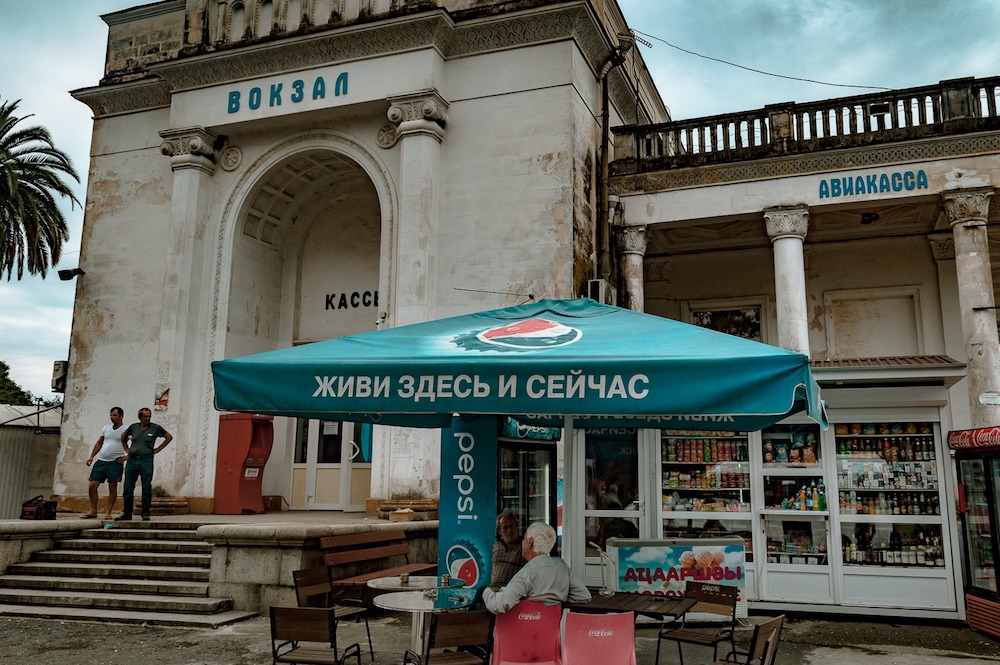
Alexander Kvitsinia (name changed) is a student from Abkhazia studying programming in his second year at a Moscow university. About a week ago, Alexander shocked his parents with the news that he had been registered at the local military enlistment office in Moscow.
“Russia is at war, and it’s been going on for years. I’m afraid our boys might be sent there like this,” Alexander’s mother shares her concern.
She said she even tried to persuade her son to drop out of university or take academic leave and return home to avoid being sent to the front line.
“Alexander mentioned that he already knows how to program drones, and right now that’s in high demand for military operations,” she adds.
As it turns out, students from Abkhazia have always been registered (or were supposed to be registered) at military enlistment offices in Russian universities because, in addition to Abkhazian citizenship, they often hold Russian citizenship as well. Under Russian law, all students who are citizens of the country must be registered with the military enlistment offices.
According to Abkhaz Foreign Minister Sergey Shamba, this situation arose because the dual citizenship agreement between Abkhazia and Russia is currently in a frozen state and has not yet been regulated.
“Although the dual citizenship law was ratified by the Russian State Duma, it is now frozen. Students are being registered with military enlistment offices, but this doesn’t mean they’ll immediately be sent to the army. However, after graduation, if the dual citizenship law hasn’t come into effect by then, they could be drafted into the army if they remain in Russia,” Shamba reassures.
In his view, there is even a silver lining to this situation, as students might be more inclined to return to Abkhazia after graduating rather than staying in Russia to avoid conscription.
Alexander Kvitsinia’s mother admits she had hoped her son would return to Abkhazia after university but also understood that he had better opportunities in Russia.
“I wanted him to build a career, and become successful, and that’s hard to do in Abkhazia. But now I think—let him come home,” she says.
Terms, place names, opinions and ideas suggested by the author of the publication are their own and do not necessarily coincide with the opinions and ideas of JAMnews or its individual employees. JAMnews reserves the right to remove comments on posts that are deemed offensive, threatening, violent or otherwise ethically unacceptable.
Transparency International-Georgia has denounced the December 14 presidential election as “illegitimate,” asserting that both the election process and the newly elected president lack legitimacy under the current government. The organization called on Bidzina Ivanishvili, the honorary chair and patron of the Georgian Dream (GD) party, to organize new elections under a reformed electoral administration and to release individuals they described as “illegally detained.”
In a statement, TI- Georgia highlighted constitutional violations surrounding the parliamentary session that preceded the election. They noted that the session was convened without authorization from the President of Georgia, who had the sole authority to do so. TI-Georgia pointed out that Parliament recognized the powers of its members, even though that the legality of their election was challenged in the Constitutional Court.
The watchdog said that “Bidzina Ivanishvili and his party are further aggravating the political crisis by electing the president in defiance of the constitution and the law”. It called on Ivanishvili to stop aggravating the country’s political crisis and to uphold the Constitution. It further demanded the release of those illegally detained and the dropping of legal proceedings against them, as well as the holding of new elections in a free and fair manner with a new electoral administration.
The new president, former footballer Mikheil Kavelashvili, the only contender, was elected on December 14 by 224 votes from an electoral college made up entirely of GD members of legislature and local councilors. His candidacy was widely criticized lacking qualifications, including the absence of a higher education diploma, and for being handpicked by Ivanishvili, who nominated him on November 27. Demonstrators gathered outside Parliament during the election, labeling the process a “farce” and rejecting Kavelashvili’s presidency as illegitimate.
Opposition parties condemned the election even before it was held. On December 12, they accused Georgian Dream of orchestrating a “constitutional coup against citizens” by pushing forward Kavelashvili’s candidacy.
International observers have also expressed concern over the ongoing political crisis in Georgia. Several partners noted that President Salome Zurabishvili remains the only institutionally legitimate figure in the country and emphasized her role in leading Georgia towards its European Union integration goals.
Also Read:
Prime Minister Irakli Kobakhidze has declared it a “national mission” to eradicate “liberal fascism” in Georgia. Speaking at a briefing on December 14, following the elections by the electoral college consisting of GD MPs and local councilors, Kobakhidze accused opposition parties and NGOs of spreading “propaganda of ugliness” and pledged to end their influence. He specifically named the four opposition forces that passed the electoral threshold in the October 26 elections and “rich NGOs”, claiming that their activities threatened Georgia’s stability.
kobakhidze said: “We have a very important national mission… to finally end liberal fascism.” He added that “the main factor for this is to end the political parties that are the main disseminators of liberal fascism in Georgia. These are the four well-known parties and the wealthy NGOs that carry out this propaganda, including on the streets of Tbilisi,” Kobakhidze said. “All this must stop, and we take full responsibility to do our best to achieve this.”
Officials of the ruling party and its founder and honorary president, Bidzina Ivanishvili, have repeatedly threatened to ban opposition parties and made this a pillar of Georgian Dream’s election campaign. On 29 April, Ivanishvili gave a speech in which he announced repression against the opposition, the “United National Movement”, which he said, would follow Georgian Dream victory in the October 2024 elections. He also defended the ‘foreign agent’ law, which seeks to label NGOs that receive foreign funding as foreign agents. Ivanishvili claimed that such organisations were ‘pseudo-elites nurtured by foreign countries’ and accused unnamed entities of trying to stage a coup in Georgia. He repeated this message on other occasions, eagerly echoed by other GD personalities.
In an interview with journalist Magda Anikashvili on pro-government Imedi TV on 22 October, Ivanishvili denounced liberal ideologies and opposition forces and advocated banning opposition parties. “Those who are enemies of the people and the country must be banned,” Ivanishvili said, adding that “winning elections alone is not enough, so I say we need a constitutional majority to ban them and get rid of them”.
Kobakhidze’s reiteration of intent to ban opposition comes amidst the series of protests taking place in Tbilisi and various regions. Following rigging elections, the self-proclaimed prime minister announced on November 28 that Georgia would halt EU accession talks until 2028. This sparked widespread protests across the country, with demonstrators calling for a reversal of the decision and new elections under a new electoral administration.
The government responded with repressive measures, including the excessive use of force against peaceful protesters, the deployment of water cannons and tear gas, and the illegal detention of activists. Authorities have also raided opposition party offices and activists’ homes, with reports of torture and mistreatment of detained citizens.
Also Read:
- 22/10/2024 – Bidzina Ivanishvili TV Interview Ahead of Elections
- 29/04/2024 – Bidzina Ivanishvili Backs Anti-Western Policies, Threatens Repressions
- 01/10/2024 – Ivanishvili Denies Targeting U.S., Repeats “Global War Party” Conspiracy, Warns of “Reputational Damage”
- 14/05/2024 – Breaking: Foreign Agents’ Law Adopted, Amid Protest, Brawls