
They come and go. Photo: Lasha Bakradze #GeorgianProtests pic.twitter.com/Xk9GkPJot0
— Notes from Georgia/South Caucasus (Hälbig, Ralph) (@SouthCaucasus) December 13, 2024
Day: December 13, 2024
#Georgia stands strong for democracy – America must stand with Georgia. By Will Cathcart @Cathcarsis via @thehill https://t.co/bxQKm0ZMoz
— Notes from Georgia/South Caucasus (Hälbig, Ralph) (@SouthCaucasus) December 13, 2024
On December 13, French President Emmanuel Macron released a video address to the Georgian people. On the eve of Georgia’s anniversary of gaining the EU candidacy, Macron reiterated his support for Georgians’ EU aspirations, reiterated that the Union stands for peace and dialogue, and expressed his hope that Georgia will continue on the path of EU integration.
President Macron noted that the betrayal of the Georgian people’s European aspirations, enshrined in the Georgian Constitution, is unacceptable and that Georgia’s European dream shouldn’t die. He noted that Georgia’s sovereign choice of the European path is now being peacefully expressed through protests in Tbilisi and other cities of the country.
The French President underlined that by granting the candidate status, the EU has positively responded to the aspirations of the Georgian people and that the European choice that Georgia has made entails certain responsibilities and obligations that need to be implemented over time. He emphasized that the path has been laid out and that Georgia can confidently work hand-in-hand with the 27 EU member states to build its European future. “Or it can wait and postpone this process, but wait for what and why?” asked Macron.
He emphasized that the EU obliges no one and does not intimidate but proposes an equal partnership to achieve prosperity based on shared values. Macron stressed that the EU doesn’t threaten or intimidate, nor does it create chaos, destabilize its neighbors or subjugate them through wars or hybrid tactics, it doesn’t promote discord in society or aim to sow confusion. The EU respects the sovereign rights of people and the history and identity of nations, just like the thousand-year-old history of Georgia.
The French President also noted that the EU doesn’t dictate national interests, it respects the territorial integrity of countries, particularly that of Georgia. He pointed out that it was not the EU that supported the separatists in the country. He stressed that the EU represents a peace project, which has been its foundation from the very beginning and is proven by the fact that the EU has never started a war against a sovereign state. “The Europe is solidarity, the choice of peace, the collective defense of strategic interests common to a single family,” Macron noted.
President Macron stressed that it is up to Georgia to decide its future and that the voice of Georgians must be heard and respected. He reiterated that the EU stands with Georgia, with its EU and democratic aspirations. He emphasized that Georgia cannot hope to make progress on its European path if peaceful demonstrations are suppressed with disproportionate use of force, if civil society organizations, journalists and members of opposition parties are harassed, if freedom of expression and assembly are not respected.
Finally, he expressed his hope that there is a way forward “in line with the country’s European aspirations, that of open, respectful dialogue with all political forces and civil society organizations.” He stressed that this dialogue is the responsibility of every citizen and should give Georgians the opportunity to once again take the reins of their future into their hands. He emphasized that he has confidence in Georgians who remain faithful to the European future and that they won’t be frightened by intimidation, information manipulation, cyber attacks, and propaganda.
The video address comes days after the phone call President Macron had with the ruling Georgian Dream’s founder and Honorary Chair, Bidzina Ivanishvili. In this conversation, Macron expressed readiness to help resolve the political crisis in Georgia well. Before the talk with Ivanishvili, President Macron had met with his Georgian counterpart, Salome Zurabishvili in France.
President Salome Zurabishvili thanked her French counterpart, stressing that “Europe is the free choice of the Georgian people, which has given no mandate to the Georgian Dream leaders to turn away!”
Also Read:
- 09/12/2024 – President Zurabishvili Visits France
As members of the 🇦🇲🇬🇧Friendship Group, we met with Lord #MarkMcInnes. During the meeting, we discussed issues related to establishing security and peace in the #SouthCaucasus, implementing social programs aimed at forcibly displaced compatriots from #NagornoKarabakh. pic.twitter.com/0CFYcDHjSW
— Zaruhi Batoyan (@Batoyan) December 13, 2024
Anthony Blinken: “She returned knowing that she might be arrested on arrival.”
The U.S. Department of State awarded Sevinj Vagifgizi, the editor-in-chief of AbzasMedia, with the “Champions of Combating Corruption” award.
Sevinj is known for her work on corruption investigations, and she is currently imprisoned.
In his speech, U.S. Secretary of State Antony Blinken highlighted Sevinj’s devotion over the past decade in exposing government abuses.
“She is also the one awardee who is not with us this afternoon. In November 2023, Sevinj flew home from an overseas country amid a crackdown on Azerbaijani independent media. She returned knowing that she might be arrested on arrival. She was. Now, more than a year later, she remains in detention. Prior to her arrest Sevinj wrote and I quote, ‘I don’t feel fear anymore. I know what they can do. It does not stop me. It is more important to be useful to the people. People need us’”
-Antony Blinken
Blinken also expressed gratitude to the ten anti-corruption champions for their courage. He said it was an honor to partner with them in this fight. The Department of State created the “Champions of Combating Corruption” award in 2021 to recognize individuals who have made significant progress in fighting corruption and to show the U.S. government’s solidarity with them.
This year’s award recipients include journalists, human rights defenders, judges, and even government officials who have facilitated major institutional changes. Other awardees include Jorge Mora Cortes from Colombia, Matrika Daxal from Nepal, Altin Dumani from Albania, Srbukhy Galyan from Armenia, Carl Irani from Lebanon, Marr Nyang from Gambia, Javier Enrique Caraballo Salazar from Panama, Didar Smagulov from Kazakhstan, and Jimmy Spyre Ssentongo from Uganda. Blinken emphasized that each recipient made a difficult decision to help their own citizens and all the people around the world, and their dedication, along with those of others, we are in a better place now.
AbzasMedia, the organization behind Sevinj’s work, has also faced significant challenges. Six of its employees, including the general manager Ulvi Hasanlı, assistant Muhammad Kekalov, editor Sevinj Vagifgiz, reporters Nargiz Absalamova and Elnara Gasimova, and investigative journalist Hafız Babali, have been arrested. These individuals are facing charges of smuggling, with some detained since November 2023.
On May 31, 2024, journalist and economist Farid Mehralizade from the “Azadlig” radio station was arrested, and a search was conducted at his home. He was accused under Article 206.3.2 of the Penal Code, which concerns smuggling by a group of individuals who had previously made secret agreements. The Khatai District Court decided to detain him for security reasons. On the same day, AbzasMedia issued a statement declaring that Mehralizade had no connection to the media organization.
Following this, each of the detainees in the AbzasMedia case was faced with additional serious charges related to financial matters. Since November 2023, nearly 20 journalists and social activists have been arrested in Azerbaijan on smuggling charges. None of these individuals have been charged based on their professional activities or political affiliations.
According to local human rights organizations, there are currently around 300 political prisoners in Azerbaijani prisons. Authorities typically assert that no one has been detained solely for political reasons related to their professional activities. However, both local and international human rights organizations believe these arrests are politically motivated, and they are calling for the release of the detainees and the withdrawal of the charges against them.
The post Sevinj Vagifgizi honored as anti-corruption champion appeared first on MEYDAN.TV.
On December 13, the de-facto foreign minister of occupied Abkhazia, Sergei Shamba said that Russia now requires Abkhazian students studying in Russia to enlist in military commissions of the Russian Federation.
The requirement affects people who have so-called dual citizenship – one Russian and a second de facto “citizenship” of the occupied Abkhazia. Shamba said that they enroll in higher education institutions as foreigners, but because they also have Russian citizenship, they are required to enlist.
He said the requirement is not something new “only for a while they [Russians] treated [this issue] loyally, closing their eyes to it, not demanding it. Now they are demanding it. This does not mean that they will be drafted into the army immediately, but after graduation, if the law on [so-called] dual citizenship does not come into force by then, they can be drafted into the army if they stay in Russia,” he explained.
Shamba reported that the resolution of this issue is being delayed because of the need for an additional decree from the Russian president regulating “the expedited granting of Russian citizenship”.
Shamba noted that despite the fact that his own grandson had also been ordered to report to a military commission, this development made him happy in a way, because now Abkhaz students won’t stay in Russia after graduation and will return home. He admited that there are no jobs in Abkhazia, but said: ‘Well, there’s no point in hanging around there [in Russia] either.
Also Read:
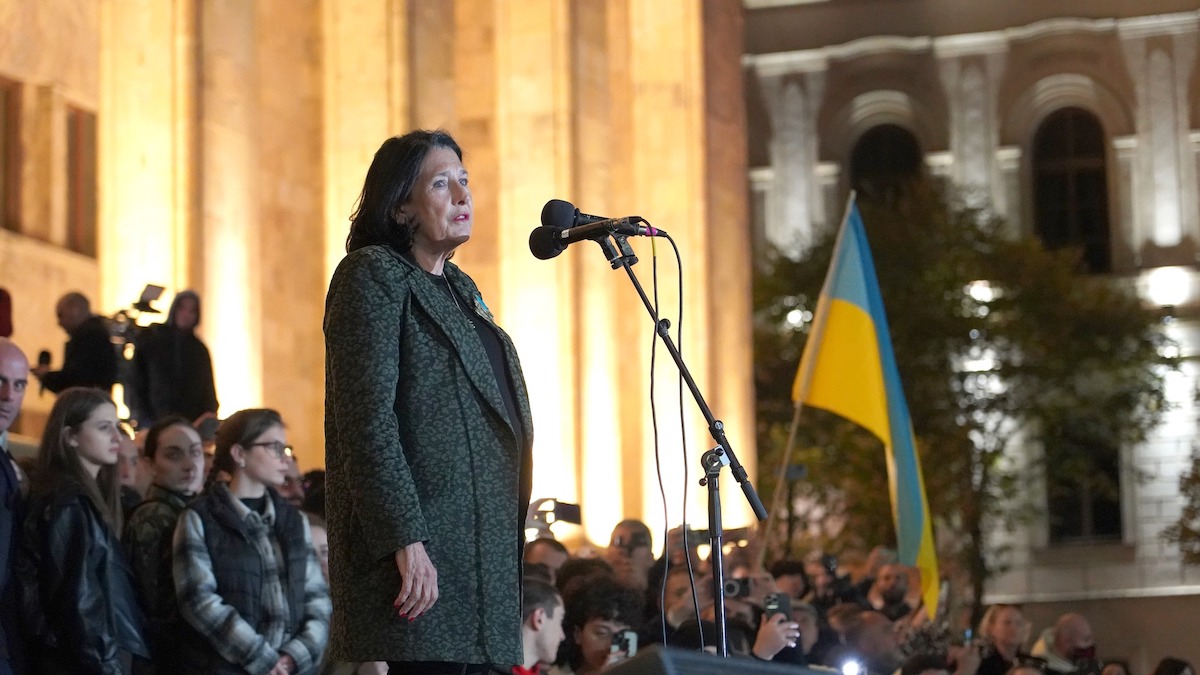
Will Zurabishvili stop being president?
On 14 December, Georgia‘s parliament, composed solely of members from the ruling Georgian Dream party, will elect the country’s next president. The candidate, former footballer Mikheil Kavelashvili, was personally nominated by the party’s honorary chairman and founder, oligarch Bidzina Ivanishvili.
Kavelashvili played for clubs including Alania, Dinamo Tbilisi, Manchester City, Grasshoppers, and several others in Europe over the years. He also worked as a football commentator for Public Television. In the previous parliament, he ran as a candidate from the ruling Georgian Dream party. Notably, the “Education” section on his CV on the parliament’s official website is blank.
The party claims that even if two rounds of voting are required, the second round will take place on the same day.
The president’s inauguration is scheduled for 29 December.
Given that these events are categorically rejected and deemed illegitimate by the opposition, the current president Salome Zourabichvili, and a significant portion of the public, tens of thousands of people are participating in protests across the country. What happens next? What role can Salome Zourabichvili play? Will Georgia lose its ability to be heard in the West? We gathered opinions from Georgian experts.
For the first time in history, Georgia’s president will not be elected by the people but by an electoral college. The college consists of 300 members, including 150 parliamentary deputies. The new parliament was elected on 26 October, with the ruling Georgian Dream party officially receiving nearly 54% of the vote, according to the Central Election Commission.
However, all four opposition groups (three alliances and the party For Georgia led by Giorgi Gakharia) that entered parliament, as well as President Zourabichvili, declared the elections rigged, the parliament illegitimate, and the government it appointed unlawful. The elections were not recognized by any Western country except Hungary.
Legal experts note that at the time of the parliament’s first session, cases challenging the mandates of all 150 newly elected deputies were pending in the Constitutional Court. According to the Constitution, parliament was not allowed to convene under such circumstances, rendering all its decisions unconstitutional—including the presidential election.
Both the opposition and Salome Zourabichvili herself assert that she remains the legitimate president of Georgia and, in fact, the only legitimate institution in the country. She maintains her role as Commander-in-Chief of the Defence Forces and the nation’s highest representative in foreign relations.
Expert commentary
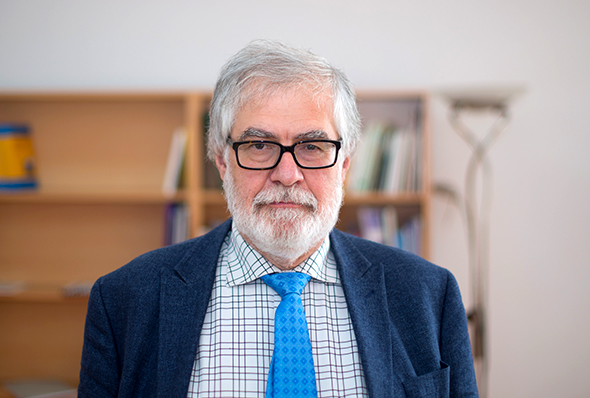
Gia Nodia, Doctor of Political Science and Professor at Ilia University:
“The government has abandoned the course of European integration, which has been traditional for the country for over 30 years and is enshrined in the Constitution.
Today, only President Salome Zourabichvili upholds this constitutional principle.”
She represents Georgian society on the international stage and demonstrates that the country has a legitimate political leader, elected by the people, who remains committed to the policy of European integration. This is now her primary role.
The president is also attempting, to some extent, to influence the domestic political situation. She tried to unite the opposition and create a common opposition platform. However, in the current context of a widespread national protest movement, the opposition has become almost invisible.
The opposition’s role in these processes is minimal, and consequently, Salome Zourabichvili’s significance as a domestic political player is also diminished.
For the first time in history, Georgia’s president will not be elected by the people but by an electoral college. The college consists of 300 members, including 150 parliamentary deputies. The new parliament was elected on 26 October, with the ruling Georgian Dream party officially receiving nearly 54% of the vote, according to the Central Election Commission.
However, all four opposition groups (three alliances and the party For Georgia led by Giorgi Gakharia) that entered parliament, as well as President Zourabichvili, declared the elections rigged, the parliament illegitimate, and the government it appointed unlawful. The elections were not recognized by any Western country except Hungary.
Legal experts note that at the time of the parliament’s first session, cases challenging the mandates of all 150 newly elected deputies were pending in the Constitutional Court. According to the Constitution, parliament was not allowed to convene under such circumstances, rendering all its decisions unconstitutional—including the presidential election.
Both the opposition and Salome Zourabichvili herself assert that she remains the legitimate president of Georgia and, in fact, the only legitimate institution in the country. She maintains her role as Commander-in-Chief of the Defence Forces and the nation’s highest representative in foreign relations.
After the end of her presidential term, a new reality will emerge—one that Bidzina Ivanishvili has always desired. The country will have a president with no real role, an empty figure in an empty space.
Ivanishvili has always believed that the president should be insignificant, whether they exist or not. The candidate he has chosen will be exactly that type of president—faceless and functionless. They may or may not even retain ceremonial duties, and their involvement in foreign relations is out of the question.
Salome Zourabichvili argues that the new president cannot be legitimate because their election involves an illegitimate parliament. She may be correct in principle. However, since the parliament has declared itself legitimate, this government has the means to hold presidential elections and replace the current president.
 Salome Zourabichvili lacks the power to oppose this process. It might simply serve as an additional impetus for the public protests already taking place.
To change the current situation, a kind of crisis must emerge within the government itself. It’s hard to imagine Bidzina Ivanishvili coming to his senses, repenting, or that his or Prime Minister Irakli Kobakhidze’s worldview will change.
It’s crucial to somehow deepen the existing crisis trends within the government, and most importantly, within its repressive apparatus, as the authorities today survive almost entirely through the forceful actions of this apparatus.

Paata Zakareishvili, Conflictologist:
“Everything Salome Zourabichvili has already done and what she still has to accomplish is very important.
Formally, she may no longer remain president, but she has already become the leader of the opposition and the voice of the people.
Her most significant achievement is that, from a legitimate position based on the will of the people, she has informed Europe that the Georgian people want to be part of Europe.”
This is extremely important—the fact that citizens are not protesting alone in the streets but have the support of the president. Without this, the people’s protest would not be as compelling.

Zourabichvili has already reached a level that Kavelashvili, who will likely be named president, cannot compete with. He won’t be able to act as a counterbalance to Zourabichvili.
This is yet another major mistake by Georgian Dream. They didn’t even attempt to challenge Salome Zourabichvili with a significant figure, someone capable of traveling across Europe and clearly presenting their positions.
There is much discussion about her meeting with Trump. While it was certainly a positive development, I wouldn’t expect too much from it.
Our problem is that we always look to someone else for solutions. But currently, our strength lies within the country. We have a unique, golden resource in our people. Salome Zourabichvili, working within Georgia, is more important to us than Trump.
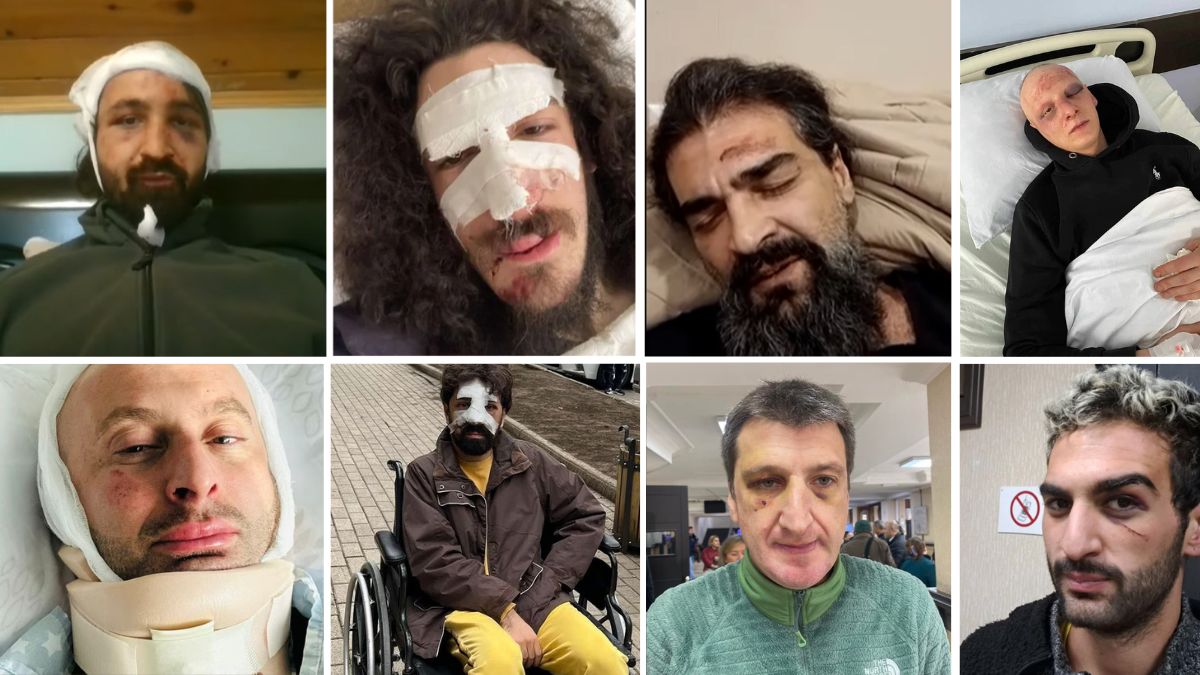
Don’t look for solutions outside when they lie within. Constant protests, acts of civil disobedience, and strikes show that people have already taken charge of domestic political processes. It’s also clear that Georgian Dream has had to resort to recruiting criminals into its security structures and using unlawful methods.
All of this clearly indicates they are in crisis and cannot find a way out.
I appreciate that there is no visible leader in this protest movement. I like that Georgia has, as it turns out, freed itself from the obsession with leaders and figureheads.
The main goal now is to push for new parliamentary elections. Even as a former president, Salome Zourabichvili can remain a source of energy for Georgia and a communicator of that energy abroad.
She will retain the same two roles: helping to address domestic political challenges in Georgia and boldly engaging with the democratic world.
I am confident that even as an ex-president, Salome Zourabichvili will gain more credibility and legitimacy in the eyes of foreigners than the Ministry of Foreign Affairs, the ruling party’s president, and the Georgian parliament combined.
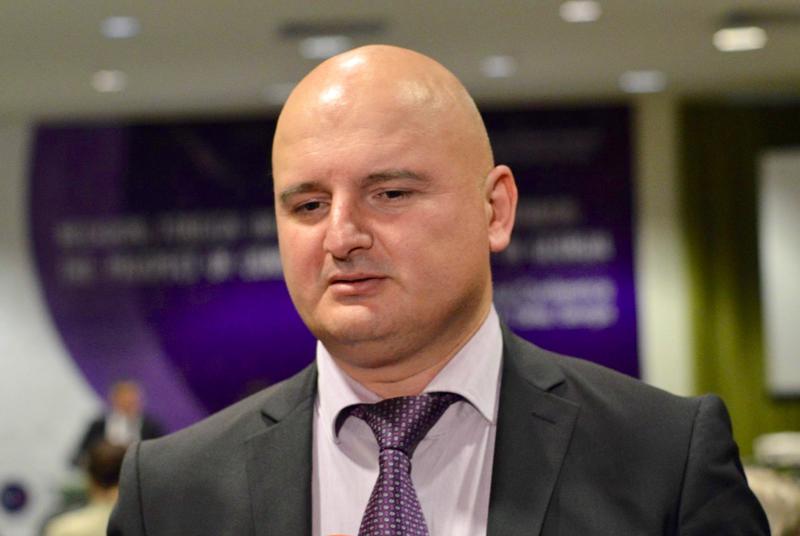
Korneli Kakachia, Doctor of Political Science, Director of the Georgian Institute of Politics:
“Salome Zourabichvili managed to turn public opinion in her favour, despite the fact that initially, she wasn’t highly regarded as she was a candidate from Georgian Dream.
The key achievement she has made is becoming a coordinator, the person who united the democratic forces in the country. This is particularly significant because she is the last president of Georgia elected directly by the people.
At the same time, her connections with Western leaders, top EU officials, and France have helped her become a sort of ‘torchbearer,’ a leading force for Georgia’s pro-European choice.”
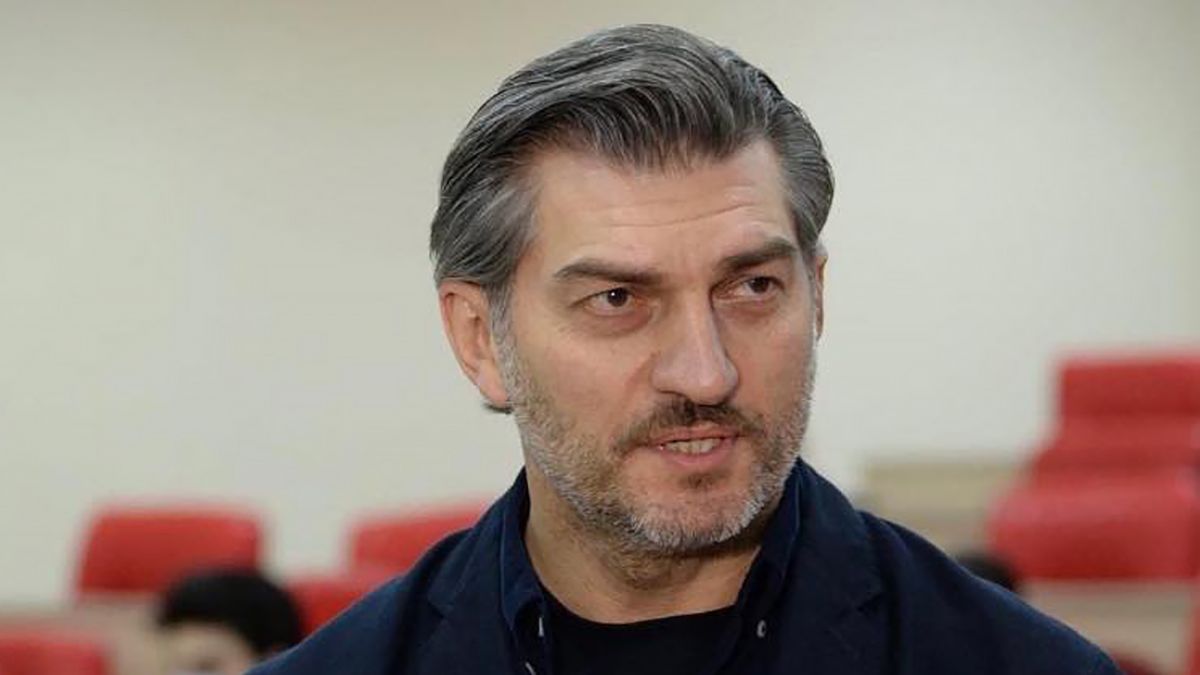
She is welcomed everywhere in the European Union. Even opposition parties in Georgia have recognized that she truly stands for the European path and is making every effort to become the voice of Georgia in the EU and on the international stage.
After her term ends, she will naturally lose the advantages of presidential status. However, she could become a spokesperson or coordinator for the opposition, or even a leader of Georgia’s democratic society.
The authorities are currently relying on two “allies”: Trump and the New Year festivities, or “satsivi.” But I don’t think this is a reliable strategy. While protests may weaken or pause during the New Year, the societal momentum will likely persist at least until January 20.
After that, Trump’s inauguration will take place, and much will depend on his administration. Both opposing sides in Georgia are awaiting this moment.
It is crucial that two processes continue: domestic public protests and external pressure on the Georgian authorities. Both aspects are equally important because change is unlikely to happen with only one of them.
The main objectives must be clearly defined. Here, political parties play a critical role, although unfortunately, their role is not very visible today.
I understand the caution of politicians, as any active involvement will immediately lead to accusations from the authorities that they are attempting a coup to seize power.
However, it must be understood that protests cannot lack a political component. Yes, the protests are people-led, but they also need a specific goal.
If this government falls tomorrow, who will take responsibility, and what steps will they take? This remains unclear, and such uncertainty could greatly complicate the situation.”
Will Zurabishvili stop being president?
Demonstration in Georgien:
“Wir beschützen Europas Sicherheit”. In Georgien kämpfen Demonstranten gegen einen russlandtreuen Milliardär und seine Regierung. Ein Besuch zwischen Wasserwerfern.
Von Andrea Jeska @andrea_jeska https://t.co/k64THUB1kN via @zeitonline— Notes from Georgia/South Caucasus (Hälbig, Ralph) (@SouthCaucasus) December 13, 2024