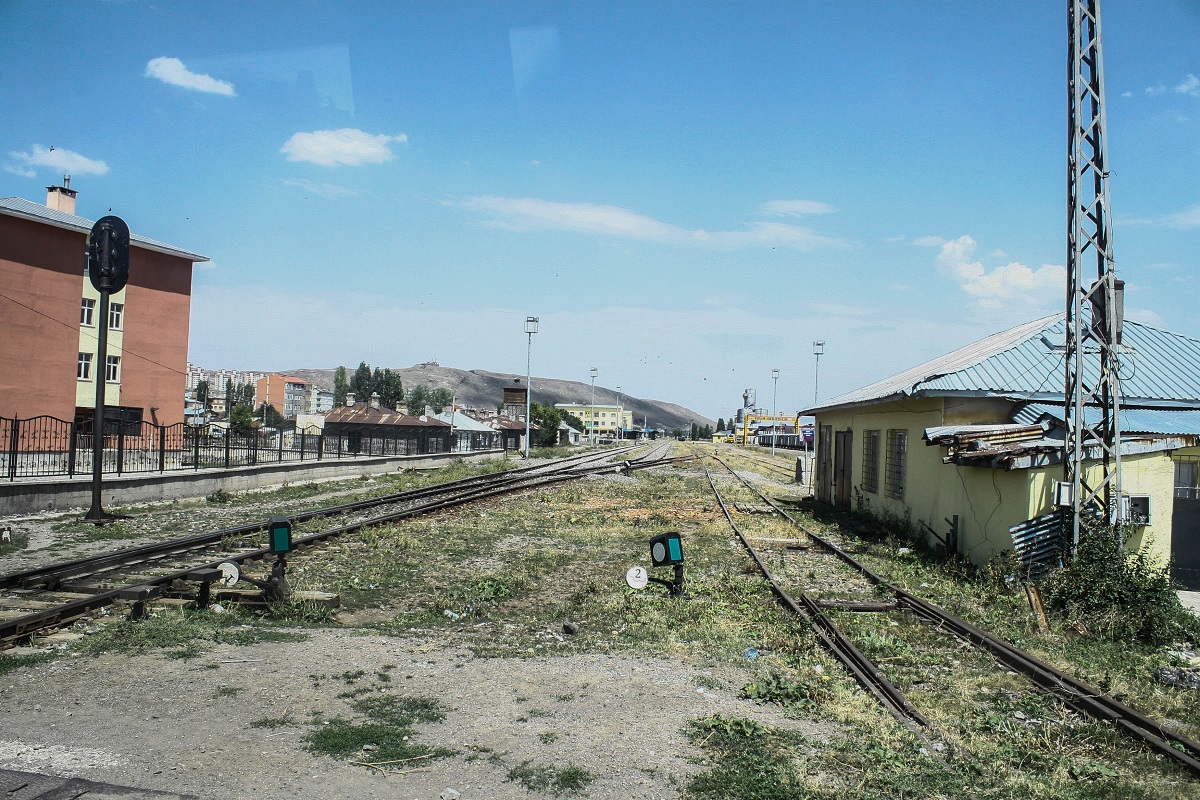
India, Iran, and Armenia Reaffirm Commitment to Key Transport Project Asbarez Armenian News
Day: December 13, 2024
Anthony Blinken: “She returned knowing that she might be arrested on arrival.”
The U.S. Department of State awarded Sevinj Vagifgizi, the editor-in-chief of AbzasMedia, with the “Champions of Combating Corruption” award.
Sevinj is known for her work on corruption investigations, and she is currently imprisoned.
In his speech, U.S. Secretary of State Antony Blinken highlighted Sevinj’s devotion over the past decade in exposing government abuses.
“She is also the one awardee who is not with us this afternoon. In November 2023, Sevinj flew home from an overseas country amid a crackdown on Azerbaijani independent media. She returned knowing that she might be arrested on arrival. She was. Now, more than a year later, she remains in detention. Prior to her arrest Sevinj wrote and I quote, ‘I don’t feel fear anymore. I know what they can do. It does not stop me. It is more important to be useful to the people. People need us’”
-Antony Blinken
Blinken also expressed gratitude to the ten anti-corruption champions for their courage. He said it was an honor to partner with them in this fight. The Department of State created the “Champions of Combating Corruption” award in 2021 to recognize individuals who have made significant progress in fighting corruption and to show the U.S. government’s solidarity with them.
This year’s award recipients include journalists, human rights defenders, judges, and even government officials who have facilitated major institutional changes. Other awardees include Jorge Mora Cortes from Colombia, Matrika Daxal from Nepal, Altin Dumani from Albania, Srbukhy Galyan from Armenia, Carl Irani from Lebanon, Marr Nyang from Gambia, Javier Enrique Caraballo Salazar from Panama, Didar Smagulov from Kazakhstan, and Jimmy Spyre Ssentongo from Uganda. Blinken emphasized that each recipient made a difficult decision to help their own citizens and all the people around the world, and their dedication, along with those of others, we are in a better place now.
AbzasMedia, the organization behind Sevinj’s work, has also faced significant challenges. Six of its employees, including the general manager Ulvi Hasanlı, assistant Muhammad Kekalov, editor Sevinj Vagifgiz, reporters Nargiz Absalamova and Elnara Gasimova, and investigative journalist Hafız Babali, have been arrested. These individuals are facing charges of smuggling, with some detained since November 2023.
On May 31, 2024, journalist and economist Farid Mehralizade from the “Azadlig” radio station was arrested, and a search was conducted at his home. He was accused under Article 206.3.2 of the Penal Code, which concerns smuggling by a group of individuals who had previously made secret agreements. The Khatai District Court decided to detain him for security reasons. On the same day, AbzasMedia issued a statement declaring that Mehralizade had no connection to the media organization.
Following this, each of the detainees in the AbzasMedia case was faced with additional serious charges related to financial matters. Since November 2023, nearly 20 journalists and social activists have been arrested in Azerbaijan on smuggling charges. None of these individuals have been charged based on their professional activities or political affiliations.
According to local human rights organizations, there are currently around 300 political prisoners in Azerbaijani prisons. Authorities typically assert that no one has been detained solely for political reasons related to their professional activities. However, both local and international human rights organizations believe these arrests are politically motivated, and they are calling for the release of the detainees and the withdrawal of the charges against them.
The post Sevinj Vagifgizi honored as anti-corruption champion appeared first on MEYDAN.TV.
Anthony Blinken: “She returned knowing that she might be arrested on arrival.”
The U.S. Department of State awarded Sevinj Vagifgizi, the editor-in-chief of AbzasMedia, with the “Champions of Combating Corruption” award.
Sevinj is known for her work on corruption investigations, and she is currently imprisoned.
In his speech, U.S. Secretary of State Antony Blinken highlighted Sevinj’s devotion over the past decade in exposing government abuses.
“She is also the one awardee who is not with us this afternoon. In November 2023, Sevinj flew home from an overseas country amid a crackdown on Azerbaijani independent media. She returned knowing that she might be arrested on arrival. She was. Now, more than a year later, she remains in detention. Prior to her arrest Sevinj wrote and I quote, ‘I don’t feel fear anymore. I know what they can do. It does not stop me. It is more important to be useful to the people. People need us’”
-Antony Blinken
Blinken also expressed gratitude to the ten anti-corruption champions for their courage. He said it was an honor to partner with them in this fight. The Department of State created the “Champions of Combating Corruption” award in 2021 to recognize individuals who have made significant progress in fighting corruption and to show the U.S. government’s solidarity with them.
This year’s award recipients include journalists, human rights defenders, judges, and even government officials who have facilitated major institutional changes. Other awardees include Jorge Mora Cortes from Colombia, Matrika Daxal from Nepal, Altin Dumani from Albania, Srbukhy Galyan from Armenia, Carl Irani from Lebanon, Marr Nyang from Gambia, Javier Enrique Caraballo Salazar from Panama, Didar Smagulov from Kazakhstan, and Jimmy Spyre Ssentongo from Uganda. Blinken emphasized that each recipient made a difficult decision to help their own citizens and all the people around the world, and their dedication, along with those of others, we are in a better place now.
AbzasMedia, the organization behind Sevinj’s work, has also faced significant challenges. Six of its employees, including the general manager Ulvi Hasanlı, assistant Muhammad Kekalov, editor Sevinj Vagifgiz, reporters Nargiz Absalamova and Elnara Gasimova, and investigative journalist Hafız Babali, have been arrested. These individuals are facing charges of smuggling, with some detained since November 2023.
On May 31, 2024, journalist and economist Farid Mehralizade from the “Azadlig” radio station was arrested, and a search was conducted at his home. He was accused under Article 206.3.2 of the Penal Code, which concerns smuggling by a group of individuals who had previously made secret agreements. The Khatai District Court decided to detain him for security reasons. On the same day, AbzasMedia issued a statement declaring that Mehralizade had no connection to the media organization.
Following this, each of the detainees in the AbzasMedia case was faced with additional serious charges related to financial matters. Since November 2023, nearly 20 journalists and social activists have been arrested in Azerbaijan on smuggling charges. None of these individuals have been charged based on their professional activities or political affiliations.
According to local human rights organizations, there are currently around 300 political prisoners in Azerbaijani prisons. Authorities typically assert that no one has been detained solely for political reasons related to their professional activities. However, both local and international human rights organizations believe these arrests are politically motivated, and they are calling for the release of the detainees and the withdrawal of the charges against them.
The post Sevinj Vagifgizi honored as anti-corruption champion appeared first on MEYDAN.TV.
The streets of Tbilisi and its central Rustaveli Avenue were crowded on the 16th consecutive day of protests, as more than a dozen separate marches converged on the parliament building. Throughout the day, different social and professional groups – from clubbers to psychologists, from PR/HR workers to emigrants, from the theatre to the IT/tech community – held separate protest marches and rallies at different places and times of the day. At 1 pm, workers from different companies left their offices as part of an announced one-hour symbolic general strike. The protests brought traffic to a standstill across Tbilisi, causing serious disruption to the city’s transport system.
Civil.ge‘s Guram Muradov captured memorable moments from the protest:


Follow our Resistance Live Blog to stay up to date with developments in Georgia.
Anthony Blinken: “She returned knowing that she might be arrested on arrival.”
The U.S. Department of State awarded Sevinj Vagifgizi, the editor-in-chief of AbzasMedia, with the “Champions of Combating Corruption” award.
Sevinj is known for her work on corruption investigations, and she is currently imprisoned.
In his speech, U.S. Secretary of State Antony Blinken highlighted Sevinj’s devotion over the past decade in exposing government abuses.
“She is also the one awardee who is not with us this afternoon. In November 2023, Sevinj flew home from an overseas country amid a crackdown on Azerbaijani independent media. She returned knowing that she might be arrested on arrival. She was. Now, more than a year later, she remains in detention. Prior to her arrest Sevinj wrote and I quote, ‘I don’t feel fear anymore. I know what they can do. It does not stop me. It is more important to be useful to the people. People need us’”
-Antony Blinken
Blinken also expressed gratitude to the ten anti-corruption champions for their courage. He said it was an honor to partner with them in this fight. The Department of State created the “Champions of Combating Corruption” award in 2021 to recognize individuals who have made significant progress in fighting corruption and to show the U.S. government’s solidarity with them.
This year’s award recipients include journalists, human rights defenders, judges, and even government officials who have facilitated major institutional changes. Other awardees include Jorge Mora Cortes from Colombia, Matrika Daxal from Nepal, Altin Dumani from Albania, Srbukhy Galyan from Armenia, Carl Irani from Lebanon, Marr Nyang from Gambia, Javier Enrique Caraballo Salazar from Panama, Didar Smagulov from Kazakhstan, and Jimmy Spyre Ssentongo from Uganda. Blinken emphasized that each recipient made a difficult decision to help their own citizens and all the people around the world, and their dedication, along with those of others, we are in a better place now.
AbzasMedia, the organization behind Sevinj’s work, has also faced significant challenges. Six of its employees, including the general manager Ulvi Hasanlı, assistant Muhammad Kekalov, editor Sevinj Vagifgiz, reporters Nargiz Absalamova and Elnara Gasimova, and investigative journalist Hafız Babali, have been arrested. These individuals are facing charges of smuggling, with some detained since November 2023.
On May 31, 2024, journalist and economist Farid Mehralizade from the “Azadlig” radio station was arrested, and a search was conducted at his home. He was accused under Article 206.3.2 of the Penal Code, which concerns smuggling by a group of individuals who had previously made secret agreements. The Khatai District Court decided to detain him for security reasons. On the same day, AbzasMedia issued a statement declaring that Mehralizade had no connection to the media organization.
Following this, each of the detainees in the AbzasMedia case was faced with additional serious charges related to financial matters. Since November 2023, nearly 20 journalists and social activists have been arrested in Azerbaijan on smuggling charges. None of these individuals have been charged based on their professional activities or political affiliations.
According to local human rights organizations, there are currently around 300 political prisoners in Azerbaijani prisons. Authorities typically assert that no one has been detained solely for political reasons related to their professional activities. However, both local and international human rights organizations believe these arrests are politically motivated, and they are calling for the release of the detainees and the withdrawal of the charges against them.
The post Sevinj Vagifgizi honored as anti-corruption champion appeared first on MEYDAN.TV.
#Georgien: Bringt die Präsidentschaftswahl eine weitere Eskalation der Lage? Mit Florian Mühlfried via @ORF @orf_at https://t.co/JQ8VKaOqd6
— Notes from Georgia/South Caucasus (Hälbig, Ralph) (@SouthCaucasus) December 13, 2024
EU-Erweiterung und Protest. #Bundesregierung @die_regierung @AuswaertigesAmt setzt sich für Sanktionen gegen Georgien ein. Für den Fall, dass #Ungarn blockiert, soll es einen Plan B geben.
Von Timo Lehmann via @derspiegel https://t.co/7bYTRKPF2i— Notes from Georgia/South Caucasus (Hälbig, Ralph) (@SouthCaucasus) December 13, 2024

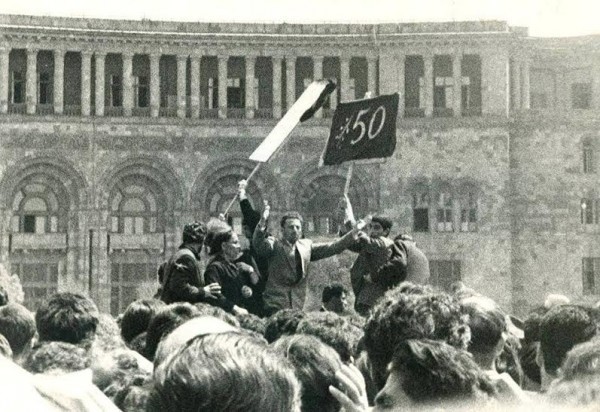
Yerevan hosts forum Against Crime of Genocide
For two days, Armenian and international experts gathered in Yerevan to discuss genocide risk factors and ways to enhance mechanisms for early detection and prevention of such tragedies. The 5th Global Forum “Against the Crime of Genocide” brought together scholars researching crimes against humanity, leaders of international human rights organizations, activists, civil society representatives, and politicians.
A central theme of the forum was the idea that impunity leads to new genocides. Many speakers argued that some of today’s events might have been avoided if prevention mechanisms had been applied effectively. However, they emphasized that political will is essential to prosecute perpetrators, while international justice often faces significant resistance.
Armenian Foreign Minister Ararat Mirzoyan, speaking at the forum, noted that the international community tends to pay attention to genocides and other mass crimes only after they have already occurred:
“We witnessed this in our region not only over 110 years ago in case of the Armenian Genocide but also literally last year when it seemed that the world could clearly see enough risk factors that could lead to irreversible consequences.
Unfortunately, we were unable to prevent, and today we are witnessing the irreversible consequences. This is one of the examples where the response of international institutions was not proportional to the risk factors and the situation on the ground. And the most significant one of these risk factors, the spread of hatred, ultimately turned from hate speech into a crime.”
- Opinion from Yerevan: “Turkey’s preconditions for Armenia are often voiced from Baku”
- Opinion: “There is pressure on Erdoğan regarding the opening of the Armenian-Turkish border”
- Special representatives of Armenia and Turkey met at the border: what was agreed upon
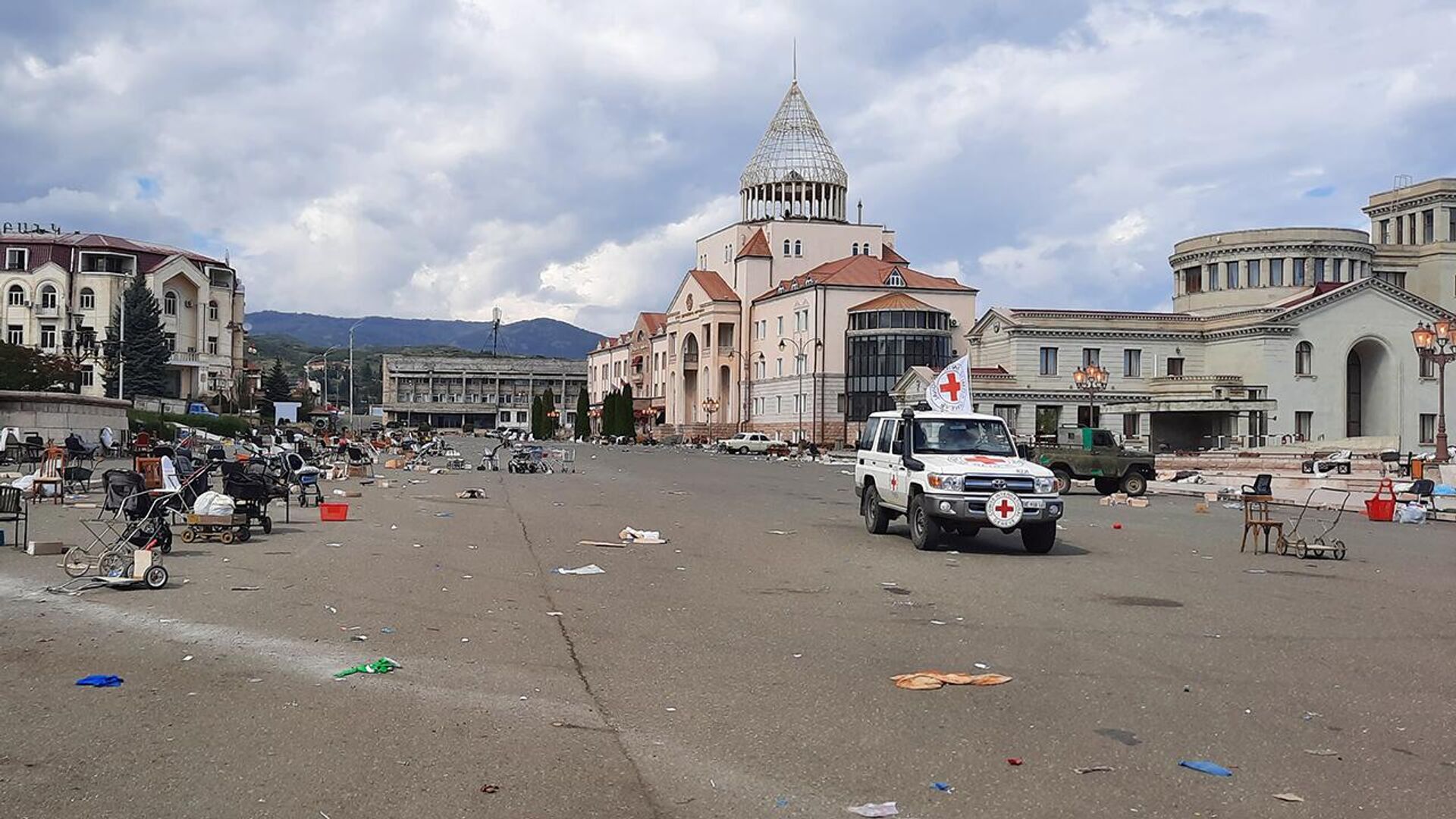
“Genocide preceded ethnic cleansing in Nagorno-Karabakh”
The President of the International Association of Genocide Scholars, Melanie O’Brien, stated in Yerevan that discussions about genocides should not overlook what occurred during the 10-month blockade in Nagorno-Karabakh:
“We are talking about the lack of food, medical care, and medication. These are fundamental characteristics of genocide. This is a crime of creating conditions for physical destruction. We saw some residents of Nagorno-Karabakh die of starvation. At the very least, we can clearly state that the ethnic cleansing in Nagorno-Karabakh in September 2023 was preceded by genocide.
The deportation of Armenians from Nagorno-Karabakh can be characterized as a crime against humanity. This would allow the International Criminal Court to examine the crime. Evidence-based arguments can be made, but I understand it will be challenging to find a way to hold anyone truly accountable.”
“Armenians fight primarily for justice and memory”
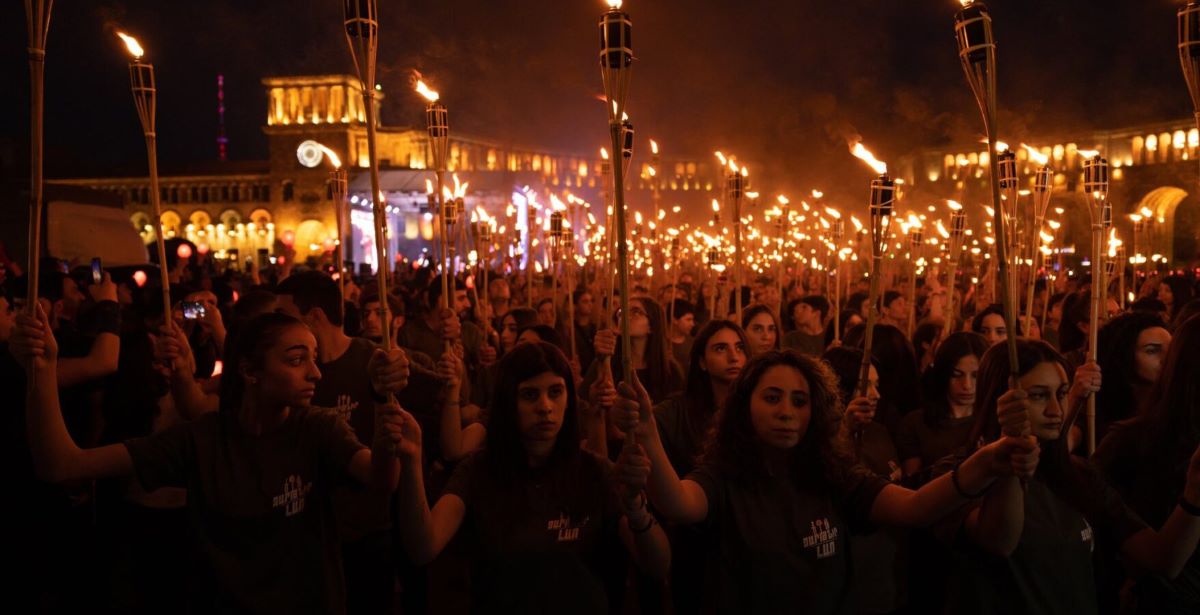
Former Chief Prosecutor of the International Criminal Court, Luis Moreno Ocampo, also participated in the forum. Speaking about the Armenian Genocide of the early 20th century and the efforts to recognize this crime, he said:
“Armenians fight primarily for justice and the memory [of the victims]. It’s hard to say whether Turkey will ever acknowledge the fact of genocide. We don’t know. But we must involve Turkey in the discussion and explain. The younger generation is different. I believe we can address this issue with the younger generation.”
The Armenian Genocide refers to the mass killings in Ottoman Turkey in 1915. Before that, approximately 2.5 million Armenians lived in the Ottoman Empire. As a result of killings and mass deportations, more than half of them perished. Armenia, some Western countries, and international organizations officially recognize those events as genocide. Turkey categorically rejects this term.
“Today’s crimes could have been prevented”
The President of the International Association of Genocide Scholars, Melanie O’Brien, warns that genocide is not limited to mass killings:
“This term also encompasses crimes involving humiliation and deprivation of people. Genocide, as a crime against humanity, must be recognized, condemned, and prevented through international mechanisms. International courts must oversee this process.
The crimes we are witnessing today could have been prevented in the past. But that did not happen. Now, we see these processes unfolding in Sudan, Myanmar, and Palestine. If the perpetrators had been held accountable, others might have thought twice before committing similar crimes.”
UN calls: “respect international law, strengthen prevention tools”
At the “Against the Crime of Genocide” forum, UN High Commissioner for Human Rights Volker Türk delivered a video address, emphasizing that the key to preventing genocides is the full adherence to international law by all governments and conflicting parties:
“These grave crimes do not arise out of nowhere. They are preceded by systematic discrimination, incitement to hatred, and practices of segregation based on racial, ethnic, religious, or other grounds.”
Türk noted that there are obligations to prevent such violations, which “many countries today fail to fulfill.” He urged governments to cooperate in investigating international crimes and to support mechanisms of accountability, including the International Criminal Court.
UN Secretary-General António Guterres also addressed the forum participants, recalling the Convention on the Prevention and Punishment of the Crime of Genocide, adopted 76 years ago. He stated that this document serves as a guarantee to victims and survivors of genocide that such atrocities will never happen again.
“Unfortunately, in a world plagued by division, distrust, and violence, the dark spectre of genocide remains with us,” he said.
Guterres stressed that all governments must ratify and implement the provisions of the convention and hold perpetrators accountable. He also called for strengthening prevention tools, including education and combating misinformation:
“Misinformation can contribute to incitement to hatred and actions aimed at genocide. We must respect and implement the rulings of the International Court of Justice regarding the application of the convention. We must do everything possible to identify early warning signs and raise the alarm. The best way to honour the memory of genocide victims and survivors is to intensify efforts to prevent this horrific crime.”