
Aegean to fly to Iraq and Azerbaijan in 2025 Kathimerini English Edition
Day: December 9, 2024

EU may cancel Georgia’s visa-free travel
The EU Ambassador to Georgia, Paweł Herczyński, stated on 9 December that the EU plans to respond to recent events in the country over the past 12 days and is considering all options, including suspending the visa-free regime with EU member states.
“Acts of violence, intimidation and threats against human rights defenders, civil society representatives and activists, journalists and politicians – such as those we are currently seeing in Georgia – are deplorable and blatantly incompatible with basic democratic values,” Paweł Herczyński said on Facebook.
He added that on 16 December, EU member state leaders plan to hold a meeting focused on developments in Georgia and make concrete decisions.
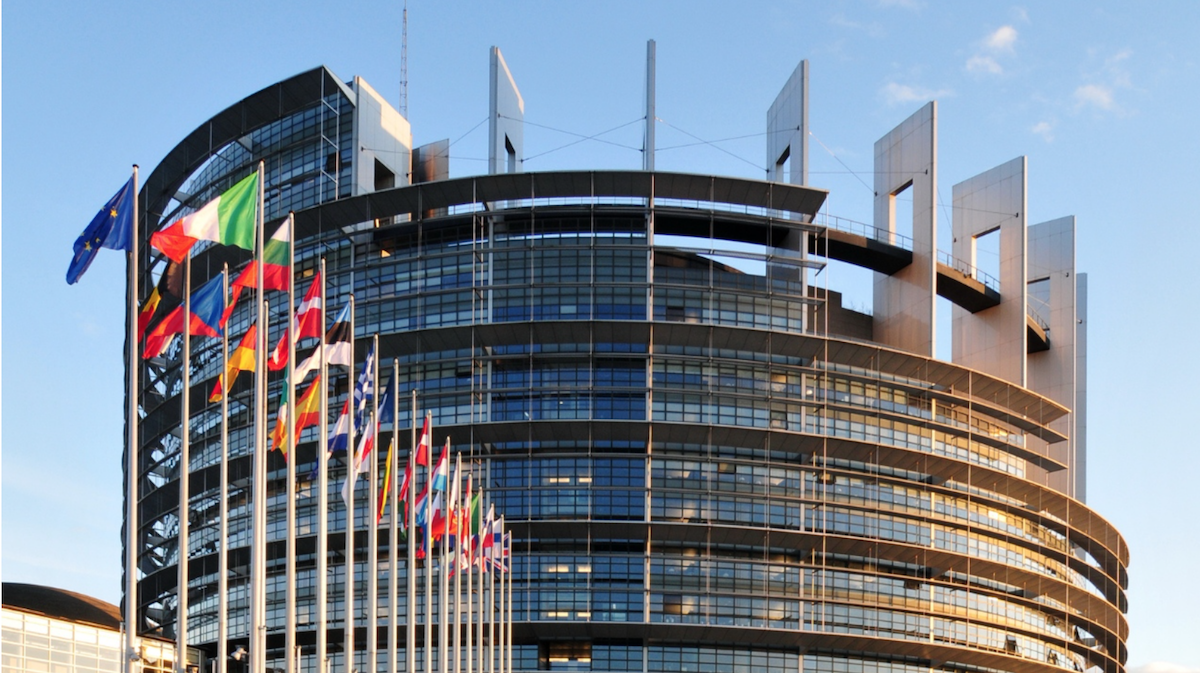
Herczyński: ‘Suspension of visa-free travel for certain groups under discussion’
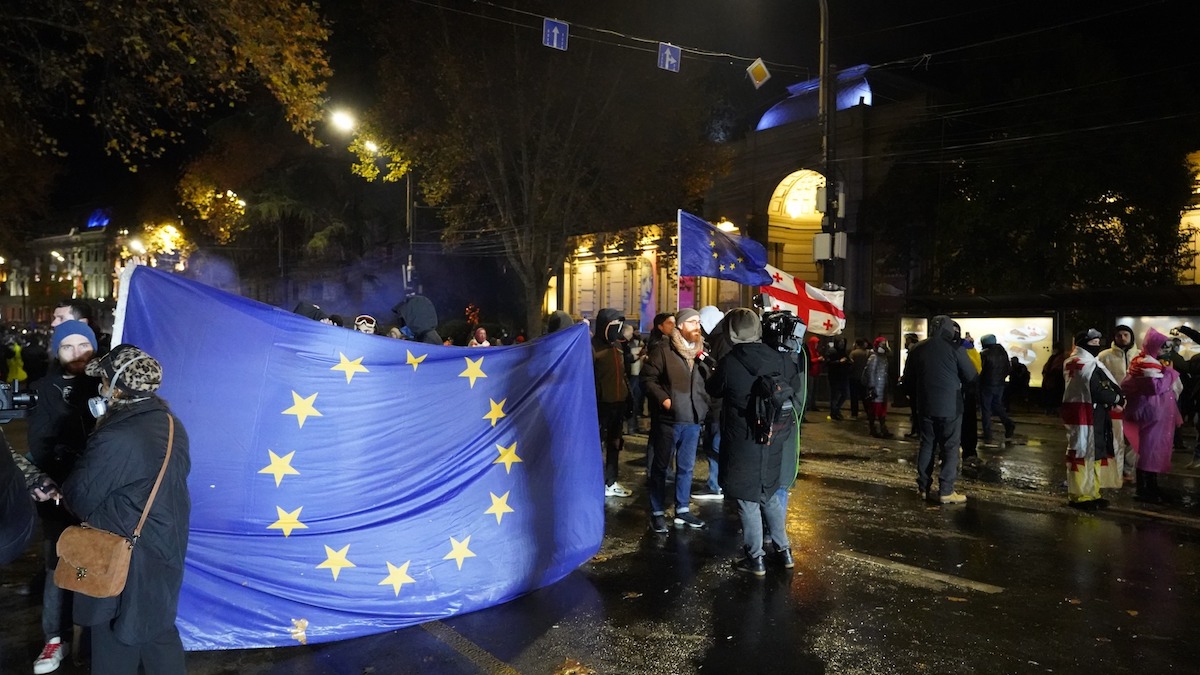
“We always say that we do not want to harm the population or punish those who uphold EU values and wave EU flags in Tbilisi and other Georgian cities.
But we cannot remain silent about members of the government and those responsible for violence and brutality against protesters,” said Paweł Herczyński.
“Sanctions require a unanimous decision from all 27 EU member states. In my opinion, most European countries have come to understand that we need to act. It is very difficult for any of these countries to ignore the level of violence and brutality against peaceful protesters in Georgia.
The EU High Representative for Foreign Affairs and Security Policy, Kaja Kallas, has already stated that there will be consequences for the Georgian authorities violating the rights of peaceful protesters.
For years, Georgia has enjoyed privileged relations with the European Union. The association and free trade agreements are in place, as is the visa-free regime. Georgia was even granted candidate status for EU membership.
However, what has been happening in Georgia over the past 12 days is entirely incompatible with these arrangements. We need to consider what will happen to these privileged relations,” Herczyński added.
EU may cancel Georgia’s visa-free regime
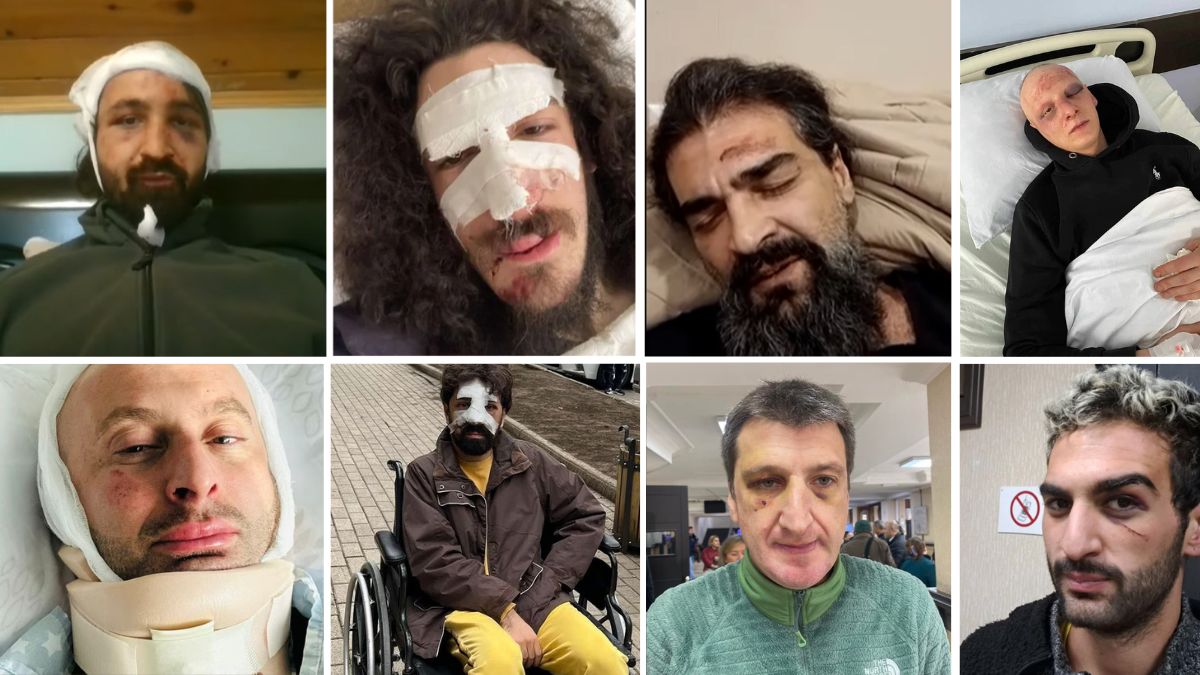
Journalists in Georgia have been violently attacked while covering mass protests after the ruling party announced a delay in membership talks with the European Union. The attacks have been blamed on “titushky,” a word with origins in Ukraine’s 2013 protests, meaning mercenaries hired by the authorities to beat and harass opponents.
Journalists in Georgia have been violently attacked while covering mass protests after the ruling party announced a delay in membership talks with the European Union. The attacks have been blamed on “titushky,” a word with origins in Ukraine’s 2013 protests, meaning mercenaries hired by the authorities to beat and harass opponents.
Aysel Umudova, a member of Meydan TV, was placed under a 4-month detention order on 6 December.
Her lawyer, Aqil Layic, stated that the charges against her remain unclear, and mentioned that she has not been feeling well and that emergency medical assistance had been called for her twice.
Other members of the channel also face similar detention measures.
Reports indicate that Aysel’s health has significantly worsened, with an increase in her panic attacks. Her relatives shared that her condition has caused her body to tremble continuously and she vomited repeatedly during the trial, requiring frequent trips to the restroom.
Due to the severity of her condition, Aysel carries a bag in her pocket to cope with vomiting. At the Baku Main Police Department, her blood pressure dropped, prompting an emergency call.
Her health has deteriorated as she struggles to eat and continues to vomit.
Dozens of journalists in Azerbaijan have been detained under similar charges, with local and international human rights organizations calling for their immediate release.
The post Lawyer: “Aysel Umudova’s condition is not good” appeared first on MEYDAN.TV.

Georgian parliament speaker accuses EED of funding terrorism
Shalva Papuashvili, the parliament speaker from the ruling Georgian Dream party, stated on 9 December that the Western European Endowment for Democracy (EED) is “funding terrorism in Georgia.”
The European Endowment for Democracy (EED) is an international organization established in 2013 by the European Union to support democracy promotion projects worldwide.
Papuashvili’s accusations
“Why did the European Commission and the EU create so many problems for both themselves and us? Wouldn’t it have been better to simply acknowledge they have no issues with transparency and ensure that their funding of organizations in Georgia is conducted openly?
What is the European Union hiding, and why? Why such a desire to conceal how it spends its resources? The answer is clear:
The European Endowment for Democracy, funded by the EU, secretly finances political parties, radical and extremist groups, promotes polarization, and funds terror in Georgia.
This includes financing campaigns that romanticize the ‘Molotov cocktail.’ And here is the result. Last year, there was one instance of its use during protests. This time, around five ‘Molotov cocktails’ were thrown.
It is this romanticization, sponsored by the EU, that has driven these hooligans and our society to this point.”
Papuashvili’s ‘financial transparency’ of NGOs in Georgia achieved
NGOs and media outlets receiving grants from Western organizations are already fully financially transparent to the state, as they submit detailed monthly reports to Georgia’s tax authorities.
These reports specify all received funds and exactly how they were spent. The issue with the “financial transparency” law adopted in spring 2024 is that it does not enhance the transparency that already exists but instead significantly restricts the operations of local NGOs and independent media.
The issue with the “financial transparency” law adopted in spring 2024 is that it does not enhance the transparency that already exists but instead significantly restricts the operations of local NGOs and independent media.
The law has been deemed unacceptable by Georgia’s civil society, and following its adoption, the European Union halted Georgia’s integration process into the alliance in spring 2024.
On 7 December, the European Commission released a report stating that Georgian authorities must implement eight recommendations to maintain the country’s visa-free regime with the EU.
The first recommendation is to repeal the “foreign agents” law and the subsequent package of laws targeting “LGBT propaganda.”
Everything to know about Georgia’s ‘financial transparency’ law
The main argument of the Georgian government is that similar laws exist in the United States and several European countries, including France. According to Georgian Dream, every country has the right to protect itself from foreign influence and demand transparency from its organizations.
However, this comparison is flawed because:
The U.S. Foreign Agents Registration Act (FARA), cited by Georgian Dream, was enacted in 1938, ahead of World War II, to protect the American public from Nazi propaganda. However, neither then nor now does FARA apply to allies and friendly nations of the U.S.
Similarly, in France, the “Foreign State Influence” law is accompanied by a specific list of countries it applies to. This list includes nations whose growing influence France considers a threat, such as Russia, China, Turkey, and Iran. The French law also explicitly states it does not apply to EU member states.
In contrast, the Georgian version of the law lacks such exemptions. Consequently, it directly targets organizations funded by the U.S. and the EU—friendly and partner countries that support Georgia’s democratic development and vital projects across various sectors, from healthcare and infrastructure to civil society building.
Additionally, FARA explicitly excludes media outlets and NGOs, applying only to lobbying organizations. The Georgian version contains no such clarification.
This makes the Georgian law more akin to the Russian legislation, which primarily impacted media and the NGO sector. As a result, all independent NGOs and media in Russia have been shut down. This similarity is why the “Foreign Influence Transparency” law in Georgia has been dubbed the “Russian law.”
Moreover, this law contradicts EU legislation. When a similar law was adopted in Hungary, it was annulled by the European Court of Human Rights, as it was deemed to specifically target and silence media and NGOs.
The “Foreign Influence Transparency” law in Georgia is set to come into effect by September 2024, when a special registry will be established. Organizations deemed “foreign agents”—those receiving over 20% of their funding from foreign grants—will be required to register. In a small and economically limited country like Georgia, this encompasses the vast majority of NGOs.
Many Georgian NGOs and media outlets refuse to register, finding the label of “representing foreign interests” offensive. “We work honestly for our country. Why are we being branded as ‘foreign agents’?” they protest.
Georgian parliament speaker accuses EED of funding terrorism