
Day: December 6, 2024
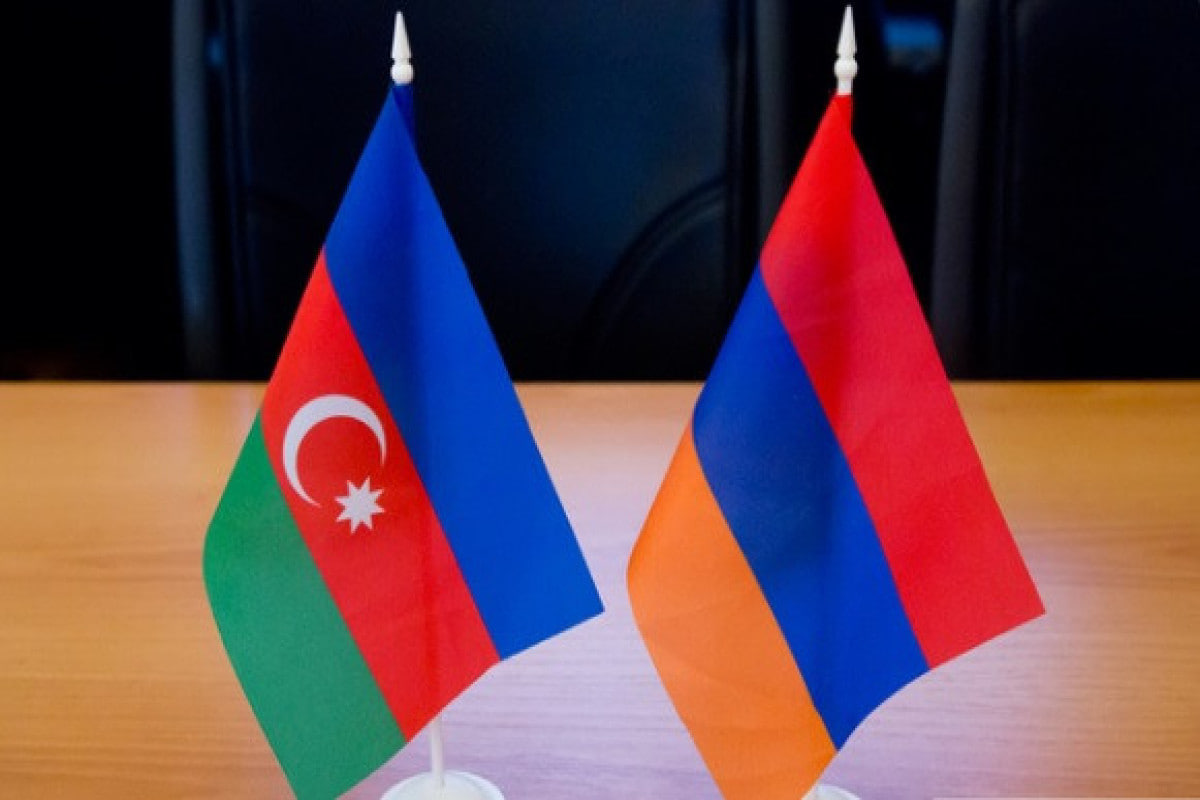
Recently, in peace talks between Azerbaijan and Armenia, which prefer a bilateral format, both sides have made positive statements.
“Significant progress has been made in the work on the draft bilateral agreement,” said Azerbaijan’s Foreign Minister Jeyhun Bayramov at the latest meeting of the OSCE Ministerial Council.
Armenian Prime Minister Nikol Pashinyan, speaking yesterday during a government hour in the National Assembly, stated that Yerevan and Baku are intensifying efforts on the peace agreement draft.
- How special forces beat protesters in Tbilisi: stories from those hospitalized
- Pashinyan’s response to Putin ‘Armenia has passed the point of no return’
- Food imports to Azerbaijan rise: what’s driving the increase?
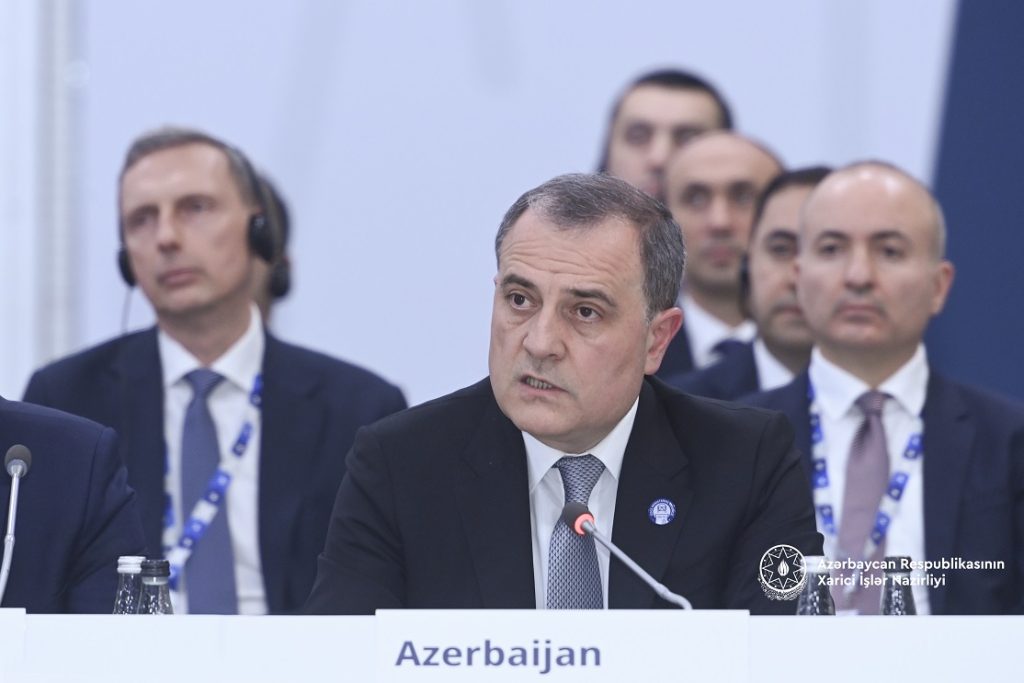
“Since the last meeting of the OSCE Ministerial Council, Azerbaijan and Armenia have completed the delimitation and demarcation of part of their borders through direct bilateral dialogue.
“The recently implemented regulation on the joint activities of the relevant border commissions will ensure the implementation of the next stages of the delimitation work. On the other hand, significant progress has been made in the work on the draft bilateral agreement.”
As reported by Voice of America, this was stated by Azerbaijan’s Foreign Minister Jeyhun Bayramov at the 31st meeting of the OSCE Ministerial Council.
According to the minister, these achievements clearly demonstrate that direct bilateral negotiations are the best and only viable way forward in the normalization process, which Azerbaijan has consistently pursued.
“Despite the progress made, unresolved issues remain in the normalization process. The conclusion of the process depends on Armenia fulfilling its stated commitment to respect Azerbaijan’s territorial integrity and sovereignty by removing territorial claims still enshrined in its constitution and other legal acts.
“Peace and friendly neighborly relations cannot be sustainable and irreversible if Azerbaijan’s sovereignty and territorial integrity are questioned in Armenia’s constitution, and if the implementation of a bilateral agreement depends on Armenia’s internal legal or political scenarios,” he said.
The minister believes that at this critical moment, when Azerbaijan and Armenia have a historic opportunity to turn the page on confrontation and establish friendly neighborly relations, all efforts should be focused on completing the normalization process based on mutual respect for sovereignty and territorial integrity.
“Azerbaijan’s determination on this issue remains unchanged, and we expect political will and responsibility in response from Armenia,” Bayramov said.
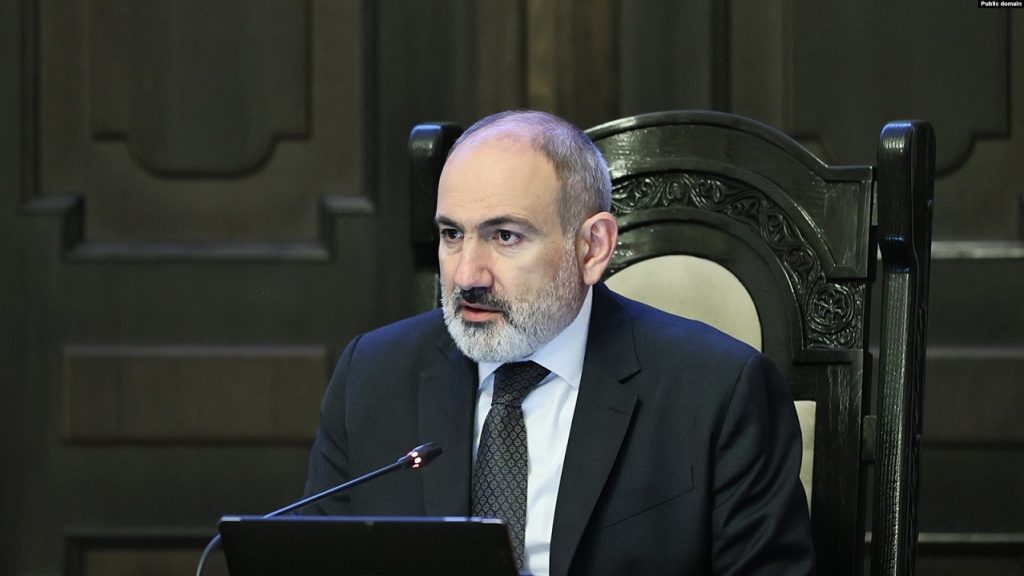
Armenian Prime Minister Nikol Pashinyan stated during a government hour in the National Assembly that Yerevan and Baku are intensifying efforts on the draft peace agreement.
“90 percent of the work has been completed, only the final efforts remain to sign the peace agreement,” he said.
He reminded that the National Assembly of Armenia had approved the regulation on the joint activities of the commissions for delimiting the state border between Armenia and Azerbaijan, and the delimitation process should begin in the coming days based on mutual consent.
“I exclude any actions by Armenia aimed at destabilizing the region,” Pashinyan said.
He noted that in 2021 and 2022, “over 200 square kilometers of Armenian territory were occupied.”
“But we also stated that resolving the issue of these territories by military means is not and will not be on our agenda. The approval of the regulations for the delimitation commissions and the delimitation process allows these issues to be resolved through negotiations and on a legal basis.”
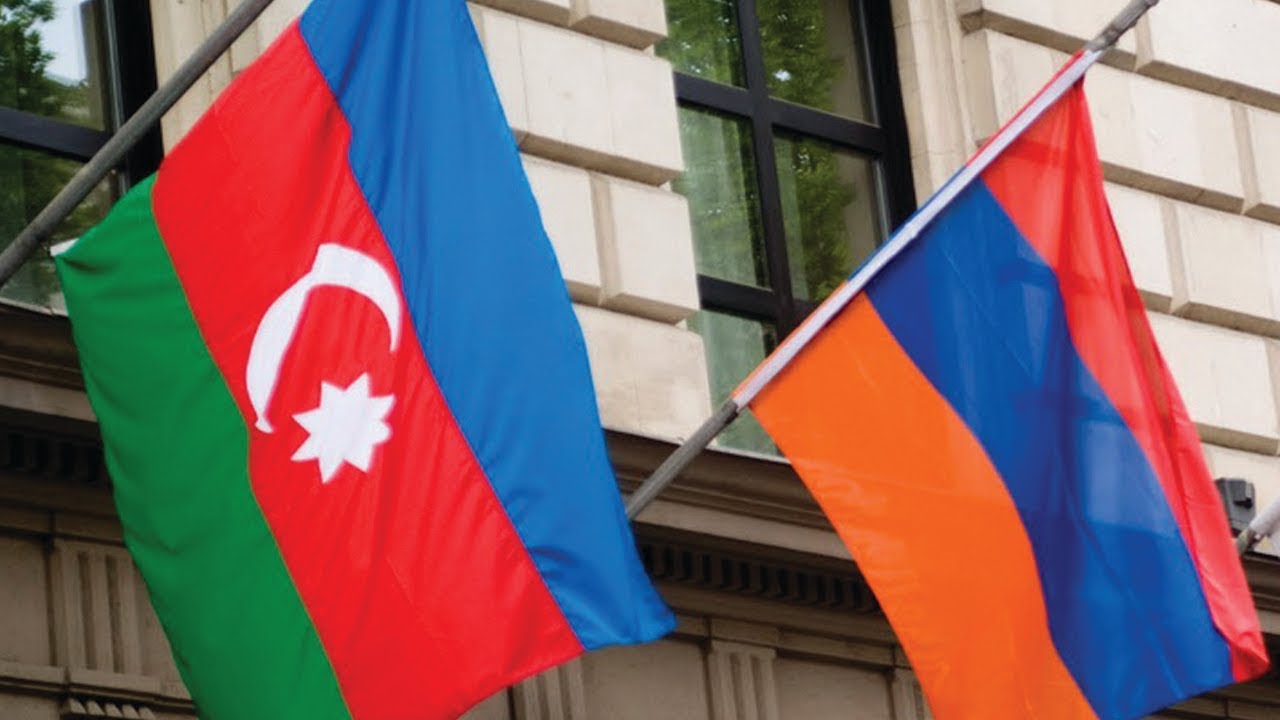
The Prime Minister assured that Yerevan is committed to the peace agenda and that Armenia has no military issues with any of its neighbors.
“We are intensifying efforts on the draft peace agreement because 90 percent of the work has been completed; only the final effort remains to sign the peace agreement. We have also proposed a real solution to the issue of opening communications in the region, and it’s just a matter of taking a step and resolving it. My assessment is that there are simply no reasons for tense Armenian-Azerbaijani relations in the region,” Pashinyan said.
The conflict between Armenia and Azerbaijan began in 1988. In 1991, it escalated into a military phase. After the ceasefire agreement in 1994, the former Nagorno-Karabakh Autonomous Region of Azerbaijan and seven surrounding districts remained under Armenian control.
Although the co-chairing countries of the OSCE Minsk Group (the United States, Russia, and France) conducted a mediation mission for a political settlement between the parties for three decades, they were unable to achieve any progress.
On September 27, 2020, military actions resumed between the armed forces of Azerbaijan and Armenia.
The leaders of Azerbaijan, Armenia, and Russia signed a trilateral statement on ceasefire after the Azerbaijani army, by November 10, had gained control over more than 300 settlements, including five districts, as well as the city of Shusha within its internationally recognized borders.
During the 44-day war, it was reported that up to 3,000 Azerbaijani soldiers and about 100 civilians were killed.
Armenian officials stated that more than 4,000 soldiers from their side died in the conflict.
Azerbaijan’s sovereignty over its entire territory was fully restored as a result of an anti-terrorist operation conducted by the Azerbaijani army on September 19-20, 2023.
A peace agreement between the parties has not yet been signed, and borders have not been demarcated. In the early years, peace talks were mediated by both the West and Russia. Recently, peace negotiations have increasingly been held in a bilateral format.
On December 4-6, the newly appointed Georgian Foreign Minister, Maka Botchorishvili, attended the OSCE Ministerial Meeting in Malta. During her visit, she met with the foreign ministers of Finland, Austria, Slovakia, Azerbaijan and Armenia. The information about the meetings have been provided by the Georgian Foreign Ministry’s press releases, however, they seem to be missing the description of the conversation topics that the Georgian Foreign Minister held with her Finnish and Austrian counterparts.
Meeting with the Austrian Counterpart
According to the press release of the Georgian Foreign Ministry, Botchorishvili met on December 5 with the Austrian Federal Minister for European and International Affairs Alexander Schallenberg. During the meeting, MFA says, the parties highlighted the “friendly relations” and “close cooperation” between the two countries in bilateral and multilateral formats. Discussions covered ongoing developments in Georgia, including the government’s efforts “to advance European integration,” with Austria reaffirming its support for Georgia’s EU membership aspirations.
The press release also noted that Botchorishvili thanked Austria for its support of Georgia’s European path and provided an update on the parliamentary elections and the involvement of international observers. The talks also focused on the regional security environment, with Botchorishvili describing the difficult situation in Georgia’s occupied territories. The Georgian side also thanked Austria for its strong support for Georgia’s sovereignty and territorial integrity, the Georgian MFA said.
Meanwhile, FM Alexander Schallenberg shared on social media that during the meeting with his Georgian counterpart, he had emphasized the “extreme concern” over the recent developments in Georgia and underlined the need to “fully respect” freedom of assembly and expression of demonstrators. “High time for government to engage with opposition and civil society in order to de-escalate polarization,” reads Austrian FM’s post.
Meeting with the Finnish Counterpart
Georgian Foreign Ministry’s brief press release on the meeting between Botchorishvili and Minister of Foreign Affairs of Finland, Elina Valtonen reported that “at the meeting, the Ministers discussed issues of cooperation in international formats, including Finland’s upcoming Chairmanship in the OSCE and its priorities. As for the ongoing processes in Georgia, the Minister confirmed to her colleague the strong will of the Georgian government to make active efforts to achieve further successes in the country’s European integration process. The conversation touched upon the parliamentary elections held in Georgia. Maka Botchorishvili provided her colleague “with information on the assessment of the election process by international observers.”
FM Valtonen reported, on the other hand, that she had shared with FM Botchorishvili “serious concerns about the violence against peaceful protesters and the need for a full, impartial investigation of the October election.” The incoming OSCE Chair emphasized in her social media post that OSCE/ODIHR is currently working on its final report on the elections.
FM Botchorishvili at the OSCE Ministerial
At the 31st OSCE Ministerial Council meeting in Malta, Maka Botchorishvili discussed Russia’s occupation of Georgia, stressing that “the ongoing war in Ukraine is a continuation of Russia’s aggressive actions in Georgia, which poses the greatest threat to European security”.
Botchorishvili highlighted the dire security, human rights and humanitarian situation in the Russian-occupied regions of Abkhazia and the Tskhinvali region, and criticized Russia’s non-compliance with the 2008 EU-brokered ceasefire agreement. It called for enhanced international security and monitoring mechanisms in the occupied territories and stressed the need for a consolidated policy of peaceful settlement supported by the international community, in particular through the Geneva International Discussions.
The media reported that Bochorishvili was one of the ministers who walked out in protest during the speech of Russian Foreign Minister Sergey Lavrov.
The Minister claimed that Georgia’s government is commited to EU integration, denying that the Government intends to stop accession negotiations with the EU, and warned against “political speculation”, which exacerbated polarization and threatened the country’s stability. Botchorishvili also expressed appreciation for the role of the OSCE/ODIHR in monitoring the Georgian parliamentary elections, but criticized the ongoing speculation about the elections as an attempt to create “artificial political crisis.”
Also Read:
- 25/11/2024 – PM Kobakhidze Nominates Three New Cabinet Members
The past year in Georgia has been marked by an unprecedented number of physical and verbal attacks on the opposition, CSOs and media representatives, and activists. The ruling Georgian Dream party has subjected the active part of the Georgian society to systematic repression, carried out both by official state bodies and by thugs, who attack activists not only during the violent dispersal of rallies, but also during the day, in their homes and offices.
The repressions intensified following what local observers assessed as a rigged parliamentary election of October 26 and got further brutal after the popular protests started, following the November 28 announcement by Irakli Kobakhidze that the government was stopping the EU accession negotiations process till 2028.
According to our count, at least 11 members of the opposition have been beaten this year; there are multiple reports of attacks on activists, and the exact number is unknown. The Public Defender reports that at least 85% of those detained from November 28 to December 6 were physically abused.
The Public Defender’s Office has described the actions of the riot police as ‘acts of torture’, while the Georgian Young Lawyers’ Association (GYLA has stated that the systematic and violent repression of the civilian population should be considered a crime against humanity, which may be grounds for an application to the International Criminal Court. Human rights observers said that the police’s inhuman and degrading treatment of the demonstrators is criminal in nature and amounts to torture.
According to Transparency International Georgia, from November 28 to December 6, more than 400 people were arrested – more than 350 people on administrative charges and 26 people on criminal charges. Of these, more than 300 reported being physically assaulted and/or tortured. More than 80 detainees have been hospitalized. Of the detainees, 7 are foreigners. Punished policemen – 0.
We have created this blog to keep you updated on cases of intimidation, violence and threats.
December 6
Tbilisi City Court Judge Lela Maridashvili sentenced Saba Skhvitaridze, a member of the opposition Coalition for Change, to pre-trial detention. Skhvitaridze is charged with the second part of Article 353, which refers to harming the health of a police officer during his official duties. The next hearing in the case will be held on January 28. During the trial, Saba Skhvitaridze stated that he had been abducted and tortured. According to him, during the arrest the police did not even explain to him why they were detaining him, but simply handed him over to an unknown operational group in the Gori region.
Tbilisi City Court Judge Irakli Khuskivadze sentenced eight members of the Dafioni organization to pre-trial detention on charges of organizing, leading and participating in group violence. The detainees are: Zviad Tsetskhladze, Vasil Kadzelashvili, Vepkhia Kasradze, Irakli Miminoshvili, Insaf Aliyev, Tornike Goshadze and Giorgi Giorgadze.
Three of the defendants – Zviad Tsetskhladze, Vepkhia Kasradze, and Vasil Kadzelashvili – are accused of organizing and directing group violence. They face 6 to 9 years in prison.
Five of the defendants – Irakli Miminoshvili, Insaf Aliyev, Tornike Goshadze and Giorgi Giorgadze – are accused of participating in group violence. They face between 4 and 6 years in prison.

Aleko Elisashvili, one of the leaders of the opposition coalition Strong Georgia, was sentenced to two months in pre-trial detention by Tbilisi City Court Judge Tamar Mchedlishvili. Aleko Elisashvili is charged under Article 156, Part 2, Subparagraph “a” of the Criminal Code of Georgia, which provides for up to three years’ imprisonment.
Nika Gvaramia, one of the leaders of the opposition alliance Coalition for Change, was sentenced to twelve days’ imprisonment after being charged with violations of Articles 166 and 173 of the Code of Administrative Offences, including petty hooliganism and disobeying a lawful order of a police officer.
The case took a dramatic turn when Gvaramia was unexpectedly transferred from Marneuli Detention Center to Tbilisi City Court without prior notification to his lawyer or family. Following his request for legal representation, the judge called for a break. Gvaramia’s lawyers subsequently requested a postponement of the trial, arguing that they had not been given access to the court records, which had reportedly been provided by the Ministry of Internal Affairs hour before the trial. Despite these concerns about the fairness of the trial, it went ahead.
Gela Khasaia, a member of the Coalition for Change opposition alliance, who was arrested on 4 December during a police raid in the office of the opposition party Droa, has been released on parole.
Aleko Elisashvili, one of the leaders of ‘Strong Georgia’, has been transferred back to Dusheti detention facility after receiving ambulatory treatment at Vivamed clinic, the hospital confirmed to IPN. His lawyer, Giorgi Rekhviashvili, awaits a court hearing on preventive measures, expected later today. Elisashvili was detained on December 4 near Courtyard Marriott following an opposition meeting, in connection with alleged violence against Ali Babaev, chairman of the National Congress of Azerbaijanis in Georgia.
December 5
Police arrests a 15-year old demonstrator during the protest in Kutaisi. A video footage depicts him lying on the ground and semi-conscious after a confrontation between police and protesters. Other protesters can be heard accusing the police of using violence against a “kid”.
One of the leaders of the opposition coalition Strong Georgia, Aleko Elisashvili, has been transferred from the Dusheti detention center to the Vivamedi clinic for medical examination. The press service of the coalition told Interpressnews that Elisashvili has injuries on his face and may have a broken rib. He was physically assulted and arrested yesterday, the Prosecutor charged him for political discrimination today.
Police has detained actor Andro Chichinadze and comedian Onise Tskhadadze. The details about why they have been detained are unknown. Both of them have been actively protesting against the government’s u-turn from the EU path.
The Prosecutor General’s Office has charged one of the leaders of the opposition coalition Strong Georgia, Aleko Elisashvili, with political discrimination against Ali Babaevi, the chairman of the Georgian-Azerbaijani National Congress and one of the founders of the ruling Georgian Dream party. The Prosecutor said Elisashvili verbally and physically assaulted Babaevi on December 2. He is charged with violating the second part of Article 156 (a) of the Criminal Code (persecution of a person in connection with political activity, committed by violence) and faces up to 3 years in prison.
Nana Malashkhia, one of the leaders of the opposition Coalition for Change party was fined 500 GEL [USD 176] for blocking the road during protests near Tbilisi State University on 19 November.
The Ministry of Internal Affairs (MIA) has arrested three individuals, including a 20-year-old, on charges of organizing and directing violent group activities against police officers under the Georgian Criminal Code; the 20-year-old is accused of systematic violence against police officers, while two others, aged 25 and 31, have been charged with assaulting police officers under Article 353 Prima. These offences carry a penalty of up to 9 years’ imprisonment. The MIA is investigating various criminal acts committed by “violent groups” during ongoing protests, leading to the arrest of 9 individuals under Articles 187(Damage or destruction of property) and 353 Prima (Attacking a police officer, employee of the Special Penitentiary Service or other representative of authority or a public institution) and 8 more under Articles 225 (Organization, management or participation in group violence) and Article 239 (Hooliganism).One individual has also been arrested for preparing an explosion.
On December 5, Tbilisi police department of the Ministry of Internal Affairs said it arrested an individual, S.J., born in 2006, on charges of assaulting a police officer. The crime carries a penalty of up to 7 years of imprisonment.
The police reports that on November 30, 2024, during a protest on Rustaveli Avenue, “the accused, armed with a knife, attacked an employee of the Ministry of Internal Affairs with the intent to cause harm”. The investigation is being conducted under the first part of Article 353 of the Criminal Code. Additionally, 7 individuals have been arrested under Articles 225 and 239 of the Criminal Code, which relate to organizing, leading or participating in group violence and publicly inciting violent actions. One person was also arrested for preparing an explosion.
December 4
In front of the Marriott Hotel on Freedom Square, mobilized thugs attacked opposition leaders who were meeting at the hotel to discuss their plans of action following the police raids earlier in the day. During the physical confrontation, the police joined the thugs in their attack and arrested the athlete and one of the leaders of the opposition party Ahali, Zurab Davitashvili.
Police also arrested one of the leaders of the “Strong Georgia” coalition, Aleko Elisashvili, for allegedly assaulting Ali Babaevi, the chairman of the Georgian-Azerbaijani National Congress. Babaevi claimed yesterday that Elisashvili had verbally and physically abused him, forcing him to be hospitalized.
During the confrontation the police damaged the camera of TV Pirveli.
Following police raids on opposition offices and activists’ homes, Georgian citizens took to the streets in protests in four major cities – Tbilisi, Batumi, Kutaisi and Zugdidi. The situation in Tbilisi quickly became tense, with police waiting for demonstrators in metro stations, searching them and taking away their gas masks and other protective equipment. Two people have already been arrested after a physical confrontation in front of the Freedom Square metro station.
- 04/12/2024 – Police Raids, Arrests Opposition, Activists
Several members of the Unity-UNM youth organization have been arrested, but the charges for their detention are not yet known. Arrested individuals include: Davit Gedenidze, Vakhtang Gagnidze, Irakli Ardia, Saba Birkaia, and Mishiko Janikashvili.
One of the leaders of the opposition alliance Coalition for Change Nika Gvaramia and Gela Khasaia of the same coalition have been arrested by the police.
Police initiated a search of the home of Ilia Ghlonti, a leader of the public group “Daitove.” The group has been prominent in mobilizing protest movement on social networks. Police have charged him with “organization or management of a group activity accompanied by violence, raids, damage, or destruction” and participation in disorder. Notably, the search began before Ghlonti’s lawyer arrived at the scene.
The Ministry of Internal Affairs (MIA) has arrested a 42-year-old man for “intentionally damaging a video surveillance camera in Mziuri Park” after leaving the protest on Rustaveli Avenue; If convicted, he will be facing up to five years in prison. The individual has been charged under Article 187 of the Criminal Code of Georgia, which pertains to the damage or destruction of property.
Public Broadcaster journalist Giorgi Chagelishvili has been fined 2,000 GEL (697 USD) after being arrested during the dispersal of a rally near Metro Rustaveli on December 2. Despite Chagelashvili stating that he was carrying out his professional duties, the police proceeded with his detention.
December 3
MIA arrested a 25-year-old demonstrator on charges of preparing an explosion, which is a violation of the first part of 18-229 (e) prima of the Criminal Code and provides for imprisonment up to 7 years. According to MIA, the demonstrator was first arrested for artificially blocking a road and disobeying police orders, and after the police searched him, they found so-called Molotov cocktail on him, which was submitted to eximination and the experts found traces of petroleum products.
Deputy Interior Minister Aleksandre Darakhvelidze reported that 5 demonstrators had been arrested on criminal charges of assaulting police and damaging property. Other cases of violation of Articles 187 and 353 of the Criminal Code are under investigation. As for the persons arrested for administrative offenses, their number has reached 293. Of them, the Tbilisi City Court has already sentenced 89 persons, imposed fines on 43, administrative detention on 41 and warnings on 5.
Activist Dodo Kharkheli was not arrested. Her house was searched by police who took all the electronic devices belonging to her, her husband and their child, including laptops, phones, flash drives, etc.
Dodi Kharkheli, a blogger and activist, was arrested by the police near her child’s kindergarten. According to the reports, the police had been mobilized near activist’s home for search.
The Ministry of Internal Affairs (MIA) has arrested a 37-year-old individual facing up to 7 years in prison. The individual is charged under Article 353 of the Criminal Code for assaulting police officers and public institutions, specifically for using a Molotov cocktail against the police. So far, five people have been detained, and the MIA continues to investigate “criminal acts committed by violent groups” under Articles 187 (Damage or destruction of property) and 353 (Assault on police officers or other representatives of the authorities or on a public institution).
December 2
Tbilisi City Court Judge Nino Enukidze found Shota Narsia, senior researcher for the International Society for Fair Elections and Democracy (ISFED), guilty of an administrative offense and fined him GEL 2,800 (USD 984). Narsia was arrested during the early morning dispersal of the December 1 rally. According to his lawyer, Narsia was physically abused by the police, although he did not disobey their orders.
Tbilisi City Court Judge Zviad Tsekvava sentenced poet Zviad Ratiani to 8 days in prison. Ratiani was arrested during the dispersal of a peaceful rally on November 29. He was brutally beaten during his arrest, and his medical report states that he has “a fracture of the fifth vertebra, a fracture of the nasal bone and septum, hematomas and bruises of varying severity on the head and throughout the body.” He underwent surgery this morning and is still in the hospital.
Gela Khasaia, a member of the Coalition for Change, was attacked by three thugs near his home while trying to get to the rally. He was violently beaten, dragged and verbally abused.
December 1
According to Levan Khabeishvili of Unity-UNM, opposition party, special forces attacked him when 15 masked men rushed out of Chichinadze Street and attempted to detain him. However, with the public intervention, the special forces were unable to arrest him. Khabeishvili stated that the special forces were deliberately searching for him, adding that a journalist reported hearing this information while livestreaming. During the April 30 rally against the Foreign Agents Law, Levan Khabeishvili was severely beaten by police.
MIA said it arrested one person for damaging an object, which carries a penalty of up to six years in prison. The man, born in 1997, “who is a member of a political party”, MIA said, allegedly set fire to the electric wires and power supply unit of the surveillance camera at the parliament building during a rally on Rustaveli Avenue on 29 November this year, “thereby damaging the said device and rendering it inoperable”. The case is being investigated under Article 187, Part 2 of the Criminal Code.
November 30: Judge Koba Chagunava sentenced two citizens, Giorgi Tsakatze and Zurab Tsiklauri, to five and four days of administrative sentence today. They were detained on the night of November 28-29. A total of 150 people were detained on that night and are being accused of disobeying police and minor hooliganism. The Special Investigation Service is investigating the excessive use of police force during that demonstration.
November 30: At least four persons have reportedly been arrested in Batumi, including one underage, where the rally is taking place near the Constitutional Court building in the central Batumi. The Rustaveli street is closed to traffic.
November 29: Two women politicians, Elene Khoshtaria and Nana Malashkhia (woman with an EU flag from the 2023 anti-Foreign Agents’ law rally) of the Coalition for Change were reported to have been injured during the protests: Khoshtaria has broken arm, and Malashkhia has a broken nose.
November 29: Guram Rogava, a journalist from Formula TV, who was covering the overnight protest, was physically, in a targeted manner, assaulted by one of the unidentified people dressed in black, wearing helmets and gas masks, have been operating in tandem with the riot police line, chasing and beating peaceful protesters. He was injured and hospitalized with head and suspected back trauma.
November 29: Journalist Lekso Keshelashvili, of Publika was reportedly beaten and arrested while carrying out his professional duties. Lekso went online and said that he probably had a broken nose and head injuries, his colleague wrote on FB. He is now being taken to hospital. His camera was taken from him.
November 29: Media reports indicate that members of the Coalition for Change have been injured – one of its leaders, Elene Khoshtaria, became sick after inhaling tear gas and standing under the water cannon (which reportedly has some gas mixed in), while Boris (Chele) Kurua suffered a head injury from allegedly a rubber bullet. Another Coalition member Vakho Tsereteli, was beaten and received hear injuries.
November 28: Police arrested Misha Mumladze in Kutaisi. He was peacefully demonstrating with locals in Kutaisi when he called for people to cross the street and the police attacked him, dragged him, tore his clothes and despite calls to stop and that he was unwell, they took him to the police car and arrested him. The police said that Mumladze didn’t respect their order and verbally assulted them.
November 28: Guram Chukhrikidze, an observer for “My Vote“, was fined 500 GEL [182 USD] for blocking the road during protests against rigged elections. He had observed the election process in Marneuli on 26 October. Chukhrikidze said, “This is another manifestation of the regime’s law. They are trying to intimidate us so that we cannot speak out.”
November 28: Judge Zviad Tsekvava fined all ten activists 500 GEL [182 USD] each for blocking an embankment road during a November 10 protest denouncing the election results. Authorities said they had violated the law on assembly and demonstrations. The list of activists who have been fined is as follows: Lasha Parulava, Nikoloz Kuchukhidze, Nodar Chikviladze, Nona Kiuregiani, Tinatin Meskhi, Baniamin Kasimov, Vakhtangi Maghradze, Archil Museliantsi, Sopiko Berulava, Nino Liparteliani.
November 28: Lasha Parulava, a member of the Unity-UNM, was expelled from the courtroom and fined 200 GEL [73 USD] for disrespecting the court, in particular by claiming that both the judge and the court were complicit in a Russian “special operation” and explicitly stating that “there is a Russian regime in the country”. Parulava stated that the Judge Tsekvava’s actions were influenced by the political instructions from the Georgian Dream (GD) party, a claim that led to his expulsion from the Courtroom. Judge Zviad Tsekvava is jointly reviewing the cases of 10 people, including Parulava’s, who were subjected to administrative proceedings for blocking the embankment road on November 10 protest, arguing that the activists had violated law on assembly and demonstration. Parulava stated that “the Ministry of Internal Affairs is accusing us of the offense we did not commit.”
November 27: Vano Gomurashvili, another activist, was fined 2000 GEL [733 USD] on 27 November. He was arrested for blocking the road during the rally on 16 November near the CEC building; Representatives of the Ministry of Internal Affairs claimed that Gomurashvili had insulted the policeman and disobeyed his requests. However, there is no evidence to support this, as the body camera of the officer involved in the arrest was set to an automatic deletion mechanism.
November 27: Ilia Seturi, one of the participants in the November 10 protest, was fined 500 GEL. He has been the subject of administrative proceedings for the blocking of the embankment road. Although Seturi admits his participation in the rally, he denies being depicted in the videos presented by the Ministry of Internal Affairs‘ lawyers.
After Seturi was fined, his supporters planned to hold a protest in the court yard. However, security guards did not allow them to do so, forbidding the use of banners and expelling them from the yard. The guards also closed the gates. The activists argue that they have the right to protest within 20 metres of the court building under the Law on Assembly and Demonstration.
November 27: Isako Devidze and Davit Tsotsoria, two activists sentenced to 8 days in prison, have been released. They were arrested on 19 November during the violent dispersal on Melikishvili Avenue. “We are writing the history of a new Georgia. We will definitely win,” said Isako Devidze, who was on a dry hunger strike, after leaving the isolation ward.
November 26: The Tbilisi City Court has sentenced Anatoli Gigauri to pretrial detention as a preventive measure- the decision was announced by Judge Lela Maridashvili. Gigauri was arrested during the November 25 and was charged under Article 353 Prima of the Criminal Code, which refers to assault on the police officer. Gigauri’s lawyer said that his client had been severely beaten by police during his arrest and had sustained physical injuries.
November 26: Anatoli Gigauri, born in 1980, has been charged by the Prosecutor’s Office of Georgia for allegedly assaulting a police officer during a protest on November 24 at the intersection of Rustaveli Avenue and Chanturia Street. Gigauri was arrested on November 25 and is facing charges under the first paragraph of Article 353 Prima of the Criminal Code of Georgia, which pertains to “Assault on police officers or other representatives of the authorities or on a public institution.” According to Gigauri, he was allegedly physically abused by policemen and responded by using force to defend himself. The lawyer is requesting “a forensic medical examination to determine the extent of the injury”. If convicted, Gigauri could face a prison sentence ranging from four to seven years. The Prosecutor’s Office will soon apply to the Tbilisi City Court for a preventive measure for the accused, and the investigation into the case is ongoing.
November 23: Activist Isako Devidze, who was arrested on November 19 during the violent dispersal of a 48-hour peaceful rally, was taken to the hospital and then returned to the ward because his four-day-long dry hunger strike has damaged his health. His lawyer says that Isako needs 24-hour medical attention because he won’t even drink water in protest, however the doctor he was taken to the Vivamedi clinic refused to even talk to Isako’s family and inform them about his health.
November 23: Natia Dzidziguri, who was arrested during the 19 November protest on Melikishvili Avenue in Tbilisi, said she was verbally and sexually abused by police officers. She told Formula TV that she was forced to kneel down in the police car and wasn’t allowed to sit down while the police officers made derogatory comments.
November 22: The Tbilisi City Court remanded 21-year-old Mate Devidze in pre-trial detention. Devidze was arrested on charges of attacking police on November 19 during a protest rally on Melikishvili Avenue and faces up to seven years in prison. The Prosecutor’s Office sought his remand in custody. The court rejected the lawyers’ request to release Devidze on bail.
November 22: Members of the student movement Dapioni, who have spent the night in the first building of Tbilisi State University in protest against the elections, were confronted by the security guards and an unknown thug during the night. According to the students, the clash broke out after the guards restricted their freedom of movement inside the building. Several students reportedly became unwell during the confrontation.
November 21: Mate Devidze, 21, was arrested on charges of attacking police, the Interior Ministry said today, November 21. The young man faces up to seven years in prison.
November 21: Aleksandre Kavtaradze, a citizen who was arrested during protests on November 19 and released on November 21, was summoned for questioning by the Special Investigation Service. RFE/RL’s Georgian Service was told that the SIS opened an investigation under Article 33 of the Criminal Code, which deals with exceeding official powers through violence. Kavtaradze, who was detained on charges of petty hooliganism and disobeying a lawful police order, describes police violence against him during his detention.
November 20: According to the decision of the Tbilisi City Court Judge Koba Chagunava, activist Isako Devidze, who was detained on November 19 during the violent dispersal of a 48-hour peaceful rally, was sentenced to 8 days in prison.
November 20: According to media reports, activist Irakli Andguladze, who was detained on November 19 during the violent dispersal of a 48-hour peaceful rally, has been fined GEL 2,700 (USD 984) by Tbilisi City Court Judge Lela Tsagareishvili. The trial of two other detained activists is currently underway.
November 20: Davit Kirtadze, UNM’s representative in CEC, was fined 500 GEL ($182) for splashing black ink on the chairman of the CEC, Giorgi Kalandarishvili during the announcement of the final summary protocol. The judge considered the case on an expedited basis.
According to Article 10 of Election Code of Georgia, “a person who has been discharged from his/her post at the election commission of Georgia by the election commission or court due to the violation of the electoral legislation of Georgia, – within 4 years from the date he/she was discharged from post.” Therefore, Davit Kirtadze is ineligible to be appointed as a member of the CEC for the next four years.
November 19: The Ministry of Internal Affairs confirmed to Civil.ge that it arrested 16 people at the rally for violating Articles 166 and 173 of the Administrative code, of which 3 people were released on parole.
November 19: Sergi Baramidze, a cameraman for Mtavari TV was released after being arrested by police while carrying out his journalistic duties. He was reportedly beaten and physically abused during the protest crackdown.
November 19: Protests in Tbilisi have escalated, with reports of unlawful detentions, injuries, and obstruction of journalists. According to the Coalition for Change, police detained its several members, including Manuchar Chachanidze and Saba Tskhvitaridze, during the crackdown on Melikishvili Avenue. Another member of the Coalition, Rezi Dumbadze, was also arrested, while Nika Kvitatiani, one of the members, suffered injuries, reportedly due to pepper spray, and was hospitalized.
Simultaneously, journalists faced violence and interference, with media organizations reporting physical assaults and detentions. According to The Media Ombudsman, “special forces prevented OC Media journalist Mariam Nikuradze from her journalistic activities; Law enforcement officers did not allow Netgazeti correspondent Givi Avaliani to film; Mtavari Arkhi cameraman Sergi Baramidze was arrested while performing journalistic activities; Law defenders physically assaulted Publika journalist Mindia Gabadze.”
November 18: Giorgi Liponava, co-founder of the Formula TV channel, along with two other citizens, has been released after 48 hours in detention. The three were violently arrested during a peaceful protest on November 16, as the Central Election Commission (CEC) announced the summary protocol. Vano Gomurashvili, a member of the “Coalition for Change,” also got released, as he confirms on Facebook.
November 16: The MIA said it had opened an investigation under Article 118 of the Criminal Code, which refers to the intentional infliction of less serious damage to health, following a complaint from the Central Election Commission. The case relates to the fact that David Kirtadze of the United National Movement threw an unknown liquid at the chairman of the CEC, Giorgi Kalandarishvili, during the November 16 meeting of the CEC.
November 11: Niko Managadze, a young activist, says he was summoned for questioning by the Special Investigation Service (SIS) on allegations of obstructing a pro-government Imedi TV crew during protests in Tbilisi.
November 11: According to the decision of the Tbilisi City Court on November 20, Isako Devidze and Davit Tsotsoria, two Georgian citizens who were arrested during the violent dispersal of the rally on Chavchavadze and Melikishvili Avenues, were sentenced to 8 days imprisonment.
November 7: The civic movement For Freedom, which is a member of the local observer mission My Vote, has been fined 3000 GEL (1100 USD) for hanging a banner on the wall of its office building, that reads “Russian Dream Stole Elections.”
October 30: Sopo Gelava and Eto Buziashvili, two Atlantic Council researchers whose houses were searched by the financial police two days before the election, say they now have no access to their bank accounts, with banks citing no legal justification or court order for freezing their accounts.
October 27: The Coalition for Change office in Zugdidi was targeted by alleged government-paid thugs who threw metal objects and pots at the office and attempted to enter, but left the area as media arrived on the scene. Police and ambulances are now seen in the area. This was reportedly the second attack on the same office today.
October 24: The house of one of the leaders of newly established party Federalist’s, Giorgi Noniashvili and his wife, Sopo Gelava was searched. Police took away all electronic gadgets, including their children’s laptops. According to some reports, the search is connected to an investigation on NGO Atlantic Council’s contractor company. Sopo Gelava is Atlantic Council’s employee.
October 22: Social Justice Center (SJC), a rights watchdog, issued an assessment of the battering case of Giorgi Mumladze, a politician and lecturer at Ilia State University, saying that the MIA is deliberately dragging out the case. Mumladze was beaten by four people on May 9 in the Kvemo Kartli region near his home, in the presence of his parents, bride, and two minor children, for his involvement in protests against the Foreign Agents Law in the spring. The SJC says that the investigation is not underway, despite many details provided by eyewitnesses to the relevant authorities.
September 27: Education expert Simon Janashia said that Ilia State University received only “conditional accreditation,” raising concerns given the positive evaluation by accreditation experts. The Accreditation Council has not explained its decision. A “conditional accreditation” is expected to delay the university’s full accreditation process for one year. Janashia warned, “Georgian Dream is trying not only to terrorize every member of society but to take over the institutions that are still free; not only Ilia State University, but the entire higher education system.” Ilia State University is considered to be independent of state influence.
September 25: Gela Khasaia, a member of the opposition Coalition for Change, reported that his bank accounts were frozen for failure to pay a court-ordered fine, although he claims he never received the court order. According to Khasaia, police arrested and physically assaulted him during protests against the Foreign Agents Law, and later the court fined him GEL 2700 (USD 990). He notes that he called and asked where he could pay the fine, but was told to just wait for the order.
September 25: The leader of “Vote for Europe” movement, Khatuna Lagazidze reported that one of the banks illegally gave the Anti-Corruption Bureau access to financial statements of the organization and its founders on September 17, without waiting for the decision of the Appeals Court. The Tbilisi City Court authorized the Anti-Corruption Bureau to access the personal data – bank account information and information related to the activities, of the founders of the newly launched “Vote for Europe” movement and the organization itself on September 13.
September 24: The Anti-Corruption Bureau declared Transparency International Georgia, a local watchdog, and Vote for Europe, a public movement, along with their leaders, as political actors with respective election-related “declared” goals, and demanded from them to submit financial statements.
September 24: Boris Chele Kurua, member of Girchi More Freedom, reported that his bank accounts were frozen for failure to pay a fine ordered by the court, although he claims that he had never received the court order. He was fined in May this year for artificially blocking the road during protests against the Foreign Agents Law. He was originally ordered to pay GEL 500 (USD 185), but now reports that GEL 50 (USD 18) has been added to the fine because he did not pay it on time.
September 16: The main opposition party in Georgia, the United National Movement, reports to the media that one of its members, Zurab Abaevi, has been arrested and physically assaulted by police. He has been charged under Article 166 of the Code of Administrative Violations of Georgia for petty hooliganism. According to his lawyer, he was arrested on his way to work at the UNM’s Nadzladevi office in Tbilisi.
September 16: The Tbilisi City Court Judge Mikheil Kinkolia found Giorgi Shanidze, an activist against the Foreign Agents Law and the former soldier fighting for Ukraine in the war against Russia, guilty under the Article 265 of the Georgian Criminal Code, which provides for punishment for the illegal cultivation of plants containing narcotics, and Article 187 – damaging surveillance cameras. Shanidze was sentenced to four years in prison.
September 11: The Tbilisi City Court fined Aleko Elisashvili, one of the leaders of the opposition coalition “Strong Georgia,” GEL 2000 (approximately USD 742) for petty hooliganism (Article 166 of the Code of Administrative Offenses of Georgia) and disobedience to the police (Article 173 of the Code of Administrative Offenses of Georgia). Elisashvili was charged with cursing at a policeman on April 17, when he was physically assaulted by police and later detained for several hours.
September 10: The Tbilisi City Court fined Saba Meparishvili GEL 2000 (approximately USD 742) for petty hooliganism (Article 166 of the Code of Administrative Offenses of Georgia) and disobedience to the police (Article 173 of the Code of Administrative Offenses of Georgia). Meparishvili is also charged under the second part of Article 187 of the Criminal Code, which deals with damage to or destruction of property, with “deliberately damaging” the iron protective barrier placed near the Parliament building.
September 9: The Tbilisi City Court has fined citizen Aleksandre Samkharadze GEL 1000 (approximately USD 371) for calling MP Viktor Japaridze, a supporter of the Foreign Agents Law, a “slave” and giving him the middle finger on May 28. Samkharadze was fined under Part One of Article 166 of the Administrative Code of Georgia, which provides for punishment for swearing in public places, harassment of citizens, or similar actions that disrupt public order and the peace of citizens.
August 6: The Tbilisi City Court ordered Vitali Guguchia to pay GEL 5,000 (USD 1,900) bail.
August 5: The Prosecutor General of Georgia charged Vitali Guguchia, the person who, in a video that went viral, reprimanded Georgian Dream spin-off People’s Power MP Viktor Japaridze for the adoption of the Foreign Agents Law, with obstructing the journalistic activities of the journalist and cameraman of PosTV. Guguchia is charged with the first part of Article 126 (beating causing physical pain) and the first part of Article 154 (unlawful obstruction of a journalist in his professional activity) of the Criminal Code of Georgia, which are punishable by up to one year in prison. The Prosecutor General’s Office plans to apply to the court within the time limit established by law, requesting the use of bail as a preventive measure.
July 26: Another defendant, Giorgi Shanidze (Shano), remains in custody. A judge denied him bail. He is accused under the first part of the Article 187 of the Criminal Code of damaging surveillance cameras during the protest against the Foreign Agents Law. He is also charged under second part of the Article 265 of the Criminal Code of Georgia, which envisages punishment for illegal sowing, growing or cultivating of plants containing narcotics. This article envisages a more severe punishment, so if the defendant is found guilty of both charges, he will be sentenced under the Article 265 to 4 to 7 years in prison.
July 26: Judge Zviad Shavadze rejected the defense’s appeal to release Pridon Bubuteishvili, a 20-year-old youth arrested on May 9 for allegedly damaging the Parliament gate and inflicting harm on a firefighter during the May 1 protest against the Foreign Agents Law. The defense had proposed a bail of GEL 3000 [approximately USD 1,111]. Bubuteishvili faces up to seven years in prison.
July 24: Judge Natia Gudadze once again rejected the defense’s appeal to release Saba Meparishvili (23) and Omar Okribelashvili (19), so they remain in custody. The two were arrested for damaging a temporary iron fence during a protest against the Foreign Agents Law. The damage caused to the state is estimated at GEL 400 (approximately USD 150), an amount which has already been paid.
July 24: U.S.-Georgian citizen and well-known lawyer Ted Jonas, who was beaten and arrested by police during demonstrations against the Foreign Agents Law, was found guilty by the Tbilisi City Court of administrative charges of petty hooliganism (Article 166) and disobeying a lawful request of the police (Article 173). He was fined 2000 GEL (approximately 730 USD).
July 23: Davit Katsarava, the leader of the anti-occupation movement Power is in Unity, who was severely beaten by the law enforcement on May 14 and had to be hospitalized and underwent surgery, was found guilty of the administrative charge of disobeying the lawful request of the police (Article 173). Katsarava was fined GEL 2000 (approximately USD 730) and his right to bear arms was restricted for two years.
July 10: Lazare Grigoriadis, who was among those arrested and beaten on May 14, the day the ruling party passed the Foreign Agents Bill in its third reading, was fined 2300 GEL by the Tbilisi City Court.
July 5: Davit Katsarava stated that after being brutally beaten and on his way to the hospital, the police told him that he was arrested on administrative charges of petty hooliganism (Article 166) and disobeying the lawful request of the police (Article 173).
July 3: Davit Katsarava, the leader of the anti-occupation movement Power is in Unity, who was beaten so badly on May 14 that he had to be hospitalized and underwent a surgery, received a letter from the court summoning him to appear before a judge on July 5, most likely for administrative offenses. Katsarava reports on social media that he expects the court hearing to be another “kangaroo court,” with police officers testifying that they had turned off their body cameras when Katsarava allegedly began swearing at them.
July 2: The Tbilisi City Court remanded in custody Omar Okribelashvili and Saba Meparishvili, who were arrested on May 14 during protests against the law on foreign agents. The two individuals are charged under the second part of Article 187 of the Criminal Code, which deals with damage to or destruction of property, and is punishable by three to six years’ imprisonment when committed in groups. According to the Georgian MIA, they deliberately damaged the iron protective barrier placed near the Parliament building.
June 25: The UNM office in Poti (western Georgia) was vandalized. Davit Khomeriki, Chair of the UNM regional organization in Poti, said the double-glazed windows were apparently broken by several blows with heavy objects.
June 25: Kote Abdushelishvili, another activist involved in planning the June 30 protest rally against the Georgian Manganese mining company, ნ member of the movement to save the village of Zodi, was attacked by three masked men in daylight in central Tbilisi.
- On June 30, residents of the Chiatura municipality (Imereti region) plan to rally against the “Georgian Manganese” mining company. They say the company’s work threatens to destroy their village.
June 22: Activist Niko Gaprindashvili was ambushed by three men who physically assaulted him with batons, leaving him with a concussion and other physical injuries. He was attacked after the announcement of the June 30 protest rally against the Georgian Manganese mining company.
June 17: Leri Darjania, a friend of civic activist Datuna Danelia, was attacked and severely beaten by about seven men around 8 a.m. Danelia wrote about this in social media saying: “At 8 o’clock this morning, my friend and comrade-in-arms Leri Darjania was met by the “Titushkys” of the Georgian Dream and was physically assaulted by about 7 people”. According to him Darjania was hospitalized with a broken nose and other facial injuries.
June 14: Ivane Chkhikvadze, EU Integration Program Manager at the Civil Society Foundation and Georgia Country Consultant at the European Endowment for Democracy, who was one of the witnesses testifying at the June 4 U.S. Congressional Hearing, was confronted by propagandist TV representatives and government loyalists at the airport upon his arrival in Georgia on June 14. The video footage shows them, including one allegedly a member of the GD youth organization, calling him “Sergo Orjonikidze,” “slave,” “agent sold with Soros money,” and “traitor without motherland ” and hassling him: “Weren’t you ashamed to make statements against your country ..?” “Doesn’t it make you uncomfortable that you asked for sanctions against the country?”
June 13: Activist Beqa Papashvili was beaten for calling Georgian Dream MP Beqa Odisharia a “Russian slave” and a “traitor” in a grocery store. According to Papashvili, Odisharia was in the store with his bodyguards, who wouldn’t let Papashvili get close to the MP, and after Papashvili came out of the store, three men surrounded him within minutes and started beating him. Papashvili says that one of the men proudly announced that he was Odisharia’s son.
June 11: Zuka Berdzenishvili, an activist and a son of Davit Berdzenishvili, one of the leaders of the opposition Republican party, was brutally assaulted by three people near his home. Recalling the incident, Berdzenishvili says that while he was being beaten, one of the attackers also threatened his life, saying, “I promise I’ll shoot you in the head.” The incident occurred about two hours after a social media post by Shalva Papuashvili, the Speaker of the Georgian Parliament, in which he named Berdzenishvili among other individuals representing EU-funded media or NGOs, accusing them of an “organized and politically motivated terror campaign” against members of the parliamentary majority. The Parliament Speaker referred to recent cases of citizens confronting MPs who voted in favor of the foreign agents law.
June 10: Several men dressed in black gathered around the apartment complex of Zurab (Girchi) Japaridze, leader of the opposition party Girchi-More Freedom allegedly waiting to physically attack him. The suspicious figures were spotted by the politician’s neighbors. Gia Japaridze (who was himself ambushed last month by government-paid thugs), the brother of Zurab Japaridze, reported about them in social media. When the crew of TV Pirveli reached the area and inquired, the men said they were there to protect public order and quickly left. Zurab Japaridze was targeted three times in the last month, and once had to fire a warning shot from his gun into the air to scare off the attackers.
June 9: Mariam Tsitsikashvili, a researcher with GRASS-Georgia’s Reforms Associates, was detained at the airport on administrative charges of petty hooliganism (Article 166) following a verbal confrontation with People’s Power MP Viktor Japaridze over his vote in favor of the foreign agents law. She and her companion, Irina Gurgenashvili, who was not involved in the incident, had their passports seized and were denied boarding.
June 7: Niko Managadze, an activist, representative of the Student Movement for Freedom and one of the students protesting Prime Minister Irakli Kobakhidze’s lecture at Tbilisi State University, was attacked by several men on the street in daylight. He shared to online media outlet Publika that he had just left the university and was waiting for the light to turn green to cross the street when he suddenly felt a blow from behind. Suddenly, others joined the attacker and several men surrounded him and began beating him. Managadze started bleeding and the men let him go only after the passers-by joined the fight. The witnesses recorded a video in which the attackers can be clearly identified.
June 6: Nino Kalandia, an activist and representative of the organizations Talgha and Georgian Down Syndrome Association, reported that when she came home to her apartment complex, she was met in the lobby by a man who asked her when she was going to stop what she was doing and then threatened her. She actively and loudly confronted him and the man taken aback had to leave her alone. Kalandia has also reported receiving threatening phone calls.
June 5: Khatuna Beridze, an activist and head of the NGO Alternative, was arrested and released on parole after calling Prime Minister Irakli Kobakhidze and the Head of the Adjara region’s Government Tornike Rizhvadze “slaves” and “traitors” as they walked down Batumi Boulevard.
June 4: Ioseb Babaevi, a civic activist and businessman, owner of the anti-occupation “Resto Bar,” who, according to media reports, often sends humanitarian aid to Ukraine, was controversially arrested in the city of Gori. He was arrested under Article 236 of the Criminal Code, which provides for the illegal purchase or storage of firearms. However, Babaevi’s lawyer, as well as the local people protesting his arrest, say that the police planted guns on him. The lawyer also said that Babaevi was physically and verbally abused by the police during his detention. In fact, on June 6, when Babaevi appeared before the Gori City Court, several physical injuries were visible on his head. Judge Levan Darbaidze found Ioseb Babaevi not guilty and ruled that the investigation was conducted illegally.
June 2: Tsotne Koberidze, a young politician from the opposition party Girchi-More Freedom, was confronted near his apartment in Tbilisi by two unknown assailants wielding electric shock devices. Koberidze resisted, and bystanders shouted at the attackers, who then fled the scene, leaving Koberidze physically unharmed. Ana Subeliani, a civic activist and co-chair of Tbilisi Pride, received a strange call from someone she didn’t know. The caller tried to trick her by saying he had 150 GEL (about 55 USD) worth of strawberries to give her, hoping to meet up. When Ana refused to meet him, the caller started cursing and verbally abusing her.
June 1: Around 2:30 a.m., 30-40 thugs vandalized the central office of the United National Movement. Levan Khabeishvili, UNM leader, shared the video of the destroyed office on Facebook Live. The night guards had to shoot into the air several times to scare off the intruders. According to Khabeishvili, the men worked in coordination with the police and the Georgian State Security Service. The MIA opened an investigation into the case under Article 187 of the Criminal Code, which deals with damage to or destruction of property.
May 31: Vitali Guguchia, a man seen in the viral video giving GD MP Viktor Japaridze a well-reasoned explanation of why the law on foreign agents is a “Russian law,” became the target of an intense smear campaign by a pro-government POSTV crew that showed up in Guguchia’s village in the western Georgian region of Samegrelo. POSTV journalist Natia Beridze accused Guguchia of secret operations under the UNM government, and the encounter escalated into a physical confrontation between Guguchia and the POSTV cameraman. The Special Investigative Service opened an investigation under Article 154 of the Criminal Code, which deals with obstruction of journalistic activity.
May 31: Giorgi Ushikishvili, a singer and an open critic of the government and the foreign agents law, was chased and verbally abused while driving the car. The next day, the same person texted him on Facebook, reminding him of the incident and telling him that “he does not like his [Ushikishvili’s] position on the country’s Euro-integration.”
May 31: Several opposition politicians and their family members continued to receive threatening phone calls. Among them were Tina Bokuchava and Ani Tsitlidze of the UNM, the mother of For Georgia member Ana Buchukuri, the mother of Droa member Tata Khundadze, and several members of Girchi-More Freedom. The Deputy Mayor of Tsalenjikha, Tamar Belkania, reported that her child had also received the threatening call.
May 31: GD MP Dimitri (Dito) Samkharadze publicly announced that he and his thugs were behind the campaign of intimidation against the government’s opponents and civil society. His Facebook video shows a man leaving abusive, obscene writings on the walls of the offices of protesters against the foreign agents’ law. Samkharadze said this was a response to “neo-fascists,” as he calls them, to those who earlier left writings on the walls of the homes of some GD MPs, calling them “slaves” and “traitors.”
Samkharadze also shared the list of prospective targets. NGOs: Georgian Young Lawyers’ Association (GYLA); Tbilisi Pride; Sapari; Movement “Step”; “Shame” movement; Courtwatch; Mtis Ambebi; Studio Monitor; Movement “Talga”; Civil Society Foundation; International Society for Fair Elections And Democracy (ISFED); Transparency International – Batumi; Green Sector. Opposition parties: Lelo For Georgia; Girchi – More Freedom; Droa; Lelo For Georgia – youth wing; United National Movement – central office; Ahali; UNM – Batumi; Lelo – Batumi; Ahali – Batumi.
MP Dito Samkharadze’s announcement of repression was openly supported by People’s Power MP Guram Macharashvili, another GD MP Davit Kacharava, and pro-government POSTV co-founder and TV host Shalva Ramishvili, who on their part endorsed and warned of further repression.
May 31: An orchestrated campaign of intimidation against opposition politicians, media, civil society organizations, and critics of the foreign agents law has resumed.
MAY 28: Parliament Overrides President’s Veto, Finally Adopts Foreign Agents Law
May 28: Zviad Kharazishvili, alias “Khareba,” the notorious head of the MIA’s Special Tasks Department, admitted to battering protesters during peaceful demonstrations against the foreign agents law and said he had a special “list” of people to be targeted by riot police. “I don’t beat young people, I beat scoundrels… We have a list,” Kharazishvili told a journalist.
MAY 27: Legal Issues Committee Endorses Overriding Presidential Veto on Foreign Agents Law
MAY 18: President Salome Zurabishvili Vetoes Foreign Agents Law
May 15: Police arrested Giorgi Okmelashvili, head of the Limoni creative agency, on charges of assaulting a police officer, amid broader concerns that authorities are cracking down on individuals and organizations critical of the government. The MIA said Okmelashvili “physically assaulted” its employees during the May 13 rally at the Parliament building. Prior to his arrest, his home and the agency’s pavilion were searched by police. According to social media reports, at least four other creative and media agencies – AdFlex, H0lymotors, Ogilvy and Betterfly – have been subjected to surprise audits by tax authorities.
May 14: Several people were arrested and beaten during rally near the Parliament building against the foreign agents law when it was adopted in its third and final reading. Among them was Davit Katsarava, the leader of the anti-occupation movement Power is in Unity, which regularly patrols the occupation line and reports on the situation on the ground. Katsarava was standing peacefully on Rustaveli Avenue, when he was grabbed by the special forces, severely beaten and later hospitalized in serious condition. Lazare Grigoriadis, who was pardoned by the President, was among those arrested and beaten.
MAY 14: Parliament Passes Foreign Agents Law 84-30 in Third and Final Reading
MAY 13: Legal Issues Committee Passes Foreign Agents Law in Third Reading
May 11: The 73-year-old father of Ana Subeliani, civil activist and co-chair of Tbilisi Pride, was beaten. Rati Amaghlobeli, a writer and one of the organizers of the rallies against the foreign agents law, said that several people ambushed his house and covered his entrance with writings and posters.
May 10-11: Zurab Japaridze, leader of Girchi-More Freedom, was ambushed three times, twice at midnight near his home and once at noon near his party office; in all three cases, he successfully evaded the attackers. In the second case, Japaridze who is a former MP and is legally carrying a weapon, fired a warning shot, causing the masked men to flee in their car.
May 10: A man was severely beaten in his car by a group of police in the presence of his wife. The incident took place in Tbilisi, on Leonidze Street. It occurred when the man was driving up a street and encountered a police bus moving in the opposite direction on a one-way street. When he refused to yield to the bus, a number of policemen got out of the bus and physically assaulted him, relentlessly punching and kicking him, targeting his head. The Special Investigation Service opened an investigation under Article 333 (3b) of the Criminal Code, which deals with exceeding official authority by using force or a weapon.
May 9: Two opposition politicians, Boris (Chele) Kurua of the Girchi-More Freedom party and Nodar Chachanidze of the Ahali party, were attacked and physically assaulted by a group of Titushky (a word that originates from Ukraine’s Maidan protests and denotes thugs paid for by the government to intimidate protesters – both practice and the term are now being re-used in Georgia). Both were attacked near their homes as they were returning from a talk show in which they had participated on Formula TV.
May 9: Ucha Abashidze, a prominent pro-Ukrainian military blogger and activist against the foreign agents’ law, was controversially arrested for allegedly illegally purchasing and storing weapons and ammunition after his house was searched by a group of police who did not allow anyone to enter the property, including his lawyer and family members. The manner in which his house was searched by the police raised fears of the deliberate planting of guns. A few days later, Ucha Abashidze and his wife, Mariam Iashvili, who was arrested on 11 May, were charged under Article 157 Prime (unlawful obtaining and storage of private life secrets) and Article 236 (illegal purchase and storage of firearms and ammunition).
May 9: An orchestrated campaign of intimidation against opponents of the foreign agents law took on a new dimension, with insulting and discrediting posters and writings appearing on the offices and homes of civil society, media, and opposition politicians, calling these people “agents,” “enemies of the country,” “UNM hired,” and so on. This process continued on May 10 and 11.
May 9: Giorgi Oniani, a member of the opposition Ahali party, told Formula TV that after he and his wife left home late at night to visit the hospital and see Dimitri Chikovani, who had been beaten by unknown assailants earlier that day, individuals ambushed his home, aggressively stomping on the floors and verbally assaulting his 14-year-old son, who was alone at the time. He also said that he and his family members had been receiving abusive phone calls for two days.
May 8: Dimitri Chikovani of the UNM, Lasha Ghvinianidze, an activist and one of the organizers of the bikers’ marches, and Gia Japaridze, a former career diplomat, professor at the University of Georgia, researcher at the Chavchavadze Center think tank, and brother of Zurab Japaridze, leader of the opposition Girchi-More Freedom, were attacked and beaten by pro-government thugs. Following the attack on Lasha Ghviniashvili, he told Formula TV that he had received an unknown call on his phone prior to the attack, suggesting that the attackers may have used this method to pinpoint his location. He also mentioned that his 72-year-old father had received a call earlier in the day warning him that “his son should stop.” On the same day, DJ Gio Shengelia, a public critic of the foreign agents law, was physically assaulted by two people as he left the club.
May 8: Koba Pipiashvili, who attacked Lado Apkhazava and his son on May 5, was released on GEL 4000 (about USD 1440) bail. He was issued a restraining order against Apkhazava and his companion. Before releasing the attacker on bail, prosecutors charged him under Part C of Article 126 (violence against two persons) of the Georgian Criminal Code, which carries a two-year prison sentence.
May 8: Parliament Speaker Shalva Papuashvili announced that the Political Council of Georgian Dream has decided to create a database containing information on all individuals “who are involved in violence, blackmail, threats, and other illegal acts,” or “who publicly endorse these actions.”
Since May 7: Hundreds of civil activists, opposition politicians, participants in the protests against the foreign agents law, as well as their family members have been receiving phone calls from foreign and Georgian phone numbers, and after picking the phone they are verbally abused and intimidated.
May 7: Giorgi Kldiashvili, Executive Director of the Institute for Development of Freedom of Information (IDFI), a watchdog, was verbally and physically assaulted while speaking to journalists near the Swedish Embassy in Tbilisi. The opposition-leaning Formula TV crew interviewing Kldiashvili was also attacked. The assailant, whose face and car could be identified, pointed at people near the Embassy as he passed by, swearing at those who “support these people.”
May 5: Lado Aphazava, a teacher from the Guria region of western Georgia and winner of the National Teacher Award, and his son were attacked and physically assaulted by several men near his home in the town of Lanchkhuti. Aphazava claimed that he was targeted because of his public criticism of the foreign agents’ law and his participation in protest rallies.
MAY 1: Parliament Passes Foreign Agents Law 83-23 in Second Reading
May 1: Levan Khabeishvili, leader of the United National Movement (UNM), was severely beaten by police during the April 30-May 1 rally against the foreign agents law. He had multiple bruises and lacerations on his face, a severely injured eye, and a broken nose. Recalling his detention, Khabeishvili said that he was told that he has a “long tongue” and that he is “constantly criticizing the government.” Almost a month after the incident, the Prosecutor’s Office officially recognized Khabeishvili as an injured party.
APRIL 29: Legal Issues Committee Endorses Foreign Agents Law in Second Hearing
April 17: Online media journalists Aleksandre Keshelashvili of Publika, Giorgi Badridze of Tabula, and Giorgi Baskhajauri of April were reportedly chased and beaten by police while covering a story during a protest rally against the foreign agent’s law near the Parliament building.
To be updated…
- Fireworks light up pro-EU protests in Georgia Reuters
- Four Scenarios for the Protests in Georgia Foreign Policy
- Opinion | The Georgia Protests Are Fueled by Fury The New York Times