Azerbaijani view on Syrian crisis
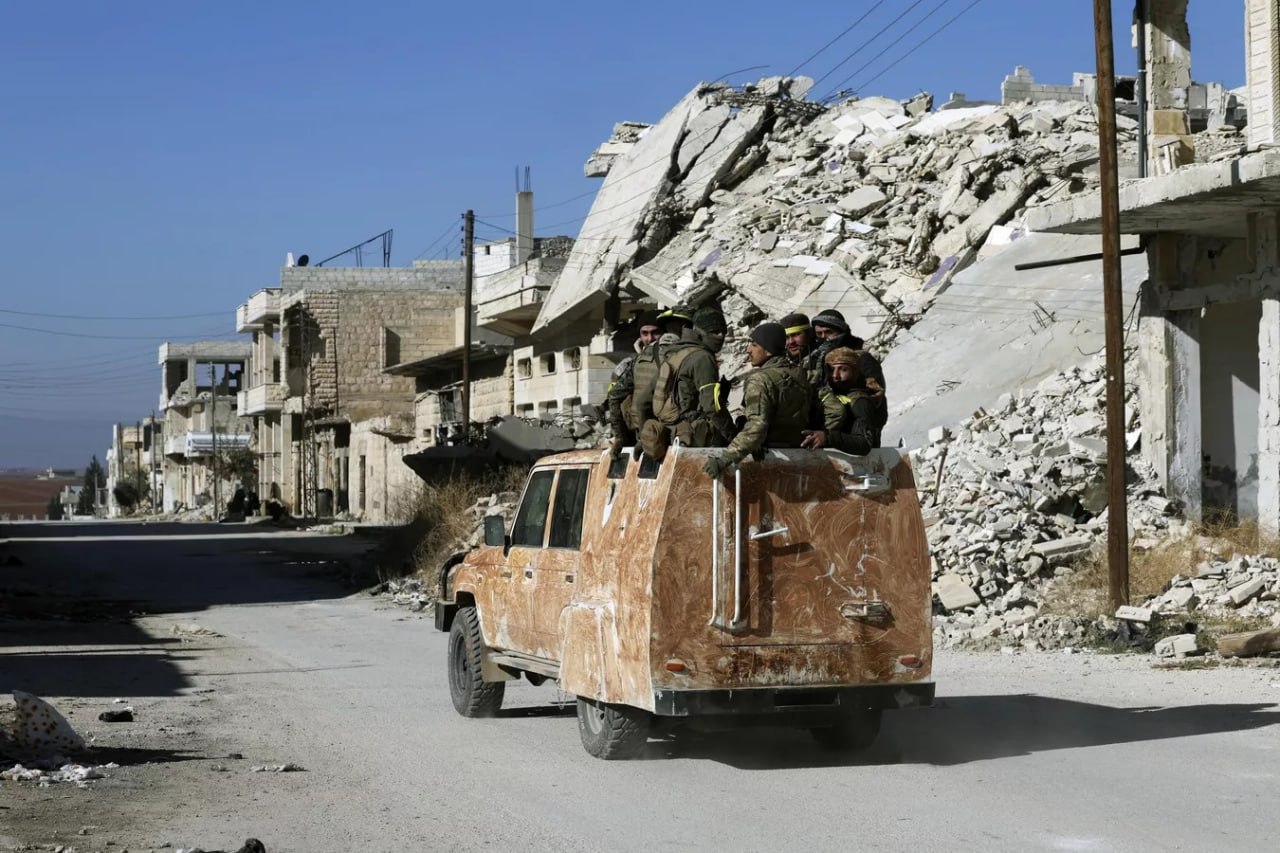
Tensions in the Middle East are escalating by the day. In Syria, the fate of the Assad regime, which has held power for 55 years, is being decided, potentially reshaping the entire region. The world is closely watching these developments, while Azerbaijani analysts are actively discussing the situation in Syria, as neighboring powers—Russia, Iran, and Turkey—are deeply involved.
Analysts at the South Caucasus Research Centre (CSSC) believe that a new status quo is taking shape in Syria.
Meanwhile, experts at the “View on the East” center argue that the October 7 attacks by Hamas and Palestinian groups on Israel marked the beginning of a New Middle East. “As in many periods of history, the Middle East is once again being reshaped with energy emanating from the Holy Land,” the center stated in its commentary.
Commentary from South Caucasus Research Centre (CSSC)
New status quo emerges in Syria
The military conflict in Syria has been ongoing for over 13 years. The civil war, which began in March 2011 amidst the wave of the “Arab Spring,” later evolved into a multifaceted conflict involving regional and international powers.
In 2017, the conflict entered a new phase with the emergence of the Astana peace process. Through the consensus reached between Turkey, Iran, and Russia, a certain status quo was established in Syria.
However, forces outside this agreement remain active in the country, the most significant being U.S.-backed Kurdish groups that control northeastern Syria.
Most of the southern and central parts of Syria are under the control of Assad’s army, supported by a small contingent of Russian ground forces, additional air support, and Iranian proxies.
The northwest of Syria is controlled by the Turkish army and Ankara-backed armed groups, the most prominent being Hayat Tahrir al-Sham.
In addition to forces aligned with the Astana trio and those outside this agreement, other armed groups operate in Syria, though their limited numbers render their influence on the broader conflict minimal.
This year, Turkey has made numerous attempts to negotiate with Bashar al-Assad. Assad, however, has largely relied on the support of Russia and Iran, avoiding direct contact with Ankara. Damascus has also shown a preference for prioritizing the restoration of relations with other Arab states.
However, due to the war in Ukraine, the weakening of Russia, and Iran’s diminished influence as a result of Israeli military actions in the Middle East, the need for a new status quo in Syria has arisen. In this context, the current escalation is not unexpected. Since attempts to achieve inevitable changes through negotiations have failed, the formation of a new status quo in Syria is now unfolding through military means.
To achieve this, armed groups must maximize their capabilities to establish a new status quo. Only then can the resulting situation on the ground be confirmed at the negotiating table. These negotiations are already underway between Tehran and Ankara, coinciding with the visit of Iran’s Foreign Minister to Turkey.
Currently, the biggest weakness of Hayat Tahrir al-Sham lies in Russia’s continued air dominance. If this advantage is not countered in the near future, a new status quo could be established on the ground sooner.
In conclusion, two key points must be emphasized:
— Turkey aims to enhance its role in Syria, especially as it has remained sidelined from key developments in Gaza and Lebanon. The weakening of other parties to the existing consensus—Russia and Iran—further necessitates this shift.
— Meanwhile, as in many conflict zones, factions in Syria are racing to strengthen their positions and create a new reality by January 20, so the Trump administration can shape its future policy in line with this new reality.
Commentary from “View on the East” Centre
Middle East is redefined by energy flowing from “Holy Lands”
The Bashar al-Assad regime is in a highly precarious situation. Reports suggest that some government factions in the capital are attempting to overthrow the Assad dynasty, showing support for advancing Sunni forces. According to government sources, Bashar al-Assad has returned from Moscow to Damascus and is closely monitoring the unfolding events.
Following a series of military coups, Hafez al-Assad—Bashar’s father, who seized power in 1971 and belonged to the Nusairi (Alawite) minority comprising 10-12% of the population—managed to build a coalition with Sunni tribes. These tribes, representing over half the population and primarily engaged in agriculture and trade, helped secure minority rule. However, a severe drought in the mid-2000s ended the alliance between Sunni groups and the Assad family.
The conflict between Assad and the Sunnis, which began as social protests in 2011 and escalated into a civil war a year later, quickly evolved into a proxy battleground involving various global power centers.
Bashar al-Assad, who regained control over most of Syria in 2019 with significant support from Russia and Iran, has made various attempts to stabilize the country. However, unlike his father, he has failed to restore the loyalty of the Sunni population.
The shake-up of Assad’s rule is undoubtedly an alarming signal for both Russia and Iran. However, Moscow’s interests in Syria extend beyond the Assad family.
Russia’s primary focus in Syria is its naval fleet of 11 ships stationed in Tartus and the large airbase in Khmeimim, both officially leased from Syria for 49 years under agreements that place them outside Syrian sovereignty. This means that even a potential new government in Damascus would legally be unable to interfere with Russia’s military bases in the country.
Advancing Sunni forces have already sent initial positive signals to Russia. Against the backdrop of the realities in Ukraine, Moscow’s motivation to open an additional front to defend Assad appears limited.
For Iran, however, the continuation of Assad’s rule represents a “red line.” Despite ideological differences between Assad’s secular regime and Iran’s religious government, their shared opposition to Sunni rule unites them in pragmatic interests. Sunni rule in Syria could lead to the withdrawal of thousands of Shiite militias deployed by Tehran, effectively cutting off Iran’s influence, which extends to Lebanon and the Mediterranean coast.
This shift could dismantle the resistance network Iran has built over years. However, the fact that Israeli fighter jets currently operate freely in Syrian airspace complicates any overt intervention by Iran-backed forces in the country.
At the same time, with Russia remaining inactive, Iran finds itself completely alone in Syria. In such a situation, questions arise about the limits of Iran’s capabilities and its motivation to defend the Assad dynasty. It seems Tehran has opted to wait and see how the situation in Syria develops until Moscow’s position becomes clearer. For Iran’s leadership, preserving its current religious regime in Tehran appears more critical than preventing the collapse of its resistance network in the Middle East.
The overthrow of the Assad dynasty, which has ruled Syria for 55 years—a country considered the most geographically strategic in the Middle East—would undoubtedly reshape the region’s political landscape and potentially its borders. The October 7 attack by Hamas and Palestinian factions on Israel appears to have marked the beginning of a New Middle East. As in many periods of history, the Middle East is once again being redefined by energy emanating from the “Holy Lands.”