
Georgian police crack down on peaceful protests in Tbilisi, escalating assaults on assembly rights Amnesty International
Day: November 29, 2024
On November 29, the Standing Committee of the Parliamentary Assembly of the Council of Europe (PACE) adopted a statement expressing concern over the announcement by the Georgian Dream government to suspend accession negotiations with the EU, condemning the brutal dispersal of citizens protesting against this decision, and urging Georgia to remain faithful to European values.
“The Parliamentary Assembly… expresses its concern about the situation in Georgia, where the government has announced the suspension of accession negotiations with the European Union, contrary to electoral promises. This decision may have a significant impact on the implementation of reforms that are essential for the strengthening of the rule of law and the functioning of democratic institutions in Georgia,” notes the PACE.
The statement also “strongly condemns the brutal repression of the peaceful demonstrations” that followed the Prime Minister’s announcement, noting that the tactics used to disperse the rally are “a violation of the fundamental rights to freedom of expression and assembly.”
“The Assembly also notes with concern that most of the demonstrators were arrested and charged under provisions of the controversial Soviet-era Code of Administrative Offenses and recalls that it has requested on many occasions for this law to be replaced by a new law in line with European standards,” reads the statement.
The Parliamentary Assembly emphasizes that the current developments in Georgia are “all the more worrying” after the October 26 elections, which the Assembly’s observation mission assessed as having been conducted in an environment that didn’t create the conditions for voters “to make an informed choice, free from intimidation and undue pressure.”
The Assembly urges Georgia to remain faithful to European values and to fully comply with its obligations and commitments as a member State of the Council of Europe. It also expresses its readiness to engage in a “constructive dialogue” with the Georgian authorities and announces a forthcoming visit to Georgia.
Also Read:
Armenian politicians continue to shed crocodile tears over the so-called Armenian POWs in Azerbaijan. Armenia has been exploiting this issue since 2020, playing the victim. Recently, President of the National Assembly of Armenia, Allen Simonyan, raised the issue again, begging the Dutch Ambassador to help “release” these so-called “POWs.”
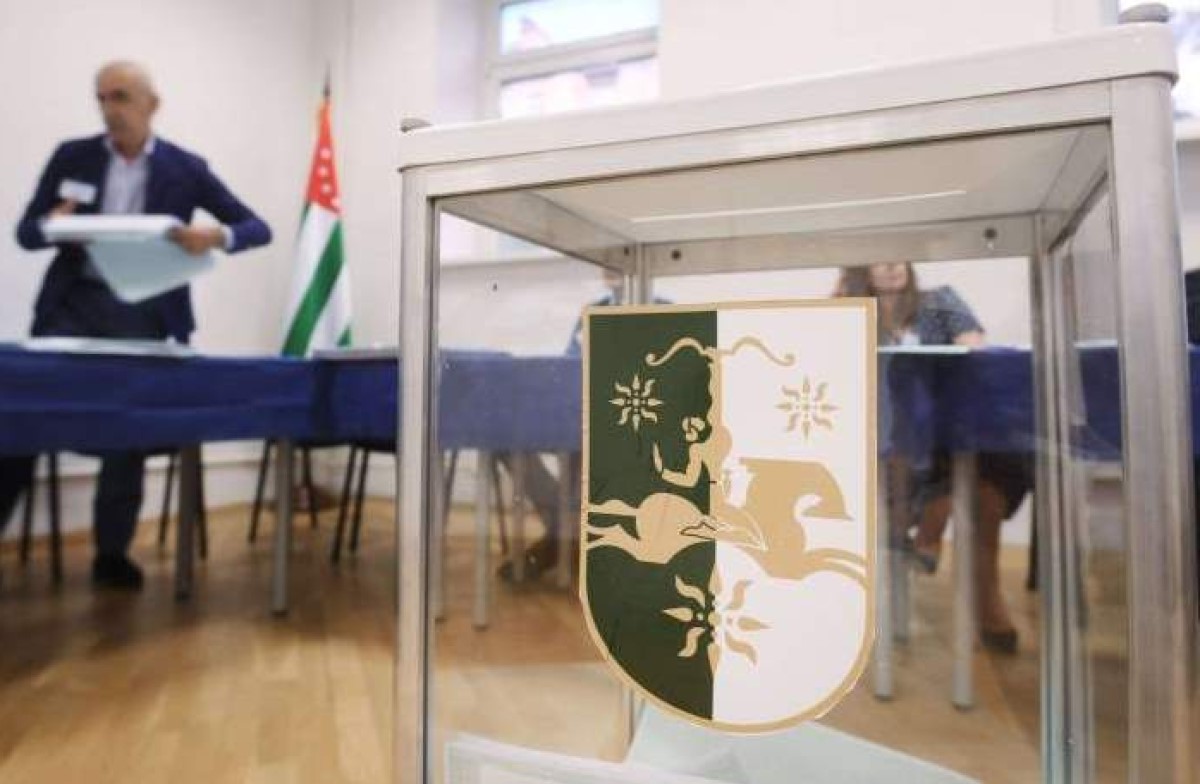
Who is running for president in Abkhazia
Early presidential elections in Abkhazia are scheduled for February 15, 2025.
Former President Aslan Bzhania and Oleg Bartsyts, the former trade representative of Abkhazia in Russia, have already announced their candidacies. Bartsyts, who was dismissed last summer for criticizing the apartment law draft, is seen as a centrist and a “dark horse” in the race.
From the opposition, it is almost certain that Adgur Ardzinba, the leader of the “Abkhaz People’s Council,” will run. However, it remains unclear whether he will be the sole opposition candidate. It is possible that two opposition MPs, Kan Kvarchiya and Leuan Mikaa, may also enter the race.
Former President Aslan Bzhania, whose term was set to end in April 2025, was forced to step down on November 19 following four days of protests against the ratification of a Russia-Abkhazia investment agreement he had advocated.
The date for the early elections was set by Parliament after preliminary consultations with all political forces in the republic, including the opposition.
The registration of initiative groups and parties to nominate candidates will begin two months before the election, on December 15, and will close 40 days before the vote.
To be registered by the Central Election Commission, a candidate must collect between 2,000 and 2,500 signatures. However, candidates nominated by a political party are not required to gather signatures.
Only ethnic Abkhazians aged between 35 and 65 who have resided continuously in the republic for at least the past five years are eligible to run for president.
Presidential and vice-presidential candidates must submit consent forms to the Central Election Commission, along with income statements for themselves and their family members. Additionally, they are required to pass an Abkhaz language proficiency exam.
Terms, place names, opinions and ideas suggested by the author of the publication are their own and do not necessarily coincide with the opinions and ideas of JAMnews or its individual employees. JAMnews reserves the right to remove comments on posts that are deemed offensive, threatening, violent or otherwise ethically unacceptable.
Fazil Gasimov, an Azerbaijani doctoral student at Istanbul University who was detained in Turkey in August 2023 and later extradited to Azerbaijan, has reportedly been subjected to severe torture while in custody, according to Rufat Safarov, executive director of the “Defence Line” human rights organization.
Speaking to Meydan TV, Safarov detailed the allegations, highlighting escalating abuse at the Treatment Facility of Azerbaijan’s Penitentiary Service.
Safarov claims Gasimov was tortured on November 16 after attempting to communicate in English with his family during a monitored phone call. According to Safarov, Gasimov implored his family to raise awareness about his plight, leading authorities to cut the call short and subsequently retaliate against him. “They tore his clothes, dragged him away, and tortured him,” Safarov alleged, identifying Major Jalal Alizadeh as one of the perpetrators.
A day later, Gasimov was reportedly taken to a meeting room with lawyers, where his hands and feet were bound, and attempts were made to forcibly shave his head. Protesting loudly, Gasimov reportedly caused such a commotion that nearby prisoners and staff gathered. The incident allegedly ended with Gasimov bleeding heavily from the nose, prompting the intervention of a doctor before he was returned to his cell.
The rights defender also reported that other prisoners who showed solidarity with Gasimov have faced punitive measures, including the withdrawal of their medical treatment and their return to harsher detention conditions. Gasimov, who has been on a hunger strike for over five months, was eventually transferred back to the Kurdakhani Pre-Trial Detention Center in Baku. Safarov alleged that Gasimov was beaten and stripped of written petitions and personal notes during the transfer, leaving him in a weakened state.
Safarov has urged Azerbaijan’s Ombudsman, Sabina Aliyeva, to intervene, emphasizing the severity of Gasimov’s deteriorating health and the need to address ongoing instances of alleged torture. He also accused Azerbaijani authorities of systematically targeting Gasimov, describing his treatment as part of a broader campaign of inhumane practices. “This is a person who could have contributed greatly to society, yet his career, health, and dignity have been destroyed,” Safarov said, recounting earlier allegations of electric shocks, physical humiliation, and coercion into providing false testimony against economist Gubad Ibadoglu.
Gasimov and Ibadoglu were charged under Article 204.3.1 of Azerbaijan’s Criminal Code, and accused of circulating counterfeit currency. Authorities allege that $40,000 in cash, some of it counterfeit, was discovered in Ibadoglu’s office, purportedly brought from Turkey. Both men have denied the charges, with Ibadoglu claiming the evidence was planted and his detention politically motivated. While Ibadoglu was released from prison in April 2024 and placed under house arrest, his party, the Azerbaijan Democracy and Welfare Party, was effectively suspended weeks later, allegedly due to bureaucratic hurdles in its registration.
The Penitentiary Service has denied the allegations of torture, maintaining that all detainees’ legal rights are upheld. Gasimov’s case has drawn international attention to the state of human rights in Azerbaijan, with advocacy groups warning of a pattern of abuse against political dissidents, academics, and activists.
The post Detained Azerbaijani PhD student Fazil Gasimov endures alleged torture and humiliation appeared first on MEYDAN.TV.
Strikes engulf Georgia amid protests
After Georgian Prime Minister Irakli Kobakhidze announced that the country would suspend EU membership talks until 2028, a wave of large-scale protests erupted across various cities in Georgia.

But the resistance extends beyond street protests. Schools and universities—more than a hundred so far—are publishing open letters expressing disagreement with the government and demanding a return to the path of European integration.
Several Georgian diplomats have also publicly condemned the government’s policies, with some resigning from their positions.
Below is a list of such notable acts of dissent known so far. This article will continue to be updated.
Diplomats
On the morning of November 29, it was reported that Georgia‘s ambassador to Bulgaria, Otar Berdzenishvili, is stepping down from his position. He announced his decision on the social platform X.
Berdzenishvili wrote that during his two years in diplomatic service, he and his colleagues actively worked towards Georgia’s Euro-Atlantic and European integration. He also expressed solidarity with the protesters.
“No to violence against peaceful demonstrators! Full solidarity!” the diplomat wrote.
— Otar Berdzenishvili (@OtariB) November 29, 2024


Otar Berdzenishvili began his diplomatic career in 2000. Since 2023, he has served as Georgia’s ambassador to Bulgaria. Prior to this, he worked as an advisor to the Minister of Foreign Affairs and was also Georgia’s ambassador to the Republic of South Korea.
- Georgia’s president urged the people, opposition, and diplomats to “resist and fight to the end”
- European Parliament: Georgia’s October 26 elections ‘rigged’ – What’s in resolution?
Another diplomat, Georgia’s ambassador to South Korea, Tarash Papaskua, wrote on social media:
“Russia continues to occupy 20% of our country’s territory. It is waging a destructive war against Ukraine. It is fighting against Europe, the democratic world, and threatening global security. In this situation, we need Europe and NATO more than ever. We need greater solidarity and support from the free world!”
Georgia’s ambassador to the Czech Republic, Tea Maisuradze, stated that for Georgia, especially in the context of Russian occupation, there is no alternative to European Union integration.
The ambassador wrote that she and her fellow diplomats have worked tirelessly for many years to advance Georgia’s path toward EU and NATO membership and to strengthen ties with strategic partners.
“Today, with more than 20% of our country’s territory occupied by Russia, deepening and strengthening relations with our Western friends and allies takes on special significance.
Returning to the European family is our country’s historic choice. Full membership in European and Euro-Atlantic structures is, in the interests of our country, without alternative,” the diplomat wrote on social media.
Immediately after the Prime Minister’s briefing on November 28, a joint open letter signed by more than 100 employees of Georgia’s Ministry of Foreign Affairs was circulated on social media. They expressed their disagreement with the government’s decision to suspend EU membership negotiations.
“The current wave of EU expansion has given Georgia an unprecedented historic opportunity to return to the European family. This situation is linked to international political developments. A unilateral rejection of this opportunity will lead to strategically negative consequences. It is possible that such favorable conditions for joining European and Euro-Atlantic structures may never arise again.
Moreover, halting the negotiation process will result in the country’s isolation. Without the support of Western partners, Georgia faces threats alone, especially as these threats intensify amid ongoing international developments, particularly regarding security,” the letter states.
The Foreign Ministry employees also argued that removing EU membership negotiations from the political agenda contradicts Article 78 of Georgia’s Constitution.
“We remain committed to Georgia’s course of European and Euro-Atlantic integration,” declared the Foreign Ministry employees who signed the open letter.
Universities suspending academic activities
On November 29, several universities in Georgia announced they were suspending academic activities as a form of protest.
Caucasus University stated that academic activities were temporarily suspended due to the current events in the country.
Ilia State University’s academic council issued the following statement: “We are outraged by the rejection of Georgia’s European perspective. We believe it is the duty of the academic community to defend the country’s European future.”
The University of Georgia also announced the suspension of academic activities, stating: “There are moments when everything must be put aside. In the current situation in Georgia, we are halting studies. We believe the primary duty of everyone today is to return Georgia to the path of its European future.”
Sulkhan-Saba Orbeliani University announced that it would suspend classes from 5 p.m. on November 29. Students were informed that updates on the resumption of classes would be sent via email.
GIPA, the Georgian Institute of Public Affairs, joined the protest, stating, “As a university committed to the ideals of democracy and freedom since its founding, GIPA supports Georgia’s aspiration to become a full member of the European family. Academic activities are temporarily suspended.”
The Business and Technology University (BTU) also decided to suspend academic activities, stating, “We share the position of our students, academic staff, and administration regarding the European integration process. The university’s academic council has considered the students’ interests and the current situation and decided to halt academic activities.”
Protest hotspots in schools

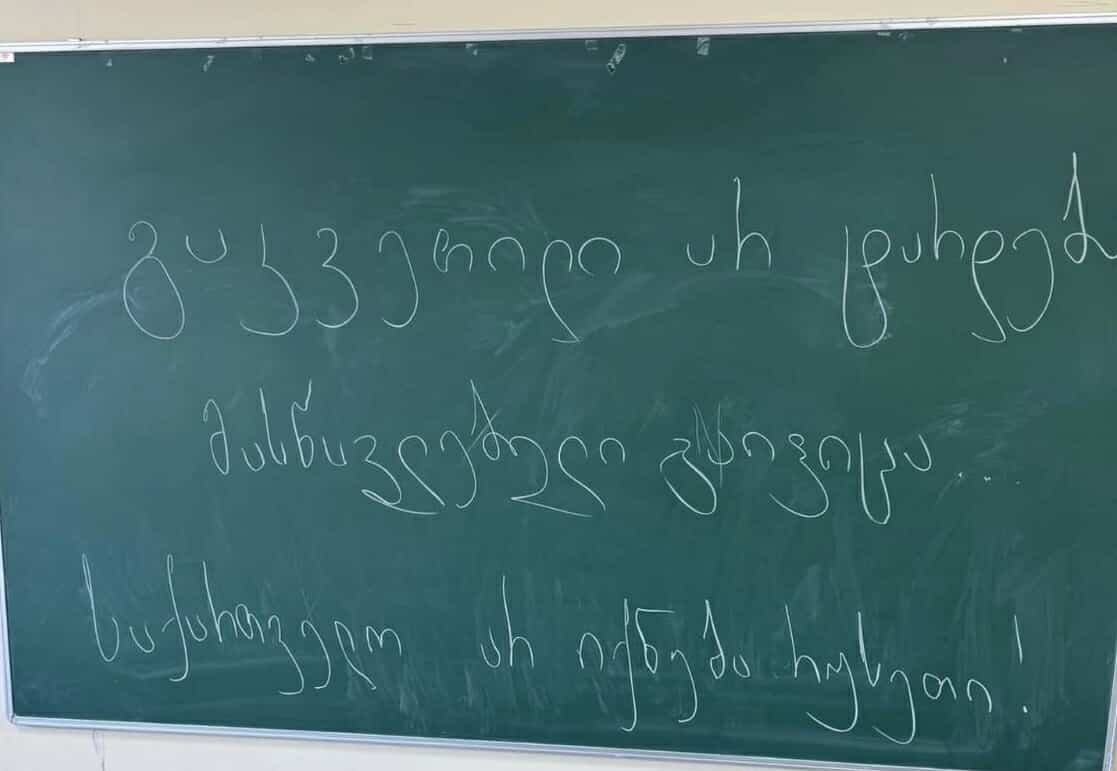
“Class is canceled. The teacher is on strike. Georgia will not become Russia!” — this photo of a school blackboard with the message has been widely shared on social media in Georgia. The author of the message is teacher Maia Ekaladze.
“You can punish me. Georgia will not become Russia,” Maia Ekaladze wrote.
Information is also circulating on social media that the 186th public school has also declared a strike.
“We are real teachers! Maybe not all of us, but…” — one of the teachers from this school posted a photo with this caption on social media.
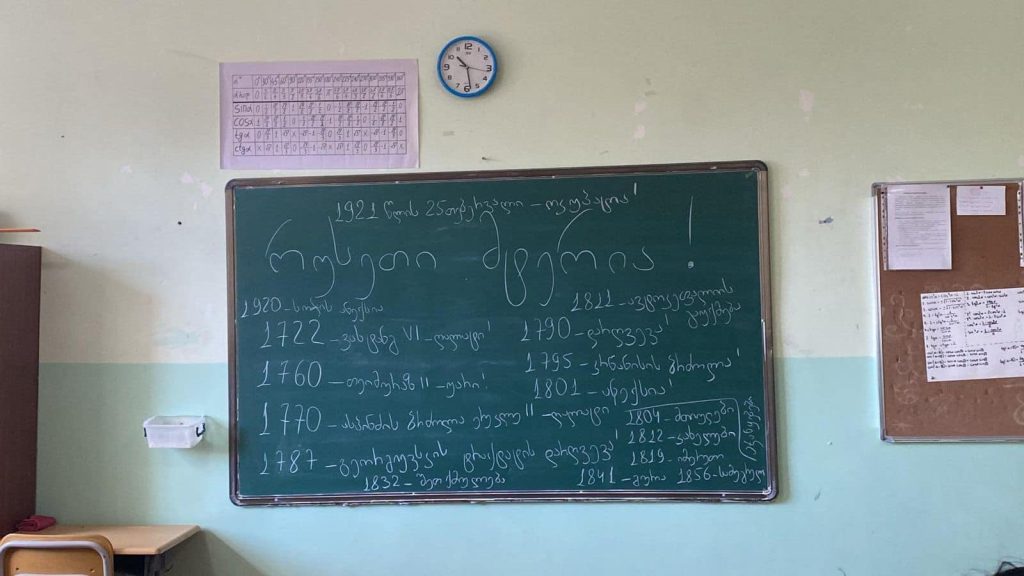
Tbilisi, School No. 136. Anna Tvauri, a history and civic education teacher, wrote on the board in her classroom: “Russia is the enemy!” She then listed key historical facts to support this statement.
Strikes engulf Georgia amid protests
💥 “Western ‘bombs’ of interference falling in South Caucasus” — Russian MFA warns. Mikhail Galuzin urges all countries in the region to stay vigilant and cautious amid rising tensions.#SouthCaucasus #Geopolitics #RussianMFA #InternationalRelations
— Amaravati Today (@amaravati_today) November 29, 2024