Categories
South Caucasus News

Sinking Russia and Azerbaijanis struggling to stay afloat


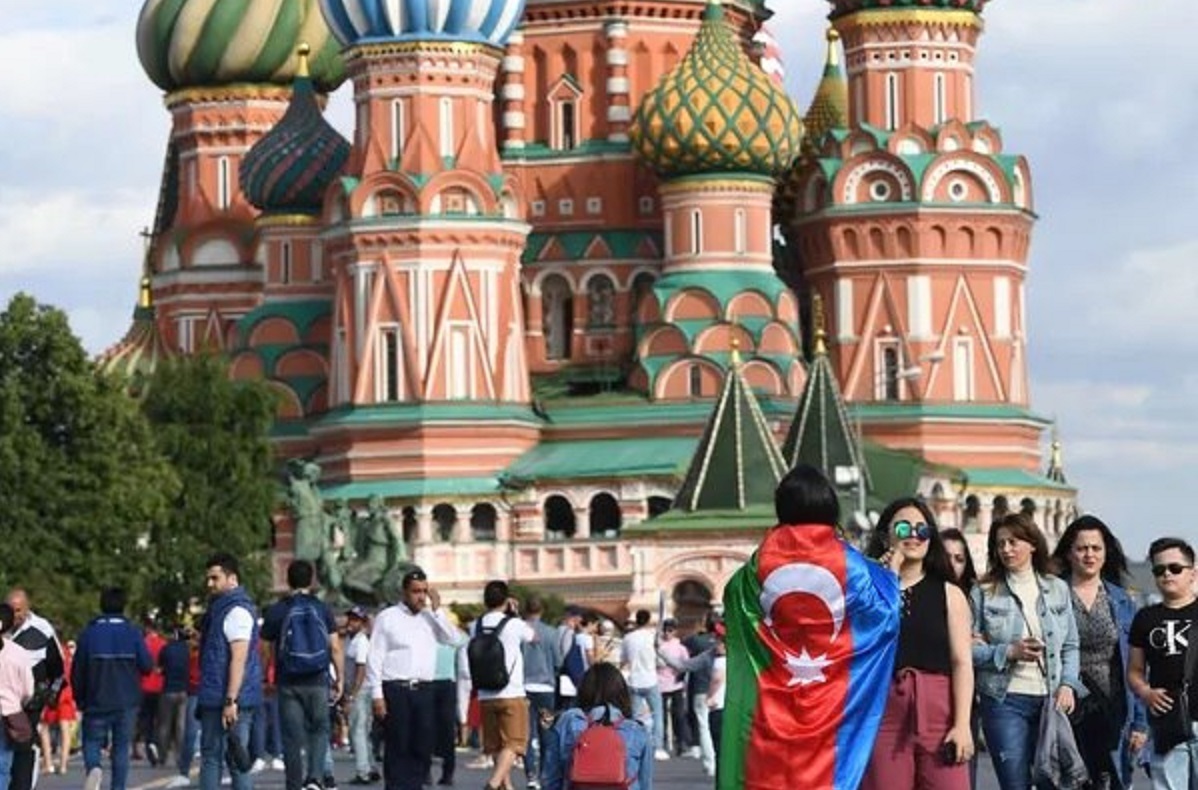
Azerbaijanis working in Russia

Azerbaijanis working in Russia

The aggressive war against Ukraine, now nearing three years, and Western sanctions have finally begun to cause serious problems for Russia‘s economy. Statistics show that the worsening economic situation of the northern neighbor is also affecting Azerbaijan.


Impact of war and sanctions on Russia’s economy

In October this year, the Central Bank of Russia announced it had raised the interest rate to a 20-year high of 21 percent. This marked the third consecutive rate hike within the year. The rate increase drives up borrowing costs for businesses and households, which in turn slows economic growth and contributes to rising inflation.

In early November, Central Bank Governor Elvira Nabiullina admitted she had been forced to adopt a tight monetary policy, describing it as a new reality for the Russian economy.
Last week, the U.S. Treasury imposed sanctions on Gazprombank, DOM.RF Bank, and 10 other Russian banks. Following this, the UK and several European countries announced new restrictions targeting Russian financial institutions, which had an immediate impact on the ruble’s exchange rate. The sanctions prohibit foreign banks from servicing cards issued by Gazprombank under the Chinese payment system.

On November 28, the dollar’s exchange rate on the international Forex market rose to 110 rubles, reaching its highest level since March 2022. The euro and yuan rates also increased, reaching 120 rubles and 14.5 rubles, respectively.

Massive funds directed toward winning war

Russia is allocating massive resources to win the war against Ukraine. Under sanctions, covering these expenses is becoming increasingly difficult, leading to a significant budget deficit. Notably, Russia’s 2025 state budget projects defense spending at a historic high of 13.2 trillion rubles, or approximately $142 billion. This amount is nearly double what was allocated in 2024. Consequently, military expenditures are expected to account for 6.2% of Russia’s GDP next year.

Defense and security expenses alone are projected to make up nearly 40% of Russia’s total budget in 2025, surpassing combined allocations for education, healthcare, social policy, and the national economy.
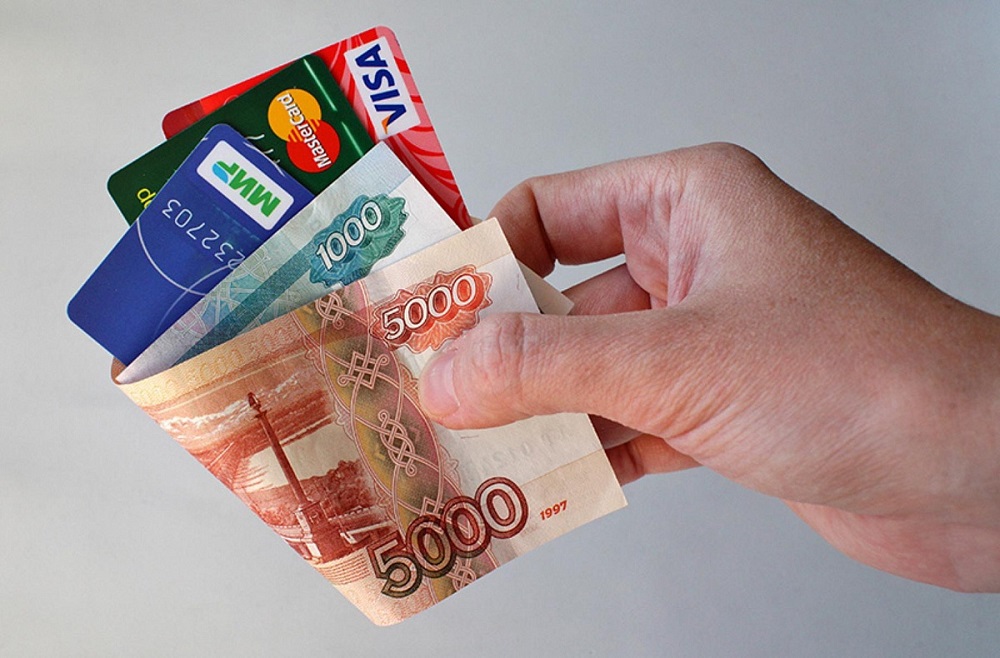
“Azerbaijanis who ere Russian citizens are being forcibly sent to war”

The worsening economic and social situation in Russia is affecting millions of Azerbaijanis who live and work in the country, as well as those in Azerbaijan who rely on income from their relatives in Russia.

Ismail Mamedzade, a fruit and vegetable trader in Moscow, told the Azerbaijani outlet PressKlub that the situation has deteriorated even compared to the previous year:

“People’s purchasing power has decreased, and expenses for food, services, transportation, and logistics have risen. In addition, new laws targeting migrants have been introduced, and strict controls are in place. The number of documents required for work permits has increased, along with the associated fees. Many people cannot overcome these obstacles.”

Mamedzade says that migrants face lengthy and thorough checks at Russian airports. Those allowed entry are reportedly monitored, while individuals with Russian citizenship are allegedly forced to join the army and fight:

“For those who refuse, their passports are marked for deportation, and they are expelled from the country. The treatment of migrants has become very strict. As a result, the number of migrants leaving Russia, including Azerbaijanis, is growing daily. Many are deterred by Azerbaijan’s closed land borders, as airfare is prohibitively expensive. Many Azerbaijani families are working in Russia, and returning home is a significant financial burden for them.”
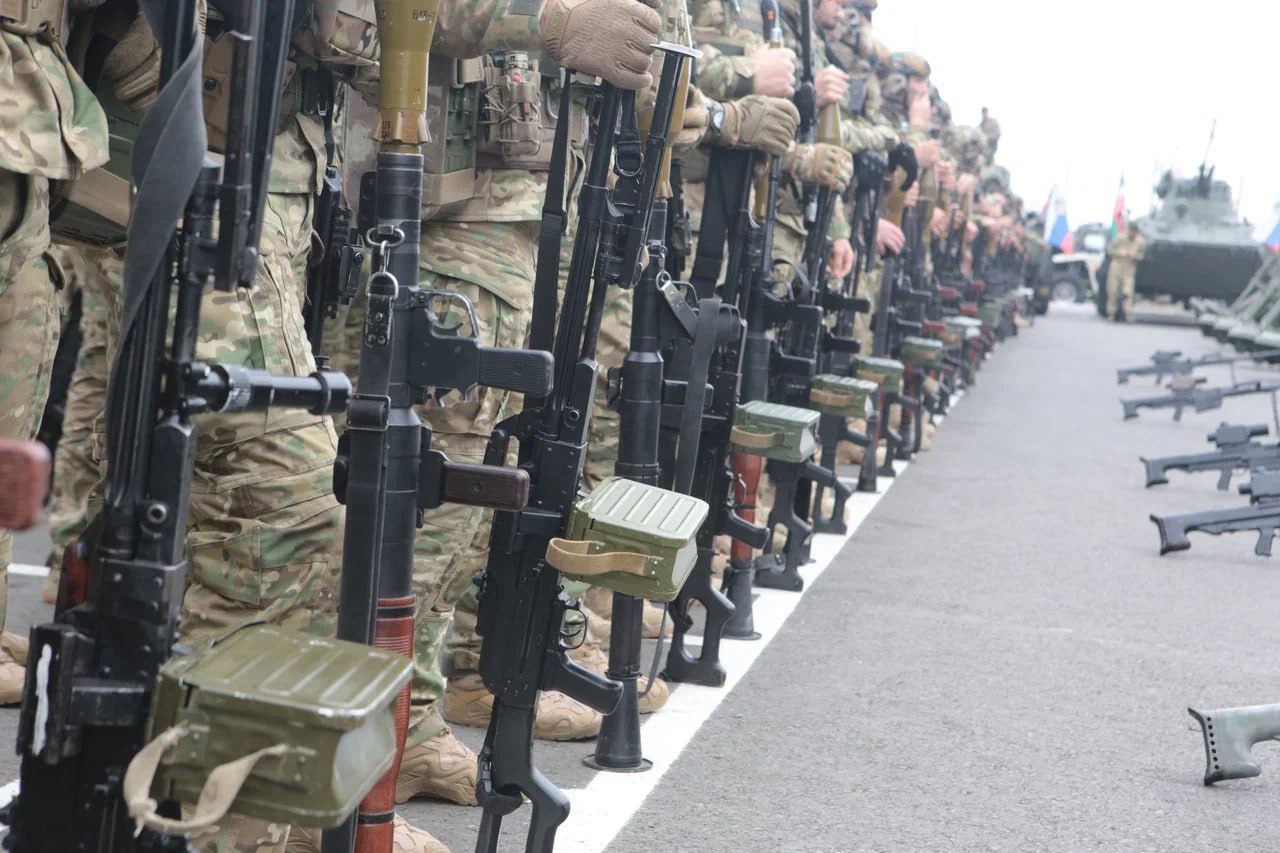
He says one of the factors making work and earnings in Russia less effective is the devaluation of the ruble. According to him, incomes have already decreased, and they lose part of their value when exchanging rubles for manats:

“Last week, I exchanged 1,000 rubles for 15.7 manats when sending money to my family. You know how high food prices are in Azerbaijan—how much money would we have to earn monthly for our families to afford groceries there?! It’s very difficult.”

Money transfers to Azerbaijan decrease by 29.3%

According to the Central Bank, from January to September 2024, Azerbaijani banks received 29.3 percent less money from foreign countries through fast money transfer systems, while transfers from Azerbaijani banks abroad decreased by 15.4 percent.

Experts view this decline as a key indicator of the impact of Russia’s worsening economic situation on Azerbaijanis.

The deterioration of the socio-economic situation in the neighboring country is bad news not only for Azerbaijanis working in Russia but also for Azerbaijani farmers and entrepreneurs. Their incomes depend on Russia, and their farms survive thanks to the currency earned from selling their products there.

Although the government does not provide any statistics on this matter, observations indicate that livelihoods in Azerbaijan’s regions are largely supported by income earned in Russia. Consequently, the worsening economic situation in Russia next year is expected to further reduce the flow of money into households in Azerbaijan.

Azerbaijanis working in Russia

Categories
South Caucasus News

Turkiye expects to have harshest winter in last 50-60 years


It is predicted that this winter will be the harshest season in Turkiye in the last 50-60 years. Currently, air temperatures across the country are lower than in the same period in previous years, and in some regions, snowfall has arrived earlier than usual, Azernews reports.

Categories
South Caucasus News

SouthCaucasus: Georgischer Ministerpräsident setzt EU-Beitrittsgespräche bis Ende 2028 aus. via ⁦@euronewsde⁩ https://t.co/p9BT49HCIn


Categories
South Caucasus News

Protests in Georgia after government halts EU application until 2028 – Reuters


  1. Protests in Georgia after government halts EU application until 2028  Reuters
  2. Georgia to suspend EU accession talks until 2028  Al Jazeera English
  3. Georgia: Thousands protest after PM suspends EU entry bid  DW (English)

Categories
South Caucasus News

Protests in Georgia after government halts EU application until 2028 – Reuters


  1. Protests in Georgia after government halts EU application until 2028  Reuters
  2. Georgia suspends talks on joining the EU for 4 years, accusing the bloc of blackmail  The Associated Press
  3. Georgia to suspend EU accession talks until 2028  Al Jazeera English

Categories
South Caucasus News

Protests in Georgia after government halts EU application until 2028 – Reuters


  1. Protests in Georgia after government halts EU application until 2028  Reuters
  2. Georgian prime minister suspends EU membership talks until end of 2028  Euronews
  3. Georgia to suspend EU accession talks until 2028  Al Jazeera English

Categories
South Caucasus News

AraratMirzoyan: Appreciated warm welcome by w/@elinavaltonen in Helsinki. Further strengthening of 🇦🇲-🇫🇮 political dialogue, coop in key sectors of mutual interest, democratic reforms, new partnership w/#EU: all on our agenda. Touched upon regional issues, vision of more stable #SouthCaucasus. https://t.co/QlF1MOznWg


Categories
South Caucasus News

World’s first floating “smart” police station opens in Dubai


The Dubai Police Department has announced that the world’s and the Middle East’s first floating “smart” police station (SPS) will be operational by the end of 2026, Azernews reports.

Categories
South Caucasus News

President Calls for Resistance Against “Constitutional Coup”


On November 28, President Salome Zurabishvili made a statement after meeting with the Diplomatic Corps and opposition members. She said the Georgian Dream’s decision to abort the EU accession process has finalized the “constitutional coup” after the rigged October 26 parliamentary elections. She called on the EU to hold new elections in Georgia. President also called on the opposition to unite and urged Georgian ambassadors, civil servants, police, and the army to stand by Georgian people today.

Zurabishvili said that the “illegitimate government’s” decision heralds the end of Georgian statehood, independence, and future, dragging it towards Russia. “Today, this illegitimate government has declared not peace but war,” Zurabishvili said, alluding to the Georgian Dream’s campaign promises of peace.

The President criticized the European diplomats for being “late in their assessment of the situation” and said she urged them today “to immediately take all the decisions that should have been taken in the past months and to help the Georgian citizens hold new elections.”

Zurabishvili called on all opposition members and CSO representatives to put aside their differences and pledged to stand by them as an embodiment of the “only remaining legitimate institution” as long as this unity holds. “Today, we need reasonable decisions made in coordination with each other,” she noted.

She issued a separate call to civil servants: “It is time to make your decision… It is time to think about the future you’re leaving your children.”

Addressing the Georgian Ambassadors abroad, Zurabishvili stressed: “We’ve already asked you once before: What are you doing today? Whom do you serve? What do you serve? Where are you? Can you imagine the absurdity you are living in? […] Russia will be here tomorrow if we don’t all raise our voices from wherever we are.”

“I want to address the police, the real police, the police that serves the state, you are nothing without the state. And your duty in this state is to protect citizens, not slaves, not Russians, not foreigners, not traitors,” she continued.

To Georgian soldiers, President Zurabishvili said: “I would like to address the army, whose hearts ache the most today because it cannot and should not do anything today. But it remains the most loyal to this country and is the most hurt by the return of this country to Russia.” She pledged to them, “Nobody will be able to take away our independence.”


Categories
South Caucasus News

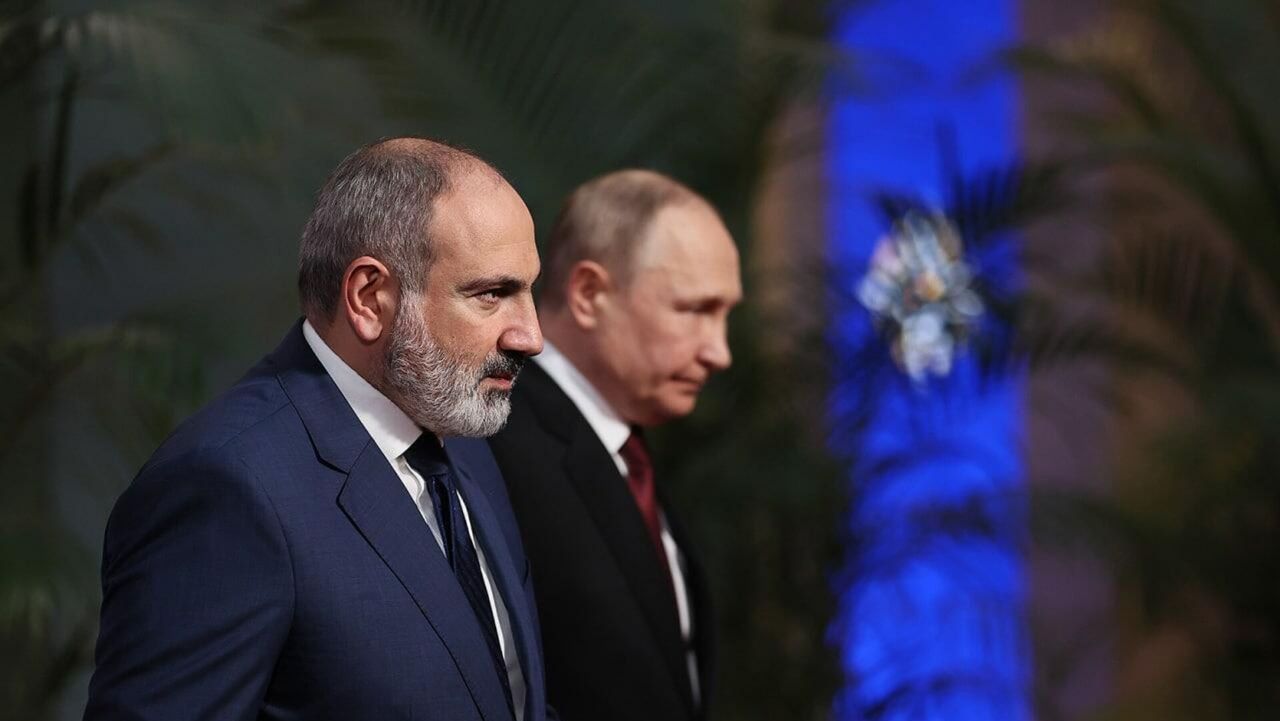
Russia says door open for Armenia’s return to CSTO


Russia says CSTO's door open for Armenia

Russia says CSTO’s door open for Armenia

“We expect that, in the interest of the future security of a friendly country and the entire region, our partnership with Armenia within the CSTO will be fully restored. We confirm that, at this stage, the door remains open for Yerevan to return to full-scale cooperation within the CSTO,” Russian Foreign Ministry spokesperson Maria Zakharova stated.

The CSTO is a military bloc operating under Russia’s aegis, comprising Belarus, Armenia, Kazakhstan, Kyrgyzstan, and Tajikistan. Armenian authorities have long refused to participate in the organization’s activities and have frozen their involvement. They cite the bloc’s failure to respond when Armenia sought assistance against an incursion by Azerbaijani forces into its territory, and even a lack of political condemnation. The CSTO justified its inaction by stating that the border was not demarcated. Armenian Prime Minister Nikol Pashinyan responded:

“If there is no border between Armenia and Azerbaijan, then there is no CSTO. The CSTO’s zone of responsibility is defined by borders. If there is no border, there is no zone of responsibility, and if there is no zone of responsibility, there is no organization.”

Previously, a similar statement was made by Yuri Ushakov, an aide to the Russian president. He said that Russia does not question “the right of Armenian partners to determine their own course” but reminded that “Yerevan de jure remains a member of the CSTO with all the rights and obligations that entails.”

These comments came after reports that Nikol Pashinyan would not attend the CSTO summit in Astana on November 28. The Prime Minister’s spokesperson confirmed that “Armenia’s position on freezing its participation in CSTO activities has not changed.”

According to political analyst Ara Poghosyan, the latest statements from Moscow point to a crisis within the CSTO:

“Russia now faces the task of restoring the organization’s reputation and preventing Armenia from leaving the CSTO’s orbit and Russia’s sphere of influence.”


Moscow claims US aims to ‘fully subjugate Armenia’

Russia’s Foreign Intelligence Service (SVR) issued a statement:

“The United States continues to pursue plans for so-called democratization, aiming to fully subjugate Armenia. However, similar practices in other countries and regions have proven destructive. There are numerous examples in the Middle East, Latin America, and Africa, with the most striking being Ukraine’s current state.”

The same statement claimed that “the Americans are considering how to prevent Yerevan from deviating from the so-called democratic path.” According to the SVR, the United States doubts the irreversibility of Armenia’s course toward closer ties with the West.

The statement also alleged that Washington is promoting pro-Western forces within Armenia:

“A political ‘boost’ for pro-Western parties has already begun, intending to ensure their entry into parliament during the 2026 elections. These ‘staunch defenders of democracy’ are tasked with ‘keeping the Armenian executive in check’ should it, like the government of neighboring Georgia, prioritize the nation’s objective interests, traditions, and values.”

Political analyst Ara Poghosyan

Political analyst Ara Poghosyan interprets Russia’s statements as an attempt to keep Armenia within its sphere of influence. In his view, the Russian Foreign Intelligence Service’s claim about the West’s “destructive activities” reveals its anxieties and destructiveness.

He concludes that Russia no longer has institutions whose statements or explanations can be taken seriously:

“The atmosphere of the Russian-American Cold War suggests that this statement is rooted in propaganda intended to serve as a tool of Russian soft power to influence the psychology of Armenian society.”

According to the analyst, Russia is being pushed out of the South Caucasus and its key processes, particularly the regulation of Armenian-Azerbaijani relations.

He argues that Moscow is attempting to maintain its position in the region through such propagandist tactics:

“Meanwhile, Russia should have strengthened its position earlier by responding promptly and taking action during Azerbaijan’s invasion of the sovereign territory of Armenia, a CSTO member. Russia’s inaction created a vacuum in the region, which has since been filled by India and France, who stepped in to assist Armenia.”

At the same time, Poghosyan considers the statements from Moscow logical in the sense that Armenia remains a legal member of Russian-led integration structures. If Armenia were to leave the CSTO, it would have both political and moral consequences:

“First and foremost, it would be a blow to the organization operating under Russia’s aegis. Russia is the leader and guarantor of security for CSTO members. Now, as a result of its policies, Russia finds itself unable to fulfill its role in ensuring the security of one of its members. Moscow is now trying to restore the reputation of its military bloc, the CSTO,” he explained, adding that the Russian side is making efforts to rebuild the alliance’s credibility.

Russia says CSTO’s door open for Armenia