New Georgian Parliament convenes
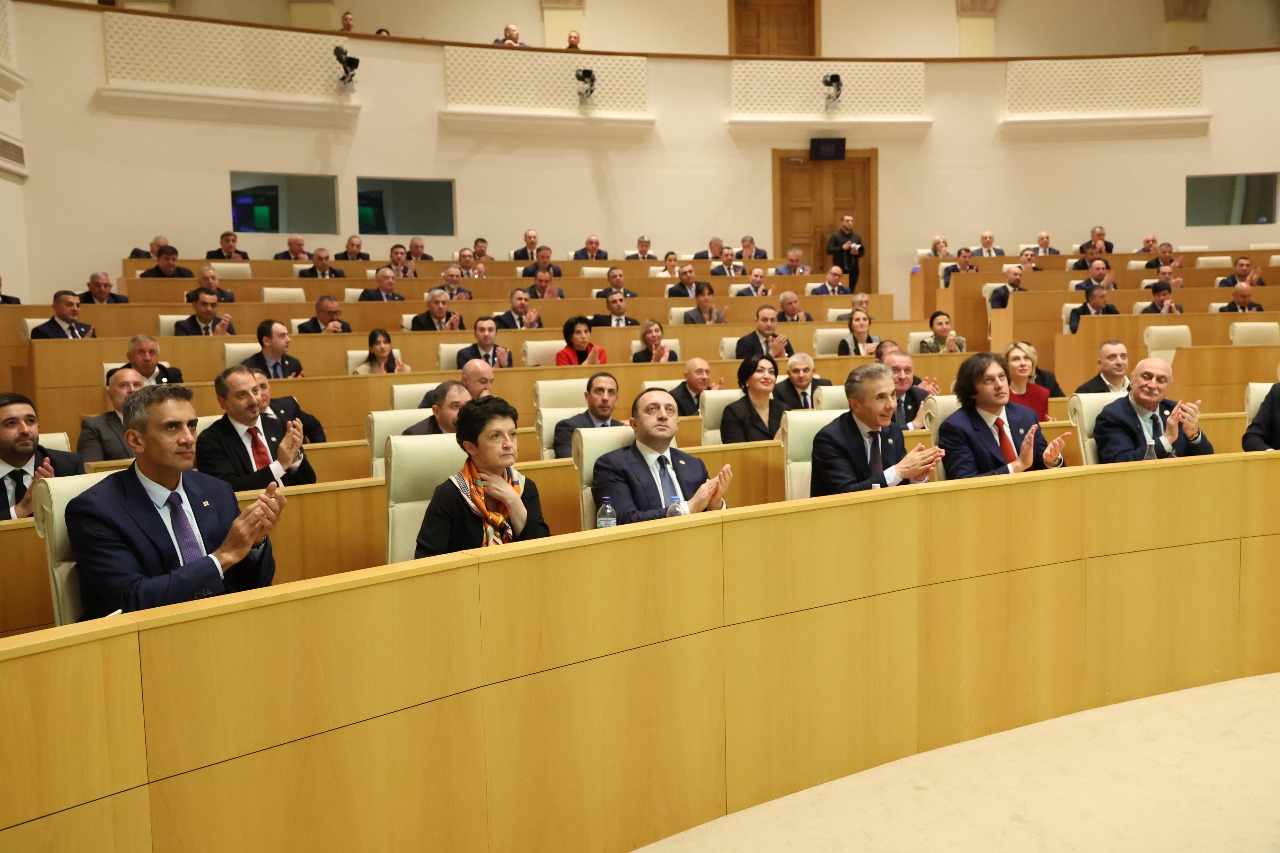
On November 25, Georgia’s 11th Parliament convened its first session against the backdrop of a mass protest. Demonstrators allege that the October 26 election was rigged, declaring the parliament illegitimate and self-proclaimed.
The inaugural session was attended solely by MPs from the ruling Georgian Dream party. According to official results from the Central Election Commission, the party received nearly 54% of the vote, securing 89 out of 150 seats. Four opposition parties that made it into parliament have refused to participate, demanding repeat elections.
The composition of Georgia’s new parliament, according to official figures from the Central Election Commission, is as follows:
- Georgian Dream: 89 seats (53.93% of the vote)
- For Change Coalition: 19 seats (11.03%)
- National Movement – Unity: 16 seats (10.17%)
- Strong Georgia Coalition: 14 seats (8.81%)
- For Georgia – Giorgi Gakharia: 12 seats (7.78%)
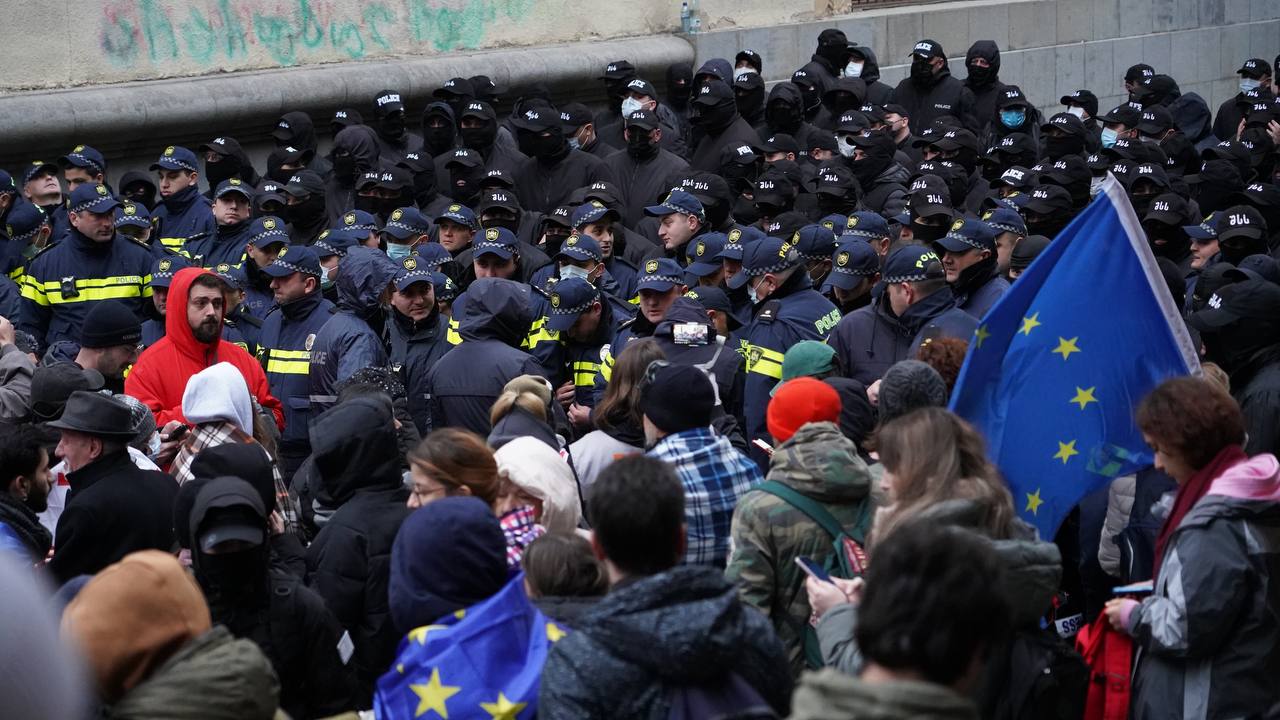
MPs from the ruling Georgian Dream party entered and exited the parliament building under the escort of special forces.
From early morning, the parliamentary and government district was heavily protected by law enforcement and specialized equipment.
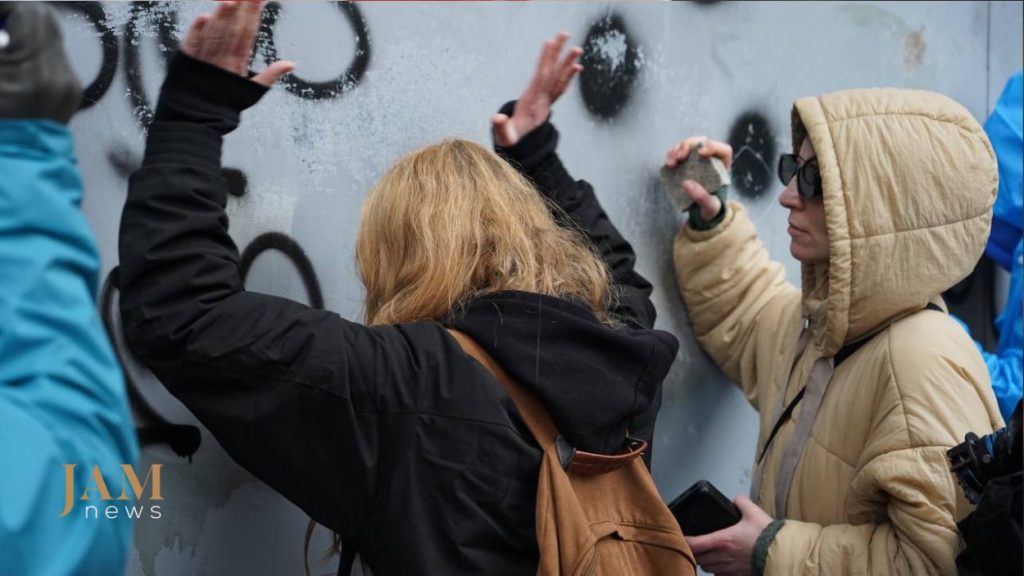
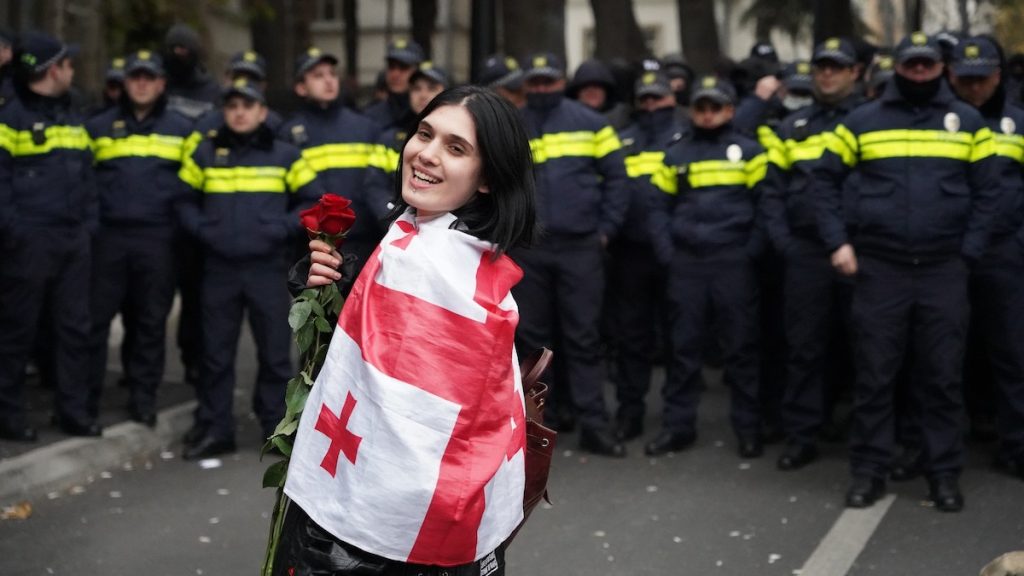
Protesters occupied area outside parliament
Many carried signs with messages such as “You are Russians,” “Slaves,” and “You stole our votes and our future.”
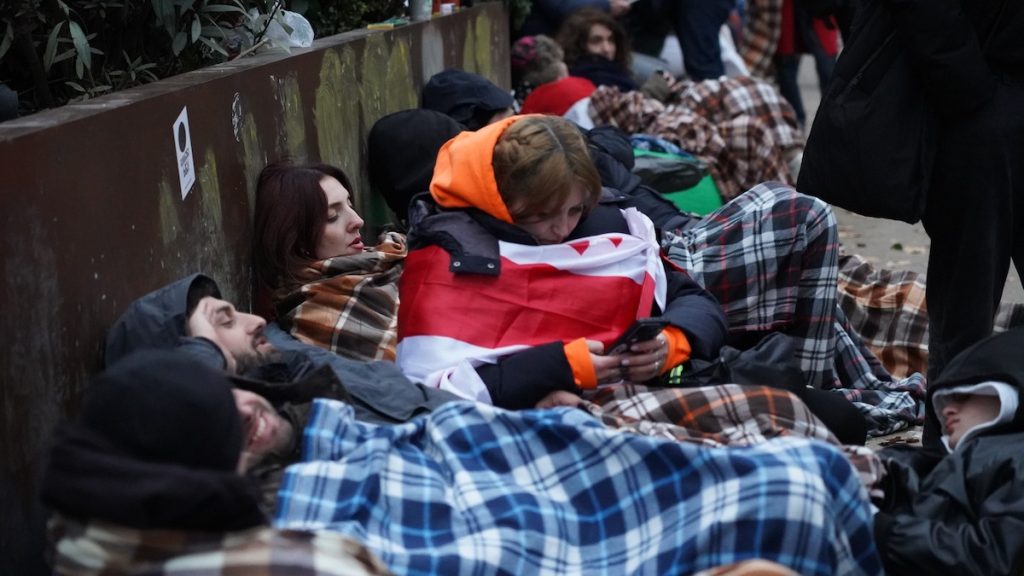
Hundreds of protesters spent the night outside the parliament, while thousands more joined the demonstration starting at 9 a.m.
Heartfelt tributes and applause for oligarch Bidzina Ivanishvili
The session of parliament was opened by its eldest member, Lado Kakhadze.
Also in attendance was the honorary chairman of Georgian Dream, oligarch Bidzina Ivanishvili. MPs from the ruling party showed a notably reverent attitude toward him, expressing their gratitude one after another and showering him in standing ovations.
A video of MP Lado Kakhadze emotionally pressing Bidzina Ivanishvili’s hand to his cheek has gone viral on social media.
The same footage shows the head of the Central Election Commission, Giorgi Kalandarishvili, cheerfully greeting the billionaire.
President refuses to open Parliament, declares the day ‘Black Monday’
Under the Constitution, it is the President of Georgia’s duty to convene and open the first session of the new parliament. However, Salome Zourabichvili refused to do so and was absent from the session.
Immediately after the October 26 elections, she declared the results illegitimate and falsified, describing the entire process as a “Russian special operation.”
On the day of the first session, she posted on X social media platform: “Black Monday in Georgia: Police & spetsnats guarding the doors behind which « GD slaves » are killing our Constitution and making a mockery of our Parliament.”
In a rare move, Georgia’s Western partners’ ambassadors were excluded from first parliamentary session
This was the first time in Georgia’s history since gaining independence.
Speaker Shalva Papuashvili explained the decision as follows:
“This is an important day for the citizens of Georgia and their elected parliament. The government, constitutional bodies, and representatives of the Church will be present in parliament. This is our national day.
As for the participation or absence of foreign representatives, we have unfortunate experience of how foreign involvement has become a tool in Georgian politics. Therefore, we believe it is better for all if they are not present at the first session.”
Although foreign ambassadors were absent from the hall, the speaker dedicated much of his speech to foreign influence.
He spoke of the “intervention of foreign states in Georgia” and described the opposition and civil society as “carriers of foreign interests, whose homeland lies elsewhere.”
“Since Georgian Dream firmly holds power, no party controlled by external forces will be able to influence the country,” Papuashvili declared during his speech in parliament.
“Long live, the Communist Party!”
The parliament’s session hall was under a “yellow level” security status — only specially invited guests and accredited journalists from television companies were allowed entry. Representatives from online media, including those accredited to work in parliament, were denied access.
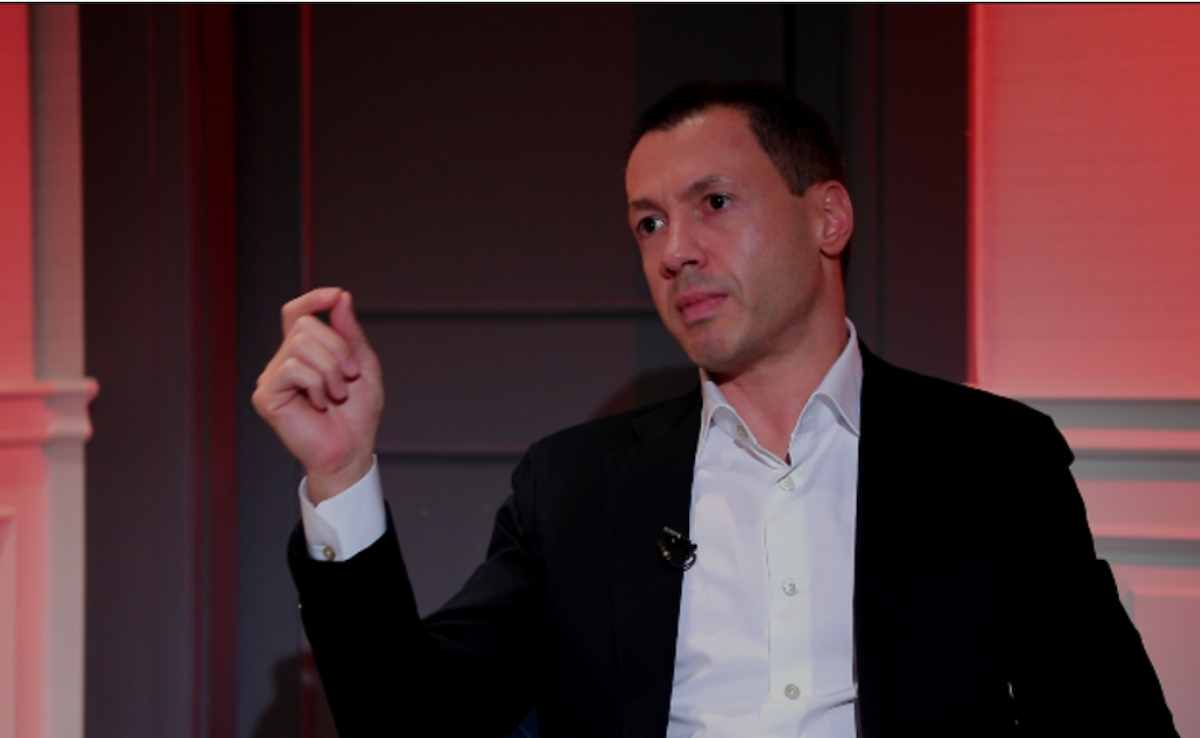
“The saddest part is that all of this evokes the scenario and aesthetics of a not-so-distant past, when only one party – the ‘Communist Party’ – was represented in this very hall for many years. The slogans are strikingly similar: ‘Congratulations, comrades!’ ‘Long live the Communist Party!’” writes Natia Inauri, a journalist for Interpress News, on her Facebook page. Inauri has been an accredited correspondent in parliament for many years.
How leadership roles were distributed
Shalva Papuashvili was re-elected as Speaker of Parliament.
His deputies are Giorgi Volski, Tea Tsulukiani, and Nino Tsilosani.
Mamuka Mdinaradze became the head of the Georgian Dream parliamentary faction.
It was announced that, as planned, the honorary chairman of the ruling party, Georgian Dream, Bidzina Ivanishvili, political secretary Irakli Kobakhidze (the Prime Minister), and party chairman Irakli Garibashvili (former Prime Minister) would relinquish their mandates.
The 11th Parliament confirmed the legitimacy of all 150 deputies, despite a constitutional lawsuit filed by the president calling for the annulment of the election results.
Is the Parliament legitimate?
The legitimacy of the 11th convocation of the Parliament is facing serious doubts for the following reasons:
- The President of Georgia has filed a lawsuit with the Constitutional Court, claiming that two constitutional rights were violated during the elections: the secrecy of the vote and the freedom of elections. In her lawsuit, Salome Zourabichvili demands a review of the mandates of all 150 deputies.
- Thirty opposition deputies have also appealed to the Constitutional Court, requesting that the October 26 elections be declared unconstitutional.
According to Article 86 of the Georgian Parliament’s rules of procedure, a deputy cannot be granted a mandate if there is a lawsuit in the Constitutional Court challenging their legitimacy. The parliament is required to postpone its first session and await the court’s decision.
According to constitutional experts, the November 25 session of the Georgian Parliament and the decisions made during it are illegal.
Constitutionalist Vakhtang Menabde states, “We can confidently say that the parliament’s recognition of its own authority is unlawful,” and outlines the following reasons:
- The Constitutional Court is currently reviewing a case challenging the legitimacy of the mandates of all 150 deputies.
- In such circumstances, the parliament is obligated to wait for the court’s decision.
- Any decision made by the parliament before the court’s ruling is illegal, including declarations of authority, laws, the budget, and government approvals.
Social media users urge opposition to develop a concrete plan
Opposition leaders joined the protesters throughout November 25. However, they have yet to offer a concrete plan of action, drawing significant criticism on social media.
New Georgian Parliament convenes