
Poland is deploying K2 tanks acquired from South Korea in Branev, just a few kilometers from the border with Russia’s Kaliningrad region, Azernews reports.
Day: November 14, 2024
Alleged Russian interference in Georgia’s 2024 parliamentary elections have been revealed, according to an article published by Myth Detector, a fact-checking platform in Georgia, which analyzed an audio recording released on October 29 on the Russian Telegram channel Georgian Passerby (Грузинский прохожий). In the recording a person identifying himself as Giorgi Taktakishvili, leader of ‘Vote for Europe,’ is heard speaking to OSCE/ODIHR spokesperson Katya Andrusz, saying that she shouldn’t take bribes from the corrupt Ivanishvili regime and threatening that if she does, citizens “won’t allow her to leave the country”.
In response, the OSCE/ODIHR spokesman asks for the information in writing and tells the caller her e-mail address,” writes the Myth Detector, which was launched in 2017 as part of a partnership between the Media Development Foundation and Deutsche Welle Akademie.
Katya Andrusz confirmed to Myth Detector that she received such a call before the elections. Taktakishvili denies placing such a call adding that the person impersonating him in the recording has distinctively different voice and mispronounces the name of the organization, in particular calling it “Choose Europe” instead of “Vote for Europe”.
The Facebook post by lawyer Irakli Zakareishvili, who shared the recordings, claimed that “acts of telephone terror” with similar content had also been carried out against representatives of other observer missions. MDF said it had only been able to obtain confirmation from a representative of the Latvian observer mission, who confirmed that she had received a call allegedly from the Central Election Commission of Georgia, but when the observer mission contacted the CEC, the commission denied making such a call.
In order to find out whether the audio recording showed signs of the use of artificial intelligence and whether the voice of the person speaking in the recording matched the authentic voice of Giorgi Taktakishvili, “Myth Detector” contacted four specialized organizations (Mantis Analytics, Witness, Deepfakes Analysis Unit, Validia) that deal with the verification of audio recordings and the detection of deepfake technologies.
According to the experts, unnatural pauses, gaps and a deep voice tone were detected, suggesting that the recording may have been technically edited or synthesized. Metadata analysis also revealed that the file had been created in external software, further raising suspicions of possible editing.
The publication of the video on the Russian Telegram channel, coupled with the fact that the calls were made from the area around Stepanstminda, close to the Larsi border crossing with Russia, provides a basis for Tamar Kintsurashvili, an executive director of the Media Development Fund, to claim that this is an alleged Russian special operation. According to her this incident underlines Russia’s continued efforts to interfere in Georgia’s internal affairs, particularly in the electoral process. Kintsurashvili stresses that similar operations carried out by Russia have been aimed not only at intimidating local activists, through fabrication of such acts, but also at targeting and intimidating international observers.
“Russia has not relinquished its interest in interfering in the Georgian elections. There were statements from their side that they would not allow anti-Russian forces to come to power,” says Tamar Kintsurashvili, adding that Telegram, among others, is the platform often used by Russia to manipulate the public opinion.
Also Read:
- 05/11/2024 – Lavrov Denies Russian Interference in Georgian Elections, Expresses Readiness to Normalize Relations
- 02/11/2024 – CEC: Malkevich Was Granted Accreditation in Accordance with Electoral Legislation
- 31/10/2024 – Reports Locate Founder of Russian Propaganda Network in Tbilisi on Election Day
- 29/10/2024 – Russian Officials Accuse West of “Neocolonialism” and Meddling in Georgia
- 28/02/2024-Zurabishvili Worried about Russian Election Interference
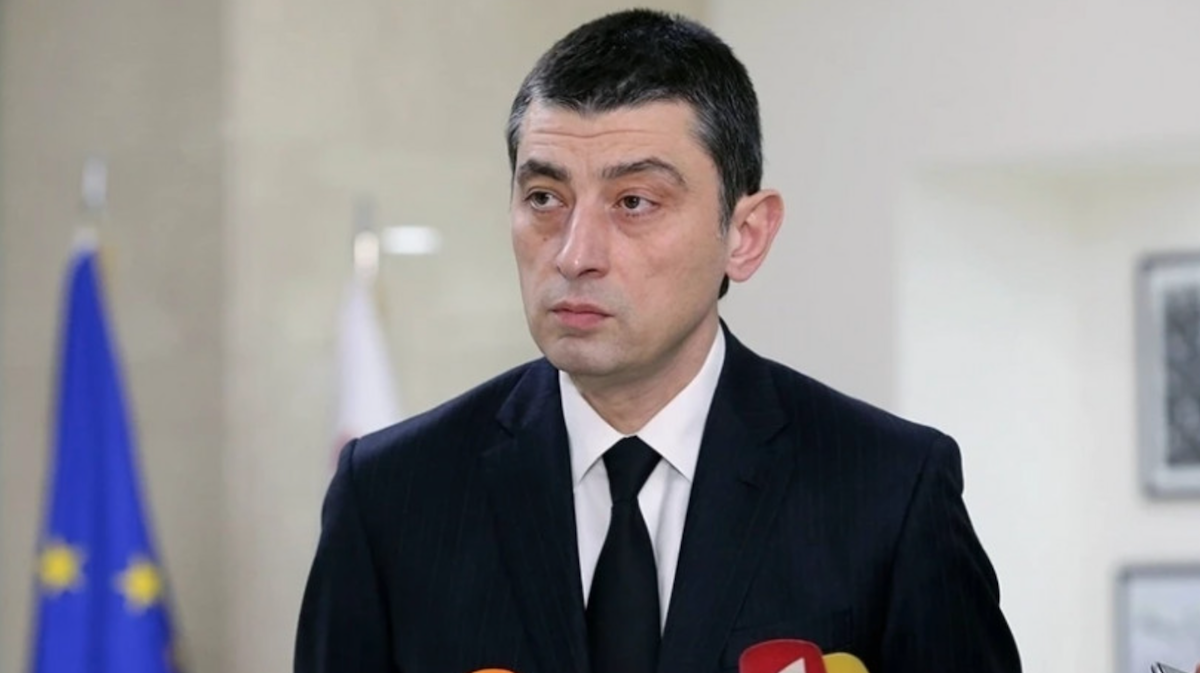
Gakharia claims voting evidence jeopardized
“Georgia’s Prosecutor General confiscated all voting equipment used in the October 26 parliamentary elections. Now, even the Central Election Commission no longer has access to voter data, and the most crucial evidence of election fraud could be destroyed,” stated Giorgi Gakharia, leader of the opposition party For Georgia, on November 14.
The party is one of four opposition groups that gained seats in the new parliament, all of whom claim the elections were rigged and are calling for a thorough investigation into violations.
One of the main demands of the opposition and civil organizations was to make the voter list publicly available. The personal data law requires the Central Election Commission (CEC) to disclose these details due to significant public interest.
Gakharia highlighted that the Prosecutor General’s office confiscated the equipment right after this demand was raised, claiming it was necessary for the investigation into allegations of fraud.
On November 6, Gakharia — For Georgia claimed that the court denied their request to urgently secure the data on CEC servers and voting machines. In this appeal, the party warned that data could be lost as the prosecutor’s office was attempting to seize the equipment.
What Giorgi Gakharia said
“No one has recognized the Georgian elections as democratic and free. The legitimacy of the elections is in question.”.
International monitoring missions and Georgia’s foreign partners have stated that the authorities must conduct a thorough investigation into violations to resolve the legitimacy of these elections.
Therefore, we approached the CEC to publish the list of voters who participated in the elections, indicating the polling stations where they voted.
The CEC did not respond. We then turned to the court to request that the CEC protect the equipment storing this information.
Unfortunately, CEC representatives testified in court that the prosecutor’s office had already seized the equipment as part of an ongoing investigation.
As it stands, the main data that could prove whether the elections were fair and untainted is no longer available.
It would have been simple — release the data from these machines for public examination. Instead, the ruling party simply seized the equipment through the prosecutor’s office under the pretext of a so-called investigation.”
Following the October 26 parliamentary elections, Georgia found itself in a new reality.
The ruling Georgian Dream party secured nearly 54 percent of the votes, almost 12 percent more than exit polls had predicted.
Thousands of violations and systematic falsifications reported by observers and experts have cast doubt on the election results, both domestically and internationally.
The international community has not recognized the elections and questions their legitimacy. The only European leader to acknowledge the elections in Georgia as legitimate is Hungarian leader Viktor Orban.
EU Ambassador to Georgia Pawel Herczynski reported that due to the government’s undemocratic course, EU leaders decided to halt Georgia’s EU accession process. Strong statements have also been made by the United States.
Gakharia claims voting evidence jeopardized