
Day: November 13, 2024


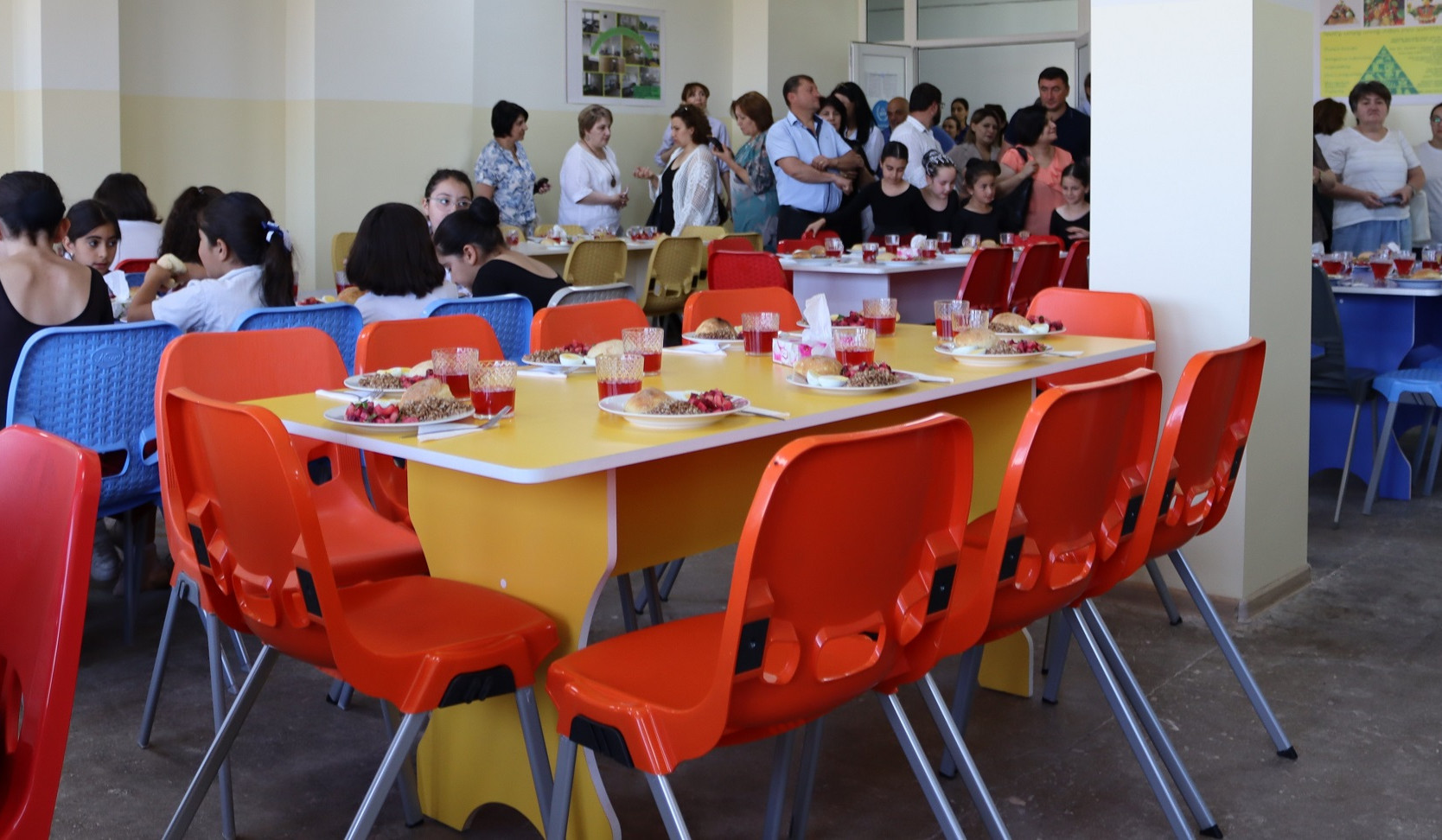
Armenia child sweet consumption risks
Armenia has the highest rate of sweet consumption among children, according to a recent study conducted in Armenia and 50 other countries, placing the nation as the leading consumer of sweets among 15-year-olds.
“64% of girls and 56% of boys in this age group consume sweets multiple times a day. This is a truly concerning indicator,” stated Marina Melkumova, a pediatrician at the Institute of Child and Adolescent Health.
The World Health Organization, together with Armenia’s Ministries of Health and Education and the “Arabkir” Medical Center, conducted this study among school-aged children. The results, presented to journalists, included warnings about potential health consequences.
- TUMO: alternative education in Armenia – free yet advanced
- Mentoring schools in Armenia: helping remote and borderline villages
- Over 650 fired Armenian teachers can return to work
Over 4,300 children participated in study
This study on school-aged children’s behaviors, which may impact their health, is conducted every four years in 51 countries. In Armenia’s latest survey, over 4,300 children aged 11, 13, 15, and 17 were studied.
Dr. Marina Melkumova, a pediatrician at the “Arabkir” Institute, expressed alarm over the findings. Children’s diets are unbalanced, with doctors particularly concerned about adolescents’ excessive consumption of sweets and sugary sodas.
“Among 15-year-olds, 32 percent of boys and 22 percent of girls drink sugary carbonated drinks daily,” Melkumova reported.
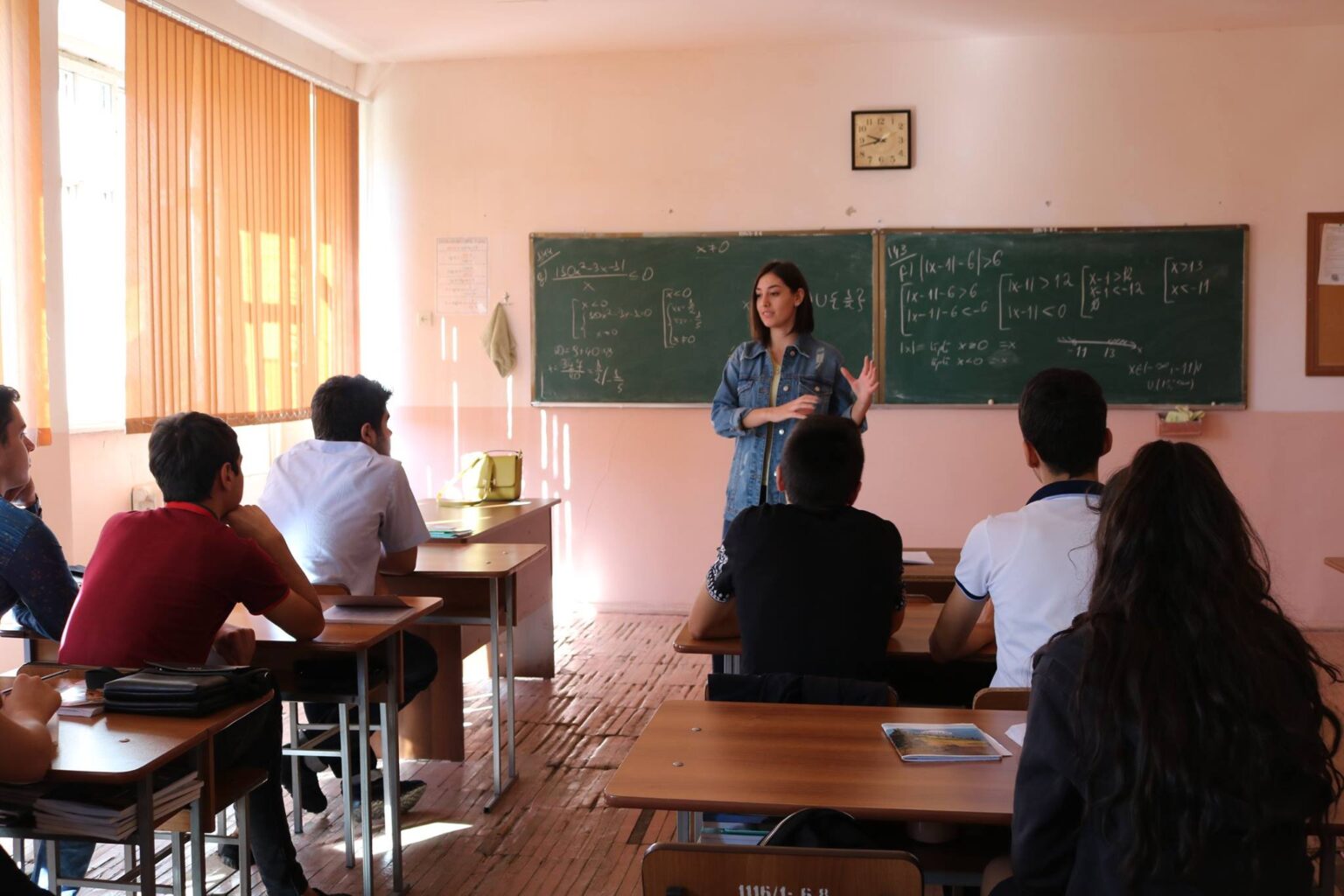
Schools understand that children’s nutrition must be balanced
Araik Papoyan, a hygienist at the National Center for Disease Control and Prevention, stated that specific dietary standards are mandatory for schools. Schools receive guidelines on what foods are appropriate for children’s diets and which should be excluded.
He emphasized that these standards consider both age groups (6-10, 11-14, 15-18) and potential physical activity levels.
“School meals should be balanced, including foods with protein, vitamins, and minerals. Students should not be served raw or smoked meats, unpasteurized milk products, or items high in salt and sugar, including sugary sodas.”

“Children prefer fast food”
Experts note that while schools offer relatively balanced food options, children often choose less healthy alternatives. Dr. Melkumova points out that children eat few vegetables, favoring fast food and sweets instead.
“Sweets and sugary drinks are high in sugar, leading to problems such as overweight and obesity.”
She also reminded that a previous study among children aged 7-8 found 30 percent of boys and 25 percent of girls to be overweight—another troubling statistic. Dr. Melkumova warned parents of possible long-term effects, including:
- diabetes
- cardiovascular diseases
- psychological issues
Experts believe that schools need stricter controls to ensure compliance with dietary standards and call for more education for students and parents on healthy eating.
Armenia child sweet consumption risks
The Constitutional Court of Georgia has accepted for a consideration a lawsuit filed by the Public Defender concerning the legal restrictions on the right to abortion for women victims of violence. The subject of the lawsuit is the provision according to which the mandatory basis for the termination of pregnancy between 12-22 weeks resulting from rape is a court conviction confirming that the woman is a victim of rape.
The Public Defender emphasized in the lawsuit, that this requirement poses a problem because the length of court proceedings in general jurisdiction often exceeds not only the allowed 22-week period for abortion, but also the entire duration of the pregnancy. As a result, women who are victims of rape are unable to obtain a conviction within the time limit for induced abortion.
The lawsuit notes that the legitimate aim of the controversial rule may be to reduce the number of illegal abortions and thereby protect women’s health. However, the said objective can be achieved by less restrictive methods that are more in line with the interests of women victims of violence.
It is noted that “the mentioned norm is the only norm that, based on Article 140, Clause 2 of the Law of Georgia “On Health Protection”, defines pregnancy as a result of rape as a social sign and grounds for abortion.” “From the point of view of women’s equality, victims of sexual violence are one of the most vulnerable groups. “From the point of view of women’s equality, victims of sexual violence are one of the most vulnerable groups. The denial of an abortion to a woman in such a situation may become an additional source of psycho-emotional stress and social stigma,” the lawsuit emphasizes.
The Public Defender also stressed that “among the verdicts issued by the common courts for the crime of rape, the shortest time it took for the court to reach a verdict for rape is 4 months (Kutaisi City Court’s verdict of March 19, 2018 N1/136-18)”, highlighting that the lengthy duration of legal proceedings potentially undermines the timely delivery of justice and the effectiveness of legal remedies in sexual assault cases.
According to the position of the Public Defender, the restriction established by the disputed norm violates the right of women victims of sexual violence to free development and autonomy, protected by the right to privacy.
Also Read:
2/2 Thus, the Peace Treaty between Armenia and Azerbaijan will acquire superior legal force over the laws of the Republic of Armenia and other normative legal acts once it is ratified by the Parliament.
— Nikol Pashinyan (@NikolPashinyan) November 13, 2024
3/3 If the Constitutional Court finds that the text of the Peace Treaty conforms to the Constitution, it will proceed to the ratification process in the country’s Parliament.
— Nikol Pashinyan (@NikolPashinyan) November 13, 2024
The Social Justice Center (SJC), a local human rights watchdog, addresses the ongoing tensions in the occupied Abkhazia, saying that the Georgian Dream government’s position on the issue is “yet another indicator that the government has no real peace policy toward the conflict regions.” “Moreover, its policy of silence and inaction is effectively tolerating Russian annexation in the region, ultimately leading to the loss of an important historic opportunity to restore trust and transform the conflict,” the SJC warns.
Recently, several opposition leaders have been arrested in Abkhazia. This was prompted by the popular protest against the controversial legislative package in the run-up to its ratification on November 15 by the de-facto legislative body of the occupied region, that would facilitate Russian “investments” and ownership of land and property in the occupied region. There have been no reports yet of any reaction from GD government on this issue.
The SJC slams the Georgian government’s “policy of silence and inaction,” which it says is reflected in its “refraining from making political statements at home and abroad that would criticize and condemn Russia’s actions.” The watchdog adds: “It is obvious that this approach contradicts Georgia’s sovereign interests and the state’s positive obligations to protect human rights on this territory.”
The watchdog elaborates on this “policy of silence and inaction,” saying it indicates that the Georgian government has no “vision and strategy to respond to Russia’s annexation.” It says the government “no longer holds the balance between the policy of not irritating Russia and defending its national interests.” It adds that the government’s inaction “fosters the discourse and feeling of condoning and normalizing Russian expansion and annexation processes in Abkhazia.”
Stressing that strengthening of Russia’s economic dominance in Abkhazia is detrimental for Black Sea security, the watchdog says the Georgian government “should be emphasizing a broader goal of regional security and stability and strengthening diplomatic work to create international interest and agenda.” The watchdog laments that the Georgian government “completely ignores” work in the international arena.
The SJC rebukes the government for failing to develop a new peace policy, noting that the emphasis on European integration would level the process of restoring trust and creating a dialogue and negotiation process with Abkhazia. However, the watchdog notes that the issue of the occupied region has once again shown how “damaging” the GD’s anti-European foreign policy has been for peace policy and conflict reduction.
“Ongoing processes and positioning of the GD government make it clear that its pre-election statements about new opportunities for conflict resolution were merely pre-election manipulation, and that there is no concrete content and efforts behind them,” the watchdog notes, adding that since coming to power, the GD government has not even renewed the peace policy document adopted by the previous government.
“It is important that the ongoing processes in Abkhazia become the subject of active discussion by civil society, political parties and the media. It is crucial to start a broad social and political dialogue in order to develop and agree on a new type of democratic and European peace policy, taking into account the changed geopolitical context,” the SJC concludes.
Also Read:
- 14/09/2024 – In Gori, Ivanishvili Blames Outsiders, UNM for 2008 War, Broaches Apology “to Ossetian Brothers and Sisters”
- 04/09/24 – Kremlin Suspends Funding of Occupied Abkhazia
- 20/08/2024 – Ruling Party Seeks Constitutional Majority to Ban Opposition, “Gay Propaganda,” Two Other Cryptic Reasons
- 15/08/2024 – Russian Deputy Minister for Economic Development: “Harmonization of Legislation” Between Moscow and Occupied Abkhazia “Mostly Complete”