
Day: November 7, 2024
On November 7, the United Kingdom sanctioned the former de-facto president of the occupied Tskhinvali region, Anatoly Bibilov, as part of its sanctions package against Russia.
The 56 new sanctions target suppliers that support Russia’s military production, Russian-backed mercenary groups operating in sub-Saharan Africa, 3 private mercenary groups linked to the Kremlin, and 11 individuals associated with Russian proxies.
Bibilov was sanctioned for his association with private mercenary groups with ties to the Kremlin. The sanctions include an asset freeze, a travel ban, and sanctions on trust services.
“Anatoly Ilyich Bibilov is or has been involved in destabilizing Ukraine or undermining or threatening the territorial integrity, sovereignty or independence of Ukraine because he engages in, provides support for, or promotes any policy or action which destabilizes Ukraine or undermines or threatens the territorial integrity, sovereignty or independence of Ukraine,” reads the U.K. Government’s statement of reason.
Also Read:
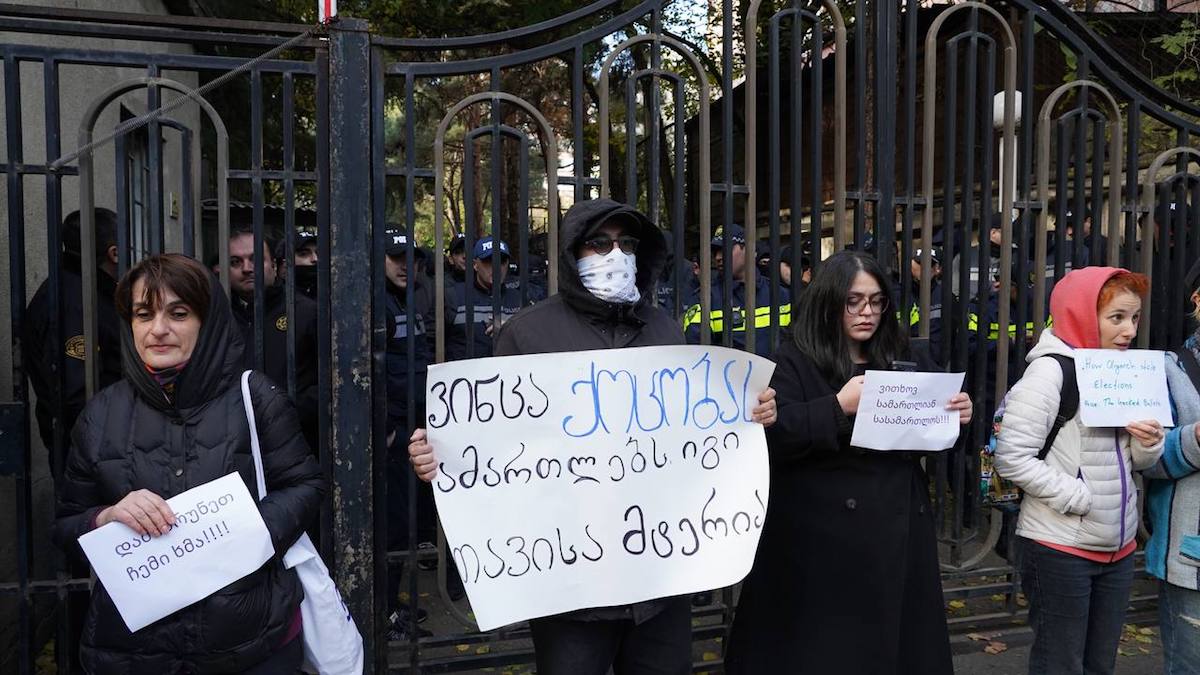
The civic movement For Freedom, which is a member of the local observer mission My Vote, has been fined 3000 GEL (1100 USD) for hanging a banner on the wall of its office building, that reads “Russian Dream Stole Elections.”
The local government of Ozurgeti, a town in western Georgia, said that hanging the banner was “illegal advertising”.
According to the media sources, the members of the observer movement were initially individually fined 1500 GEL (550 USD) for this banner two days ago.
“With this banner we are protesting against the stolen elections… It is completely absurd to say that this is an advertisement for something… This is repression, this is an attempt to deprive people of their freedom of speech,” Otar Revishvili, the founder of the movement, told the media.
He also said that the movement would not pay the fine and would fight the decision in court.
Also Read:


On November 7, the International Society for Fair Elections and Democracy (ISFED) issued a statement on a worrying trend identified by the watchdog in its analysis of the Central Election Commission’s data on voter activity by gender. The concern is about the difference between the registered number of male and female voters and the proportion of those voters who actually went to the polling stations, as opposed to the figures reflected in the CEC’s voter database.
On the basis of the information requested and received from the CEC, ISFED found that in a significant proportion of precincts, the difference between the activity of male and female voters is skewed away from the normal distribution and has practically impossible characteristics. For example, in 62 precincts where 80-100% of registered male voters actually voted, the average female turnout was 57%. Moreover, in some precincts, male activity reaches the theoretically impossible figure of more than 100% of registered male voters (from both unified and special lists), which ISFED believes indicates manipulation.
ISFED found that:
- In 275 polling stations, the difference between the participation of male and female voters on the unified list is higher than 20 percentage points. Of these, in 243 polling stations this difference is expressed by the majority of male voters, and in 32 polling stations – by the majority of female voters;
- Of the 275 precincts listed, in 67 precincts the level of male voter activity exceeds that of women by more than 30 percentage points, and in 12 precincts the proportion of women registered to vote is higher than that of men by the same percentage points;
- The number of male voters registered in 23 polling stations exceeds the number of male voters registered on the unified list. Among them, in at least 6 polling stations, the proportion of male voters is higher than 100%, even under the theoretical assumption that all the voters registered in the special list on these stations were men.
Precincts where these irregularities were found:
| District | Precinct | Voting Type | Number of Registered Male Voters in the Unified List | Number of Male Voters that Actually Voted | Number of Voters in the Special Lists |
|---|---|---|---|---|---|
| 36 Borjomi | 11 | Traditional | 514 | 599 | 8 |
| 16 Kvareli | 12 | Traditional | 123 | 140 | 4 |
| 58 Tskaltubo | 21 | Traditional | 95 | 105 | 3 |
| 38 Adigeni | 11 | Traditional | 122 | 127 | 1 |
| 54 Samtredia | 18 | Electronic | 660 | 673 | 10 |
| 41 Ninotsminda | 15 | Traditional | 26 | 65 | 38 |
ISFED also found unexplained discrepancies when comparing the preliminary data published by the CEC on the number of male and female voters during the elections with the revised data published later. For example, according to the CEC preliminary results about the number of voters, 961,751 women and 1,098,661 men voted on October 26, but according to the revised data, the number of female voters increased and the number of male voters decreased proportionally – 1,053,662 women (91,911 more than shown initially) and 1,009,686 men (88,975 less than shown initially).
In some cases, ISFED found a drastic difference between the preliminary published and revised total number of voters in the district. For example, in Marneuli’s District No. 22, the CEC initially reported that 41,766 voters had voted, but later revised this figure to 43,858. After ISFED had requested detailed data from each precinct, the CEC updated its website and it is now impossible to see the preliminary data on voter activity.
ISFED says it has also requested special lists (the lists include, inter alia, prisoners, people with health problems, employees of MIAs, MOD, inmates, etc.) from the CEC and will provide additional results based on these.
Furthermore, ISFED notes that in the document provided to it by the CEC, in a significant part of the polling stations, the data on the total number of voters who participated in the elections does not correspond to the total number of voters as reflected in the summary protocols as published on the CEC website.
For example, the difference found in 15 polling stations is:

Also Read:
ISFED reports voter irregularities Georgia
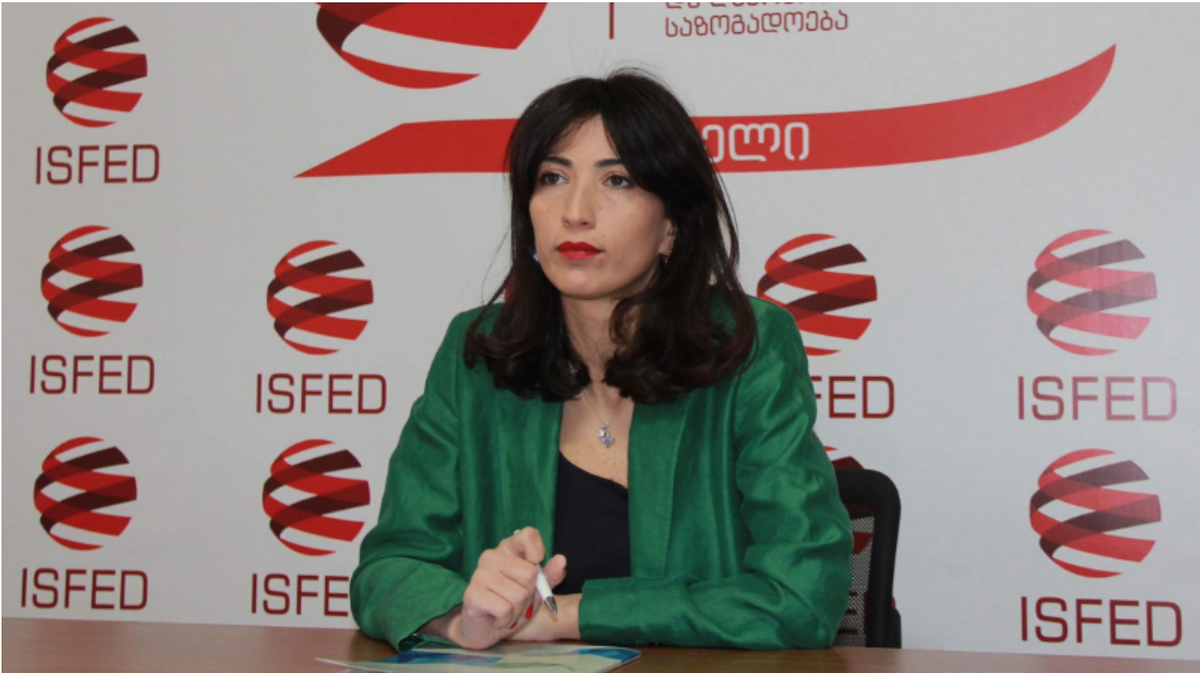
Nino Dolidze, Executive Director of the International Society for Fair Elections and Democracy (ISFED), addressed newly identified violations in Georgia’s October 26 parliamentary elections, emphasizing the gender aspects of voter turnout.
According to her, an initial analysis of information requested from the Central Election Commission (CEC) revealed that the difference in turnout levels between male and female voters at a significant number of polling stations deviates from a normal distribution.
For instance, the data shows that at some polling stations, male turnout exceeded the number of registered male voters by more than 100%, indicating manipulation at these locations, specifically at 23 stations.
“In monitoring the number of voters in the October 26 parliamentary elections, we observed a noteworthy trend concerning the gender aspect. We requested information from the CEC on the number of male and female voters.
The initial analysis of this information showed that at certain stations, the turnout of male and female voters deviated from a normal distribution, displaying irregular or unnatural characteristics. For example, at 62 polling stations, male turnout from registered lists was up to 80-100%, while female turnout was 57%,” Dolidze explains.
The data analysis provided by the CEC found that the difference in voter turnout between males and females from the unified list exceeded 20 percentage points at 275 polling stations.
“We have 23 polling stations where male voter turnout exceeds the number of men on the voter list,” says Dolidze.
ISFED reports voter irregularities Georgia

Teen violence intensifies in North Ossetia
A group of teenage girls has appeared in Russia’s North Caucasus republic of North Ossetia, with group members attacking their peers on the streets, beating them violently, filming the incidents, and posting them online.
Videos of these girl fights quickly went viral on social media, reaching Yekaterina Mizulina, Director of the Safe Internet League and member of the Russian Civic Chamber, sparking a launch of an investigation by the North Ossetian law enforcement.
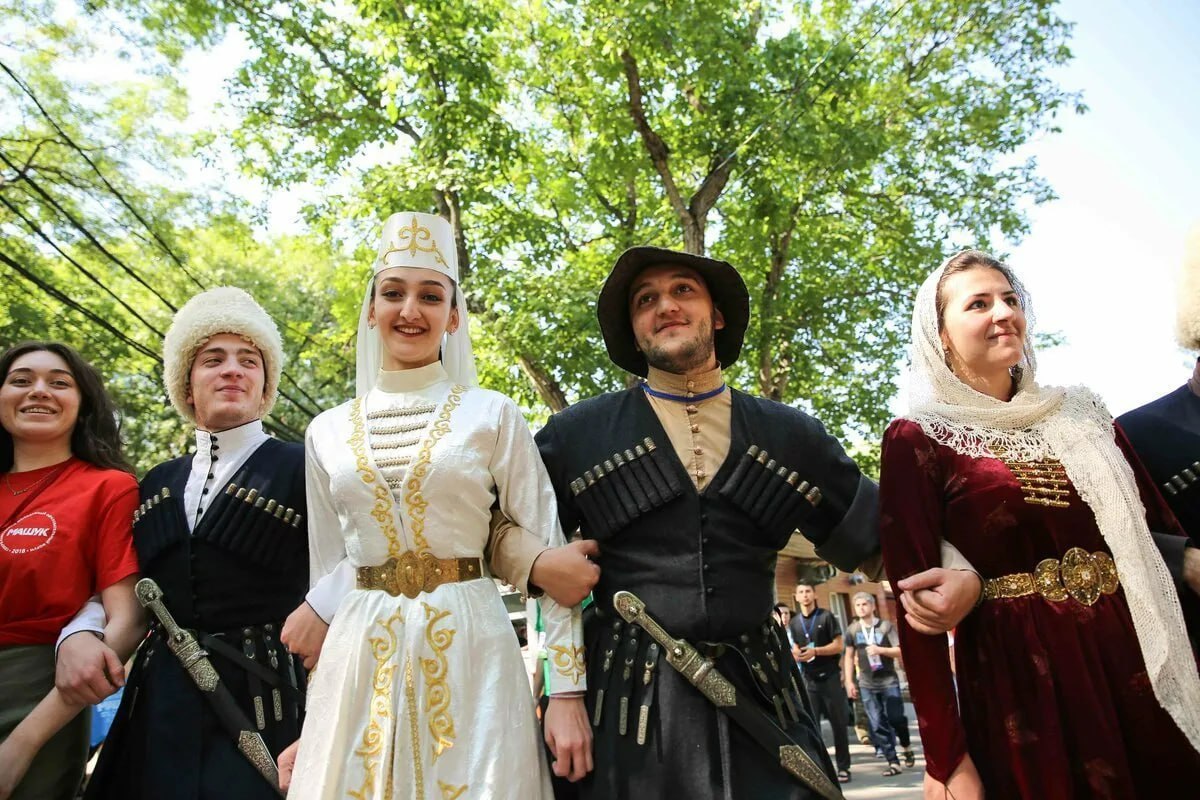
The inquiry revealed two rival youth groups within North Ossetia’s teenage circles, particularly in Vladikavkaz, the republic’s capital: the so-called “hipsters” and “fighters” (also referred to as “dzhiburshi“).
Political scientist Badri Gazzati explained the difference between the two rival groups to JAMnews.
According to Gazzati, hipsters (or “nonconformists”) are teenagers and young people aged 14 to 20, including girls, who emulate subcultures:
“They drink and smoke questionable substances. Prospekt Mira in central Vladikavkaz has turned into such an area—clubs and cafes where young people unwind. These are gaming clubs, hookah bars, essentially dens. Many of these establishments are owned by local deputies and officials.”
The hipsters are opposed by the “dzhiburs” – a slang term for adolescents who are poorly educated and lack moral values.
“They’re locals too, but they position themselves as ‘protectors’ of traditional values and Ossetian culture. But that’s just talk. Their behavior reflects a lack of culture as well: they swear, fight, and dress in tracksuits.
Girls in these groups call themselves ‘dzhiburshas’ or ‘fighters.’ So, the hipsters and fighters ‘claim’ the streets and neighborhoods. In reality, both groups are just idlers,” Gazzati remarks.
- Closed Georgian-Russian meeting took place in Vladikavkaz. How did the Ossetians react?
- Dancing, language, archery – “national hobbies” gaining popularity in Abkhazia
- “The world denies our existence”. How Abkhazia’s young people are doing after EU sanctions
He laments that youth self-expression is taking on disturbing forms, “but it probably doesn’t concern anyone.”
“These are mostly children from troubled families. Schools are failing in their upbringing. I think this issue will be swept under the rug, forced underground. No one will really address it.”
Meanwhile, the North Ossetian Interior Ministry reported that the aggressive girls, along with their parents, were brought to the police station for questioning on the same day.
“The participants in the scuffle were 14 and 15-year-old girls. The police held a preventive conversation with the minors, their parents, and representatives from the schools the teens attend.
The incident’s participants were reminded of their liability for displaying aggression and deviant behavior,” the Interior Ministry stated.
Law enforcement chose not to press administrative “hooliganism” charges against detained the girls.
Teen violence intensifies in North Ossetia