
Month: September 2024
Reso Kiknadze Quintet live at Jazz Club 1984 in Tbilisi – 29.09.2024, 21:00 https://t.co/UadO5CGcmk
— Notes from Georgia/South Caucasus (Hälbig, Ralph) (@SouthCaucasus) September 28, 2024
Pankisi Ensemble. Kists of Georgia in Berlin – 21.10.2024, Galiläakirche https://t.co/I8CNVniCEw
— Notes from Georgia/South Caucasus (Hälbig, Ralph) (@SouthCaucasus) September 28, 2024
Russian Foreign Minister Sergei Lavrov said Moscow is ready to “help” Georgia, Abkhazia, and Tskhinvali “normalize relations” if they are “interested”. Sergei Lavrov made the statement at the press conference following the 79th session of the UN General Assembly.
He praised the Georgian government for “simply being honest about the past,” referring to GD patron Bidzina Ivanishvili’s recent talk of apologizing to Ossetians for the 2008 war, which he blamed on the then UNM government, not Russia.
“They [Abkhazia and Tskhinvali] are neighbors of Georgia, some kind of contacts there are inevitable anyway,” the Russian minister said, adding: “If there is interest on all sides to normalize these relations, to ensure non-aggression agreements… we will be ready to help if the parties are interested.” The non-aggression agreement, or non-use of force, that Lavrov mentioned is the issue that Russia has been pushing hard for in the Geneva talks. Such an agreement would recognize Abkhazia and Tskhinvali as sides in the conflict, and thus as subjects of international law.
Lavrov’s statement comes just after the UNGA, where Georgian PM Irakli Kobakhidze did not mention Russia in his final speech to the General Assembly when he addressed the occupation. In the run-up to the elections, the GD openly blames the former UNM government and then-President Mikheil Saakashvili for starting the August war and threatens to ban UNM and other opposition parties after the elections.
Earlier, the de-facto foreign ministry in occupied Tskhinvali also reacted to Ivanishvili’s apology offer, saying it expected concrete “practical measures” from Tbilisi in the future, specifically mentioning – just like Lavrov – the official commitment not to use force.
Also Read:
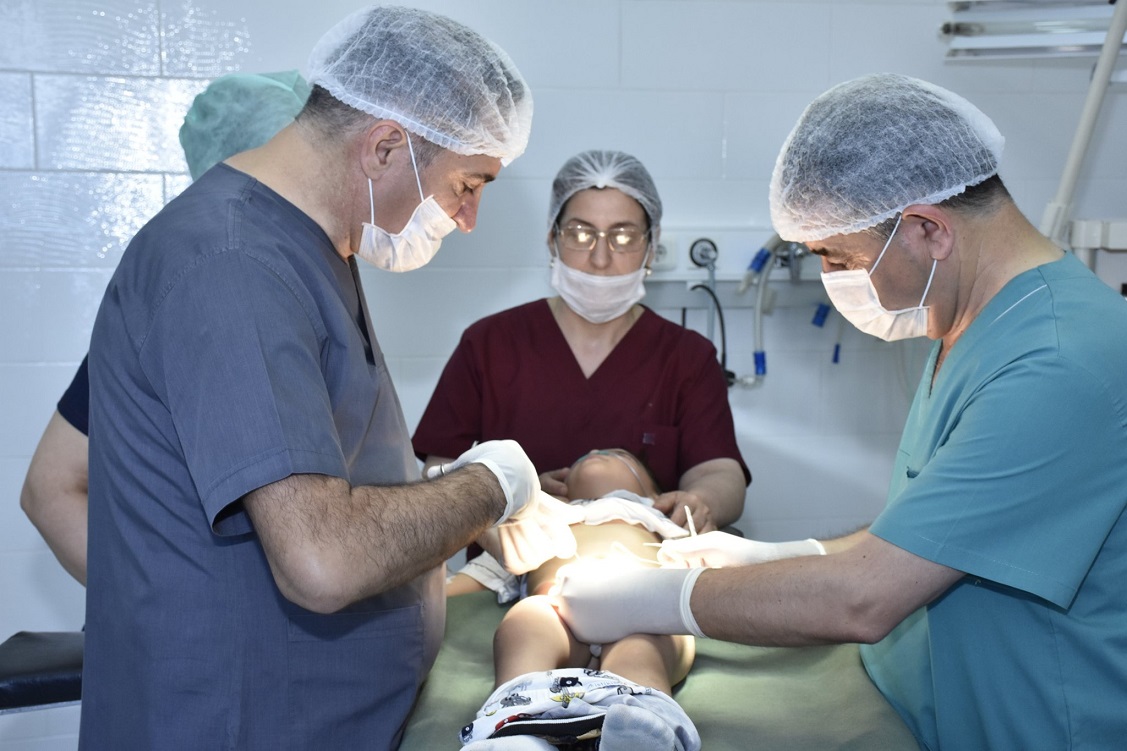
Circumcision in Azerbaijan
“My grandson had inflammation of his genital area, which often caused him pain. At the clinic where he was registered, they said circumcision was necessary. I inquired about where and how this could be done and visited a private clinic near our house. They told me the operation would cost 200 manats [about $117]. Only later did I find out that circumcision is covered under mandatory health insurance. We had it done through insurance, and it was completely free,” says Baku resident Tazakhan Miralamli.
Since the beginning of this year, circumcision in Azerbaijan has been covered by mandatory health insurance. In the past six months, more than 15,000 circumcision surgeries have been performed under this insurance.
- Sanctioned vehicles are being imported into Russia through Georgia, according to a Sky News investigation
- Ruined Ukraine vs. prosperous Georgia: Controversial election banners by the ruling party
- Bakhtiyar Hajiyev no longer plans to take part in his court case
What is circumcision?
Circumcision is the partial or complete removal of the foreskin, which covers and protects the head of the male genital organ. This practice is mainly observed among Jews and Muslims. Azerbaijan is also part of a region where male circumcision is widely practiced.
“In fact, circumcision usually does not have medical significance. Yes, sometimes we have to perform circumcision on children or adults for medical reasons, such as phimosis (narrowing of the foreskin). However, if we look at the international classification of diseases, we see that this operation is referred to as ‘ritual circumcision,‘” says urologist-andrologist Vasif Ismail.
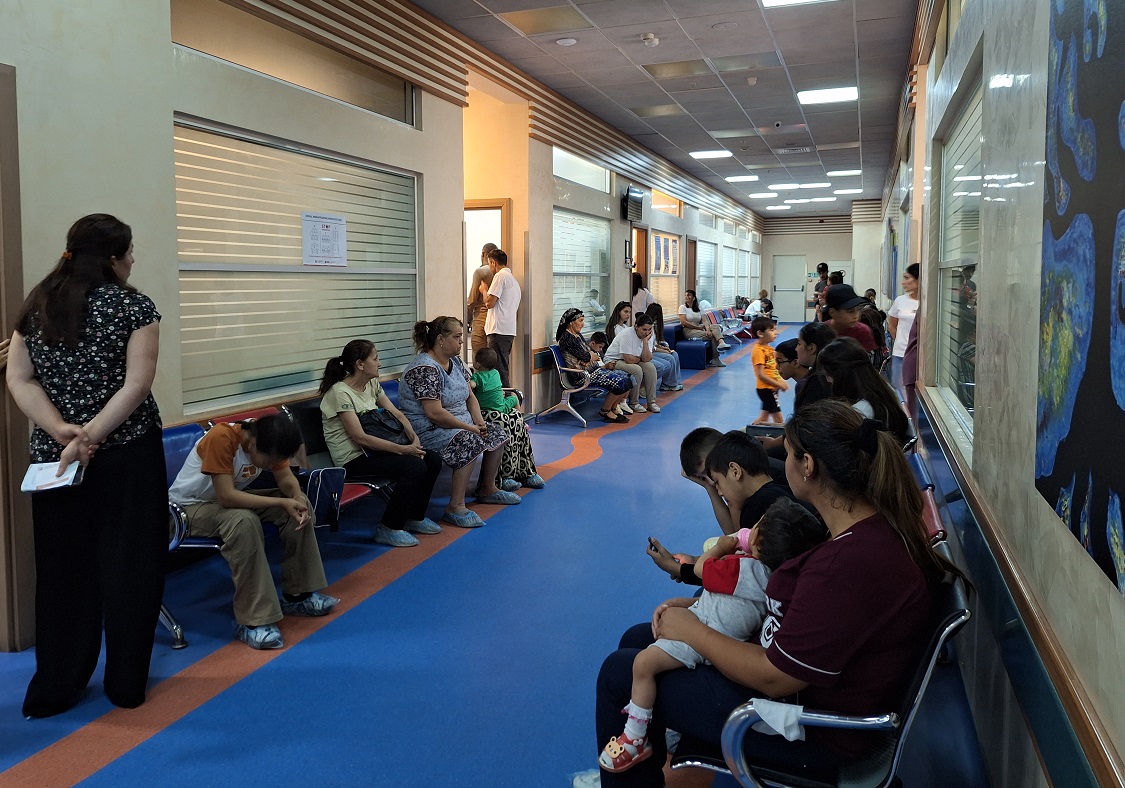
Consequences of circumcision by barbers
Before the recent changes, circumcision for boys in clinics was quite expensive, with prices ranging from 300 to 800 manats [about $176 to $470]. As a result, those who could not afford this turned to individuals known as “barbers,” or circumcision practitioners without proper medical training. This was not always safe. Media in the country frequently reported incidents involving irreversible injuries to children, severe complications, and even deaths following circumcisions performed by barbers.
One such high-profile case occurred in a region of Azerbaijan in February 2020, when a five-year-old boy had his genital organ accidentally severed during a circumcision. The child was urgently taken to Baku for surgery. At that time, surgeon Toghrul Omarov told the media that the child’s condition had been stabilized, but he would require extensive treatment for a full recovery.
A similar incident happened in Ganja in 2011 when 82-year-old barber Shamseddin Tagiyev accidentally severed the genital organ of a four-year-old boy while performing a circumcision at home. The child barely survived.
“Including circumcision in mandatory health insurance will prevent dangerous circumcisions outside clinics”
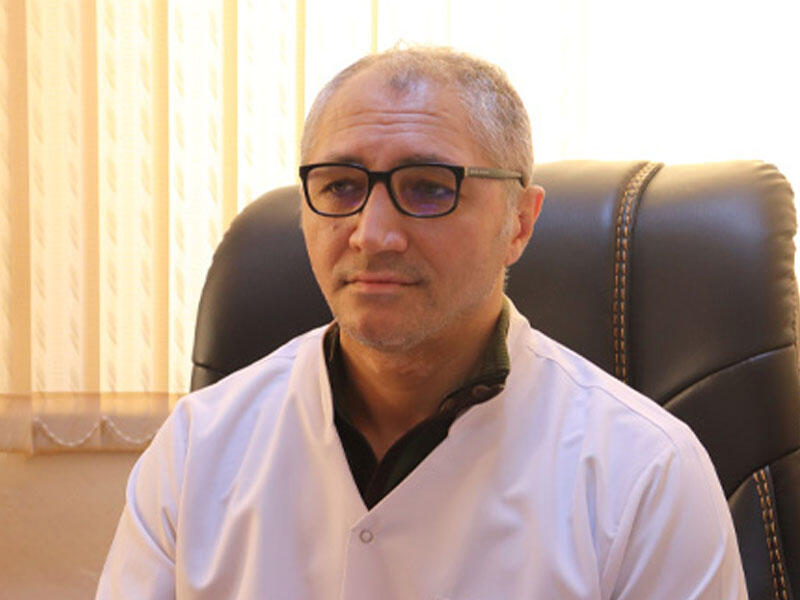
Circumcision covered by mandatory health insurance will help avoid such risks, believes Dr. Vasif Ismail.
“Except in special cases, circumcision is not medically necessary; it is purely traditional. However, to say that we shouldn’t include circumcision in mandatory health insurance because of this would be a mistake. People will continue to have it done, and it costs money. Therefore, I view the inclusion of circumcision in the mandatory health insurance package positively. Poor families have been forced to have their children circumcised by barbers, leading to negative consequences. This is a very good step to prevent such outcomes. Now people will be able to have their children circumcised by a qualified professional without financial difficulties,” says Vasif Ismail.
A few interesting facts
Despite most doctors seeing no medical significance in circumcision, scientific evidence shows that circumcision protects men from the HIV virus.
“The infection rate among uncircumcised men is eight times higher than that among circumcised men,” asserts Professor Rachel Royce (New England Journal of Medicine, April 10, 1997).
“The chance of circumcised men contracting AIDS is much lower than that of uncircumcised men. This data is based on 28 studies conducted in different countries, 26 of which showed an unequivocal direct link between the risk of contracting AIDS and the presence of the foreskin, which serves as a breeding ground for various pathogens,” reiterates the same point by Professor Alon Ronald from Canada in a study presented at the international symposium on AIDS issues in Japan (The Telegraph, September 8, 1994).
On September 27, the 31st anniversary of the fall of Sokhumi, which marked Tbilisi’s loss of control over the region, the documentary “Forgotten Victims: Before Bucha was Abkhazia” was screened at the French National Assembly.
The documentary features first-hand accounts of Russia’s heinous crimes in Abkhazia in 1993, drawing clear parallels to its recent actions in Ukraine and highlighting that such atrocities by Russia are not new. The documentary is the joint project by the opposition Federalists party, the movement Assembly of Abkhazians, the online media Tabula, and the Liberty Institute, a local think tank.
Georgian President Salome Zurabishvili and France’s Minister Delegate for Europe, Benjamin Haddad, attended the screening of the movie. Also present were the leaders of the Federalist Party, Giga Bokeria and Tamar Chergoleishvili, co-authors of the project. The audience included French politicians, diplomats and representatives of the Georgian diaspora.
“Honored to welcome the President of Georgia Salome Zurabishvili at a symposium at the French National Assembly today. France stands by the Georgian people in their European perspective, and in the preservation of the rule of law and fundamental freedoms,” Benjamin Haddad tweeted.
“It is symbolic that on this day, September 27th – a day of tragedy for Georgia, marking the fall of Sokhumi – we gathered in the French National Assembly in Paris for the screening of the film “Forgotten Victims: Before Bucha, There was Abkhazia,” President Zurabishvili tweeted.
President Salome Zurabishvili and Minister Benjamin Haddad made the opening speeches at the event.
In her address, President Salome Zurabishvili spoke of the 1992-1993 conflict in Abkhazia, noting that Russia used “the same ferocity” in Abkhazia 31 years ago as it does in Ukraine today.
She then blasted the election banners of Georgia’s ruling party, which juxtaposed the war in Ukraine with the “peace” Georgian Dream party promises, saying she was “shocked” that the government thought it was a “good idea” to use such imagery in its campaign. She said that the banners have caused outrage among Georgians, including “remaining supporters” of the Georgian Dream, which she again referred to as the “Georgian nightmare,” and expressed hope that this outrage signals that Georgia is on the right track. She said that the GD’s banners are in conflict with Georgia’s traditions, culture and humanism – the very values that the President said Georgia shares with Europe.
“Never, at any point along the way, has Georgia stopped being pro-European. All our polls are consistent: 80-85% of Georgians say they want to be European,” she said. The President reiterated that the ruling party is increasingly acting as a “pro-Russian” force and stressed the “existential” importance of the upcoming elections for the country’s European path.
In addition, she condemned Russia’s ongoing aggression against Ukraine, stressing that “Europe should not allow itself to live next to the abnormal state” that does not respect the borders of its neighbors.
The screening of the film “was followed by a discussion in the French National Assembly about Russia’s genocide against the Georgians”, Giga Bokeria wrote on his official Facebook page.