
OPEC still expects an increase in global oil demand at the end of this year by 2.2 million barrels per day (bpd), to 104.46 million bpd
Day: July 10, 2024
Categories
The Region in Brief
Armenia
An extraordinary session of Armenia’s National Assembly has been scheduled for July 11. The regular session of the National Assembly concluded on June 20, with the next session not scheduled to commence until September. The extraordinary session was convened to deliberate several legislative initiatives prior to the fall. It has been proposed to conduct the second reading of these initiatives within 24 hours of their adoption, allowing for three-hour intervals dedicated to presenting written proposals and concluding remarks from committee heads.
Artsakh
Human rights lawyer Siranush Sahakyan has called for international involvement in the court trials of former Artsakh leaders, emphasizing the lack of judicial independence in Azerbaijan and the predetermined nature of Armenian prisoners’ sentences. She highlighted the investigations’ lack of transparency and the control exerted by Azerbaijani authorities over the judicial system and independent lawyers. Sahakyan stressed the need for international monitoring to ensure fair trials and document violations. She also pointed to the inhumane treatment and torture faced by Armenian prisoners, noting that charges against them are politically motivated to shield Azerbaijani military personnel from accountability.
Georgia
Pavel Gerchinsky, the EU ambassador to Georgia, announced that the European Union has decided to freeze €30 million earmarked for supporting Georgia’s defense sector. Gerchinsky stated that this is just the beginning, with more reductions in direct aid to the Georgian government expected. Instead, the EU will redirect support towards civil society and NGOs. This shift comes in the wake of Georgia’s parliament passing a controversial foreign agent law. Gerchinsky also noted that Georgia’s EU membership bid is currently on hold due to skepticism about Georgia’s progress.
Iran
Armenian Prime Minister Nikol Pashinyan held a phone conversation with Iran’s newly-elected president Masoud Pezeshkian during which both leaders agreed to meet at the earliest opportunity. Pezeshkian, a reformist candidate of Azerbaijani-Kurdish origin, secured the presidency with 16.3 million votes (54.76%) in a recent runoff election, defeating conservative rival Saeed Jalili, who garnered 13.5 million votes (45.24%). Despite the president’s Azerbaijani heritage, Iranian Ambassador to Armenia Abbas Badakhshan Zohouri emphasized that Iran’s national policy towards neighboring countries, including Armenia, remains unchanged regardless of leadership changes.
Turkey
Turkish Foreign Minister Hakan Fidan has expressed Ankara’s concerns over what it perceives as an unbalanced position taken by several Western countries in the ongoing efforts to regulate relations between Armenia and Azerbaijan. Fidan made these remarks during a meeting of the Foreign Affairs Council of the Organization of Turkic States in occupied Shushi, where he represented Turkey in place of President Recep Tayyip Erdogan. Fidan also conveyed Ankara’s hope that the current negotiation process between Azerbaijan and Armenia will soon culminate in the signing of a peace agreement.
Author information

Hoory Minoyan
Hoory Minoyan was an active member of the Armenian community in Los Angeles until she moved to Armenia prior to the 44-day war. She graduated with a master’s in International Affairs from Boston University, where she was also the recipient of the William R. Keylor Travel Grant. The research and interviews she conducted while in Armenia later became the foundation of her Master’s thesis, “Shaping Identity Through Conflict: The Armenian Experience.” Hoory continues to follow her passion for research and writing by contributing to the Armenian Weekly.
|
The post The Region in Brief appeared first on The Armenian Weekly.
 The Regional Advocacy Officer will implement the advocacy goals and objectives of the organization throughout the 18 states (excluding California) within the jurisdiction of the Armenian National Committee of America – Western Region (ANCA-WR). The Regional Advocacy Officer will devise strategies to achieve grassroots advocacy goals; cultivate and maintain relations with the organization’s committees, chapters and community and coalition organizations; and implement the decisions of the ANCA-WR’s Board of Directors. This position will report directly to the ANCA-WR Executive Director and Government Affairs Director, and work closely with ANCA’s National Grassroots Director to ensure a coordinated execution of the organization’s strategic priorities.
Qualifications
- Bachelor’s degree or equivalent experience commensurate with the role;
- At least one year of experience in effective advocacy, communication and/or coalition building;
- Superior relationship management experience and the ability to communicate effectively on policy priorities and legislative efforts;
- Strong presentation and persuasion skills and confidence when conversing with community members and coalition partners;
- An interest in policy and politics with a solid understanding of the ANCA-WR’s work, mission and values;
- Organized and effective communication skills, excellent stakeholder management skills, and a deep understanding of federal, state and local policy procedures;
- The ideal candidate will have experience in the nonprofit sector, including experience in budgeting and program administration;
- Commitment to the mission of the organization and a working knowledge of the needs of the communities it serves;
- This is a traveling position. All applicants are required to have a valid driver’s license in good standing;
- Lifting up to 25 pounds may be required infrequently.
Duties
- Provide staff support to any and all ANCA-WR committees and chapters as assigned by the Executive Director;
- Work with staff members to implement the Strategic Plans of the organization;
- Maintain a shared and updated database of all contacts;
- Provide weekly reports to the Executive Director and Government Affairs Director;
- Help with the recruitment of interns and publicly promote the internship program by presenting at universities, ASA meetings, committee and chapter meetings and AYF Camp;
- Manage at least one to three interns during each cycle (fall, spring and summer) of the ANCA-WR’s Internship Program;
- Travel as needed to carry out the duties outlined in this job description.
Regional advocacy duties
- Support the work of ANCA-WR committees and local chapters by providing them with guidance, tools, resources and assistance as needed to maximize their productivity and efficiency in accomplishing the advocacy goals of the ANCA-WR;
- Foster and maintain continuous positive communication between the ANCA-WR and all of its committees and local chapters, as well as all sister and community organizations and structures in order to ensure maximum efficiency and coordination of efforts and activities;
- Schedule, organize and hold regional meetings and conference calls with ANCA-WR local chapters and committee chairs on a consistent basis in order to ensure consistent communication of policies, methods, goals and coordination of activities, and ensure the timely implementation of those goals;
- Establish and maintain strong relationships, cooperation and communication with community groups and organizations, public officials, elected officials, media and political and governmental entities;
- Work with chapters to design advocacy, outreach and other program initiatives that can be implemented easily and effectively;
- Actively participate in coalition building with prior approval from the Executive Director and/or the ANCA-WR Board;
- In accordance with the strategic advocacy priorities of the organization, identify impactful grassroots leaders and organizations that share common interests and goals with the ANCA-WR;
- Develop and maintain strong relationships with strategically identified coalition partners to advance the advocacy priorities of the ANCA-WR and local chapters in the 18 states (out of CA) within the organization’s jurisdiction;
- Draft the regional advocacy and coalition building portions of ANCA-WR’s annual reports;
- Secure grants for community development programs throughout the Western Region (out of CA);
- Coordinate grassroots engagement with members, sponsors and partners;
- Develop and maintain a comprehensive calendar to ensure monthly communication with the representatives of all ANCA-WR chapters;
- Research and evaluate relevant community data, including through online or phone surveys;
- Collaborate with local nonprofits and other relevant partners on appropriate strategies. Build strong, long-term working relationships;
- Salary commensurate with experience and qualifications; the salary range is $55,000-$65,000.
Disclaimer: This job description is intended to describe the general nature and level of the work being performed by the people assigned to this position. It is not intended to include every job duty and responsibility specific to the position. The organization reserves the right to amend and change responsibilities to meet organizational needs, as necessary. To apply, send your resume and cover letter to info@ancawr.org.
Author information
The Armenian National Committee of America – Western Region is the largest and most influential nonpartisan Armenian-American grassroots advocacy organization in the Western United States. Working in coordination with a network of offices, chapters, and supporters throughout the Western United States and affiliated organizations around the country, the ANCA-WR advances the concerns of the Armenian-American community on a broad range of issues in pursuit of the Armenian Cause.
|
The post Employment Opportunity: ANCA-WR Regional Advocacy Officer appeared first on The Armenian Weekly.
GYLA on justice system reform in Georgia
The “Georgian Young Lawyers’ Association” (GYLA) has presented a report on monitoring the justice system of the High Council of Justice. The report covers the period from January 1 to December 31, 2023. According to the monitoring results, the main problem of the justice system is the so-called “clan rule.”
The report also states that the government has superficially implemented the European Commission’s recommendation for comprehensive justice system reforms, while disciplinary proceedings within the system are being prolonged. According to the organization, this is causing significant issues. Additionally, there is a quota for chairmanship.
Key findings of the report
● The primary problem of the justice system remains the so-called “clan rule.” Parliament appointed non-judge members to the Council of Justice two years late, which instead of promoting pluralism, strengthened an influential group. So far, there have been no debates or disagreements during the meetings.
● The European Commission’s recommendation called for comprehensive justice system reforms; however, all legislative changes developed were superficial and did not address the real problems within the system.
● Despite the backlog of cases in the justice system and the large number of judicial vacancies, the Council of Justice did not announce a competition for first and second instance positions for 2023. The High Council of Justice exercises complete control over the influx of new personnel into the judicial system and their distribution across chambers/panels, which is a key lever for managing the system.
● Another issue is the presence of a quota for chairmanships within the council. During the reporting period, four of the eight elected council members simultaneously chaired a chamber/panel.
● Disciplinary proceedings are still delayed. During the reporting period, the Council of Justice held only one disciplinary meeting. Despite numerous complaints, most of which are related to delays in the administration of justice, the council does not take effective steps to address this problem, which serves as an effective lever of pressure on individual judges in the context of prolonged disciplinary proceedings.
● During the reporting period, the transparency of information significantly deteriorated, and the High Council of Justice became a completely closed body. GYLA did not receive responses to eight requests for public information sent to the High Council of Justice in 2023.
● Issues in the justice system can also be viewed through the lens of corporatism. According to GYLA, while a few years ago the main problem was government control over the judicial system, today this control has shifted within the structure, and influential judges, allied with the government, have fully adapted the justice system and its main body, the High Council of Justice.
● Additionally, the monitoring revealed that the situation with transparency is extremely problematic. Besides not providing answers to requests, the council did not upload meeting minutes to its website or publish decisions made after June 2, 2023. The date and agenda of any meeting were not posted on the site within the timeframes established by law. They were regularly changed/postponed, and items were removed from the agenda.
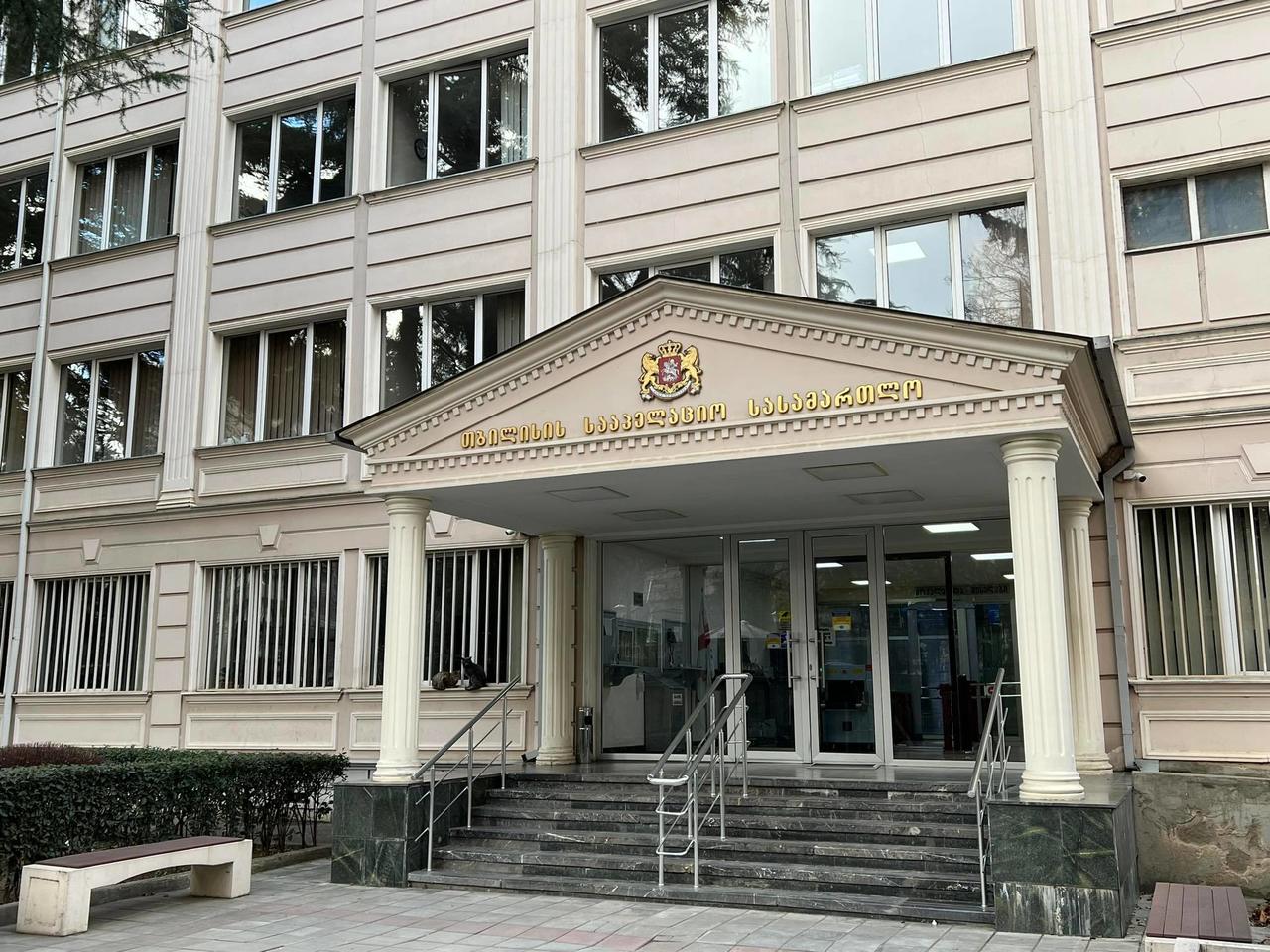
It is worth noting that on March 11, the Supreme Court issued a statement categorically opposing the procedure for vetting the integrity of judges in Georgia.
The mention of vetting the integrity of individuals appointed to the judiciary is included in the European Commission’s report, which discussed granting Georgia candidate status for EU membership.
The vetting system is a model that assesses the integrity and professionalism of judges, and the vetting commission should be comprised of both foreign and Georgian experts. This requirement is also supported by the Venice Commission.
The ruling party, Georgian Dream, claims that the country’s sovereignty would be threatened by the involvement of foreign partners in this process. According to the leadership, the so-called vetting system is an initiative of the opposition aimed at “undermining Georgia’s sovereignty.”
The chairman of Georgian Dream and former prime minister Irakli Garibashvili responded to a question about the vetting system by saying that the judiciary is currently functioning properly, and the government will not allow anyone to interfere with Georgia’s judicial system.
Garibashvili also stated that Georgia is a leader in the rule of law among Eastern European countries, and therefore opposes “inviting foreign nationals from outside” to enhance the integrity of judges.
GYLA on justice system reform in Georgia
The United States Under Secretary of State for Civilian Security, Democracy, and Human Rights Uzra Zeya will travel to Georgia and Armenia from July 9-17 “to engage on democratic governance and anti-corruption; media freedom and freedom of expression; and inclusion of marginalized and vulnerable groups,” the U.S. State Department reported on July 10.
The official release says that while in Georgia, the Under Secretary will meet the representatives of the executive and legislature, as well as CSOs and media “to underscore the U.S.’s grave concerns over the ‘foreign influence’ law and other illiberal legislation and the harmful rhetoric of the Georgian government, which has placed Georgia’s Euro-Atlantic trajectory at risk.”
According to the State Department, Under Secretary Zeya “will make clear that the government’s undemocratic behavior and disinformation about the United States has damaged our long-standing relationship” and “will also emphasize unwavering U.S. support for Georgia’s sovereignty and territorial integrity, the Georgian people’s commitment to Euro-Atlantic integration, and assistance to Georgia over 32 years of partnership.”
“Additionally, she will reiterate the importance of free and fair elections and a vibrant civil society, raise respect for fundamental freedoms, protections for members of marginalized groups, and the human rights of all Georgians. Under Secretary Zeya will also visit a community organization founded and led by women displaced by Russia’s continued occupation of Georgia,” the State Department added.
Civil.ge was granted an interview with Under Secretary Zeya.
Also Read:
- 14/05/2024 – U.S. Assistant Secretary Jim O’Brien Visits Georgia
- 06/12/2023 – US Deputy Assistant Secretary of State Visits Georgia
On July 10, Transparency International Georgia published a report assessing the performance of the Parliament in 2023. Over the last year, the report finds, the Parliament has become a “closed institution.” The report names the growing institutional inaccessibility of the Parliament for both journalists and representatives of civil society organizations and the lack of transparency when releasing public information, particularly concerning developments in 2023. What is more, for the first time in the last ten years, the Parliament did not respond to Transparency International’s request for public information on the number of speeches delivered by MPs, details on disciplinary actions taken against MPs, and the activities of the parliamentary committees.
The report recognizes the importance of the Parliament’s work for Georgia’s path toward European integration. Specifically, it points out the protests against the foreign agents law in February 2023 as playing “a crucial role in the country achieving candidate status for EU membership.” Further, it notes that only three of the 12 recommendations for Georgia’s EU accession issued by the European Commission in June 2022 have been implemented.
Transparency International-Georgia welcomes the passage of legislation regarding personal data protection, as well as the amendments to the anti-corruption law mandating prosecutors to disclose their asset declarations. However, the report negatively evaluates the proposed initiatives concerning “the preliminary prohibition on temporary constructions during gatherings and demonstrations, modifications to broadcasting regulations concerning the management of hate speech, and amendments to accountability and oversight provisions in the Rules of Procedure.”
Overview of activities by MPs in 2023
- The Parliament authorized 1,836,033.17 GEL in funding for overseas business trips by 98 MPs in 2023
- Of the MPs serving in the parliamentary majority, Irma Zavradashvili (Georgian Dream) submitted the highest number of bills—105. Of all opposition MPs, the most prolific was Aleksandre Rakviashvili (Girchi), who initiated a total of 74 bills.
- The most frequent absentee from the majority was Eliso Bolkvadze (Georgian Dream), who did not take part in 13 plenary sessions. Of the opposition, Cezar Chocheli (UNM) missed 23 plenary sessions. Of those missing the Parliament’s committee sessions without a valid reason, the majority MP Mariam Lashkhi (Georgian Dream) did not attend ten plenary sessions, while the opposition MP Giorgi Godabrelidze (UNM) had 16 unexcused absences.
- Opposition MPs submitted the most questions to stakeholders in 2023 (2,920), while MPs from the parliamentary majority sent only 77 questions to ministers and accountable persons. Overall, there was a decrease in the number of parliamentary questions submitted compared to previous years.
Recommendations
The report stresses the importance of establishing a specialized parliamentary body for the oversight of the activities of the security sector, in particular the opaque State Security Service. It advises that the parliamentary majority “should not obstruct the opposition’s use of oversight mechanisms through artificial barriers” regarding enforcing the recommended oversight procedures. The report notes that in 2023, “791 unanswered parliamentary questions were submitted by the opposition, constituting 27% of their overall inquiries. Conversely, only five questions posed by the majority remained unanswered, representing a mere 6% of their total questions.”
Further, Transparency International recommends that MPs consult more with the public throughout the legislative process, stressing the importance of extensive discussions and expert involvement concerning decisions made on “significant national matters” in the Parliament. Moreover, the report stresses that “the Parliament should review legislative proposals promptly and allow the authors to present their opinions to the committee,” pointing out that “bills should only be expedited or prolonged in their deliberation in exceptional cases.” In 2023, 122 laws were fast-tracked by the Parliament.
Lastly, the report encourages the Parliament to refrain from obstructing the participation of media and civil society organizations in the legislative process through “legislative changes or violations of existing rules,” further noting the importance of the timely release of public information to ensure institutional transparency and accountability. “Access to the Parliament,” Transparency International states, “should not be unreasonably restricted for media and civil society representatives.”
Also Read:
The United States Under Secretary of State for Civilian Security, Democracy, and Human Rights Uzra Zeya will travel to Georgia and Armenia from July 9-17 “to engage on democratic governance and anti-corruption; media freedom and freedom of expression; and inclusion of marginalized and vulnerable groups,” the U.S. State Department reported on July 10.
The official release says that while in Georgia, the Under Secretary will meet the representatives of the executive and legislature, as well as CSOs and media “to underscore the U.S.’s grave concerns over the ‘foreign influence’ law and other illiberal legislation and the harmful rhetoric of the Georgian government, which has placed Georgia’s Euro-Atlantic trajectory at risk.”
According to the State Department, Under Secretary Zeya “will make clear that the government’s undemocratic behavior and disinformation about the United States has damaged our long-standing relationship” and “will also emphasize unwavering U.S. support for Georgia’s sovereignty and territorial integrity, the Georgian people’s commitment to Euro-Atlantic integration, and assistance to Georgia over 32 years of partnership.”
“Additionally, she will reiterate the importance of free and fair elections and a vibrant civil society, raise respect for fundamental freedoms, protections for members of marginalized groups, and the human rights of all Georgians. Under Secretary Zeya will also visit a community organization founded and led by women displaced by Russia’s continued occupation of Georgia,” the State Department added.
Civil.ge was granted an interview with Under Secretary Zeya.
Also Read:
- 14/05/2024 – U.S. Assistant Secretary Jim O’Brien Visits Georgia
- 06/12/2023 – US Deputy Assistant Secretary of State Visits Georgia
On July 10, Transparency International Georgia published a report assessing the performance of the Parliament in 2023. Over the last year, the report finds, the Parliament has become a “closed institution.” The report names the growing institutional inaccessibility of the Parliament for both journalists and representatives of civil society organizations and the lack of transparency when releasing public information, particularly concerning developments in 2023. What is more, for the first time in the last ten years, the Parliament did not respond to Transparency International’s request for public information on the number of speeches delivered by MPs, details on disciplinary actions taken against MPs, and the activities of the parliamentary committees.
The report recognizes the importance of the Parliament’s work for Georgia’s path toward European integration. Specifically, it points out the protests against the foreign agents law in February 2023 as playing “a crucial role in the country achieving candidate status for EU membership.” Further, it notes that only three of the 12 recommendations for Georgia’s EU accession issued by the European Commission in June 2022 have been implemented.
Transparency International-Georgia welcomes the passage of legislation regarding personal data protection, as well as the amendments to the anti-corruption law mandating prosecutors to disclose their asset declarations. However, the report negatively evaluates the proposed initiatives concerning “the preliminary prohibition on temporary constructions during gatherings and demonstrations, modifications to broadcasting regulations concerning the management of hate speech, and amendments to accountability and oversight provisions in the Rules of Procedure.”
Overview of activities by MPs in 2023
- The Parliament authorized 1,836,033.17 GEL in funding for overseas business trips by 98 MPs in 2023
- Of the MPs serving in the parliamentary majority, Irma Zavradashvili (Georgian Dream) submitted the highest number of bills—105. Of all opposition MPs, the most prolific was Aleksandre Rakviashvili (Girchi), who initiated a total of 74 bills.
- The most frequent absentee from the majority was Eliso Bolkvadze (Georgian Dream), who did not take part in 13 plenary sessions. Of the opposition, Cezar Chocheli (UNM) missed 23 plenary sessions. Of those missing the Parliament’s committee sessions without a valid reason, the majority MP Mariam Lashkhi (Georgian Dream) did not attend ten plenary sessions, while the opposition MP Giorgi Godabrelidze (UNM) had 16 unexcused absences.
- Opposition MPs submitted the most questions to stakeholders in 2023 (2,920), while MPs from the parliamentary majority sent only 77 questions to ministers and accountable persons. Overall, there was a decrease in the number of parliamentary questions submitted compared to previous years.
Recommendations
The report stresses the importance of establishing a specialized parliamentary body for the oversight of the activities of the security sector, in particular the opaque State Security Service. It advises that the parliamentary majority “should not obstruct the opposition’s use of oversight mechanisms through artificial barriers” regarding enforcing the recommended oversight procedures. The report notes that in 2023, “791 unanswered parliamentary questions were submitted by the opposition, constituting 27% of their overall inquiries. Conversely, only five questions posed by the majority remained unanswered, representing a mere 6% of their total questions.”
Further, Transparency International recommends that MPs consult more with the public throughout the legislative process, stressing the importance of extensive discussions and expert involvement concerning decisions made on “significant national matters” in the Parliament. Moreover, the report stresses that “the Parliament should review legislative proposals promptly and allow the authors to present their opinions to the committee,” pointing out that “bills should only be expedited or prolonged in their deliberation in exceptional cases.” In 2023, 122 laws were fast-tracked by the Parliament.
Lastly, the report encourages the Parliament to refrain from obstructing the participation of media and civil society organizations in the legislative process through “legislative changes or violations of existing rules,” further noting the importance of the timely release of public information to ensure institutional transparency and accountability. “Access to the Parliament,” Transparency International states, “should not be unreasonably restricted for media and civil society representatives.”
Also Read:
A group of supporters of Georgia’s ruling Georgian Dream party have launched the United Neutral Georgia movement, opposing Georgia’s EU and NATO membership aspirations.
On Wednesday, a group of outspoken supporters of the ruling party launched United Neutral Georgia to protest what they described as Georgia’s ‘religious’ enthusiasm for EU membership.
The founders promised to transform their movement into a political party in a year’s time, and to run in the 2028 parliamentary elections.
‘We have to build an independent, democratic, and neutral Georgia’, the new movement argued, at an event heavily covered by Georgian pro-government media. The group claimed that Georgians had been ‘held hostage’ by the issue of EU integration, ‘especially during the past two years’.
The launch of the new organisation coincided with mounting concerns that Georgia, unlike Ukraine and Moldova, had halted its progress towards EU membership. Concerns have risen in light of recent US and EU announcements that military funding and training to Georgia would be cut, in relation to the Georgian government’s anti-Western turn.
[Read more: EU suspends €30 million in defence aid to Georgia]
The movement’s manifesto described the EU’s economy as ‘stagnating’, European politics as mired in ‘pseudo-liberalism’, and its political class as subservient to a ‘foreign country’, likely intended to suggest the US.
‘At the behest of a foreign country, they opened [Europe’s] doors to total migration, which robs European nations of their national identities at an accelerated rate’, their manifesto read. ‘It is precisely according to instructions from a foreign country that they [European bureaucrats] replace Christianity, a traditional religion for Europe, with a new religion called LGBTQI+’.
The movement’s manifesto condemned the EU’s recent criticism of Georgia, including the foreign agent bill, as also dictated by forces outside Europe. It also argued against Georgia giving up its sovereignty by seeking membership in a union that they claimed might disintegrate by 2030.
United Neutral Georgia also chastised the ruling party for including Georgia’s NATO membership aspirations in the country’s constitution several years ago, and warned against Georgia sharing Ukraine’s fate. The group, however, made no mention of Russia at all.
Georgia’s constitution stipulates that the government do everything possible to secure EU and NATO membership.
The movement criticised the ruling party for following a foreign policy agenda they claimed was borrowed from the opposition. Nevertheless, United Neutral Georgia’s manifesto reflected recent rhetoric by Georgian Dream leaders, including their focus on Georgia potentially ‘giving up’ its sovereignty in case of receiving EU membership, depicting Ukraine as a victim of NATO’s expansion attempts, and repeating anti-immigration rhetoric used by European far-right groups.
[Read more: Georgian PM rails against ‘liberal’ West at far-right Budapest conference]
On Tuesday, former deputy interior minister and current member of the opposition For Georgia party Natia Mezvrishvil called the movement’s founders the ‘puppets’ of Bidzina Ivanishvili, the billionaire founder and honorary chair of Georgian Dream.
‘Ivanishvili has been testing public attitudes towards #neutrality within last couple of years’, wrote Mezvrishvili. ‘This is happening along with strong anti-Western rhetoric & ahead of elections.’
Vato (Vakhtang) Shakarishvili, a former deputy chair of the Georgian Dream faction of the Tbilisi city assembly and a prominent antiliberal and anti-queer campaigner, co-leads the United Neutral Georgia movement.
In April 2019, Shakarishvili defected from the party to join Protect Georgia, a group primarily made up of people who claimed to have grown disillusioned by the ruling party. The group, like the Ai Ia conservative movement, which Shakarishvili co-founded later in 2021, failed to gain traction. Before launching yet another movement today, Shakarashvii co-founded another group, the Conservative Movement – Georgia First, in July of last year.
Among the other leading members of the movement are Nana Kakabadze, an outspoken government supporter, and prominent lawyer and government supporter Gela Nikolaishvili.
The post Government supporters launch ‘Neutral Georgia’ movement appeared first on OC Media.