
Armenia, France continue abusing Francophonie Organization – Western Azerbaijan Community Trend News Agency
Day: July 10, 2024
Iranian Official Says Azerbaijan’s Embassy In Tehran To Reopen Soon – Iran Front Page Iran Front Page – IFP News


“Azərbaycan Ordusu” qəzeti № 50 (2861)
“Şəhidlərimizi tanıyaq və tanıdaq”
Şəhidlik müqəddəslikdir. Şəhidlik, Vətənə olan sonsuz sevginin təcəssümü, Vətənə can fəda etməkdir. Şəhidlik şərəf, qeyrət, ucalıq zirvəsidir…davamı
“Hərbi xidmət həm də məktəbdir!”
Rəvan Yardımlının Parsova kəndindəndir, Sumqayıtda 34 saylı orta məktəbi bitirib. Riyaziyyatı sevib, bu sevgi onun kompüterə marağının başlanğıcı olub…davamı
Azərbaycan Ordusunun şəxsi heyəti ilə keçirilən ictimai-siyasi hazırlıq dərsi
(İctimai-siyasi hazırlıq dərsinin qrup rəhbərinə kömək)
Mövzu: Hərbi etikanın əsasları. Hərbi qulluqçular arasında qarşılıqlı münasibətlər, bölmədə sağlam əhval-ruhiyyənin yaranmasında kollektivin rolu
Suallar:
1. Hərbi etikanın əsasları.
2. Hərbi kollektivlərdə qarşılıqlı münasibətlər və yüksək davranış qaydaları…davamı
Cəsarətli, qorxmaz, bacarıqlı döyüşçü
Ermənistan ölkəmizə qarşı elan olunmamış müharibəyə başlayanda gənclər bütün ölkə üzrə mütəşəkkil qaydada Vətənin müdafiəsinə qalxdılar…davamı
Hərbi qulluqçuların maarifləndirilməsi üzrə keçirilən tədbirlər davam etdirilir
Azərbaycan Ordusunda milli-mənəvi dəyərlərimizin təbliği və hərbi qulluqçuların maarifləndirilməsi məqsədilə müdafiə naziri general-polkovnik Zakir Həsənovun tapşırığına əsasən həyata keçirilən tədbirlər davam etdirilir…davamı
“Azərbaycan Ordusu” qəzetinin tam variantı
“Azərbaycan Ordusu” qəzeti № 50 (2861)
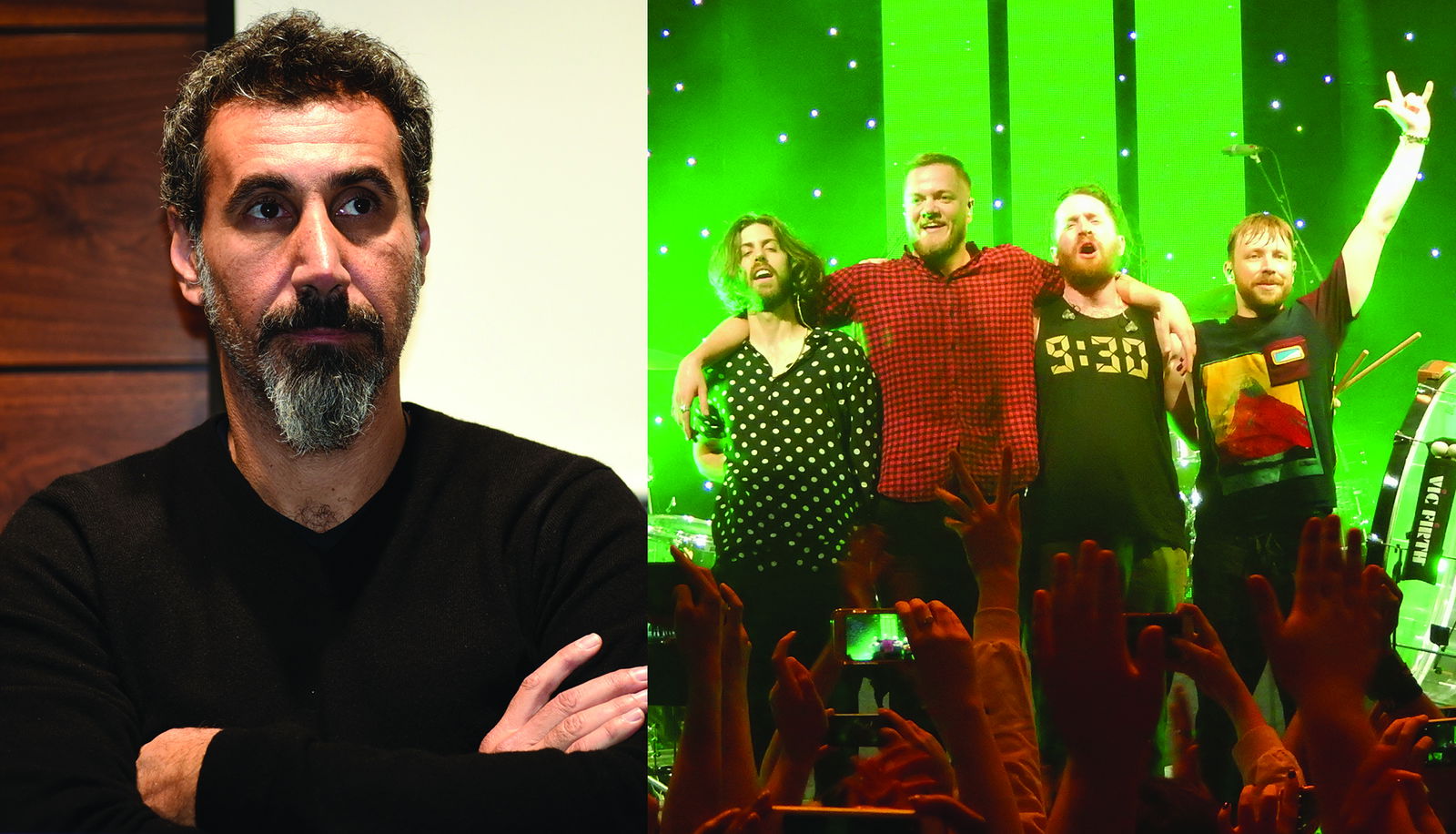 Serj Tankian and Imagine Dragons, 2017 (Wikimedia Commons)
Serj Tankian, frontman of the renowned Armenian-American heavy metal band System of a Down, publicly criticized Imagine Dragons for their planned concert in Baku, Azerbaijan on September 2, 2023, with which the band eventually did follow through. The debate was revived following a Rolling Stone interview in July with Imagine Dragons’ frontman, Dan Reynolds, during which he defended playing the concert in Baku.
Tankian’s initial criticism in 2023 came amid the humanitarian crisis in the dissolved Republic of Artsakh (Nagorno-Karabakh), where the Azerbaijani government conducted a campaign of ethnic cleansing that involved blockading 120,000 Artsakhtsis — including children and the elderly — without food, medicine, internet access, electricity and gas in severe winter weather conditions.
Following the 10-month blockade, Azerbaijan forcibly removed the Artsakh Armenians, thereafter taking control of the area. Over 100,000 Artsakhtsis fled their centuries-old homeland. For the first time in over 2,000 years, Artsakh had no Armenians.
The situation was — and remains — dire, with many international organizations officially speaking out in support of the Armenian population. This includes the Lemkin Institute for Genocide Prevention and Human Rights Watch, among others.
Imagine Dragons, a globally successful pop-rock band with over 74 billion streams, numerous platinum records and a multitude of music awards, including a Grammy award, was urged by Tankian to reconsider their performance.
In his original public message on Instagram in 2023, Tankian wrote that he “was sure they were unaware that Azerbaijan’s petro-oligarchic dictatorial regime was starving 120k people in Nagorno-Karabagh which is now being called a genocide by the former prosecutor of the International Criminal Court, Luis Moreno Ocampo.”
He stated that he attempted to reach out to Imagine Dragons through their representatives, sending them a “kind letter urging them to reconsider playing their show in Azerbaijan as it would help whitewash the dictatorial regime’s image there.” Tankian even went on to include various informational articles, including one by Amnesty International.
Tankian said he was told that the band had worked with Amnesty in the past. This is true, as the band was a headliner for Amnesty International’s 2014 “Bringing Human Rights Home” concert in New York. The human rights organization is a staunch critic of Azerbaijan and its President Ilham Aliyev, having highlighted the blockade, the lack of journalists’ rights and other human rights abuses.
Imagine Dragons did not respond to Tankian’s letter, prompting him to go public with his concerns. He continued, writing:
As the humanitarian crisis worsens in Nagorno-Karabagh with starvation already being recorded, I am forced to publicize this letter and their disregard for this humanitarian catastrophe. Maybe they felt they had a legal liability to play the show, maybe they just don’t care. My whole life I have been an advocate for genocide recognition and have always said there has to be a price to pay for genocidal regimes or deniers. Another genocide is looming by Azerbaijan and while this happens they get to enjoy an American band from LV. F**k that!
That’s not right.
Go to my profile to sign a petition to the band on change.org if you care to sign and you can see my letter to the band on my Facebook page.
Thanks for reading. Serj
The petition Tankian referenced presently has 19,421 signatures, but was left unacknowledged by Imagine Dragons, who did play their show as originally planned.
Tankian went on to interview with Metal Hammer magazine, where he stated that although he is not one to tell bands where or where not to play, there are certain conditions under which he must draw the line: “When there’s a government that’s about to commit ethnic cleansing, when Azerbaijan was starving the 120,000 Armenians in Nagorno-Karabakh, and not allowing any food or medicine in…you know, as an artist, if I found that out, there is no f***ing way I could have gone and played that show. But some artists do. And I don’t know what to say about those artists. I don’t respect them as human beings. F**k their art, they’re not good human beings, as far as I’m concerned.”
He went on to state that he has “zero respect for those guys” for playing the show, and that it is not about his ego but about making a positive change.
He continued:
I wanted those guys to know that what they’re about to do is going to have bad repercussions. I was warning them for their own sake, for their own morality.
I’ve been warning different organizations against using Azerbaijan as a venue because, again, if you allow them to have international links in a way where they feel like they’re legitimate, they’re going to continue their bad behaviour.
You have a dictator who is doing ethnic cleansing, and he’s getting more contracts, Formula 1 racing and rock shows, then he’s going to think that it’s okay to kill people. That’s not okay. So you’ve got to break that link, you’ve got to let people know.
On July 2 this year, Rolling Stone released an interview with Reynolds. The magazine asked him about the widespread criticism Imagine Dragons received for their concert in Azerbaijan, as well as in Israel. He said that he does not believe in depriving fans who want to see them play because of their leaders and governments’ actions. He called it “a really slippery slope,” stating that there are corrupt leaders and warmongers everywhere. “Where do you draw the line?” he asked.
Rolling Stone specifically asked Reynolds about Tankian’s statement that he didn’t “respect them as human beings” for playing in Azerbaijan, to which he gave the same general response: “I think I just said it. It’s a slippery slope, and I’m never going to deprive our fans of playing for them.”
It is important to note that Imagine Dragons canceled their shows in Kiev and Moscow, posting a since-deleted image of the Ukrainian flag on Instagram with the accompanying caption, “In light of recent events, we’re sad to announce our Russia and Ukraine shows are cancelled until further notice. Our thoughts are with Ukraine and all others suffering from this needless war.”
The band also took on the role of ambassadors for humanitarian organization UNITED24, a Ukrainian government-run fundraising platform to raise money for Ukraine in the Russo-Ukrainian War. They have worked alongside Ukraine’s First Lady Olena Zelenska on a fundraiser for ambulance supplies.
In a statement, Reynolds said, “We love the people of Ukraine and want to help in any way possible. Injustices like this can only be conquered when people around the world come together. We stand by the beautiful people of Ukraine and their courageous leader President Zelensky. We will work with UNITED24 and local leaders to continually find ways to raise awareness and funds for the people until this unjust war ends. We look forward to the day when we can play a concert again in Kyiv and celebrate freedom, life and music with the resilient and strong people of Ukraine.”
The band even removed their discography from the Russian market. As it turns out, this “slippery slope” that Reynolds mentioned is a selective one. While he celebrates people coming together to conquer injustices in the case of Ukraine, that very same idea is not relevant — or, as implied, precarious or unfair — to other situations around the world.
Tankian was quick to respond to Reynolds’ Rolling Stone interview on July 5 on social media, writing:
Dan Reynolds stated: “I don’t believe in depriving our fans who want to see us play because of the acts of their leaders and their governments, I think that’s a really slippery slope. I think the second you start to do that, there’s corrupt leaders and warmongers all over the world, and where do you draw the line?”
Respectfully, I draw the line at ethnic cleansing and genocide. Azerbaijan’s dictatorship with popular support was already into a 9-month starvation blockade of Nagorno-Karabagh qualified as genocide by former @icc prosecutor @luismorenoocampo when they decided to play Baku. Would they play in Nazi Germany? Why don’t they want to play in Russia? Because it’s not popular?
They support Ukraine but not Armenians of Artsakh? The only “slippery slope” is the farce moral equivalency at the heart of this hypocritical attitude. I have nothing against this guy nor his band. I just hate artists being taken advantage of to whitewash genocidal dictatorships.
Reynolds and other members from Imagine Dragons have not responded to this statement, but it is evident where their priorities lie. While they publicly denounce their Russian fans (arguably “depriving” fans of their music, in Reynolds’ words) and embrace Ukraine, going above and beyond for the country in terms of fundraisers and other aforementioned steps, that same train of thought is not applicable in the case of Azerbaijan, Artsakh and Armenia.
Rolling Stone Australia covered Tankian’s response to Reynold’s interview on July 8. According to the article, a representative for Imagine Dragons did not immediately respond to the magazine’s request for comment.
Whether the band will properly address Tankian’s concerns — in line with their activism for Ukraine — remains to be seen, but this public debate within the music industry has undoubtedly brought global attention to artists’ responsibilities in the face of human rights abuses.
Author information
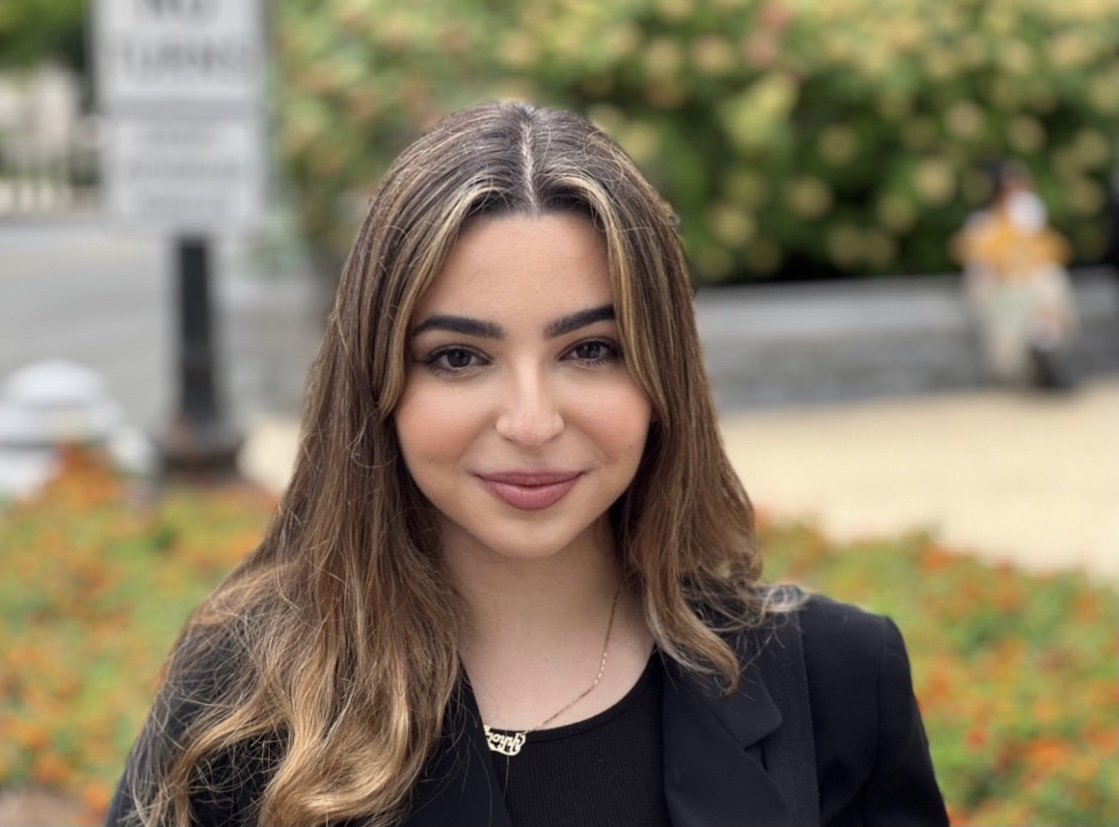
Melody Seraydarian
Melody Seraydarian is a journalist and undergraduate student at the University of California, Berkeley, pursuing a degree in Media Studies with a concentration in media, law and policy. Her column, “Hye Key,” covers politics, culture and everything in between from a Gen-Z perspective. She is from Los Angeles, California and is an active member of her local Armenian community.
|
The post Serj Tankian criticizes Imagine Dragons’ performance in Azerbaijan, cites country’s human rights abuses appeared first on The Armenian Weekly.
Indeed life is fragile. On Father’s Day, a proud community celebrated with its traditional picnic on church grounds. That evening it lost two dear members to an unspeakable tragedy. Our reaction can only be described as speechless, as an entire community was frozen in shock. Certainly, we have heard of such senseless acts, but it was always a news item far removed from our peaceful existence. We naturally become somewhat ambivalent toward such stories, perhaps evoking momentary human compassion that fades in the absence of personal knowledge. Those in the Armenian parish community of St. Gregory in Indian Orchard and the town of Wilbraham, Massachusetts knew the victims of this devastating tragedy. They were our friends, our relatives, our colleagues and fellow parishioners. They were our family. Sima Setian Pariseau and her son Dylan were not simply names associated with another horrific tragedy. They were people in our lives. They were loved and respected in our community by countless whose lives now contain a huge void.
The Setian family is a fourth generation founding family of the St. Gregory parish. Sima’s grandfather Nishan was an original member who worked with my grandfather to build the sanctuary in 1934. Her father Harry has been an iconic contributor to the church for his entire life and a personal mentor who I deeply respect. Her mom Liz has been a mainstay of the choir and church events since her marriage to Harry. I taught all three Setian children in Sunday School: Steve, Deacon Bedros and Sima. Sima was named after her morkouyr (mother’s sister), who was her grandmother’s sister and also my aunt from marriage. This bound the Setian and Piligian families together for eternity. Sima as a high school student was the teenage version of what she became as an adult. She was your best friend who loved life and was devoted to things she believed in. Sima was always an important part of the Armenian community, as she was a participant in Sunday School, Camp Haiastan and eventually became a leader in parish life. People who knew her always described her in a similar manner at all phases of her life…loyal, devoted, kind and caring.
Sima is remembered as someone defined by her family, her faith and her friends. She was the mother of two wonderful children, as reflected in their personable and caring character. Dylan grew up in the church with his sister Sophie and developed into a bright, personable and respectful young man. On the day of the tragedy, the community was together for the annual Father’s Day picnic. When my wife and I arrived, we were greeted at the food line by servers Sima and Dylan. They were smiling, happy and genuinely interested in seeing you. During the picnic, I was fortunate to talk with Dylan about his career and his life. He had established himself as a research assistant in the biotech/pharmaceutical industry, having worked for companies such as Moderna. I was so impressed with his enthusiasm, engaging personality and politeness. Sophie lives in San Diego and is very close to her family. I can see Sima in both children.
 Sima Setian Pariseau and Dylan Pariseau at the St. Gregory Father’s Day picnic, June 16, 2024
This past spring the parish celebrated the 90th anniversary of its founding. I had the opportunity to work with the committee, and it was so gratifying to see many former students in leadership positions in the parish. I was struck by the universal respect everyone had for Sima. It was clear she was deeply loved and admired by her peers. Her contributions were always impactful, because she was honest, direct, humble and deeply committed. The committee was not simply working on an activity; they truly enjoyed each other’s company. The most important experience in community life is when God’s work is accomplished in a joyful atmosphere. That was the value that Sima brought to her interests.
We should only speak of Sima and Dylan in the past tense when referring to the end of their earthly lives. We believe that they are in paradise in God’s heavenly kingdom, where all believers in our Lord Jesus Christ will be reunited one day. Sima and Dylan’s lives on earth ended tragically, but they are now resting in God’s kingdom, free of the challenges of earthly life. The raw pain of their loss, however, continues for their family, friends and community. How does a community handle such grief? What direction should it take? How do we move on? These are not simple questions, and there are no easy answers, as they relate to the very essence of human existence and the depth of our souls.
The answer for comfort and healing lies in our sense of community and faith. Community can be described as a fellowship with others who share common values and purpose. If we add “Armenian Christian” as descriptors to the term “community,” we begin to understand that, during the initial stage of grief, our communal life is a critical factor. Initially, the senseless nature of their passing brought on an emptiness and shock that required solitude. We discovered quickly that our grief is shared by others in our community, and our interactions have healing power. The Sunday after their deaths, prior to the funerals, the parish sponsored a special gathering of Badarak and fellowship to bring a hurting community together. It was painful, but a beautiful communion of love. They have planned a community grief counseling session with an Armenian priest licensed in this work. The unfiltered emotion of our collective loss can only be healed through our faith. Our Lord Jesus Christ told us in Matthew 18:20 that “whenever two or three are gathered in my name, I am there.” This is the basis of communal worship and fellowship. We can pray alone, but we worship together. We pray for the souls of Sima and Dylan, knowing through our faith that they are at peace in God’s kingdom. We feel the pain of our loss and know that healing may begin only through the mystical power of the Holy Spirit. Our prayers are answered through the Holy Spirit.
Someday we will all be in the past tense, but their spirit, values and inspiring behavior are alive. They reside in the hearts of all who love and respect them. Every day we are inspired by them or do something to honor them. They hold an eternal and special place in our hearts.
I would like to share a small act of that power that recently brought me to tears. There is a member of the St. Gregory community who was a pillar of the church who left several years ago after an unfortunate conflict. He was close to Sima’s father for decades and has remained so but stopped going to the church and its sponsored events. He is also my friend, and over the years many of us have encouraged him to end the pain with forgiveness and return to the community. Despite the efforts of many, the estrangement continued. Everyone reacts to grief in different ways, and some are touched by the Holy Spirit. Last week, I received a call from this individual. He wanted me to know that as he has struggled with his grief, he decided that it was important to forgive and attended Badarak for the previous two weeks. I was stunned with joy by his announcement and felt the spirit of Sima in his voice. This is why we only speak of Sima and Dylan in the past tense in terms of their earthly lives. Someday we will all be in the past tense, but their spirit, values and inspiring behavior are alive. They reside in the hearts of all who love and respect them. Every day we are inspired by them or do something to honor them. They hold an eternal and special place in our hearts.
Sometimes, in the short term, the most important support a community can offer to the family is to simply be there for them. It may be a visit, a hug or a phone call to let them know they will never be alone. Beyond immediate support, which we tend to excel at, there is the question of the direction of the community. When community pillars are taken from us suddenly, it can either create an atmosphere of despair or inspire a community to new heights. Sima and Dylan would want the latter. We often hear that we should do something to honor someone’s memory, to the point that it sounds like a cliche. For all who knew Sima and Dylan, their love for the church community was obvious and endearing. There will be an appropriate time when activities will be sponsored that directly honor them. I would ask those who loved and respected them to consider some level of self-reflection on what we can do to fill the void left by our dear Sima and Dylan. For those who were close colleagues, they may consider how to carry on what Sima loved in her parish. Others who have drifted from community life but have established roots should think of how to re-engage in community life, inspired by the values that Sima and Dylan expressed. Go to church to pray for their souls and for the Holy Spirit to comfort the Setian and Pariseau families. We should also re-dedicate ourselves to their work and encourage others to come home to the parish. There is a time to mourn and grieve with dignity and respect. There will always be a hole in our hearts with this tragic loss, but we repair the hole by dedicating ourselves to their values.
When the 90th anniversary planning group was meeting between February and April, Sima was so happy with her sense of community. Her life was full of caring for others, but her community was always important. It was not a task but a labor of love. She is a great example of how to do God’s work, not out of a sense of obligation but with joy. When I saw Dylan serving the kebob dinners at the picnic, his happiness to contribute was obvious. We should all follow their examples. This is not a time to be paralyzed by fear and despair but to overcome challenges inspired by their humble and loving examples. They defined community life, and now we must carry that value forward. Asdvatz hokin louysavoreh. The greatest legacy is to be remembered. May we always be inspired by our Sima and Dylan.
Author information
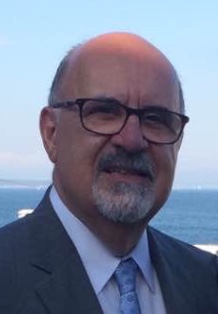
Stepan Piligian
Columnist
Stepan was raised in the Armenian community of Indian Orchard, MA at the St. Gregory Parish. A former member of the AYF Central Executive and the Eastern Prelacy Executive Council, he also served many years as a delegate to the Eastern Diocesan Assembly. Currently , he serves as a member of the board and executive committee of the National Association for Armenian Studies and Research (NAASR). He also serves on the board of the Armenian Heritage Foundation. Stepan is a retired executive in the computer storage industry and resides in the Boston area with his wife Susan. He has spent many years as a volunteer teacher of Armenian history and contemporary issues to the young generation and adults at schools, camps and churches. His interests include the Armenian diaspora, Armenia, sports and reading.
|
The post What should we do as a community when the unfathomable happens? appeared first on The Armenian Weekly.