
Turkey continues to ban, without any substantiation, Armenia-registered planes from entering its airspace.
Day: July 10, 2024
A court in the United Arab Emirates has handed life sentences to 43 activists after finding them guilty of terror offences, the BBC reports.
State media said the Abu Dhabi Federal Court of Appeal convicted the defendants of “creating a terrorist organisation”.
United Nations experts and human rights groups have severely criticised the mass trial.
Human Rights Watch (HRW) said more than 80 human rights defenders and political dissidents – known as the “UAE 84” – were put on trial.
Last January, the UAE’s prosecutor general referred the defendants to the Abu Dhabi Federal Court of Appeal on charges of “establishing another clandestine organisation for the purpose of committing acts of violence and terrorism on UAE soil” known as the “Justice and Dignity Committee”.
He said most of the defendants were members of the Muslim Brotherhood, an Islamist movement that has been proscribed as a terrorist organisation in the UAE since 2014. Its local affiliate, the al-Islah party, is also banned.
According to the official WAM news agency, on Wednesday the Abu Dhabi Federal Court of Appeal “sentenced 43 defendants to life imprisonment for the crime of creating, establishing, and managing a terrorist organisation”.
In addition to the 43 life sentences handed out, 10 other defendants were jailed for 10 to 15 years in prison on the charges of “co-operating with al-Islah” and money laundering, WAM said.
One defendant was acquitted and 24 cases were ruled inadmissible, it added.
The bulk of the defendants have been in prison for more than a decade after they were jailed as part of the “UAE 94” trial in 2013, according to HRW and Amnesty International.
Many had already completed their sentences.
But UAE authorities said the latest charges were “materially distinct” from those brought in 2013, which did not include accusations of financing a “terrorist organisation”, AFP news agency reported.
According to Amnesty International, the indictment, charges, defence lawyers and names of defendants were “kept secret by the government”.
It said details were only known through “leaks”.
HRW identified three of those sentenced to life in prison were Nasser bin Ghaith, Abdulsalam Darwish al-Marzouqi and Sultan Bin Kayed al-Qasimi. Prominent activist Ahmed Mansoor was among the defendants, it added.
Reacting to the sentencings, Amnesty International’s Devin Kenney urged the UAE to “urgently revoke this unlawful verdict” and called on those sentenced to be released.
“The trial has been a shameless parody of justice and violated multiple fundamental principles of law, including the principle that you cannot try the same person twice for the same crime, and the principle that you cannot punish people retroactively under laws that didn’t exist at the time of the alleged offence.”
Khalid Ibrahim of the Gulf Center for Human Rights, on whose board Ahmed Mansoor sits, said: “It is a real tragedy that so many activists and human rights defenders will remain in prison for decades, deprived of watching their children grow up, for no other reason than calling for a better future for Emiratis.”
Despite being one of the wealthiest countries in the Middle East and promoting high-tech sectors and innovations, the UAE remains restrictive on political activity.
The federation of seven emirates, which include Abu Dhabi and Dubai, has no official opposition and bans political parties.
In 2013, almost 70 Islamists were given jail sentences over an alleged plot to overthrow the government.
During a joint announcement with RA Minister of High-Tech Industry Mkhitar Hayrapetyan, US Agency for International Development Director Samantha Power announced a new funding of 5 million US dollars to promote and advance the cooperation between Amazon Web Service and the RA government.
Samantha Power noted that the RA government approaches digitization, technologies, cyber security with dedication, wanting to make their vision related to them a reality.
The IDA director emphasized that Amazon Web Service will help Armenia rapidly develop and digitize its systems by providing training services in the fields of cloud computing and cyber security, helping Armenia build its sovereignty. This initiative from the international business community can bring more interest to Armenia, which will also create new jobs, help families to start earning more money.
According to Power, all this is being done at the right place and at the right time to help Armenia build an effective and lasting democracy that will serve the Armenian people.
RA Minister of High-tech Industry Mkhitar Hayrapetyan, on behalf of the RA government, thanked the US Agency for International Development and the American people for their support to Armenia over the years.
“In a world where technologies are rapidly changing our way of life, digitization has become a driving force in stimulating the economy and innovation and ensuring sustainable development,” said Mkhitar Hayrapetyan, adding that Armenia deeply values the contribution of the USAID, especially services, to the path of digital transformation in the direction of optimization, digitalization, cyber security.
“In order to optimize services and make them citizen-centric, we have started to apply various modern methodologies and with the latter tools we are currently improving the procedures of “importing goods” and “business registration and protection of rights” and other procedures. As a result, we will have fully digitized services that will be available for citizens on the national service delivery platform.
A significant achievement of our joint work was the development of a prototype of the mobile version of the service delivery platform. This innovation will bring services closer to our citizens, providing access to vital services anytime anywhere.”
In his speech, Mkhitar Hayrapetyan also referred to the “Cloud First” policy recently adopted by the RA government, which laid a legal basis for the development of advanced cloud infrastructures. The minister assuredly noted that Armenia will also cooperate with American partners in this matter to ensure the development of capacities in the public and private sector in order to switch to cloud technologies.
Concluding his speech, Mkhitar Hayrapetyan emphasized the importance of partnership with the United States in promoting technological innovations in Armenia and ensuring cyber security for the benefit of a more resilient and technologically developed Armenia.

Georgia’s Foreign Minister Ilia Darchiashvili went into damage-control mode in Washington after the United States rebuked Tbilisi by indefinitely postponing joint military maneuvers with a Georgian contingent, citing recent statements and actions by the Georgian government that are incompatible with Western values.
Darchiashvili traveled to Washington to participate in NATO’s annual summit, which began July 9. He met with the NATO Secretary General’s Special Representative for the Caucasus and Central Asia, Javier Colomina, on the sidelines of the meeting to discuss Georgia’s Euro-Atlantic integration prospects.
The Georgian Foreign Ministry proceeded to issue a statement touting Darchiashvili’s meeting with Colomina as evidence that Georgia “has always been a reliable partner of the alliance and has made a significant contribution to the strengthening of Euro-Atlantic security.”
The statement also noted “the progress of Georgia on the path of Euro-Atlantic integration, including the strengthening of the country’s defense capabilities.”
Progress is not a word that US officials are using when describing Georgia’s relations with Western political and security institutions.
The Pentagon demonstrated its displeasure with the Georgian government’s recent policy actions, including the adoption of illiberal legislation and the awarding of a contract to develop a strategic seaport to a Chinese consortium, by effectively canceling Exercise Noble Partner, originally scheduled for July 25-August 6. Washington has determined that this is an “inappropriate time to hold a large-scale military exercise in Georgia,” according to the Pentagon. The decision came as part of a broad review of bilateral relations that began in response to the Georgian Dream government’s geopolitical shift away from the West.
“On May 23, the Secretary [of State Antony Blinken] announced a comprehensive review of bilateral cooperation between the United States and Georgia due to the actions and statements of the ruling party,” a State Department spokesperson said in response to a query from Eurasianet. “It is an unfortunate development, but one driven by the current situation.”
Helping to fuel Washington’s irritation have been unsubstantiated claims by Georgian Prime Minister Irakli Kobakhidze that the United States was working to topple his government and use Georgia to open “a second front” against Russia.
Darchiashvili’s meeting appeared to do little to ease tension between Georgia and the West. Colomina‘s account of the meeting stuck to generalities. He mentioned the two sides discussed the current status of the NATO-Georgia partnership, including the 10th anniversary of the Substantial NATO-Georgia Package, as well as regional developments. The package was adopted in 2014 and was aimed at increasing the interoperability of Georgia’s defense capabilities with those of NATO members. The conversation also touched on the security environment in the region and Russia’s war in Ukraine.
Darchiashvili will take part in a meeting of foreign ministers of NATO partner countries scheduled for July 10. Armenian Foreign Minister Ararat Mirzoyan is also expected to attend.
While Georgia is testing the West’s patience, Armenia appears to be the new darling of the Caucasus in the eyes of the United States and European Union. Later in July, Armenian troops will hold joint military maneuvers with US Army and National Guard personnel, dubbed Eagle Partner 24. The joint exercises with American forces come shortly after Armenian Prime Minister Nikol Pashinyan confirmed that Yerevan intended to withdraw from the Moscow-led Collective Security Treaty Organization.
On the sidelines of the summit, Mirzoyan, whose presence in Washington was intended as a strong signal of rapprochement with the West, met with Blinken and discussed the bilateral agenda and regional issues.
The US capital is hosting the NATO summit for the first time in 25 years. In a speech to attendees, US President Joseph Biden described NATO as “more powerful than ever,” and announced a new military aid package for Ukraine intended to bolster the country’s defenses against Russian missile attacks.
What is Project 2025? What to know about the conservative blueprint for a second Trump administration. https://t.co/RcHNUhSijh
— CBS News (@CBSNews) July 10, 2024

Tax revenues in Armenia
Over the past five years, Armenia’s state budget has been significantly bolstered by tax revenues, which have increased annually. Following the 2018 “Velvet Revolution,” the shadow economy shrank, and companies began paying taxes voluntarily.
However, in the early months of this year, the amount of tax revenue has decreased. What is the reason for this, and what are experts predicting?
- Stagnant economic ties in the South Caucasus: Three stories
- Armenia’s 2024 budget characterized by “unprecedented reserve fund”
- “Armenia’s economic growth potential is not infinite.” Opinion
Businessman urges to pay taxes
Gnel Karapetyan has opened three kiosks in Yerevan where fresh fruit drinks are prepared for passersby. He describes himself as an “honest and responsible taxpayer.” Despite occasional issues with the tax authorities, this does not affect his approach to work:
“For several months, we couldn’t issue receipts to our customers due to technical problems with the cash register. We have already paid a fine for this. But I have never evaded taxes. All my employees are registered for the actual salary they receive, and all income is fully declared.”
Gnel lived in Europe for five years and has a principled attitude towards matters such as being a good citizen, a responsible taxpayer, and someone who cares about the environment:
“If I paid taxes there, why shouldn’t I pay them in Armenia? It is thanks to the taxes I pay that my children can attend public school and kindergarten for free and receive medical care at the clinic.”
Walking through the streets of Yerevan, he notices businesses offering “entertainment services” like trampolines and children’s car rentals. He is confident that these businesses are not registered and do not pay taxes.
“I don’t think taxing these services would drastically change anything. Currently, the majority of the budget is covered by construction and the mining industry. But for the future, it is important to change people’s attitudes so that they do not avoid their obligations to the state and pay taxes. This also makes you a more demanding citizen. You want to know where the taxes you pay are going,” he says.

Based on the tax revenue collected during the first months of 2024, it has become evident that the government may not fully meet its tax revenue plan. Rustam Badasyan, head of the state Revenue Committee, informed parliamentarians of difficulties in achieving the plan. Finance minister Vahe Hovhannisyan did not rule out the possibility that expenditure cuts might be necessary as a result.
The tax plan for 2024 amounts to 2 trillion 613 billion drams (approximately $6.8 billion). The Ministry of Finance forecasts that this amount may decrease by 60 billion drams (about $155.8 million).
Government officials do not rule out that the situation may change by the end of the year, potentially allowing the tax plan to be met. However, experts are skeptical. They argue that key economic sectors lack the tax-generating potential needed to make the government’s plan realistic.
According to economist Armen Ktoyan of the National Center for Public Policy Research, tax revenue shortfall is expected to be at least four to five percent.
In his opinion, the forecasts for tax revenues did not account for the structural peculiarities of the economy and its ability to generate tax revenues in key growth-driving sectors:
“Construction and operations involving precious metals are the main generators of economic activity. Taxes primarily come from apartment sales, which do not coincide chronologically with the actual construction process. As a result, although construction shows growth, it does not yet lead to an adequate increase in the tax base.”
Regarding the import, processing, and re-export of precious metals, Ktoyan notes that while this activity significantly enhances foreign trade turnover and economic activity in related sectors, its contribution to tax obligations is modest.
“The export of automobiles from Armenia to EAEU countries has significantly decreased since last year. The impact of restrictions became noticeable this year, significantly affecting VAT revenue shortfall,” Ktoyan adds.
Armenia is a member of the Eurasian Economic Union (EAEU), comprising Russia, Belarus, Kazakhstan, and Kyrgyzstan. Sanctions against Russia since 2022 have sharply increased the re-export of automobiles from Armenia. Armenia joined the EAEU in 2014, with customs duties for importing cars adopted within the EAEU affecting Armenia from 2020. This initially allowed Armenian citizens to import and clear cars cheaper than in other EAEU countries, but since 2022, the customs clearance process in Armenia has aligned with Russia’s regulations. Moreover, as of April 2024, taxes and fees on automobile imports into Russia from EAEU countries, including Armenia, have increased.

Opening Armenia’s second wind
Armenia’s economy, as part of the Eurasian Economic Union (EAEU), has been subjected to ‘shock effects’ caused by the Russian-Ukrainian war and continues to be in this state, according to Armen Ktoyan.
In his words, Armenia is becoming a transit country for Russia in every respect. From this perspective, the economy is ‘significantly revitalized.’ However, there is a risk of certain distortions in the economic structure. These operations do not generate the expected taxes, leading to a shortfall in tax revenues. This is explained by the fact that they occur within the common market of goods, services, and capital of the EAEU, of which Armenia is a member.
The expert sees the solution in diversifying exports and developing export directions. He emphasizes the importance of innovation, economic modernization, and efficient resource utilization.
Economist Vilen Khachatryan states that the slight fluctuation seen earlier this year cannot seriously impact the economy and can be regulated through internal debt:
‘Over the past years, our economy has reached a state where it can easily withstand such minor shocks. We can manage deviations of up to 10 percent without harming the economy. We currently have all the tools to neutralize risks.’
According to the expert, Armenia may achieve progress in several areas in the near future:
‘Currently, the service sector is a sufficiently active direction with serious potential. I would also note the development of tourism and related infrastructure.’
Khachatryan disagrees with colleagues who predict a decline in the construction sector:
‘There may not be peaks like in previous years, but construction can maintain its development pace.
Unlocking regional communications is also very important for Armenia. Many states are currently interested in regional infrastructure. With effort, Armenia can reap significant dividends.’

What the state spends tax revenues on
Given Armenia’s numerous security challenges, taxes are an especially crucial factor as they help the government fulfill its obligations. Additionally, funds are needed for a long-term and costly program—providing housing and social support to refugees from Nagorno-Karabakh. Therefore, a reduction in tax revenues could lead to serious problems.
Is the state prepared for them? Experts hesitate to provide a definitive answer. In any case, they speak of the necessity for risky and radical decisions. They argue that the logic of economic development requires a change in economic priorities.
Currently, priorities are seen in construction, information technology, and services. Agriculture has been largely neglected. Economists believe this sector could develop if, for example, farmers were provided with cheap credits to implement innovations. Looking at larger-scale transformations, they suggest considering military industry and ore processing.
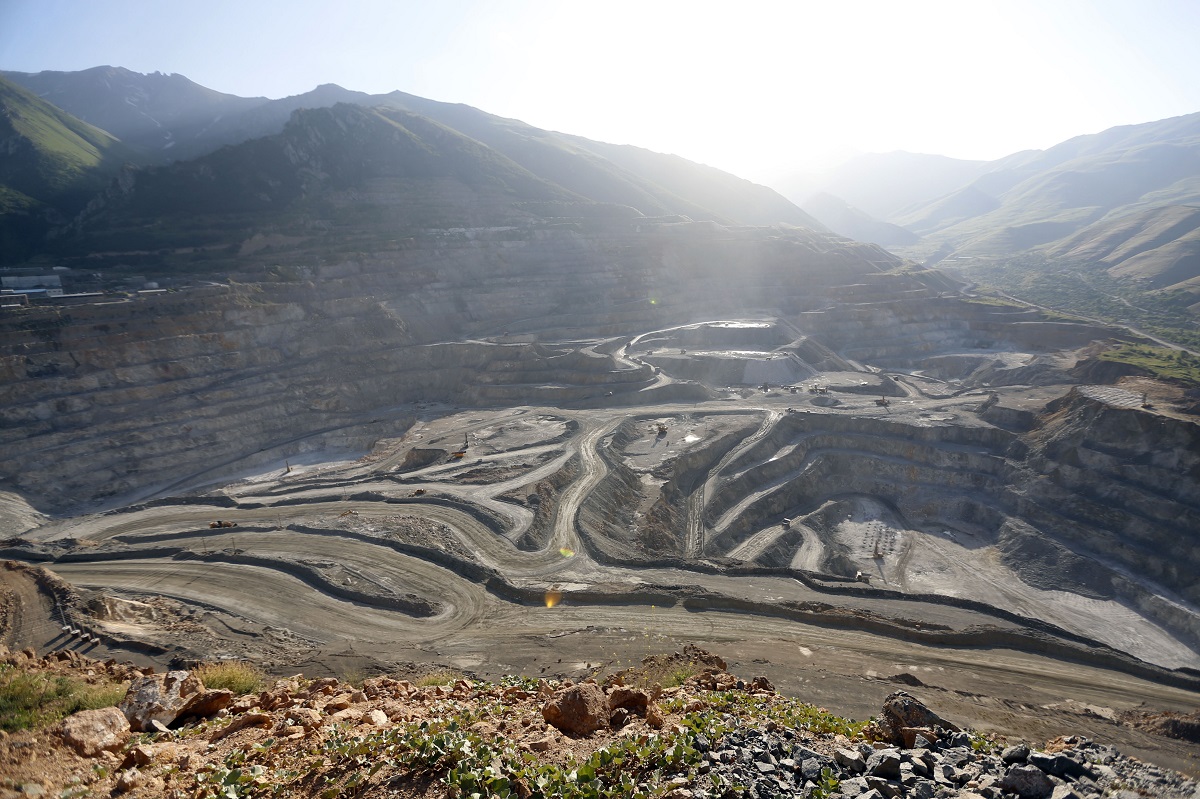
Tax revenues in Armenia