
TEHRAN, Jul. 09 (MNA) – Kremlin spokesman Dmitry Peskov says Russia hopes to continue close cooperation and allied relations with Iran.
Day: July 9, 2024
Azerbaijan Army servicemen arrive in Kazakhstan to participate in “Birlestik-2024” exercise – VIDEO

“Birlestik-2024” operational-tactical command-staff exercise will be held from July 11 on Oymasha training ground and Cape Tokmak in the Caspian Sea aquatorium of Kazakhstan under the joint plan signed between the Defense Ministries of Azerbaijan, Kazakhstan, Kyrgyzstan, Tajikistan and Uzbekistan.
A group of servicemen of commando units of Land Forces, Parachute descent and search-rescue service and Su-25 aircraft of the Air Force, as well as patrol and descent ships of the Navy representing Azerbaijan arrived in Kazakhstan.
It is noteworthy that, joint operational-tactical command-staff exercise will continue until July 17.
Azerbaijan Army servicemen arrive in Kazakhstan to participate in “Birlestik-2024” exercise – VIDEO
“Birləşdik – 2024” təlimində iştirak edəcək hərbçilərimiz Qazaxıstandadır – VİDEO
Azərbaycan, Qazaxıstan, Qırğızıstan, Tacikistan və Özbəkistan respublikalarının Müdafiə nazirlikləri arasında imzalanmış birgə plana əsasən, Qazaxıstan Respublikasının “Oymaşa” təlim poliqonu və Xəzər dənizinin akvatoriyasında yerləşən Tokmak burnunda iyulun 11-dən etibarən “Birləşdik – 2024” əməliyyat-taktiki komanda-qərargah təlimi keçiriləcək.
Təlimdə ölkəmizi təmsil edəcək Quru Qoşunlarının komando bölmələrinin bir qrup hərbi qulluqçusu, Hərbi Hava Qüvvələrinin paraşüt-desant və axtarış-xilasetmə qrupu, Su-25 təyyarələri, eləcə də Hərbi Dəniz Qüvvələrinin gözətçi və desant gəmiləri Qazaxıstandadır.
Qeyd edək ki, birgə əməliyyat-taktiki komanda-qərargah təlimi iyulun 17-dək davam edəcək.
“Birləşdik – 2024” təlimində iştirak edəcək hərbçilərimiz Qazaxıstandadır – VİDEO
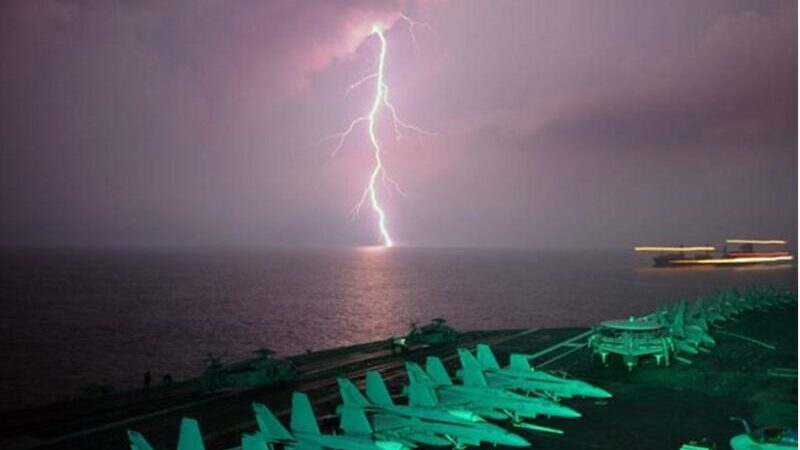
By Elliot Silverberg
(FPRI) — As war rages in Ukraine, the logical step for the United States has been to revitalize its security cooperation with NATO. This is the project that President Joe Biden’s administration has skillfully orchestrated since February 2022.
But waiting in the wings of the Euro-Atlantic alliance—and requiring renewed clarity and focus—is America’s pacing threat of China.
This is the belief which many in Washington harbor—notably among certain quarters of the current GOP foreign policy establishment and even, to a lesser extent, a growing number of Democratic elites—that China, not Russia, is the greater challenge to Western interests, and consequently, that Asia, not Europe, should be America’s primary focus.
Theirs is a cogent assessment, one backed by significant assertions of Chinese power and mounting evidence of Beijing’s aggressive intent. Exhibit A should benew British intelligence claimingthat “lethal aid is now, or will be, flowing from China to Russia and into Ukraine,” and US confirmation that China is already providing weapons components to Russia.
This community of so-called Asia “prioritizers” is here to stay. Though sometimes described pejoratively as Asia First-ers, they carry broad bipartisan appeal in Washington. Biden’s ownNational Defense Strategy, released eight months after Russia’s full-scale invasion of Ukraine, distinguishes between Moscow as presenting “serious, continuing risks in key areas,” and Beijing’s actions—from gunboat diplomacy in the South China Sea, to debt-trap diplomacy across Southeast Asia, Latin America, and Africa—as representing perhaps “[t]he most comprehensive and serious challenge to US national security.” Furthermore, the Biden administration is staffed by an essentialfigurein theAsia prioritizerscamp: Kurt Campbell, a key architect of former President Barack Obama’spivot to Asiawho most recently served as the Indo-Pacific coordinator on the Biden National Security Council. Campbell’s elevation to the role of US Deputy Secretary of State earlier this February affirms the gravity of Washington’s shifting focus from the Middle East and Europe to the Indo-Pacific.
Whoever occupies the White House in January 2025, the Asia First outlook will continue to permeate US priorities in Europe and most certainly determine the future of Ukraine. Elbridge Colby, another prominent Asia prioritizer, who oversaw development of former President Donald Trump’s 2018 National Defense Strategy and whose name has been floated as a possible candidate for a crucial role in a future Republican administration, has been typecast as a critic of unconditional US support for Ukraine. Colby’srecent commentsurging an imminent shift to deterring China around Taiwan should not be construed to signal any rationalization of a sudden decision to abandon Ukraine, but to spur a serious dialogue with European allies about building a more robust and self-sufficient Euro-Atlantic alliance essential for long-term stability against Russian aggression. Therefore, in the spirit of jumpstarting the kind of frank discussion that Colby’s remarks may be intended to elicit, Atlanticists from Brussels to London should set aside their fears of the Asia prioritizers to seek constructive, practical terms with them, regardless of who wins the next US election in November.
First, Atlanticists must recognize that Asia prioritizers are not weak isolationists, and should not be dismissed as such, an argument recentlyarticulatedby my colleague Mohammed Soliman. Rather, Asia prioritizers believe that the Indo-Pacific matters most for long-term US interests and thus, that the US Congress should not let Ukraine aid get in the way of enhanced support for Taiwan, that lawmakers should spare no expense for floundering efforts like thePacific Deterrence Initiative, and that senior officials should not let events in Europe dictate preparations for the long-term strategic relationship-building and partner capability integration needed in Washington’s priority theater. In short, Asia prioritizers like Solimanrejectthe premise of merging the Indo-Pacific and Europe as one unified theater because of thedivergent interestsandresource trade-offsnecessary––not to mention the decisive role of a multifarious group of smaller powers caught in the middle––for such an effort to be successful.
Second, Atlanticists must learn to appreciate that the United States cannot in the long-run afford to continue bankrolling NATO defense at the expense of Indo-Pacific security. Asia prioritizers, like most Americans, acknowledge that Russia’s violations of Ukrainian sovereignty have been unprovoked, brutal, and criminal. They support a strong and stable NATO capable of fully deterring Moscow from further incursions against European security. But going forward, US defense outlays for NATO must begin to be paired with equivalent or greater US investments in Indo-Pacific security. Consequently, US military aid for Ukraine cannot be expected to underwrite theover 120 billion euros in additional defense spendingthat experts project will be needed for Ukraine’s victory. A significant portion of that difference will need to come from Europe. As European countries increase their contributions to NATO security, US defense budgets should gradually reflect a greater prioritization of the Indo-Pacific. To avoid European frustration with US transactionalism, close coordination to accommodate this new balance of priorities should focus on furthering the concept of a shared Euro-Atlantic dividend from supporting Indo-Pacific security.
Finally, in return for Europe stepping up its NATO support, the United States must more seriously weigh and address the disruptive economic and societal impacts of the war in Ukraine. To date, Europe has borne the brunt of the war’s spillover consequences, which include a refugee crisis, energy shortages, food insecurity, high inflation, and strained social services. The United States has also experienced inflationary pressures, but Europe’s proximity to the conflict and greater dependence on Russian energy has led to more severe and chronic effects. As Europe progresses its military aid for Ukraine and investment in NATO, US policymakers should consider new and innovative ways of helping their European counterparts build economic resilience.
US economic support for Europe may range from energy assistance, in the form of increased exports of US-manufactured natural gas and investments in European energy storage infrastructure, to new economic subsidies and incentives for US businesses to invest in European sustainable energy and other technology projects. Strengthening trade agreements to facilitate smoother, more robust Euro-Atlantic trade flows, reducing tariffs, easing regulatory burdens, and introducing reciprocal exemptions to Buy American and Buy European policies, could also fuel economic growth.
Other novel ideas for building collective resilience may involve investing in European smart cities, transportation, and digital infrastructure––all designed with improvements to Euro-Atlantic quality-of-life in mind. Establishing joint innovation zones for emerging technologies such as AI, quantum computing, and biotechnology––where US and European companies each have much to offer the other––may afford further relief from current economic pressures. Where appropriate, emerging minilateral technology frameworks, such as the US-European Union Trade and Technology Council and the Global AI Safety Summit, should be leveraged to assemble innovative companies from across the Euro-Atlantic to develop new regulatory approaches for harnessing these advanced technologies. More importantly, these initiatives could be used to enhance supply chain security and market stability by strengthening coordination to reduce single-source dependencies for critical technologies and identify potential supply bottlenecks sooner.
Europe is right to worry that Washington’s transition to a primary focus on the Indo-Pacific will not be seamless, or that increased European defense spending may not entirely fill the resultant US-sized gap in NATO expenditures. But as the United States necessarily renews its pivot to the Indo-Pacific, it will be crucial to consider the broader implications for both US and European interests in that region. This shift will not be merely about reallocating limited resources, but about redefining the Euro-Atlantic relationship in a way that acknowledges, prepares for, and invests in the future geostrategic and economic architecture. To overcome the likely political headwinds and budgetary pressures imposed by this rebalancing, Europe’s increased investment in its own defense capabilities will need to be matched by a concerted effort from the United States to buttress the eurozone’s economic resilience. This support can take many forms, but the key will be fostering a more mutually beneficial partnership. With time, once Ukraine reaches a new modus vivendi in Europe, the concept of a shared Euro-Atlantic responsibility for Indo-Pacific security can and must become a cornerstone of combined planning between Washington and Brussels.
- About the author: Elliot Silverberg is a nonresident scholar with the Strategic Technologies and Cyber Security Program at the Middle East Institute
- Source: This article was published by FPRI
By Andrew Chubb
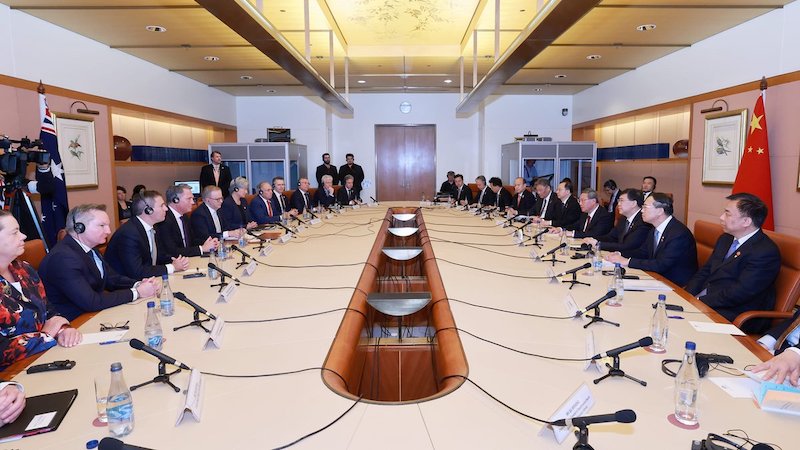
Chinese Premier Li Qiang’s June 2024 tour of Australia was widely viewed as signalling Beijing’s desire to bring an end to years of frozen diplomatic relations, political disputes and economic coercion.
But the fate of Australian writer and businessman Yang Jun, known under his pen name Yang Hengjun, hangs unresolved after the visit — both as an ongoing human tragedy and as an indication of where relations with Australia sit among the priorities of President Xi Jinping’s China.
Since the election of Australian Prime Minister Anthony Albanese in 2022, Beijing has sought to repair ties with Australia, allowing ministerial contact and gradually easing restrictions on Australian exports. Following three years of COVID-19 restrictions, Xi signalled China’s tacticalreprioritisationof economic growth and openness to foreign business in December 2022.
The suspended death sentence dealt to Yang in February 2024 clearly demonstrated that the two key themes of Li’s trip — building foreign relationships and economic growth — remain firmly subordinate to regime security.
Yang’s case contrasts with that of former CGTN host and Australian citizenCheng Lei, who was released in October 2023 after spending three years in a Chinese prison on national security charges. Five months before her release, Albanese publicly demanded ‘proper justice’ for ‘Australians such as Cheng Lei’. But while the improvement in bilateral relations enabled Cheng’s repatriation, the Chinese authorities have only doubled down on Yang’s harsh punishment.
In practice, Yang is likely facing life imprisonment rather than execution, which suggests the suspended death sentence was intended to generate psychological effects. In this regard it succeeded — Yang’s family was ‘shocked and devastatedby this news’, describing it as ‘the extreme end of worst expectations’. Australian Foreign Minister Penny Wong said the Australian government was ‘appalled’.
The particulars of the case are, unsurprisingly, unclear. Deng Yuwen, an associate of Yang and fellow critic of Xi’s government,pointed outshortly after Yang’s arrest in 2019 that he had kept a relatively low public profile for several years prior to his detention.
Yang was once an official in China’s Foreign Ministry but became an outspoken critic of the party-state after he moved to Australia in the late 1990s. His trilogy ofspy novelspublished between 2002 and 2005 depicted the world of Chinese–US espionage and double agents so vividly that many concluded he had worked for China’s Ministry of State Security in the past. This was subsequently confirmed inpublic reporting.
Under the pen name Yang Hengjun, he maintained several blogs through the early 2010s, attracting a substantial following with his trenchant criticism of Beijing’s encouragement of pro-state nationalist activism and increasingly assertive and repressive policy direction. But in more recent years he had reportedly focused more on hisonline shoppingbusiness. Prior to his detention, he had travelled to and from China frequently,apparently believinghe had protection inside China.
While the case will likely remain shrouded in secrecy, the sentencing carries a couple of implications.
One implication is that Chinese concerns about regime security not only trump economic goals but also political relationships. Despite discussion of China’s supposed culturally-inflected emphasis onrelationships over actors, the latter frequently override the former where security threats are perceived.
The imprisonment may indicate increasing concern among Xi Jinping’s security services about its own people. China’s handling of Yang’s case seems designed to telegraph a message to those whowere oncepart of the system and might be contemplating speaking out —return home at your peril.
Ahead of Premier Li’s visit, Albanese said he would raise Yang’s case. The Australian government should redouble its efforts to repatriate Yang by clearly linking therecovery of the bilateral relationshipand trade ties with respect for the human rights of Australian citizens.
Yang’songoing confinement— and the threat it telegraphs to others — violates internationally recognised rights of Australian citizens and residents. Aside from basic freedoms of speech and association, theright to returnto one’s home country is also recognised under international law, including the International Covenant on Civil and Political Rights, which China has signed.
Canberra should make clear that Yang’s treatment is itself an impediment to trade, in part because the broader risks of detention do not solely impact Yang. June 2024pollingfound more than 70 per cent of Australians considered ‘the risk of arbitrary detention’ in China a concern. While Beijing almost certainly views the issue in the short-term context of deterring defections, coercing critics and keeping dissenters out, the fact that Yang was detained while on a business trip is threatening to a wide range of groups — especially among the Chinese-Australian community.
Friends and associates of Yang have urged Canberra to demand he be grantedmedical parole, particularly in light of claims oftorture and deteriorating health. The agonising case of Nobel LaureateLiu Xiaobo, who died of medical neglect in 2017, is a reminder both of the fate that can befall brave Chinese critics when forced to go it alone and of the international reputational costs to Beijing.
- About the author: Andrew Chubb is Senior Lecturer at Lancaster University and a Fellow of the Asia Society’s Center for China Analysis.
- Source: This article was published by East Asia Forum
Въезд в Батуми сильно затруднен с утра до вечера. С утра по вечера, а порой и позже, автомобильные пробки окружают весь город. По данным Google Maps, 8 июля в поселке Тамар наблюдались заторы в течение всего дня. Эта ситуация складывается, когда некоторые запланированные объекты еще строятся, а возведение крупных проектов даже не началось. Кроме того, реализуется […]