
Day: July 8, 2024
The June Surprise: To be jacked up on the Mountain Dew – News Review In 100 Tweets https://t.co/SRosRoKo7s pic.twitter.com/kzo4DwrSwB
— Michael Novakhov (@mikenov) July 8, 2024
Michael Novakhov’s favorite articles on Inoreader

WASHINGTON, July 8 (Reuters) – President Joe Biden refused to abandon his reelection campaign on Monday as he sought to stave off a possible revolt by fellow Democrats who worry the party could lose the White House and Congress in the Nov. 5 U.S. election.

Tweets – The News And Times Review – TheNewsAndTimes.Blogspot.com
белоусов и кадыров – Google Search https://t.co/Y3Z5OyhFWz— Michael Novakhov (@mikenov) July 8, 2024
ВЫ ОБАЛДЕЕТЕ! Андрей Белоусов ПРИЖАЛ этим ВОЛОДИНА И ГОСДУМУ! https://t.co/kEhHUN06tz via @YouTube— Michael Novakhov (@mikenov) July 8, 2024
portable directed energy weapons disguised as the video recording equipment – Google Search https://t.co/rjUGgKQaZh— Michael Novakhov (@mikenov) July 8, 2024
portable directed energy weapons disguised as the video recording equipment – Google Search https://t.co/vAJbU4kRIe – pic.twitter.com/c99r6gDmNt— Michael Novakhov (@mikenov) July 8, 2024
https://t.co/Q0CCItB2YX— Michael Novakhov (@mikenov) July 8, 2024
Was this attributed to the DEW attack? The “first and original”, then followed by retaliations, escalating to the very top?2022 illness – Igor Kostyukov – WOn 25 March 2022, former Ukrainian Minister of Internal Affairs Arsen Avakov claimed that Kostyukov and Russian defence… pic.twitter.com/mjB51HuEvS— Michael Novakhov (@mikenov) July 8, 2024
Зеленский: мы дадим мощный ответ России https://t.co/HTp1ufC5bK— Голос Америки (@GolosAmeriki) July 8, 2024
kostyukov – Google Search https://t.co/e8zKm5mWAJ pic.twitter.com/jNyFgs9k8M— Michael Novakhov (@mikenov) July 8, 2024
Костюков, Путин, Шойгу, Белоусов – Google Search https://t.co/QTZPCMTRjz pic.twitter.com/WzGpM9lQ7Z— Michael Novakhov (@mikenov) July 8, 2024
Костюков, Путин, Шойгу, Белоусов – Google Search https://t.co/QTZPCMTRjz— Michael Novakhov (@mikenov) July 8, 2024
intel cats – Google Search https://t.co/SfWbRrZqGE pic.twitter.com/L267L6XItr— Michael Novakhov (@mikenov) July 8, 2024
https://t.co/IsWBsRGYcJThe Intel Cats do not change their spots. #NewsAndTimes #NT #TNT #News #Times#World #USA #POTUS #DOJ #FBI #CIA #DIA #ODNI#Israel #Mossad #Netanyahu#Ukraine #NewAbwehr #OSINT#Putin #Russia #GRU #Путин, #Россия #SouthCaucasus #Bloggers…— Michael Novakhov (@mikenov) July 8, 2024
The June Surprise Putin And Netanyahu: same cats, same spots: Waiting for Trump-2 and managing it from the heights of the Mountain Dew (pronounced as “JEW”). Ziz points more to Israel than Russia, or does it? Or both! Just like in 2016, but with the early, the June Surprise.… pic.twitter.com/yZETmQAtfC— Michael Novakhov (@mikenov) July 8, 2024
https://t.co/hd9JRihQRRThe June Surprise #NewsAndTimes #NT #TNT #News #Times#World #USA #POTUS #DOJ #FBI #CIA #DIA #ODNI#Israel #Mossad #Netanyahu#Ukraine #NewAbwehr #OSINT#Putin #Russia #GRU #Путин, #Россия #SouthCaucasus #Bloggershttps://t.co/O0SIgLVWzM… pic.twitter.com/0T67Eb3OSI— Michael Novakhov (@mikenov) July 8, 2024
The June Surprise https://t.co/7H34z3Tc6C Putin And Netanyahu: same cats, same spots: Waiting for Trump-2 and managing it from the heights of the Mountain Dew (pronounced as “JEW”). Ziz points more to Israel than Russia, or both. (!!!) Just like in 2016, but with the early, the… pic.twitter.com/vIYIm7MepP— Michael Novakhov (@mikenov) July 8, 2024
To be jacked up on the Mountain Dew … https://t.co/q9RxxSb1wS pic.twitter.com/EzgsozbID0— Michael Novakhov (@mikenov) July 8, 2024
To be jacked up on the Mountain Dew … https://t.co/q9RxxSb1wS pic.twitter.com/N1kY2N7K1X— Michael Novakhov (@mikenov) July 8, 2024
https://t.co/9md6Cws4BbTo be jacked up on the Mountain Dew …#NewsAndTimes #NT #TNT #News #Times#World #USA #POTUS #DOJ #FBI #CIA #DIA #ODNI#Israel #Mossad #Netanyahu#Ukraine #NewAbwehr #OSINT#Putin #Russia #GRU #Путин, #Россия #SouthCaucasus #Bloggers… https://t.co/BDukvEOSzU pic.twitter.com/TRbeJ4z8BU— Michael Novakhov (@mikenov) July 8, 2024
https://t.co/YnUTlc8yWK”Mountain DEW” can be viewed as the TELLING CODE PHRASE to denote the “DEW – Directed Energy Weapon” attack on Biden and the “MOUNTAIN” of the coming future attacks. The multiple references to Biden’s “energy” or “energy level” also point to this… https://t.co/ZrWS7dUiLl— Michael Novakhov (@mikenov) July 8, 2024
RussiaOn March 19, 2024, Burlison voted NAY to House Resolution 149 Condemning the illegal abduction and forcible transfer of children from Ukraine to the Russian Federation. He was one of nine Republicans to do so.[16]-Eric Burlison – Wikipedia https://t.co/xfuks7Lcjm— Michael Novakhov (@mikenov) July 8, 2024
https://t.co/YnUTlc8yWK”Mountain DEW” can be viewed as the TELLING CODE PHRASE to denote the “DEW – Directed Energy Weapon” attack on Biden and the “MOUNTAIN” of the coming future attacks. The reference to Biden’s “energy level” also points to this interpretation. If I were…— Michael Novakhov (@mikenov) July 8, 2024
Also the children’s hospital in Kyiv 🇺🇦 was now heavily damaged during the massive 🇷🇺 missile attack during the night. https://t.co/nVHNdmDfdu— Carl Bildt (@carlbildt) July 8, 2024
❗️Ukraine is initiating an emergency meeting of the UN Security Council following today’s attacks by Russia, announced President Volodymyr #Zelensky.— KyivPost (@KyivPost) July 8, 2024
17 people dead and 41 injured in Kyiv – military administration. pic.twitter.com/z0HhdvjHHU— Anton Gerashchenko (@Gerashchenko_en) July 8, 2024
@GolosAmeriki: RT by @mikenov: Крупномасштабная российская атака на украинские города dlvr.it/T9JjR8
Крупномасштабная российская атака на украинские города https://t.co/e2QjIHoLKl— Голос Америки (@GolosAmeriki) July 8, 2024
A barrage of Russian missiles have hit central Kyiv, severely damaging Ukraine’s main children’s cancer hospital, with authorities reporting multiple deaths https://t.co/I34aJtnEqC pic.twitter.com/ihQDftSXzo— Financial Times (@FT) July 8, 2024
Россия нанесла массированный удар по Украине – погибли свыше 20 человек. Взрывы раздавались в Киеве, Днепре, Кривом Роге и ряде городов Донецкой области. Тревога звучала в Киеве несколько раз, одну из них застала корреспондентка Настоящего Времени pic.twitter.com/fXQNRTUupH— Настоящее Время (@CurrentTimeTv) July 8, 2024
As leaders gather for @NATO’s 75th anniversary, Russia launched 40 missiles across Ukraine. This callous aggression – a total disregard for human life, jeopardizing European & Transatlantic security – is why leaders will make significant security commitments to Ukraine this week. pic.twitter.com/gQZuDsEezU— Ambassador Bridget A. Brink (@USAmbKyiv)…
At least 20 people killed in Ukraine, and Kyiv children’s hospital hit in massive Russian missile attack, officials say https://t.co/9nS3GRCxYD— BBC Breaking News (@BBCBreaking) July 8, 2024
These neurological symptoms are called Havana Syndrome, named after the first reported case in Cuba in 2016. The unexplained symptoms include intense headaches, vertigo, nausea, and a ringing or popping in the ears, followed by confusion and memory loss. https://t.co/NxHDOlJ8zg— 60 Minutes (@60Minutes) July 7, 2024
https://t.co/yGbBQMZOTHDEW attack on Biden?! #NewsAndTimes #NT #TNT #News #Times#World #USA #POTUS #DOJ #FBI #CIA #DIA #ODNI#Israel #Mossad #Netanyahu#Ukraine #NewAbwehr #OSINT#Putin #Russia #GRU #Путин, #Россия #SouthCaucasus #Bloggershttps://t.co/O0SIgLVWzM…— Michael Novakhov (@mikenov) July 8, 2024
The hypothetical (at this point) DEW attack on Biden and the “Debate debacle” of 6.27.24: Was it the Russian “high precision” retaliation for Sevastopol beach attack? Or was it staged this way by Russians, to imply this connection? What will happen next? -“Last week, following… pic.twitter.com/AqFZ8QahNG— Michael Novakhov (@mikenov) July 8, 2024
Киев сейчас под ударами российских ракет. В районе аэропорта Жуляны были слышны взрывы. Мэр украинской столицы Виталий Кличко написал в своем Telegram-канале, что медики и пожарные направлены в Соломенский район Киева. Он также просил жителей не покидать укрытия.Ракеты… pic.twitter.com/4yY6AUgZUU— DW на русском (@dw_russian) July 8, 2024
A major medical study for the government found clear evidence of an injury to the auditory and vestibular system of the brain, starting with the inner ear, where humans perceive sound and sense balance. https://t.co/gNto2PzG8L pic.twitter.com/37WGu04EwP— 60 Minutes (@60Minutes) July 7, 2024
Today in 2020, Homeland Security’s intelligence division submitted a report that Russia’s propaganda network was behind a campaign to smear Joe Biden as having cognitive decline. The intelligence report was blocked by Chad Wolf. https://t.co/B2GLOBM0wt— TrumpFile.org (@TrumpFile) July 7, 2024
https://t.co/9PnhTG15Ra https://t.co/pHZDbogncq— Michael Novakhov (@mikenov) July 8, 2024
‘Sonic attacks’ suffered by US diplomats likely caused by microwave energy, government study says | CNN https://t.co/brMvuoSOoI— Michael Novakhov (@mikenov) July 8, 2024
Russian fascists hit a children’s hospital in Kyiv this morning. pic.twitter.com/qichN8os3r— Igor Sushko (@igorsushko) July 8, 2024
‼️As a result of the Russian attack on #Kyiv, the Okhmatdyt Children’s Hospital has been damaged. pic.twitter.com/ym18mAsFXy— KyivPost (@KyivPost) July 8, 2024
Is the hypothetical (at this point) DEW attack on Biden and the “Debate debacle” of 6.27.24, the Russian “high precision” retaliation for Sevastopol beach attack? What will happen next? -“Last week, following a Ukrainian strike on the Crimean port of Sevastopol that resulted… pic.twitter.com/8wJll2uaYI— Michael Novakhov (@mikenov) July 8, 2024
It looks like a hostage-ceasefire deal with Hamas is not dead- let’s hope for the best. #hamas #mossad #cia https://t.co/4GuZeIIPPB— Robert Morton (@Robert4787) July 7, 2024
Mountain Dew and the Debate debacle – Google Search https://t.co/cUiCLg7hgN pic.twitter.com/OknEKK50PF— Michael Novakhov (@mikenov) July 7, 2024
Mountain Dew and the Debate debacle – Google Search https://t.co/sLYsahgxxY— Michael Novakhov (@mikenov) July 7, 2024
Belousov is the Technical Director of the Special Active Actions Political Intelligence Operations for Putin, and the hypothetical DEW attack on Biden during debate might be one of them. – Google Search https://t.co/W49AQ9Fk3D pic.twitter.com/FfeKSBaVDN— Michael Novakhov (@mikenov) July 7, 2024
Belousov is the Technical Director of the Special Active Actions Political Intelligence Operations for Putin, and the hypothetical DEW attack on Biden during debate might be one of them. – Google Search https://t.co/dQBctCS55C— Michael Novakhov (@mikenov) July 7, 2024
“We believe that nothing short of American democracy is at stake this November, and we are at risk of a devastating loss,” the letter reads.https://t.co/V6zLzojc4a— The Hill (@thehill) July 6, 2024
Directed-energy weapon – Wikipedia https://t.co/bRrb7ZTMAG— Michael Novakhov (@mikenov) July 7, 2024
Executive Summary: DIRECTED ENERGY WEAPONS: RECENT DEVELOPMENTS AND UTILIZATION https://t.co/eXSHJFgcQV— Michael Novakhov (@mikenov) July 7, 2024
DIRECTED ENERGY WEAPONS: RECENT DEVELOPMENTS AND UTILIZATION – 2024 – Google Search https://t.co/yXO4TzYZe6— Michael Novakhov (@mikenov) July 7, 2024
Mount DEW – Directed Energy Weapon – Google Search https://t.co/TkTZ2XnOVw https://t.co/bRrb7ZTeL8— Michael Novakhov (@mikenov) July 7, 2024
“Maybe he should have had some Mountain Dew,” said Congressman Eric Burlison, R-7th District.-“Maybe he should have had some Mountain Dew” Missouri’s Congressional delegation sounds off about presidential debate – Missourinet https://t.co/XsyJNjtKYI— Michael Novakhov (@mikenov) July 7, 2024
Белоусов посетил центр управления Сухопутных войск: видео https://t.co/TQOxGNOQaP— Michael Novakhov (@mikenov) July 7, 2024
New UK defense minister: the country will additionally supply Ukraine with about 100 Brimstone missiles, as well as artillery guns and ammunition. pic.twitter.com/McPcOpPI9r— NEXTA (@nexta_tv) July 7, 2024
Ukraine hits munitions depot inside Russia with drones – source | Reuters https://t.co/R78vIGHDFm— Michael Novakhov (@mikenov) July 7, 2024
Video claiming to show a directed-energy weapon is actually an edited clip of an explosion in Russia | AP News https://t.co/4DMdx3Ps0Q— Michael Novakhov (@mikenov) July 7, 2024
1/7 The opposite of disappointing: leaked documents indicate that more russians have been killed in Ukraine than previously believed. Update by @joni_askola pic.twitter.com/KEWifdsENt— Artur Rehi (@ArturRehi) July 7, 2024
We have too many prisoners, says new UK PM Starmer https://t.co/5rhr3FoCkT— BBC News (World) (@BBCWorld) July 7, 2024
ХОДОРКОВСКИЙ: Путин начнет еще одну войну. Чего ждать от Белоусова https://t.co/GrU77p7ox1 via @YouTube— Michael Novakhov (@mikenov) July 7, 2024
БЕЛОУСОВ ПОЙМАЛ С ПОЛИЧНЫМ! Дело Попова, Подоляка и Бородин о мигрантах!… https://t.co/RzJOt8fEGA via @YouTube— Michael Novakhov (@mikenov) July 7, 2024
🤡 Главный клоун в цирке Путина. История Вячеслава Володина. https://t.co/Tpzm3kLpyY via @YouTube— Michael Novakhov (@mikenov) July 7, 2024
А теперь внимание! Мир затаил дыхание! Стало известно кто станет преемни… https://t.co/tBZ8vVloq0 via @YouTube— Michael Novakhov (@mikenov) July 7, 2024
А теперь внимание! Мир затаил дыхание! Стало известно кто станет преемни… https://t.co/6NHU5YAQK7 via @YouTube— Michael Novakhov (@mikenov) July 7, 2024
У Белоусова волосы встали дыбом! Белоусов поднял старые дела вскрылось о… https://t.co/it4jc46Lik via @YouTube— Michael Novakhov (@mikenov) July 7, 2024
American ambassador was summoned after attack on Sevastopol beach – GS https://t.co/ft3bpgsXL8 Russia’s Foreign Ministry summoned US Ambassador Lynne Tracy on Monday and accused the US of waging a “proxy war” and said retaliatory measures would “definitely follow”.Jun 24, 2024…— Michael Novakhov (@mikenov) July 7, 2024
Министр обороны Андрей БЕЛОУСОВ РВЕТ и МЕЧЕТ! Генеральша Татьяна ШЕВЦОВА… https://t.co/dlpn9B3qQF via @YouTube— Michael Novakhov (@mikenov) July 7, 2024
БЕЛОУСОВ УВОЛИЛ ВОЛОДИНА! РАСПУСТИТЬ ВСЮ ДУМУ! БАСТРЫКИН ЗА! https://t.co/4F440PnlGJ via @YouTube— Michael Novakhov (@mikenov) July 7, 2024
I SAY, FISH ROTS FROM ITS HEAD: Start with Putin himself and his circles. He built this criminal system for years, and he is ultimately responsible for it. No man is untouchable, and no man is above the Law. -TRANSCRIPTBastrykin joined Belousov in his anti-corruption drive… pic.twitter.com/ggwiJzveMi— Michael Novakhov (@mikenov) July 7, 2024
ВСКРЫЛАСЬ ПРАВДА О НОВОМ МИНИСТРЕ ОБОРОНЫ БЕЛОУСОВЕ. Дружба с Пригожиным… https://t.co/pQJsP9KGkv via @YouTube— Michael Novakhov (@mikenov) July 7, 2024
Russian spy plot to sow ‘panic and terror’ in US leaked in bombshell report https://t.co/WChfd9z2VR— Dr. Dan Lomas (@Sandbagger_01) July 7, 2024
I SAY, FISH ROTS FROM ITS HEAD: Start with Putin himself and his circles. He built this criminal system for years, and he is ultimately responsible for it. No man is untouchable, and no man is above the Law. -TRANSCRIPTBastrykin joined Belousov in his anti-corruption drive… pic.twitter.com/zKQThovtBU— Michael Novakhov (@mikenov) July 7, 2024
В ЭТИ МИНУТЫ! Володин в Щепки Разнёс Думу/Депутаты На Ушах/Белоусов Раск… https://t.co/OKiZiB1mYd via @YouTube— Michael Novakhov (@mikenov) July 7, 2024
https://t.co/WnsaK0egbTPutin, Belousov, Bastrykin, Volodin, and the “GosDura”#NewsAndTimes #NT #TNT #News #Times#World #USA #POTUS #DOJ #FBI #CIA #DIA #ODNI#Israel #Mossad #Netanyahu#Ukraine #NewAbwehr #OSINT#Putin #Russia #GRU #Путин, #Россия #SouthCaucasus #Bloggers… https://t.co/NRdzYvnW6t— Michael Novakhov (@mikenov) July 7, 2024
I SAY, FISH ROTS FROM ITS HEAD: Start with Putin himself and his circles. He built this criminal system for years, and he is ultimately responsible for it. No man is untouchable, and no man is above the Law. -Bastrykin joined Belousov in his anti-corruption drive against the… pic.twitter.com/dwnlvwzEg4— Michael Novakhov (@mikenov) July 7, 2024
Russia, Russia, Russia https://t.co/2U9mYbM8DO— John Sipher (@john_sipher) July 7, 2024
The Economist: Russia’s losses in Ukraine since 2022 exceed its casualties in all its wars since World War II combined pic.twitter.com/5UevBZ1GWK— NEXTA (@nexta_tv) July 7, 2024
https://t.co/ke0USAOOJBPutin’s Warning?! DEW and the future of Politics#NewsAndTimes #NT #TNT #News #Times#World #USA #POTUS #DOJ #FBI #CIA #DIA #ODNI#Israel #Mossad #Netanyahu#Ukraine #NewAbwehr #OSINT#Putin #Russia #GRU #Путин, #Россия #SouthCaucasus #Bloggers…— Michael Novakhov (@mikenov) July 7, 2024
From The Rare Old Mountain Dew to Ryazan Tatar Boy: You should be flogged in the Red Square! (Your ratings will go up after that, too.) – News Review in 100 Tweets https://t.co/Wiy19v5Qsf pic.twitter.com/YAHkS9PZie— Michael Novakhov (@mikenov) July 7, 2024
The Rare Old Mountain Dew (Irish Rovers) https://t.co/iITZYFnDcm via @YouTube – https://t.co/Y0OZ94X1xR-The FBI and other Security agencies should investigate this matter further and they should pay attention to the clues described in my tweets. -Please note, that in the YT… pic.twitter.com/jtEutaad7c— Michael Novakhov (@mikenov) July 7, 2024
https://t.co/7X0bZ1K2kzSing, sing, sing! Rare Auld Mountain Dew. #NewsAndTimes #NT #TNT #News #Times#World #USA #POTUS #DOJ #FBI #CIA #DIA #ODNI#Israel #Mossad #Netanyahu#Ukraine #NewAbwehr #OSINT#Putin #Russia #GRU #Путин, #Россия #SouthCaucasus #Bloggers… https://t.co/0ft5WAebDL pic.twitter.com/WrXTWONikb— Michael Novakhov (@mikenov) July 7, 2024…
The Rare Old Mountain Dew (Irish Rovers) https://t.co/iITZYFnDcm via @YouTube – https://t.co/Y0OZ94X1xR-The FBI and other Security agencies should investigate this matter further and they should pay attention to the clues described in my tweets. -Please note, that in the YT… pic.twitter.com/Maztvii4KB— Michael Novakhov (@mikenov) July 7, 2024
The Rare Old Mountain Dew (Irish Rovers) https://t.co/iITZYFnDcm via @YouTube – https://t.co/Y0OZ94X1xRPlease note, that in the YT quoted rendition, it sounds like the “Mountain JEW”, which conveys the additional meaning and the frame of reference, for those in the know. Nice… pic.twitter.com/GE5eTGUZoN— Michael Novakhov (@mikenov) July 7, 2024
Is there a connection? Was there the DEW attack on Biden, and was it planned long in advance? Brief chronology of the recent US and Russia events: June 23 – Attack on SebastopolJune 25 – Austin calls Belousov, (after US ambassador is summoned), apparently the Black Sea… pic.twitter.com/2AzInq88fF— Michael Novakhov (@mikenov) July 7, 2024
To be jacked up meaning – GS https://t.co/keRpdKWYl2 not thinking or behaving normally because of having taken drugs: He died while jacked up on amphetamines. We were so jacked up we didn’t sleep for four nights. – JACKED UP | definition in the Cambridge English Dictionary-… pic.twitter.com/9LnLpFVyga— Michael Novakhov (@mikenov) July 7, 2024
Dew – GS https://t.co/1k7MxDgpc4 Dew is the moisture that forms at night when objects or the ground outside cool down by radiating, or emitting, their heat. This can be viewed as the reference to the abbreviation “DEW”: Directed Energy Weapon. -In this light, the phrase… pic.twitter.com/l8tti3EZTc— Michael Novakhov (@mikenov) July 7, 2024
‘Embarrassing and despicable moment’: Trump ally says Biden will be ‘jac… https://t.co/NN9KivkGTI via @YouTube— Michael Novakhov (@mikenov) July 7, 2024
Biden said, he almost fell asleep during debate – Google Search https://t.co/fMDhlmEjIX https://t.co/UiywRMQrlQ— Michael Novakhov (@mikenov) July 7, 2024
Is there a connection? Was there the DEW attack on Biden, and was it planned long in advance? Brief chronology of the recent US and Russia events: June 23 – Attack on SebastopolJune 25 – Austin calls Belousov, (after US ambassador is summoned), apparently the Black Sea… pic.twitter.com/AxXtUYvAPW— Michael Novakhov (@mikenov) July 7, 2024
“Ранее стало известно, что атаку ВСУ по пляжу в Севастополе координировал американский беспилотник-разведчик RQ-4B Global Hawk, передает RT. 23 июня украинская армия ударила по городу пятью американскими ракетами ATACMS. В результате атаки более 100 человек пострадали, трое…— Michael Novakhov (@mikenov) July 7, 2024
https://t.co/Rjff2pA44GPuerto Rico FBI and Police #NewsAndTimes #NT #TNT #News #Times#World #USA #POTUS #DOJ #FBI #CIA #DIA #ODNI#Israel #Mossad #Netanyahu#Ukraine #NewAbwehr #OSINT#Putin #Russia #GRU #Путин, #Россия #SouthCaucasus #Bloggershttps://t.co/O0SIgLVWzM…— Michael Novakhov (@mikenov) July 7, 2024
#PUERTORICO FBI #PUERTORICOFBI-THE FBI IS THE AMERICAN GESTAPO AND KGB, AND THE PUERTO RICO FBI AND POLICE IS THE MOST STINKING, SHITTY, UGLY, PERVERTED, AND MONSTROUS PART OF IT. INVESTIGATE THEM CONTINUOUSLY, FIRE THEM, PUT THEM IN PRISON! https://t.co/IklrCcJ4Wg https://t.co/8IfxX9rYpo pic.twitter.com/HPHccH6HBu— Michael Novakhov (@mikenov) July…
https://t.co/vqSTPMW40NDEFUND THE AMERICAN GESTAPO AND KGB, regardless of Trump!#NewsAndTimes #NT #TNT #News #Times#World #USA #POTUS #DOJ #FBI #CIA #DIA #ODNI#Israel #Mossad #Netanyahu#Ukraine #NewAbwehr #OSINT#Putin #Russia #GRU #Путин, #Россия #SouthCaucasus #Bloggers…— Michael Novakhov (@mikenov) July 7, 2024
Project 2025: Defund the FBI – Google Search https://t.co/gvg8BPynkc pic.twitter.com/mDpopXFjNp— Michael Novakhov (@mikenov) July 7, 2024
A former staffer on Donald Trump’s 2016 campaign revealed bombshell texts claiming that the former president’s 2020 campaign “settled multiple suits” related to gender discrimination and sexual harassment https://t.co/qjc2AW7eoX— Republicans against Trump (@RpsAgainstTrump) July 7, 2024
Military intelligence alert system said poorly maintained leading up to October 7 https://t.co/G10d2rfd86— The Times of Israel (@TimesofIsrael) July 7, 2024
Hungarian Prime Minister Viktor Orban’s new alliance of far-right parties has passed the threshold to form a political group in the European Parliament. https://t.co/0rgv5yVBqg— DW News (@dwnews) July 7, 2024
The message to NATO from President Vladimir Putin was simple and stark: Don’t go too far in providing military support for Ukraine, or you’ll risk a conflict with Russia that could quickly turn nuclear.https://t.co/umPZNWlPAr— PBS News (@NewsHour) July 6, 2024
The funny thing about CNN going down the tubes is that Licht and Malone thought that moving more to the right would help their ratings AND bottom line.Lowest ratings in over 30 years. 🤣🤣🤣 pic.twitter.com/qSRARDhqvh— Tim Williams (@timwilliamsart) July 6, 2024
Еще две правопопулистских партии примыкают к создаваемой Орбаном фракции в Европарламенте. К альянсу правопопулистских партий в Европарламенте (ЕП) “Патриоты за Европу” присоединятся испанская ультраправая партия “Вокс” (Vox) и нидерландская Партия свободы (PVV).О создании… pic.twitter.com/iQ1El2uEeD— DW на русском (@dw_russian) July 6, 2024
📝🇷🇺#Russia #Россия #Medvedev #Медведев #NATO #НАТО #Stoltenberg: Medvedev ridiculed Stoltenberg’s words about Ukraine’s membership in NATO by 2034The corresponding post appeared on Medvedev’s Telegram channel.NATO Secretary General Stoltenberg: I hope that Ukraine will… pic.twitter.com/OPEKDqmztX— 🌐World News 24 🌍🌎🌏 (@DailyWorld24) July 6, 2024
Sometimes Trump reveals more than he intends. In using “Palestinian” as an insult directed at politicians, he’s not differentiating between Hamas and civilians, @GrahamDavidA writes. “All Palestinians are the same to him, and they are all contemptible”: https://t.co/mzZZa57FaQ— The Atlantic (@TheAtlantic) July 6, 2024
The News And Times Information Network – Blogs By Michael Novakhov – thenewsandtimes.blogspot.com

By Eduard Bucher
Terry L. Anderson and Peter J. Hill’sfascinating accounttraces the decline of the American constitutional framework from its origins in laissez-faire individualism to its current state of redistributive collectivism. Viewing the evolution as a series of legal developments motivated by ever greater financial incentives to involve the federal government, they highlight the following pivotal cases: (1)Marbury v. Madison(1803), which established the Supreme Court’s right to perform judicial review, striking down laws it considered unconstitutional; (2)McCulloch v. Maryland(1819), which sanctioned Congress’s founding of the Bank of the United States, deemed that states could not tax instruments of the federal government and further solidified the basis for judicial review; (3)Ogden v. Saunders(1827), which ended the old, laissez-faire interpretation of the Contract Clause; (4)Munn v. Illinois(1877), which for the first time granted the state the power to control private property via the “public interest” argument; and (5)US v. Grimaud(1911), which gave administrative rulings the force of law, beginning the transfer of the lawmaking function from Congress to the president.
Emphasizing the role played by the courts, the authors show how from “1877 to 1917 the Constitution was altered in numerous ways that made transfers much easier to obtain. Except for the income tax amendment, all of these changes came through interpretation.” Furthermore, the “substitution of an equivocal concept like public interest for firm constitutional limitations meant that the subjective judgment of justices was supreme.” This set the stage for private interests to learn to benefit from governmental transfers: “There is no field in which industry expects, or gets more from its associations than that of relations with governmental bodies. This becomes true year by year, as government, and particularly the Federal government, plays an ever-increasing part in our business and industrial life.”
Unlike mainstream economists, the authors identify governmentally enforced transfers as negative-sum instead of as zero-sum games. Their reasoning, while cogent, can, however, be enhanced in its rigor by including insights from the Austrian School. Consider the following:
When [property] rights are transferred without some quid pro quo, a non-voluntary transfer takes place. The most obvious example of such transfer activity is theft. At first glance such activity might appear to be zero sum since one person’s gain is another’s loss. But this ignores the process through which the transfer is effected. The result of this transfer activity is negative sum since nothing is produced and resources are expended in the process. (The reader is reminded of our unwillingness to allow interpersonal utility comparisons.) A thief invests in physical and human capital to effect a transfer only if it nets a normal rate of return. Moreover, an owner invests in additional measures to increase the probability of capturing the return [of] his assets. Traditional analysis has viewed transfers of this sort as altering the distribution of income without affecting output since the total amount of goods in society remains unchanged. Thus, if A steals B’s car, traditional analysis says that no social loss has occurred, assuming the value to both individuals is equal. But this ignores the consumption of resources in A’s attempts to carry out the theft and B’s attempts to prevent it. The transfer itself may be costless, but the prospect of the transfer leads individuals and groups to invest resources in either attempting to obtain a transfer or to resist a transfer away from themselves. These resources represent net social waste.
In short, expenditures on predatory and protective activities constitute the “waste” that makes the total less than the sum of its parts. However, as Austrians have argued from several viewpoints (Ludwig von Mises’sbookHuman Action, Peter Klein’sessays, theresearchof NicolaiFoss et al.), the structure of ownership is itself an integral component of a society’s wealth; if assets are owned by individuals who put them to poor use, wealth is relatively diminished. Unlike nonvoluntary transfers, exchanges that arise voluntarily in the market are the mechanism by which ownership passes to those most qualified to use it ex ante. Thus, the new distribution itself constitutes a loss of value compared to that which existed previously irrespective of the resources expended on predatory and protective activities.
Furthermore, the authors claim that the state is justified in pursuing nonvoluntary transfers to rectify illegitimate property distributions and to eliminate the free-rider problem in public goods. The problem, they argue, is that once coercive redistribution is allowed for those reasons, special interests are incentivized to find ways to use it to benefit themselves:
Nonvoluntary transfers for the purpose of providing public goods may become positive-sum transactions. The problem is one of accurately defining a public good. If this cannot be specified then and therefore limited to only those goods from which nonpaying consumers cannot be excluded, legitimate powers specified in the constitution can and will be used for other types of transfer activity. Negative-sum games will result. Transfer mechanisms dealing with illegitimacy and public goods allow the camel’s nose under the tent. The problem is keeping the beast from obtaining full entry.
However, in neither of these cases is government action net value-generating. Regarding the illegitimacy question, the state has no competitors and thus faces no negative consequences for poorly resolving competing property claims. By comparison, private arbiters that become corrupted or have a poor reputation lose customers and are ultimately replaced by competitors, leading to losses for their shareholders. The state’s monopoly on coercion, however, cannot be withdrawn, and so it lacks such a corrective mechanism (which is significant in light of its susceptibility to abuse by special interests). In the case of public goods, on the other hand, even if the state were somehow capable of operating without transaction costs or extracting resources, it could only finance value-destroying ventures because value-generating undertakings are already voluntarily financed by profit-seeking entrepreneurs. Furthermore, the supposed need to combat the free-rider problem is entirely fallacious, for as Murray Rothbardpoints out, the definition of what constitutes free-riding is entirely subjective and arbitrary; it applies to everyone regarding the civilizational and technological achievements of both ancestors and contemporaries, and there is likely not a single benefit that accrues only to a single person. We can either accept this as a happy fact of life and let it be or tax away everything in pursuit of a confused conception of justice, bringing all economic activity to a standstill.
The authors also see a role for the state in maintaining the democratic nature of politics. They write that between the American Revolution and 1790, the number of land-owning Rhode Islanders decreased drastically, reducing the number of voters to one-third due to a land-ownership requirement for enfranchisement, and they conclude that “expanding the franchise was thus essential to maintaining a government based on the consent of the governed.” However, they then concede that, although appropriate, such changes increased the reliance on majority rule to an extent incompatible with constitutional restrictions on government. But that is precisely the point: The greater the number of individuals who can influence the state, the greater the potential for redistributive cooperation between them. If the state were just a well-meaning public institution, diligently providing police, military, and courts at minimum cost, there would be no connection between the number of voters and constitutional restrictiveness. Only if the state is an alternative marketplace with profit opportunities for political entrepreneurs does an increase in voters (competitors for government handouts) result in greater clamor for the removal of restrictions on government, since every government action is an opportunity for someone to benefit at thepublic’s expense.
The authors end by proposing a return to the original conception of government, its roles and limitations, along with the removal of the political and legal bases for the statist developments that have occurred since the nineteenth century. As they put it, it is essential “that the concept of a government limited by a set of fundamental, difficult-to-change rules dominate our thinking.” Anarcho-capitalists will counter that the only true guarantee of freedom is through competition in the free market. Regardless of one’s stance on that debate, however, Anderson and Hill’s book provides an illuminating account of the decay of constitutional safeguards and warrants serious study.
- About the author: Eduard Bucher is a graduate of the Mises Institute’s MA program in Austrian Economics. He is the CEO of Nerum Pharmaceuticals, a Swiss pharmaceutical ingredient start-up, and has been involved with several other entrepreneurial ventures, including private city projects. He lives in Spain with his wife and their newborn son.
- Source: This article was published by the Mises Institute

Is Svalbard becoming a geopolitical flashpoint in the High North? Trends unfolding in the Arctic indicate a potential conflict scenario involving Russia and China, adding to the region’s tensions.
The latest incident concerns Norway’s decision to restrict the sale of the last privately owned land in Svalbard, ostensibly to prevent its acquisition by China. On July 1, the Norwegian government declared that the sale of property in Søre Fagerfjord, located in south-west Svalbard, now requires state approval under the National Security Act. This measure was taken due to fears that the sale to certain parties could threaten national security interests. The property owner had expressed willingness to sell to buyers potentially challenging Norwegian sovereignty in the region. However, legal experts have raised concerns over Norway’s decision.
According to Per Kyllingstad, the attorney for the sellers, had indicated that there had been definite interest from Chinese buyers who have shown a sustained enthusiasm for the Arctic and Svalbard. He characterized the sale as a rare chance to purchase “the last private land in Svalbard, and possibly the last private land in the world’s high Arctic.”
Legal experts are arguing that the Norwegian government’s decision conflicts with the Svalbard Treaty. The treaty, signed in 1920, grants Norway sovereignty over the Svalbard archipelago but also ensures that all signatory countries have equal access and rights to engage in commercial activities. The Svalbard Treaty has been signed by 46 countries, including China, Russia, India, Saudi Arabia, and North Korea.
The Norwegian government firmly maintains that its decision aligns with the Svalbard Treaty. Attorney General Fredrik Sejersted emphasizes that the state’s actions are within the legal framework established by the treaty. He notes that Article 7 does not apply to this situation. The new regulations specifically target the company and its current owners, requiring them to notify and obtain government approval before entering into negotiations or completing any sales.
An Arctic expert Andreas Østhagen points out that the fear of China might be a questionable reason for the Norwegian government to spend 350 million EUR on the last private property on Svalbard. However, he acknowledges that China has a clear interest in the region. Traditionally, Norway’s approach to Svalbard in terms of foreign and security policy has been to maintain a low profile, avoiding unnecessary attention. The worry is that increased discussions about Svalbard with other nations could lead to more misunderstandings and complications.
Why Russia Matters?
Located between Norway and the North Pole, Svalbard is under Norwegian sovereignty. Its unique international status allows citizens from various countries certain freedoms, and Russia has maintained a significant presence there for years with its foothold. Latest reports say that the Russian state-owned company Arktikugol has plans to establish an Arctic research station in Pyramiden in partnership with BRICS nations, endorsed by Russian officials. This project was announced shortly after Norway designated the University Centre of Svalbard (UNIS) as the sole institution authorized to offer higher education on the archipelago.
At a working group session on oceanic and polar research in Murmansk, Russia emphasized the importance of political cooperation among BRICS nations for the Svalbard science centre project. Moscow plans to develop an international science complex in Pyramiden with China, India, Iran, and the UAE—BRICS nations considered ‘friendly states’ by Russia. This follows Russia’s reclassification of Norway from ‘unfriendly’ to ‘very unfriendly’ last August. Under the 1920 Svalbard Treaty, Russia can exploit the archipelago’s resources. With dwindling coal reserves in Barentsburg, Russia is focusing on academic projects to maintain its strategic position, challenging Norway’s University Centre in Longyearbyen and the global scientific community in Ny-Ålesund.
The Murmansk Marine Biological Institute (MMBI) is key in establishing the new science centre in Pyramiden. Denis Moiseev, MMBI’s deputy science director, expects the centre to open this year. MMBI has partnered with China’s Polar Research Institute for joint Arctic expeditions. Russia’s plan includes a central science hub in Pyramiden and branches in Grumant, Coles Bay, and Barentsburg, covering ethno-humanities, cultural-historical studies, palaeography, and medical biology. A consortium of allied research and educational institutions will also be created. Moiseev noted the BRICS centre will be comparable to Norway’s UNIS.
Meanwhile Norway emphasized the need for stable governance and national control over Svalbard, stressing a consistent management approach. In response, Russia announced its plans in Svalbard, leveraging its rights under the 1920 Svalbard Treaty. To counter Russia’s influence, Norway proposed creating a Svalbard Science Office to enhance research oversight, coordinate activities, and liaise with the international research community, ensuring Norway’s control over research development in Svalbard.
While President Putin emphasized the Arctic’s strategic importance, citing its untapped mineral resources as crucial for Russia’s growth, Russia’s Deputy Prime Minister warned Norway against reducing Russian rights in Svalbard, escalating geopolitical tensions.
Over years, Arctic politics has shifted from cooperation to confrontation. During the Cold War, Norway and the Soviet Union balanced tensions with scientific cooperation. Since the early 2000s, increased Arctic interest, especially from Russia, has focused on economic development and climate research, with Russia boosting its military presence.
Following Russia’s annexation of Crimea in 2014, Arctic security tensions rose, further escalated by the invasion of Ukraine in 2022. Russia’s closer ties with China have bolstered Beijing’s ‘near-Arctic’ claims, challenging other Arctic states. Against this backdrop, experts emphasized the need for careful monitoring by European High North countries, NATO, and the U.S. due to growing geopolitical tensions.
Svalbard, near Russia’s Northern Fleet on the Kola Peninsula, exemplifies the emerging tensions. Its rich fish stocks, mineral deposits, and increased accessibility due to melting ice make it a focal point. Despite misconceptions, Norway retains full sovereignty over Svalbard under the Svalbard Treaty, though debates persist over treaty adherence, with Russian complaints about restricted helicopter use, environmental regulations, and military-use satellite stations.
Norway established a Svalbard Science Office to manage research, coordinate activities, and liaise with the international research community even as Russia is expanding academic activities and fostering partnerships with BRICS nations and other ‘friendly’ countries. Tensions have increased, with Russia’s warning Norway over Svalbard’s management, framing it as a sovereignty issue similar to Ukraine.
Arctic geopolitics gets complicated with new issues like Svalbard. Norway may need to collaborate with allies to clarify Svalbard’s legal and political status and address misconceptions about NATO’s security guarantees. This approach can help manage the evolving Arctic security landscape and prevent distorted narratives.
Russian interest in Arctic resources surged since its 2007 flag-planting at the North Pole, making the Arctic a critical political arena with significant potential for fossil fuels. Pyramiden, a coal mining town in Svalbard, symbolizes Soviet ideals with the northernmost statue of Lenin. Despite minimal coal output, Russia’s presence in Pyramiden has always been politically motivated. After the Cold War, Pyramiden’s population declined, but Russia maintained its presence. The creation of the Svalbard Committee in 2019 by President Putin’s aides indicated Russia’s continued interest. Activities like water and sediment sampling help legitimize its Arctic presence.
Svalbard has two active coal mines. Norway’s Mine No. 7 extended operations to 2025 due to the energy crisis from Russia’s invasion of Ukraine. The other mine, near Barentsburg, reflects Russia’s effort to maintain its presence despite dwindling reserves. Observers suggest Russia’s scientific and economic activities in Svalbard are pretexts for geopolitical or military aims. The Norwegian Intelligence Service has warned about Russia’s nuclear capabilities in the Arctic, viewing Western military activity as a threat.
The Arctic Council, which facilitated Arctic cooperation, suspended activities after Russia’s invasion of Ukraine, ending collaboration. Post-invasion, natural resources have gained political importance due to sanctions and energy scarcity. An Arctic presence is crucial for Russia to access these resources. Svalbard’s proximity to the Kola Peninsula and its naval and nuclear assets makes it strategically important for Russia’s bastion strategy. Control of Svalbard is essential for Moscow’s interests, but Norway and its allies are unlikely to let Russia pursue its ambitions unchallenged, making Svalbard a potential hotspot for renewed geopolitical contestation.
By Ekaterina Venkina
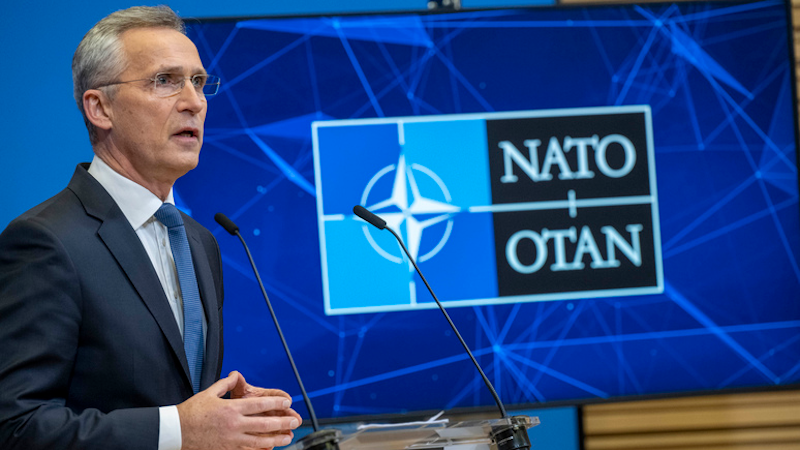
(Eurasianet) — A NATO summit will convene July 9 in Washington with the main objective being enhancing Ukraine’s ability to defend itself against Russian aggression. But an ancillary aim for the Atlantic Alliance will be strengthening relationships with states in the Caucasus and Central Asia in the hopes of crimping Russia’s ability to wage war.
During three days of meetings, NATO leaders will strive to put a comprehensivesystemin place to build Kyiv’s war-fighting capacity. At the same time, they intend to pay attention to Russia’s southern flank, which has emerged since the start of the war as a key tradeconduitfor the Kremlin.
Representatives from more than 40 organizations and non-member states, including Georgia, Armenia, Azerbaijan, Kazakhstan, and others that interact with NATO through itsPartnershipforPeaceprogram, will participate in some summit sessions. Georgia is a country of particular concern for the Atlantic Alliance.
The Georgian Dream-dominated government in Tbilisi has taken a sharp right turn in recent years, souring relations with Western political and security institutions, including the European Union and NATO. Atlantic Alliance officials are determined to send a strong signal to the Georgian government. “We’re asking the government to reconsider its positions,” Assistant Secretary of State for European and Eurasian Affairs James O’Briensaidahead of the summit.
Among the sources of Western displeasure with Georgia is passage of a Moscow-influenced “foreign agents” law and a series ofviolentattackson its critics. Tbilisi also awarded a major contract to build a Black Sea port atAnakliato a Chinese consortium.
“All of these things are incompatible with wanting to join the US and EU-based international organizations,” O’Brien said. He compared the membership bid to a game of football (soccer): Those who join the European Football Championship follow “the rules of the club.” This year, Georgia’s national football team qualified for the Euro 2024 finals, making it to the knockout round before losing to Spain.
Responding to Tbilisi’s decisions, the United States launched acomprehensivereviewof bilateral cooperation, and U.S. Secretary of State AntonyBlinkenannouncedvisa restrictions for those“undermining democracy.”
Meanwhile, as authorities in Tbilisi drift away from the West, public opinion remains firmly in favor of EU and NATO membership.A 2023 poll by the Washington-basedNationalDemocraticInstitutefoundthat 73 percent of Georgians still support NATO membership.
The alliance last held ajointbrigade-levelexercisewith Georgia in March 2022. The 2023 Vilnius summitintroducednew cooperation initiatives on cybersecurity and chemical, biological, radiological, and nuclear defense. In October 2023, Tbilisimadeitsdebutas an operational partner in NATO’s maritime Operation Sea Guardian. This year, it participated in theSeaBreeze 24exercises in Scotland together with the Ukrainian Navy.
In Washington, the Georgian delegation will be led by Foreign Minister Ilia Darchiashvili.Ahead of his trip, hehailedthe US as a“strategic partner”and said he looked forward to strengthening cooperation. At the summit,Darchiashvili will participate in working sessions and “hold bilateral meetings,” the Georgian Foreign Ministrysaidin a statement.
According to Alexander Vinnikov, who heads NATO’s liaison office in Georgia,nospecificformatfor interaction was planned for the summit. Ahead of the event, the US message to Tbilisi remained firm. “We’re trying to be as clear as we can that there is a way to step back from the path that they have chosen,” O’Briensaid.
Another Caucasus state, Armenia,hopestoobtainanIndividuallyTailoredPartnershipProgrammewith NATO, an update of the 2005IndividualPartnershipActionPlan. Similar action plans have been agreed with Georgia, Azerbaijan, Kazakhstan, and Moldova, with Tbilisi taking the lead in 2004.
Armenia, unlike Georgia, has sought to bolster itsrelationswith Western institutions over the past year, following the country’s decisive defeat at the hands of Azerbaijan in Nagorno-Karabakh and the sharpdeteriorationof Yerevan’s relations with Russia.
The Washington summit willmarkthe 75th anniversary of the alliance’s founding. With Sweden and Finland now among the 32 member states, nearly75percentof whom spending at or near 2 percent of GDP on defense, the alliance is demonstrating continuing resolve to support Ukraine’s war effort.
“I’m an optimist,” outgoing NATO Secretary General Jens Stoltenberg told journalists. “I expect that regardless of the shifting political winds … NATO will remain a stable and strong force in an uncertain time.”
- Ekaterina Venkina is a journalist specializing in foreign policy and international relations. She is a graduate of Columbia University’s School of Journalism.

By Jason Gutierrez
The Philippines and Japan signed a defense pact Monday that will allow troops to be deployed in each other’s country, a landmark agreement seen as a counterweight to China’s growing assertiveness in the South China Sea.
Filipino Defense Secretary Gilberto Teodoro Jr. and Japanese Foreign Minister Yoko Kamikawa signed the Reciprocal Access Agreement (RAA) at a ceremony in Manila witnessed by Philippine President Ferdinand Marcos Jr.
Japan’s foreign and defense ministers were in the Philippine capital for so-called “two-plus-two” meetings with their Filipino counterparts.
The RAA serves as a framework for security operations and training between the two nations, including joint military drills and maritime patrols in South China Sea waters claimed by Beijingbut that liewithin the Philippines’ exclusive economic zone.
Japan has pursued similar agreements with a handful of countries, such as the United Kingdom andAustralia, but this is a first in Asia.
It also signifies the first time Japanese troops will be allowed to return to Philippine soil since the Imperial army’s occupation during World War II.
Speaking after the signing, Kamikawa hailed the pact as a great achievement that would help “maintain and strengthen a free and open international order based on the rule of law.”
Teodoro said the deal was a step forward for the region and would add another layer to bilateral and defense relations. It would alsohelp “uphold the essence, principles, and concepts of international law particularly UNCLOS (United Nations Convention on the Law of the Sea),”he said.
Japanese Defense Minister Minoru Kihara said the Philippines and other Southeast Asian nations were strategically important for Japan, as they are situated at a key junction of its sea-lanes.
He added Japan was keen to deepen trilateral and quadrilateral ties, with the Philippines, United States and Australia.
The signing of the RAA comes amid escalating tensions between Manila and Beijing in the South China Sea.
On June 17, Filipino officials said China Coast Guard personnel, armed with pikes and machetes, punctured Philippine boats and seized firearms during a resupply mission to an outpost on Second Thomas Shoal.
One Filipino sailorlost a finger in the clash, the third such encounter this year in which Philippine personnel have been hurt.
OnMonday, Philippine ForeignAffairsSecretary Enrique Manalo thanked Japan for standing by the Philippines in its maritime dispute with China.
He also praised Tokyo for supporting the rules-based international order, including a 2016 international arbitration ruling that found China had violated Manila’s sovereign rights in its exclusive economic zone.
“Amidst the backdrop of the geopolitical situation in this and other regions, which has put the stability and predictability of the rules-based international order under stress, we discussed global and regional issues of common concern,” Manalo said during the two-plus-two meetings.
Chester Cabalza, president of International Development and Security Cooperation, a Philippine think-tank, said the defense deal was “groundbreaking” and would serve as a counterweight to China in the region.
“The significance of themilitary pactenlivens the agility and deterrence of Manila with the quantum leap support of a strategic and technologically advanced neighbor like Japan,” Cabalza told BenarNews.
Don McLain Gill, a political analyst at the international studies department of De La Salle University, said the agreement would act as an independent stabilizing force. At the same time, it would be compatible with U.S. efforts to form a network of alliances in the Asia-Pacific region.
“Japan has played a significant role in crafting a more robust framework for Manila-Tokyo ties, and Japan has also demonstrated its steadfast commitment in being the Philippines’ major economic and defense partner,” he said.
“In a scenario where the U.S. may dial down its support for Manila, our partnership with Japan is likely to remain steadfast and consistent.”
Following the signing of the RAA, China reiterated that bilateral cooperation should not “target” third parties.
“The exchange and cooperation between countries should not undermine the mutual understanding and trust between other countries in the region. It should not threaten regional peace and stability, target any third party, or harm the interests of any third party,” foreign ministry spokesman Lin Jian said in anews briefingon Monday, when asked about China’s reaction to the Manila-Tokyo defense pact.
“The Asia-Pacific region does not need any military bloc, still less groupings that incite bloc confrontation or a new Cold War,” he said.
He also reminded Japan of its “aggression and colonial rule” over the Philippines and other Southeast Asian countries during World War II.
Manila has a similardefensedeal with Washington, the 1999 Visiting Forces Agreement, which sets the terms under which American military personnel can operate on Philippine soil.
The U.S. now has access to nine military bases across the archipelago and has pledged U.S. $100 million for upgrades.
Jojo Riñoza and Gerard Carreon contributed to this report from Manila.
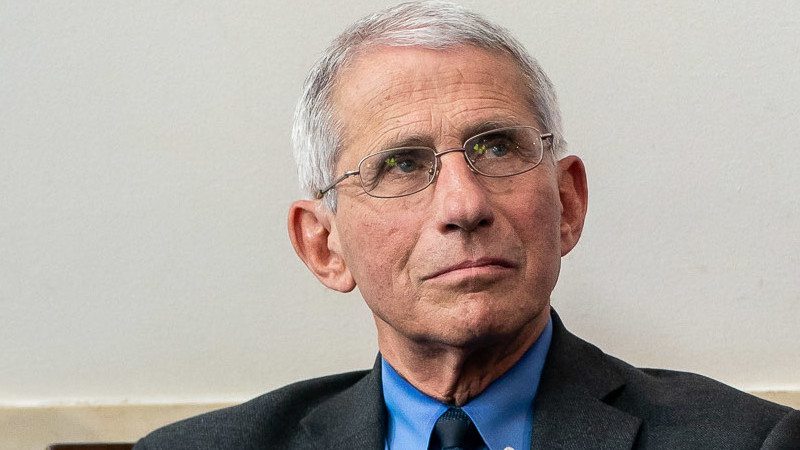
Dr. Anthony Fauci is out withOn Call: A Doctor’s Journey in PublicService,but even before the new book, ABC’s Jonathan Karl had a question.
“I have to ask you aboutall this talk about—about Biden’s health,” Karl said. “You’ve worked with seven presidents. You know what the job entails. Why would someone in their 80s want to do another four years of this?” Dr. Fauci seemed to be taken off guard.
“You know, I think it’s just an individual choice, and you really can’t generalize,” Fauci said. “You have to take each individual person, you know, how they feel, what they feel they can do, you know, what their passion is, what their energy is. Those are the kind of things.”
Karl then wondered, “were you surprised? I mean, you worked with him. You worked closely with him … Were you surprised by what you saw in that debate?”
“Well, you know,” Fauci responded. “I don’t want to comment on anything that would have any political implications. You know me, over many years. But the one thing I can say and feel comfortable about is I have dealt with President Biden, and in my dealings with him, it’s been really very positive. He asks probing questions. He’s right on point on things. So my personal experience has been quite positive with him.”
Dr. Fauci Politician
Dr. Fauci’s concerns about “political implications” overrode the medical implications. That recalled an episode in 2021, when Dr. Fauci was the government’s chief spokesman on the Covid pandemic. AJan. 30 reportby New York Attorney General Letitia James revealed that thousands more nursing home residents may have died from Covid than New York Gov. Andrew Cuomo had publicly acknowledged.
On Feb. 15, Gov. Cuomodefended his pandemic responseand the next day Dr. Fauci appeared on CNN with Jim Sciutto. Gov. Cuomo had argued that New York was following federal guidelines when he ordered long-term care facilities to accept patients returning from hospitals, and the CNN host wondered if Dr. Fauci could clarify that claim.
“You know, Jim, I can’t,”Fauci responded. “I mean, excuse me. I really am—I’m honestly not trying to erase your question, but I’m not really sure of all the details of that, and I think if I, if you make a statement, it might be wrong or taken out of context. So, I prefer not to comment on that.” In reality, Fauci had already clarified the details.
In July of 2020, Dr. Fauci told reporters that unlike other states, New York responded“properly” and “correctly”to the pandemic. For his part, Gov. Cuomo said, “If you think there was a mistake, then go talk to the federal government. It’s not about pointing fingers or blame, this became a political football.”
Once again, political considerations blocked Dr. Fauci’s medical judgement, and that should come as no surprise. If he ever actually practiced medicine it was only for a short time.
Dr. Fauci Tenured Bureaucrat
In 1966, Anthony Fauci earned a medical degree from Cornell but in 1968 he took a job with the National Institutes of Health. Dr. Fauci’s bio showed no advanced degrees in molecular biology or biochemistry, but in 1984 he became head of the National Institute of Allergy and Infectious Diseases (NIAID). Nobel laureateKary Mullis, inventor of the polymerase chain reaction (PCR), believed that Fauci “should not be in a position like he’s in.”
Dr. Faucideclined the offerof President George W. Bush to head the National Institutes of Health, which would have imposed a limited term. As NIAID boss, Dr. Fauci controlled public health policy and spending on medical research, a huge concentration of power. In effect, Dr. Fauci’s MD functioned as an Ed.D., basically a bureaucratic credential. A ballpark figure for the number of patients Dr. Fauci treated during the pandemic is zero, and his reluctance to render a post-debate medical opinion on Joe Biden was entirely political.
A government bureaucrat for more than 50 years, Dr. Anthony Fauci wielded executive-level power without ever having to face the voters. The task of Congress is to prevent that brand of white coat supremacy from happening again, and this is not a difficult matter.
The NIAID and NIH directors should be limited to a single four-year term. No single person should control public health policy and medical research spending. All NIAID and NIH grants should be revealed online in real-time and in downloadable form. NIH and NIAID directors must be held accountable for all actions in office.
- This article was also published in The American Spectator