
Day: July 8, 2024
Project Kylo – Google Search https://t.co/zbqSs2mG2Q https://t.co/nVEbmYFwlI
— Michael Novakhov (@mikenov) July 8, 2024
The July 4 landslide defeat of the neoliberal pro-war British Conservatives by the neoliberal pro-war Labour Party poses the question of just what the media mean when they describe the elections and political alignments throughout Europe in terms of center-right and center-left traditional parties challenged by nationalist neo-fascists.
Political differences between Europe’s centrist parties are marginal, all supporting neoliberal cutbacks in social spending in favor of rearmament, fiscal stringency and the deindustrialization that support of U.S.-NATO policy entails. The word “centrist” means not advocating any change in the economy’s neoliberalism. Hyphenated-centrist parties are committed to maintaining the pro-U.S. post-2022 status quo.
That means letting U.S. leaders control European politics via NATO and the European Commission, Europe’s counterpart to America’s Deep State. This passivity is putting its economies onto a war footing, with inflation, trade dependence on the United States and European deficits resulting from U.S.-sponsored trade and financial sanctions against Russia and China. This new status quo has shifted European trade and investment away from the Eurasia to the United States.
Voters in France, Germany and Italy are turning away from this blind alley. Every incumbent centrist party has recently lost – and their defeated leaders all had similar pro-U.S. neoliberal policies. As Steve Keen describes the centrist political game: “The Party in power runs Neoliberal policies; it loses the next election to rivals who, when they get in power,also run neoliberal policies. They then lose, and the cycle repeats.” European elections, like this November’s one in the United States, are largely a protest vote – with voters having nowhere else to go except to vote for the populist nationalist parties promising to smash this status quo. This is continental Europe’s counterpart to Britain’s Brexit vote.
The AfD in Germany, Marine le Pen’s National Rally in France and Georgia Meloni’s Brothers of Italy are depicted as smashing and breaking the economy – by being nationalist instead of conforming to the NATO/EU Commission, and specifically by opposing the war in Ukraine and European isolation from Russia. That stance is why voters are supporting them. We are seeing a popular rejection of the status quo. The centrist parties call all nationalist opposition neo-fascist, just as in England the media describe both the Tories and Labour as centrists but Nigel Farage as a far right populist.
There are no “left-wing” parties in the traditional meaning of the political left
The former left parties have joined the centrists, becoming pro-U.S. neoliberals. There is no counterpart on the old left to the new nationalist parties, except for Sara Wagenknecht’s party in East Germany. The “left” no longer exists in the way that it did when I was growing up in the 1950s. Today’s Social Democratic and Labor parties are neither socialist nor pro-labor, but pro-austerity. The British Labour Party and German Social Democrats are no longer even anti-war, but support the wars against Russia and Palestinians, and have put their faith in neoliberal Thatcherite/Blairite Reaganomics and an economic break from Russia and China.
The social democratic parties that were on the left a century ago are imposing austerity and cutbacks in social spending. Eurozone rules limiting national budget deficits to 3% mean in practice that its shrinking economic growth is to be spent on military rearmament – 2% or 3% of GDP, mainly for U.S. weapons. That means falling exchange rates for eurozone countries.
This is not really conservative or centrist. It is hard-right austerity, squeezing labor and government spending that the left-wing parties supported long ago. The idea that centrism means stability and preserves the status quo thus turns out to be self-contradictory. Today’s political status quo is squeezing wages and living standards, and polarizing economies. It is turning NATO into an aggressive anti-Russia and anti-China alliance that is forcing national budgets into deficit, leading social welfare programs to be cut back even further.
What are called extremist right-wing parties are now the populist anti-war parties
What is called the “far right” is supporting (at least in campaign rhetoric) policies that used to be called “left,” opposing war and improving the economic conditions of domestic labor and farmers – but not those of immigrants. And as was the case with the old left, the right’s main supporters are the younger voters. After all, they are bearing the brunt of falling real wages throughout Europe. They see that their path to upward mobility is no longer what it was for their parents (or grandparents) in the 1950s after World War II ended, when there was much less private-sector housing debt, credit-card debt or other debt – especially student debt. Back then, everyone could afford to buy a house by taking out a mortgage that only absorbed 25% of their wage income, and was self-amortizing in 30 years. But today’s families, businesses and governments are obliged to borrow rising sums just to maintain their status quo.
The old division between right and left parties has become meaningless. The recent rise in parties described as “far right” reflects the widespread popular opposition to the US/NATO support of Ukraine against Russia, and especially to the consequences for European economies of that support. Traditionally, anti-war policies have been left-wing, but Europe’s “center-left” parties are following America’s pro-war “leadership from behind” (and often under the table). This is presented as an internationalist stance, but it has become unipolar and U.S.-centered. European countries have no independent voice.
What turns out to be a radical break from past norms is Europe following NATO’s transformation from a defensive alliance to an offensive alliance in keeping with U.S. attempts to maintain its unipolar dominance of world affairs. Joining America’s sanctions on Russia and China, and emptying out their own arsenals to send weapons to Ukraine to try and bleed the Russian economy has not hurt Russia, but strengthened it. The sanctions have acted as a protective wall for its own agriculture and industry, leading to import-displacing investment. But the sanctions have hurt Europe, especially Germany.
The global failure of today’s Western version of internationalism
The BRICS+ countries are expressing the same political demands for a break from the status quo that national populations in the West are seeking. Russia, China and other leading BRICS countries are working to undo the legacy of debt-ridden economic polarization that has spread through both the West, the Global South and Eurasia as a result of the US/NATO and IMF diplomacy.
After World War II, internationalism promised a peaceful world. The two World Wars were blamed on nationalist rivalries. These were supposed to end, but instead of internationalism ending national rivalries, the Western version that prevailed with the end of the Cold War has seen an increasingly nationalist United States lock in Europe and other satellite countries against Russia and the rest of Asia. What poses as an international “rules-based order” is one in which U.S. diplomats set and change the rules to reflect U.S. interests, while ignoring international law and demanding s that American allies follow U.S. Cold War leadership.
This is not peaceful internationalism. It sees a unipolar U.S. military alliance leading toward military aggression and economic sanctions to isolate Russia and China. Or more to the point, to isolate European and other alliesfromits former trade and investment with Russia and China, making those allies more dependent on the United States.
What may have seemed to Western Europeans a peaceful and even prosperous international order in the 1950s under U.S. leadership has turned into an increasingly self-promoting American order that is impoverishing Europe. Donald Trump has announced that he will support a protectionist tariff policy not only against Russia and China, but also against Europe. He has promised that he will withdraw funding for NATO, and oblige European members to bear the full costs of restoring their depleted supply of armaments, mainly by buying U.S. arms, even though these have turned out not to work very well in Ukraine.
Europe is to be left isolated by itself. If non-centrist political parties do not intervene to reverse this trend, Europe’s economies (and also America’s) will be swept up in today’s domestic and international economic and military polarization. So what turns out to be radically disruptive is the direction in which today’s status quo is heading under centrist parties.
Supporting the U.S. drive to break up Russia, and then to do the same to China, involves joining America’s neocon drive to treat them as enemies. That means imposing trade and investment sanctions that are impoverishing Germany and other European countries by destroying their economic linkages with Russia, China and other designated rivals (and hence, enemies) of the United States.
Since 2022 Europe’s support for America’s fight against Russia (and now also against China) has ended what had been the basis of European prosperity. Germany’s former industrial leadership of Europe – and its support for the euro’s exchange rate – is being ended. Is this really “centrist”? Is it a left policy, or a right-wing policy? Whatever we call it, this radical global fracture is responsible for deindustrializing Germany by isolating it from trading with and investing in Russia.
Similar pressure is being made to break European trade away from China. The result is a widening European trade and payments deficit with China. Along with Europe’s rising import dependency on the United States for what it used to buy at lower cost from the East, the weakening euro position (and Europe’s seizure of Russian foreign reserves) has led other countries and foreign investors to offload their euro and sterling reserves, further weakening the currencies. That threatens to raise the European cost of living and doing business. The “centrist” parties are not producing stability, but economic shrinkage as Europe becomes a satellite of U.S. policy and its antagonism to the BRICS economies.
Russian President Putin recently said that the break in normal relations with Europe look irreversible for the next thirty years or so. Will an entire generation of Europeans remain isolated from the world’s most rapidly growing economies, those of Eurasia? This global fracturing of America’s unipolar world order is enabling the anti-euro parties to present themselves not as radical extremists but as seeking to restore Europe’s lost prosperity and diplomatic self-reliance – in a right-wing anti-immigrant way, to be sure. That has become the only alternative to the pro-U.S. parties, now that there is no more real left.
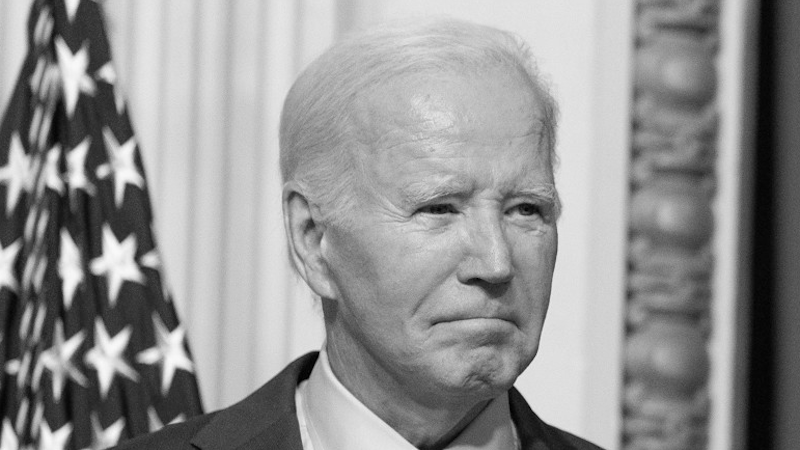
The Editor at Large for the Wall Street Journal, Gerry Baker,says: ‘We’ve been “gaslit’ and deceived” – for years – “all in the name of ‘democracy’”. That deceit “collapsed” with the Presidential debate, Thursday’.
“Until the world saw the truth … [against] the ‘misinformation’ … the fiction of Mr. Biden’s competence … suggests they [the Democrats] evidently thought they could get away with promoting it. [Yet] by perpetuating that fiction they were also revealing their contempt for the voters and for democracy itself”.
Baker continues:
“Biden succeeded because he made toeing the party line his life’s work. Like all politicians whose egos dwarf their talents, he ascended the greasy pole by slavishly following his party wherever it led … Finally—in the ultimate act of partisan servility, he became Barack Obama’s vice president, the summit of achievement for those incapable, yet loyal: the apex position for the consummate ‘yes man’”.
“But then, just as he was ready to drift into a comfortable and well-deserved obscurity, his party needed a front man … They sought a loyal and reliable figurehead, a flag of convenience, under which they could sail the progressive vessel into the deepest reaches of American life — on a mission to advance statism, climate extremism and self-lacerating wokery. There was no more loyal and convenient vehicle than Joe”.
If so, then who actually has been ‘pulling America’s strings’ these past years?
“You [the Democratic machine] don’t get to deceive, dissemble and gaslight us for years about how this man was both brilliantly competent at the job and a healing force for national unity – and now tell us, when your deception is uncovered, that it’s ‘bedtime for Bonzo’ – thanks for your service, and let’s move on”, Baker warns.
“[Now] it is going horribly wrong. Much of his party has no use for him anymore … in a remarkably cynical act of bait-and-switch, [they are trying to] swap him out for someone more useful to their cause. Part of me thinks they shouldn’t be allowed to get away with it. I find myself in the odd position of wanting to root for poor mumbling Joe … It’s tempting to say to the Democratic machine frantically mobilizing against him: You don’t get to do this. You don’t get to deceive, dissemble and gaslight us for years”.
Something significant has snapped within ‘the system’. It is always tempting to situate such events in ‘immediate time’, but even Baker seems to allude to a longer cycle of gaslighting and deception – one that only now has suddenly burst into open view.
Such events – though seemingly ephemeral and of the moment – can be portents to deeper structural contradictions moving.
When Baker writes of Biden being the latest ‘flag of convenience’ under which the ruling strata could sail the progressive vessel into the deepest reaches of American life – “on a mission to advance statism, climate extremism and self-lacerating wokery” – it seems probable that he isreferringto the 1970s era of the Trilateral Commission and the Club of Rome.
The 1970s and 1980s were the point at which the long arc of traditional liberalism gave place to an avowedly illiberal, mechanical ‘control system’ (managerial technocracy) that today fraudulently poses as liberal democracy.
Emmanuel Todd, the French anthropological historian, examines the longer dynamics to events unfolding in the present: The prime agent of change leading to the Decline of the West (La Défaite de l’Occident), he argues, was the implosion of ‘Anglo’ Protestantism in the U.S. (and England), with its entailed habits of work, individualism and industry – a creed whose qualities were held then to reflect God’s grace through material success, and, above all, to confirm membership of the divine ‘Elect’.
Whereas traditional liberalism had its mores, the decline of traditional values triggered the slide towards managerial technocracy, and to nihilism. Religion lingers on in the West, though in a ‘zombie’ state, Todd avers. Such societies, he argues, flounder – absent some guiding metaphysical sphere that provides people with non-material sustenance.
However, the incoming doctrine that only a wealthy financial élite, tech experts, leaders of multinational corporations and banks possess the required foresight and technological understanding to manipulate a complex and increasingly controlled system changed politics completely.
Mores were gone – and so was empathy. Many experienced the disconnect and the disregard of cold technocracy.
So when a senior WSJ editor tells us that the ‘deception and ‘gaslighting’ collapsed with the CNN Biden-Trump debate, we should surely pay attention; He is saying the scales finally fell from peoples’ eyes.
What was being gaslighted was the fiction of democracy and also that of America declaring itself – in its own scripture – to be the trailblazer and pathfinder of humanity: America as the exceptional nation: the singular, the pure-of-heart, the baptizer, and redeemer of all peoples despised and downtrodden; the “last, best hope of earth”.
The reality was very different. Of course, states can ‘live a lie’ for a long period. The underlying problem – the point Todd makes so compellingly – is that you can be successful in deceiving and manipulating public perceptions, but only up to a point.
The reality was, it simply was not working.
The same is true of ‘Europe’. The EU’s aspiration to become a global geo-political actor too, was contingent on gaslighting the public that France, Italy and Germany et al could continue to be real national entities – even as the EU scooped up all national decision-making prerogatives, by deceit. Themutinyat the recent European elections reflected this discontent.
Of course, Biden’s condition has been long known. So who then has been running affairs; making critical daily decisions about war, peace, the composition of the judiciary and the boundaries of state authority? The WSJ piece gives one answer: “Unelected advisers, party hacks, scheming family members and random hangers-on make the critical daily decisions” on these issues.
Maybe we have toreconcileto the fact that Biden is an angry, senile man who yells at his staff: “During meetings with aides who are putting together formal briefings, some senior officials have at times gone to great lengths to curate the information in an effort to avoid provoking a negative reaction”.
“It’s like, ‘You can’t include that, that will set him off’ or ‘Put that in, he likes that,’” said one senior administration official. “It’s very difficult and people are scared sh*tless of him.” The official added, “He doesn’t take advice from anyone other than those few top aides, and it becomes a perfect storm because he just gets more and more isolated from their efforts to control it”.
Seymour Hersh, the well-known investigative journalistreports:
“Biden’s drift into blankness has been ongoing for months, as he and his foreign policy aides have been urging a ceasefire that will not happen in Gaza whilst continuing to supply the weapons that make a ceasefire less likely. There’s a similar paradox in Ukraine, where Biden has been financing a war that cannot be won – yet refusing to participate in negotiations that could end the slaughter”.
“The reality behind all of this, as I’ve been told for months, is that Biden is simply ‘no longer there’ – in terms of understanding the contradictions of the policies he and his foreign policy advisers have been carrying out”.
On the one hand, Politicotellsus: “Biden’s insular senior team are well acquainted with the longtime aides who continue to have the president’s ear: Mike Donilon, Steve Ricchetti and Bruce Reed, as well as Ted Kaufman and Klain on the outside”.
“It’s the same people — he has not changed those people for 40 years … The number of people who have access to the president has gotten smaller and smaller and smaller. They’ve been digging deeper into the bunker for months now.” And, the strategist said, “the more you get into the bunker, the less you listen to anyone”.
In Todd’s words then, decisions are made by a small ‘Washington village’.
Of course, Jake Sullivan and Blinken sit at the centre of what is called the ‘inter-agency’ view. This where policy mostly is discussed. It is not coherent – with its locus in the National Security Committee – but rather is spread through a matrix of interlocking ‘clusters’ that includes the Military Industrial Complex, Congressional leaders, Big Donors, Wall Street, the Treasury, the CIA, the FBI, a few cosmopolitan oligarchs and the princelings of the security-intelligence world.
All these ‘princes’ pretend to have a foreign policy view, and fight like cats to protect their fiefdom’s autonomy. Sometimes they channel their ‘take’ via the NSC, but if they can, they will ‘stovepipe’ it directly to one or other ‘key actor’ with the ear of one, or other, Washington ‘village’.
Nonetheless, at bottom, the 1992 Wolfowitz doctrine which underscored American supremacy at all costs, in a post-Soviet world – together with “stamping out rivals, wherever they may emerge” – still today remains the ‘current doctrine’ framing the ‘inter-agency’ baseline.
Dysfunction at the heart of a seemingly functioning organization may persist for years without any real public awareness or appreciation of the descent into dysfunctionality. But then suddenly – when a crisis hits, or Presidential debate misfires – ‘poof’ and we see clearly the collapse of the manipulation that has confined discourse to within the various Washington villages.
In this light, some of the structural contradictions that Todd noted as contributory factors to western decline become unexpectedly ‘illuminated’ by events: Baker highlighted one: The key Faustian bargain: the pretence of a liberal democracy operating in tandem with a ‘classic’ liberal economy versus the reality of an illiberal oligarchic leadership sitting atop a hyper-financialised corporate economy that has both sucked the life from the classic organic economy, and created toxic inequalities too.
The second agent of western decline is Todd’s observation that the implosion of the Soviet Union rendered the U.S. so cock-a-hoop that the latter triggered a paradoxical unleashing of global ‘Rules-Based Order’ expansion of empire versus the reality that the West was already being consumed from its roots upwards.
The third agent to decline lay, Todd argues, with America declaring itself to be the greatest military nation on earth – versus the reality of an America that has long rid itself of much of its manufacturing capacity (particularly the military capacity), yet elects to clash with a stabilized Russia, a great power returned, and with China which has instantiated itself as the world’s manufacturing Behemoth (including militarily).
These unresolved paradoxes became the agents of western decline, Todd maintained. He has a point.
By Kjeld Neubert
(EurActiv) — A new far-right group, the Patriots for Europe, was formed in the European Parliament on Monday (8 July) after swallowing their predecessor, Identity and Democracy (ID), and unifying enough lawmakers on the right and far-right side to become the third-largest group.
The intention to form a group of “patriotic and sovereigntist parties” – keen to boost the role of national governments and decrease that of Brussels – was made public on 30 June by Hungarian Prime Minister Victor Orbán, the Austrian far-right FPÖ, and ANO, the erstwhile liberal party of former Czech prime minister Andrej Babiš.
The negotiations about the new group took about a week and were finalised on Monday, also marking the end of the ID group.
The new group, made of 13 national parties, aims to return more sovereignty to the EU states and push for stricter measures against illegal migration.
“We want to reshape the European Union, we want to ensure that asylum is not abused and we want peace on our doorstep”, Harald Vilimsky (Austria’s FPÖ) said during the press conference.
In the manifesto signed by the three founding parties, it also spoke against the EU’s Green Deal, while on the matter of Russia’s invasion of Ukraine, it stated strong commitment to peace and dialogue.
Jean-Paul Garraud, who represented the French delegation at the inaugural press conference, declared that the group would work “against the hegemony of the European Commission and the majority of the European Parliament, which has now been shaken”, alluding to the fact that the self-styled group is now the third largest with 84 MEPs.
“These 84 Members are just the first layer, there will be more, many want to be counterweight to the EU madness”, Vilimsky added.
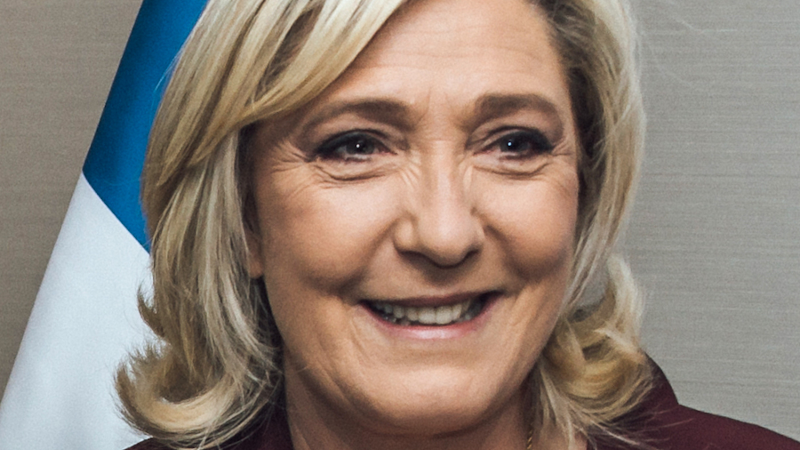
The fact that Marine Le Pen’s Rassemblement National joined Orbán in this new group has sealed the fate of her own group, the ID. Her protégé and failed candidate for French prime minister, Jordan Bardella, was elected president of the Patriot group.
Andrej Babiš, leader of ANO, expects further expansion of the group, as well. “Many MEPs from the EPP or the ECR share our view on illegal migration,” he said during a separate press conference hold in Czechia.
ANO has been criticized for aligning itself with parties with openly pro-Russian stances. However, according to Karel Havlíček, the vice-president of ANO movement, the party wasn’t looking for allies who would have the same view of Russia. “We were looking for allies who would share the same view of the functioning of the Union.”
ANO’s opinion on the conflict in Ukraine, including criticism of Russian aggression, has not changed, he added. He condemned today’s air strike on Ukraine, which targeted, among other things, a children’s hospital.
A rapid expansion
Last week, multiple ID parties expressed their intention to join the Patriots, making it obvious that ID will probably not have enough national delegations to continue as a group in the European Parliament.
Initially, the Patriots for Europe declaration was signed by Orbán, whose own Fidesz party spent most of the last legislature as an independent after leaving the European People’s Party in 2021; Austria’s FPÖ, a former member of the ID group; and the Czech ANO, which quit the liberal Renew group on 21 June.
While the three parties alone fulfilled the requirement to gather more than 23 lawmakers to form a new group, they needed at least seven different national delegations to complete the picture.
Shortly after the announcement, the Portuguese Chega! declared their intention to work leave ID and work with the new formation.
On Friday, the Patriots were joined by Spain’s Vox, who switched from the hard-right ECR, and the far-right Dutch PVV of Geert Wilders (ID), followed by the Danish Peoples Party and Vlaams Belang from Belgium, both formerly members of the ID group as well.
Marine Le Pen and her Rassemblement national, the leading party in the ID group, waited until after the French general election ended on 7 July to announce their decision to follow suit.
The rebranding of the ID group, now under the shared leadership of Orbán and Le Pen, aims to convey the intention to rally far-right parties with government expertise or a serious potential to govern.
Some small parties, such as the newly founded Greek ultranationalist Voice of Reason, which is not represented in the Greek parliament, have also found its place in the new group. The other example is Czech’s controversial Oath and Motorists coalition. This new coalition has secured itself two mandates during the elections and has been on a hunt for a political group ever since.
The German far-right AfD, which was excluded by the ID group shortly before the EU elections, will not be part of this alliance. There is still a possibility that the party will try to form its own group at some point this week.
*Kateřina Horáková contributed to this story

Debate is healthy for a democratic society. Vigorous exchanges cause people to confront unorthodox ideas, examine their beliefs and develop informed opinions. Robust speech is akin to exercise machines in the gym: a tool to build democratic muscles and endurance.
Unfortunately, in the wake of protests over the Israel-Hamas war, many are calling for restrictions on free speech. For example, Professor Claire O. Finkelstein of the University of Pennsylvania lamented recently inThe Washington Postthat the First Amendment, which protects free speech and a free press, applies to public universities. She averred that “restricting poisonous speech that targets Jews and other minorities” should be a priority.
But what is “poisonous speech” or, as it is frequently framed, “hate speech”? Does it include someone comparing Israel’s treatment of Gaza civilians to the Nazi Holocaust? How about claims that the civilian death toll in Gaza amounts to genocide? Or is “poisonous speech” limited to vile assertions that the Israeli population should be annihilated by their Arab neighbors?
Of course, the big question is, who in government or on campus is all-knowing enough to judge such matters? Joe Biden? Donald Trump? An anonymous bureaucrat? The president of Harvard University?
The “safe space”
This recent call for speech restrictions is the latest manifestation of the campus “safe space” phenomenon. Rather than grappling with challenging ideas, students and their faculty enablers demand cozy echo chambers where only their views—no matter how silly or ill-informed—are praised.
An anonymous author writing for Teen Vogue defended the need for safe spaces this way: “Due to the frequency of incidents related to racism, sexism or homophobia on some college campuses, students have expressed a need for a space where they can have constructive discussions or receive support without fear of being subjected to implicit or explicit micro-aggressions.”
These “snowflakes,” as some call them, make college campuses sound like the haunts of knuckle-dragging conservative professors seeking to teach Western civilization, American history (without the 1619 Project’s gloss) or the classics. In reality, studies show that liberal professors outnumber conservative professors 12 to 1 at leading U.S. universities. Fear of the Neanderthal professoriate instilling terror in progressive freshmen is akin to the Army’s 1.2 million soldiers begging for Xanax because the Bahamas might invade.
The Sedition Act
Furthermore, speech restrictions in American history haven’t gone well. In 1798, President John Adams’ Federalist Party enacted the Sedition Act in response to the Quasi-War with France. This legislation made criticism of the federal government a crime punishable by two years in prison and a $2,000 fine. Multiple newspaper editors who were sharply critical of the Adams administration faced federal prosecution. The Sedition Act is remembered as a black eye for Adams and the Federalist Party.
Abraham Lincoln, author of the Emancipation Proclamation, shut down more than 300 Northern newspapers for questioning his leadership. He unilaterally suspended the writ of habeas corpus through which imprisoned editors could challenge their confinement. Roger Taney, chief justice of the Supreme Court, ruled that Lincoln’s suspension of habeas corpus was unconstitutional, but Lincoln ignored him. Lincoln’s record on this tarnished his supposed commitment to freedom.
During World War I, the United States enacted the Sedition Act of 1918, which made it a crime to impugn the government, Constitution or members of the military. Jacob Abrams, a self-proclaimed “anarchist-socialist,” and four colleagues drew the ire of authorities for distributing leaflets in English and Yiddish criticizing the government for opposing the Bolshevik revolution in Russia. Four of the five radicals were imprisoned for their activities, which should have been protected by the First Amendment.
History has harshly judged speech restrictions because safe spaces and curtailment of debate cause our democratic muscles to atrophy. We must exercise them by dealing with opinions we abhor rather than becoming intellectual couch potatoes.
Campus unrest related to the Israel-Hamas war is just the latest temptation to insulate ourselves from ideas.
Undoubtedly, most radicals chanting “from the river to the sea” probably could not identify which river and sea are referenced. Even so, the remedy for such speech is not to silence those who chant such things but to clearly explain why they’re wrong.
- This article was also published in Pittsburgh Post-Gazette
By Qian Lang
Chinese authorities have included Tesla cars on an approved government procurement list, possibly signaling a turnaround for the electric car maker’s fortunes in China.
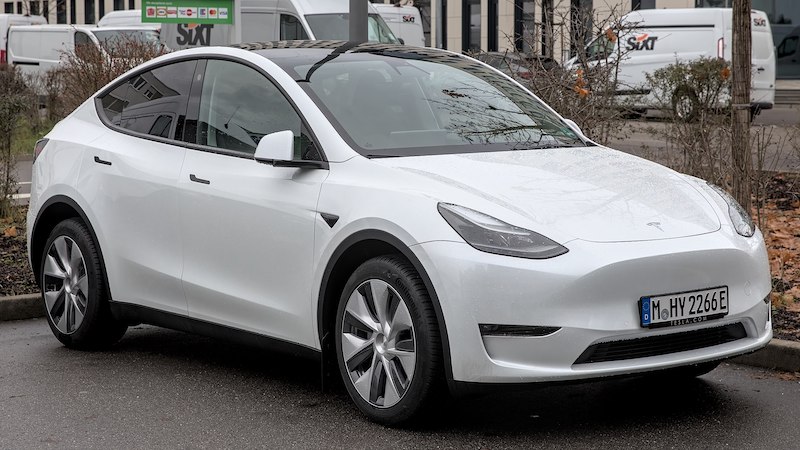
The Jiangsu Provincial Government Procurement website last week listed Tesla’s Model-Y rear-wheel drive version as a model approved for government purchase in a spreadsheet of permitted green vehicles for 2024-2025, quoting a price of 249,900 yuan (US$34,250) and classifying it as a “Chinese-made” vehicle.
The provincial government later confirmed the car’s inclusion on the list, saying there are “no relevant documents prohibiting its inclusion,” according to a July 4 report from Red Star news service.
“As long as an automaker meets certain requirements for pricing and configuration, it can be included,” Red Star quoted the official as saying.
The move comes after restrictions indicating that Teslas hadpreviously been viewedas a security risk.
In 2022, authorities in the northern seaside resort of Beidaihebanned the carsduring a top secret summer conference by ruling Chinese Communist Party leaders in the town.
Authorities in Zhejiang, Beijing and Wuhan, among other places, have followed up with their own local bans since then, RFA Mandarin has reported.
The inclusion of Teslas on a government-approved list also comes amid a European Union probe into Chinese subsidies for the EV industry that could lead to tariffs on electric vehicles made in China, potentially including Tesla cars.
Quarter of the market
Electric vehicles accounted for around a quarter of new car sales in China last year, and manufacturers like Volkswagen and Nissan are scrambling to develop their own electric models to compete with the tide of cheap electric cars from China.
Tesla CEO Elon Musk met with Chinese Premier Li Qiang during a visit to China in April.
Li told Musk at their meeting in April that Tesla’s operations in China were a “successful example” of U.S.-China economic cooperation, amid increasingly vocal criticism in Washington of Chinese “overcapacity” in the electric vehicle sector.
Soon afterwards, China’s Association of Automobile Manufacturersadded Tesla vehiclesto a list of smart vehicles deemed compliant with national data security requirements.
Tesla has a major manufacturing base in Shanghai for both domestic sales in China and exports to Europe and other regions, and cut prices earlier this year, shortly before Musk’s trip.
Current affairs commentator Cai Shenkun said the move in Jiangsu appears to be a nod to the debt owed to Tesla by China’s EV sector.
“Tesla’s entry into China drove the development of domestic EVs,” Cai said. “There wouldn’t be a complete supply chain for Chinese EVs if it weren’t for Tesla’s factory in China.”
“This has led to the emergence of Chinese EVs as a new force in the sector.”
Current affairs commentator Guo Min said the authorities could always reintroduce security restrictions on Tesla vehicles at any time, however.
“They act according to the needs of the current situation, but maintaining stability is paramount,” Guo said. “They banned Teslas according to the requirements at the time.”
“They now no longer need to ban them, but this could just be a stopgap measure — who knows when they could get banned again?”
Du Wen, a former legal adviser to China’s Inner Mongolia Autonomous Region government, said the cars’ inclusion on the Jiangsu procurement list is largely symbolic.
“This policy is inconsistent with Xi Jinping’s overall emphasis on national security, and it is probably going to be difficult to truly put into practice,” Du said.