
Зеленский: мы дадим мощный ответ России https://t.co/HTp1ufC5bK
— Голос Америки (@GolosAmeriki) July 8, 2024
Day: July 8, 2024
 Cellist Hayk Sukiasyan
Hayk Sukiasyan is a young Armenian cellist born in 1994 in Yerevan. During his studies, Sukiasyan performed internationally with orchestras such as the Freixenet Orchestra under the baton of Pablo Heras Casado, the Armenian National Philharmonic Orchestra under the baton of Harutyun Arzumanyan, the State Youth Symphony Orchestra of Armenia under Sergey Smbatyan and the Staatskapelle Halle with Josep Caballe Domenech. Despite his young age, Sukiasyan has already had the opportunity to play at renowned concert venues including Konzerthaus Berlin, Semperoper Dresden, Handel Halle, Stiftung Mozarteum Salzburg, Salle Cortot Paris, National Auditorium of Madrid, Teatro Real Madrid, Kursaal San Sebastian, L’Auditori Barcelona and many others.
Our fellow compatriot has shared the stage with hundreds of esteemed musicians, including Anne-Sophie Mutter, Natalia Prischepenko, Diemut Poppen, Marie Elisabeth Lott, Zakhar Bron, Felix Renggli and Massimo Mercelli. It was my honor to interview Sukiasyan and discuss his inspiring trajectory and interesting subjects such as his invitation to perform at the anniversary of the Queen of Spain.
Milena Baghdasaryan (M.B.): It is not very common in Armenia to learn the cello, as many other musical instruments such as the piano, violin, drums and guitar dominate the scene in Armenian musical schools. What brought you to the world of the cello, and what were your first steps in that career trajectory?
Hayk Sukiasyan (H.S.): That’s true, back in the beginning of the millennium when I took my first steps into the musical world, the cello was a less popular instrument in Armenia than it is now.
The story was simple; one day at a dinner, my family decided for me to go to music school and start learning to play the cello. To my question, “Why the cello?,” my mother explained that it’s the closest to the human baritone and has the most beautiful sound. She was right, and I was, of course, too lazy to start practicing for hours. It took a while to get used to practicing routines (and to be honest, it is still ongoing).
M.B.: Were there any teachers, inspiring musicians or experiences that shaped your signature as a musician? Besides music, were there any other artistic or non-artistic fields and factors that left a mark on you as an artist?
H.S.: There were many, and there still are. I feel blessed that in every period of my life, I had people around me: teachers, friends, who voluntarily or involuntarily inspired me or moved my soul with their true artistry and craft, which eventually led me to do all the “hard work” on myself. Whereas, I have never considered this (music-making) as hard work because it has always been based on true passion, love and devotion.
I love arts, particularly cinema, which is an inseparable part of my day-to-day life, and sports. I get very energized by some of the most incredible fighters, actors, directors.
M.B.: What was the first time you realized that the page of success had opened up for you? Do you recall any moment, performance or achievement that stands out among the others?
H.S.: Depends on how you define “success.” I must say the very first step of it was when I realized how I love music and what it meant to me when I was a teenager. I would breathe and live with/in music every day of my life. I do recall our endless phone calls with a very good childhood friend of mine, who is now an established violinist and conductor. We would call each other and talk about music, composers, musicians, their performances on certain repertoire and even play for each other on the phone.
I think, for every performing artist, success is due to a life on stage (playing and “living” on stage is a huge success in itself). I often reminisce about the time when I was a teenager and started having my first concert tours within a year, namely around the U.S., Canada, France, Germany and the Middle East. I realized that this is something I might want to do for the rest of my life.
M.B.: You were invited to perform at the anniversary of the Queen of Spain Sofía. Can you tell us about how that happened and what impact it had on your career?
H.S.: Yes, this was during my studies in Madrid at the wonderful music school named after Her Majesty Queen Sofía. It was a wonderful evening, and two special guests were Maestros Zubin Mehta and Plácido Domingo. It was fantastic to work with both of them and hear a couple of stories from Maestro Domingo about his friend, the famous French-Armenian chansonnier Charles Aznavour.
I was playing J.S. Bach’s Brandenburg Concerto No.6 with my friends, which is, as I was told, one of Her Majesty’s favorite pieces of music.
M.B.: Along with performing at Queen Sofía’s 80th anniversary, you have also received several awards from the Queen of Spain. What was your reaction when you found out about these awards, and what is your attitude towards awards in general? How important are they for you, and how do they influence your artistic trajectory?
H.S.: It happened that I got these two awards during the same night for the two best chamber music groups of that year at the Escuela Superior de Música Reina Sofía. The feeling was indeed overwhelming, and these awards do mean a lot to me!
My attitude towards awards varies depending on the award, but in general, it must not be the most important thing since they do not always clearly define one’s professional nor artistic qualities.
M.B.: What does a cellist need to succeed in today’s musical world?
H.S.: Nowadays, the market is full of very good cellists. With all the digitized recordings, our ears tend to recreate what we hear from our speakers or headphones, mostly unintentionally. Therefore, it’s important to find your own sound, remain true to yourself, be critical enough so that you won’t make a copy of something already existing and be as authentic as possible.
M.B.: Collaboration appears to be a significant and integral part of your artistic life. Do you create opportunities for collaboration, or do they come to you? Can you tell us about a particular collaboration experience that stands out to you?
H.S.: A little bit of both. Collaboration is the core of music, and music is definitely one of the most powerful ways of communication. I am truly grateful for all the opportunities I have had to share the stage with all those incredible people. Some of those experiences have been totally life changing for me, and you know, separating some names would be unfair to the others, because I truly believe that all of them did enrich me not only as a musician but as a person, too.
M.B.: In one of your interviews you mentioned that you haven’t performed on stages in Armenia since 2015. Could you talk about the reasons behind this absence from Armenian stages and whether you envision any concerts in Armenia in the near future?
H.S.: That’s true, it’s been somewhat long. There are no particular reasons behind that as far as I am concerned. I am always open to suggestions and am positively sure that in the near future there’ll be opportunities and that I’ll have a musical comeback in our lovely homeland.
M.B.: It was great to see Aram Khachaturian’s music play on the stages of Switzerland. Could you tell us about how that happened, and what was your role in the making of this remarkable event?
H.S.: This music means a lot to me, not only because it was written by Aram Khachaturian and every single time I play or listen to it I am mentally taken to the center of Yerevan, but also because it was written and dedicated to Mstislav Rostropovich, who was the teacher of my former teacher Ivan Monighetti and basically my musical grandfather.
Maestro Khachaturian has taken this piece to many important stages of the world, either with M. Rostropovich or another phenomenal cellist, Karine Georgian. To my big surprise, they have missed Basel, and it was a great pleasure for me to perform this piece for the Swiss audience together with Sinfonieorchester Basel and the conductor Gabriel Venzago.
M.B.: What role does being Armenian play in your signature and musical career? Were there any moments when you realized that being Armenian was one of the contributing factors to your success? Or has it perhaps ever been a limiting factor?
H.S.: Let me start from the end. If I talk about those two, it might take a little longer. I’ve had both experiences. It did play a role to achieve success, and let’s face it, has been a factor for an obstacle as well.
However, the magic of arts, and especially music, is that it gives us the possibility of being a human, first and foremost, without any prejudices, so we can transform into any nationality we need depending on what we’re performing. I strongly believe that music pulls out all the human qualities in us and connects us all.
Of course, I think that nationality does play a certain role in the establishment of a given person as a musician. Our linguistic thinking plays a significant role in many aspects. In my case, there are two main areas of influence. The first is the Armenian language which, being my mother tongue, is very musical and modulated, with countless dialects and directions (Western and Eastern). The second one revolves around our roots which, coming from the depths of centuries, is also a serious stimulus in the development of an individual and musician.
M.B.: You travel from one place to another on a regular basis. How do these traveling experiences contribute to your musical expression?
H.S.: I always thought that getting to know the world is one of the biggest life lessons. It’s a great endless journey during which you learn so much about humanity, cultures and every possible thing that comes across your path. So, eventually it does affect one and undoubtedly shapes one’s musical and artistic expression. Or at least it should…
M.B.: When traveling, do you have one particular performance style that you follow across different places, or do you adjust and adapt your style and musical expression to the cultural tastes and preferences of the countries you visit?
H.S.: I do enjoy playing different kinds and styles of music, if that’s what you’re asking. I think by doing that you already adapt a lot to certain stylistics, ways of pronunciation and articulation. You always try to do the honest job of trying to understand the text in the best possible way, do research in order to have deep insights of what that certain piece of music represents.
M.B.: What projects and performances can our readers expect from Hayk Sukiasyan in the near future?
H.S.: I am preparing some solo recitals in Germany and Switzerland for the next couple of months. Next year I will be having my debut with L’Orchestre National de Cannes in 2025, as well as some very exciting chamber music projects coming up this summer.
M.B.: What is the best advice you have ever received, and what would be your own best advice to young Armenian musicians?
H.S.: There were many, but I would like to mention what my grandfather Samvel Avetisyan used to tell me, which is to do everything with full dedication and utmost love. It has been stamped in my consciousness (as well as many other of his pieces of advice) and has become a life motto for me.
And as an Armenian I would suggest to constantly research, learn about our rich culture, preserve the language. As a musician, I would suggest applying all of this into their musical apprehensions, learn about their identity, find their own voice and practice a bunch.
Author information

Milena Baghdasaryan
Milena Baghdasaryan is a graduate from UWC Changshu China. Since the age of 11, she has been writing articles for a local newspaper named Kanch (‘Call’). At the age of 18, she published her first novel on Granish.org and created her own blog, Taghandi Hetqerov (‘In the Pursuit of Talent’)—a portal devoted to interviewing young and talented Armenians all around the world. Baghdasaryan considers storytelling, traveling and learning new languages to be critical in helping one explore the world, connect with others, and discover oneself. After completing her bachelor’s degree in Film and New Media at New York University in Abu Dhabi, Milena is currently enrolled in an advanced Master of Arts program in European Interdisciplinary Studies at the College of Europe in Natolin.
|
The post The Cello in the Cells: The story of Hayk Sukiasyan appeared first on The Armenian Weekly.
Categories
NPR News: 07-08-2024 12PM EDT
NPR News: 07-08-2024 12PM EDT
Learn more about sponsor message choices: podcastchoices.com/adchoices


“This is the inflection point,” warned Nigel Farage last month as he assumed the reins of power at the incarnated Reform UK party, standard bearer of the often inchoate group known as the hard right of British politics. “The only wasted vote is a Conservative one. We are the challengers to Labour. We are on our way.”
On July 4, an important stop was made on that way. A figure who had exerted more influence on British politics outside the houses of Parliament than any other this century, a figure who had conspicuously failed in getting elected despite seven previous efforts, had finally convinced voters he was electable.
The new member for the Essex seat of Clacton had unseated the Conservative candidate, Giles Watling, who had held the seat since 2017. The margin was impressive: 21,225 votes to Watling’s 12,820.
To keep him company in the House of Commons will be such colleagues as Richard Tice, Reform’s chair, along with former Southampton football club chairman Rupert Lowe, and former Conservative deputy chair Lee Anderson. They now form a snapping rearguard of politics that is not so much nipping at the heels of Britain’s oldest party as tearing it apart.
As the Tories contemplate their ruin and richly deserved defeat, the new Labour government of Sir Keir Starmer will find little time to relish the joys of victory. Farage is already promising rapacious raids into enemy territory. “We are coming for Labour … be in no doubt about that.” While eschewing notions of working with the Conservatives, he offered an olive branch by way of invitation: Tory members could join Reform if they wished.
Commentators on Farage’s life have noted a streak of luck suggesting the blessings of the devil. He has cheated death, surviving car crashes, a plane crash and a misdiagnosis regarding testicular cancer. The party that caught his eye, the UK Independence Party (Ukip), would have vanished into the suffocating arms of the larger Referendum party of James Goldsmith had the latter not perished to cancer 10 weeks after the 1997 election. “Farage takes his chances, and though things often blow up – planes, parties, countries – he walks away and on to the next caper,” writes David Runciman.
Reform UK is certainly one such caper, and its somewhat anti-democratic operations, often chaotic, poorly organised and lacking any institutional framework, make its electoral returns even more remarkable. But even on Farage’s side of politics, it is hard to mistake the fact that he has treated the party much like a political start-up, where he has assumed the role of director and majority shareholder. Reform will, in time, require reform if it is to be a durable force. Farage has admitted as much. “We have a structure. We do have a constitution, but to build a branch structure, we have to give people the ability to choose candidates to vote.”
Durability, however, may have nothing to do with it. As with many charismatic buffoonish party goers, he may leave when required to help with the cleaning up, leaving the washing to the snarling and fractious functionaries who fight over the leftovers and break the crockery. This may well be Starmer’s hope. It is certainly the assessment of Fraser Nelson in The Spectator. “Whatever his intention, Farage has ended up serving as a purely destructive force. He has become the nemesis, not the rejuvenator, of the causes he purports to care about.”
Otherwise, the threat is palpable, and comments by the new Business Secretary Jonathan Reynolds about Reform’s policies being like “Liz Truss in terms of the economy” and similar to “Russian positions in terms of … the war in Ukraine” are unhelpful. Labour’s lack of clarity on how it will deal with the Channel crossings of irregular migrants is something Farage is salivating over.
Concerned about such matters, Tony Blair, Labour’s longest serving prime minister and overly remunerated circuit speaker, has been willing to offer the sort of advice in the Sunday Times he charges obscene amounts for. His typically soupy ideas all go to trying to blunt the effect Reform will have in the next election. “We need a plan to control immigration. If we don’t get rules, we get prejudices.”
Showing his recurrent fascination with surveillance (as the Coronavirus pandemic raged, Blair suggested adopting a “Covid Pass” to distinguish the anointed from the unwashed), a “digital ID” could be used to maintain the integrity of borders. Law and order matters, another favourite of the New Labour era, also needed to be dealt with. “At present, criminal elements are modernising faster than law enforcement.” To round off the trifecta, it was also important that the Starmer government not succumb to “any vulnerability on ‘wokeism’.”
Farage is now in the temple of Westminster and, in time, hopes to bring it down. He will woo, seduce and despoil, as he has done to a string of lovers and prominent figures he has lured to his camp over the years. He will be remorselessly destructive. For Labour and for those more progressive than Starmer’s stiffly starched set, the threat has been truly enlivened.

The Albanian Communist regime (1945-1990) has sparked a gust of heated debate pertaining to a series of publications that are written in the last 33 years by Enver Hoxha’s henchmen, Qemal Lame (whose political asylum in Germany has emboldened his desire to disinform) and other surrogates that have revived the silhouette of communist concentration camps with their highly varnished autobiographies and stories. In the last three decades Tirana has been saturated with books and memories that further increase the gloominess of its communist past; considering that Karl Jaspers’ Metaphysical Guilt and Responsibility is not taken into account, let alone having the capacity to reveal the deeper truth about themselves. [1]
Even though many years have passed since the fall of the Berlin Wall, metaphysical guilt is not reflected in any works of literature focused on communist Albania, published after 1990 by the top brass of communist regime. Before this dramatic situation and lack of consciousness that makes each co-responsible for every wrong and every injustice in the 45 years of brutal communist rule, especially for crimes committed in their presence or with their knowledge; reminds us Hannah Arendt’s (1906-1975) “the banality of evil,” which brings into the limelight the character in Albert Camus’s novel “The Stranger” (1942), who randomly and informally kills a man, but then afterwards feels no remorse. [2]
In 2022, Dr. Anna Kohen, DDS, born in Vlora, Albania, published a highly acclaimed memoir: “The Flower of Vlora: Growing up Jewish in Communist Albania” (Holocaust Survivor True Stories); a masterpiece that encompasses a series of substantial elements that emanated in a communist society. “Flower of Vlora” is a bouquet of Kohen’s genuine encounters and hardships in post-World War II Albania; where she grew up in a small community of Romaniote Jews that were saved from Nazi forces by a family of Muslim Albanians. Dr. Kohen and her family have experienced personally the hardships of the communist dictatorship; she is perhaps the only writer, foreign and domestic, that has written with candor, courage, wisdom and fortitude about the ruthless communist regime of Albania; intertwining important sequences and events of Albanian history during WWII. While in the aftermath of post – communism, misery of life in Southeast Europe under socialist dictatorships can fade from our collective memory, in Dr. Kohen’s admirable writing style, emerges as the fulcrum of Albanian brutal communist legacy; her suffering representing, serving as a mirror image, of the socio-economic reality that had succumbed thousand, many thousands of families in isolated Shqipëria (the modern name of Albania, called by the local population, meaning “Land of Eagles”).
In the introduction of Dr. Kohen’s book, Saimir A. Lolja (in May, 2021) writes about Jewish families being rescued and sheltered with warmth by Albanian families:
“The story of Jews in Albania and their total salvation by Albanians during WWII—after all, not a single Jew in Albania was murdered by the Nazis—is an example of how Albanians came together to survive the war without giving up their Jewish neighbors to the Nazis as happened in so many other European countries. Albania saving its Jews is worthy of singular praise, and has left a lasting positive legacy for the small country in its international relations. The story of Albania and how it saved its Jews radiates an important lesson about responsibility and humanity… Albanians practicing Besa rescued Jews throughout the Holocaust and at other times in the 20th century. They saved captured soldiers of the Austro-Hungarian Army in 1917 and the Italian Army in 1943. They cared for Greek citizens and wounded soldiers in WWII and following the Greek Civil War.”
Dr. Saimir A. Lolja, continues: “Albania was a warm sanctuary for Albanians expelled by Serbs from Dardania (Kosovo Polje) in 1998-1999. That Besa is unique to Albania and is not derived from Islam is underscored by Muslim Bosnia, where Jews were not saved during the Holocaust.
In Albania, Jews were dispersed and sheltered in organized safe houses by neighbors who knew what they were doing, who cooperated together, who did not spy on one another, and who were assisted by Albanian officials…Anti-Semitism was well-established in neighbouring Serbia before WWII and encouraged by politicians, military officers, and the Serbian Orthodox Church. It flourished during the war. On January 20, 1942, a meeting of senior Nazi officials took place in the Berlin suburb of Wannsee. Called the Wannsee Conference, it specifically decided to complete “the final solution to the Jewish question.” It decided the number of Jews that should be exterminated in each of the European countries.”
Dr. Kohen, as a prolific writer, highly acclaimed in international audiences has shared with us the hardships of Albanian society with the same passion, style and dedication that draws the antithesis of the Roman god Janus, king of Latium, who was possessed of two faces, one pointing toward the future and one looking backward into the past, and as Benjamin Kunkel, of the New Yorker would say: “it is tempting to imagine that these faces must also have worn contrasting expressions, one brighter and hopeful, the other rueful or even aghast.” In Dr. Kohen’s narrative is revealed Albania’s true and sole face of generosity and Besa; indispensable values – ingrained within the Albanian society – that even a totalitarian regime and today’s smothered transitional democracy are unable to contain.
References:
https://oralhistorykosovo.org/wp-content/uploads/2016/12/AGIMVINCA_ENG_FINALE.pdf
https://www.amazon.com/Flower-Vlora-Communist-Holocaust-Survivor-ebook/dp/B0B4DW51C8/?_encoding=UTF8&pd_rd_w=u1Mvb&content-id=amzn1.sym.f911c8db-3a2b-4b3e-952f-b80fdcee83f4&pf_rd_p=f911c8db-3a2b-4b3e-952f-b80fdcee83f4&pf_rd_r=141-8494629-9003410&pd_rd_wg=JAixz&pd_rd_r=c05dec83-8725-4f5a-a920-466cbf12d4de&ref_=aufs_ap_sc_dskhttps://www.theguardian.com/books/2010/feb/18/andrei-platonov-robert-chandler
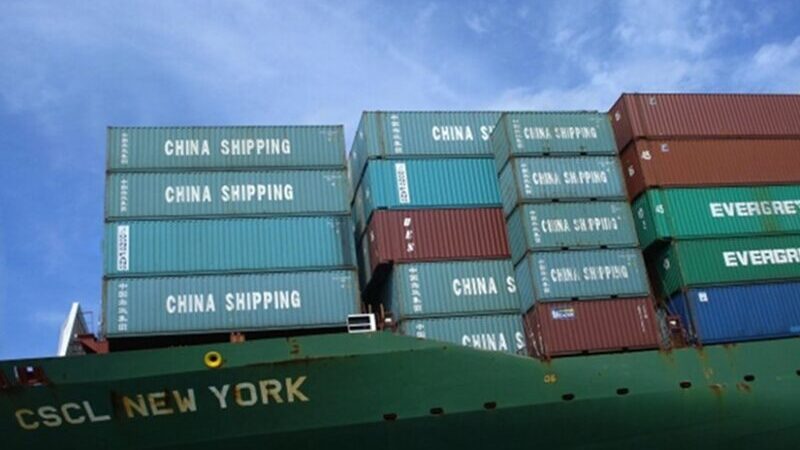
The US-China trade war is set to escalate with the announcement by the Biden administration that it will quadruple tariffs on electric vehicles, double tariffs on solar panels, and nearly triple tariffs on Chinese-made steel and aluminum products. Such an approach was expected following visits of Treasury Secretary Janet Yellen and Secretary of State Antony Blinken to China, considering the stances they had taken.
Yellen criticized her Chinese counterparts for ignoring what she termed China’s industrial overcapacity, calling it a threat not only to American manufacturers but also to the global economy. According to her, this excess capacity is the result of a highly protectionist policy and the allocation of massive financial aid by the Chinese government to its manufacturers over the past decades. This has given Chinese entrepreneurs, especially in the green industry and clean energy sectors, an unfair competitive advantage, enabling them to sideline other competitors in global markets.
The threat posed by China’s industrial overcapacity was raised again at the end of Blinken’s three-day visit to China. He likened China’s economic policies, which have led to product inflation and flooding of Chinese products into global markets, to a repetitive movie with a predictable ending for the American audience. The tragic end of this movie will be the closure of factories and the loss of jobs with all their social and political ramifications. Along with Yellen, Blinken emphasized that all options would be on the table to prevent repetition of this dramatic ending.
According to the International Energy Agency based in Paris, after a decade of subsidizing its automotive industry, China now monopolizes about 60% of the global market for electric vehicles with its robust automotive manufacturing sector. Based on some estimates, Chinese companies produce an average of 10 million more electric vehicles annually than their domestic sales demand, leading to the surplus cars being sold in the international markets. There is concern that a similar mechanism governing other sectors of China’s technology and green industry, such as solar panel and battery production, will drive the Chinese to capture even more international markets.
Although American officials claim they have seen this scenario before, there is evidence that they view the current trade challenge as different from previous instances. Imports of steel and aluminum from China have increased significantly over the past decade, following the Chinese government’s support for production expansion after the global financial crisis in 2008. The import of these products in 2017 coincided with the Trump administration imposing tariffs, which have remained in place under the Biden administration. What seems newer compared to previous experiences, according to some analysts, is the growing concern over China’s excess capacity in certain high-tech sectors, which is becoming increasingly acute.
However, the Chinese side assesses that the real goal of the United States in claiming China’s excess capacity is simply to suppress the development of China’s emerging industries and to maintain the long-standing but declining monopoly position of the United States in the global industrial chain. According to them, the idea of excess capacity lacks any basis when global demand is projected to increase significantly by 2030, with estimates from the International Energy Agency indicating a surge to 45 million electric vehicles—a 4.5-fold increase—and 820 gigawatts of photovoltaic energy production—a fourfold increase. This is especially pertinent as growth in these nascent sectors still significantly lags behind desired levels.
U.S. officials and media attribute the bankruptcy of American companies to the influx of cheap Chinese products. However, Chinese electric vehicles have now been excluded from the U.S. market thanks to tariffs. Therefore, the high price of American electric vehicles, with an average price of about $50,000, has hindered their widespread adoption in the United States, not China’s excess capacity. In 2023, electric vehicles made up only 7.6% of the total U.S. car market.
Additionally, the United States has faced significant resistance in building its own electric vehicle manufacturing infrastructure, which fundamentally has nothing to do with China or its excess capacity. In the United States, Republicans and fossil fuel companies have historically opposed the development of electric vehicles. The United Auto Workers, who are key supporters of the Democratic Party and advocates for Biden’s reelection, have serious concerns and reservations about shifting the production system towards electric vehicles.
According to Chinese officials, criticisms from the United States regarding China’s excess capacity are not based on market logic but rather fabricated narratives aimed at manipulating and politicizing trade to disrupt China’s economic development process. In fact, there is no excess capacity. What exists is America’s fear and concern about losing its position in the global economy in the face of China’s growing economic prowess. However, behind this seemingly new trade dispute, a deeper hidden reality has emerged.
The term “excess capacity” has recently emerged as a pivotal concept in the West’s discourse. It serves as a strategic tool aimed at managing and balancing China’s burgeoning influence while safeguarding the existing power dynamics in the international arena. Alongside other terms like “isolation,” “de-risking,” and “NATO,” it shares a common origin—rooted in the intersection of political-security and commercial-economic considerations. By framing economic and commercial issues through a security lens, a grand narrative has been constructed—one that portrays China as both a rival and a threat to the established world order. In this era of renewed geopolitical competition among major powers, the Biden administration seeks to comprehensively contain China. Their objective extends beyond mere containment; it also involves restoring stability to the waning liberal international order.

The Sumerian civilisation, one of the earliest known societies, had sophisticated systems of lending, borrowing, credit, and debt. These systems were based on mutual trust and social currency, allowing individuals to engage in economic transactions without the need for physical money or barter. Instead, social bonds and communal trust underpinned these interactions, facilitating trade and the distribution of resources. This foundation of trust was crucial for the development of early markets and the overall growth of human civilisation. Social currency operated on the principle that individuals could rely on each other within their communities, creating a network of reciprocal obligations and support. These informal financial systems were essential for maintaining social cohesion and enabling economic activities.
As human societies evolved, the rise of feudalism and capitalism introduced significant changes to these trust-based systems. Economic relationships that were once informal and personal became formalised, legalised and institutionalised. The establishment of legal frameworks and banking institutions standardised lending and borrowing practices, providing a more structured and reliable system for managing credit and debt. This formalisation helped to support larger-scale economic activities and fostered the growth of global trade. In the modern era, technological advancements and the digital revolution are once again transforming the landscape of lending and borrowing. The development of peer-to-peer (P2P) lending platforms represents a significant shift in how financial transactions are conducted. The history of lending and borrowing reveals a continuous evolution from informal, trust-based systems to formalised, institutionalised practices, and now to digitally enabled P2P platforms.
The advent of digital revolution has played a pivotal role in the expansion of peer-to-peer (P2P) lending. As a result of technological innovations and the growth of platform economy, the P2P lending market has experienced substantial growth over the past decade. Analysts predict that this trend will continue, with the volume of P2P lending expected to reach an astounding one trillion U.S. dollars by 2050. Online platforms and digital tools have streamlined the lending process, offering greater accessibility, convenience, and efficiency. These platforms use sophisticated algorithms to match lenders with borrowers, assess creditworthiness, and manage transactions, thereby reducing the time and costs associated with traditional lending methods. It is argued that the digital revolution has not only expanded the reach and capabilities of P2P lending but has also positioned it as a major player in the future of global finance.
The proponents of capitalism often assert that it fosters innovation. The priest of finance capital claims that P2P lending represents a groundbreaking idea within finance capital that addresses the institutional lending crisis by creating online marketplace platforms. These platforms enable lenders to directly lend money to individuals or small businesses, bypassing traditional financial institutions. The P2P lending solves of the institutional lending crisis by developing online marketplace platforms. It is argued further that P2P lending promotes alternative financing methods. By eliminating the need for traditional financial institutions in the lending process, P2P platforms not only provide more accessible funding options for borrowers but also offer attractive investment opportunities for lenders. This innovative approach helps to democratise finance, making it more inclusive and efficient.
Peer-to-peer lending, commonly branded to as “social lending” or “crowd lending,” is often categorized under the umbrella of the “sharing economy” for the sake of mass appeal. This designation suggests a system where resources are shared among individuals, fostering a sense of community and collective benefit. However, the actual mechanics of P2P lending diverge significantly from these idealist claims.
In practice, P2P lending involves individuals or businesses borrowing money directly from other individuals through online platforms, bypassing traditional financial institutions. While this might seem to align with the principles of a sharing economy—where goods and services are distributed among a community—P2P lending lacks the communal and altruistic aspects typically associated with such economies. The primary motivation behind P2P lending is financial gain rather than social good. Lenders participate to earn interest on their money, and borrowers seek loans often because they can obtain more favourable terms than those offered by traditional banks. This transactional nature emphasises profit over community welfare, contrasting sharply with the sharing economy’s ethos of mutual benefit and resource sharing.
Moreover, the risk involved in P2P lending is borne individually by the lenders, who may face significant financial loss if borrowers default on their loans. This individual risk further underscores the lack of collective support and communal risk-sharing that would be present in a true sharing economy model. P2P lending is marketed under the appealing labels of “social lending” and “crowd lending” and is positioned within the sharing economy framework, its operational realities reveal a system that is fundamentally profit-driven and individualistic, lacking the community-oriented principles that define a genuine sharing economy.
There is no doubt that the (P2P) lending and borrowing system fundamentally transforms traditional financial interactions. Unlike conventional banking, which relies heavily on institutional trust and regulatory frameworks, P2P platforms leverage personal trust and social networks to facilitate financial transactions. This shift allows individuals to directly lend and borrow money from each other without intermediaries, thus monetising the informal processes that have historically existed in many communities. By commodifying these social foundations, P2P lending alters the dynamics of economic interactions. It turns personal relationships and trust into marketable assets, creating new opportunities for individuals who might be underserved by traditional banking systems. However, it also introduces new risks and challenges, as the absence of formal regulatory oversight can lead to issues related to trustworthiness, repayment, and legal recourse.
Despite its innovative approach, P2P lending should not be seen as a replacement for the cooperative banking system. Cooperative banks are member-owned financial institutions that operate based on principles of shared ownership and democratic decision-making. They are designed to serve the financial needs of their members, often focusing on community development and social goals alongside profitability. In contrast, P2P platforms are primarily market-driven and profit-oriented, focusing on facilitating transactions between individual lenders and borrowers.
In conclusion, it can be said that while P2P lending provides an intriguing alternative to traditional banking by leveraging social trust and personal networks, it does not fulfil the same role as cooperative banks. P2P lending and borrowing systems are not sustainable alternatives like cooperative banking system.
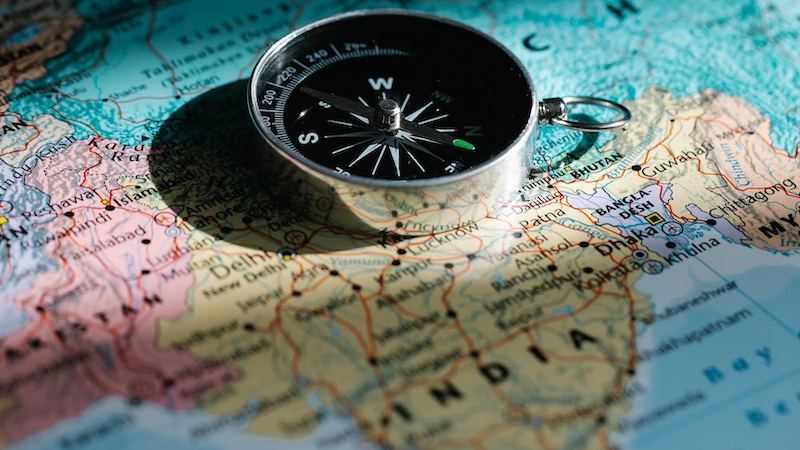
In an unprecedented departure from fundamental diplomatic courtesies, both Pakistan’s Prime Minister Shehbaz Sharif and its Foreign Office [FO] failed to convey the customary congratulatory message to Prime Minister Narendra Modi on the victory of his National Democratic Alliance [NDA] coalition party in the general elections after the poll results were officially announced.
However, three related developments that took place a day prior to, on and a day after Modi’s oath taking ceremony on June 9 unambiguously provide a fair idea about the shape of things to come and what emerges is definitely disconcerting!
On June 8, while answering a question on whether Islamabad had congratulated Modi, Pakistan’s FO spokespersonMumtaz Zahra Baloch tried to wriggle out of an embarrassing situation by saying that since the new government in New Delhi hadn’t yet been officially sworn-in, it was“premature”to discuss the issue of congratulating Modi.
However, the FO spokesperson did say that“Pakistan has always desired cooperative relations with all its neighbours including India. We have consistently advocated constructive dialogue and engagement to resolve all outstanding issues, including the core dispute of J&K” and though non-committal, it was nevertheless a positive comment that gave a ray of hope of rapprochement between India and Pakistan..
The next day however, even as Modi’s oath taking ceremony was underway, Pakistan sponsored terrorists carried out a gruesome attack on a bus carrying devotees on a pilgrimage in the Reasi area of J&K, killing nine travellers and injuring 41 others [including women and children]. It’s not only the timing but also the targeted killing of people belonging to a specific community that clearly indicates that this brutal act was intended to arouse communal passions and create unrest between two communities!
Curiously, despite claiming to be a victim of terrorism and suffering immensely on this account, Islamabad didn’t even care to condemn this horrific massacre of unarmed civilian pilgrims by terrorists. The next day however, Pakistani Prime Minister Shehbaz Sharif did find the time to felicitate Modi on taking oath as Prime Minister of India through an impersonal post on X.
It’s heartening to note that unlike Pakistani media that kept insisting that the onus of commencing talking with Pakistan squarely falls on India, back home no one attached any importance to Islamabad’s uncouth diplomatic behaviour. This inconsequential occurrence caused no ripples in India would not have been mentioned here as well, had it not been for the message these puerile actions convey.
Through its message of“cooperative relations”and “constructive dialogue and engagement to resolve all outstanding issues, including the core dispute of J&K”on eve of Modi’s oath taking,Islamabad has tried to take high moral ground in an desperate attempt to conceal the proxy war that the Pakistan army is brazenly waging in J&K.
The FO’s statement could also well be a‘feeler’to ascertain New Delhi’s response. With its financial condition worsening by the day, clamour for normalisation of indo-Pak ties and resumption of trade has been gathering momentum in Pakistan. In February last year, while stressing on the need for Pakistan to reduce its defence expenditure, eminent political economist Dr Pervez Tahir had called for revival of trade with India to“decrease people’s woes.”
Readers would also recall that in April,Punjab province assembly Speaker Malik Ahmad Khan ruling Pakistan Muslim League-Nawaz [PML-N] said“… both countries need to initiate trade ties. But I want to talk straight that this enmity between Pakistan and India needs to be ended if we have to move forward. We are neighbours… We should promote trade between the two countries.”So, giving Islamabad the benefit of doubt, Islamabad’s June 8 comments could be viewed as the PML-N led Pakistan government’s outreach to mend fences with New Delhi.
Regrettably, while Islamabad had kept a window of opportunity for dialogue to normalise Indo-Pak relations open, the terrorist attack on the pilgrim bus in J&K was Rawalpindi’s characteristic way of effectively sabotaging any scope of this happening, and this assessment is not mere speculation.
The Pakistan army did the same in 2014 by using its most trusted ally Lashkar-e-Taiba [LeT] for orchestrating the terrorist attack on the Indian consulate in Herat, Afghanistan. This attack took place just two days before Modi’s oath taking ceremony with the aim of causing casualties to the Indian consulate staff, which would fan anti-Pakistan emotions in India and thereby prevent the then Pakistani Prime Minister Nawaz Sharif from attending this event.
The spate of terrorist attacks in areas South of Pir Panjal mountain ranges in J&K give two clear indications- one, that despite Islamabad making peace overtures, Rawalpindi will continue to use its proxies to create further animosity that would not allow Pakistani lawmakers to enter into dialogue with India. As such, it would be prudent to assume that normalisation of Indo-Pak relations in the foreseeable future is unlikely.
Two, with Pakistan sponsored terrorists in Kashmir Valley being put on the back-foot by the Indian security forces with active support of civilians, Pakistan army’s spy agency Inter Services Intelligence [ISI] has started pushing terrorists into the Jammu region of J&K in a desperate attempt to revive terrorism in J&K.Such unprovoked escalation in violence is fraught with danger of likely Indian retaliation, but Rawalpindi seems to have no choice.
It’s apparent that ‘iron brother’ Beijing, which has been providing financial assistance to Pakistan, is extracting its pound of flesh by directing Rawalpindi to redouble terrorist activities South of Pir Panjal so that the Indian army cannot shift troops from this area to the Line of Actual Control [LAC] that demarcates the unresolved Sino-Indian border and where the Indian army and Peoples’ Liberation Army [PLA] of China are locked in a face-off.
This collusive threat is a serious issue that needs to be carefully monitored.
Lastly, as long as Rawalpindi continues calling the shots, use of terrorism as state policy in Pakistan will continue unabated. A sudden swell in the number of Pakistani nationals amongst terrorists neutralised in the recent past as well as its collusivity with the PLA is a clear indication that Rawalpindi has no intention of ending its proxy war against India.
It’s been proven beyond any doubts that our security forces and intelligence agencies are not professionally competent but also enjoy tremendous public support. Hence they are fully capable of thwarting ISI’s nefarious designs and so, there’s no reason to panic or project a doomsday scenario.The planned creation of additional Central Reserve Police Force [CRPF] battalions specially trained and equipped for conducting operations against terrorists in the mountainous areas of J&K will further enhance the anti-terrorism operational capability of Indian security forces.
However, there’s no room for complacency.
Let’s not forget for a moment that since Pakistan has no credible reasons to stake claim on Kashmir, use of force has been the cornerstone of its Kashmir policy since 1947. And even though it has militarily failed to annex J&K both in 1947 and 1965, Rawalpindi has reconciled and after abandoningits Kashmir ambition, settled down for a proxy war in J&K to bleed India‘through a thousand cuts’.
That’s why optimists in India who still believe in the‘aman ki asha’[hope for peace] dream need to wake up and smell the coffee-because in Pakistan, while Islamabad proposes, it’s ultimately Rawalpindi that disposes!