
В Тбилисском городском суде продолжается процесс над избитым на акции протеста лидером Антиоккупационного движения Давидом Кацарава. Давиду Кацарава, которого предположительно избили правоохранители во время акции протеста против «российского закона», предъявлены обвинения в нарушении статей 166 и 173 КоАП. Он обвиняется в неповиновении полицейскому и мелком хулиганстве. Давид Кацарава: «Это экзистенциальная борьба против российского режима» Задержанный […]
Day: July 5, 2024

By Kiliane Gateau
What led to the riot at the 1968 Democratic Convention?
The 1968 Democratic National Convention in Chicago stands out as a pivotal moment in American political history. Held from August 26-29, it became a flashpoint for protests and unrest, both inside and outside the convention hall. The primary cause of this turmoil were the contentious Vietnam War policies of President Lyndon Johnson, which deeply divided the Democratic Party.
President Johnson’s decision not to seek re-election further fueled the turmoil. This opened the door for Vice President Hubert Humphrey, who was nominated despite not winning any primaries. This decision angered anti-war activists aligned with candidates like Eugene McCarthy and Robert F. Kennedy, leading to widespread protests.
The scenes of unrest broadcast nationwide underscored the party’s internal divisions. The clashes between anti-war demonstrators and authorities highlighted the disconnect between the party’s establishment figures and its more radical elements.
McGovern-Fraser Commission’s eight guidelines
The aftermath of the 1968 convention prompted the Democratic Party to reevaluate its nominating process. In response, the party established the Commission on Party Structure and Delegate Selection, chaired by Senators McGovern and Donald M. Fraser. Their goal was to democratize the nomination process and address the flaws exposed during the convention.
The commission introduced 18 guidelines aimed at ensuring fairness and inclusivity in delegate selection. These guidelines mandated that all Democrats be given a full, meaningful, and timely opportunity to participate in the process. They sought to eliminate barriers that inhibited access or diluted influence, ensuring that delegates accurately reflected primary and caucus results.
By embracing these reforms, the Democratic Party aimed to restore public confidence and demonstrate its commitment to fair and transparent democratic practices. The guidelines marked a significant step towards making the party’s nomination process more reflective of the diverse voices within its ranks.
How it reshaped the Democratic Party
The 1968 Democratic National Convention led to significant changes within the party by pushing for internal reforms aimed at ensuring fairness in how delegates are selected. The Commission on Party Structure and Delegate Selection established 18 guidelines to ensure that all Democrats could participate in the selection of delegates.
These guidelines were designed to reduce obstacles that previously had limited Democratic influence. They gave states flexibility with how they conducted their procedures and helped to increase Democratic engagement and rebuild trust in the convention during a time of widespread dissatisfaction with the political system.
Today, these reforms continue to shape the way in which the Democratic Party manages its internal processes — emphasizing greater transparency and further inclusivity in how delegates are selected.
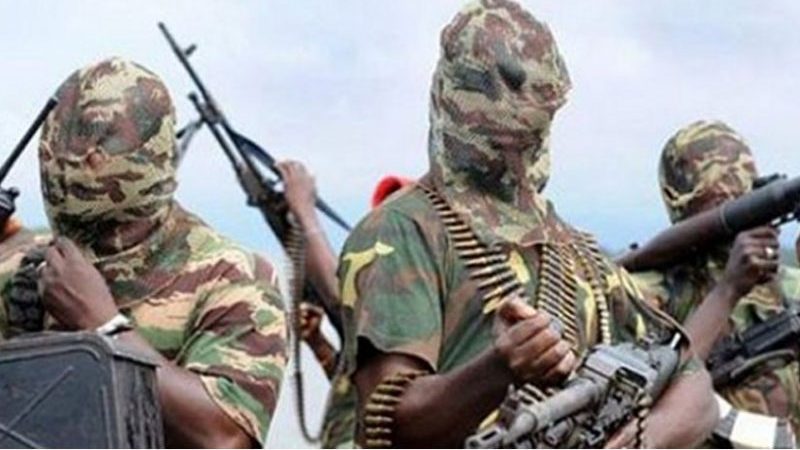
Boko Haram terrorists in Nigeria killed 20 young men in one of a series of early June attacks in the mountainous Shiroro communities of Niger State.
Witnesses in the town of Bassa said Boko Haram fighters attacked in broad daylight on June 6, shot the victims at close range and beheaded 10 of them. Residents were forced to hold the severed heads as the terrorists took pictures and made video recordings.
“They told us that anybody who refused to be recruited into their fold would be given a similar treatment,” an anonymous witness told Nigeria’s Premium Times online newspaper. “They said they used the 10 beheaded youths as an example. They said they had warned us that everybody should vacate the community but that we refused. It’s either we join them, or we leave the community.”
Boko Haram also torched houses and killed domestic animals in four other Shiroro villages during the two-day terror campaign. Analysts say the terrorists have gradually regrouped in central Shiroro after being driven from northeast Nigeria.
Retired Nigerian Navy Capt. Umar Bakori said the group likely is attracted to Shiroro’s strategic location, fertile soil, and abundance of gold and copper.
“About 90 percent of Shiroro County’s inhabitants are farmers,” Bakori told TruthNigeria.com. “If Boko Haram controls Shiroro, they’ll have access to vast lands filled with mineral deposits and agricultural land.”
This would provide them with more than enough revenue and resources to sustain their terrorism, Bakori added.
In mid-April, Boko Haram was blamed for killing and beheading nine people during ambushes in at least four Shiroro farming communities. An unknown number of Nigerian Soldiers died days earlier after a military vehicle ran over an improvised explosive device. The attacks drove Nigerian military forces from the area. Hundreds of residents also left.
“We are leaving our communities now and there are insufficient motorcycles and vehicles to take us out as quickly as possible,” Shiroro resident Yahuza Allawa told Nigeria’s Punch newspaper. “We are afraid. We left our belongings behind because we could not carry so many things. So many other people have left already.”
Emmanuel Umar, a former commissioner of internal security in Niger State, said Boko Haram likely seeks to replicate the situation it once exploited in northeast Nigeria’s rugged Sambisa Forest. The terror group was known to bring kidnapped girls to the forest and launch attacks against security forces from it before disappearing into its dense cover.
“They want to create a haven where they can plan and launch attacks without fear of being caught,” Umar told TruthNigeria.com.
Sambisa Forest was Boko Haram’s main base until it was driven out by its rival, the Islamic State West Africa Province
(ISWAP) in 2021.
Boko Haram had maintained a presence in Shiroro since 2014 but recently increased its operations there.
“For several years, they lay low, regrouping and re-strategizing,” Bakori told TruthNigeria.com. “Now, they’re trying to establish a stronghold in Shiroro.”
Bakori said the Nigerian military is unable to properly defend Shiroro because it lacks manpower and equipment. He suggested that men and women with the Vigilant Group of Nigeria (VGN) could complement military activities in Shiroro. Journalist Mohammed Anka credited the VGN with helping stem recent violence.
Boko Haram’s activities in Niger State are not confined to Shiroro.
The group is blamed for an attack on the village of Kuchi, part of the Munya community, where eight people were killed and at least 160 kidnapped in late May.
Aminu Najume, the local government chairman, said about 300 gunmen arrived on motorbikes and stayed for several hours.
“They made a fire to curb the cold because it was raining throughout that day,” Najume told CNN. “They cooked and made tea; they made Indomie (instant noodles) and spaghetti.”
Boko Haram controlled 42 communities in Munya and Shiroro as of October 2023, according to Sen. Musa Sani, who represents the Niger Eastdistrict of Niger State.
“Boko Haram terrorists have mounted their flags in many of the villages they have captured, such as Kaure, Alawa and Magami,” Sani said in a report by Nigerian newspaper Business Day. “Inhabitants of these war-torn parts of the state have been abandoned and left to their fate, compelling them to wallow in perpetual agony and abject misery.”

The United States is 248 years old today. As nations go, we’re a spring chicken.
At 81, Joe Biden is the oldest president the United States has ever had. Donald Trump, his rival in the 2024 election, is 78. As candidates go, they’re both over the hill.
Age has become a central issue in the campaign, especially after Biden’s disappointing performance in last Thursday’s debate.
How old is too old? (I’ve addressed this before, but the topic has become so timely that it might be useful to you if I do again.)
In 1900, gerontologists considered “old” to be 47. Today, you are considered “youngest-old” at 65, “middle-old” at 75, and at 85, you are a member of the “oldest-old.”
I ask with some personal stake. Last week I turned 78. I feel fit, I swing dance and salsa, and I can do 20 pushups in a row. Yet I confess to a certain loss of, shall we say,fizz.
Three score and ten is the number of years of life set out in the Bible. Modern technology and Big Pharma add at least a decade and a half. Beyond this is an extra helping.
“After 80, it’s gravy,” my father used to say. Joe is on the gravy train.
People treat you differently when you get old. An elderly friend once told me there were four ages to life: youth, middle age, old age, and “You look great.”
Where will it end? There’s only one possibility, and that reality occurs to me with increasing frequency. My mother passed at 86, my father two weeks before his 102nd birthday, so I’m hoping for the best, genetically speaking.
Yet I find myself reading the obituary pages with ever greater interest, curious about how long they lasted and what brought them down. I remember aNew Yorkercartoon in which an older reader of the obituaries sees headlines that read only “Older Than Me” or “Younger Than Me.”
Most of the time I forget my age. Not long ago, after lunch with some of my graduate students, I caught our reflection in a store window and for an instant wondered about the identity of the little old man in our midst.
It’s not death that’s the worrying thing about a second Biden term. It’s the dwindling capacities that go with aging. “Bodily decrepitude,” said Yeats, “is wisdom.” I have accumulated somewhat more of the former than the latter. Joe strikes me as having a considerable amount of both.
I still have my teeth, in contrast to my grandfather, who I recall storing his choppers in a glass next to his bed, and have so far steered clear of heart attack or stroke (I pray I’m not tempting fate by my stating this fact). But I’ve lived through several kidney stones and had both hips replaced.
And my hearing is crap. Even with hearing aids, I have a hard time understanding someone talking to me in a noisy restaurant. You’d think that the sheer market power of 60 million boomers losing their hearing would be enough to generate at least one chain of quiet restaurants.
When I get together with old friends, our first ritual is an “organ recital” — how’s your back? knee? heart? hip? shoulder? eyesight? hearing? prostate? hemorrhoids? digestion?
The recital can run — and ruin — an entire lunch.
The question my friends and I jokingly (and brutishly) asked one other in college — “getting much?” — now refers not to sex but to sleep.
I don’t know anyone over 75 who sleeps through the night. When he was president, Bill Clinton prided himself on getting only about four hours. But he was in his 40s then. (I also recall Cabinet meetings where he dozed off.) How does Biden manage?
My memory for names is horrible. I once asked Ted Kennedy how he recalled names, and he advised that if a man is over 50, just ask, “How’s the back?” and he’ll think you know him.
I often can’t remember where I put my wallet and keys or why I’ve entered a room. And certain proper nouns have disappeared altogether. Even when rediscovered, they have a diabolical way of disappearing again. Biden’s Secret Service detail can worry about his wallet, and he’s got a teleprompter for wayward nouns, but last week’s debate revealed some diminution in the memory department.
I have lost much of my enthusiasm for travel and feel, as did Philip Larkin, that I would like to visit China, but only on the condition that I could return home that night. Air Force One makes this possible for Biden, under most circumstances. If not, it has a first-class bedroom and personal bathroom.
I’m told that after the age of 60, one loses half an inch of height every five years. This doesn’t appear to be a problem for Biden, but it presents a challenge for me, considering that at my zenith I didn’t quite make it to five feet. If I live as long as my father did, I may vanish.
Another diminution I’ve noticed is tact. Months ago, I gave the finger to a driver who passed me recklessly. Giving the finger to another driver is itself a reckless act.
I’m also noticing I have less patience, perhaps because of an unconscious “use by” timer that’s now clicking away. Increasingly, I wonder why I’m wasting time with this or that buffoon. I’m less tolerant of long waiting lines, automated phone menus, and Republicans.
Cicero claimed “older people who are reasonable, good-tempered, and gracious bear aging well. Those who are mean-spirited and irritable will be unhappy at every stage of their lives.” Easy for Cicero to say. He was forced into exile and murdered at the age of 63, his decapitated head and right hand hung up in the Forum by order of the mean-spirited and irritable Marcus Antonius.
How the hell did Biden maintain his patience when he was on the debate stage with the most vile person in public life?
The style sections of the papers tell us that the 70s are the new 50s. Septuagenarians are supposed to be fit and alert, exercise like mad, have rip-roaring sex, and party until dawn. Rubbish. Inevitably, things begin falling apart. My aunt, who lived far into her nineties, told me “getting old isn’t for sissies.” Toward the end, she repeated that phrase every two to three minutes.
Philosopher George Santayana claimed to prefer old age to all others. “Old age is, or may be as in my case, far happier than youth,” he wrote. “I was never more entertained or less troubled than I am now.” True for me too, in a way. Despite Trump, the Republican Party, climate change, near record inequality, potential nuclear war, and another strain of COVID making the rounds, I remain upbeat — largely because I still spend most days with people in their 20s who buoy my spirits. Maybe Biden does, too.
But I’m feeling more and more out of it. I’m doing videos on TikTok and Snapchat, yet when my students talk about Ariana Grande or Selena Gomez or Jared Leto, I don’t have a clue whom they’re talking about (and frankly don’t care).
I find myself using words — “hence,” “utmost,” “therefore,” “tony,” “brilliant” “valise” — that my younger colleagues find charmingly old-fashioned. If I refer to “Rose Mary Woods” or “Jackie Robinson” or “Ed Sullivan” or “Mary Jo Kopechne,” they’re bewildered.
Last spring, I made a hard decision. At the end of the semester, I taught my last class after more than 40 years of teaching.
Why? I wanted to leave on a high note, when I felt I could still do the job well. I didn’t want to wait until I could no longer give students what they need and deserve. And I hated the thought of students or colleagues whispering about the old guy who shouldn’t be teaching anymore.
Getting too old to do a job isn’t a matter of chronological age. It’s a matter of being lucid enough to know when you should exit the stagebeforeyou no longer have what it takes to do the job well.
It saddens me that I won’t be heading back into the classroom this fall. But it was time for me to go.
Happy July Fourth.
- This article was published at Robert Reich’s Substack

During a recent visit to Northern Cyprus, the writer stayed at the Guest House of the Middle East Technical University (METU) Northern Cyprus Campus. His goal was to provide a snapshot of local life, energy, and power infrastructure based on his limited observations.
The writer examined the region’s electricity generation facilities, such as the Teknecik Thermal Power Plant near Kyrenia, which operates 2×60 MWe oil-fired units and new diesel generators for peak loads. The Northern Cyprus Electricity Authority, KIBTEK, plans to expand capacity with additional generators and explore renewable energy options like solar and wind.
Currently, power in Northern Cyprus is primarily generated at three main fuel oil-burning stations: Teknecik, Dikmen, and Kalecik, with a total capacity of 346.3 MW. However, the use of renewable energy is expanding. Despite this, emissions from existing power plants pose significant environmental challenges, necessitating urgent upgrades to reduce dust pollution. The writer suggested the consideration of small-scale barge-mounted nuclear power plants for future energy needs and emphasized the importance of nuclear engineering education at METU.
The writer also noted the challenges faced by regions like Guzelyurt/Morphou, which suffer from severe droughts and reliance on limited water sources. Additionally, he observed the mixed emotions of locals visiting their former homes across the border, highlighting the shared cultural and historical ties between communities in the North and South.
The influx of unskilled labor, primarily from mainland Turkey, was identified as a significant issue for Northern Cyprus’s economy and social structure. Conversely, the presence of multiple pensions for retirees was seen as an unsustainable practice needing reform.
Key economic activities in Northern Cyprus include villa construction, casinos, and universities, with the construction boom slowing due to global economic conditions.
The Varosha/Marash area near Famagusta was recommended for redevelopment into an industrial fairground, as its current state holds no practical value.
METU Northern Cyprus was highlighted for its robust educational programs and facilities, seen as crucial for boosting local industrial output and economic growth. The university’s International Relations Department provides practical education opportunities amidst the ongoing political situation.
The writer concluded that Northern Cyprus should focus on its strengths and ignore unproductive negotiations with the South, which relies heavily on external support. The British community in Northern Cyprus was viewed as a valuable asset, contributing positively to local society with their frugal lifestyle and intellectual resources.
Investment in education, particularly higher education, was identified as a key driver for societal development, with a call for comments and feedback on these observations.
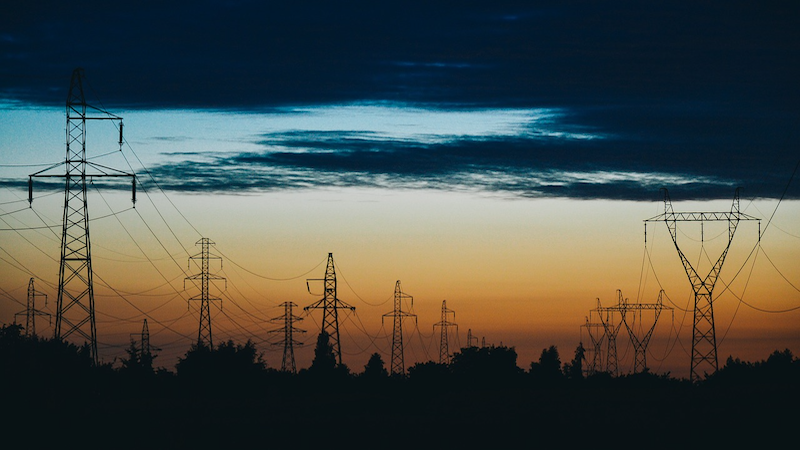
Although energy production from wind and solar has grown rapidly in the United States, its integration into the national electric grid has been impeded by poor grid interconnection policies, leaving thousands of new facilities for generating renewable energy waiting to be connected to the grid.
In a Policy Forum, Les Armstrong and colleagues highlight the interconnection problem and discuss whether federal grid policy reforms alone are enough to address it. Armstrong et al. argue that while the US Federal Energy Regulatory Commission’s (FERC) recent orders to improve this bottleneck are a step in the right direction, fundamental issues remain unaddressed.
In the US, electricity production from wind and utility-scale solar exceeded that from coal for the first time in April 2022 and again from February through May 2023. The Inflation Reduction Act is expected to significantly boost low-carbon capacity additions, potentially doubling annual growth.
However, there is a significant backlog of thousands of new generation projects in the queue to connect to the electrical grid, with wait times between request and agreement that can last several years. In response to issues with the interconnection process, FERC released a set of reforms that incentivize ready projects, levy penalties for delays, and mandate long-term transmission upgrades with more equitable cost allocation.
Despite these steps, Armstrong et al. highlight several problems that remain, including the need for a more centralized planning approach and better integration of interconnection and transmission policies. Historical lack of coordination and conflicting state goals also hinder efficient grid development, emphasizing the need for a more coordinated and comprehensive strategy. “
Going forward, Congress and the federal government need to move to a more coordinated and comprehensive planning approach that allows FERC to overcome local and regional resistance if it is to contribute to the Biden administration’s goal of decarbonizing our electrical system,” write the authors. “What this fundamentally requires is a national decarbonization goal that provides the impetus for truly national planning for a 21st-century electrical grid.”