TEHRAN, Jul. 05 (MNA) – The second phase of the 14th Iranian presidential election is underway in Arak/
Categories
 The South Caucasus News - SouthCaucasusNews.com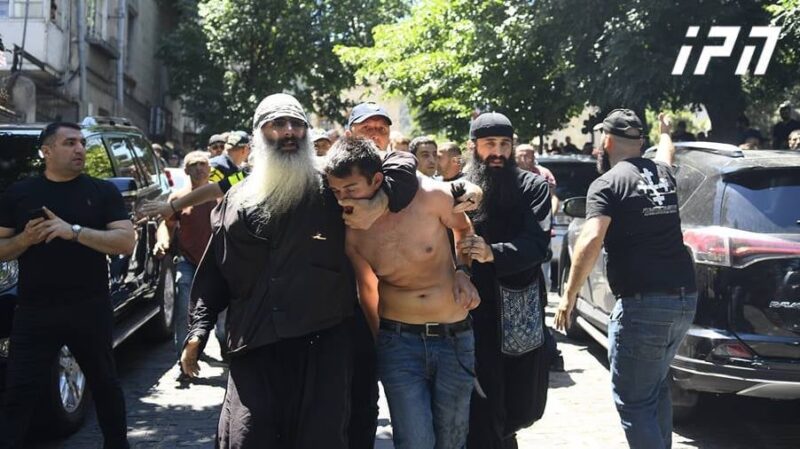
LGBT violence in Georgia
The Georgian Young Lawyers’ Association (GYLA) has issued a statement regarding the events of July 5-6, 2021. During that time, right-wing homophobic groups in Tbilisi instigated a violent rampage aimed at disrupting a gay parade. The primary victims were journalists, one of whom later passed away.
GYLA representatives emphasized that even three years later, the organizers and participants of this mass violence remain largely unpunished. While the Tbilisi City Court has handed down guilty verdicts to several attackers, not all responsible parties have been identified and held accountable.
Furthermore, investigative authorities continue to ignore the issue of government officials’ accountability for what happened. Therefore, on behalf of media representatives, GYLA has appealed to the European Court of Human Rights.
GYLA is representing the interests of 19 individuals affected by the events of July 5-6, 2021. Among them, 17 are representatives of various media organizations, while two were targeted due to their association with the LGBT community.
“GYLA has been actively communicating with investigative authorities during this period. However, there has been no immediate response to the statements and complaints submitted, suggesting that the national-level investigation is ineffective.
Due to the inadequate protection of victims’ rights at the national level, GYLA has filed an appeal to the European Court of Human Rights on behalf of media representatives. The case concerns violations of Articles 3 (prohibition of torture), 10 (freedom of expression), 13 (right to an effective remedy), and 14 (prohibition of discrimination) of the European Convention. The response stage in the case has been completed, and the appellants await a decision from the Strasbourg Court“, – stated GYLA.
Both the Council of Europe’s Committee of Ministers and the European Parliament have called on government bodies to thoroughly investigate the events of July 5-6. A resolution dated June 9, 2022, underscores that impunity for those responsible for such actions is unacceptable under any circumstances, violating both Georgian national legislation and the state’s international obligations.
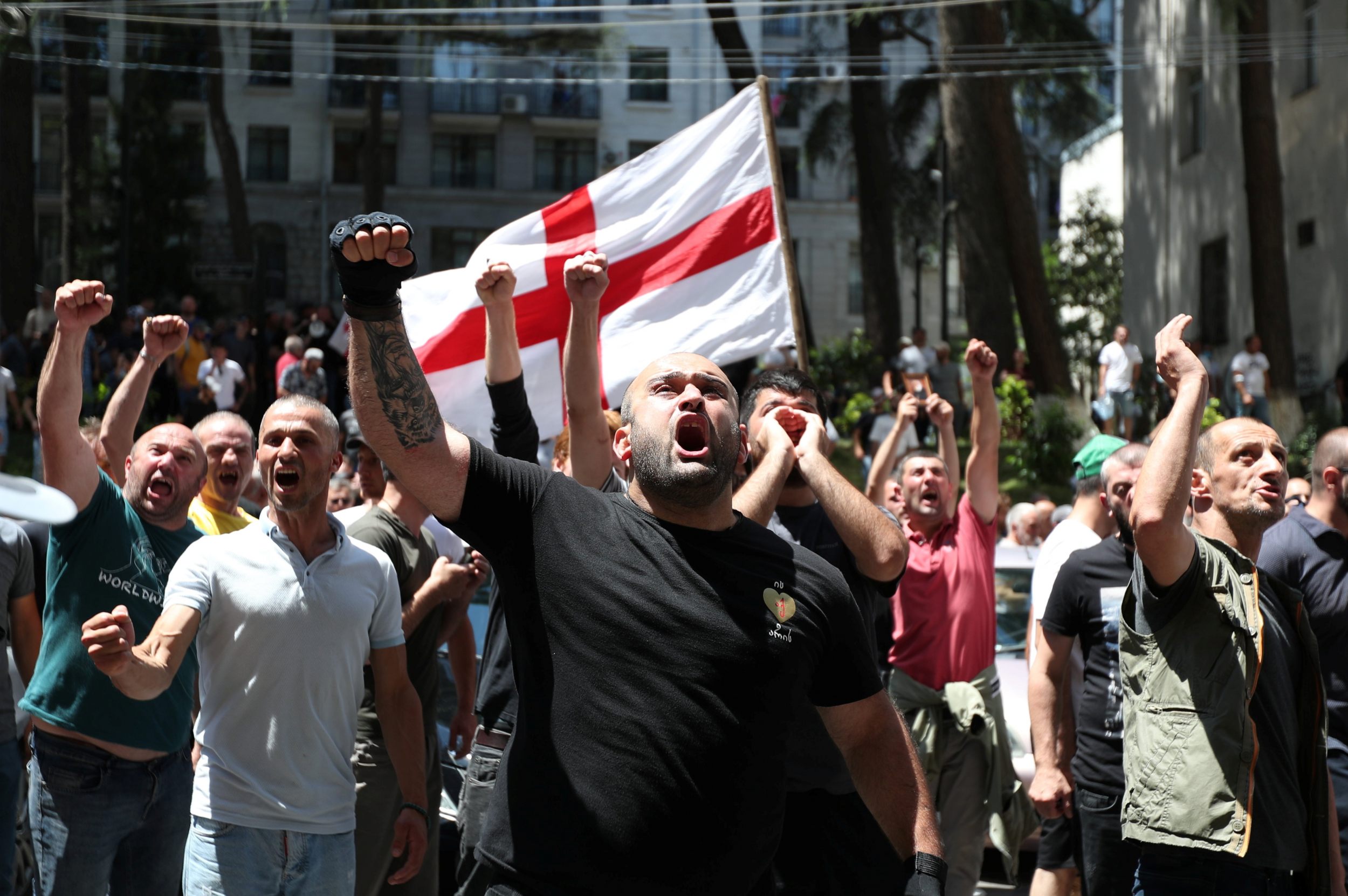
On July 5, 2021, as part of Tbilisi Pride Week, a ‘Dignity March’ was scheduled to take place. The procession was planned to start at Rustaveli Metro Station at 6:00 PM. However, the patriarchate soon announced its own action aimed against the march. Clergy called on their supporters to take to the streets and defend the country from what they termed a ‘deviant lifestyle.’
In the morning of July 5, homophobic groups gathered outside the parliament building. In Tbilisi, a real hunt for media representatives was organized—radicals attacked 53 journalists.
The violence was directly encouraged by the clergy. ‘No to violence, but you must commit violence for the Motherland,’ said Deacon Spiridon to those gathered.
Observers claim that the actions of the perpetrators were prompted by a statement from then-prime minister Irakli Garibashvili on July 5. He placed responsibility for potential complications not on the participants of the violent action, but on the organizers of the ‘Dignity March,’ urging them not to hold the procession on Rustaveli Avenue.
The ‘Dignity March’ was canceled, yet violence on Rustaveli Avenue continued for several hours. Journalists reported that there were insufficient police officers on-site throughout the day. In response, the Minister of Internal Affairs stated that ‘as many law enforcement officers as possible’ had been mobilized.
Media representatives noted that the attackers specifically targeted them. Some journalists required serious medical assistance afterward.

Leaders attending the Shanghai Cooperation Organization cast the group as capable of exerting increasing influence on the world stage. But beneath a veneer of solidarity, cracks are visible in the foundation.
The two-day SCO summit concluded July 4 with the signing of a bevy of documents, including a joint declaration that outlined an intention for the organization to exert a greater degree of global influence. “Tectonic shifts are occurring in global politics, the economy and other areas of international relations,” the document stated. “A fairer and multipolar world order is emerging.”
Earlier during the summit, Russian leader Vladimir Putin described the SCO as a “one of the key pillars of a fair multipolar world order.”
To substantiate Putin’s assertion, Russian media cited statistics that had little connection to tangible accomplishments, noting, for example, that SCO member states now account for almost 27 percent of the world’s landmass and more than 42 percent of the global population.
The summit’s most tangible result was the admission of Belarus as a full member. Most of the documents signed were aspirational.
In a carefully worded speech, the summit’s host, Kazakh President Kassym-Jomart Tokayev, indicated that the SCO needed to become more cohesive. “The SCO must strengthen its stabilizing and creative role to overcome the erosion of international law, prevent geopolitical fault lines and, ultimately, strengthen peace and security in a broad global context,” Tokayev said.
The SCO has expanded from its original membership of Russia, China and all Central Asian states except Turkmenistan, to include India, Iran, Pakistan and, now, Belarus.
The speeches at the summit provided clues suggesting not all participants are on the same geopolitical page. Chinese leader Xi Jinping called for a “complete set of measures” on information sharing among members to promote mutual security. “Security is a prerequisite for national development, and safety is the lifeline to the happiness of the people,” Xi said. Putin, meanwhile, focused his address on criticism of the West.
Perhaps the clearest sign of differences within the group was the speech made by India’s representative, Foreign Minister Subrahmanyam Jaishankar, who subtly criticized Beijing’s economic cooperation with Pakistan.
Meanwhile, UN Secretary-General Antonio Guterres, who participated in the Astana summit, sought to focus the group’s attention on pressing global matters, urging ceasefires for the conflicts in Gaza and Ukraine, and calling for an improved response to the “climate emergency.”
The SCO’s unifying factor at present is a general desire to see a reduction of Western global influence. Beyond that, there’s not much else that binds the organization. Kazakh political scientist Dimash Alzhanov believes SCO members prioritize their own interests rather than try to stake out a shared vision, noting that they have substantial tactical differences on efforts to contain Western influence.
Temur Umarov, a fellow at the Carnegie BerlinCenter, described the SCO as an organization lacking in operational substance to back up its grand intentions. “The SCO is still trying to understand what it is now and what it can be,” Umarov said in an interview with Radio Azattyk, the Kazakh service of RFE/RL. “In the end, its main advantage is only its size and collective GDP, but there are still almost no significant results.”
Learn more about sponsor message choices: podcastchoices.com/adchoices