Categories
South Caucasus News

UK’s Labour to win massive election majority, exit poll shows


LONDON — Keir Starmer will be Britain’s next prime minister with his Labour Party set to win a massive majority in a parliamentary election, an exit poll indicated Thursday, while Rishi Sunak’s Conservatives are forecast to suffer historic losses. 

The poll showed Labour would win 410 seats in the 650-seat parliament, ending 14 years of Conservative-led government.  

Sunak’s party was forecast to only take 131 seats, down from 346 when parliament was dissolved, as voters punish the Conservatives for a cost-of-living crisis and years of instability and infighting that has seen five prime ministers since 2016.  

In the last six national elections, only one exit poll has got the outcome wrong: In 2015 the poll predicted a hung parliament when in fact the Conservatives won a majority. Official results will follow over the next few hours.  

Sunak stunned Westminster and many in his own party by calling the election earlier than he needed to in May with the Conservatives trailing Labour by about 20 points in opinion polls. 

He had hoped that the gap would narrow as had traditionally been the case in British elections, but the deficit has failed to budge in a fairly disastrous campaign. 

It started badly with Sunak getting drenched by rain outside Downing Street as he announced the vote, before aides and Conservative candidates became caught up in a gambling scandal over suspicious bets placed on the date of the election. 

Sunak’s early departure from D-Day commemorative events in France to do a TV interview angered veterans, and even those within his own party said it raised questions about his political acumen.  

While polls have suggested that there is no great enthusiasm for Labour leader Starmer, his simple message that it was time for change appears to have resonated with voters. 

Unlike in France where Marine Le Pen’s far-right National Rally party made historic gains in an election last Sunday, the disenchanted British public appears to have instead moved to the center-left.


Categories
South Caucasus News

Azerbaijan, China Announce New Era of Cooperation in Strategic Partnership Declaration – Caspian News


Azerbaijan, China Announce New Era of Cooperation in Strategic Partnership Declaration  Caspian News

Categories
South Caucasus News

Connectivity along East-West, North-South corridors constitutes important area of co-op between Azerbaijan, SCO … – Trend News Agency


Connectivity along East-West, North-South corridors constitutes important area of co-op between Azerbaijan, SCO …  Trend News Agency

Categories
South Caucasus News

President Ilham Aliyev arrives at “Palace of Independence” to attend “SCO plus” format meeting – azərbaycan24


President Ilham Aliyev arrives at “Palace of Independence” to attend “SCO plus” format meeting  azərbaycan24

Categories
South Caucasus News

Russia Carving A New Regional Security Architecture – OpEd


Russia Carving A New Regional Security Architecture – OpEd

Most certainly, Russia’s final irreversible decision to suspend its membership and future participation in the Organization for Security and Cooperation in Europe (OSCE) Parliamentary Assembly on July 3, on the eve of U.S. Independence Day, marked another significant chapter in its shifting geopolitical relations with United States and Europe. As global situation heightens, particularly over security in Europe, Central EurAsia and the former Soviet space, Russia has also engaged in transforming not only economic relations but also paying attention to its security.

Over the past three decades, Russia became a member of many global bodies, participating actively at the United Nations. It spearheads the formation of the Greater Eurasia Union, the informal association BRICS—a group of states comprising Brazil, India, China and South Africa—and the Collective Security Treaty Organization (CSTO). Ukraine, which shares common geographical borders with Russia, and has primary ambitions of moving up to the global stage, has attempted joining the North Atlantic Treaty Organization (NATO) and the European Union. These systematic steps angered the Russian President and the Kremlin administration, the Executive Cabinet, the Federation Council and the State Duma, resulting into Russia undertaking “special military operation” in Ukraine. Russian President Vladimir Putin, however, stressed that Moscow had no plans to occupy Ukrainian territories.

As the United States and European sanctions broadened due to the “special military operation”, largely directed at “demilitarization” and “denazification” in Ukraine, Russia was ultimately expelled from most of foreign organizations including the Council of Europe.

The Organization for Economic Cooperation and Development (OECD) has also announced it had suspended Russia and Belarus from any participation in that organization. The OECD is one of the world’s major multilateral economic bodies with a membership of mostly of the rich, highly developed countries. The exclusion of Russia and Belarus will mean both countries are barred from participating in negotiations on issues including taxation, international business regulation and trade.

We can establish the fact that Russia and Belarus are not official members of the Paris-based group. But, Russia’s accession into the OECD was postponed after the country annexed Crimea in 2014 and was terminated because of Russian aggression against Ukraine. The group announced a plan “to develop proposals to further strengthen support to the democratically elected government of Ukraine, including to support recovery and reconstruction”.

Remarkable, during these past few years, Russia also exited from a number of international organizations. The simple interpretations and far reaching implications are that, as the world undergoes evolutionary process, Russia, emerging out of Soviet era setting, has broadly been restructuring its architecture and status. It emphasizes its national interest, sovereignty and better lives for its citizens while exercising its legitimate roles in the global system.

Noticeably, Russia continues to seek a profound respectable position and lately plays the role of an advocate for multipolar order, and consistently opposes conservative western-style rules-based order and hegemony. Reports monitored by this author indicated that Russia has already exited, the historic fall of the Soviet era, from international organizations, including

Russia’s upper and lower houses of parliament, the Federation Council and the State Duma, have expectedly decided to suspend Moscow’s participation in the Organization for Security and Cooperation in Europe (OSCE) Parliamentary Assembly. That said of the withdrawal from the OSCE, Russia still reserves the right to return if conditions are improved for its delegation, according to several interviews conducted with parliament members by local Russian media Izvestia in late June 2024, just before the final suspension.

Prominent Russian Senators have spoken:

– Vladimir Dzhabarov, first deputy chairman of the Federation Council Committee on International Affairs, pointed out that since 2022, Russia has faced increasing obstacles from the organization, such as its delegation members being denied entry visas and the right to speak.

– Konstantin Kosachev, member of the Federation Council Committee on International Affairs, noted that “the OSCE was conceived as a platform for comparing positions and trying to align them, if possible.” “The OSCE has recently stopped addressing general issues, becoming a vehicle for the collective West to impose its views on all others. It’s not us that have changed but the organization; it has been changed from within and actually destroyed. It certainly makes no sense for Russia to work in an organization that no longer is a platform for comparing and harmonizing positions,” the senator stated. “If and when the OSCE Parliamentary Assembly creates normal conditions for our work, if and when we receive guarantees and the principle of consensus is established in the organization, the decision may be reviewed,” Kosachev added.

– Alexey Fenenko, professor with the Department of International Security at Moscow State University’s Faculty of World Politics, believes that things are heading towards Russia’s gradual withdrawal from the OSCE. “Following Russian Foreign Minister Sergey Lavrov’s high-profile statement in 2004 that the OSCE in its current shape does not suit us, Russia has been trying to promote various reforms of the organization. But this did not work out at all,” the expert explained. “In fact, we have to deal with a new version of the Russia-NATO Council. I think that it’s only a matter of time before Russia decides to pull out of it,” Fenenko added.

In spite of the marked outrages, the Federation Council (the upper chamber) and the State Duma (the lower house) unanimously voted to adopt the Russian Federal Assembly’s motion to suspend the Russian delegation’s participation in the Parliamentary Assembly of the Organization for Security and Co-operation in Europe (OSCE PA) and stop paying dues to the organization.

“The Russian senators and State Duma members consider it sensible and justified to suspend the participation of the delegation of the Russian Federal Assembly in the OSCE PA and the payment of contributions to the OSCE PA budget. During the suspension period, any actions to amend the rules of procedure of the assembly with the aim of prejudicing the Russian delegation will be considered legally null and void,” the document states.

The parliamentarians also believe that the leadership of the OSCE PA and its members have ignored repeated appeals to return to an equal interparliamentary dialogue, the statement says. “Despite the Russian delegation’s repeated appeals and proposals, the priorities of the OSCE PA leadership indicate that at present, instead of creating conditions for a constructive exchange of views and the formation of a unifying agenda, this platform is being used as a politicized tool to deliberately implement an anti-Russian course, and also to intentionally distort what is going on in Ukraine,” the senators and MPs state.

The MPs emphasize that biased discriminatory approaches, double standards and total Russophobia, as well as an unwillingness to engage in substantive discussion, testify to the extreme degradation of the OSCE PA as a mechanism for interparliamentary co-operation. In addition, they draw attention to the fact that for many years the Parliamentary Assembly has ignored the problems related to the violation of the rights of national minorities in Ukraine and the Baltic States, the freedom of communication and education in one’s native language, has not paid attention to the blasphemous glorification of the Nazis and their accomplices, the harassment and murder of journalists who voice a position different from that of Brussels and Washington.

The parliamentarians also emphasize that the Russian delegation to the OSCE PA has, under spurious pretexts, “repeatedly been deprived of the opportunity to continue dialogue and to participate fully and equally in the work of the plenary sessions and governing bodies of the OSCE PA.” Romania’s demonstrative refusal to issue visas to members of the Russian delegation to participate in the annual session of the OSCE PA in Bucharest in 2024 was “the last point in the emerging deadlock,” as it has demonstrated that “confrontational tendencies and intolerance have taken over the common sense, spirit and values of this organization,” the statement reads.

Early July 2024, Russian President Vladimir Putin participated in the summit of the Shanghai Cooperation Organization (SCO) in Astana, Kazakhstan. Twenty-four documents were adopted at the summit. UN Secretary-General Antonio Guterres and the leaders of several international organizations were invited, including CIS Secretary General Sergey Lebedev and Secretary General of the Collective Security Treaty Organization (CSTO) Imangali Tasmagambetov. The topic of the meeting is “Strengthening multilateral dialogue – the pursuit of sustainable peace and development.” Belarusian President Alexander Lukashenko expected Belarus would be formally granted full-fledged membership. Minsk filed a bid to join the SCO in 2022, but started to participate in the organization’s work as early as in 2009. The SCO was founded on June 15, 2001, in Shanghai. Initially the organization included Russia, Kazakhstan, Kyrgyzstan, China, Tajikistan and Uzbekistan, in 2017 they were joined by India and Pakistan. Tehran applied to join in 2008 and became a full-fledged member of the organization in July 2023.

The OSCE has a comprehensive approach to security that encompasses politico-military, economic and environmental, and human aspects. It therefore addresses a wide range of security-related concerns, including arms control, confidence- and security-building measures, human rights, national minorities, democratization, policing strategies, counter-terrorism and economic and environmental activities.

It has a secretariat and currently headed by Helga Maria Schmid, who was appointed to the post of Secretary General of the OSCE in December 2020 for a three-year term and then extended until September 2024. OSCE also has specialized institutions with specific functions. But what is important here is that all 57 participating States enjoy equal status, and decisions are taken by consensus on a politically, but not legally binding basis.

The fall of the Soviet Union required a change of role for the CSCE. And Russia, after Soviet’s collapse, renewed its membership in According the records researched by this author, Then Soviet Union was admitted on 25 June 1973. Along the line, members of OSCE have criticized the organization for being in a position where Russia, and sometimes Belarus, can veto all OSCE decisions, Moscow has, for a number of years, not allowed the approval of the organization’s budget, the organization of official OSCE events or the extension of missions. In November 2023, they vetoed the appointment of Estonia as chairman from 2024.

The OSCE Mission to Georgia was established in November 1992 with its headquarters in the capital Tbilisi. The Mission’s mandate expired on 31 December 2008. Between these dates it was powerless to control the outbreak of the August 2008 Russo-Georgian war.

The objective of the mission to Moldova is to facilitate a comprehensive and lasting political settlement of the Transnistria conflict in all its aspects, strengthening the independence, sovereignty and territorial integrity of the Republic of Moldova within its internationally recognised borders with a special status for Transnistria.[15]

OSCE promoted a 5+2 format as a diplomatic negotiation platform, which began in 2005, suspended by Russia and Transnistria in 2006 until it started again in 2012, before making slow progress over the next ten years. The process stopped following the 2022 Russian invasion of Ukraine as two of the parties were then at war with each other. In December 2022 Russia blocked the renewal of the annual mandate by limiting it to a six month period, repeated again in June 2023 to another six month period.

OSCE involvement in Ukraine. It has deployed its Special Monitoring Mission to Ukraine at the request of Ukraine’s government. The mission has received mixed reviews. While some observers have applauded its function as the “eyes and ears of the international community”, others have accused the mission of bias towards either Russia or Ukraine.

OSCE has had so many disagreements with Russia, especially since the Ukraine crisis began on 24 February 2022 to de-nazify and de-militarize that former Soviet republic. It has protested the detention of four staff members in Donetsk and Luhansk, without specifying who had detained them. Further, two Ukrainian OSCE staffers were sentenced to 13 years of prison by a court in the Luhansk People’s Republic for “alleged high treason and espionage for the United States.”

The Russian delegation was not invited to the 29th OSCE Ministerial Council held in December 2022 where the delegates considered the ramifications and regional security challenges created by Russia’s continued ‘special military operation’ against Ukraine. There were calls to assess the reparations that Russia should be accountable for.

Since the start of its conflict with Ukraine, Russia has seized €2.7 million worth of armored vehicles that were previously part of the OSCE Special Monitoring Mission to Ukraine. According to a letter that was sent by Russian OSCE representatives to OSCE Secretary-General Helga Schmid in January 2023, 71 trucks and cars were brought to the Luhansk People’s Republic and the Donetsk People’s Republic as “evidence” and criminal proceedings were initiated against former OSCE personnel for espionage.

As a regional security-oriented intergovernmental organization comprising member states in Europe, North America, and Asia, its mandate includes issues such as arms control, the promotion of human rights, freedom of the press, and free and fair elections. It employs around 3,460 people, mostly in its field operations but also in its secretariat in Vienna, Austria, and its institutions. It has observer status at the United Nations.

Categories
South Caucasus News

Robert Reich: Stuck In Space – OpEd


Robert Reich: Stuck In Space – OpEd

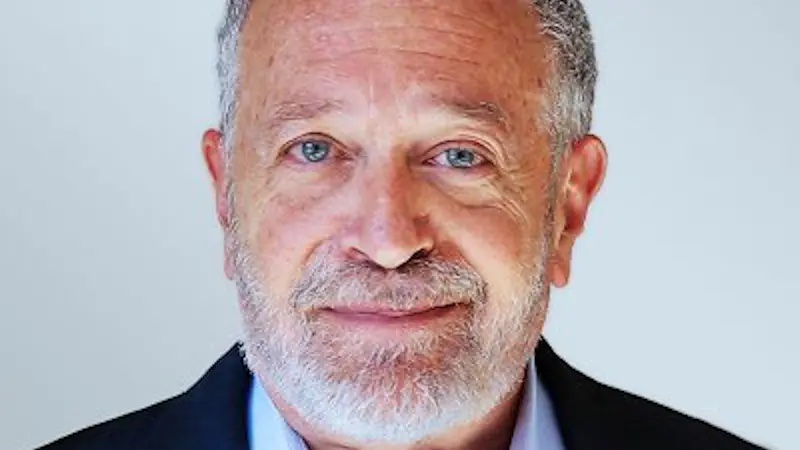
Robert Reich

On June 5, Boeing sent NASA astronauts Butch Wilmore and Suni Williams to the International Space Station aboard its new Starliner spacecraft — the first time the Starliner had ever put humans into space. But its thrusters started to behave aberrantly. Wilmore and Williams got to the space station safely, but the planned eight-day stay has already stretched to 26 days and counting. Williams and Wilmore are, for all intents and purposes, stuck in space.

As is the Democratic Party. Its own major thruster — Joe Biden — started to behave aberrantly last Thursday evening in front of 60 million people, and since then Democrats have been twisting in the stratosphere.

Some believe Biden must step down in favor of (in all likelihood) Kamala Harris. A rising chorus of Democratic members of Congress and Democratic governors, along with major donors and the chattering class in the media, says he looks and acts too frail to have any chance of beating Trump.

A new poll released Wednesday from The New York Times and Siena College provides more grist for this view. It was done after Thursday’s debate. It shows Trump ahead of Biden among likely voters 49 percent to 43 percent, his largest lead of the race in a Times/Siena survey. It also reveals growing concerns about whether Biden is fit enough to serve as an effective president.

A new Wall Street Journal poll, also done post-debate and also released Wednesday, shows almost exactly the same. 6-point lead over Biden among voters nationally (48 percent for Trump, 42 percent for Biden) with 80 percent saying that Biden is too old to run for a second term.

Others say no, Biden won’t and shouldn’t drop out of the race. Biden’s inner circle of advisers, including his wife, are digging in.

Katie Rogers in Wednesday’s New York Times reports that Biden has told a key ally that he knows he may not be able to salvage his candidacy if he cannot convince the public in coming days that he is up for the job. 

Only one thing is for sure: The uncertainty about all this, combined with a daily drip of reports that he’s being urged to drop out, is itself debilitating to Biden and the Democrats.

Trump knows this, which is why he’s been so quiet about Biden’s condition. Reportedly, his campaign wants Biden to continue to be the Democrats’ candidate. They figure Trump has a better chance against Biden than against a more vigorous opponent.

What will happen next? Biden has an interview scheduled for Friday with George Stephanopoulos of ABC News, along with campaign stops in Pennsylvania and Wisconsin.

My personal advice to Biden: Hold an unscripted news conference tomorrow, July 4, when the nation celebrates the birth of our democracy. Let the media and the public see how you field questions without a teleprompter. Admit what everyone knows — that in light of your debate performance, many are concerned about your age and capacity to be president for the next four years. Say you’re not concerned, but, given the intensity of those questions, you’ll release your latest medical report immediately and then be guided by the will of the people. You’ll make a final decision by Tuesday.

The Democratic National Convention is a mere seven weeks away, and early voting in several states starts in just 90 days. Ohio mandates by law that candidates are legally certified by August 7 in order to be included on the state’s ballot — that’s 35 days from now.

Being stuck in space is no place for astronauts or the Democrats to be.


Categories
South Caucasus News

India’s Claim To Have Replaced Colonial-Era Criminal Laws Is A Sham – Analysis


India’s Claim To Have Replaced Colonial-Era Criminal Laws Is A Sham – Analysis

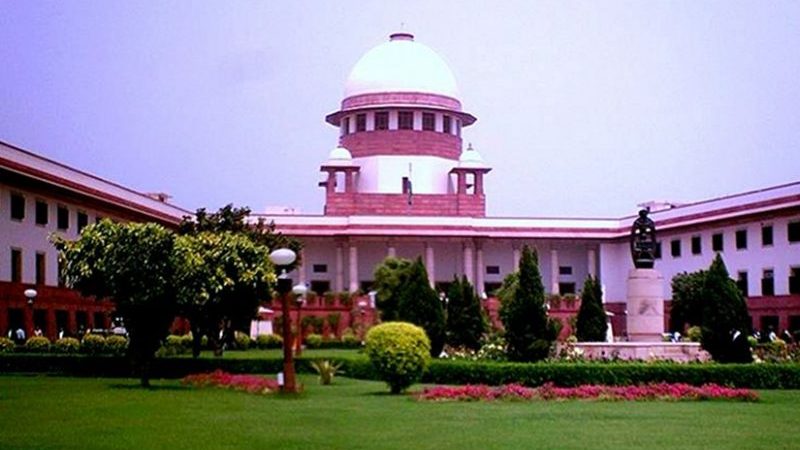
India's Supreme Court. Photo by Legaleagle86, Wikipedia Commons.

While some of the provisions of the new laws are progressive, critics say that they are generally harsher than the colonial laws, with increased powers given to the police.

In a controversial step, Narendra Modi government in India has replaced the country’s criminal laws by new ones on the plea that the old laws were “colonial” in character and were meant to sustain British colonial interests. 

On July 1, the government replaced the Indian Penal Code (IPC) of 1860; the Code of Criminal Procedure (Cr.PC) of 1973; and the Indian Evidence Act (IEA) of 1872.

The new laws were the Bharatiya Nyaya Sanhita (BNS) to take place of the Indian Penal Code; the Bharatiya Nagarik Suraksha Sanhita (BNSS) to replace the Criminal Procedure Code; and the Bharatiya Sakshya Adhiniyam (BSA) to replace the Indian Evidence Act.

According to Home Minister Amit Shah these laws are “framed by Indians, for Indians.

But critics point out that the new laws are harsher than the colonial laws they replaced, with increased powers given to the police. The stated purpose of liberating the people from servitude is not being fulfilled, they argue.

The new laws have come under heavy flak from opposition parties, the civil society, and most importantly, the legal community itself. There are calls for calls for a review of the laws by parliament and experts while others want a repeal.

Background

In 2023, the Narendra Modi government sought suggestions and recommendations on “comprehensive amendments to criminal laws” from Governors and Chief Ministers of States and Union Territories, High Courts and the Supreme Court, Bar councils, the law universities, members of the Parliament and the general public.

It is pointed out that as per the Pre-Legislative Consultation Policy of 2014. any draft legislation or its key points, should be published in the public domain for a minimum period of thirty days before it is introduced in parliament. And this must be accompanied by a justification for the enactment, its financial implications, and the estimation of the laws’ impact on the system and the citizenry.

Additionally, comments received through such a consultation process must be published on the website of the nodal ministry.

But in the case of these laws, the process was not made accessible to the public until it was introduced in parliament, media reports say.

On the day the bills were introduced in parliament, the Speaker had expelled 146 opposition MPs for creating a ruckus in the House.Thus criminal laws of far reaching impact were passed in the absence of the opposition.

Mamata Banerjee, Trinamool Congress leader and West Bengal Chief Minister described the enactment as a “dark day” in Indian democracy. She demanded a fresh parliamentary review of the laws for the sake of “transparency and accountability in the legislative process.”

Reportedly, stakeholders such as the police, prosecutors, government officials, judges and court officials, medical and forensic science specialists, lawyer and citizens got only 26 days to submit their comments and suggestions, though Home Minister Shah said that the laws were discussed at various forums for three months.

Are New Laws Needed?

Many leading Supreme Court lawyers pointed out that the total jettisoning of the old criminal laws was not required at all because the new set of laws showed only 12 substantive changes. These could well have been accommodated in the old laws with amendments, they say.

Many of the provisions of the new laws are a duplication of existing laws. The All-Indian Lawyers Association for Justice (AILAJ) has warned that there will be confusion on account of the existence of parallel laws for the same crime. Clause 113 (terrorist acts) of the BNS will clash with the Unlawful Activities (Prevention) Act, 1967 (UAPA) already in force.

It is pointed out that the IPC, Cr.PC and the IEA had existed for over a century and their contents had been a matter of judicial interpretation at High Courts and the Supreme Court. Would these interpretations be valid now?

According to Senior Supreme Court Advocate Indira Jaising, even as the three new criminal laws are being implemented, the old laws willcontinue for another 20 years or more until pending cases governed by them are sorted out.

“In effect, we will be having two parallel criminal justice systems for the foreseeable future, which can range from 20–30 years,” Jaising says.

Jaising further states that new the criminal laws may have an impact on the backlog of cases, which is heavy in the Indian courts.

Citing data on pendency of cases from the National Judicial Data Grid she said that in India as a whole, 34,180,141 criminal cases in the district and local level courts; 1,755,946 criminal cases in the High Courts; and 18,049 cases in the Supreme Court are pending..

She expects criminal litigation to increase by 30% as a result of the co-existence of the two sets of laws.

Among the problematic aspects of the new laws is the numbering of the clauses in the new laws. Dissenters said that the massive changes in the numbering would cause confusion and lead to delays in the functioning of the police and the courts.

Illusory De-colonisation

The change is being sold by the nationalist government as “de-colonization”, but this is challenged by the opponents who point out that the actual changes are marginal with just 12 substantive changes in the BNS (IPC).

This reality is camouflaged by the substitution of English names by Hindi names and by substituting “Indian” with “Bharatiya.”

If de-colonization means giving more freedom and being more just in the administration of justice, the provisions of the new laws do not qualify to be considered “de-colonisation.”

The list of acts deemed criminal has been expanded and punishments are harsher. A legal publication called “Leaflet” said that the new laws indicate a “continuation and intensification of colonial-style powers”. The police have been given more powers, taking them away from magistrates. In other words, decisions which were left to the courts can now being taken by the police.

For example, under the Unlawful Activity Prevention Act (UAPA) 1967, sanction is required to prosecute someone. But under the BNS the police need no such sanction.

Furthermore, under the BNSS (the new Cr.PC), police custody has been increased from 15 days to 90 days, depending on the gravity of the offence.

A total of 20 new crimes have been added, and the period of imprisonment has been increased for 33 offences. A mandatory minimum punishment has been introduced in 23 crimes.

Sedition, which was a major crime in colonial laws, has been retained with a new nomenclature and a more expansive definition of “Acts endangering sovereignty unity and integrity of India”. Provisions under it have been made more stringent.

The death penalty has been retained and has been added for at least four new crimes such as mob lynching and organised crime.

“There is no shift from retributive to rehabilitative justice,” the “Leaflet” pointed out.

According to author and Supreme Court Advocate Nipun Saxena the new laws violate “at least four articles of the constitution and many important judgements of the Supreme Court”. These relate to procedural safeguards, protection against illegal detention, and laws against “self-incrimination.”

The new Indian Evidence Act (BSA) allows the admissibility of electronic records as evidence. While this is modernization, there are doubts about its implementation in India.

Aakar Patel, chair of board at Amnesty International India, said that in the absence of a robust data protection law and given the documented misuse of electronic evidence in the Bhima Koregaon case and Newsclick case, the new law leaves room for abuse.

“The laws in their current form will be used as pretext to violate the rights of all those who dare speak truth to power. The three new criminal laws in India must be immediately repealed and brought in line with international human rights standards to prevent the continued flagrant misuse to crackdown on peaceful dissent in the country,” Patel said.

Dr.Faizan Mustafa of the Chanakya Law University is disheartened to see that the new code has not made any improvements on the inadequate hate speech provisions in the old law.

The offence of adultery reappears in a new avatar as the offence of having sex on the basis of false promises. Deceit included the false promise of employment or promotion, inducement, or marrying after suppressing identity.

But critics say that this might, in some cases, end up criminalising consensual relationships and provide a fillip to the Hindu nationalistic movement against Muslim men making love to or marrying Hindu women (called Love Jihad).

Redeeming Features 

However, there are some redeeming features in the new laws.

Dr.Faizan Mustafa, Law professor and Vice Chancellor of the Chanakya National Law University says that the code punishes lynching by five or more persons without using the term “mob lynching”. Death penalty has been provided for the rape of a minor.

The BNS, under Clause 103, for the first time also recognises murder on the ground of race, caste, or community as a separate offence. The new provision could now ensure such crimes, which have been on the rise in recent years, get legal recognition.

“Community service” has been introduced for six crimes.

Challenge in Supreme Court

Meanwhile, a petition was moved in the Supreme Court seeking a stay on the implementation of the new laws saying that they were passed without detailed debate or effective discussion in parliament as a large number of Members from the Opposition had been suspended at that time.


Categories
South Caucasus News

The Ripple Effect: How A Right-Wing Victory In France Could Reshape Europe – OpEd


The Ripple Effect: How A Right-Wing Victory In France Could Reshape Europe – OpEd

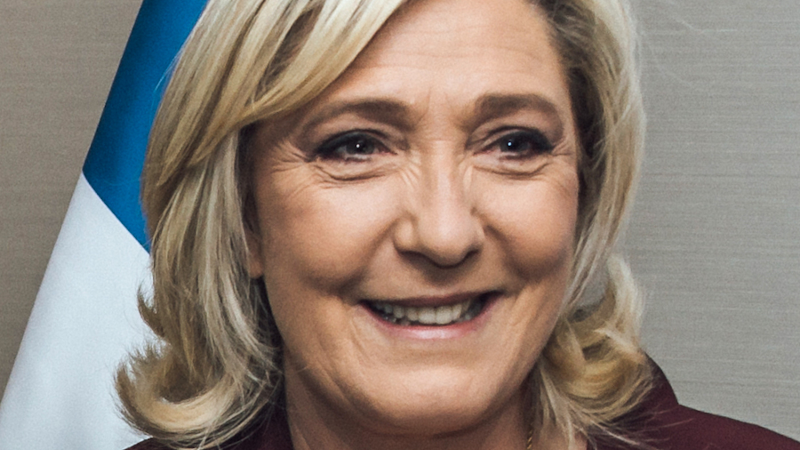
France's Marine Le Pen. Photo Credit: VOX España, Wikipedia Commons

The potential triumph of right-wing parties in France in July 2024 holds great significance for both the future of France and the European Union (EU). This outcome would not only reshape domestic policies, but also have far-reaching effects across the continent, influencing political dynamics, economic strategies, and security protocols. This essay explores the multifaceted impacts of a right-wing victory in France, analyzing the potential transformations within the country and their broader consequences for the EU.

A victory for right-wing parties in France would likely signal the start of a new era characterized by domestic policies focused on national identity control and social conservatism. One of the most immediate changes would be stricter immigration laws, reflecting the right wing’s long-standing emphasis on border control and curbing illegal immigration. While this approach aims to address national security concerns and preserve cultural heritage, it may also exacerbate social tensions and marginalize immigrant communities. Furthermore, an emphasis on national identity could lead to policies that prioritize traditional French values and cultural norms, potentially overshadowing multiculturalism, progressivism, and social initiatives.

From an economic standpoint, right-wing governance in France may lead to the implementation of protectionist policies aimed at safeguarding domestic industries from global competition. These protectionist measures could include tariffs, subsidies, and regulations that favour local businesses. While such measures might benefit certain sectors and protect jobs, they could also result in trade disputes with other EU member states and non-EU countries, ultimately affecting France’s economic growth and global market position. Additionally, reducing taxes and regulations for businesses could stimulate investment and economic activity, but it might also require cuts in social welfare programs, thus impacting vulnerable populations.

Under right-wing leadership, France’s foreign relations would undergo significant changes. An assertive foreign policy centred on national interests could strain relationships with neighbouring countries and the EU. France might adopt a more independent stance in international organizations and treaties, prioritizing its sovereignty over multilateral cooperation. This shift could present diplomatic challenges and necessitate a reassessment of France’s global commitments and regional partnership.

The vulnerability of the European Union to the repercussions of a right-wing triumph in France would be profound. It is plausible that France would seek to implement reforms to reduce the influence of EU institutions and advance national sovereignty, creating significant obstacles to EU integration efforts. This standpoint could resonate with other member states that harbour similar sentiments, thus posing a wider challenge to the federalist trajectory of the EU. Consequently, the EU’s ability to formulate unified policies on crucial matters such as immigration, trade, and regulation would become more complex.

From an economic perspective, the rise of protectionism in France has the potential to disrupt the single market. This would occur through the establishment of trade barriers and restrictions on investment within the EU. Furthermore, conflicts over budgetary issues could lead to France’s desire to reduce its financial contributions to the EU budget. As a result, there could be a redistribution of financial resources among member states, leading to tensions. Consequently, these dynamics would hinder the EU’s economic policies and initiatives, compromising economic stability and prospects for growth overall.

A right-wing victory in France may prioritize national defence over collective EU defence projects. This could lead to an increase in national defence spending, which may detract from cooperative EU initiatives and weaken the framework for collective security. Additionally, there may be a greater emphasis on internal and border security controls, which could result in changes to EU-wide security policies. This might culminate in stricter measures being implemented throughout the continent. As a result, the EU’s approach to intelligence sharing and counter-terrorism efforts would face challenges, undermining the pursuit of cohesive security strategies.

Furthermore, a right-wing victory in France would have a significant impact on the political landscape of the EU. This could strengthen nationalist and right-wing movements across Europe, leading to increased political polarization within the EU. As a result, EU cohesion would be strained and the implementation of unified policies could become more complicated, as member states may prioritize their national interests over collective objectives. The rise of right-wing parties may also lead to a reevaluation of the fundamental principles that underpin the EU, sparking debates about the balance between national sovereignty and EU integration. To address the potential challenges that could arise from a right-wing victory in France, it is important to consider several problem-solving approaches. Firstly, fostering dialogue and cooperation between member states of the European Union (EU) is crucial for maintaining unity and addressing diverging political views. The EU could establish dedicated forums for discussing national concerns within the framework of EU-wide goals, thus bridging the gap between national sovereignty and integration.

Secondly, economic policies should be carefully crafted to strike a balance between protectionism and the benefits of open markets. This balance can be achieved through the negotiation of trade agreements that both safeguard domestic industries and promote international cooperation and economic growth.

In terms of security, it is crucial to enhance joint defence initiatives and intelligence-sharing mechanisms to strengthen collective security, while also considering national priorities. The EU can invest in technologies and infrastructure that facilitate secure and efficient information exchange. This will enable member states to collaborate effectively in addressing counterterrorism and other security threats.

Furthermore, promoting social cohesion and integration within member states can help reduce potential social tensions that may arise due to stricter immigration policies. Programs aimed at fostering cultural understanding and providing economic opportunities for immigrant communities can contribute to a more harmonious society.

In conclusion, if there is a right-wing victory in France in July 2024, it would have significant implications for both France and the European Union. Domestically, it could lead to stricter immigration policies, protectionist economic measures, and a more assertive foreign policy. For the EU as a whole, this outcome would present challenges to integration efforts, economic stability, and collective security. However, through dialogue, well-balanced economic strategies, and enhanced security cooperation, both France and the EU can effectively address these challenges and work towards a future that respects national sovereignty while promoting unity and prosperity.

The opinions expressed in this article are the author’s own.

References

  • Brubaker, Rogers. “Immigration, citizenship, and the nation-state in France and Germany: A comparative historical analysis.” International Sociology 5, no. 4 (1990): 379-407.
  • Della Porta, Donatella, and Manuela Caiani. “The mobilization of the extreme right in Europe.” In The Extreme Right in Europe: Current Trends and Perspectives, edited by Paul Hainsworth, 117-134. Routledge, 2008.
  • Judis, John B. “The populist explosion: How the great recession transformed American and European politics.” Columbia Global Reports, 2016.
  • Mudde, Cas. “The populist radical right: A pathological normalcy.” West European Politics 33, no. 6 (2010): 1167-1186.
  • Taggart, Paul, and Aleks Szczerbiak. “Contemporary Euroscepticism in the party systems of the European Union candidate states of Central and Eastern Europe.” European Journal of Political Research 43, no. 1 (2004): 1-27.

Categories
South Caucasus News

Russian Media: Tokayev Is Part Of Putin’s Inner Circle — Does That Mean Moscow Considers Kazakhstan As Part Of Russia? – Analysis


Russian Media: Tokayev Is Part Of Putin’s Inner Circle — Does That Mean Moscow Considers Kazakhstan As Part Of Russia? – Analysis

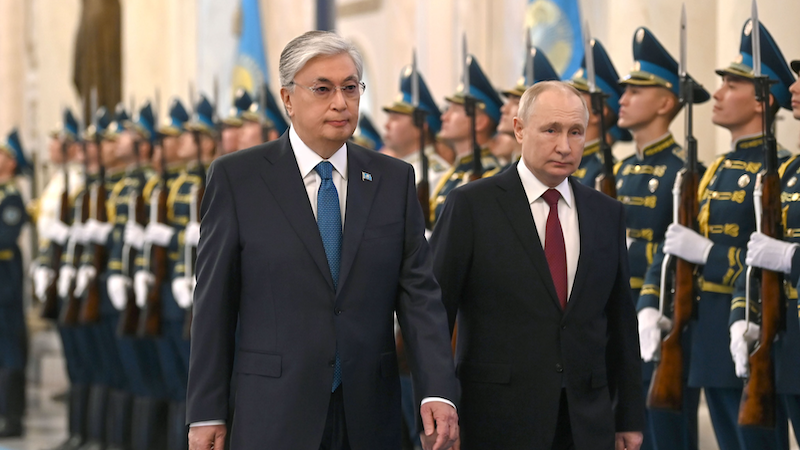
Kazakhstan's President Kassym-Jomart Tokayev with Russia's President Vladimir Putin. Photo Credit: Kazakhstan Presidential Office

The 2024 Shanghai Cooperation Organization (SCO) Summit concluded today, on July 4, in the Kazakh capital city with the adoption of the Astana Declaration and the approving of a number of strategic documents covering energy, security, trade, finance, and information security.

The UN Secretary-General António Guterres’ participation in this high-level gathering lent additional weight to it.  The summit appears to have largely been an image event for Kazakhstan. It probably is therefore particularly pitiful for the host country’s representatives to see that some Western and Russian media outlets have been writing more about the problematic geopolitical atmosphere in which the summit took place than the event itself.

Deutsche Welle’s Anatoly Weiskopf, in a report piece entitled “Why the SCO summit in Astana has already become a triumph for Xi Jinping” and published on July 3, says: “Another summit of the Shanghai Cooperation Organization began in Astana. The main events will take place on July 4, and during its first day, the Chinese side dominated the information field”. He notes that President of Kazakhstan Kassym-Jomart Tokayev personally met Xi Jinping at the Astana Nursultan Nazarbayev Airport, while Russian President Vladimir Putin who had arrived shortly after the Chinese President was met at the plane’s ramp by the head of the Kazakh government, Olzhas Bektenov. 

It is said that Chinese President Xi Jinping arrived in Kazakhstan on Tuesday for a State visit and to attend the 24th Meeting of the Council of Heads of State of the Shanghai Cooperation Organization, and Russian President Vladimir Putin appeared in Astana just to take part in the SCO summit.

Here is what Anatoly Weiskopf further writes: “What is also interesting is that this time the Kazakh press pays almost no attention to the Russian President. He is clearly in the shadow of his Chinese counterpart. Just look at the reports of the leading media in Kazakhstan, which track almost every step of Xi Jinping and members of his team – and without a single critical remark”.

The Russian propaganda media did not remain in debt and responded peculiarly to views of the above kind on the situation in the triangle of Moscow – Astana – Beijing. New Izvestia’s Nikolai Vladimirov, in an analytical piece, entitled “Kazakhstan as a backyard: why the meeting between Putin and Tokayev did not attract attention” and published on July, 4 says: “On the eve of the main day of the SCO summit in Astana, Vladimir Putin met with the head of Kazakhstan, Kassym-Jomart Tokayev. A minimum of information has emerged about their conversation. Meanwhile, the interdependence of the two States and the closeness of their leaders are undeniable”. This seems to be the answer to why “the Kazakh press pays almost no attention to the Russian president”.

Then Nikolai Vladimirov goes on to point out: “There is no doubt that Putin and Tokayev do not need to meet in person to monitor the development of relations between the two countries with all its difficult moments created mainly by the Russian-Ukrainian armed conflict. For this, there is a telephone, foreign ministers, advisers, ambassadors, etc. And judging by the current level of relationships, all these people work quite successfully”. According to him, Kassym-Jomart Tokayev “managed to emerge from the shadow (of the first President of Kazakhstan, Nursultan Nazarbayev) thanks to the support of Vladimir Putin, which the [current] Kazakh leader will always remember in the future and lead his country in the wake of Russian foreign policy”.

Thus, Nikolai Vladimirov seemingly takes pains to convince everyone that claims like Putin was “clearly in the shadow of his Chinese counterpart” in Astana are not true. But it still needs to be proven. Nikolai Vladimirov, having taken up the task, goes too far with his conclusions. Testimony of this is his claim that Kazakh President “[Kassym-Jomart] Tokayev is part of [Russian President] Putin’s inner circle”.

The meaning of ‘inner circle’ is a small group of people who lead a government or an organization or who are close to its leader.  In nowadays Russia’s case, being part of Putin’s inner circle means being part of the Russian administrative and political vertical of power, isn’t it?! Does this suggest that the Russian journalist means that Moscow already considers Kazakhstan as part of Russia?


Categories
South Caucasus News

This Georgia beach is one of the best in the country, according to a new report – WSB Atlanta


This Georgia beach is one of the best in the country, according to a new report  WSB Atlanta