
Day: July 4, 2024
Painting by Julia Sanikidze. 75/75 canvas, acrylic 2024. #GeorgianArt – more: https://t.co/0BdP9ErrYW pic.twitter.com/ABZjPbysRr
— Notes from Georgia/South Caucasus (Hälbig, Ralph) (@SouthCaucasus) July 4, 2024
By Zhao Zhijiang
Pingjiang County in China’s Hunan Province has recently been struck by severe and persistent rainstorms, affecting over 340,000 residents. The disaster resulted in extensive damage, including the destruction of bridges, roads, and houses.
In extreme weather conditions, no one can remain unaffected.
A pressing concern for many is the extent of the impact caused by climate change. Are the economic losses attributable to climate change real? On this matter, opinions vary. According to the latest research from the World Economic Forum, climate change is causing global losses of up to USD 16 million per hour. Furthermore, a report published in April this year in Nature by researchers from the Potsdam-Institut für Klimafolgenforschung (PIK) indicates that climate change-induced disasters such as agricultural production reductions and prolonged heatwaves could lead to global economic losses of USD 38 trillion annually by 2049, resulting in a 19% reduction in global income. The study reportedly utilized data from over 1,600 regions globally over the past 40 years to assess the impact of future climate change on economic growth.
These figures related to climate change may seem remarkable, but their accuracy is subject to debate.
ANBOUND’s founder Kung Chan believes that determining losses involves many factors, and the key issue is filtering out irrelevant factors to focus solely on quantifiable losses caused by climate change. He further suggests that climate change has been a continuous process, and human society has partially adapted to its effects since the Industrial Revolution. The additional impacts brought by “abnormal” climate change are the difficult aspects to measure accurately but are often overlooked. Therefore, many calculations of losses attributed to climate change by various organizations and institutions are likely overestimations.
Kung Chan believes that within specific urban contexts, using a dedicated model to calculate the cost losses caused by climate change may be more helpful and even more accurate. To this end, he has developed the “Basic Model of Estimating Lost Costs for Cities Affected by Climate Change”. This model includes 12 factors:
1. Losses and transfer of insurance: Climate change affects nearly every aspect of the insurance industry, including property insurance for assets such as real estate and agriculture, as well as life and health insurance covering personal well-being. Each type of insurance faces unique challenges. Without proactive measures, these challenges could increase insurance costs for consumers and governments, potentially hindering the industry’s growth.
2. Construction quality and standards: Urban construction materials like cement and concrete contribute to environmental issues linked to climate change. Cities are increasingly adopting concepts such as sponge cities and green cities to enhance construction quality and standards. However, these improvements come with higher costs, viewed as additional expenses attributable to climate change. Research conducted in Japan indicates that achieving urban carbon emission control and enhancing energy efficiency in new buildings could raise construction material costs by 10% to 20%.
3. Losses in supply chains and logistics: Extreme weather and natural events can lead to widespread power outages, subsequently affecting the operations of suppliers’ logistics warehouses and production facilities. The buildings of relevant factories themselves may also suffer damage. For port cities, logistics hubs, and surrounding areas, a stable supply of products will incur additional cost losses, which is an extremely important factor to consider.
4. Rise in medical costs: Extreme weather events such as droughts and floods can lead to secondary disasters and food security issues, causing outbreaks of diseases. Malnutrition, malaria, diarrhea, heat stress, and epidemics can all become more frequent. According to the World Health Organization, direct medical costs due to climate change are estimated to range between USD 2 billion to USD 4 billion annually by 2030. Given the diversity of diseases prevalent in different cities, a more thorough study is needed on the rise in medical costs. It’s worth noting that the costs of treating psychological issues should also be factored in.
5. Pressure from migration: Rising sea levels, smog, land pollution, and other issues may exacerbate the increase in “climate migrants”, thereby altering the population structure of some cities. Cities will also face additional challenges such as how to accommodate and manage immigrants, and how to balance relationships between immigrants and local residents. All these require additional costs.
6. Increase in energy prices: Energy drives all activities, and under climate change, prices of energy sources like oil, coal, and natural gas are expected to surge. Simultaneously, some industries are beginning to shift towards renewable energy sources. However, this transition also brings higher cost implications that will be passed on to consumers and other groups.
7. Pressure of inflation: Influenced by climate change, issues like food insecurity and soaring prices can affect a city’s economic level and people’s living standards. This means there could be a significant increase in costs across different price levels and covers a wide range of aspects.
8. Fiscal strain and increased taxation: Some environmental researchers point out that global fiscal policies are being altered by climate warming. For many governments, achieving climate goals, fiscal sustainability, and policy feasibility seem to form an “impossible triangle”. For instance, emission reduction policies heavily reliant on public expenditure will incur significant fiscal costs. For fossil fuel-producing nations, transitioning globally to achieve net-zero emissions could pose major challenges to fiscal and economic diversification. This impacts not just countries but also brings additional costs to cities with specific resources and industries. Moreover, it raises important issues regarding public services and social welfare that cannot be overlooked.
9. Unemployment: Climate change affects fisheries, and tourism, thereby causing widespread unemployment on a broader scale. It will also inevitably lead to significant fluctuations in the labor market. For example, a city known for its water features may lose tourist interest due to drought, thereby affecting the tourism industry and resulting in mass unemployment. Additionally, in areas affected by extreme weather events, some businesses may choose to cease operations, discouraging new businesses from establishing themselves and leading to further job losses.
10. Poverty: Influenced by climate change, factors such as crop failures, economic shocks, and resource scarcity have heightened the vulnerability of some cities, pushing economically viable cities into unprecedented poverty.
11. Water resources: The impact of climate change on water resources is evident and is even referred to by the United Nations as central to the climate crisis. Besides drinking water security, the cost implications for businesses due to water scarcity also need consideration. For instance, AI data centers require substantial water for operations. Cities hosting such facilities may face additional costs to address operational issues during water scarcity. In the era of AI, technology cities will confront serious challenges.
12. Investment in technological equipment: Cities facing climate change require technological advancement and investments in new equipment. Whether it is green technology, renewable energy, smart city technologies, etc., these will all entail significant additional expenses.
The above model transcends mere broad discussions on the economic costs and losses caused by climate change to humanity, thereby enhancing the reference value of its results. These 12 factors are clearly interconnected; for instance, energy prices influence inflation, and there exists a close correlation between unemployment and poverty. Each city differs in geography, environment, history, industry, and politics, leading to varying levels of importance and sensitivity to changes in these indicators. They not only cover various aspects of modern cities but also provide possibilities to precisely determine specific additional costs for a city in research.
It is worth mentioning that the structural relationships shown by this model can directly define and calculate the economic losses caused by climate change to cities. Its applications are extensive and highly practical in areas such as urban disaster reduction and emergency response. The model also significantly impacts investments, as it can be used to assess risks and compared with other relevant models for reference, widely applicable in fields such as finance. It should be noted that there is potential for further updates to this model. For instance, it could be developed into a quantitative model, applicable even to specific city industries, where each industry can be treated as a sub-function in macroscopic analysis.
Final analysis conclusion:
Kung Chan’s “Basic Model of Estimating Lost Costs for Cities Affected by Climate Change” reflects the latest research findings of ANBOUND on the crucial issue of climate change. Utilizing this model, specific cities can more accurately calculate the additional cost losses caused by climate change through the study of 12 factors: insurance losses and transfer, changes in construction quality and standards, losses in supply chains and logistics, rise in medical costs, pressure from migration, increase in energy prices, inflationary pressure, fiscal strain and increased taxation, unemployment, poverty, water resources, and investment in technological equipment.

By Walter Landgraf
(FPRI) — On July 9-11, the heads of state and government of NATO’s 32 allies will convene in Washington to discuss the most pressing issues facing the alliance and provide strategic guidance for its activities.
The NATO summit in Washington comes at a crucial time for the alliance. For starters, it marks NATO’s 75th anniversary, which is a remarkable feat deserving of commemoration. Alliances historicallybreak uponce the external threats they were formed against disappear. NATO on the other hand has transformed itself in the post-Cold War era, expanding both its functions and its membership. Nevertheless, the birthday celebration will likely be modest, as NATO faces a host of immediate challenges. Maintaining allied political cohesion on continuing the flow of Western military aid to Ukraine in the fight against Russia is among the biggest concerns.
The Ghost of Summits Past
The Washington summit will also be the first such meeting on US soil since the May 2012 Chicago summit. That occasion was notable for reasons which remain salient today. It was the first NATO summit after Vladimir Putin’s return to the Russian presidency following a four-year hiatus as prime minister from 2008 to 2012. It was also the last NATO summit before Russia’s annexation of Crimea in March 2014. That was a shocking move, as it was the first annexation of territory in Europe by a major power since World War II. In response, NATO returned to focus on the task ofterritorial defenseand defense spending among the European allies began trendingupwardafter many years of decline.
The Chicago gathering also happened at the end of a series of noteworthy practical achievements by NATO and Russia on military and technical issues. This included logistics cooperation supporting deployed US and NATO forces, as Russia provided crucial access to ground and air resupply routes to and fromAfghanistan. While NATO might not have treated Russia equally during the US-led “reset” of relations — a major factor leading to the policy failure — this sort of cooperation seems inconceivable today given the current crisis over Ukraine. The allies have never accepted Russia’s persistent claim that NATO’s enlargement to the east threatens Russian national security. This is because doing so would acknowledge that enlargement could be interpreted as something other than the peaceful extension of a community of democracies, as NATOasserts.
Moreover, the Washington summit’s 2024 iteration invokes more distant memories of a previous NATO summit held there. On April 23-25, 1999, the leaders of NATO’s 19 members convened in the US capital to mark the alliance’s 50th anniversary. The meeting coincided with several developments that have made a lasting impression on the NATO-Russia relationship and the making of the European security landscape. The allies welcomed three new members — the Czech Republic, Hungary, and Poland — to their first summit meeting. This was only the beginning of an expansion process framed as central to achieving the idealistic goal of a Europe “whole, free, and at peace.” Russia opposed their membership but was given a special bilateral council with NATO as compensation. NATO also announced the creation of the Membership Action Plan to guide countries towards achieving membership, initially granting the status to nine candidates. Finally, the Washington summit took place just one month after NATO launched air-strikes against Serbian military forces that lasted nearly three months. Russia opposed this move against one of its traditional allies, while the United States and its European allies justified it as a humanitarian mission. However, NATO’s use of force lacked a United Nations Security Council resolution authorizing the intervention. Already by early 1999, these developments encapsulated NATO’s post-Cold War interpretation of an expanded geopolitical reach.
A Summer Surprise?
The dramas swirling around previous US-based NATO summits could lead one to believe that the 2024 Washington summit might involve similar splashy announcements or geopolitical shock events. NATO could, for example, finally invite Ukraine to join the alliance, honoring the commitment made in the April 2008 Bucharest summit declarationpledge. For its part, the European Union kicked off formal accessiontalkswith Kyiv on June 25th — though it is unlikely Ukraine will join the club for the foreseeable future. Or Putin could be planning to upstage NATO’s 75th anniversary by launching asurprisemilitary offensive timed to coincide with the summit. Yet, the prospects of either development coming to pass seem dim: The necessaryunanimous agreementwithin NATO on extending an invitation to Ukraine does not currently exist and the window for Russia’s gains this summer might beclosing. Given this current situation, the allies will likely do what they can in Washington while mitigating the risk of conflict escalation. This means maintaining the current level of military support to Ukraine and simultaneously showing Western resolve and solidarity in opposing Russia.
NATO’s Next Steps
There are a few things NATO should do right now to continue to help Ukraine defend itself against Russia. First, it should bring the existing US-led Ukraine Defense Contact Group, an ad hoc framework made up of nearly 50 countries which has been organizing the transfer of military aid to Ukraine since spring 2022, under the direction of NATO. Placing this effort within NATO would provide military planners and policymakers in Kyiv with longer-term predictability while minimizing the risk of gaps in aid delivery. There are alreadysignsthis will be announced at the summit. Putting NATO in charge now could also safeguard military assistance against the possibility that a Trump administration might withhold future aid to bring Ukraine and Russia to the negotiating table. As a presidential candidate, Trump has previously boasted he could end the war intwenty-four hoursafter returning to the White House.
Second, the allies should make a collective, long-term financial pledge to Ukraine under the existing Comprehensive Assistance Packagemechanism. NATO announced the creation of this package at the July 2016 Warsaw summit, which brought over forty separate non-lethal defense and security reform initiatives under one umbrella. Ahead of the Washington summit, NATO Secretary General Jens Stoltenberg has been trying, thoughreportedlyfailing, to muster alliance consensus on allocating annual funding for both non-lethal and lethal military aid to Ukraine. Doing so would enable Ukraine to assume that funds and arms will keep flowing in the future rather than be treated as a variable. Steady NATO funding is critical to Ukraine’s long-term acquisition and force structure planning efforts. Much of the existing aid involves government-to-governmenttransfersinto Ukraine, such as the long-awaited supplemental appropriation by the United States in April 2024. This form of aid is less reliable because it can fall victim to countervailing domestic political pressures.
While these are small steps that fall short of giving Ukraine what it really wants — a security guarantee by virtue of NATO membership and backed by US power — they are nonetheless significant. Institutionalizing the provision of defensive aid to Ukraine will help it to repel Russia’s invasion over the long term. By making these moves at the Washington summit, the NATO allies can signal a deeper commitment to Ukraine’s security and political solidarity with one of NATO’s closest partners, on the one hand, while also projecting alliance cohesion and steadfastness in the face of continued Russian aggression, on the other. Mark Rutte, the incoming NATO secretary general, will have plenty of priorities on his to-do list when he takes the helm this fall. Institutionalizing the flow of military aid to Ukraine should be a box that has been ticked already.
- About the author: Lieutenant Colonel (Retired) Walter Rick Landgraf, Ph.D. is a Senior Fellow in the Foreign Policy Research Institute’s Eurasia Program and the Managing Editor of the Texas National Security Review.
- Source: This article was published by FPRI
Donald Trump seems to have hit on a winning plan for returning to the White House – by convincing voters he is the candidate to prevent World War Three.
The Republican candidate is latelypitchingthe importance of ending “the horrible war” in Ukraine to prevent the United States from sliding toward a nuclear conflagration with Russia.
Trump is slamming Democrat rival Joe Biden for fueling the conflict by recklessly supplying U.S. weapons that are provoking Russia and risking the start of World War Three. That’s true enough.
After Biden’s disastrous TV debate with Trump last week, the polls areshowingTrump slightly pulling ahead. The Democrat campaign is in panic mode after the incumbent president’s shaky performance confirmed public misgivings about his deteriorating mental health.
Still, however, Trump has not capitalized on taking a decisive lead in the polls. The Republican is at most a couple of points ahead of Biden – even after the latter’s slow-motion car-crash TV debate.
Trump could pick up a lot of ballots among large numbers of undecided voters and propel his return to the White House by posing as the “anti-war candidate”.
At election rallies, the former president is touting his supposed ability to bring an immediate end to the war in Ukraine. Trump is saying he would cut off military aid to Ukraine and call on the Kiev regime to negotiate with Russian President Vladimir Putin.
Trump is boasting that he could broker an immediate peace deal if he wins the election in November and implement a settlement even before his inauguration in the Oval Office in January 2025. Thereby preventing World War Three between the nuclear-armed U.S. and Russia.
That might seem like a sound campaign plan. A largemajorityof Americans – some 70 percent – want their government to find a diplomatic solution to the two-and-a-half-year war in Ukraine. This reflects public opposition to the perception of another endless American war and the growing apprehension over an escalation in the conflict between nuclear powers.
Astutely, Trump is tapping into those legitimate concerns.
On the other hand, Biden’s administration is pushing ahead with military support for the Kiev regime in a way that seems insanely reckless. This week, Secretary of Defense Lloyd Austinannouncedanother $2.3 billion in military aid to Ukraine. Biden has said he will support Ukraine for as long as it takes and shows no sign of backing away from military confrontation. The president has approved the supply of longer-range missiles to Ukraine and given his permission to strike Russia.
The issue of war and peace – and without exaggeration the issue of world peace and survival of the planet – could be the one that wins the White House for Trump.
Biden does not have a reverse gear when it comes to his policy of supporting Ukraine in a futile war that it is losing badly and only provoking Russia.
Such madness is bound to be a vote loser and yet Biden and his administration appear to have no way back from the abyss. Combined with Biden’s appalling policy of supporting Israel – especially for younger American voters who would normally lean toward a Democrat – Trump could exploit the anxiety over Ukraine to his electoral advantage.
It’s not just about the danger of an all-out war with Russia. The American public is rightly incensed by the vast amounts of taxpayer money – over $100 billion at least – being shelled out for a corrupt regime in Kiev while so much public need is neglected at home.
The trouble is Trump’s lack of credibility. Ordinarily, a presidential candidate declaring his opposition to starting World War Three would be a clear winning platform, one would think.
Recall the first time Trump ran for the White House back in 2016 when he promised all sorts of splendid things about making America great again by stopping endless U.S. wars around the world and putting an end to “American carnage” at home.
Trump did not deliver then despite all his braggadocio about “draining the swamp”. During his presidency, Trump broke the taboo of supplying lethal weapons to Ukraine. In 2018, heapprovedsending $47 million worth of Javelin anti-tank missiles to the Kiev regime while it was attacking the ethnic Russian population in the former Ukrainian territory of Donbass. That military backing of the Kiev regime led to the current conflict after Moscow intervened in February 2022 to stop the merciless killing of the Russian population.
On Trump’s recent bragging about how he would quickly end the war in Ukraine, Russia’s ambassador to the United Nations, Vassily Nebenzia,dismissedit as empty “subjective” talk. That’s a diplomatic way of saying Trump hasn’t a clue about resolving the conflict.
Trump is all about the expedient winning of votes, not about winning genuine peace. The only way to create a peaceful resolution in Ukraine and elsewhere is for the U.S.-led NATO military bloc to scale back from Russia’s borders and eventually disband in conformity with international law. NATO is a self-appointed war machine to serve Western imperialist power and one that is in flagrant violation of the UN Charter and the upholding of international law. NATO exists to enforce U.S. power unilaterally without any respect for international law – despite the American and European rhetoric about “rules-based order”.
The war in Ukraine is but one symptom of the United States as a failing and frustrated imperialist power. Washington’s hostility towards Russia is consonant with its relentless belligerence towards China and its support for Israel’s genocide in a desperate bid to control the Middle East. Trump is on board with U.S. imperialist power projection against China and slavishly supporting the Israeli regime. His talk about criticizing NATO expenditures is just carping to get Europeans to pay more for the American protection racket. The only thing different from Biden is a superficial matter of style and a seemingly more reasonable view of the conflict in Ukraine.
Posing as a candidate to avert World War Three over Ukraine might be enough to get Trump back to the White House. It might work as an electioneering ploy. But it won’t change a damn thing about stopping U.S. imperialist violence and the constant threat to world peace that Washington and its NATO war machine engender. The Donald’s “trump card” for peace in Ukraine is another worthless deuce.
- This article was published at Strategic Culture
By David Hutt
The Cambodian government has to claim to be committed to climate action. So it really doesn’t like people who point out the lie.
For years, the loudest critic has been Mother Nature, a group of environmental activists formed in 2013 that has often run afoul of the authorities.
In 2021, several members of the group documented waste run-off into Phnom Penh’s Tonle Sap river, near the royal palace. This was linked to companies run by some well-connected individuals.
For this, they were charged with plotting against the government and insulting the king, two charges that prosecutors never even tried to prove in a trial that ended on July 2 with ten Mother Nature activists being sentenced to between six and eight years in jail.
Three were also convicted of defaming King Norodom Sihamoni, receiving sentences of eight years in prison. The other seven got six years behind bars.
Five of the ten are currently in hiding or exile. They were tried in absentia. That includes the founder of Mother Nature, Spanish environmentalist Alejandro Gonzalez-Davidson, who was deported from Cambodia in 2015.
It was “another crushing blow to Cambodia’s civil society,” said Amnesty International’s deputy regional director for research, Montse Ferrer. Igor Driesmans, the EU ambassador to Phnom Penh, tweeted that he is “deeply concerned about increasing persecution and arrests of human rights defenders in Cambodia.”
Indeed, Cambodia’s civil society is now a mere whisper of what it once was. Since 2017, it has been systematically dismantled.
The trade union movement has been broken up, while NGOs have been destroyed by lawsuits and jailings. Some middle-class liberals have been bought off with government jobs and promises of reform when Hun Manet, the son of the long-serving premier, inherited the prime ministership last year.
Splintering of activists
However, unlike all other forms of activism that came before, environmentalism has endured. That’s partly because groups like Mother Nature refused to self-censor. But it is also structural.
In the past, civil activism was disparate. Cambodia had a strong trade union movement, but this was only in the garment factories. It had loud middle-class urbanites, but they stayed in the cities and campaigned for liberal reforms.
People in the countryside protested when their land was taken away and given to well-connected businesses, but they rarely connected with other groups.
The now-dissolved Cambodia National Rescue Party brought some of the voices under one roof for a brief period between 2012 and 2017, but once the party was dissolved that year, on laughable accusations of plotting a coup, the civil activist groups splintered.
Not environmentalism, however. That’s because, unlike most other causes, it unites rural folk and urbanites, rich and poor, nationalists and cosmopolitans. It is intensely patriotic, whereas some other campaigns could be rebuked as un-Cambodian. And it doesn’t grapple with abstracts.
Debates about human rights and democracy are messy. There are spectrums. There’s subjectivity. Only at the extremes can one see authoritarianism in action.
The Cambodian authorities don’t arrest hundreds of people daily. There is no public flogging. You can spend your entire life keeping your head low and avoiding the jackboot.
But the environmental cause is different.
Cambodians pass a river and see how more polluted it gets each day. They can watch the forests disappear. They can experience the droughts that are now more common. They can see where the lakes once were, now filled in for construction.
If their house is flooded because the land around them has been destroyed and built over, that creates a more immediate sensation of grief and anger than reading that the U.S. has downgraded Cambodia to the lowest Tier 3 ranking for money laundering.
Environmentalism threatens a corrupt state
Whereas a propagandist can dismiss human rights and democracy with claims of “Asian Values” and the need for social stability over individual rights, no one can explain away deforestation, mass pollution, and environmental destruction as anything other than a crime against the nation itself.
That’s why environmentalism poses such risks for autocratic regimes. It’s ridiculous the courts ruled that the Mother Nature activists plotted against the state. But, in a sense, the cause does threaten the state.
What it reveals is just how much Cambodia’s political system is a criminal racket.
Cambodia’s political system is feudal-ish: It’s a political aristocracy, composed of corrupt and incestuous families, rules. But it depends on the money and patronage of economic barons, the financiers.
Money flows up and favors flow down. Those favors include illegal logging, land grabs, industrial pollution, and the destruction of waterways.
The tycoons may donatesomemoney to some good causes, but the environmentalists come along and point out that this money was made by destroying the country’s natural resources.
The ruling Cambodian People’s Party (CPP) claims to represent the “people of the soil,” but the environmentalists show that it puts the interest of capital above the interests of the people.
The CPP derides its opponents as cosmopolitans bought and owned by the West, but the environmentalists prove that the CPP government has presided over the utter gutting of Cambodia’s natural wealth, frequently by foreign-owned companies.
Ly Chandaravuth, one of the activists jailed this week, said this before the trial: “When [political elites] destroy our country, they have taken on new nationalities; they have millions of dollars; they can run to live in other countries when our country is destroyed, leaving only us who live in this country. If we don’t protect our country, we will be victims in the future.”
Greens are hard to silence
Cambodia is starting to experience something similar to what began in Vietnam in the late 2000s when environmentalism and nationalism morphed into a new, powerful force.
In 2008, Vietnamese activists, including war-era generals, sparked a new movement after lambasting the ruling Communist Party for selling off Vietnamese land to Chinese bauxite miners.
Ever since, eco-nationalism has been the trigger for Vietnam’s largest protests. The communist authorities have no response other than repression when the government is derided for not only destroying the country’s habitat but for doing it to get a quick Chinese buck.
It matters on another level, too.
The likes of Cambodia now see climate action as a basis for international aid diplomacy.
Promise some Hail-Mary green goal and the European Union will ignore all of your other vices. Laud Beijing as the Global South’s environmental savior and you get investment capital from China. Talk about renewable energy infrastructure and Japan is at the front of the queue with bags full of cash.
Washington isn’t so easily bought off with green platitudes, but talk about climate action in terms of self-sufficiency – meaning less dependency on China – and the U.S. gets on board, too.
The sums involved for this green agenda are in the tens of billions. Most of the money is essential for economic development. Much of it flows into companies or ventures controlled by political elites or the economic barrons.
This means that there’s a lot on the line when homegrown environmentalists point out that the government is lying about its green agenda, that the government isn’t as green as it pretends. So all the more reason for regimes to see eco-nationalism as an existential threat.
The fact of the matter is that the Mother Nature activists will now have to endure the hell of prison for years. But their cause will persist.
Autocratic regimes like Cambodia’s cannot silence the eco-nationalists because their revelations are obvious to all.
Cambodians don’t need to understand theories of democracy to see that their forests are disappearing, that their rivers are overflowing with filth, that droughts are now more common and their crops are becoming harder to grow, or that their land is being torn apart by an elite that will never have to suffer the consequences.
David Hutt is a research fellow at the Central European Institute of Asian Studies (CEIAS) and the Southeast Asia Columnist at the Diplomat. He writes the Watching Europe In Southeast Asia newsletter. The views expressed here are his own and do not reflect the position of RFA.
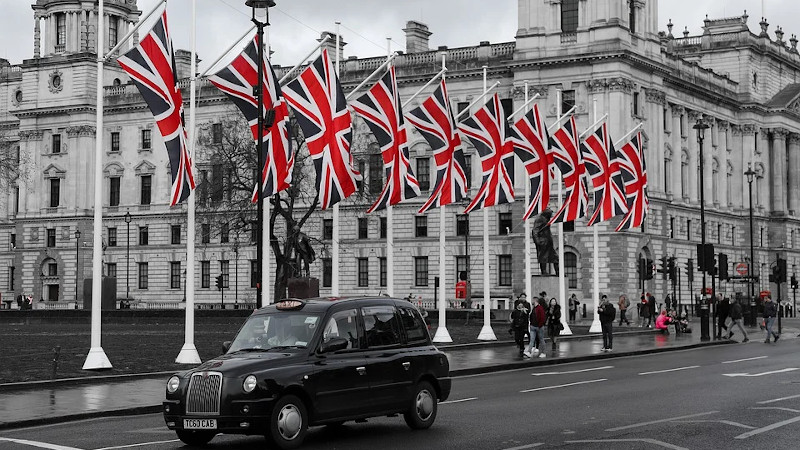
By Chris Powers
(EurActiv) — Exit polls for the UK’s General Election have awarded a clear majority to the centre-left Labour Party, ushering in the removal of the right-wing Conservative Party, which has governed the country since 2010.
The exit poll awards Labour 410 seats, not dissimilar to the 418 seats (and 179 seat majority) achieved in 1997, when Tony Blair led them to victory.
The Conservatives under Rishi Sunak in contrast are projected to achieve a historic low in their seat allocation, with only 131 seats, less than half the 365 seats achieved in 2019. The party has been languishing behind Labour in opinion polling since as far back as 2022.
In the political centre-ground, the UK’s Liberal Democrats have made something of a comeback, predicted by the exit poll to gain 61 seats, almost identical to their performance in 2010 (62 seats), after which they formed a coalition government with the Conservatives, broke an election pledge on not raising university tuition fees, and were reduced to eight seats.
The Scottish National Party has scored 10 seats in the exit poll, lower than in previous elections where they had all but dominated in Scotland. Since former leader Nicola Sturgeon resigned as head of the party, they have struggled to regain political momentum.
On the far-right, Reform UK, the party of Nigel Farage, has made in-roads in the exit poll, predicted 13seats. Before the election was called, they had one MP who had defected from the ruling Conservatives. The party was for a time expected to do much better, and was even polling neck-and-neck with the ‘Tories’, at least in terms of the popular vote, however it is very hard for new parties to gain any traction in the UK’s first-past-the-post system and so this breakthrough has some political significance.
The Green party is projected to secure two seats for the first time, an increase from the one seat they have historically enjoyed in Brighton. 23 seats remain classified as ‘other’, according to the exit poll.
Categories
NPR News: 07-04-2024 5PM EDT
LONDON — Keir Starmer will be Britain’s next prime minister with his Labour Party set to win a massive majority in a parliamentary election, an exit poll indicated Thursday, while Rishi Sunak’s Conservatives are forecast to suffer historic losses.
The poll showed Labour would win 410 seats in the 650-seat parliament, ending 14 years of Conservative-led government.
Sunak’s party was forecast to only take 131 seats, down from 346 when parliament was dissolved, as voters punish the Conservatives for a cost-of-living crisis and years of instability and infighting that has seen five prime ministers since 2016.
In the last six national elections, only one exit poll has got the outcome wrong: In 2015 the poll predicted a hung parliament when in fact the Conservatives won a majority. Official results will follow over the next few hours.
Sunak stunned Westminster and many in his own party by calling the election earlier than he needed to in May with the Conservatives trailing Labour by about 20 points in opinion polls.
He had hoped that the gap would narrow as had traditionally been the case in British elections, but the deficit has failed to budge in a fairly disastrous campaign.
It started badly with Sunak getting drenched by rain outside Downing Street as he announced the vote, before aides and Conservative candidates became caught up in a gambling scandal over suspicious bets placed on the date of the election.
Sunak’s early departure from D-Day commemorative events in France to do a TV interview angered veterans, and even those within his own party said it raised questions about his political acumen.
While polls have suggested that there is no great enthusiasm for Labour leader Starmer, his simple message that it was time for change appears to have resonated with voters.
Unlike in France where Marine Le Pen’s far-right National Rally party made historic gains in an election last Sunday, the disenchanted British public appears to have instead moved to the center-left.