
Day: July 2, 2024
Although news articles often call Donald Trump a “liar,” I don’t think I have ever seen that term used when discussing Joe Biden. Following the first presidential debate in June, fact-checkers atThe New York Times andThe Wall Street Journalaccused Trump of numerous falsehoods. But they couldn’t find a single Biden falsehood.
It’s worse than a double standard. It’s bizarre reporting. Concerning Trump, the critics often seize upon a single misstatement of fact, while ignoring the larger truth connected to that fact. For Biden, they can’t seem to find the misstatement to begin with.
With respect to Trump, they can’t see the forest for the trees. With respect to Biden, they can’t see the trees.
Immigration. Let’s start with the most blatant falsehood in the entire election season. Last January, Biden claimed, “I’ve done all I can do” to secure the border. He has taken almost300 executive actionson immigration. Nearly all of these actions made immigration easier, including revoking some of Trump’s policies on his first day in office.
The second worst falsehood is his claim that he needs Congress to act. “Just give me the power I’ve asked from the very day I got into office,” he told reporters. Yet he operates under the same congressional laws as presidents Obama and Trump.
Trump states correctly that innocent young girls have been raped and killed by illegal immigrants. He is justified in saying that those girls would probably be alive today if the Trump immigration policies were still in place.
We are not vetting the immigrants we apprehend, to say nothing of all the got-aways. We don’t really know who they are or where they are. Some are connected to terrorist organizations.FBI Director Wrayhas testified that there is a serious fear of another 9/11.
Trump may exaggerate some facts. But in doing so, he is actually underestimating the seriousness of the threat.
Abortion. There are two extreme positions on abortion during pregnancy: that it should never be legal, or that it should always be legal. Ever since the original Roe v. Wade decision, polling has shown that the great majority of us are somewhere in the middle. However, the people who care most about the issue are at the extremes. Politicians in both parties are fearful of alienating the extremes.
In the presidential debate, Joe Biden should have been asked, “Is there ever a time when abortion should be illegal?” Most Democrats refuse to answer a question like that—reverting to something like “leave it up to the woman and her doctor.” A reasonable inference from that answer is that abortion should always be legal, regardless.
In the debate, Donald Trump claimed that Democrats in general and Biden in particular believe in the legality of killing babies after they are delivered. Even though a Democratic Virginia governor once seemed to suggest that, it is probably not factually correct. But it is very, very close to being correct. For most Democratic candidates, abortion should be legal one minute before delivery, and possibly even during delivery.
During the debate, Joe Biden seemed to be calling for a return to a national Roe v. Wade standard. But this falls way short of what most Democratic women’s groups want. Roe v. Wade allows for abortion to be outlawed once the fetus reaches the point of viability outside the womb. Fact-checkers should have noted that this more moderate approach to abortion is nowhere in theWhite House position paperon “reproductive rights.”
The War in Ukraine. Donald Trump says that there would have been no war in Ukraine had he been president. This is not a falsehood. It may not be true, but a very persuasive case can be made for it. Our withdrawal from Afghanistan signaled weakness and a lack of resolve. As Russia amassed troops and armor on the Ukraine border, Biden made confusing statements that Russia might have interpreted as indifference on our part. And, of course, Russia only invaded when Obama and Biden were presidents, and not when the president was Trump.
Deficit spending. Some fact-checkers claim that when Trump attacked Biden for running up debt, that was another falsehood. It is true that theCommittee for a Responsible Federal Budgetclaims that Trump accumulated twice as much debt as Biden. Yet, this claim has been refuted by theHouse Budget Committee. Moreover, the official scorekeeper on this question is theCongressional Budget Office, whose ten-year projection finds that Biden’s policies will add far more to the national debt than Trump’s policies.
Corruption. The House Oversight Committee has documented that the Biden family has receivedmore than $20 million—funneled through 24 shell companies. There is nothing wrong with Trump making an issue of this. It’s not a falsehood. Critics point out that there is no hard evidence that Joe Biden personally received any of this money (although there is circumstantial evidence). But that’s not the test. If money was given to influence policies, that’s illegal—even if the actual payment was made to family members, not the person making the policy decisions.
My suggestion to future fact-checkers: find the trees, but don’t miss the forest.
- This article was also published in Townhall.com

Back in December of 2020, then United Staes President Donald Trump wastoutingthe supposed great accomplishment of his Operation Warp Speed quickly producing coronavirus “vaccines.” Trump and politicians, bureaucrats, and media members at the national, state, and local level then did everything they could to maximize the number of people who took successive shots incessantly proclaimed to be “safe and effective.”
But, from the beginning, people who looked below the surface realized the coronavirus shots were far from the wonder drug promised. Indeed, with time, it has become commonly known that the coronavirus shots have been counterproductive, turning out to be both dangerous and ineffective.
Well, three and a half years later, a new presidential administration is touting its own program in the style of Operation Warp Speed. The new program is intended to create, like before for coronavirus, mRNA shots in the name of countering bird flu. The particular bird flu being hyped by fearmongers now is often referred to as H5N1. Like with Trump, President Joe Biden is working from the beginning with the companies Moderna and Pfizer to produce shots.
Those companies raked in the cash with their earlier mRNA shots propagandized to and even mandated on the public. Now, few people want the latest versions of the dud coronavirus shots, and the companies are facing liability for the harm the shots have caused for many people. But, the US has become so much a corporatocracy that it is little surprise that the Biden administration is providing the companies a potentially very profitable opportunity to do it all over again in response to the new hyped pandemicdu jour.
The bird flu gravy train is proceeding along with the United States Department of Health and Human Services (HHS) announcing Tuesday that it will give 176 million dollars to Moderna to develop mRNA bird flu shots. Not to worry, Pfizer and other select companies, there will likely be much government money for you as well. Julie Steenhuysen and Leah Douglas reported Tuesday at Reuters that Dawn O’Connell, assistant secretary for preparedness and response at HHS “said her agency was also negotiating with Pfizer for an mRNA vaccine against H5N1.”
- This article was published at RonPaul Institute
By Sara Bjerg Moller
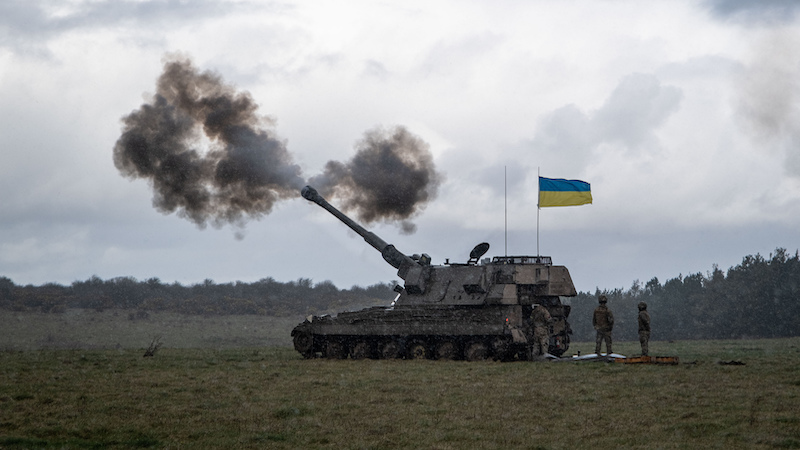
(FPRI) — Despite promises to support Ukraine for as long as necessary, many NATO Allies are starting to reach a tipping point in their military assistance to Ukraine. That reality, and the specter of Donald Trump’s reelection this November, has led some within the Alliance to call for the NATOization of the war in Ukraine. Absent consensus on extending Ukraine an invitation for NATO membership, NATO Allies have spent the last few months finalizing plans for alternative ways to show support for Ukraine at the upcoming Washington Summit. Intended to be a ‘bridge’ to NATO membership, the new measures—which will see NATO taking a larger role in coordination of allied training and security assistance—are unlikely to resolve the underlying dilemma the Alliance has faced since 2014: determining how far NATO should go in supporting Ukraine absent a formal collective defense security guarantee by the Alliance. Moreover, by fundamentally altering NATO’s role in the conflict, the new measures could actually increase ambiguity surrounding the Allies’ commitment to the defense of Ukraine, prompting Russian president Vladimir Putin to potentially test the Alliance’s resolve.
A Slippery Slope?
On the surface, the crux of the dilemma is simple: NATO operates on the principle of a non-zero-sum view of security, where the security of each ally is linked directly to the security of every other ally. However, Ukraine is not yet a member of the Alliance. That fact, of course, has not stopped most Allies from providing unprecedented military assistance to Ukraine since 2022. This, along with repeated assurances since 2008 that Ukraine’s place is inside NATO, has generated considerable ambiguity regarding the limits of NATO’s obligations to the security of a future member.
In recent months, a growing cadre of voices within the Alliance have argued that the organization itself—that is, the military alliance’s integrated command structure and related military architecture—can and should be doing more to support the Ukrainians in their struggle for freedom. At the recent NATO Defense Ministerial, outgoing Secretary General Jens Stoltenberg announced there is now agreement among allies for a NATO Security Assistance and Support package for Ukraine. Among the proposals expected to be approved at the upcoming Washington Summit is a new NATO command in Wiesbaden, Germany where Allied personnel will provide training and oversee equipment donations for Ukraine. The move represents a fundamental shift in theAlliance’s roleto date.
The rationale for the campaign to NATOize the West’s military support to Ukraine stems from the widespread recognition that Ukraine needs not only more weapons but also more better-trained soldiers to carry on the war. Signs that personnel shortages are hindering Ukraine’s combat effectiveness had been appearing for some time but became more acute this spring asRussia’s offensivein the northeast began stretching Ukraine’s reserves. When it comes to Western military support for Ukraine, there is an inverse relationship at play: As Ukraine’s battlefield prospects have worsened, calls for NATO to do more have grown. In February, Prime Minister Emmanuel Macronstirred controversyby suggesting there may come a time when France and other European nations would need to consider sending troops to Ukraine.
Despite drawing a swift rebuke from fellow Allies, including Germany and Poland, who immediately declared they had no intention of deploying troops to Ukraine, Macron’s stance that “nothing should be ruled out” when it comes to Ukraine appears to have garnered supporters in recent months. In May, Estonia’s Prime Minister Kaja Kallas came out in favor of Macron’s position, arguing that Allies who worry such a scenario could lead to a direct military confrontation between NATO and Russia had no grounds for such fears, since “there are countries who aretraining soldierson the ground already.”
In a further sign that views are shifting within the Alliance, US Chairman of the Joint Chiefs of Staff Charles Q. Brown suggested last month that the Alliance deployingmilitary trainersto Ukraine was inevitable, telling reporters “We’ll get there eventually, over time.” Although it’s unclear whether what Brown had in mind was a NATO training deployment amid active hostilities or following a ceasefire, the comments seemed to underscore that, as has been the case since the start of the war in 2022, Allied views on how far to go in supporting Ukraine’s defensive war against Russia continue to evolve.
Other efforts to NATOize the conflict in Ukraine have arisen from within NATO itself. In April, Stoltenberg began publicly floating putting the US-led Ukraine Defense Contact Group (UDCG), also known as the Ramstein Group, under the Brussels-based military organization. If implemented, the move would mark a fundamental break in NATO’s role in the war to date. To understand why requires briefly examining the military alliance’s role up until now.
Since 2014 NATO’s support for Kyiv’s resistance against Russian aggression has been mostly political, with the Alliance consistently reaffirming Ukraine’s inherent right to self-defense and that its future lies inside the Alliance. Over time, however, NATO’s role has gradually taken on a military dimension as well. Along with offering Kyiv its political backing, the Alliance in 2016 began providing what it termed“practical” supportthrough capability development, capacity-building, and training under the Comprehensive Assistance Package framework. When Russia launched its full scale-invasion in February 2022, NATO stepped up itsnon-lethal assistanceto Ukraine, providing materiel like fuel, medical supplies, vehicles, and counter-drone equipment, as well as some communications support to the Ukrainians. Up until now, however, NATO itself has stayed out of the day-to-day business of providing lethal military assistance to Ukraine, which has been coordinated either bilaterally or multilaterally through the US-led Ramstein effort or the G7. This is due to both practical reasons—the Alliance itself ‘owns’ very little military equipment, and political reasons—NATO is a defensive alliance.
Placing the responsibility for arming Ukraine within NATO Headquarters, as the Alliance is preparing to announce at the upcoming Washington Summit, could irreversibly alter the delicate political-military balance that the Euro-Atlantic alliance has maintained towards Ukraine since 2014. The move could permanently shift the organization’s current political focus closer toward playing amore pronounced military rolein the conflict, thereby making it increasingly difficult to argue that NATO is not a party to the conflict.
Additionally, some analysts worry the NATOization of security assistance and training for Ukraine could lead to more direct involvement in the war by NATO (and thus, the United States) in the future. Given the incrementalism the Allies have practiced to date, there is concern that the logical next step after establishing a NATO training command for Ukrainian soldiers in Germany could be the deployment of trainers to Ukraine itself. Although US President Joe Biden and other Allied leaders (including German ChancellorOlaf Scholz) have previously ruled out the prospect ofsending Westerntroopsto Ukraine, the line between having trainers and troops in a theater of war can often be very thin. In a move that is likely to increase the fears of those in this camp, there are reports that theBiden administrationis reportedly consideringlifting the banon US military contractors in Ukraine.
A Shaky Foundation
Those who, like Stoltenberg, argue having NATO in charge of coordinating Ukraine military assistance is a good idea do so on the grounds that it would helpstabilizeAllies’ unpredictable record of military assistance to Ukraine. “We need a more robust, institutionalized framework for our support to ensure predictability, to ensure more accountability and to ensure burden-sharing,” theSecretary Generalrecently said. However, moving the Ramstein process into NATO could, in reality, end up doing the opposite. Since the final arbiters of military aid are the national capitals themselves, asking Brussels to take charge of the process would only add another layer of bureaucracy, potentially gumming up the process.
NATOization of Western military assistance for Ukraine is unlikely to solve the supply-side issues facing Europe’s depleted arsenals, nor is it likely to reconcile the fundamental policy differences emanating from the capitals of Europe, which lie at the root of the problem. Because the question of how far the NATO Alliance should go in militarily assisting Ukraine is fundamentally a political one, the solution can only be found in the individual capitals, not NATO Headquarters. As EU foreign policy Chief Joseph Borrell recently noted afterunsuccessful meetingsaimed at persuading Europeans to send additional air defense systems to Ukraine, “the Patriots are in the capitals. And it’s up to them to take the decisions.” Shifting these discussions from an informal US-led forum to a NATO forum will not address the underlying financial and political issues which are the main impediments currently preventing capitals from providing more support to Ukraine.
In addition to the time required to establish NATO’s new coordination procedures, embedding the coordination of Western military assistance inside NATO could introduce new risks by putting decisions in the hands of all thirty-two allies. Because NATO operates according to the principle of consensus, its gears often grind slowly. Those Allies concerned about escalation risks would likely continue to urge caution at each step of the way, while countries like Hungary and Turkey, which have resorted to transactionalism in the past, would gain another opportunity toobstruct NATO business. Stoltenberg’s recent success in securing a pledge from Hungary’s Viktor Orban not toopposethe NATOization of military assistance allows the process to move forward for now. However, it’s unlikely to stop his government from potentially interfering with the plans and obstructing NATO business through other means down the road.
The coalition composition of the UDCG introduces an additional layer of complexity for NATO. With fifty-plus members, nearly a third of whom are not members of the Alliance, new procedures for integrating all the UDCG coalition members into NATO coordination procedures will need to be developed. In this respect, the process could end up mirroring another NATO-led coalition effort, the International Security Assistance Force for Afghanistan, which required the Alliance to establish new working mechanisms for day-to-day management during the eleven years NATO oversaw the mission.
Nor is it likely that the move will “Trump-proof” NATO’s support for Ukraine, as some supporters of the plan have argued. In truth, no such thing is possible, as that would first require downgrading the role of the United States in the military alliance. NATO’s military commander, the Supreme Allied Commander Europe, along with much of the staff at Allied Command Operations, the headquarters responsible for planning and conducting military operations, is American, meaning they are automatically in the U.S. chain of command. The same is true of the new command NATO is establishing inWiesbadento coordinate training, security assistance and the transfer and repair of equipment to Ukraine. Home to the European headquarters of the U.S. Army, it’s likely that a significant number of the Allied personnel promised by Stoltenberg for the NATOtraining missionwill be American. In all, Stoltenberg said he anticipates several hundred Allied personnel to be involved in the new NATO effort, which will also consist of additionallogistical support.
Ultimately, however, these and other efforts—like the rumored appointment of a NATO envoy for Ukraine—to bridge the divide over the status of Ukraine’s membership at the upcoming Washington Summit are unlikely to clarify the ambiguity that exists surrounding the Alliance’s commitment to the defense of Ukraine.
An Immoveable Feast
At its core, the debate over NATO’s role in Ukraine boils down to two different views toward crisis management and the extent to which strategic ambiguity or redlines are (de)stabilizing, as well as one’s comfort level with risk. In the first camp are those like the French president who believe that, “by defining the limits of our action,” Europe has surrendered the strategic initiative to Moscow. TheFrench leader’s positionon military trainers is part of his broader effort to get the Allies to embrace strategic ambiguity. Only by keeping Putin guessing over what action it might take next, Macron and his supporters believe, can NATO deter Russia from going further, either in Ukraine or in Europe.
In the other camp are those who contend that attempts at increasing the military alliance’s involvement in the war are exceedingly dangerous. Given the lack of a clear end state in United States and Alliance strategy toward Ukraine, analysts worry that the Alliance could soon choose to send trainers to Ukraine, as the US Chairman predicted, setting a dangerous game of escalation into motion. Rather than deterring Russia from seizing more Ukrainian land or targeting Ukrainian civilians, this camp argues, putting NATO in charge of training the Ukrainian military could increase the likelihood of the Alliance and Moscow becoming engaged in direct conflict by blurring the line between actions taken by individual Allies in their national capacity and those undertaken collectively as part of the defense organization. Others worry it could lead Putin to try and test Alliance resolve by targeting Allied trainers inside Ukraine.
Supporters of efforts to embed Western military assistance to Ukraine inside NATO counter critics’ concerns by arguing that Putin does not wish to see a direct confrontation with the Alliance and that Russian nuclear saber-rattling is merely a bluff. By contrast, skeptics of NATOization are more risk averse and contend that Putin’s intentions are ultimately unknowable save to a few in his inner circle.
Setting aside the degree of confidence with which either camp can know Putin’s true intentions, those in the NATOization camp fail to engage the second variant of the escalation argument—the risk ofinadvertentescalation. Because the fog of war can never be ruled out, neither can accidental escalation, detractors warn, cautioning against the creation of conditions which they argue would increase the risk of misinterpretations in high-pressure situations.
Although not as common as the escalation argument, there’s a second reason why critics of NATOization argue it is unwise and could be destabilizing for the Alliance and the wider European security landscape itself. The reason comes down to Allies’ demonstrated lack of commitment toward Ukraine’s defense since 2008, when the Alliance officially recognized Ukraine’s aspirations for membership. Had the Allies been willing to go to war with Russia over Ukraine, critics argue, they would have already extended NATO’s Article 5 collective defense guarantee to Ukraine by inviting it to join the Alliance. The fact that, more than two years into the war, some Allies are still not willing to extend a security guarantee to Ukraine makes it clear to all—including Moscow—that there is no collective willingness to defend Ukrainetoday. Thus, they argue that any NATOization of the conflict amounts to a dangerous gamble in which the Western Alliance is essentially bluffing about the extent of its commitment to Ukraine’s security.
Similarly to the escalation line of argument, the danger here lies in a scenario where Moscow—either intentionally or inadvertently—attacks Allied personnel inside Ukraine. However, unlike the earlier example, the risk in this case stems not from escalation but rather from inaction or a lack of timely response. Given the divisions within the Alliance over Ukraine, NATO political and military officials would face the formidable challenge of trying to come up with a unified response all thirty-two allies could endorse. Due to long-standing divisions over Alliance policy toward not only Ukraine but also Russia, it is conceivable that the North Atlantic Council—the Alliance’s top decision-making body—might fail to reach consensus about a collective military response. While individual allies might act independently on their own or in a coalition (heightening the risk of escalation,) NATO could find itself placed in the uncomfortable position of being unable to mount a coordinated and cohesive Alliance-wide response. Essentially, the entire premise behind NATO and collective defense would be undercut, bringing the whole deck of cards tumbling down. To avoid precisely this scenario, critics of NATOization caution the prudent thing is not to put NATO in a position where it could be tested and found wanting.
All Eyes on Washington
Ukraine’s supporters inside the Alliance would like nothing better than to see the Allies extend an invitation to Kyiv at the Washington Summit, which they contend would decisively resolve the ambiguity over NATO’scommitment to Ukraineonce and for all. In reality, the opposite may in fact be true. Were the Allies to invite Ukraine to begin the accession process while the war remains ‘hot’, a prospect most analysts agree is highly unlikely, each of the thirty-two allies would still need to ratify Kyiv’s accession protocols before Ukraine would come under the Alliance’s Article 5 security umbrella. As illustrated recently by the case of Sweden, the accession of new members is neither assured nor timely in all Allied capitals. Thus, although Ukraine would then have formally acquired the status of ‘invitee,’ entitling it to more privileges at NATO headquarters, it could still find itself languishing in the waiting room for years. Rather than shrink the aperture of ambiguity surrounding NATO’s commitment toward Ukraine, such a move would instead increase uncertainty regarding NATO’s collective responsibility for Ukraine’s defense: a situation which could prompt Putin to try and test the waters. Unlike the case ofSweden and Finland—both of whom received security assurances from the United States and United Kingdom to bridge the time between invitation and accession—the long-term bilateral security agreementsWashingtonandother Alliesrecently concluded with Ukraine do not appear to contain the same security guarantees. In short, there is no golden fix for what in the end boils down to a dilemma of the Alliance’s own making stemming from 2008.
At the same time, leaving Ukraine permanently on the cusp of membership doesn’t look good when the country is fighting for its survival. But rather than add clarity about their future security prospects, stopgap measures like the ones expected to be announced at the Summit this month are unlikely to address the fundamental issue dividing Kyiv and Brussels: absence ofcollectivewill within the Alliance to actively defend Ukraine. The NATOization of Western training and security assistance and the addition of a NATO envoy for Ukraine is unlikely to resolve the debate over the extent of the Alliance’s responsibility for Ukraine’s security. Instead, it merely represents the next stage in the ongoing clash between the zoomers and slow-rollers, between those who argue that NATO should move quickly to welcome Ukraine into the collective defense fold, and those who argue for taking it slow.
Ultimately, the views of the two camps on Ukraine boil down to their perspectives on escalation dynamics: Those advocating for swift action on membership favor the logic of fait accomplis and acting in one fell swoop, while those urging caution embrace a strategy premised on small incrementals, what Thomas Schelling called ‘salami slicing.’ Neither strategy is devoid of risk. A strategy premised on small incremental steps could prove as dangerous as a fait accomplis completed in one fell swoop. As one commentatorrecently put it, “The risk in salami slicing is that, if you push too far, you may lose a finger.” For now, only one thing seems certain, regardless of what position NATO leaders adopt toward Ukraine at the Washington July Summit: The certitude of each camp is unlikely to change.
- About the author: Sara Bjerg Moller is an Associate Teaching Professor in the Security Studies Program (SSP) at Georgetown University and a Non-Resident Senior Fellow at the Atlantic Council.
- Source: This article was published by FPRI

By Golam Rasul
Religious minorities arefrequently subjected to discrimination, humiliation, exclusion and even physical violence in India. Published in the middle of the 2024 parliamentary election, a recent report by the Economic Advisory Council to the Prime Minister of India whichexamines trendsin religious minority populations has reignited an old myth that Muslims will outnumber Hindus in India and that Hindus will lose political and cultural influence.
Thefindings of the reportfit well with thenarrativepromoted by right-wing politicians that Indian Hindus are in danger, Muslims are growing too fast and that they will soon outnumber Hindus anddominate politics and culture. They argue that Hindus should unite and put their trust in theBharatiya Janata Partyto protect their interests. If liberal parties like the Indian National Congress gain power, they warn that Hindus’ property will be taken away and given to Muslims.
This narrative has spread widely and intensified deep-rooted political polarisation between Hindus and Muslims. Anti-Muslim hate speech is rising. Prime MinisterNarendra Modi, in hiselection speech, referred to Muslims as ‘infiltrators’ and blamed them for having ‘too many children’. But this narrative is a misleading reading oftrue demographic trends.
Between 1950–2015, the minority Muslim share of the population increased by 43.15 per cent in India, while the Hindu population fell by 7.82 per cent. During the same time period, the minority Hindu share of the population in Bangladesh fell from 23 per cent to 8 per cent and the Hindu share of the population in Pakistan fell from 13 per cent to 2 per cent. Buddhist-majority Bhutan and Sri Lanka also witnessed significant decreases in their minority Hindu populations, and the Muslim and Christian populations increased slightly in Hindu-majority Nepal.
While religious faith can influence attitudes toward family planning and fertility, an increasing body of evidence suggests that socioeconomic status, education, women’s empowerment, access to healthcare and sociocultural norms also play a crucial role. For instance, Muslim women in Andhra Pradesh and Keralatend to have fewer childrenthan Hindu women in Bihar and Jharkhand. Several Muslim-majority countries, including Albania, the United Arab Emirates, Qatar and Iran have experienceddeclines in their fertility ratesas their level of socioeconomic development has increased, bringing them below the global average.
Despite India’s overall progress in socioeconomic development, the Muslim communitylags behindin education, formal employment, income and access to essential public services including health and family planning. Many live below the poverty line. Despite the Muslim minority growing from 11 per cent in the mid-1980s to 14 per cent today, Muslim representation in Parliament has actually declined from 9 per cent to 5 per cent.
Between 1951–2011, theHindu population increasedfrom 304 million to 966 million, while the Muslim population in India grew from 35 million to 172 million. Despite Muslims having a higher fertility rate, the gap between the Hindu and Muslim populations has widened from 269 million to 794 million. This gap is expected to widen even further in the next census, scheduled for 2024, following the election. Contrary to widely held belief, current demographic trends do not support the idea that Muslims will soon outnumber Hindus.
In the last three decades, fertility among Muslims has been declining fast. In 1992, the Muslim fertility rate was 4.4 and the Hindu fertility rate was 3.3. But the fertility rate among Muslims haddroppedto 3.6 by 1998 and 2.36 by 2019. Hindu fertility rates decreased from 3.3 in 1992 to 1.94 in 2019. From 2011 to 2019, the Muslim fertility ratedecreased fasterthan that of Hindus. While the Muslim fertility rate remain higher than that of Hindus, the gap is narrowing.
While the Economic Advisory Council report addresses an important issue, its reliance on percentage figures for specific periods inadvertently perpetuates the myth that Hindus will lose their political and cultural dominance in India.
Like US President Donald Trump — who hasused fear-based tacticsto amplify panic about the United States losing its white majority due to non-white immigration — Narendra Modi has promoted fears of losing Hindu supremacy in India due to the growing Muslim population. Using fear-based politics, Modi justified theCitizenship Amendment Act, which provides a pathway to citizenship for non-Muslim refugees from neighbouring countries.
Fear-based politics are employed in various parts of the world to galvanise political and cultural influence. While dividing society based on religion, culture and ethnicity may be useful for politicians in polarising voters, it is ultimately harmful to society.
Recognising that education and socioeconomic development play a crucial role in shaping fertility patterns, India must invest in the education, health and socioeconomic wellbeing of religious minorities. This will help stabilise population growth and promote a counter-narrative of unity and shared values among Hindus and Muslims.
- About the author: Golam Rasul is Professor of Economics at the International University of Business, Agriculture and Technology in Dhaka, Bangladesh.
- Source: This article was published by East Asia Forum
By Karen L. Shanton
The Twenty-Fifth Amendment, proposed by Congress in 1965 and ratified by the states in 1967, provides for presidential succession, vice presidential vacancies, and presidential disability. Presidential inability or disability is specifically covered in Section 3, whereby the President may declare a disability, and Section 4, whereby a presidential disability is declared by the Vice President and a majority of the Cabinet or such other body as may be established by law.
Section 3: Presidential Declaration of Disability
Section 3 of the amendment covers circumstances in which a President is able to declare himself or herself “unable to discharge the powers and duties” of the office. When the disability is removed, the President reclaims the office by a declaration to that effect. Disabilities may include a sudden injury or illness or scheduled medical treatment that might leave the President less than fully aware or cognizant for some period of time. It may potentially cover other situations, such as absence from the country or a period of intense grief, for example, related to the loss of a loved one.
Opinion as to whether a President could invoke Section 3 to concentrate on defense in a case of impeachment is divided. The President activates Section 3 by transmitting a written declaration to the President pro tempore of the Senate (President pro tem) and the Speaker of the House of Representatives (Speaker). For the duration of the disability, the Vice President discharges the President’s powers and duties as Acting President. When the President transmits “a written declaration to the contrary” to the President pro tem and the Speaker, he or she resumes the powers and duties of the office.
When Has Section 3 Been Activated?
This section has been activated several times under circumstances in which the President underwent general anesthesia for medical treatment. In 1985, President Ronald Reagan informally invoked the amendment when he was anesthetized during cancer surgery. President George W. Bush formally implemented Section 3 twice, in 2002 and 2007, and President Joseph Biden used it once, in 2021, while they were anesthetized for routine medical procedures.
Section 4: Contingent Disability
Section 4 of the Twenty-Fifth Amendment provides for instances of contingent presidential disability. It covers instances of presidential disability or inability that differ from, and arguably are more potentially complex and problematic than, those addressed in Section 3.
Some of the differences between the two sections are notable. Section 3 can be activated only by the President, whereas the disability initiation element of Section 4 can be implemented only by the Vice President and either (1) a majority of the Cabinet, or (2) a majority of “such other body as Congress may by law provide.”This envisioned body will be identified in this publication as the Disability Review Body (DRB). Section 3 was designed to be invoked either in anticipation of presidential inability, or as a response to a disability, whereas Section 4 was intended bythe amendment’s sponsors to be activated onlyin response to a presidential disability. Section 3 assumes that the President is fully aware and competent, and capable of declaring his disability, whereas Section 4 assumes that the President, for whatever reason, is unable or unwilling to declare an obvious disability, and that he or she cannot or will not step aside for its duration.
Section 4’s complexity and concern about its potential formisuse have raised questions among some observers that it could be implemented for political purposes. During debate on the amendment, its authors and proponents largely rejected such claims. They insisted the section was not intended to facilitate the removal of an unpopular or failed President, in support of which they cited checks and balances incorporated in the amendment that were designed to prevent abuse of the procedure. To date, Section 4 has not been implemented.
Section 4: Actions
Section 4 authorizes four potential procedures:
(1) a joint declaration of presidential disability by the Vice President and a majority of the Cabinet or such other body (i.e., DRB) as Congress has established by law. When they transmit a written message to this effect to the President pro tem and the Speaker, the Vice President immediately assumes the powers and duties of the office as Acting President;
(2) a declaration by the President that the disability invoked under the provisions set out above no longer exists. If the President’s declaration is not contested by the VicePresident and the Cabinet or DRB within four days, then the President resumes the powers and duties of the office;
(3) the Vice President and a majority of the Cabinet or DRB, acting jointly, may, however, contest this finding by a written declaration to the contrary to the aforementioned officers. As noted previously, this declaration must be issued within four days of the President’s declaration; otherwise, the President resumes the powers and duties of the office;
(4) if this declaration is transmitted within four days, then Congress decides the issue. If Congress is in session it has 21 days to consider the question. If a two-thirds vote of Members present and voting in both chambers taken within this period disputes the President, the Vice President continues as Acting President. If less than two-thirds of Members in both houses voteto confirm the President’sdisability, the President resumes the powers and duties of the office. Alternative actions—a decision by Congress not to vote on the question, a decision to vote to sustain thePresident’s declaration, or passage of the 21-day deadline without a congressional vote—would also result in thePresident’s resumption oftheoffice’spowers and duties.
Section 4: Actors
The Twenty-Fifth Amendment delegates specific roles in Section 4 to two people and three institutions: the President; the Vice President, including as Acting President; the Cabinet, the DRB, and Congress.
The Vice President
The Vice President is the indispensable actor in implementing a Section 4 declaration of presidentialdisability: the amendment’s provisions can be invoked onlyonthe Vice President’sinitiative or with the VicePresident’sagreement. The Cabinet or the DRB could petition the Vice President to initiate the process, but barringthe Vice President’s action,Section 4 cannot be implemented.
The President
The President’s role under Section4 is essentially reactive: the President may issue a declaration stating that he or she is no longer disabled at any time. The President, who retains office, but not the powers and duties as chief executive throughout a disability, can declare the disability to be ended at any time, and can do so any number of times.Neither Section 3 nor Section 4 can affect the President’stenure in office—barring death, resignation, or impeachment, a chief executive who is disabled for any length of time continues in office until the term expires.
The Cabinet and Disability Review Body
For the purposes of determining presidential inability under Section 4, the Cabinet consists of “the principal officers of the executive departments.” At present, there are 15 such agency heads, listed in the order in which their departments were established: the Secretaries of State, the Treasury, and Defense; the Attorney General; and the Secretaries of the Interior, Agriculture, Commerce, Labor, Health and Human Services, Housing and Urban Development, Transportation, Energy, Education, Veterans Affairs, and Homeland Security. According to the House Judiciary Committee’s 1965 report on the proposed amendment, “the acting head (of a Cabinet department) would be authorized to participate in a presidential inability determination.” Senate debate on the Twenty-Fifth Amendment suggests that inclusion of acting Cabinet officers as participants in a Section 4 ruling was questioned by some Senators.
Section 4 provides a potential alternative to the Cabinet:“such other body as Congress may by law provide”—the Disability Review Body. Congress has broad authority over the composition and duration of a DRB. During debate on the amendment, several options were considered: Congress could designate itself; retain the Cabinet but enlarge or shrink it; or include a mix of Members of Congress and distinguished public figures. Others have suggested Justices of the Supreme Court, physicians, and the Surgeon General as possible members. Congress could establish the body as a permanent institution or require reauthorization at regular intervals. The Amendment places a check on Congress by requiring that the DRB be created “by law,”and therefore subject to the full range of the legislative process before it was enacted, up to and including a presidential veto. Section 4 does not place a time constraint on creation of a DRB, which could be established at any time.
Congress
The scope of Congress’sduties in a Section 4 disability declaration depends on the circumstances. Assuming an uncontroversial activation of Section 4 followed by thePresident’sdeclaration of recovery, the only congressional duty would be for the Speaker and the President pro tem to receive the disability declaration from the Vice President and Cabinet (or DRB)and the President’s subsequentundisputed declaration of recovery.
If, however, the Vice President and the Cabinet or DRB declare the President disabled, followed by the President’sdeclaration that the disability has ended and that he or she plans to resume office, but the Vice President and the Cabinet or DRB dispute this declaration within four days, then,in the words of the amendment, “Congress shalldecide the issue.”If Congress is in session on receipt of the declaration, it has 21 days to consider the question. If it is not in session, the amendment directs Congress to convene within 48 hours, which, if added to the 21-day window for consideration, comprises a theoretical maximum of 23 days.
If Congress determines by a two-thirds vote of the Members of both houses present and voting that the disability remains, the Vice President continues as Acting President. If the required two-thirds majority is not obtained within the specified time period, the President resumes the powers and duties of the office.
For additional information, please see CRS Report R45394,Presidential Disability Under the Twenty-Fifth Amendment: Constitutional Provisions and Perspectives for Congress. Thomas H. Neale, a former CRS Specialist in American National Government, wrote this product. The listed author is available to respond to congressional inquiries on the topic.
- About the author: Karen L. Shanton, Coordinator, Analyst in American National Government
- Source: This article was published by the Congressional Research Service (CRS).
Netanyahu, too, acts against democracy, incites against the media, the courts, academia and the left. It takes a scoundrel to know a scoundrel. This is why he is rooting for Trump | Opinion | Nehemia Shtraslerhttps://t.co/kRJRgr5azC
— Haaretz.com (@haaretzcom) July 3, 2024
Netanyahu, too, acts against democracy, incites against the media, the courts, academia and the left. It takes a scoundrel to know a scoundrel. This is why he is rooting for Trump | Opinion | Nehemia Shtraslerhttps://t.co/kRJRgr5azC
— Haaretz.com (@haaretzcom) July 3, 2024