Armenia News Armenia News
Categories
 The South Caucasus News - SouthCaucasusNews.com
On Tuesday (2 July 2024) the Transatlantic Quantum Community (TQC) held its inaugural meeting in Brussels.
Last September, NATO Secretary General Jens Stoltenberg called for the development of a dedicated network which would enhance Allied cooperation and harness the benefits of quantum technologies to strengthen deterrence and defence. Since that point, NATO’s Quantum Technologies Strategy was agreed and the Alliance’s International Staff collaborated with NATO members to establish the Community.
The Transatlantic Quantum Community is Allied led but participation is voluntary. More than half of Allies are already involved, including the United States, Canada, France, Italy and Czechia and the initiative is championed by Denmark as the first national chair. The Community will bring together quantum experts from national governments, industry, academia, funding bodies, and research institutions and will help encourage Allied innovation enabling NATO protect its technological edge.
The role of quantum technologies in the security environment is growing and the Community will help NATO engage with critical issues. These include funding and technology challenges, talent development and partnership opportunities.
The Transatlantic Quantum Community’s first annual plenary is expected to take place this autumn.
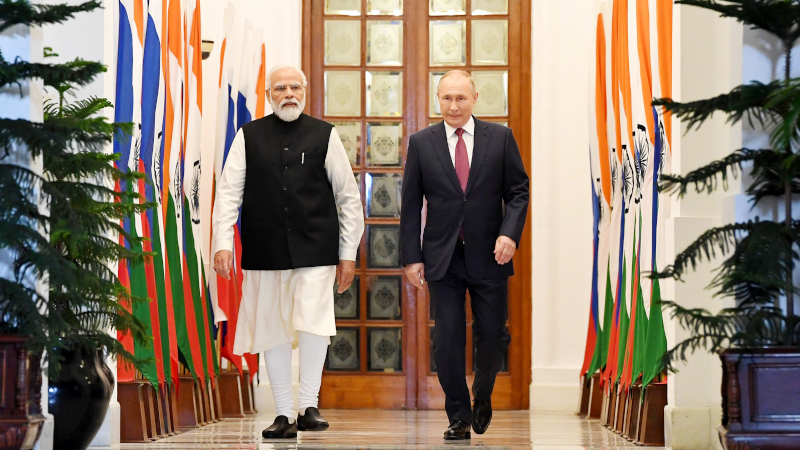
Indian Prime Minister Narendra Modi’s State visit to Russia from July 8 to 9, is significant because it will be taking place when India’s relations with the US are showing unmistakable strains and ties with China continue to be in a logjam.
Modi’s visit is expected to reaffirm and further strengthen India’s historically strong ties with Russia and restore strategic balance in India’s foreign policy.
India looks at Russia as a counterweight to the US and China. Besides the geopolitical relevance, there are key bilateral issues between India and Russia which need to be attended to.
There is the payment issue in regard to oil imports from Russia. Russia has been a major supplier of crude oil to India and that at a concessional rate. The oil trade circumvents US sanctions.
The other matter to be discussed is giving concrete shape to the Chennai-Vladivostok maritime route, which is the shortest and cheapest trade route between India and Russia. Thirdly, the Reciprocal Exchange of Logistics Agreement (RELOS) will have to be operationalised to pave the way for defence deals.
Partly because of the growing defence ties with the US, Prime Minister Modi did not visit Russia after 2015. But as per established practice, Modi and Putin should have had an annual summit.
Commenting on the Moscow visit,The Hindusaid that the visit will signal to the US and the West, that India intends to continue to “balance ties” between the West and the East and that it cannot be pressed to collaborate with the West on Ukraine against Russia nor can the West force India to fight with China militarily.
As the Indian Foreign Minister S.Jaishankar once told a TV interviewer, India cannot be expected to fight a war with China whose economy is five times bigger than India’s.
Various reasons are given for the deterioration of Indi-US ties despite the huge arms purchases running into billions of dollars and the public display of bonhomie with frequent references to “shared values.”
According to Indo-American scholar Dr.Ashely Tellis and Dr. Daniel Markey of the US Institute of Peace, India and the US are not “natural allies” wedded to democracy in contrast to China and Russia.
India has not proved to be a firm strategic ally of the order of the UK and the rest of the West, they say. And India does not seem to be eager to go to war against China as the AUKUS partners are, even though there are huge issues over the border.
The killing of Sikh separatist Hardeep Singh Nijjar in Canada allegedly by Indian agents and the alleged Indian plan to kill another Sikh separatist Gurpatwant Singh Pannun in the US have irked Canada and the US. Nijjar is a Canadian national and Pannun is a US national.
Canada is investigating the Indian involvement in Nijjar’s killing. But India has strongly denied any role. In regard to Pannun, however, India has said that it will look into the American allegation.
The nationalist opinion in India is that the US and Canada have wronged India by criticising it for taking action to defending its territorial integrity against separatists operating from safe havens abroad.
The former Indian intelligence chief A.S.Dulat toldwww.wire.inthat the US could be using the Nijjar and Pannun cases to wrest some strategic concessions from India. But India is reluctant to give in despite its dependence on the US for sophisticated defence equipment and intelligence to match the technologically advanced Chinese forces massed on the Sino-Indian border.
India has refused to work with the UN on Iran. Most recently, it has refused to condemn Russia’s invasion of Ukraine.
Slamming India’s record, Daniel Markley wrote: “Ever since Narendra Modi became the Indian prime minister nine years ago, India’s status as a democracy has become increasingly suspect. The world’s largest democracy has seen an upsurge in violence directed at its Muslim minority, often whipped up by prominent politicians. It is trying to strip citizenship from millions of Muslim residents.”
“It is muzzling the press and silencing opposition figures. The Biden administration, having cast itself as a vocal champion of democratic ideals, therefore finds itself on shaky ground whenever it characterizes the United States’ partnership with India as one of shared values.”
An angry US President Joe Biden did not accept India’s invitation to be the Chief Guest at the Republic Day celebrations on January 26, 2024 though he cooled it later.
India has grave and long-standing issues with China. India-China relations remain frozen because of these conflicts.
Besides the 1962 border war, which lasted several weeks, on the Sino-Indian border in Eastern Ladakh there was a serious standoff in April 2020. India and China have had several rounds of diplomatic and military level meetings on the situation along the Line of Actual Control (LAC) but with little or no effect.
India has maintained that there cannot be restoration of normalcy in its relations with China as long as the situation on the border remains abnormal.
While India recognises China’s sovereignty over Tibet (though giving shelter to the Tibetan spiritual leader Dalai Lama on humanitarian grounds) China continues to claim the Indian State of Arunachal Pradesh calling it “Southern Tibet”.
China holds several thousand square kilometres of Indian territory in Ladakh, tries to encroach on India’s sphere of influence in South Asia and gives unstinted support India’s arch rival, Pakistan.
China keeps pressing India to delink the border issue and foster economic ties, pointing to the burgeoning bilateral trade, which touched US$ 118.4 billion this year. But despite the growing trade, India is unwilling to improve tries insisting that China should observe the 1993 agreement on the management of the border, a pact which ensured peace till 2020.
But there is no indication that China is ready to do so.
India appears to be avoiding summits in which China will be present. As such, instead of Prime Minister Modi, External Affairs Minister S. Jaishankar will attend the Shanghai Corporation Organization (SCO) summit in Kazakhstan this week. It remains to be seen if Modi will return to Russia for the BRICS summit in October. In both SCO and BRICS China is a founding member.
India under Modi, considers itself the leader of the Global South, with Modi asVishwaguru, or World Teacher. As such it does not feel comfortable in gatherings where there is a credible competitor like China or an implacable foe like Pakistan. India therefore is interested only in bilateralism where it can cherry pick its partners.
Explaining why India has been so close to Russia, External Affairs Minister Jaishankar said at a meeting with Indians in Singapore that Russia helped India at crucial moments.
“So, if I do my calculations from my perspective and my experiences, I will get the answer. And the answer in this case is that Russia is a country with which we have always had a positive relationship. Both India and Russia have taken that extra care to look after each other’s interests,” he said.
Ties between India and Russia remained strong notwithstanding Moscow’s invasion of Ukraine. India has not yet condemned the Russian invasion of Ukraine.
The Soviet Union helped mediate a cease-fire between India and Pakistan to end the 1965 war over Kashmir. Then, during India’s war with Pakistan in December 1971, the Soviet Union used its veto to support India at the UN Security Council. The US, on the other hand, sent an aircraft carrier to the Bay of Bengal in support of Pakistan.
India and the Soviet Union signed a treaty of peace, friendship, and cooperation in August 1971. Following the dissolution of the Soviet Union, it was replaced by the Treaty of Indo-Russian Friendship and Cooperation in January 1993.
India has so far avoided voting against Russia or criticising Russian President Vladimir Putin since the invasion of Ukraine began in February 2022.
In the early 1990s, the USSR accounted for 70% of Indian Army weapons, 80% of its Air Force systems, and 85% of its Navy platform. India bought its first aircraft carrier, INS Vikramaditya, from Russia in 2004. The India’s Air Force presently operates more than 410 Soviet and Russian fighters, according to reports.
After the unfortunate demise of Ebrahim Raisi, the previous president, in a helicopter crash on May 19, 2024, the Iranian government conducted snap elections on the fictitious date of Friday, June 31. The frail 85-year-old Supreme Leader, Ali Khamenei, aimed to address his succession issues through these prompt elections.
The election, resembling more of a theatrical performance, seemed poised to advance Saeed Jalili, a former Revolutionary Guard general and a confidant of Khamenei, as the emerging victor from the polls. However, the significantly low voter turnout transformed the event into a de facto referendum, with the populace boycotting the elections and thereby collectively denouncing the ruling regime, indirectly voting for a transition to a democratic and secular republic.
Across Iran, over 14,000 polling stations were monitored by numerous resistance units until midnight, clearly demonstrating that 88% of the Iranian populace abstained from voting. This is particularly significant given that voting is mandatory for certain groups like soldiers and prisoners. As a result, in the electoral processes under the Iranian regime, null and void votes frequently secure the top positions in various cities and districts.
The Iranian public has repeatedly manifested their preference for regime change on various occasions.
Had one not observed the determination of the Iranian populace during their November 2019 uprising—where, as reported by Reuters, at least 1500 youths were fatally shot under direct orders from Khamenei in their fight for liberty—and had one not witnessed the significant uprising in 2022, which Khamenei managed to suppress only temporarily with extreme violence and torture, these elections would once again underscore the resolve of the Iranian people. This sentiment was mirrored by tens of thousands of Iranians in Berlin, who gathered the day following the Iranian presidential elections to bolster the resounding call for change from the Iranian community in Europe.
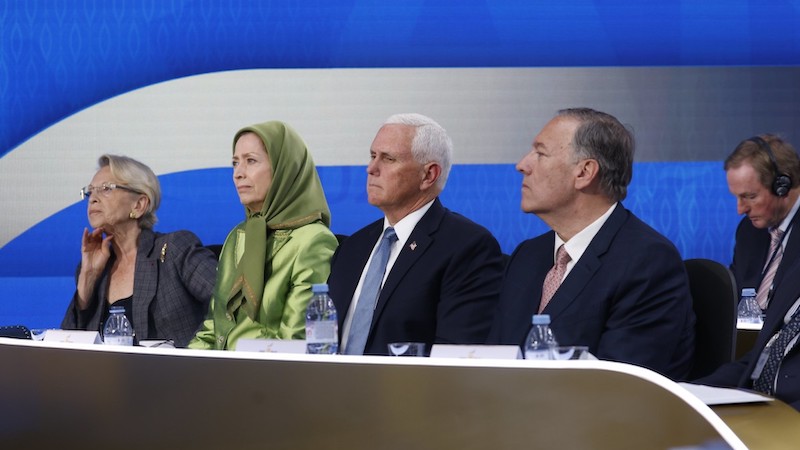
Alongside a significant protest in Berlin, the annual gathering of the Iranian Resistance took place in Paris, surrounded by tight security measures. The event was inaugurated by Maryam Rajavi, the leader of the Iranian Resistance, and was attended by notable American figures such as former US Vice President Mike Pence and former Secretary of State Mike Pompeo.
During his address to the Iranians in Germany and the attendees in Paris, Mike Pence remarked, “The new President of Iran will take over a regime that is not only weaker and less stable but also more prone to falling apart. Yet, this regime won’t crumble by itself. Thus, it requires a robust, organized, and proven resistance to drive enduring change—a movement that motivates, has consistently opposed the regime without yielding, and is prepared to endure sacrifices and pay the price needed for liberty. Fortunately, such a movement exists. It is the National Council of Resistance of Iran. Indeed, the mullahs’ greatest fear is the NCRI.”
Mike Pompeo also highlighted the presence of a viable alternative that could address the broader issues of the Middle East: “We are often told that there is no substitute for the current regime. However, the ongoing activities of resistance units in hundreds of locations across Iran each week prove otherwise. The People’s Mojahedin Organization-MEK, the main component of the NCRI, presents viable solutions not just for Iran’s challenges but for the entire region. Indeed, an alternative does exist.”
Despite the wishes of the Iranian people, the Biden administration and Western governments continue their policy of appeasement towards the faltering regime. In the United States, decisions have been made to deposit over one hundred billion dollars of Iranian assets into the regime’s treasury, aiding the sale of oil which finances the Islamic Revolutionary Guard Corps and its proxy forces, further supporting their aggressive actions.
In Belgium, compelled by public pressure due to the hostage-taking of a Belgian citizen in Iran, the government last year extradited a diplomat who had been convicted of terrorism and sentenced to 20 years in prison for transporting a bomb intended for a massive attack at an opposition gathering in Paris in 2018.
In Sweden, although a court resolutely sentenced an individual responsible for the massacre of thirty thousand political prisoners in Iran in 1988 to life imprisonment, last month the government handed him over to the clerical regime, where he was received in Tehran with a red carpet and a garland. Once again, the tactic of taking a Swedish diplomat hostage in Iran proved effective.
During her opening speech at the Resistance conference, Maryam Rajavi admonished the governments that persist in appeasing the Iranian regime: “You have assisted this regime in nearing nuclear capabilities, paved the way for Khamenei’s militaristic endeavors in the region, and emboldened the clerics to such an extent that it sparked protests in Ukraine. For years, your media have spread the falsehood that religious fascism is without an alternative and that we must accept it. Yet, sustaining this dying regime and forestalling its inevitable downfall is unfeasible.”
For years, conservatives have railed against what they call the “administrative state” and denounced regulations.
But let’s be clear. When they speak of the “administrative state,” they’re talking about agencies tasked with protecting the public from corporations that seek profits at the expense of the health, safety, and pocketbooks of average Americans.
Regulations are the means by which agencies translate broad legal mandates into practical guardrails.
Substitute the word “protection” for “regulation” and you get a more accurate picture of who has benefited — consumers, workers, and average people needing clean air and clean water.
Substitute “corporate legal movement” for the “conservative legal movement” and you see who’s really mobilizing, and for what purpose.
**
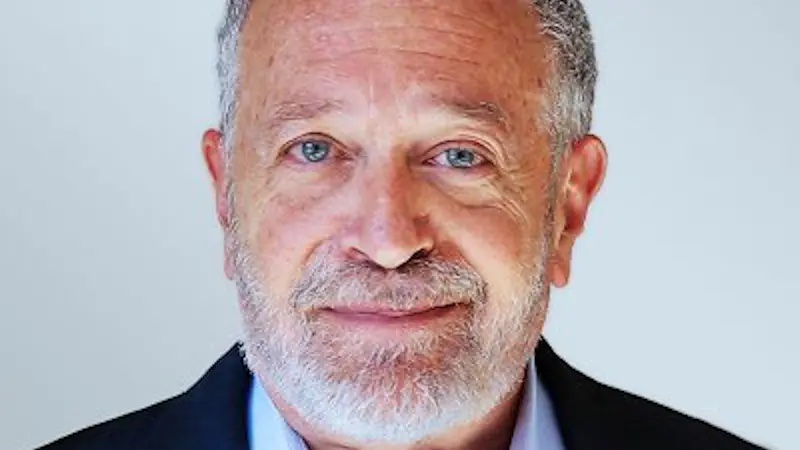
I spent four years as policy director at the Federal Trade Commission, advising the commissioners on how best to protect the public from corporate excesses. I spent four more years as secretary of labor, protecting American workers from the depredations of big American corporations.
Most large corporations I dealt with obeyed laws and regulations designed to protect the public, but they spent a great deal of money trying to prevent such laws and regulations from being created in the first place and additional efforts contesting them through the courts.
Last week, the Supreme Court made it much harder for the FTC, the Labor Department, and dozens of other agencies — ranging from the Environmental Protection Agency to the Food and Drug Administration, Securities and Exchange Commission, Occupational Safety and Health Administration, Consumer Financial Protection Bureau, and National Highway and Safety Administration — to protect Americans from corporate misconduct.
On Thursday, the six Republican-appointed justices eliminated the ability of these agencies to enforce their rules through in-house tribunals, rather than go through the far more costly and laborious process of suing corporations in federal courts before juries.
On Friday, the justices overturned a 40-year-old precedent requiring courts to defer to the expertise of these agencies in interpreting the law, thereby opening the agencies to countless corporate lawsuits alleging that Congress did not authorize the agencies to go after specific corporate wrongdoing.
In recent years, the court’s majority has also made it easier for corporations to sue agencies and get public protections overturned. The so-called “major questions doctrine” holds that judges should nullify regulations that have a significant impact on corporate profits if Congress was not sufficiently clear in authorizing them.
Make no mistake: Consumers, workers, and ordinary Americans will be hurt by these decisions. Big corporations — especially their top executives and major investors — will make even more money than they’re already making because of them.
**
These rulings are the consequence of a corporate strategy launched 53 years ago.
In 1971, the U.S. Chamber of Commerce, then a modest business group in Washington, D.C., asked Lewis Powell, then an attorney in Richmond, Virginia, to recommend actions corporations should take in response to the rising tide of public protections (that is, regulations).
Powell’s memo — distributed widely to Chamber members — said corporations were “under broad attack” from consumer, labor, and environmental groups.
In reality, these groups were doing nothing more than enforcing the implicit social contract that had emerged at the end of World War II, ensuring that corporations be responsive toalltheir stakeholders — not just shareholders but also their workers, consumers, and the environment.
Powell saw it differently. He urged businesses to mobilize for political combat.
Business must learn the lesson … that political power is necessary; that such power must be assiduously cultivated; and that when necessary, it must be used aggressively and with determination—without embarrassment and without the reluctance which has been so characteristic of American business.
He stressed that the critical ingredients for success were organization and funding.
Strength lies in … the scale of financing available only through joint effort, and in the political power available only through united action and national organizations.
On August 23, 1971, the Chamber distributed Powell’s memoto leading CEOs, large corporations, and trade associations. It had exactly the impact the Chamber sought — galvanizing corporate American into action and releasing a tidal wave of corporate money into American politics.
An entire corporate legal movement was born — including tens of thousands of corporate lobbyists, lawyers, political operatives, public relations flaks, think tanks such as the American Enterprise Institute and the Heritage Foundation, and corporate recruiters to the courts, such as the Federalist Society.
In 1972, President Nixon appointed Powell to the Supreme Court.
Within a few decades, big corporations would become the largest political force in Washington, D.C., and most state capitals.
I saw Washington change. When I arrived there in 1974, it was still a rather sleepy if not seedy town.
By the time I became secretary of labor in 1993, Washington had been transformed into a glittering center of corporate America — replete with elegant office buildings, fancy restaurants, pricy bistros, five-star hotels, conference centers, beautiful townhouses, and a booming real estate market that pushed Washington’s poor to the margins of the district and made two of Washington’s surrounding counties among the wealthiest in the nation.
The number of corporate political action committees mushroomed from under 300 in 1976 to over 1,200 by 1980. By the time I became secretary of labor, corporations employed some 61,000 people to lobby for them. That came to more than 100 lobbyists for each member of Congress.
**
The so-called “conservative legal movement” of young lawyers who came of age working for Ronald Reagan — including Chief Justice John G. Roberts Jr. and Justices Clarence Thomas and Samuel A. Alito Jr. — were in reality part of this corporate legal movement. And they still are.
Trump’s three appointments to the Supreme Court emerged from the same corporate legal movement.
The next victory of the corporate legal movement will occur if and when the Supreme Court accepts a broad interpretation of the so-called “non-delegation doctrine.”
Under this theory of the Constitution, the courts should not uphold any regulation in which Congress has delegated its lawmaking authority to agencies charged with protecting the public. If accepted by the court, this would mark the end of all regulations — that is, all public protections not expressly contained in statutes — and the final triumph of Lewis Powell’s vision.
Corporate capitalism in the United States has always coexisted uneasily with democratic capitalism. The underlying question is which is in charge — big corporations or the people?
The current Supreme Court, and the corporate legal movement that spawned it, is intent on the answer being big corporations.
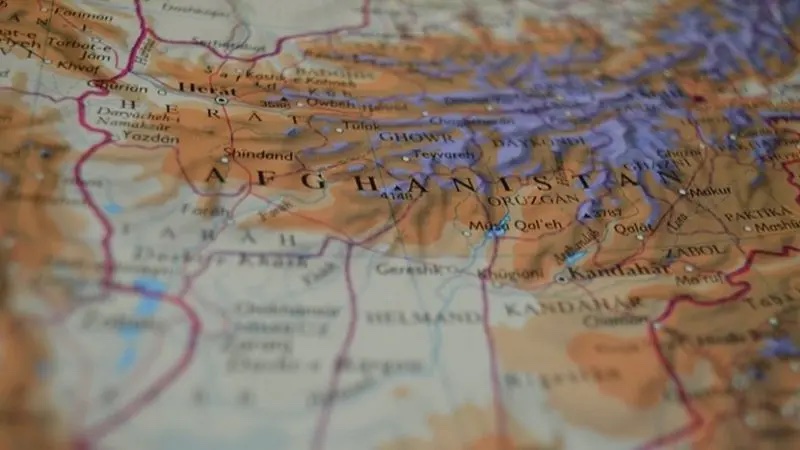
The role of India, China, and Russia in Afghanistan carries significant importance in the context of contemporary international relations, particularly considering the resurgence of the Taliban. These major powers each possess distinct interests in Afghanistan, including strategic, economic, and security considerations. These interests have been shaped by historical engagements, regional dynamics, and their respective stances on the Taliban. This essay explores the multifaceted roles and perspectives of India, China, and Russia in Afghanistan, evaluates the consequences of their involvement, and suggests potential pathways towards conflict resolution and regional stability.
India’s engagement in Afghanistan has primarily focused on developmental aid and infrastructural investments. Notable projects like the Salma Dam and the Afghan Parliament Building serve as emblematic examples of India’s dedication to the reconstruction and development of Afghanistan. Additionally, India has played a significant role in providing educational and medical assistance, reflecting its broader approach of employing soft power mechanisms.
However, the resurgence of the Taliban presents a considerable challenge for India. While India has intensified its diplomatic efforts to establish communication with the Taliban, caution remains paramount. India emphasizes the necessity of an inclusive government that upholds human rights and ensures the representation of diverse Afghan communities. The fundamental security concern for India revolves around thwarting Afghanistan from evolving into a haven for terrorist organizations, including Lashkar-e-Taiba and Jaish-e-Mohammed, which specifically target India.
Therefore, India’s engagement with the Taliban is driven by the imperatives of guaranteeing regional stability and security. Simultaneously, India actively participates in multilateral forums such as the Shanghai Cooperation Organization (SCO) to cultivate regional cooperation.
China’s influence in Afghanistan can be attributed to its strategic economic ambitions, particularly concerning the expansion of the Belt and Road Initiative (BRI). China aims to leverage Afghanistan’s mineral resources and geographic location through investments in infrastructure development and mining contracts, thereby enhancing its strategic economic objectives. China’s engagement with the Taliban is characterized by pragmatism as it seeks to maintain stability and prevent the proliferation of extremism in the Xinjiang region. By cultivating deeper ties with the Taliban, China endeavors to safeguard its economic interests while urging the Taliban to commit to counter-terrorism measures and uphold regional security. China’s active involvement in peace negotiations and regional security arrangements positions it as a critical mediator in Afghan affairs, aligning with its broader strategic imperatives in Central Asia.
Russia’s approach to Afghanistan is influenced by security concerns and historical ties. Military aid and intelligence support are central to Russia’s strategy in countering ISIS and other extremist groups. Russia has cultivated relationships with the Taliban and other political factions to maintain influence, recognizing the Taliban as a legitimate authority and promoting the importance of an inclusive government. Economic interests, such as energy and infrastructure investments, aim to boost Afghanistan’s economy and enhance Russia’s presence in the region. Additionally, Russia collaborates with Central Asian republics and engages in multilateral platforms like the Collective Security Treaty Organization (CSTO) to address security concerns related to Afghanistan, prioritizing regional stability.
The positions of India, China, Russia, and the Taliban reflect their distinct strategic imperatives and regional objectives. India engages with the Taliban cautiously, seeking regional stability while advocating for a government that respects human rights and includes diverse Afghan communities. China’s engagement is pragmatic, focusing on securing economic interests and regional security, with a particular emphasis on counter-terrorism commitments from the Taliban. Russia recognizes the Taliban as a legitimate authority and highlights the need for an inclusive government, countering extremist threats through security cooperation and regional alliances.
Efforts to mitigate rival influences and conflicts in Afghanistan require a multifaceted approach. Confidence-building measures (CBMs) along disputed border regions can help prevent military escalations and foster trust among the parties involved. Robust communication channels at various levels of government and the military are essential for managing crises and minimizing misunderstandings. Sustained comprehensive dialogue on trade issues can address economic grievances and promote balanced economic relations. Collaborative initiatives in multilateral forums, with a focus on common interests such as climate change and counterterrorism, can build trust and foster cooperative relationships.
Further regional cooperation mechanisms involving Afghanistan’s neighbors and major powers can play a crucial role in stabilizing the country. India’s participation in forums like the SCO and its engagement with Central Asian countries can supplement its diplomatic efforts with the Taliban. China’s strategic investments and mediation role in peace talks can facilitate economic and political stability in Afghanistan. Russia’s security initiatives and collaboration with regional allies can help address extremist threats and support the establishment of an inclusive government.
In conclusion, the impact of India, China, and Russia on Afghanistan is dependent on their strategic, economic, and security objectives, as well as their stances on the Taliban. While their involvement is driven by historical grievances and strategic rivalry, there are opportunities for dialogue, cooperation, and conflict resolution. By addressing underlying concerns and nurturing shared interests, these major powers can work towards a stronger and mutually beneficial association with Afghanistan. The trajectory of their bilateral relationship with Afghanistan will significantly shape the geopolitical dynamics in Central Asia and the broader global framework.
The opinions expressed in this article are the author’s own.
References
Despite defeat, Georgians salute their Euro 2024 heroes. via @ChannelNewsAsia https://t.co/pkfvE2mAiL
— Notes from Georgia/South Caucasus (Hälbig, Ralph) (@SouthCaucasus) July 2, 2024

