
https://t.co/kqKbOIlpze
Do a very simple and elegant statistical study of the diplomats and Intel workers complaining of the symptoms of Havana Syndrome. Determine the possible correlation between the degree of exposure to the press events, where the disguised weapons could have…— Michael Novakhov (@mikenov) June 30, 2024
Day: June 30, 2024
For years, astronomers have worried about how to explain why the Milky Way has fewer satellite galaxies than the standard dark matter model predicts. This is called the “missing satellites problem.” In order to bring us closer to solving this problem, an international team of researchers used data from the Hyper Suprime-Cam (HSC) Subaru Strategic Program (SSP) to discover two completely new satellite galaxies.
These results were published in the Publications of the Astronomical Society of Japan by a team of researchers from Japan, Taiwan, and America.
We live in a galaxy called The Milky Way, which has other, smaller galaxies orbiting it called satellite galaxies. Studying these satellite galaxies can help researchers unravel mysteries surrounding dark matter, and better understand how galaxies evolve over time.
“How many satellite galaxies does the Milky Way have? This has been an important question for astronomers for decades,” remarks Masahi Chiba, a professor at Tohoku University.
The research team recognized the possibility that there are likely many undiscovered, small satellite galaxies (dwarf galaxies) which are far away and difficult to detect. The powerful ability of the Subaru telescope – which sits atop an isolated mountain above the clouds in Hawaii – is well-suited to find these galaxies. In fact, this research team previously found three new dwarf galaxies using the Subaru telescope.
Now, the team has discovered an additional two new dwarf galaxies (Virgo III and Sextans II). With this discovery, a total of nine satellite galaxies have been found overall by different research teams. This is still much fewer than the 220 satellite galaxies predicted by the standard theory of dark matter.
However, the footprint of the HSC-SSP does not cover the entire Milky Way. If the distribution of those nine satellite galaxies across the entire Mily Way is similar to what was found in the footprint captured by the HSC-SSP, the research team calculates that there actually may be closer to 500 satellite galaxies. Now, we are faced with a “too many satellites problem,” rather than a “missing satellites problem.”
To better characterize the actual amount of satellite galaxies, more high-resolution imaging and analysis is required. “The next step is to use a more powerful telescope that captures a wider view of the sky,” explains Chiba, “Next year, the Vera C. Rubin Observatory in Chile will be used to fulfill that purpose. I hope that many new satellite galaxies will be discovered.”
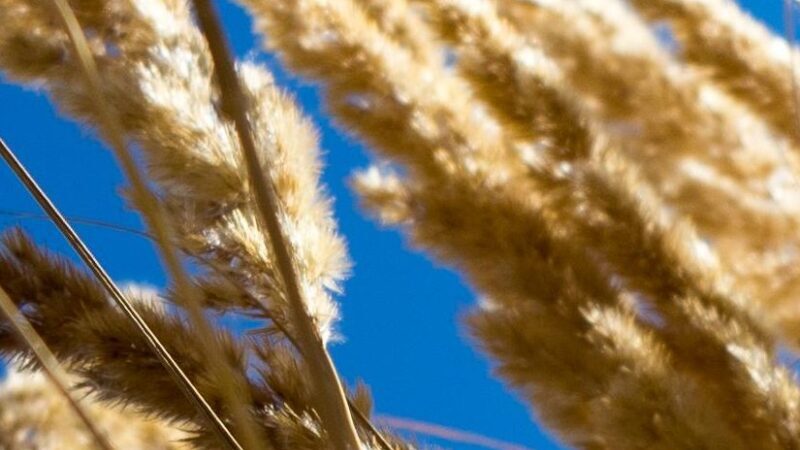
How wheat and buckwheat respond to drought situations with high CO2 and high temperatures was investigated in the Department of Plant Biology and Ecology
Drought, high temperatures and high levels of CO2 resulting from the greenhouse effect are set to jeopardize wheat production. Having analysed various physiological parameters of the plants, researchers from the Department of Plant Biology and Ecology of the University of the Basque Country (UPV/EHU) have confirmed that buckwheat responds better than wheat under these extreme conditions.
The data are clear: future climate conditions could end up becoming extreme. As in the well-known tale;Peter and the Wolf, the data are saying that “the wolf is coming”. Atmospheric CO2 has risen exponentially over the last few decades and is set to continue that way for many years to come. As a result of that, the greenhouse effect will intensify; the global temperature could rise by 3 ºC, thereby increasing water shortages in many parts of the planet as well.
So cereals will have to withstand longer and worse periods of drought in the future, along with high CO2 levels and temperatures. These conditions harm conventional cereals, such as wheat, and that could jeopardize the access of millions of people worldwide to food. Unlike the citizens in the tale of Peter and the Wolf, scientists know that climate change is on its way or is already taking place. They do not have an optimistic view in that respect, but they are striving to find remedies for when the “wolf” comes.
In the UPV/EHU’s Department of Plant Biology and Ecology, for example, they are exploring “which alternative cereals may be better able to resist these future conditions”, said the researcher Xabier Simón. “In the future the use of many conventional cereals (wheat, corn, etc.) may be reduced to be replaced by cereals better able to thrive under the new conditions. There you have, for example, buckwheat, sorghum, spelt, etc. So it is essential to find out the capacity of these species to withstand situations of severe drought, high temperatures and high CO2 levels.”
Wheat versus buckwheat
In collaboration with Jon Miranda and Usue Pérez, researchers from the FisioKlima-AgroSosT group, Xabier Simón explored the response of wheat and buckwheat to the anticipated future conditions. “We cultivated the plants of these two species in a growth chamber and controlled the conditions of temperatures, CO2 and drought.”
When analysing various physiological parameters of the plants, they found that “buckwheat had the potential to be an alternative cereal to wheat. At high CO2 levels and temperatures, even if there is no drought, certain parameters of wheat were already seen to worsen: the growth of the wheat was restricted whereas that of the buckwheat was not; furthermore, the photosynthesis level of buckwheat increased and that of wheat fell. On the whole, buckwheat was found to respond better than wheat under drought conditions.”
Categories
NPR News: 06-30-2024 6PM EDT
WHCA statement on press access for CNN hosted presidential debate | White House Correspondents’ Association (WHCA) https://t.co/XUvKLrJWFW
— Michael Novakhov (@mikenov) June 30, 2024
https://t.co/PcDdVIJIqI
Studies of the Havana Syndrome and the related events#NewsAndTimes #NT #TNT #News #Times#World #USA #POTUS #DOJ #FBI #CIA #DIA #ODNI#Israel #Mossad #Netanyahu#Ukraine #NewAbwehr #OSINT#Putin #Russia #GRU #Путин, #Россия #SouthCaucasus #Bloggers… https://t.co/W2DHKojHwF pic.twitter.com/lK6f0vv79X— Michael Novakhov (@mikenov) June 30, 2024