
Categories
South Caucasus News

France’s Reaction to the Rise of Anti-Colonial Sentiments Around the Globe and Accusations against Azerbaijan


In recent days and months, a plethora of articles in the French press have emerged regarding the French government’s accusations against Azerbaijan concerning France’s overseas territories, namely New Caledonia. Instead of addressing the causes of unrest in New Caledonia or failures in Africa, the current French government, under the leadership of Emmanuel Macron, has decided to scapegoat Azerbaijan.

In this anti-Azerbaijani campaign, French media has also profiled the Center of Analysis of International Relations (AIR Center), Azerbaijan’s government funded think tank. All these warrant the relevant clarification with regard to the current state of Azerbaijan-France bilateral relations as well as the issues surrounding decolonization.  The recent backlash from France against Azerbaijan’s involvement in the Non-Aligned Movement (NAM) and anti-colonial process, reveals a profound insecurity and hypocrisy embedded within French foreign policy.

First, neo-colonialism has always been on the agenda of the Non-Aligned Movement (NAM), a platform for nations striving to assert their independence and resist external domination – a movement which emerged in the 1950-1960s during the Cold War. The movement’s objective has been to promote political, economic, and social independence from former colonizers, ensuring that newly independent nations can chart their own course free from external interference. Azerbaijan’s support for this cause during its tenure as NAM’s chairman from 2019 to 2024 and in its aftermath aligns with NAM’s long-standing principles.

France’s neo-colonial practices, particularly in Africa, have long been a contentious issue. The country’s continued economic, political, and military involvement in its former colonies is often perceived as a modern form of colonialism. This legacy has bred resentment and resistance, manifesting in various anti-colonial movements across the globe, including recently in New Caledonia. France’s foreign policy has been marred by its attempts to maintain influence in these regions, often leading to accusations of neo-colonialism. The backlash against these practices is not a product of Azerbaijani machinations but a reflection of genuine grievances held by many nations and peoples affected by France’s policies. However, France’s attempt to scapegoat Azerbaijan for championing anti-colonialism is not only baseless but also reflects a deflection from its own colonial past and present practices.

A particularly glaring example of France’s contradictory stance has been its support for Armenian separatists in the Karabakh region until recently and its continued militarization of Armenia. By backing Armenia’s territorial claims against Azerbaijan and its illegal actions in Karabakh, France has directly undermined Azerbaijan’s territorial integrity. It is a telling example that both chambers of the French parliament recognized the independence of the so-called “Artsakh Republic” in 2020, while even Armenia itself had not recognized it. This support for separatism starkly contrasts with France’s accusations of Azerbaijan fostering anti-colonial sentiments. It reveals a selective application of principles based on geopolitical interests rather than a consistent adherence to the principles of international law and the values of sovereignty and territorial integrity. France’s position on the Armenia-Azerbaijan conflict highlights its willingness to support secessionist movements when it aligns with its interests while condemning similar sentiments when they challenge its neo-colonial practices.

The Center of Analysis of International Relations (AIR Center) in Azerbaijan has also come under fire from the French media, accused of being a tool in Azerbaijan’s supposed neo-colonialist agenda. However, the AIR Center operates with a level of transparency that starkly contrasts with these allegations. All sources of its funding are publicly available, and its operations are conducted openly.  In the meantime, the AIR Center expressed its interest to work with French think-tanks and to discuss any multilateral and bilateral agenda. In general, the relations between the two countries were always constructive until the incumbent French government. It is worth noting the fact that the current and former presidents of Azerbaijan made their first official visits to France upon their first elections in 1993 and 2003.

The recent anti-Azerbaijani campaigns in the French media further underscore the France insecurity surrounding anti-colonial rhetoric. For instance, an article from Intelligence Online describes how the French intelligence service, DGSE, was caught off guard by what it terms an Azerbaijani disinformation campaign. Similarly, a piece in Le Monde accuses Azerbaijan of leveraging anti-colonial rhetoric as a form of disinformation against France. Furthermore, if Le Monde makes comparison to KGB practices, then it should start with the fact that the French government employed the diplomatic coverage for the operation of two intelligent officers in recruiting a French national in Azerbaijan.

In conclusion, France’s accusations against Azerbaijan regarding the rise of anti-colonial sentiments are unfounded and reflect a double standard within French foreign policy. As the world faces with the legacies of colonialism, it is crucial for France to confront its own neo-colonial practices rather than deflecting blame onto countries like Azerbaijan. The historical and ongoing economic exploitation, political interference, and military presence in former colonies have led to widespread resentment and calls for true independence. These sentiments are not manufactured by external actors like Azerbaijan but are rooted in the lived experiences of people in these regions. Only by addressing its own colonial legacy can France hope to engage constructively with the global movement towards true independence and self-determination.

Categories
South Caucasus News

Start of visa liberalization talks with EU a priority for Armenia, Speaker Alen Simonyan tells Latvian FM


On an official visit to the Republic of Latvia, Speaker of the Armenian National Assembly Alen Simonyan met with the Minister of Foreign Affairs of Latvia, Baiba Braže.

Alen Simonyan emphasized that one of the priorities of Armenia is the start of visa liberalization dialogue with the EU, noting that Armenia expects the support of the Republic of Latvia in the matter.

Speaking about the “Crossroads of Peace” project initiated by the Armenian government, the Speaker of the National Assembly noted that the project envisages the development of regional communications based on the principles of sovereignty, reciprocity and equality.

Referring to the Armenia-Azerbaijan peace treaty, Alen Simonyan reaffirmed Armenia’s commitment to the principle of mutual recognition of territorial integrity based on the Alma-Ata Declaration.

Appreciating the role of the EU observervation mission stationed in Armenia, Alen Simonyan also expressed his gratitude to the Latvian government for the humanitarian aid provided to support the Armenian refugees of Nagorno-Karabakh.

Issues related to the repatriation of Armenian prisoners held in Azerbaijan were also discussed.


Categories
South Caucasus News

What legal steps are being taken to return the Armenians being held in Azerbaijan? – news.am


What legal steps are being taken to return the Armenians being held in Azerbaijan?  news.am

Categories
South Caucasus News

Rights Groups Urge Azerbaijan to Free Scholar on International Day Against Torture


Advocacy groups Publish What You Pay and Crude Accountability have raised alarm on the International Day in Support of Victims of Torture over the condition of Azerbaijani scholar Dr. Gubad Ibadoghlu, urging the government of Azerbaijan to allow him immediate travel abroad for critical medical treatment.

Dr. Ibadoghlu, a distinguished…


Categories
South Caucasus News

Azerbaijan Opens Free Equipped Beaches on Caspian Coast


For the first time since gaining independence, Azerbaijan has opened free equipped beaches along the Absheron seashore, offering residents access to fully serviced public beaches. This initiative by the Baku executive authority addresses long-standing complaints about the privatization and commercialization of the coastline.

The newly established public beaches are outfitted…


Categories
Audio Review - South Caucasus News

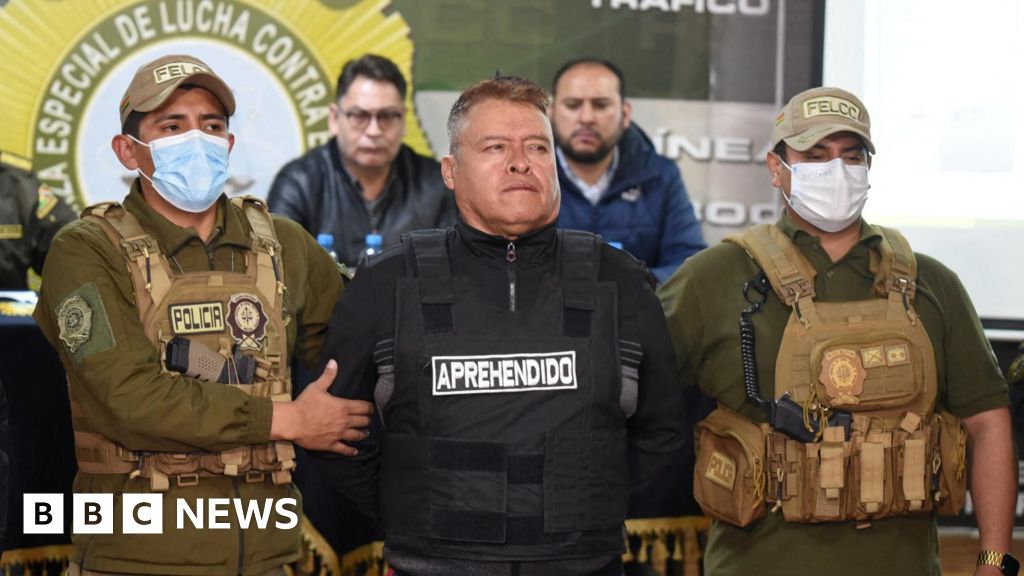
Bolivian police arrest leader of apparent coup attempt


2deb73f0-3453-11ef-a044-9d4367d5b599.jpg

21 minutes ago

By Will Grant, Mexico, Central America and Cuba Correspondent • Kathryn Armstrong, BBC News • Ido Vock, BBC News

Bolivia’s General Zuniga arrested for coup attempt

Bolivian police have arrested the leader of an apparent attempted coup, hours after the presidential palace in La Paz was stormed by soldiers.

Hundreds of troops and armoured vehicles had taken up position on Murillo Square where key government buildings are located. One armoured vehicle smashed down the main gate of the presidential palace, allowing soldiers to enter. They all later withdrew.

The rebel military leader in charge, Gen Juan José Zúñiga, had said he wanted to “restructure democracy” and that while he respected President Luis Arce for now, there would be a change of government. He was later arrested.

Gen Zúñiga was removed from his role on Tuesday, after he made inflammatory comments about Bolivia’s former president, Evo Morales, during an interview the previous day.

President Arce condemned the coup attempt, calling on the public to “organise and mobilise… in favour of democracy”.

“We cannot allow once again coup attempts to take Bolivian lives,” he said in a televised message to the country from inside the presidential palace.

His words clearly resonated, with pro-democracy demonstrators taking to the streets in support of the government.

In dramatic footage seemingly filmed inside the presidential palace, President Arce could be seen confronting Gen Zúñiga, ordering him to stand down and asking him to vacate the role.

He also announced he was appointing new military commanders, confirming reports that Gen Zúñiga had been dismissed after openly criticising Mr Morales.

Mr Morales, who also condemned the coup attempt, called for criminal charges to be brought against Gen Zúñiga and his “accomplices”.

The public prosecutor’s office has opened a criminal investigation. The head of the Bolivian Navy, Vice-Adm Juan Arnez Salvador, has also ben arrested.

Gen Zúñiga’s exact motivations for launching the coup remain unclear.

He was sacked after appearing on television on Monday, saying he would arrest Mr Morales if he ran for office again next year, despite the former president being barred from doing so.

Mr Morales was forced out of office in 2019 by military chiefs who said he was trying to manipulate the result of a presidential election, sending him into exile in Mexico.

Speaking from Murillo Square after it was taken by troops, he accused an “elite” of taking “over the country, vandals who have destroyed the country.”

But moments before his arrest, the general told reporters that the president had instructed him to get out the “blindados” (armoured vehicles), in a bid to improve his waning popularity. He was bundled into a waiting police van seconds later.

Andrea Barrientos – a leading opposition senator – echoed his claims, suggesting that an economic and judicial crisis had prompted Mr Arce to launch a “self-coup”.

“I will say that the government has a lot of questions to answer to the people of Bolivia, and they need to explain this situation very well,” she added. “We will say that we need a deep investigation about this situation.”

It is increasingly clear that Wednesday’s move this was a short-lived and ill-judged military uprising rather than any wider unravelling of power.

Nevertheless, the coming weeks will be key in establishing whether Gen Zuñiga’s military insurrection was just an isolated incident.

Certainly, the government now looks more vulnerable, and others may try to dislodge Mr Arce’s administration – albeit through politics rather than via the military.

Mr Morales called on his supporters, particularly in the country’s indigenous coca-growers movement, to take to the streets to demand an end to the attempt coup.

That display of popular power may well have helped strengthen the resolve against Gen Zuñiga’s plans, which also included freeing “political prisoners” including former leader Jeanine Áñez.

Both Mr Arce and his predecessor belong to the same political party, despite internal political feuds. Their alliance has led some Bolivians, including Gen Zúñiga, to worry that Mr Morales might seek another term in office.

Concerns come after he tried to bypass the constitution and seek a fourth term in 2019. Mr Morales went on to win the vote, but he was forced to resign and flee the country after violent protests.

The centre-right Jeanine Áñez was the country’s interim leader between 2019-20, but was sentenced to 10 years in jail over what prosecutors say was a coup to oust her predecessor Mr Morales. The incumbent president, Mr Arce, went on to win a re-run vote in 2020.

Formerly allies, Mr Arce and Mr Morales have not seen eye to eye on much recently, but they were united in their condemnation of the use of troops to force political change in Bolivia.

Before Mr Morales took power in 2005, Bolivia was one of the most politically volatile nations in the Americas. His time in power brought much-needed stability to the Andean nation, at least until its ignominious end.

For his part, Mr Arce – who was elected after a period of instability following the 2019 election – will have been heartened by the speed of the regional response.

Close allies like the left-wing governments in Venezuela and Colombia were quick to condemn what was happening and call for democracy to prevail. Washington also called for calm.

In Paraguay, centre-right President Santiago Peña also condemned the attempted coup.

Even those Bolivians who opposed his socialist rule will not want to see a return to a dark time in South America where militaries with terrible human rights records often pushed out the country’s democratically elected leaders at the barrel of a gun.

But Jhanisse Vaca Daza – a human rights activist – said she feared Mr Arce could use the apparent coup as a reason to crack down on his opponents.

“It will legitimise and give (President) Arce’s government more power to arrest new members of the opposition who they deem may be a threat to their governance,” she said.

“The fear for many people that are currently Legislative Assembly members is that this could also lead to either closing the Legislative Assembly or arresting members that may be suspected to have collaborated with the military.”

Watch: Armoured vehicle rams Bolivia’s presidential palace


Categories
South Caucasus News

Committee for Civilian Aspects of Crisis Management delegates join EU patrol in Armenia’s Goris town


default.jpg


Categories
South Caucasus News

National boxers reach European Junior Boxing Championship final


Azerbaijani boxers have reached the Semi-Finals of the European Junior Boxing Championship for Boys and Girls, Azernews reports.

Categories
South Caucasus News

President Ilham Aliyev receives UN Under-Secretary-General, Executive Director of UN Environment Program


President of the Republic of Azerbaijan Ilham Aliyev received Under-Secretary-General of the United Nations and Executive Director of the United Nations Environment Programme Inger Andersen, Azernews ​reports.

Categories
South Caucasus News

Azerbaijan enhances SMEs’ role in transitioning to green economy


In Azerbaijan, small and medium enterprises (SMEs) are the backbone of the economy, comprising 99.6% of all businesses, Azernews reports.