
Categories
South Caucasus News

IMF says US needs to tackle debt despite robust growth


washington — The International Monetary Fund on Thursday called on the U.S. to raise taxes to curb rising debt levels while applauding “robust, dynamic” growth in the world’s largest economy and progress toward bringing inflation under control.

The IMF said in a closing statement for its “Article IV” review of U.S. economic policies that high deficits and debt “create a growing risk to the U.S. and global economy, potentially feeding into higher fiscal financing costs and a growing risk to the smooth rollover of maturing obligations.”

The IMF’s statement slightly revised down its 2024 U.S. GDP growth forecast to 2.6% from the 2.7% forecast in the global lender’s World Economic Outlook in April.

The IMF forecasts U.S. growth in 2025 to dip to 1.9%, unchanged from the April outlook, and remaining above 2% through the end of the decade.

“The U.S. economy has proven itself to be robust, dynamic and adaptable to changing global conditions,” the IMF said. “Activity and employment continue to expectations … and the disinflation process has been considerably less costly than many had feared.”

The IMF said it expects U.S. inflation to return to the Federal Reserve’s 2% target by mid-2025, considerably sooner than the Fed’s own forecast of returning to target in 2026.

IMF Managing Director Kristalina Georgieva told reporters that the IMF’s forecast is more optimistic because of the current trajectory of inflation indicates a quicker return to target, partly because strong U.S. consumer spending driven by wealth built up during the COVID-19 pandemic is subsiding and the labor market is cooling.

Debt, trade prescriptions

But the IMF chided Washington for rising deficits that, if continued, would bring the U.S. debt-to-GDP ratio to a concerning level of 140% by the end of the decade. The IMF measure includes Social Security pension and Medicare health care obligations.

“Such high deficits and debt create a growing risk to the U.S. and global economy, potentially feeding into higher fiscal financing costs and a growing risk to the smooth rollover of maturing obligations,” the Fund said.

For the second year in a row, the fund prescribed that the U.S. increase income tax rates progressively, not only on the wealthiest Americans but also for households earning less than $400,000 a year — a threshold that U.S. President Joe Biden has vowed not to cross in his re-election campaign pledges.

The fund said the U.S. also should reform entitlement programs, cuts that Biden and Republican rival Donald Trump have both vowed not to pursue, and raise the threshold for eligibility for the Earned Income Tax Credit for workers without children.

Georgieva said the fund was trying to present a policy path for the U.S. “that in our view would serve the economy and its people well,” as it would for any IMF member country.

With the U.S. economy strong, it was a “good time” for the U.S. to consolidate its fiscal position, she said, adding: “It is in good times where you can do more to prepare yourself for risks in the future.”

The IMF also said that intensifying U.S. tariffs and other trade barriers along with the increased use of industrial policy to favor domestic firms represented a downside risk for the U.S. and global economies, with the potential to distort investment flows and undermine the global trading system.

Instead, the fund called for Washington to work out differences with trading partners through negotiations and strengthen the World Trade Organization.

In her discussion with Georgieva, U.S. Treasury Secretary Janet Yellen reiterated the importance of “frank and thorough assessments” of IMF member economies and discussed the “remarkable performance of the U.S. economy over the past few years,” the Treasury said.


Categories
South Caucasus News

CDC recommends updated COVID shots for everyone older than 6 months


Categories
South Caucasus News

What We Know About Monarch Migration: The Amazing ‘Last Mile’ – OpEd


What We Know About Monarch Migration: The Amazing ‘Last Mile’ – OpEd

By Stephen Day

How does the monarch butterfly (Danaus plexippus)navigate the so-called “last mile,” or final stretch, of its;migration? The precision with which these little insects home in on their target destination is nothing short of astounding. The question has foxed entomologists over the years.Scientists agree that monarchs use a complex group of sensors, mainly on their antennae, to determine when and where to migrate. Many years ago, I spoke with an entomologist specializing in monarch studies. I asked him what exactly would happen to the butterflies’ migration capabilities if their antennae were removed one at a time. “Well, of course, they couldn’t migrate, feed on nectar [or] lay their eggs on milkweed plants to reproduce. It’s their antennae, stupid,” he answered brazenly.

Scientists have since peeled the proverbial onion and;located;light and temperature sensors in a monarch’s antenna, which recognize the time of day and the sun’s position in the sky. Another section of the brain comprising;iron;molecules uses this information to act as a GPS-like magnetic compass. These all are connected to the monarch’s stereoscopic antennae sensors. These functions explain how the East and West Coast monarch species know when to initiate migration, and how they can find their cardinal directions, and specific roosting sites.

Now the question becomes: How do East Coast monarchs manage to migrate several thousand miles to the same small area — a few acres of high-altitude oyamel fir;trees;(Abies religiosa) in Mexico — when most are making their journey;for the first time? The fact that an insect brain tiny enough to be smeared on a human thumb nail can conquer this exquisite conundrum is a natural wonder.

As Alice from Lewis Carroll’s;Alice in Wonderland;novels might have pondered, this gets “curiouser and curiouser.”

Are the butterflies sniffing their way home?

My working hypothesis is that the monarch’s;genes;provide extraordinary sensors to deal with long-distance migration and the last mile. Hypothetically, the sensors would especially help with overwintering migration and the return journey to breed on alkaloid milkweed plants.

An excellent study published in February 2024 gave my hypothesis a tantalizing clue. This;article;from;The New York Times;highlighted the damaging effect pollution can have on a tobacco hawk moth’s attraction to pale evening primroses. Dr. Joel Thornton, an atmospheric chemist, led the study.

“A flower’s scent is a complex olfactory bouquet that contains many chemical compounds. To identify the ingredients in the signature primrose scent, the scientists fastened plastic bags over the blooms, capturing samples of the fragrant air. When the team analyzed these samples in the lab, it identified 22 distinct chemical components,” Thornton wrote. Naturally, his “olfactory bouquet” comment applies to a fir’s scent also.

Without getting too technical, the moths’ antennae seem specifically adapted to detect;monoterpenes;(C10H16), dimers of isoprene. These can be divided into acyclic, monocyclic, bicyclic and tricyclic compounds. Monoterpene derivatives that typically contain oxygen or nitrogen atoms are known as monoterpenoids. These monoterpenes give firs their distinctive;aroma. According to my hypothesis, oyamel firs provide the distinctive airborne chemical signature that East Coast monarchs use to locate their overwintering destination in Mexico.

Here is a hypothesis;about the last mile of the East Coast monarch’s wintering migration. It follows the Occam’s razor;principle;— the assumption that a simple solution is more likely to be correct than a complicated one.

The monarch’s antennae contain monoterpenoid receptors. Evolution has fine-tuned these receptors to detect specific complex chemicals at the molecular level. In this case, they detect chemicals from oyamel firs for East Coast monarch butterflies to allow them to overwinter in a sufficiently favorable climate.

As East coast monarchs approach the North Mexico border area in a southwesterly direction, they use their hypersensitive antennae to detect airborne chemical monoterpenes at a few parts per billion. This is analogous to the read-only;memory;(ROM) once used in our computing technology. As the concentration of airborne monoterpenes specific to oyamel firs increases, the chemical “ROM” on the antennae guides the monarch to its specific wintering habitat. Hundreds of thousands of monarchs gather here, all guided by the same function.

Concluding thoughts on other monarchs

Monarch butterflies have other overwintering migration routes, including the West Coast of North America, continental Europe, Asia and Africa. I observed the latter during my youth, in fact. As a young butterfly collector, I spent summer months witnessing monarchs at Zamalek Park in Cairo, Egypt. The African monarch (Danaus chrysippus) is widespread in Africa and Asia.

The US Forest Service;explains;the migration habitation of American West Coast monarchs: “Monarchs living west of the Rocky Mountain range in North America overwinter in California along the Pacific coast near Santa Cruz and San Diego. Here microclimatic conditions are very similar to that in central Mexico. Monarchs roost in eucalyptus, Monterey pines, and Monterey cypresses in California.”

Perhaps not just;D. plexippus;but all geographic groups of monarchs use adapted monoterpenes for last mile navigation and migration when climatic factors;require;overwintering at a specific low temperature range.

Like Thornton’s tobacco hawk moth study, my hypothesis requires confirmation.

The views expressed in this article are the author’s own and do not necessarily reflect Fair Observer’s editorial policy.

  • About the author: Stephen Day has more than 40 years of rich business experience in American, European and Japanese markets. From 1991 to 2005, he was CEO and founder of International Ventures Associates, a private consulting and investment company providing strategic advice and investment support for telecoms, information technology and software industries. Prior to his entrepreneurial career, Day spent nine years at COMSAT in a variety of senior management positions, including VP Ventures where he directed the commercialization of COMSAT’s satellite technology. He has been a member of two external advisory boards for NASA. Day is also a painter and a writer.
  • Source: This article was published at Fair Observer

Categories
South Caucasus News

The Collapse Of Real Savings Caused The Great Depression – Analysis


The Collapse Of Real Savings Caused The Great Depression – Analysis

hammer piggy bank savings broken

By Frank Shostak

The leading monetarist, Milton Friedman, blamed the Federal Reserve System’s policies for causing the Great Depression of the 1930s. According to Friedman, the Fed failed to pump enough reserves into the banking system to prevent a collapse of the money stock. Because of this,;Friedman held;that M1, which stood at $26.34 billion on March 1930, fell to $19.00 billion by April 1933—a decline of 27.9 percent.

Figure 1: US M1 money supply, 1930–33

Source: Data from FRED.

According to Friedman, as a result of the collapse in the money stock, economic growth followed suit. Year-over-year industrial production by July 1932 fell by over 31 percent (see chart). Also, year over year, the consumer price index plunged. By October 1932, the Consumer Price Index had declined by 10.7 percent.

Figure 2: Change in industrial production, 1929–32 (percent year over year)

Source: Data from FRED.

But is it possible that the failure of the Fed to lift the money supply caused the collapse of economic growth? If this is the case, money should be regarded as an agent of economic growth. The whole idea that economic growth requires monetary expansion gives the impression that money somehow sustains economic activity.

Murray Rothbard;wrote, “Money,;per se, cannot be consumed and cannot be used directly as a producers’ good in the productive process. Money;per se;is therefore unproductive; it is dead stock and produces nothing.”;Money’s main function is simply to fulfill the role of the medium of exchange. Money doesn’t sustain or fund economic activity.

By fulfilling the role of the medium of exchange, money facilitates the flow of goods and services. Moreover, within the framework of a free market, there cannot be such a thing as “too little” or “too much” money. As long as the market is allowed to clear, no shortage of money can emerge.

Consequently, once the market has chosen a particular commodity as money, the given stock of this commodity will always be sufficient to secure the services that money provides.

According to;Ludwig von Mises,

As the operation of the market tends to determine the final state of money’s purchasing power at a height at which the supply of and the demand for money coincide, there can never be an excess or deficiency of money.;.;.;. The services which money renders can be neither improved nor repaired by changing the supply of money.;.;.;. The quantity of money available in the whole economy is always sufficient to secure for everybody all that money does and can do.

The Pool of Real Savings and the Great Depression

We suggest that it is the decline in the pool of real savings that caused the economic depression of the 1930s. This decline occurred because of the previous loose monetary policies of the Fed. A closer examination of the historical data shows that the Fed was;actually pursuing;very easy monetary policy in its attempt to revive the economy.

The extent of the monetary injections is depicted by the Fed’s holdings of United States government securities. In October 1929, holdings of US government securities stood at $165 million. By December 1932, these holdings had jumped to $2.432 billion—an increase of 1,374 percent (see chart).

Figure 3: US government securities held by the Fed, 1929–32

Also, the three-month Treasury bill rate fell from almost 1.5 percent in April 1931 to 0.4 percent by July 1931 (see chart). Another indication of a loose monetary stance on the part of the Fed was the widening in the differential between the yield on the ten-year T-bill and the three-month T-bill rate. The differential increased from 0.04 percent in January 1930 to 2.80 percent by September 1931 (see Chart 5). (An upward sloping yield curve indicates loose monetary stance.)

Figure 4: US three-month T-bill rate, 1931

Source: Data from FRED.

The sharp fall in the money stock during 1930 to 1933 is not indicative that the Federal Reserve did not try to pump money. Instead, the decline in the money stock came as a result of the shrinking pool of real savings brought about by the past loose monetary policies of the Fed.

Thus, the yield spread increased from −0.67 percent in October 1920 to 2.00 percent by August 1924. Again, an upward sloping yield curve indicates an easy monetary stance.

The reversal of the stance by the Fed, which saw the yield spread decline from 2.00 percent in August 1924 to −1.45 percent by May 1929 burst the monetary bubble (see chart).

Figure 5: Ten-year and three-month T-bill interest rate differential, 1920–29

Source: Data from FRED.

In addition to this, at some periods prior to the Great Depression, the monetary injections were massive. For instance, the yearly growth rate of M1 increased from −12.6 percent in September 1921 to 11.0 percent by January 1923. Then from −0.4 percent in February 1924, the yearly growth rate accelerated to 9.8 percent by February 1925. Such large monetary pumping amounted to a massive exchange of nothing for something.

The large monetary pumping resulted in the diversion of real savings from wealth generators to various nonproductive activities that emerged on the back of loose monetary policy. This real savings diversion resulted in the depletion of the pool of savings.

As long as the pool of real savings is expanding and banks are eager to expand credit, nonproductive activities can continue to prosper. Whenever the extensive generation of credit out of “thin air” lifts the pace of wealth consumption above the pace of wealth production, the flow of real savings is arrested and a decline in the pool of real savings begins.

Consequently, the performance of economic activities starts to deteriorate, and banks’ bad loans start to pile up. In response to this, banks curtail their lending “out of thin air,” and this in turn sets in motion a decline in the money stock. Note that the pool of real savings is the heart of economic growth. (Savings sustain individuals who are employed in the various stages of production.)

After growing by 2.7 percent year over year in January 1930, bank loans had fallen by a massive 29.0 percent by March 1933 (see chart).

Figure 6: Change in bank loans (percent year over year), 1930–33

Source: Data from FRED.

Now, when loaned money is fully backed by savings, on the day of the loan’s maturity it is returned to the original lender. Thus, Bob—the borrower of one hundred dollars—will pay back to the bank on the maturity date the borrowed sum plus interest.

The bank in turn will pass to Joe, the lender, his one hundred dollars plus interest adjusted for bank fees. The money makes a full circle and goes back to the original lender. In contrast, when credit generated out of “thin air” is returned on the maturity date to the bank, this results in the withdrawal of money from the economy—i.e., a decline in the money stock. The reason for this is that there was no original saver/lender since this credit was generated out of “thin air.” (Again, savings do not support the credit here.)

Observe that economic depressions are not caused by the collapse in the money stock but come in response to a shrinking pool of real savings on account of the previous monetary pumping. A decline in the money stock is the result of a decline in the pool of real savings. Note again that the decline in this pool is due to the previous loose monetary policies of the central bank and mirrors a weakening in the process of wealth generation.

Consequently, even if the central bank were to be successful in preventing the decline of the money stock, this could not prevent the economic depression if the pool of real savings is declining.

Those commentators who are of the view that by means of the monetary pumping one can prevent economic depressions hold that this pumping is going to strengthen aggregate demand. With the increase in aggregate demand, it is held, the aggregate supply will follow suit. However, without an expanding pool of real savings that enhances and expands the infrastructure, it is not possible to increase the supply of goods and services. It is not possible to increase something out of nothing.

Conclusion

Contrary to popular thinking, economic depressions are not caused by a strong decline in the money stock but rather by the depleted pool of real savings. This depletion emerges because of the previous loose monetary policies. A tighter monetary stance arrests the depletion of the pool of real savings, thereby laying the foundation for an economic recovery.


Categories
South Caucasus News

Japan And China’s Economies Are Adapting, Not Decoupling – Analysis


Japan And China’s Economies Are Adapting, Not Decoupling – Analysis

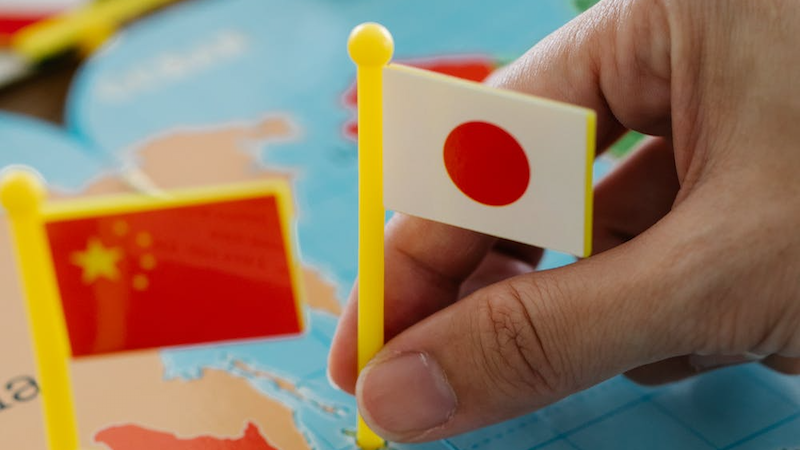
China Japan Flags

By Rumi Aoyama

Japan is one of the countries most affected by geopolitical competition between the United States and China. Although the economies of Japan and China seem to be on the first track of economic decoupling in many ways as a result, they are actually only experiencing a period of structural economic change.

Contrary to the prevailing perception, Japanese initiative, not the US–China rivalry, is driving the structural shifts in Japan’s economic security policy. China’s abrupt restrictions on rare earth exports to Japan in 2010 amid a dispute over the Senkaku/Diaoyu Islands were a wake-up call for Japan, and since then, Japan has been working to reduce its overdependence on China.

In 2020, the Ministry of Economy, Trade and Industry introduced measures to help Japanese companies shift production from China to Southeast Asia or Japan. The Japan External Trade Organization (JETRO) now administers the;Subsidy for Projects to Stimulate Direct Investment in Japan. The Japanese government has now specified;critical products and raw materials;that are essential to daily life and economic activities.

Japan enacted a far-reaching Economic Security Law in May 2022, providing a legal basis for economic security policy and clarifying Japan’s understanding of economic security. Under this law, Japan aligned its policy with the United States and the Netherlands by;tightening export restrictions;on technologies related to semiconductors and quantum computing. Although one potential explanation for this move was the United States’ extraterritorial unilateral sanctions, which gave Japan little choice in their policy alignment, a more convincing reason is that there were fears that such technology could be diverted for military purposes once China had access to. That same year, China’s share of Japan’s imports and exports was;20 per cent, which may indicate a downward trend as Japan’s main exports to China are products related to the semiconductor industry.

Recent news has reinforced the image of decoupling between the Japanese and Chinese economies. Following Mitsubishi Motors’ withdrawal from China, Honda plans to reduce its manufacturing workforce in China. These are the latest examples of a trend stemming from the rising labour costs and fierce competition from Chinese rivals that have characterised the last decade. Given that only;60–70 per cent;of Japanese companies are profitable in China, falling profit margins have led to the gradual withdrawal of 30–40 per cent of companies from China.

Despite appearances, these trends reflect the dramatic structural change facing the economies of Japan and China, not decoupling.

The Asia-Pacific is an anti-globalist exception, still moving towards regional economic integration. The Comprehensive and Progressive Trans-Pacific Partnership and the Regional Comprehensive Economic Partnership entered into force in 2018 and 2022 respectively. Japan, China and South Korea agreed to resume negotiations on a trilateral free trade agreement at a summit in May 2024. This is a clear signal from the leaders of the three major powers in the region that economic relations are vital and must continue.

The goal of the Japanese government’s economic security initiative is to construct a ‘small yard, high fence’. Among the 87 companies that received government subsidies in June 2020, most manufacture strategic assets such as aviation parts and medical equipment. As such, JETRO’s projects are only for small and medium-sized enterprises.

Most importantly, Japanese companies are adapting their way of doing business, and most of them are not leaving China. Faced with challenges such as rising labour costs and strained political relations between Japan and China, Japanese companies started to adopt a ‘China Plus One’ strategy in the early 2010s, shifting some of their business;to ASEAN countries. In response to supply chain disruptions caused by the COVID-19 pandemic, many Japanese companies adopted a ‘China for China’ strategy.

Like many global companies doing business with China, Japanese companies have undergone a significant shift in the way they formulate their business strategies since the war in Ukraine. Geopolitical considerations have now taken precedence over macroeconomic forecasts. This shift in Japanese companies’ thinking has reinforced the ‘China for China’ strategy that these companies have in place.

New technology has also created a new business model for trade between Japan and China — e-commerce. In 2022 alone, Chinese consumers have purchased;US$14.4 billion;worth of Japanese products through e-commerce.

The economic interdependence that has been a key feature of the Japan–China relationship may not be easily broken. As of 2023, China is still Japan’s largest trading partner and Japan is China’s second-largest trading partner after the United States. In a region where the trend towards economic integration is continuing, political leaders show a strong intention to stabilise economic relations, and economic security policy does not aim at full decoupling. In the process of adapting to geopolitical challenges, Japanese companies are taking the lead in changing the dynamics of the economic structure between Japan and China.

  • About the author: Rumi Aoyama is Professor in the Graduate School of Asia-Pacific Studies and Director of the Waseda Institute of Contemporary Chinese Studies at Waseda University.
  • Source: This article was published at East Asia Forum

Categories
South Caucasus News

Beyond Wires And Waves: Biodegradable Brain Implants For Seamless Check On Health – OpEd


Beyond Wires And Waves: Biodegradable Brain Implants For Seamless Check On Health – OpEd

Cyber brain Computer artificial intelligence

For many years now, scientific research has focused on brain sensors that can be implanted. However, most of these sensors rely on wires to send data to doctors, says Girish Linganna

Scientists at Huazhong University of Science and Technology (HUST), in Wuhan, China, have created a new type of gel-based sensor that can be implanted in the brain. This tiny sensor, which is about the size of a grain of sand, is soft and can dissolve in the body in a little over a month. The aim of this new biodegradable sensor is to help monitor the health of people with head injuries or cancer.

This gel-based sensor can be placed in the body without needing any invasive surgery and it works completely wirelessly. When tested on rats and pigs, the sensor performed just as well as traditional wired sensors. It can track important health indicators, such as temperature, pH levels and pressure.

Soft, Wireless Gel Sensor

According to Yueying Yang, a biomedical engineer at HUST, this technology will, possibly, be very helpful for people in medical settings—such as hospitals, clinics, and doctors’ chambers, says Interesting Engineering media house.

The study has left little to chance, Christopher Reiche, who develops implantable micro-devices at in Salt Lake City’s University of Utah, was quoted by Interesting Engineering as saying. Most sensors now rely on wires to send data to doctors. These wires are difficult to insert and remove and can create openings in the skin that allow viruses and bacteria to enter the body. Wireless sensors are an answer to this problem, but their relatively large size and limited communication range have been a constant obstacle.

To address these problems, Yueying and her team designed a set of small cube-shaped sensors, measuring only 2 millimetres, using a soft and flexible material, called hydrogel. Hydrogel is commonly used in medical applications, such as tissue regeneration and delivering medications. These gel sensors change their shape when exposed to different temperatures, pressures and levels of acidity in their surroundings.;

Additionally, they can detect vibrations caused by fluctuations in blood flow in the brain. By scanning the area with an ultrasound probe, medical professionals can analyse how ultrasound waves passing through the skull from the sensor are altered due to pressure, pH, or temperature fluctuations.

Further Development Needed

The small gel cubes dissolve fully in a saline solution in roughly four months’ time and break down within the brain in five weeks. Experiments on rats and pigs revealed that these sensors could detect tiny changes in pressure and temperature as effectively, if not more so, than traditional sensors.

For instance, the sensors could detect tiny changes in skull pressure caused by a pig’s breathing, which wired probes cannot as accurately. These findings are impressive, thinks Julia Körner, who develops hydrogel-based medical sensors at Leibniz University, in Hannover, Germany. However, she says more research is needed to ensure that the sensors are safe for humans.

The primary worry is whether the byproducts from the sensors breaking down may be harmful or build up in other parts of the body. Yueying mentioned that they would keep studying the safety of their system. They also aim to improve the sensors for reliable long-term use and look into mass-producing the devices.


Categories
South Caucasus News

AP Headline News – Jun 27 2024 20:00 (EDT)


28013281


Categories
South Caucasus News

AP Headline News – Jun 27 2024 19:00 (EDT)


28013281


Categories
Audio Review - South Caucasus News

EU leaders pick von der Leyen for second term as European Commission chief


brussels — European Union leaders agreed on Thursday to nominate Ursula von der Leyen of Germany for a second five-year term as president of the European Commission, the EU’s powerful executive body.

At a summit in Brussels, the bloc’s 27 national leaders also picked former Portuguese Premier Antonio Costa as the future chair of their European Council meetings and selected Estonian Prime Minister Kaja Kallas as the next EU foreign policy chief.

The leadership package represents continuity for the 27-member bloc, with centrist pro-EU factions keeping hold of top posts despite a far-right surge in elections to the European Parliament earlier this month.

The deal was announced by the current European Council president, Charles Michel, on social media.

The trio won broad backing from leaders, but diplomats said right-wing Italian Prime Minister Giorgia Meloni abstained from the vote on von der Leyen and voted against Costa and Kallas.

Von der Leyen’s nomination still needs approval from the European Parliament in a secret ballot – widely seen as a trickier proposition than her endorsement by EU leaders.

At the summit, the EU also signed a security agreement with Ukraine, debated how to bolster EU defenses against Russia and agreed on the bloc’s strategic priorities for the next five years.

The security deal underlines EU support for Kyiv fighting off Moscow’s invasion for a third year, despite gains by the far-right in European elections, uncertainty created by French snap elections and the U.S. presidential vote in November.

The agreement lays out the EU’s commitments to help Ukraine in nine areas of security policy, including arms deliveries, military training, defense industry cooperation and demining.

“These commitments will help Ukraine defend itself, resist destabilization and deter future acts of aggression – more concrete proof of the EU’s unshakable resolve to support Ukraine for the long haul,” Michel said.

The leaders will reiterate their pledge to support Ukraine as long as it takes, saying that “Russia must not prevail” and that Ukraine must get back the land annexed by Moscow.

Defense debate

The war in Ukraine laid bare the EU’s lack of preparedness for a conflict as the bloc struggles to supply Kyiv with enough weapons against Russia, prompting calls for more EU coordination of defense systems and investment in defense industries.

Diplomats said von der Leyen told the summit that between 1999 and 2021, the EU increased military spending by 20%, China by 600% and Russia by 300%, even before Moscow’s massive rise in military spending after its invasion of Ukraine in 2022.

According to diplomats, von der Leyen told leaders the EU needed to invest 500 billion euros ($535.30 billion) in defense over the next 10 years. Financing options included national contributions, dedicated revenue streams — called the EU’s own resources — and joint borrowing, von der Leyen said.

Investment in defense is part of the EU’s “strategic agenda” that the leaders aimed to agree on before dinner on Thursday — a document that tells EU institutions what European governments want them to focus on during their 2024-29 term.

Apart from defense, the agenda calls for a more competitive EU to withstand economic pressure from China and the United States and for preparing the bloc for enlargement that would include Ukraine, Moldova and the Western Balkans.


Categories
South Caucasus News

EU leaders pick von der Leyen for second term as European Commission chief


brussels — European Union leaders agreed on Thursday to nominate Ursula von der Leyen of Germany for a second five-year term as president of the European Commission, the EU’s powerful executive body.

At a summit in Brussels, the bloc’s 27 national leaders also picked former Portuguese Premier Antonio Costa as the future chair of their European Council meetings and selected Estonian Prime Minister Kaja Kallas as the next EU foreign policy chief.

The leadership package represents continuity for the 27-member bloc, with centrist pro-EU factions keeping hold of top posts despite a far-right surge in elections to the European Parliament earlier this month.

The deal was announced by the current European Council president, Charles Michel, on social media.

The trio won broad backing from leaders, but diplomats said right-wing Italian Prime Minister Giorgia Meloni abstained from the vote on von der Leyen and voted against Costa and Kallas.

Von der Leyen’s nomination still needs approval from the European Parliament in a secret ballot – widely seen as a trickier proposition than her endorsement by EU leaders.

At the summit, the EU also signed a security agreement with Ukraine, debated how to bolster EU defenses against Russia and agreed on the bloc’s strategic priorities for the next five years.

The security deal underlines EU support for Kyiv fighting off Moscow’s invasion for a third year, despite gains by the far-right in European elections, uncertainty created by French snap elections and the U.S. presidential vote in November.

The agreement lays out the EU’s commitments to help Ukraine in nine areas of security policy, including arms deliveries, military training, defense industry cooperation and demining.

“These commitments will help Ukraine defend itself, resist destabilization and deter future acts of aggression – more concrete proof of the EU’s unshakable resolve to support Ukraine for the long haul,” Michel said.

The leaders will reiterate their pledge to support Ukraine as long as it takes, saying that “Russia must not prevail” and that Ukraine must get back the land annexed by Moscow.

Defense debate

The war in Ukraine laid bare the EU’s lack of preparedness for a conflict as the bloc struggles to supply Kyiv with enough weapons against Russia, prompting calls for more EU coordination of defense systems and investment in defense industries.

Diplomats said von der Leyen told the summit that between 1999 and 2021, the EU increased military spending by 20%, China by 600% and Russia by 300%, even before Moscow’s massive rise in military spending after its invasion of Ukraine in 2022.

According to diplomats, von der Leyen told leaders the EU needed to invest 500 billion euros ($535.30 billion) in defense over the next 10 years. Financing options included national contributions, dedicated revenue streams — called the EU’s own resources — and joint borrowing, von der Leyen said.

Investment in defense is part of the EU’s “strategic agenda” that the leaders aimed to agree on before dinner on Thursday — a document that tells EU institutions what European governments want them to focus on during their 2024-29 term.

Apart from defense, the agenda calls for a more competitive EU to withstand economic pressure from China and the United States and for preparing the bloc for enlargement that would include Ukraine, Moldova and the Western Balkans.