
Day: June 27, 2024
Categories
NPR News: 06-27-2024 9PM EDT
By Sara Bjerg Moller
(FPRI) — In April, not long after NATO marked its 75th anniversary, during a little-noticed press conference at the Alliance’s Headquarters in Brussels, Secretary General Jens Stoltenberg declared, “if Allies face a choice between meeting NATO capability targets and providing more aid to Ukraine, my message is clear: Send more to Ukraine.” Flanked by the prime ministers of Czechia, Denmark, and the Netherlands, the outgoing secretary general continued on this theme praising Denmark for its decision to donate all of its artillery systems to Ukraine.
In acknowledging the dilemma some Allies face between investing in their own security and providing assistance to Ukraine, the NATO leader has shattered the longstanding taboo in NATO against portraying military aid to Ukraine and the Alliance’s own security interests as a zero-sum game, where one party’s gain comes at the expense of another party’s loss.
The notion that there are tradeoffs between supporting Ukraine and NATO allies’ national readiness levels is an uncomfortable topic of conversation, to be sure. It’s certainly not a debate that Allied leaders wish to have, much less one they want to see play out publicly. But as the NATO Alliance inches ever closer to assuming a more direct role in the Ukraine War, it’s increasingly a conversation that needs to be held, however uncomfortable it may be to do so.
Saying the Quiet Part Out Loud
The timing and language of Stoltenberg’s appeal for members of the NATO alliance to prioritize assistance to Ukraine over national military capability targets was prompted by Ukraine’s recent military setbacks and the fear that it could face further territorial losses following the stronger-than-expected Russian military advance and multi-month delay of the US military assistance package this spring.
With many in the Alliance anxiously awaiting the final outcome of difficult political negotiations over the US Congressional vote for the Ukraine Security Supplemental Appropriations Act in Washington, D.C. at the time, one can perhaps understand Stoltenberg’s decision to take advantage of the media opportunity to convey a sense of urgency to Allied capitals.
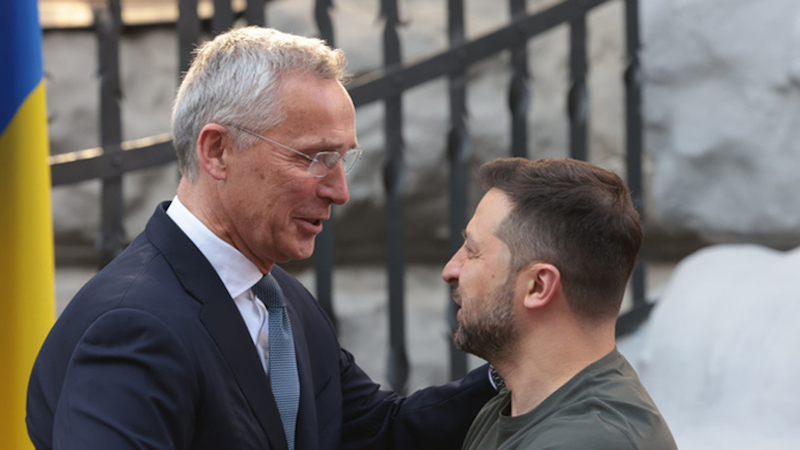
However, the NATO leader’s urgency appeared no less lessened after the US Congress passed the Act in mid-April. Standing next to Ukrainian President Volodymyr Zelenskyy in Kyiv the following week, the Alliance’s longest-serving, senior-most political figure;repeated his message;that given a choice between meeting NATO’s national capability targets set by Allied military planners or providing military support to Ukraine, Allies “should support Ukraine.” To hammer home this message, he underscored that “Stocks can and will be replenished. Lives lost can never be regained.”
In acknowledging the dilemma some NATO members face between meeting their national and alliance security commitments and supplying weapons and ammunition to Ukraine, Stoltenberg is responding to recent concerns raised by Allied capitals about how much military assistance they can afford to provide Ukraine.
For Ukraine, the timing couldn’t be worse. As Russia intensified its air and drone strikes against Ukrainian energy and civilian targets this spring, the Zelenskyy government;increased its appeals;to NATO allies for more air defense support. While some, like Germany,;responded by pledging;an additional;Patriot battery;to the one already sent, others like;Greece and Poland;refused to send their systems on the grounds that they;need them;for their own defenses. Earlier this spring, there were rumors that Spain, bowing to pressure from fellow Allies, would also send a Patriot system to Ukraine. However, this;did not materialize. While Madrid has pledged to send a dozen Patriot missiles to Ukraine, Prime Minister Pedro Sanchez used the occasion of President Erdogan’s visit to his country in June to make clear that;Spain’s Patriot air defense system;would;remain in Turkey, where it has been based since 2015 as part of a;NATO mission;to protect against the ballistic missile threat from Syria.
Although further announcements about the transfer of additional air defense systems to Ukraine are expected in the lead-up to next month’s summit, given;European governments’ own shortages;in this regard they are reluctant to deplete their capabilities to meet Ukraine’s needs without first receiving commitments from the United States that they will;backfill the systems. Indeed, air defense has emerged as one of the critical vulnerabilities in the alliance’s arsenal in recent years, leading to difficult decisions about when and which systems to surrender to Kyiv. An internal NATO assessment last year found that Allies had only;5 percent;of the air defense capacities needed to protect members in central and eastern Europe, and that was before;Germany’s announcement;this spring that it was ending its Patriot System deployments to Poland and Slovakia this summer.
The situation further west is no better, with many countries refusing to give away what meager air defense capabilities they have left after years of downgrades. While air defense is high on;Europe’s defense shopping list;and new programs—like the European Sky Shield Initiative—are in development, it will take years before Europeans regain security of the skies.
To get around countries’ reluctance to transfer their own systems to Ukraine, the Netherlands have applied a coalition approach to the problem, trying to assemble various components and munitions from across several European countries with the aim of providing at least one fully operational system this summer. However, with only a few dozen Patriot air defense systems among them, Europeans Allies will have to overcome great obstacles to get from the three to four systems already lent to Ukraine to the seven that Zelenskyy has requested.
A Non-Zero-Sum World?
Since Russia’s full-scale invasion of Ukraine began in February 2022, Allied leaders and NATO officials have endeavored to stress to their publics that Ukraine’s security is;intertwined;with their own. However, as Russian spring offensives made further gains, some officials have adopted stronger language when discussing the link. In perhaps the clearest formulation of the relationship to date, Stoltenberg declared in April that, “Ukraine is using the weapon we provided to destroy Russian combat capabilities. That makes us all safer.” Supporting Ukraine, the NATO leader continued, was thus “an;investment in our own security.”
There is some truth to this, as Russian forces and capabilities committed to Ukraine cannot be used elsewhere. However, Moscow has consistently;surprised Western analysts, not only with its economic resilience to Western sanctions but also in its faster-than-expected ability to reconstitute losses in Ukraine. Russia’s;increased hybrid activity;since 2023 also appears to have taken some allies by surprise. Unlike in Europe where discussions of wartime readiness are becoming more common, but still far from reality, the Russian defense industry and economy are already on a;war-time footing. Although many Alliance leaders have woken up to the idea of Russia as a chronic threat—with multiple countries’ intelligence agencies warning that Moscow could try to test Alliance’s resolve by attacking a NATO member in the next five years—Europe’s arsenals and armed forces remain ill-prepared for such an eventuality.
Of course, efforts are underway to;rectify this, but plans for growing Europe’s defense industrial capacity are still in the nascent stages of development, and it will take years before they bear fruit, if they do so at all. In the interim, a lot could happen to influence those plans, making it less certain that Europe’s depleted arsenals will be replenished. As more European political and military leaders come to grips with this fact, it could lead more capitals in the coming months to question the continued wisdom of sending weapons to Ukraine.
Many analysts would probably argue that Denmark, buffered by its proximity to other NATO allies, including the newest ally, Sweden, does not require artillery systems. Or, if it does, that they’re not as urgently needed as in Ukraine. The fact that the Danish government had already ordered a replacement system probably also affected the timing of the donation. However, the experience of the generous Danes could soon serve as a;cautionary tale;for other Allies: In April, Danish media reported that the replacement system, ordered back in 2015 in a scandal-ridden deal that eventually led to the resignation of the Danish defense minister, would be delayed by a year to late 2026, and the costs would be;significantly higher;than initially anticipated. Having handed over all nineteen CAESAR Howitzers to the Ukrainians, the Danes now face the prospect of being without any artillery for two years.
Indeed, the Danish experience could serve as a harbinger for what may lie ahead for Europe’s armed forces, as they attempt to replenish and upgrade depleted stocks and aged-out weapons systems they have donated to Ukraine. For it is a truth universally acknowledged, that once in possession of a defense contract, that contract will go over budget and over time. Because the European and US armament industry is not yet up to the task of handling the post-2022 surge of new orders, this scenario could arise with every new weapons order placed by the Allies.
There is no doubt that Ukraine;needs more armaments. No where was the weapons shortage in Ukraine more acutely felt this year than with 155mm ammunition. Indeed, the high rate of expenditure of ammunition has been one of the war’s unexpected developments, with the Allies consistently underestimating Ukraine’s;artillery needs;while simultaneously overpromising what they can deliver. The;ballyhooed announcement;by European Allies last year that they would deliver 1 million rounds of 155mm to Ukraine by this spring, for example, fell significantly short of that number. As French President Emmanuel Macron recently noted, Europe doesn’t just need to purchase more weapons, it;needs more factories;to build them. But doing so will take time. Even in the United States, where a new 155mm munitions plant just opened in;Texas, some analysts are already warning that the Pentagon is;not budgeting enough;for the production levels required by modern warfare. As production problems emerge and delivery deadlines for replacement systems are pushed farther back, more and more allies could find themselves adopting the position of the Greek Prime Minister Kyriakos Mitsotakis, who, when asked why his government was;refusing Zelenskyy’s request;for its Patriot systems, responded that the systems are “critical to our deterrent capability.”
At the crux of the problem are incompatible timelines. Ukraine needs weapons and ammunition now, but replacing depleted European arsenals will take years. In the interim, European capitals will be faced with increasingly tough questions about what they can afford to provide Kyiv amidst a rapidly deteriorating European security landscape.
Further complicating matters are the long lead times required for defense production and continued uncertainty regarding Europe’s commitment to foot the bill for the long haul. The one-time;‘special’ defense funds;announced by some countries in the wake of Russia’s 2022 full-scale invasion have largely been;exhausted already. In Germany and Denmark, a large portion of the funds allocated from this pool have been used to cover interest payments and offset cost overruns in the regular defense budget, rather than new projects as originally intended.
Efforts to collectively fund greater European defense industrial capacity aren’t faring much better. The much-hyped pre-war European Union’s;Permanent Structured Cooperation;project, which was designed to jointly develop European defense capabilities, has been slow to get off the ground. Meanwhile, the;European Defense Fund—which was established in 2017, but only began operating in 2021 with the mission to promote cooperation between EU companies and boost defense capability—has seen its budget decline from $1.2 billion in 2023 to;$1.1 billion;in 2024.
Because of Europe’s fixation with;budgetary austerity, the prospect of future year increases in defense spending remains uncertain. More than two years into the war, European politicians are still frantically debating the merits of restocking quickly—which often means buying American—versus investing in their own defense industry and “buying European.” In short, Europe’s defense industrial challenges will take years to overcome. All of this suggests we’re headed for a dark future during which there will be a widening gap between Ukraine’s needs and what Europe is able and willing to provide. As Kyiv’s appetite for material expands in the coming months in response to continued Russian aggression, Europe’s warehouse locks could tighten.
As it becomes increasingly challenging for Western allies to source the material Kyiv needs to sustain its fight, Allied leaders will need to grapple with difficult trade-off questions about what to give Ukraine and what to keep for themselves. Making matters tougher still, NATO Allies are; trying to determine how they will fulfill the national targets allocated to them last year by NATO military authorities, as part of the multi-year;NATO Defence Planning process. The first since the start of the 2022 war, the new Minimum Capability Requirements identified by SACEUR General Christopher Cavoli demand significantly more capabilities from the Allies than previous cycles. This is the context for Stoltenberg’s controversial April comments, which asked Allies to prioritize Ukraine’s current security needs over their Alliance-wide commitments to meet the ambitious;transformation plans;developed by NATO military officials in recent years.
Thus, despite criticism by the Zelenskyy government that Allies have been too slow to send weapons over the past two years, the reality is that Ukraine may soon have to wait longer for weapons. But unlike during the first two years of the war, where the delay was largely due to many NATO members’ fears regarding escalation, future holdups may arise as much from the sorry state of the West’s depleted arsenals and the long lag-time it will take to rebuild them.
- About the author: Sara Bjerg Moller is an Associate Teaching Professor in the Security Studies Program (SSP) at Georgetown University and a Non-Resident Senior Fellow at the Atlantic Council.
- Source: This article was published by FPRI
By Denys Reva
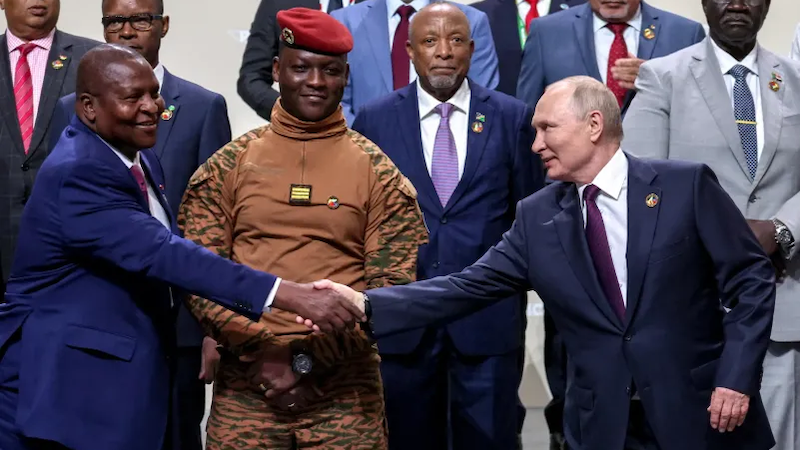
In early June, Russian Foreign Minister Sergey Lavrov visited Guinea, the Republic of the Congo and Burkina Faso – his sixth official visit to Africa since 2022. As Russia ramps up its charm offensive, can African states avoid becoming entangled in Moscow’s geopolitical competition with the West?
The rivalry intensified with the war in Ukraine, and several European countries have recently;accused;Russia of a coordinated sabotage campaign across the European Union (EU). The Kremlin says its growing presence in Africa isn’t about competition with the West, but anti-Western;rhetoric;often follows Russian visits.
It’s also clear that the Russo-Ukrainian war has elevated Africa’s importance in Russian foreign policy. While Russia’s 2016 Foreign Policy Concept included minimal engagement with the continent, the 2023 version referred to Africa as a ‘distinctive and influential centre of world development.’
Africa is the largest voting bloc in the United Nations, with 54 out of 193 voting members. Unsurprisingly, Western, Ukrainian and Russian diplomats rushed to secure support from African states early in the war. But the conflict negatively impacted international food, energy and finance systems. Food security became an urgent issue for Africa, and the Kremlin;used;that to engage with African countries and promote itself as an alternative partner.
In some cases, Russia is the only international partner for African countries facing sanctions
Yet, despite the pageantry and public declarations, Russia’s initial efforts have fallen short of expectations, for three reasons. First, Russia’s;tradevolume with Africa in 2022 (US$18.4 billion) was lower than the continent’s traditional partners, such as China (US$199 billion), Italy (US$76.3 billion), France (US$67.8 billion), the US (US$65.7 billion) and Germany (US$45 billion).
Even more telling is how low the figures are for African imports from Russia – under 2% – compared to other global trade partners (see chart). These trends may explain why African countries’ initial response to Moscow’s strategic pivot has been tepid. Only 17 African heads of state attended the 2023 Russia-Africa Summit – less than half of those at the 2019 summit.
 % of African imports from selected global trade partners. Source: Trade Map, International Trade Centre
Second, Ukraine’s success in ending Russia’s naval blockade eased export restrictions on grain in 2023, and food prices are expected to drop in 2024. Food security remains an important topic for Russian and Ukrainian relations with Africa, but the war no longer has the same urgency for the continent. Some African states, like Morocco, even used the trade disruption to increase their share of the market.
Finally, by the 2023 Russia-Africa Summit, most African states had voiced their positions on the war, with many opting for non-alignment. This seems unlikely to change. As a result, global powers are competing to influence and secure African support for specific issues.
In this regard, Moscow’s bilateral engagements are bearing fruit. To start with, Russia’s re-connection with Africa was accelerated by geopolitical;shifts;in the Sahel. These have challenged the dominance of traditional powers and created an economic and security vacuum in the so-called Coup Belt.
The Kremlin’s openness to unconditional partnerships helped position Russia as a new favourite and, sometimes, the only international partner for countries facing isolation and sanctions. Two of the three nations Lavrov visited in June – Guinea and Burkina Faso – have experienced recent coups and remain under sanctions, including from the Economic Community of West African States (ECOWAS). After Niger’s 2023 coup, Russia;warned;ECOWAS against using military measures in the country.
All six Portuguese-speaking countries in Africa have signed military agreements with Russia
And while Moscow’s actions may weaken ECOWAS and the African Union’s responses to coups, Russia has managed to avoid being seen as a disruptor by West African countries. This is an example in Africa, as happened in;Syria, of Russia leveraging its growing importance by becoming part of regional peace and security discussions.
But Russia’s greatest success comes from bilateral security agreements, including training and weapon supplies. Lavrov’s visit coincided with Russian Deputy Defence Minister Yunus-Bek Yevkurov’s trip to Libya and Niger. Russia is expected to sign security agreements with Chad, Guinea, Congo, Libya and Niger.
A new Polish Institute of International Affairs (PISM);report;says Yevkurov is now responsible for Africa Corps (formerly Wagner) operations in Africa. Wagner’s activities on the continent have been;compared;to those of an organised crime group, focusing on illicit activities, smuggling, and money laundering. While the Kremlin claimed a degree of separation, Wagner supported Moscow’s interests.
The PISM report notes that under new management, Africa Corps is pursuing Russian strategic objectives more effectively, emphasising formal economic and security cooperation. The specific intent is to displace Western political influence in Africa by establishing alternative security cooperation agreements.
Russia’s greatest success comes from bilateral security agreements, including training and weapon supplies
Russia’s cooperation with Sahelian states comes at the expense of France, which has been losing influence in the region. A;recent;report says France is set to drastically decrease its military presence in West and Central Africa, owing partly to the lack of demand for training and security partnerships. Russia is also making gains in Lusophone Africa, with Portugal expressing concerns about its increased influence. All six Portuguese-speaking countries in Africa have;signed;military agreements with Russia.
The strategy is gradually paying off. Bilateral deals with Russia won’t tip the global balance of power in Africa, but will make African states more cautious about their stance on the war in Ukraine, or criticism of Moscow.
This was evident in the limited participation of African countries in Switzerland’s Summit on Peace in Ukraine this month. Before the event, Russia and Ukraine lobbied ‘global south’ countries, especially in Africa. Russia criticised the;summit;and campaigned to dissuade countries from participating. Ukraine sought to ensure global south participation, with President Volodymyr Zelenskyy personally inviting several African leaders.
Even though the Summit on Peace’s agenda focused on soft humanitarian issues such as prisoner exchange, the return of Ukrainian children and food security, only 13 African countries participated. Only 10 signed the final declaration.
Russia’s growing presence shouldn’t necessarily be seen as a risk, and its increasing footprint may complement Africa’s relations with new and traditional partners. But while African states have become less concerned about the war in Ukraine, the continent has remained a priority for Ukraine, Russia and other major powers. As these global contenders seek Africa’s support or neutrality, countries on the continent must avoid being used or becoming a belligerent in a proxy war.
- About the author: Denys Reva is a Researcher, Africa in the World, ISS Pretoria
- Source: This article was published by ISS Today
Categories
NPR News: 06-27-2024 8PM EDT
washington — The International Monetary Fund on Thursday called on the U.S. to raise taxes to curb rising debt levels while applauding “robust, dynamic” growth in the world’s largest economy and progress toward bringing inflation under control.
The IMF said in a closing statement for its “Article IV” review of U.S. economic policies that high deficits and debt “create a growing risk to the U.S. and global economy, potentially feeding into higher fiscal financing costs and a growing risk to the smooth rollover of maturing obligations.”
The IMF’s statement slightly revised down its 2024 U.S. GDP growth forecast to 2.6% from the 2.7% forecast in the global lender’s World Economic Outlook in April.
The IMF forecasts U.S. growth in 2025 to dip to 1.9%, unchanged from the April outlook, and remaining above 2% through the end of the decade.
“The U.S. economy has proven itself to be robust, dynamic and adaptable to changing global conditions,” the IMF said. “Activity and employment continue to expectations … and the disinflation process has been considerably less costly than many had feared.”
The IMF said it expects U.S. inflation to return to the Federal Reserve’s 2% target by mid-2025, considerably sooner than the Fed’s own forecast of returning to target in 2026.
IMF Managing Director Kristalina Georgieva told reporters that the IMF’s forecast is more optimistic because of the current trajectory of inflation indicates a quicker return to target, partly because strong U.S. consumer spending driven by wealth built up during the COVID-19 pandemic is subsiding and the labor market is cooling.
Debt, trade prescriptions
But the IMF chided Washington for rising deficits that, if continued, would bring the U.S. debt-to-GDP ratio to a concerning level of 140% by the end of the decade. The IMF measure includes Social Security pension and Medicare health care obligations.
“Such high deficits and debt create a growing risk to the U.S. and global economy, potentially feeding into higher fiscal financing costs and a growing risk to the smooth rollover of maturing obligations,” the Fund said.
For the second year in a row, the fund prescribed that the U.S. increase income tax rates progressively, not only on the wealthiest Americans but also for households earning less than $400,000 a year — a threshold that U.S. President Joe Biden has vowed not to cross in his re-election campaign pledges.
The fund said the U.S. also should reform entitlement programs, cuts that Biden and Republican rival Donald Trump have both vowed not to pursue, and raise the threshold for eligibility for the Earned Income Tax Credit for workers without children.
Georgieva said the fund was trying to present a policy path for the U.S. “that in our view would serve the economy and its people well,” as it would for any IMF member country.
With the U.S. economy strong, it was a “good time” for the U.S. to consolidate its fiscal position, she said, adding: “It is in good times where you can do more to prepare yourself for risks in the future.”
The IMF also said that intensifying U.S. tariffs and other trade barriers along with the increased use of industrial policy to favor domestic firms represented a downside risk for the U.S. and global economies, with the potential to distort investment flows and undermine the global trading system.
Instead, the fund called for Washington to work out differences with trading partners through negotiations and strengthen the World Trade Organization.
In her discussion with Georgieva, U.S. Treasury Secretary Janet Yellen reiterated the importance of “frank and thorough assessments” of IMF member economies and discussed the “remarkable performance of the U.S. economy over the past few years,” the Treasury said.