Categories
Audio Review - South Caucasus News

Parliament Adopts Changes to Pension Legislation Fueling Fears Over Citizens’ Savings and Corruption


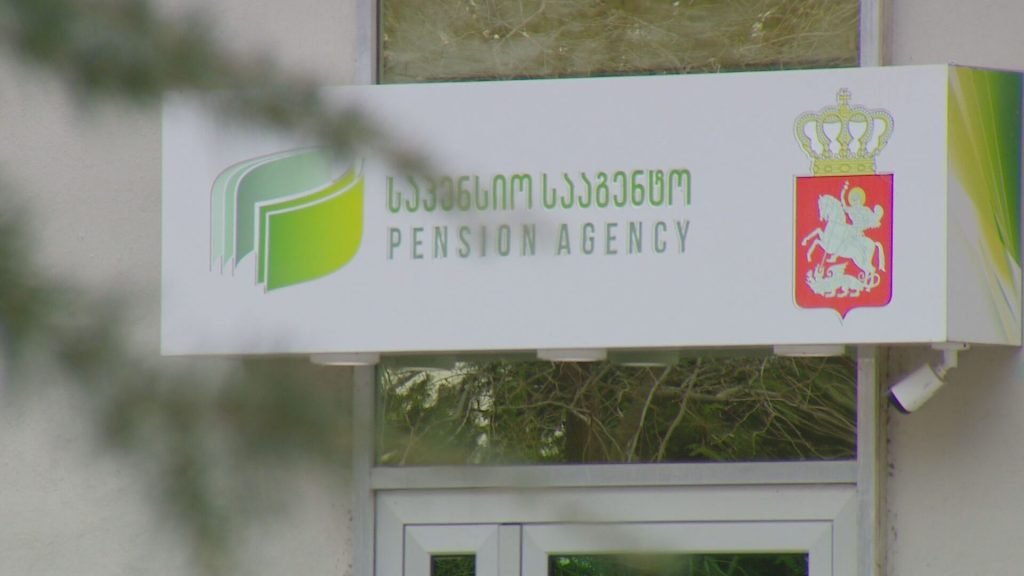
Pension-Agency.jpeg

Georgia’s ruling party has passed yet another controversial legislation that stokes fears about the citizens’ pensions of hundreds of millions of GEL. The amendments to the “Law on Funded Pension” were passed in its third and final reading today, June 27, with 75 votes in favor and none against. Most opposition parties did not participate in the vote, as they are boycotting parliamentary work after the passage of the foreign agents law.

The controversial amendments were criticized by a number of opposition leaders and President Salome Zurabishvili from the moment they were introduced by the Ministry of Economy.

“The government is starting a new gamble,” Roman Gotsiridze, MP for the Euro-Optimists parliamentary group, was warning against the amendments in early May. In early June, President Salome Zurabishvili also called the amendments “malicious,” vowing to abolish them along with other Russian-style laws if the Georgian Charter she initiated succeeds in upcoming elections. Nika Gvaramia of the opposition party Ahali even called the amendments a “pension thieves’” law.

The package goes beyond just renaming the Pension Agency to the Pension Fund, with changes that critics say raise significant concerns, including increased government control over the institution and the potential risk of citizens losing money they are supposed to get back in retirement.

Increased Government Control Over Pension Fund Management

The declared official aim of the package is to refine and make more effective the governance system of the Pension Agency by centralizing power in one body.

Previously, the Agency was governed by two boards: the Investment Board and the Supervisory Board. The Investment Board had four members, all international, appointed by the Parliament, and was responsible for developing and implementing investment policy. The Supervisory Board consisted of the Ministers of Economy, Finance, and Health and the Chairman of the Investment Board and was responsible for overseeing the work of the Pension Agency, with the exception of investment policy.

The legislative package abolished these two bodies and created a single body, the Governing Board, in their place. The Governing Board will consist of nine to 15 members and will have a full control over the Pension Fund, including on the investment policy. The members will not be Ministers or political figures, will not be international citizens and will all be appointed by the Prime Minister of Georgia, thus minimizing the role of the Parliament in the Pension Fund.

The Ministry of Economy explained the centralization of powers in a single body was necessary due to the “significant growth of pension assets and the diversification and expansion of investment instruments” that require stronger and more effective management. It said that the centralization aims at increasing the effectiveness of risk management and supervision of pension funds. In addition, Irakli Nadareishvili, Deputy Minister of Economy, said that in the new system, the participation of Ministers and political figures will be excluded. Levan Surguladze, a financial expert and former director of the Pension Agency, also welcomed the merger of the two boards into one: “Two different boards were completely unintegrated governance structures that caused a lot of problems,” he said.

Meanwhile, the critics of the package fear that granting the PM the authority to approve members of the new Governing Board – which will have combined powers resulting from merging the two abolished boards – increases government’s control over the Pension Fund and put citizens’ savings at risk. “After the bill is passed, the members of the board will not be foreigners. Therefore, the government will take full control over the [Governing] Board,” wrote Khatia Dekanoidze of the Euro-Optimists parliamentary faction. “While the people and the government cannot even agree on what development means, and public opposition to pseudo-development projects is growing, it is truly alarming that the government is now putting the security of our future at risk without our consent,” economist Ia Eradze said. She added that the government is expected to start investing pension fund money in infrastructure projects, such as the strongly opposed hydroelectric power plants (HPPs).

Pensions Expected to be Invested in Non-Financial Assets

The specific change that raises another concern is that the Pension Fund has been allowed to invest citizens’ money in non-financial assets of its choice. Citizens’ pensions are divided into three portfolios: low, medium and high risk, totaling GEL 4.9 billion (about USD 1.755 billion). The largest portion, GEL 4.8 billion (about USD 1.71 billion), is in the low-risk portfolio.

Previously, the Pension Agency was allowed to invest money from the low-risk portfolio only in financial assets such as corporate bonds, deposits, securities, and equities. From now on, the Pension Fund is allowed to invest up to 15 percent of the low-risk portfolio in “other assets,” which include non-financial assets such as infrastructure projects. This 15 percent amounts to GEL 720,000. The Pension Fund will need the approval of the National Bank to invest this money in such assets.

Under the past law, the Pension Agency could invest in non-financial assets only from the medium and high risk portfolios, with 15 percent and 20 percent of the money from these portfolios, respectively, allocated to such assets. The adopted law has raised these thresholds by an additional five percent, allowing 20 percent and 25 percent of the medium and high risk portfolios, respectively, to be invested in non-financial assets.

Allowing the agency to dispose of such a share of money in non-financial assets is feared by experts. “If the government has some big infrastructure project […] and makes a decision to invest this money [in them], since it is the long-term money, this carries risks because this money can be spent inefficiently,” Zurab Lalazashvili, the Governing Partner of audit firm BDO, told local business media BMG.” They want to invest more of the savings, which are supposed to ensure a relatively peaceful old age for our citizens, in risky projects,” opposition leader Roman Gotsiridze wrote, adding that the government could invest them either in large infrastructure projects, such as any HPP or even the Anaklia port, or in the ruling party’s affiliated companies.

Economy Minister Levan Davitashvili dismissed such fears, saying: “We cannot imagine that pension savings will be used to finance the state’s public infrastructure [projects].” However, he didn’t completely rule out the possibility of pension funds participating in the financing such projects: “In general, the participation of the Pension Agency in the financing of infrastructure projects is possible,” he said, adding that if such a case occurs, it must only “serve the best interest” of citizens’ pensions.

Citizens Barred from Transferring Assets to Private Companies

According to the adopted law, citizens will no longer be allowed to transfer their pension assets to private companies. The Ministry of Economy cited international practice and says that citizens’ choice to transfer their pension assets is often “inefficient”.

The decision has also been criticized by the opposition. Beka Liluashvili of the opposition For Georgia party argued that the Pension Fund faces a reputational risk, as many citizens would have preferred to transfer their pension assets to private companies. He claimed that the Pension Fund is restricting citizens’ freedom of choice by preventing them from transferring their assets to private companies.

Increased Corruption Risks

The law has also increased in the management fee for the Pension Agency from the current 0.5 percent, to up to 0.75 percent of total pension funds. The exact amount of this fee will be determined by the Georgian government. While the explanatory note to the bill asserts that the 0.75 percent threshold is in line with international practice, this aspect of the amendment has not escaped criticism. Opposition MP Roman Gotsiridze expressed concerns that by raising administrative and bureaucratic fees, the Pension Fund could become vulnerable to corruption.

Another Controversial Law

While these controversial legislative changes have not caused as much public outcry as the Kremlin-inspired Foreign Agents Law or the so-called Offshore Law, critics say the damage is significant and fear that Georgians’ pensions will not be managed effectively, but rather spent arbitrarily as the Georgian Dream government sees fit.

“In essence, this bill provides for the creation of a kind of state bank, it is no longer a pension fund. It is a state bank created with the savings forcibly collected from the citizens of Georgia. According to this bill, it will become the most risky financial institution. If it is enacted, we should expect that one day the pension savings of the population will simply disappear. Fundamental changes like these don’t just happen, and here the interests of the government, including corrupt interests, are revealed to use this money as they see fit…With these changes, the government will be able to manage the money of the pension fund in the same way as it manages the budget now,” says economist Akaki Tsomaia.


Categories
Audio Review - South Caucasus News

Parliament Appoints Three Lifetime Judges to Supreme Court, Amid CSO Calls for ‘Vetting’


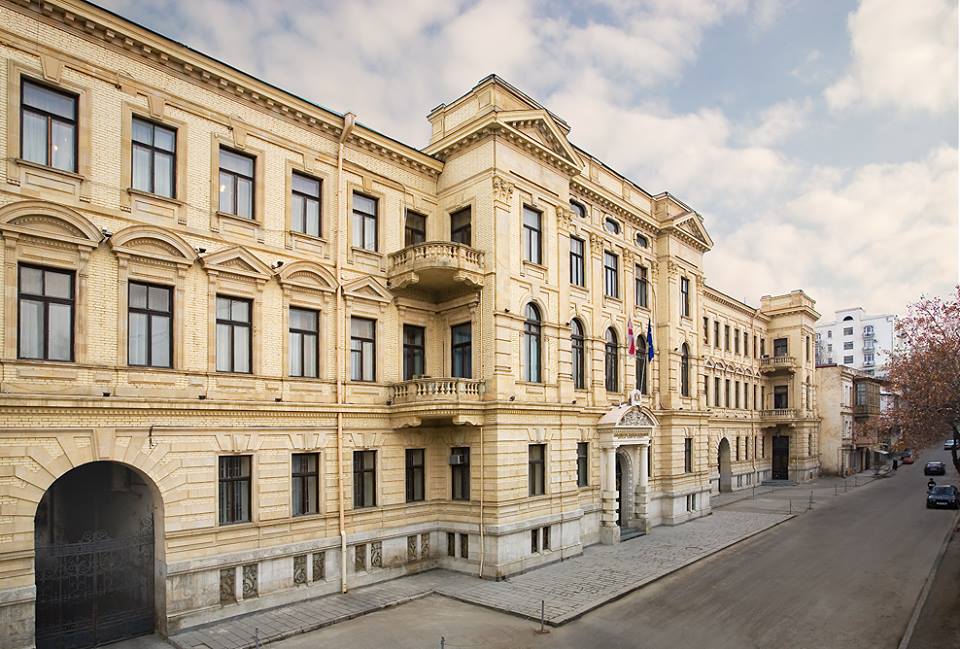
Supreme-Court-of-Georgia.jpg

On June 27, the Parliament of Georgia approved the appointment of three new judges to the Supreme Court. Judges Badri Shonia and Gocha Jeiranashvili were appointed with 78 votes and their lifelong mandate will take effect from October 18 this year. Gizo Ubilova was appointed with 80 votes and his mandate will start immediately.

Court Watch’s Assessment

The judicial watchdog, Georgian Court Watch, has issued a statement regarding the Parliament’s official filling of 27 out of 28 seats of lifelong judges of the Supreme Court of Georgia. The watchdog said: “With this decision, “Georgian Dream” effectively completes the process of staffing the Supreme Court with the lifetime judges it wants. “

The CSO stresses that “taking into account the constitutional role and status of the Supreme Court of Georgia, it is essential to staff the court with conscientious personnel”.

The organization points out that when Georgia was granted the status of an EU candidate country, it received a specific recommendation to reform the judicial system, including the creation of an extraordinary mechanism to check the integrity of persons in leading positions in the court, with the participation of international experts.

“However, the Georgian Dream not only did not start work on the creation of a mechanism to check the integrity of judges, but the Prime Minister and the Speaker of the Parliament even declared the issue closed. This deprives the judicial system of any future prospect of thorough reform,” – notes the Court Watch, adding: “Today, the undeserved election by the Parliament of three judges loyal to a group of influential judges to the highest body of the court, in conditions when the government refuses to create a mechanism to check integrity, distances Georgia from the European Union and, along with other challenges in the judicial system, may become one of the obstacles to starting negotiations on joining the European Union.”

Also Read:


Categories
Audio Review - South Caucasus News

Parliament Appoints Three Members to Public Broadcaster Board


47109543_2065241283533546_76984775237089

On June 27, the Parliament of Georgia voted in favor of appointing three new board members to the board of the Public Broadcaster.

One of the members of the Board is Izabela Osipova, presented by the Public Defender and elected with 80 votes in favor. Since 2018, she has been a member of the Board of the Public Broadcaster, as well as an expert of the “Tolerance, Civil Awareness and Integration Support Program” under the United Nations Association (UNAG)/U.S. Agency for International Development (USAID) at the Tolerance Center of the Public Defender’s Office.

The second member is Soso Sturua, presented by the Supreme Council of the Autonomous Republic of Adjara and elected again with 80 votes in favor. Previously he has been the member of the Adjara Public Broadcaster’s Board from 2019.

Lastly, Giorgi Iakobashvili has been elected with 79 votes in favor. He was presented by the Georgian Dream party and is the Editor in Chief of the online news outlet For.ge.

According to the Georgian Law on Broadcaster, the members of the Public Broadcaster’s Board are chosen for no longer than 6 years.

Also Read:


Categories
South Caucasus News

Parliament Lifts COVID-Related Fines


Face-masks.jpg

On June 27, the Georgian Parliament abolished fines imposed between June 23, 2021 and July 3, 2023 for violations of COVID-19 isolation, quarantine or face masks.

Amendments to the law on exemption from administrative fines were fast-tracked and passed in the third reading today with 79 votes in favor and none against. Most opposition parties did not participate in the vote, as they are boycotting parliamentary work after the passage of the foreign agents law.

Deputy Health Minister Irine Tsakadze, who initiated the amendments, said that they will affect about 2000 people, the vast majority of whom are physical persons and 38 are legal entities.

The amount of fines totaled to GEL 5.5 million (about USD 1.95 million).


Categories
South Caucasus News

UN Committee Finds Georgia Failed to Protect Children Against Violence, Abuse in Church-Run Orphanage


Ninotsminda-orphanage.jpg

On June 27, the United Nations Child Rights Committee found Georgia guilty of violating its child rights obligations by failing to take immediate action to address the frequent physical and psychological abuse of children living in a closed orphanage run by the Georgian Orthodox Church. The Committee urged Georgia to pay compensation to the victims in these cases, to issue a public apology, and to investigate the perpetrators.

The Ninotsminda St. Nino Children’s Boarding School was first identified as being in dire conditions by the Georgia Public Defender’s Office in 2015. The report highlighted frequent psychological and physical bullying of children, as well as corporal punishment by caregivers, including prostration, skipping meals, confinement, and forced crawling. Despite these problems, the orphanage received a care license in 2016 under Georgia’s new law on licensing educational activities.

In 2018, a follow-up report by the Public Defender’s Office highlighted systemic problems and the urgent need for oversight and improvement. Starting in June 2020, the office was denied access to the orphanage for almost a year. The NGO Partnership for Human Rights then took the case to various courts in Tbilisi and finally to the Committee in May 2021, which immediately granted interim measures in favor of 57 children and requested access for the Public Defender’s Office. Within a month, the Public Defender transferred 27 children to alternative care. As of November 2021, 15 children, including at least one with a disability, were still living in the orphanage, although the issues raised remained unresolved.

The Committee’s decision was made after reviewing 57 complaints from children residing at Ninotsminda St. Nino Children’s Boarding School at the time of the submission of the complaints. Of the 57, the cases of M.L. and L.K. were noted as the ones that revealed the extent of abuse and mistreatment.

Of 57 the individual cases of M.L. and L.K. revealed the extent of the abuse and mistreatment. Born in 2008, M.L. was placed at the orphanage from the age of three to thirteen, where she was severely punished for bedwetting. Caregivers often instructed older children to “discipline” her and other children by beating them with sticks or hands. She was also forced to take psychotropic medication when she was 11. Another child, L.K., born in 2003, faced similar hardships, including inadequate food, poor hygiene, and restricted movement. Her brother, who was disabled, also experienced neglect and abuse.

Committee member Benoit Van Keirsbilck stressed that Georgia should be held accountable for what happened behind the closed doors of the orphanage, as “children deprived of their family environment are entitled to special protection and assistance from the State, which is their custodian.” Noting that the treatment these children received will have lifelong consequences for their development, he underlined the importance of regular and independent monitoring of institutions where children are placed to ensure that treatment and living conditions comply with child rights standards and that such violations are not repeated in the future.

The UN Committee urged Georgia to provide effective reparations to child victims, including adequate compensation and rehabilitation, a public apology, a reassessment of those still in State care, and independent investigation and prosecution of those responsible. Reparation measures should be coordinated with child victims in order to incorporate their views.

Also Read:


Categories
South Caucasus News

Parliament Adopts Changes to Pension Legislation Fueling Fears Over Citizens’ Savings and Corruption


Pension-Agency.jpeg

Georgia’s ruling party has passed yet another controversial legislation that stokes fears about the citizens’ pensions of hundreds of millions of GEL. The amendments to the “Law on Funded Pension” were passed in its third and final reading today, June 27, with 75 votes in favor and none against. Most opposition parties did not participate in the vote, as they are boycotting parliamentary work after the passage of the foreign agents law.

The controversial amendments were criticized by a number of opposition leaders and President Salome Zurabishvili from the moment they were introduced by the Ministry of Economy.

“The government is starting a new gamble,” Roman Gotsiridze, MP for the Euro-Optimists parliamentary group, was warning against the amendments in early May. In early June, President Salome Zurabishvili also called the amendments “malicious,” vowing to abolish them along with other Russian-style laws if the Georgian Charter she initiated succeeds in upcoming elections. Nika Gvaramia of the opposition party Ahali even called the amendments a “pension thieves’” law.

The package goes beyond just renaming the Pension Agency to the Pension Fund, with changes that critics say raise significant concerns, including increased government control over the institution and the potential risk of citizens losing money they are supposed to get back in retirement.

Increased Government Control Over Pension Fund Management

The declared official aim of the package is to refine and make more effective the governance system of the Pension Agency by centralizing power in one body.

Previously, the Agency was governed by two boards: the Investment Board and the Supervisory Board. The Investment Board had four members, all international, appointed by the Parliament, and was responsible for developing and implementing investment policy. The Supervisory Board consisted of the Ministers of Economy, Finance, and Health and the Chairman of the Investment Board and was responsible for overseeing the work of the Pension Agency, with the exception of investment policy.

The legislative package abolished these two bodies and created a single body, the Governing Board, in their place. The Governing Board will consist of nine to 15 members and will have a full control over the Pension Fund, including on the investment policy. The members will not be Ministers or political figures, will not be international citizens and will all be appointed by the Prime Minister of Georgia, thus minimizing the role of the Parliament in the Pension Fund.

The Ministry of Economy explained the centralization of powers in a single body was necessary due to the “significant growth of pension assets and the diversification and expansion of investment instruments” that require stronger and more effective management. It said that the centralization aims at increasing the effectiveness of risk management and supervision of pension funds. In addition, Irakli Nadareishvili, Deputy Minister of Economy, said that in the new system, the participation of Ministers and political figures will be excluded. Levan Surguladze, a financial expert and former director of the Pension Agency, also welcomed the merger of the two boards into one: “Two different boards were completely unintegrated governance structures that caused a lot of problems,” he said.

Meanwhile, the critics of the package fear that granting the PM the authority to approve members of the new Governing Board – which will have combined powers resulting from merging the two abolished boards – increases government’s control over the Pension Fund and put citizens’ savings at risk. “After the bill is passed, the members of the board will not be foreigners. Therefore, the government will take full control over the [Governing] Board,” wrote Khatia Dekanoidze of the Euro-Optimists parliamentary faction. “While the people and the government cannot even agree on what development means, and public opposition to pseudo-development projects is growing, it is truly alarming that the government is now putting the security of our future at risk without our consent,” economist Ia Eradze said. She added that the government is expected to start investing pension fund money in infrastructure projects, such as the strongly opposed hydroelectric power plants (HPPs).

Pensions Expected to be Invested in Non-Financial Assets

The specific change that raises another concern is that the Pension Fund has been allowed to invest citizens’ money in non-financial assets of its choice. Citizens’ pensions are divided into three portfolios: low, medium and high risk, totaling GEL 4.9 billion (about USD 1.755 billion). The largest portion, GEL 4.8 billion (about USD 1.71 billion), is in the low-risk portfolio.

Previously, the Pension Agency was allowed to invest money from the low-risk portfolio only in financial assets such as corporate bonds, deposits, securities, and equities. From now on, the Pension Fund is allowed to invest up to 15 percent of the low-risk portfolio in “other assets,” which include non-financial assets such as infrastructure projects. This 15 percent amounts to GEL 720,000. The Pension Fund will need the approval of the National Bank to invest this money in such assets.

Under the past law, the Pension Agency could invest in non-financial assets only from the medium and high risk portfolios, with 15 percent and 20 percent of the money from these portfolios, respectively, allocated to such assets. The adopted law has raised these thresholds by an additional five percent, allowing 20 percent and 25 percent of the medium and high risk portfolios, respectively, to be invested in non-financial assets.

Allowing the agency to dispose of such a share of money in non-financial assets is feared by experts. “If the government has some big infrastructure project […] and makes a decision to invest this money [in them], since it is the long-term money, this carries risks because this money can be spent inefficiently,” Zurab Lalazashvili, the Governing Partner of audit firm BDO, told local business media BMG.” They want to invest more of the savings, which are supposed to ensure a relatively peaceful old age for our citizens, in risky projects,” opposition leader Roman Gotsiridze wrote, adding that the government could invest them either in large infrastructure projects, such as any HPP or even the Anaklia port, or in the ruling party’s affiliated companies.

Economy Minister Levan Davitashvili dismissed such fears, saying: “We cannot imagine that pension savings will be used to finance the state’s public infrastructure [projects].” However, he didn’t completely rule out the possibility of pension funds participating in the financing such projects: “In general, the participation of the Pension Agency in the financing of infrastructure projects is possible,” he said, adding that if such a case occurs, it must only “serve the best interest” of citizens’ pensions.

Citizens Barred from Transferring Assets to Private Companies

According to the adopted law, citizens will no longer be allowed to transfer their pension assets to private companies. The Ministry of Economy cited international practice and says that citizens’ choice to transfer their pension assets is often “inefficient”.

The decision has also been criticized by the opposition. Beka Liluashvili of the opposition For Georgia party argued that the Pension Fund faces a reputational risk, as many citizens would have preferred to transfer their pension assets to private companies. He claimed that the Pension Fund is restricting citizens’ freedom of choice by preventing them from transferring their assets to private companies.

Increased Corruption Risks

The law has also increased in the management fee for the Pension Agency from the current 0.5 percent, to up to 0.75 percent of total pension funds. The exact amount of this fee will be determined by the Georgian government. While the explanatory note to the bill asserts that the 0.75 percent threshold is in line with international practice, this aspect of the amendment has not escaped criticism. Opposition MP Roman Gotsiridze expressed concerns that by raising administrative and bureaucratic fees, the Pension Fund could become vulnerable to corruption.

Another Controversial Law

While these controversial legislative changes have not caused as much public outcry as the Kremlin-inspired Foreign Agents Law or the so-called Offshore Law, critics say the damage is significant and fear that Georgians’ pensions will not be managed effectively, but rather spent arbitrarily as the Georgian Dream government sees fit.

“In essence, this bill provides for the creation of a kind of state bank, it is no longer a pension fund. It is a state bank created with the savings forcibly collected from the citizens of Georgia. According to this bill, it will become the most risky financial institution. If it is enacted, we should expect that one day the pension savings of the population will simply disappear. Fundamental changes like these don’t just happen, and here the interests of the government, including corrupt interests, are revealed to use this money as they see fit…With these changes, the government will be able to manage the money of the pension fund in the same way as it manages the budget now,” says economist Akaki Tsomaia.

Categories
South Caucasus News

Parliament Appoints Three Lifetime Judges to Supreme Court, Amid CSO Calls for ‘Vetting’


Supreme-Court-of-Georgia.jpg

On June 27, the Parliament of Georgia approved the appointment of three new judges to the Supreme Court. Judges Badri Shonia and Gocha Jeiranashvili were appointed with 78 votes and their lifelong mandate will take effect from October 18 this year. Gizo Ubilova was appointed with 80 votes and his mandate will start immediately.

Court Watch’s Assessment

The judicial watchdog, Georgian Court Watch, has issued a statement regarding the Parliament’s official filling of 27 out of 28 seats of lifelong judges of the Supreme Court of Georgia. The watchdog said: “With this decision, “Georgian Dream” effectively completes the process of staffing the Supreme Court with the lifetime judges it wants. “

The CSO stresses that “taking into account the constitutional role and status of the Supreme Court of Georgia, it is essential to staff the court with conscientious personnel”.

The organization points out that when Georgia was granted the status of an EU candidate country, it received a specific recommendation to reform the judicial system, including the creation of an extraordinary mechanism to check the integrity of persons in leading positions in the court, with the participation of international experts.

“However, the Georgian Dream not only did not start work on the creation of a mechanism to check the integrity of judges, but the Prime Minister and the Speaker of the Parliament even declared the issue closed. This deprives the judicial system of any future prospect of thorough reform,” – notes the Court Watch, adding: “Today, the undeserved election by the Parliament of three judges loyal to a group of influential judges to the highest body of the court, in conditions when the government refuses to create a mechanism to check integrity, distances Georgia from the European Union and, along with other challenges in the judicial system, may become one of the obstacles to starting negotiations on joining the European Union.”

Also Read:


Categories
South Caucasus News

Checkpoint shootout in Abkhazia / JAMnews – JAMnews


Checkpoint shootout in Abkhazia / JAMnews  JAMnews

Categories
South Caucasus News

In Abkhazia, all involved in the checkpoint shootout—six attackers and their potential victim—have been arrested


Checkpoint shootout in Abkhazia

All seven participants in the shootout at the “Psou” checkpoint in Abkhazia have been detained. The incident resulted in one fatality and three injuries, with the motive cited as a “property dispute.”

The checkpoint is located on the border with Russia. Georgia and nearly all international communities regard Abkhazia as occupied by Russia, considering this checkpoint illegal and the border not Abkhaz-Russian but Georgian-Russian.


The minister of Internal Affairs of Abkhazia, Robert Kiut, described how the events unfolded on June 23rd. During the day, two residents of Abkhazia, the Kamliya brothers, were driving from Sukhumi towards the Russian border. They were followed the entire way by another car carrying six individuals with whom the Kamliya brothers had a long-standing dispute over a piece of land.

Approaching the “Psou” checkpoint, the occupants of the second car opened fire directly from inside the vehicle using automatic weapons. They managed to wound one of the Kamliya brothers, while the other brother fired back with a pistol. Shortly after, he managed to cross the border where he was apprehended by Russian law enforcement.

Three bystanders became unintended victims of the shootout, one of whom died.

The assailants switched to another vehicle and fled the scene. However, a few hours later, Abkhazian police apprehended three of them: the Batala and Beslan Godjua brothers, and Konstantin Chagovts.

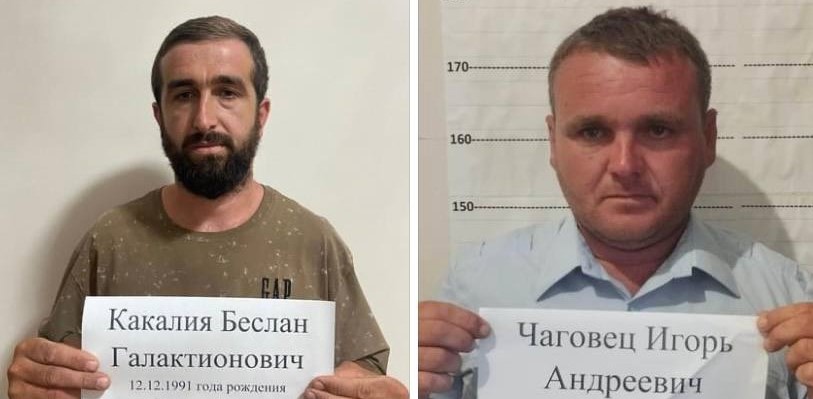
Two days later, three more suspects were arrested: the Kakaliya brothers Aslan and Beslan, and Igor Chagovets.

Beslan Kakaliya and Igor ChagovetsBeslan Kakaliya and Igor Chagovets

The court has imposed pre-trial detention for all the defendants for a period of two months. Given that innocent bystanders were affected by the shootout, Ombudsman Anas Kishmaria has proposed that investigative authorities classify this incident as a terrorist act.


Toponyms, terminology, views and opinions expressed by the author are theirs alone and do not necessarily reflect the views and opinions of JAMnews or any employees thereof. JAMnews reserves the right to delete comments it considers to be offensive, inflammatory, threatening or otherwise unacceptable.


Categories
South Caucasus News

Armenian Speaker Sees Referendum On EU Membership – azatutyun.am


Armenian Speaker Sees Referendum On EU Membership  azatutyun.am