
Categories
Audio Review - South Caucasus News

A Legal Framework Analysis Of ASEAN International Agreement On Human Trafficking: Challenges And Opportunities For Regional Cooperation


A Legal Framework Analysis Of ASEAN International Agreement On Human Trafficking: Challenges And Opportunities For Regional Cooperation

slavery human rights human trafficking

Human trafficking involves the trade in people with the purpose of exploiting them, and it is widely practiced around the world, including in the ASEAN countries. Due to the increased pressure to fight this type of crime, the ASEAN member countries have formulated international treaties that seek to abolish TIP. This article offers a legal analysis of the ASEAN International Agreement on Trafficking in Persons and affirms that though the agreement has a strong framework, its implementation has several challenges that need increased regional cooperation and solid reforms.

The ASEAN Context

ASEAN is a group of ten countries with different legal frameworks, cultures, and capacities of the member states’ economies. While it is an advantage for an organization to have diverse personnel, this has proven to have a number of difficulties in addressing the problem of human trafficking through a concerted and efficient effort. Nevertheless, it needs to be noted that ASEAN has shown a fairly good level of commitment and activity to combat TIP through a number of regional frameworks and activities linked to the issue.

ACTIP, the ASEAN Convention Against Trafficking in Persons Especially Women and Children adopted in 2015, is the fundamental of ASEAN’s fight against this vice. ACTIP’s main goals are the fight against trafficking in persons including the protection of victims and cooperation between member states. Another instrument is the APA – the ASEAN Plan of Action Against Trafficking in Persons, Especially Women and Children that outlines mechanisms of the ACTIP’s implementation.

Key Provisions of ACTIP

ACTIP’s strategies entail public sensitization, policy, education and training, which are considered as deterrent measures to lower vulnerability to trafficking. The convention requires member states to passed domestic laws which make it criminal to traffic persons for any reason and to impose stiff penalties for the individuals involved in such acts. Another important area is victim protection for which ACTIP provides protection to victims and provide them with such necessities as legal aid, medical help, and vocational training. Perhaps importantly, ACTIP will reject criminalization of victims for offenses perpetrated as a consequence of trafficking.

According to the prosecution ACTIP demands strict police and judicial prosecution of traffickers, cooperation and mutual legal assistance, extradition, interchange and cooperation transnationally. One of its goals is to emphasize cooperation between member states, international organizations and non-governmental organizations based on the sharing of experience, statistics and information to improve the activities in the sphere in the region.

Challenges in Implementation

However, there are five major challenges that limit the effective implementation of the activity despite having a seem comprehensive framework encapsulated in ACTIP. The first, is that ASEAN as a grouping has legal and institutional structures, which vary greatly across member countries. Differences in legal constructions, implementation thresholds, and victim support frameworks make it challenging to synchronize laws and policies within the region. Certain countries could have limited anti-trafficking legislation which apart from this may have varying degrees of intolerance towards the offense and differ in the way they punish the traffickers and shield the victims.

Another challenge is capacity and resource limitation In this regard, capacity and resource limits limit the scope of possible action. Currently, most of the ASEAN nations are challenged with issues of inadequate funds, physical facilities and qualified human resource in the fight against trafficking. This entails lack of funds for services to victims, lack of specialized officers to handle crimes and inadequate education of judges or policemen.

Further, trafficking is usually not limited to a single country but rather it is a transnational phenomenon that requires effective cooperation between countries. However, legal structures, implementation bureaucracies, and sometimes distrust among the members affect the cooperation outcome, especially in circumstances needing extradition as well as mutual legal assistance.

Another challenge is in identification and provision of protection to the victims of trafficking. Majority of the victims are too scared to report because they fear their traffickers will get them in return and others do not trust law enforcement agents. To guarantee the provision of protection and support services to the victims is crucial and challenging at the same time due to the available funds and the differences in system functioning within member states.

Opportunities for Enhanced Cooperation

However, there are several areas that can be further explored and strengthened in order to advance regional cooperation against TIP in ASEAN. One among the key requirements is the development of legal structures that can be easily integrated across the member states. ASEAN can strive to create model legislation and offer legal aid to countries so that their national legislation corresponds to ACTIP.

Another key instruction is enhancing the capacity of member states. This can be via organised training sessions, workshops, and seminars for the leaders of the police force, judiciary, other related agencies and the society at large. Increasing the efficiency of victim support services and guaranteeing financial stability in funding for such services can also lead to the improvement of the protection and support of victims.

The management of TIP therefore requires enhancement of confidence within mechanisms that facilitate the sharing of information, mutual legal assistance and cross border collaboration at the regional level. The implementation and establishment of a centralized database for trafficking cases and motivating the member states to come more frequent in their meetings and communications will help to establish better relation and cooperate effectively.

Prevention is key and campaigns that will educate the public are very important in combating this vice. TIP education can be introduced in the school systems of ASEAN and supported by civil society organisations and business leaders, but the campaigns must be regional in nature.

Last but not least, cooperation with agency/performance partners like the UNODC and the IOM helps to tap into technical assistance and good performing organization. Such partnerships could improve the efficiency of the region’s ability to fight against the traffic effectively.

Conclusion

On an international level, the more specific ASEAN International Agreement on Trafficking in Persons established the legal system against the human trafficking in the region adequately and sufficiently. Nevertheless, there is still large room for improvement of this process which requires collective efforts in developing the cooperation with the regions and implementing the strategic changes. In my opinion, through a set of legal harmonization, capacity building, strengthening ASEAN’s mechanism, raising awareness and involving international cooperation, ASEAN is capable of obtaining significant improvement on combating TIP and respecting the rights and dignity of the victims.

References:

  • ASEAN. (2015). ASEAN Convention Against Trafficking in Persons, Especially Women and Children (ACTIP). Retrieved from https://asean.org/asean-convention-against-trafficking-in-persons-especially-women-and-children/
  • ASEAN. (2015). ASEAN Plan of Action Against Trafficking in Persons, Especially Women and Children (APA). Retrieved from https://asean.org/asean-plan-of-action-against-trafficking-in-persons-especially-women-and-children/
  • ASEAN. (2016). Regional Plan of Action on the Elimination of Violence against Children. Jakarta: ASEAN Secretariat.
  • ASEAN Secretariat. (2016). ASEAN progress report on criminal justice responses to trafficking in persons. Jakarta: ASEAN Secretariat.
  • Gallagher, A. T., & Holmes, P. (2008). Developing an effective criminal justice response to human trafficking: Lessons from the front line. International Criminal Justice Review, 18(3), 318-343.
  • International Labour Organization (ILO). (2017). Global estimates of modern slavery: Forced labour and forced marriage. Geneva: ILO.
  • International Organization for Migration (IOM). (2020). World Migration Report 2020. Retrieved from https://www.iom.int/world-migration-report-2020
  • Kneebone, S., & Debeljak, J. (2012). Transnational crime and human rights: Responses to human trafficking in the Greater Mekong Subregion. New York: Routledge.
  • United Nations Office on Drugs and Crime (UNODC). (2018). Global Report on Trafficking in Persons 2018. Retrieved from https://www.unodc.org/unodc/en/data-and-analysis/glotip.html
  • U.S. Department of State. (2024). Trafficking in Persons Report 2024. Retrieved from https://www.state.gov/reports/2024-trafficking-in-persons-report/
  • Ward, T., & Wylie, G. (2007). Feminism, trafficking and the contested politics of representation. In L. Goldsblum & J. Oxman-Martinez (Eds.), New perspectives on international migration and development (pp. 91-108). Springer.
Categories
Audio Review - South Caucasus News

Timely And Accurate Diagnosis Is The Bedrock To Stop Misuse And Overuse Of Medicines – OpEd


Timely And Accurate Diagnosis Is The Bedrock To Stop Misuse And Overuse Of Medicines – OpEd

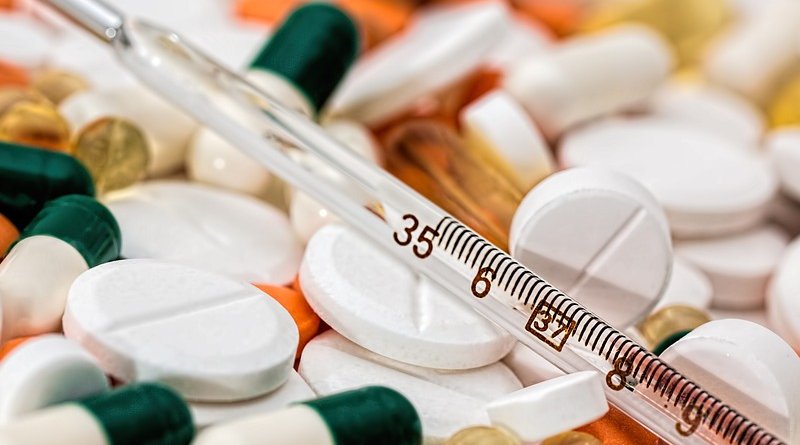
pills thermometer sick cold headache

Drug-resistant disease-causing microbes can infect any one of us. Bhakti Chavan, a promising biotechnologist, who never had TB before, got infected with extensively drug-resistant TB (XDR-TB) bacteria. XDR-TB is one of the most serious forms of TB. After some delay, an accurate XDR-TB diagnosis helped her access the right treatment, thanks to an MSF clinic. With steely resolve and grit, she went through the difficult treatment of XDR-TB and got cured. Not only has she defeated XDR-TB, but she also champions the cause of helping those who are fighting TB as well as drug resistance or antimicrobial resistance worldwide.

Bhakti got the WHO recommended molecular test diagnosis. But 79% of people with TB disease in India are not diagnosed on WHO recommended molecular test, but through sputum microscopy which underperforms in diagnosing TB (as per India TB Report 2024). That is why WHO has called upon all the countries to completely replace microscopy with upfront molecular tests for TB diagnosis by 2027. All world leaders re-echoed this call for 100% upfront molecular test diagnosis at the UN General Assembly High Level Meeting on TB last year.

Unless we ensure that timely and accurate diagnosis for TB and all other diseases is a reality on the ground, how will we stop misuse or overuse of medicines and prevent antimicrobial resistance?

People-centred diagnostics, treatment and care is key

Even though they face the brunt of it, most people have very little understanding and awareness about antimicrobial resistance (AMR). Bhakti Chavan blames it on the lack of people-centred responses to address AMR.

Bhakti, who has done her post graduation in Biotechnology and currently works with a biotech company, says that, “Many countries have National Action Plans to address AMR, but the ground level realities are very different. Take for example TB. Despite India having a National Strategic Plan to end TB (2017-2025), there are many gaps in TB care- like shortage of medicines, restricted access to novel medicines, diagnostic delays due to non-accessibility of molecular tests. All these act as roadblocks for the underprivileged in accessing the best of diagnostics and treatment. Our public health programmes must ensure that the best possible care is available to all those in need, and also ensure prevention of spread of infection. So patient-centred diagnostics (including upfront drug sensitivity testing), treatment and care is most important to combat AMR.”

Bhakti is one of the 12 members of the World Health Organization (WHO) Task Force of AMR Survivors, which consists of persons who have survived drug-resistant infections or have cared for those with such infections. It was established by the WHO with the aim to humanise the narrative around AMR. Bhakti wants more such committees or task forces to be formed at national level so that more survivors can join them to create awareness and literacy around AMR and help in combating it.

Antimicrobial resistance

The world is abuzz with the ever increasing menace of AMR which is listed among the top 10 global health threats, and kills more people than TB, HIV or malaria combined. The year 2024 is particularly an important one for the global response to AMR, with the UN General Assembly (UNGA) High Level Meeting on AMR due to take place on 26 September 2024 in New York.

Dr Sangeeta Sharma, Professor Head, Department of Neuropsychopharmacology, Institute of Human Behaviour and Allied Sciences (IHBAS) and President of Delhi Society for Promotion of Rational Use of Drugs, calls for coordinated efforts that are focused on diagnostic stewardship, antimicrobial stewardship and infection prevention and control, to deal with this manmade crisis.

But for the layperson (who is at the receiving end of this threat) what do these medicalised terms mean?

What do words like ‘antimicrobials’ and ‘antimicrobial resistance’ signify?

To put it simply, antimicrobials are medicines that are used to treat and prevent infections in humans, animals and plants by killing the germs (or pathogens) – like bacteria, parasites, viruses and fungi- that cause these infections. However, the germs fight back and, over a period of time, some of them become resistant to these medicines, making them ineffective. In scientific language we call this phenomenon antimicrobial resistance (AMR) – meaning the microbes or the disease causing germs have become resistant to the drugs and no longer get killed or destroyed by them. So treatments become less effective (or ineffective) and infections persist, spreading to other people too.

AMR is a natural phenomenon, as the pathogens evolve over time to evade their enemy- the antimicrobials. However the process is hastened and escalated by overuse and misuse of antimicrobials in humans, animals and crops. We cannot stop this phenomenon, but we can definitely slow down the process, in the interest of one and all.

A report in The Lancet estimated that drug-resistant bacterial infections alone were directly responsible for 1.27 million deaths in 2019. And 20% of these deaths were in children under 5 years.

Antimicrobials (that include antibiotics, antivirals, anti parasitics, antifungals) target specific pathogens. They are not directed against specific body conditions- like diabetes, hypertension, calcium deficiency, etc. Thus they are very different from analgesics, antipyretics or blood pressure control pills, and need to be handled with care, explains Dr Sharma.

Multi-pronged approach to control AMR

We can control AMR by implementing the triple shield strategy comprising:

(i) Timely and accurate diagnosis to avoid unnecessary use of antimicrobials (called Diagnostic Stewardship);

(ii) Appropriate and rational use of antimicrobials (including antibiotics), to improve treatment outcomes, reduce antimicrobial resistance, and decrease the spread of infections caused by drug-resistant organisms (called Antimicrobial Stewardship); and;

(iii) Reducing spread of infections by practicing hygiene and other infection control methods (called Infection Prevention and Control).

While the onus of implementing diagnostic stewardship and antimicrobial stewardship lies largely with the healthcare facilities, the public and medical fraternity are equal partners in implementing infection control measures.

Correct diagnosis is the foundation for initiating effective treatment

Diagnostics stewardship involves the various stages of microbiological diagnosis to identify the infection causing pathogen and to do its culture and sensitivity testing to find whether it will respond to X, Y or Z antibiotic or not.

Dr Sharma calls diagnostic stewardship the roadway to antimicrobial stewardship: “It is an important first step that helps in doing the right testing for the right patient at the right time, so that appropriate decisions can be taken for the management of the infection. Antimicrobial misuse is driven by diagnostic uncertainties. We have very good molecular and rapid diagnostic tests available for many diseases. But unless we use them at the right time for the right patient, it may not give the right kind of results to help tailor the antimicrobial prescription.”

Antimicrobial stewardship is about preventing misuse of antimicrobials by optimising their use- that is, preventing their over use- as soon as a correct diagnosis has been made.

“This optimisation can happen in the form of switching from broad spectrum to narrow spectrum (or targeted) antibiotics, or reducing the number of antibiotics which may no longer be needed for patient management, or prescribing shorter duration antibiotics, or switching from intravenous antimicrobials to oral ones, depending upon the patient situation,” said Dr Sharma.

Underuse and overuse fuel AMR

Dr Sharma points out that both overuse and underuse of antibiotics fuel AMR.

“Underuse happens if the patients in need of antibiotics are not able to get them, either because of accessibility or availability issues, or perhaps the diagnosis was not done. So, in the absence of treatment the person [with an infectious disease] remains infectious for a longer period of time and infection spreads to more and more people,” said Dr Sharma.

More emphasis needs to be put on infection prevention and control. Strong infection prevention and control is a very effective approach to control the spread of AMR. WHO recognises that “the most effective intervention is to improve hygiene in healthcare facilities, including promotion of hand hygiene. Safer hospitals mean fewer infections and every infection prevented is an antibiotic avoided.”

Proper sanitation, including proper waste disposal, simple hand cleaning practices, and availability of clean drinking water can go a long way in fighting infections, both in and out of hospitals.

Antibiotics are not a ‘shortcut’ to circumvent infection prevention and control

Dr Sharma cautions that antibiotics should not be used as a shortcut (as they often are) to circumvent infection prevention and control activities. She also advises against the use of antibiotics in situations like treating a wound (debridement or simple cleaning would do) or dealing with a normal vaginal delivery.

All these efforts will not only help in managing the individual patient well, they will also slow down the process of AMR and help preserve existing antimicrobials for use by the future generation.

Will world leaders include AMR survivors at the UNHLM on AMR?

World leaders would be meeting at the upcoming 2024 United Nations General Assembly High Level Meeting on AMR. Bhakti Chavan calls upon them to include the voices and faces of AMR survivors in all deliberations at the forthcoming UNHLM on AMR, as they are the ones who suffer the worst consequences of AMR.

And as Bhakti rightly says: “AMR might be invisible, but the survivors are not.”


Categories
Audio Review - South Caucasus News

Eni: Agrees To Sell Upstream Assets In Alaska


Eni: Agrees To Sell Upstream Assets In Alaska

Operations in Nikaitchuq, Alaska. Photo Credit: Eni

Eni said it has signed a binding agreement with Hilcorp, one of the largest US private company with extensive experience operating in Alaska, for the sale of 100% of the Nikaitchuq and Oooguruk assets owned by Eni in Alaska. 

This transaction is consistent with Eni’s strategy focused on the rationalization of the upstream activities by rebalancing its portfolio and divesting non-strategic assets.

Within Eni’s financial framework, supporting the Company’s distinctive growth-oriented strategy, Eni is committed to delivering a net €8 billion of net portfolio inflow, front-end loaded, over the 2024-27 Plan. Proceeds are anticipated to come from three main sources: high-grading the Upstream portfolio,;diluting down high equity ownership exploration discoveries, and accessing new pools of capital via Eni’s satellite strategy to support the growth of its transition businesses while confirming progress in value creation.

The closing of this transaction is subject to appropriate regulatory approvals and other customary terms and conditions. The value of the transaction will be announced upon its closing.


Categories
Audio Review - South Caucasus News

United Kingdom: TotalEnergies Sells Its Interests In West Of Shetland Gas Fields


United Kingdom: TotalEnergies Sells Its Interests In West Of Shetland Gas Fields

offshore oil platforms

TotalEnergies said Thursday itsigned an agreement to sell to The Prax Group its entire interest in West of Shetland assets in the United Kingdom (Laggan, Tormore, Glenlivet, Edradour and Glendronach fields, the onshore Shetland Gas Plant and nearby exploration licenses). The transaction is subject to approval from the relevant authorities.

These mature assets currently produce about 7,500 barrels of oil equivalent per day in TotalEnergies’ share, made up of around 90% of gas. The transaction involves the transfer of relevant employees from TotalEnergies to Prax in compliance with the applicable legislation.

“This transaction is in line with TotalEnergies’ strategy to continuously adapt its portfolio by divesting mature non-core assets,” said Jean-Luc Guiziou, Senior Vice President Europe for Exploration & Production at TotalEnergies. “TotalEnergies remains committed to the UK through both its upstream portfolio in the North Sea (Elgin-Franklin, Culzean and Alwyn fields) and its Integrated Power and Renewables portfolio.”


Categories
Audio Review - South Caucasus News

Secretary General: Estonia Leads By Example In NATO


Secretary General: Estonia Leads By Example In NATO

NATO Secretary General Jens Stoltenberg with the Prime Minister of Estonia, Kaja Kallas. Photo Credit: NATO

Secretary General Jens Stoltenberg welcomed Prime Minister Kaja Kallas of Estonia to NATO headquarters on Thursday (27 June 2024) to discuss final preparations for the Washington Summit, including the provision of further support to Ukraine.;

Mr Stoltenberg highlighted Estonia’s many contributions to Allied security, noting that the country “leads by example by investing more than 3% of GDP on defence”. He further praised the “unprecedented” support Estonia has been providing Ukraine and its commitment to continue this for years to come.

The Secretary General also underlined that “NATO supports Estonia in many different ways,” including with a multinational battlegroup in Tapa; with fighter jet patrols; and the fact that Spain will soon deploy an air defence battery to Estonia.

The Secretary General outlined the priorities of the NATO Summit, saying he expects “Allied leaders will agree a long-term pledge of support to Ukraine. This will provide Ukraine with greater predictability for the long haul.” He added that the Summit will also address NATO’s own deterrence and defence, saying: “We have agreed new, more ambitious defence plans; Allies are delivering more forces, high readiness, investing in high end capabilities; and this year, 23 Allies are going to invest more than 2% of GDP on defence, which is great progress”.

Finally, the Secretary General emphasised the importance of global partnerships to the Alliance and confirmed these will remain a key focus at Washington and beyond.


Categories
South Caucasus News

Azerbaijani FM and Georgian PM discuss strategic co-op expansion – Trend News Agency


Azerbaijani FM and Georgian PM discuss strategic co-op expansion  Trend News Agency

Categories
South Caucasus News

NPR News: 06-27-2024 12PM EDT


NPR News: 06-27-2024 12PM EDT

Learn more about sponsor message choices: podcastchoices.com/adchoices

NPR Privacy Policy


Categories
South Caucasus News

Azerbaijan, Italy breaking new ground for co-op in defence – AzerNews.Az


Azerbaijan, Italy breaking new ground for co-op in defence  AzerNews.Az

Categories
Audio Review - South Caucasus News

Parliament Lifts COVID-Related Fines


Face-masks.jpg

On June 27, the Georgian Parliament abolished fines imposed between June 23, 2021 and July 3, 2023 for violations of COVID-19 isolation, quarantine or face masks.

Amendments to the law on exemption from administrative fines were fast-tracked and passed in the third reading today with 79 votes in favor and none against. Most opposition parties did not participate in the vote, as they are boycotting parliamentary work after the passage of the foreign agents law.

Deputy Health Minister Irine Tsakadze, who initiated the amendments, said that they will affect about 2000 people, the vast majority of whom are physical persons and 38 are legal entities.

The amount of fines totaled to GEL 5.5 million (about USD 1.95 million).


Categories
Audio Review - South Caucasus News

UN Committee Finds Georgia Failed to Protect Children Against Violence, Abuse in Church-Run Orphanage


Ninotsminda-orphanage.jpg

On June 27, the United Nations Child Rights Committee found Georgia guilty of violating its child rights obligations by failing to take immediate action to address the frequent physical and psychological abuse of children living in a closed orphanage run by the Georgian Orthodox Church. The Committee urged Georgia to pay compensation to the victims in these cases, to issue a public apology, and to investigate the perpetrators.

The Ninotsminda St. Nino Children’s Boarding School was first identified as being in dire conditions by the Georgia Public Defender’s Office in 2015. The report highlighted frequent psychological and physical bullying of children, as well as corporal punishment by caregivers, including prostration, skipping meals, confinement, and forced crawling. Despite these problems, the orphanage received a care license in 2016 under Georgia’s new law on licensing educational activities.

In 2018, a follow-up report by the Public Defender’s Office highlighted systemic problems and the urgent need for oversight and improvement. Starting in June 2020, the office was denied access to the orphanage for almost a year. The NGO Partnership for Human Rights then took the case to various courts in Tbilisi and finally to the Committee in May 2021, which immediately granted interim measures in favor of 57 children and requested access for the Public Defender’s Office. Within a month, the Public Defender transferred 27 children to alternative care. As of November 2021, 15 children, including at least one with a disability, were still living in the orphanage, although the issues raised remained unresolved.

The Committee’s decision was made after reviewing 57 complaints from children residing at Ninotsminda St. Nino Children’s Boarding School at the time of the submission of the complaints. Of the 57, the cases of M.L. and L.K. were noted as the ones that revealed the extent of abuse and mistreatment.

Of 57 the individual cases of M.L. and L.K. revealed the extent of the abuse and mistreatment. Born in 2008, M.L. was placed at the orphanage from the age of three to thirteen, where she was severely punished for bedwetting. Caregivers often instructed older children to “discipline” her and other children by beating them with sticks or hands. She was also forced to take psychotropic medication when she was 11. Another child, L.K., born in 2003, faced similar hardships, including inadequate food, poor hygiene, and restricted movement. Her brother, who was disabled, also experienced neglect and abuse.

Committee member Benoit Van Keirsbilck stressed that Georgia should be held accountable for what happened behind the closed doors of the orphanage, as “children deprived of their family environment are entitled to special protection and assistance from the State, which is their custodian.” Noting that the treatment these children received will have lifelong consequences for their development, he underlined the importance of regular and independent monitoring of institutions where children are placed to ensure that treatment and living conditions comply with child rights standards and that such violations are not repeated in the future.

The UN Committee urged Georgia to provide effective reparations to child victims, including adequate compensation and rehabilitation, a public apology, a reassessment of those still in State care, and independent investigation and prosecution of those responsible. Reparation measures should be coordinated with child victims in order to incorporate their views.

Also Read: