
Omg pic.twitter.com/H3Xyl9HqsE
— Enez Özen (@Enezator) June 25, 2024
Day: June 26, 2024
LONDON — NATO allies on Wednesday selected Dutch Prime Minister Mark Rutte as NATO’s next boss, as the war in Ukraine rages on its doorstep and uncertainty hangs over the United States’ future attitude to the transatlantic alliance.
Rutte’s appointment became a formality after his only rival for the post, Romanian President Klaus Iohannis, announced last week that he had quit the race, having failed to gain traction.
“The North Atlantic Council decided to appoint Dutch Prime Minister Mark Rutte as the next Secretary General of NATO, succeeding Jens Stoltenberg,” NATO said in a statement.
“Mr Rutte will assume his functions as Secretary General from 1 October 2024, when Mr Stoltenberg’s term expires after ten years at the helm of the Alliance,” it added.
After declaring his interest in the post last year, Rutte gained early support from key members of the alliance including the United States, Britain, France and Germany.
Others were more reticent, particularly Eastern European countries which argued the post should go to someone from their region for the first time.
But they ultimately rowed in behind Rutte, a fierce critic of Russian President Vladimir Putin and a staunch ally of Ukraine.
Stoltenberg said he warmly welcomed the selection of Rutte as his successor.
“Mark is a true transatlanticist, a strong leader, and a consensus-builder,” he said. “I know I am leaving NATO in good hands.”
NATO takes decisions by consensus so Rutte, who is bowing out of Dutch politics after nearly 14 years as prime minister, could only be confirmed once all 32 alliance members gave him their backing.
Rutte will face the challenge of sustaining allies’ support for Ukraine’s fight against Russia’s invasion while guarding against NATO’s being drawn directly into a war with Moscow.
He will also have to contend with the possibility that NATO-skeptic Donald Trump may return to the White House after November’s U.S. presidential election.
Trump’s possible return has unnerved NATO leaders as the Republican former president called into question U.S. willingness to support other members of the alliance if they were attacked.
Dear Mark Rutte, congratulations – and good luck as NATO Secretary General. Our common alliance has rarely been as important as it is today. Your experience, your security policy expertise and your diplomatic skills are in the right place. A good choice for freedom and security. pic.twitter.com/QF0ZLhc4Xg
— Bundeskanzler Olaf Scholz (@Bundeskanzler) June 26, 2024
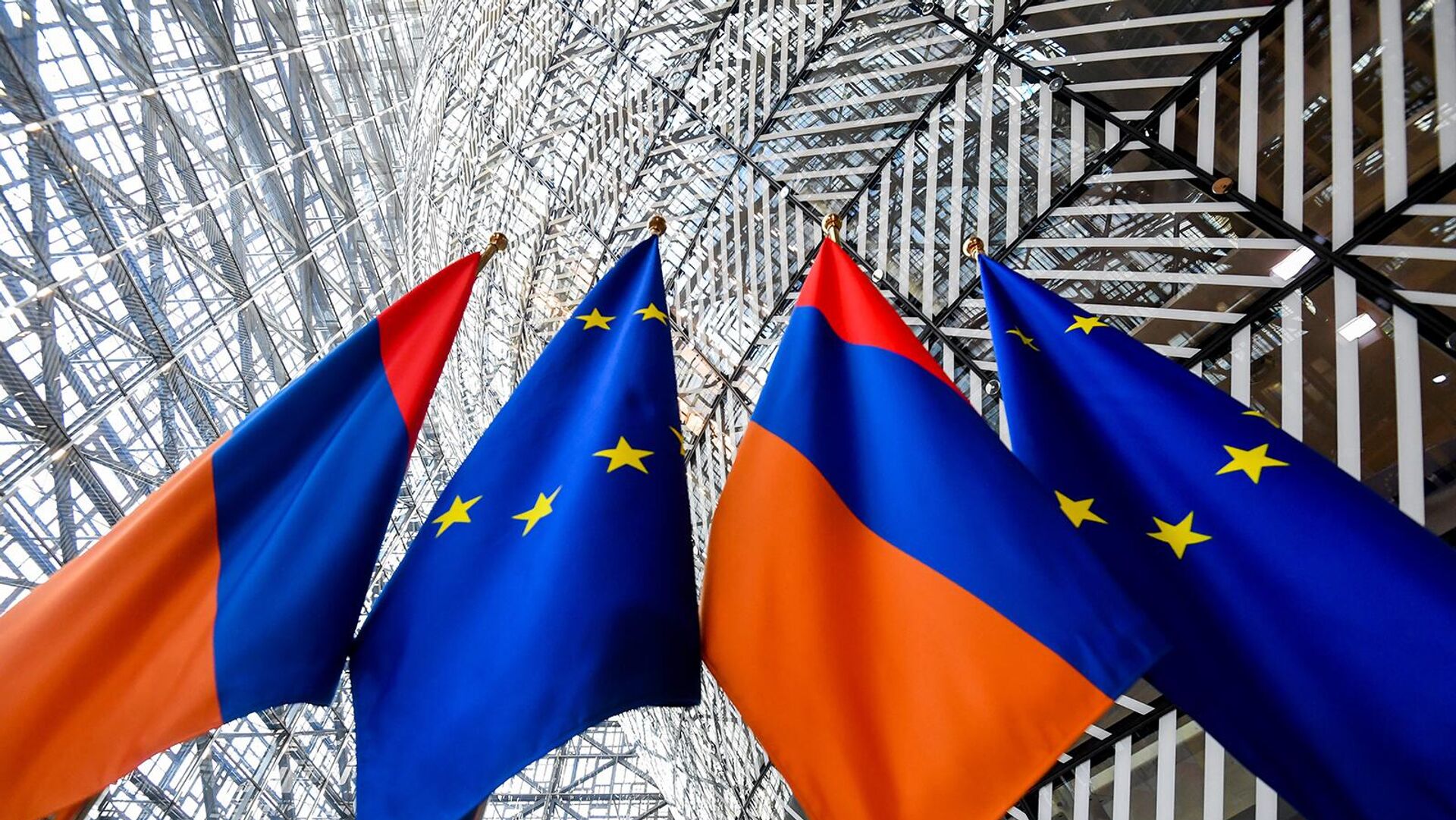
Will Armenia Become an EU Member?
“The EU may see potential in Armenia or theoretically consider Armenia as a member of the European Union, but only if the country meets the established standards,” says political scientist Robert Ghevondyan.
He emphasizes that although Armenia is a potential candidate for EU membership, meeting these standards is crucial: “After all, we are not dealing with the Eurasian Economic Union created by Russia, where participation is the main thing.”
According to Ghevondyan, Armenia will face numerous challenges on its path to the EU, from financial to political issues. The political scientist does not rule out that this might be the reason why the country’s authorities are in no hurry to submit a membership application.
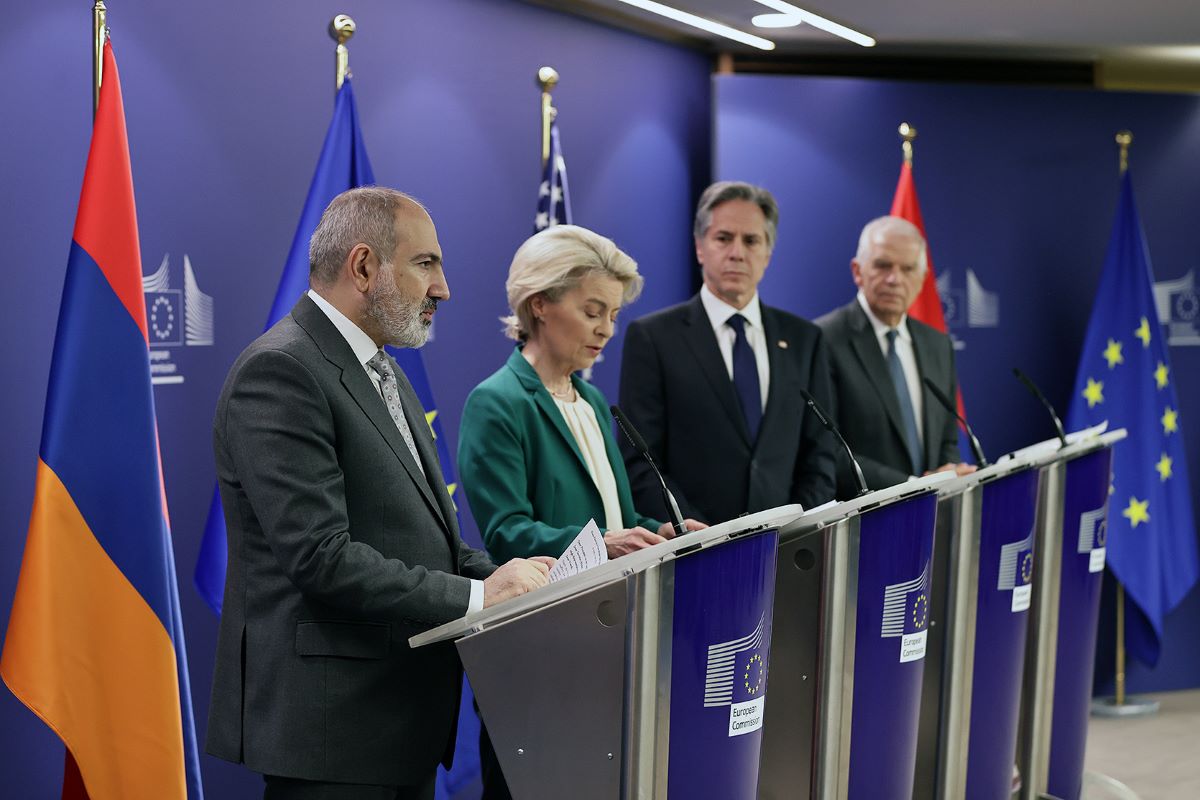
- “Armenia did not decide to align itself with the West just today,” – Pashinyan to British media
- “Armenia provided with safety cushions” – Opinion on the Brussels meeting
- “Armenia is Europe, period”: Discussion on Euro-Integration in Parliament
Commentary by political scientist Robert Ghevondyan
Authorities more cautious than necessary
“The Armenian authorities clearly want to continue on the path of European integration. EU membership is one stage of this integration. However, at this moment, I do not see a definite decision that we will necessarily reach the membership stage.
Becoming an EU member is not about signing a single document. Comprehensive reforms are needed, and this process cannot be completed in one or two years, even if the state has no financial problems.
Armenia must go through a certain path, do its homework, which will be very difficult to achieve even within 5-10 years. And after the membership application is submitted, we should not expect Armenia to join the EU sooner than in 10 years.
It is in this logic that the Armenian authorities are not inclined to hold a referendum on EU membership now, as suggested by pro-Western parties. This would mean submitting a membership application in a short period, implying that Armenia would commit to completing its homework at an accelerated pace over 10-15 years. This could exceed our capabilities in many respects. Figuratively speaking, we would have to go to great lengths to meet these obligations.
At the same time, I can say that the authorities are acting much more cautiously than necessary and are extremely indecisive. They tend to first fulfill the necessary obligations in various areas and only then apply for membership.”
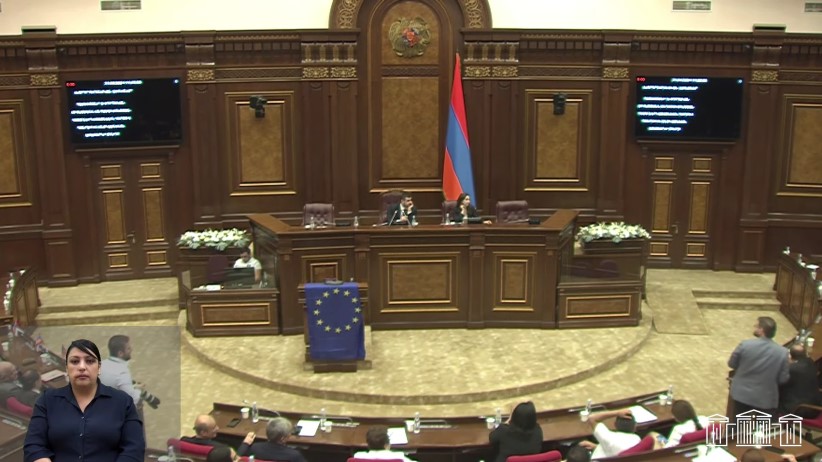
The future of Armenia lies in the EU
“The majority, both in society as a whole and among politicians and parties, believe that Armenia’s political future is on the path of European integration.
There are also radical approaches. Some political forces think that Armenia should apply for EU membership immediately.
However, there are others who believe that comprehensive reforms are necessary before submitting an application. This is the approach taken by the Armenian authorities.”
Numerous Issues: From lack of political will to financial constraints
“The EU standards that a country must meet to qualify for membership are numerous and cover various areas. In many respects, Armenia may face problems it cannot solve alone. For example, the railway tracks across the EU are narrower than those in the post-Soviet space and currently in Armenia. Replacing the railway tracks would require changing the train wheels. These are issues that could be resolved over several years, costing billions of dollars. And there are not just dozens, but hundreds of such examples.
It’s not that the European Union demands all these issues be resolved 100 percent before membership. But at least most of them must be addressed. The state must follow this path to become an EU member.
We have many problems in the economic sphere. The quality of products made in Armenia significantly lags behind European standards. We are part of an economic union [the EAEU, under Russia’s aegis], where quality is secondary or tertiary. The garbage that local businesses produces can be easily sold in Siberia. Businessmen can make a good profit from this. Therefore, they are not interested in taking steps to improve quality and spending money on it.
The Armenian authorities need to find ways to motivate these businessmen. For example, they could create additional challenges for their operations by increasing the tax burden, so they would reject easy money and work towards improving their product quality. If we become an EU member, we would have the opportunity to export our products to EU countries.
A few instances of exporting substandard goods could close EU doors to Armenian products, ending Armenia’s economic integration with the EU.
In short, we face more of a political will issue in tackling these economic transformations.
But, of course, there are also political problems. There is the issue of defining and specifying the Armenian-Azerbaijani border and reducing the risk of war in the region. We could list these areas and problems for hours.”
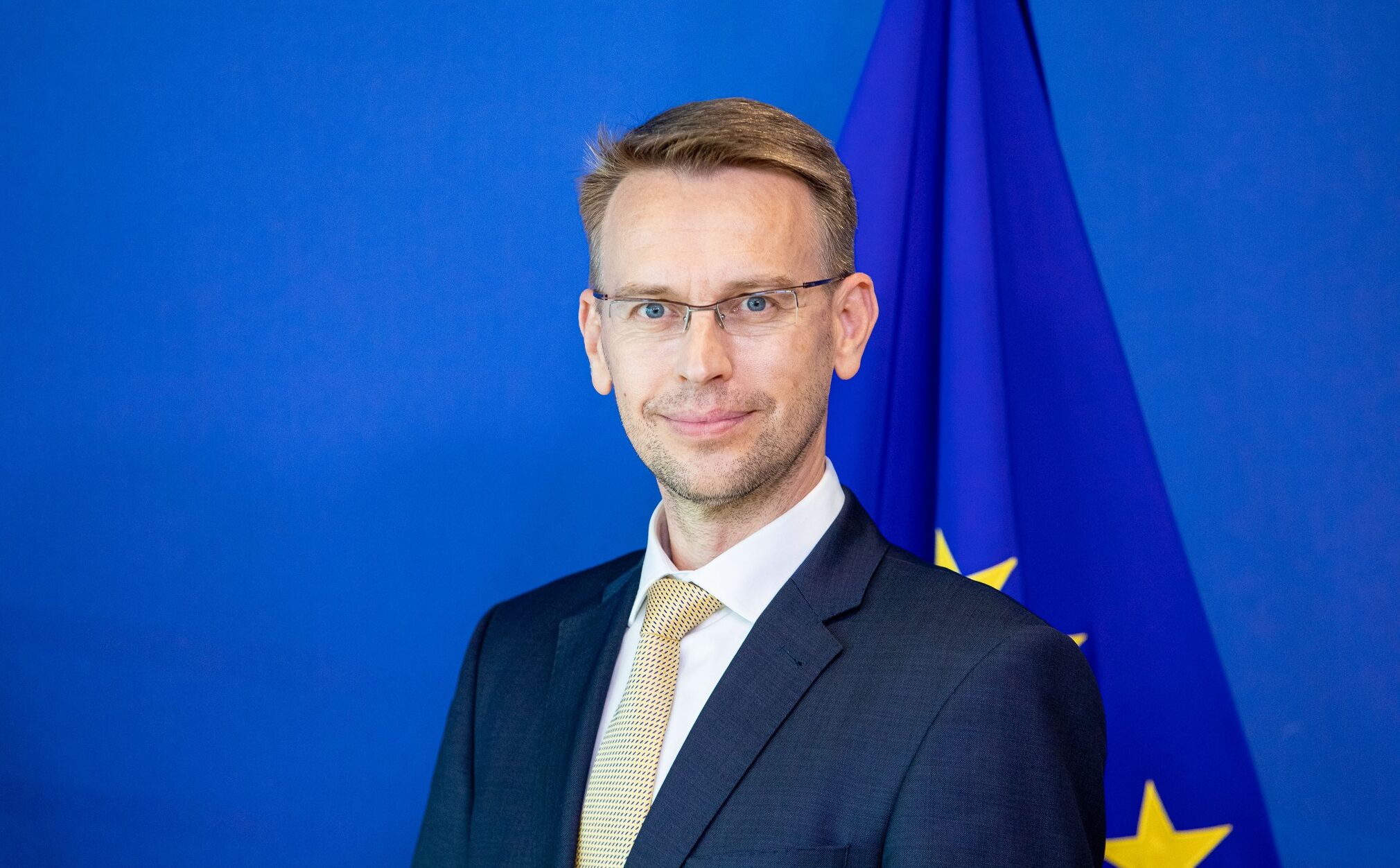
Peter Stano: “The EU can assist Armenia, but it will not impose solutions”
EU Commission spokesperson on Armenia, Azerbaijan, and Russia relations
Is resolving relations with Azerbaijan and Turkey a prerequisite?
“The issue is not that a country [seeking EU membership] must first resolve all its conflicts. Remember, the Greek part of Cyprus became an EU member. The problem is not the absence of conflict but that it must be manageable and at a certain level of resolution. For example, they say Ukraine could become an EU member in 2030, despite the ongoing war. There are other such examples.
Armenia can become an EU member even if some issues with Azerbaijan remain unresolved, which I believe is inevitable.
Regarding Armenian-Turkish relations, Turkey is the main reason the border is closed. It can be said that the decision depends solely on Turkey. Whenever Turkey wants, the border will open. And if Armenia becomes an EU member, the Armenia-Turkey border will become the EU’s border. I think this would only accelerate the border opening from Turkey’s side.”
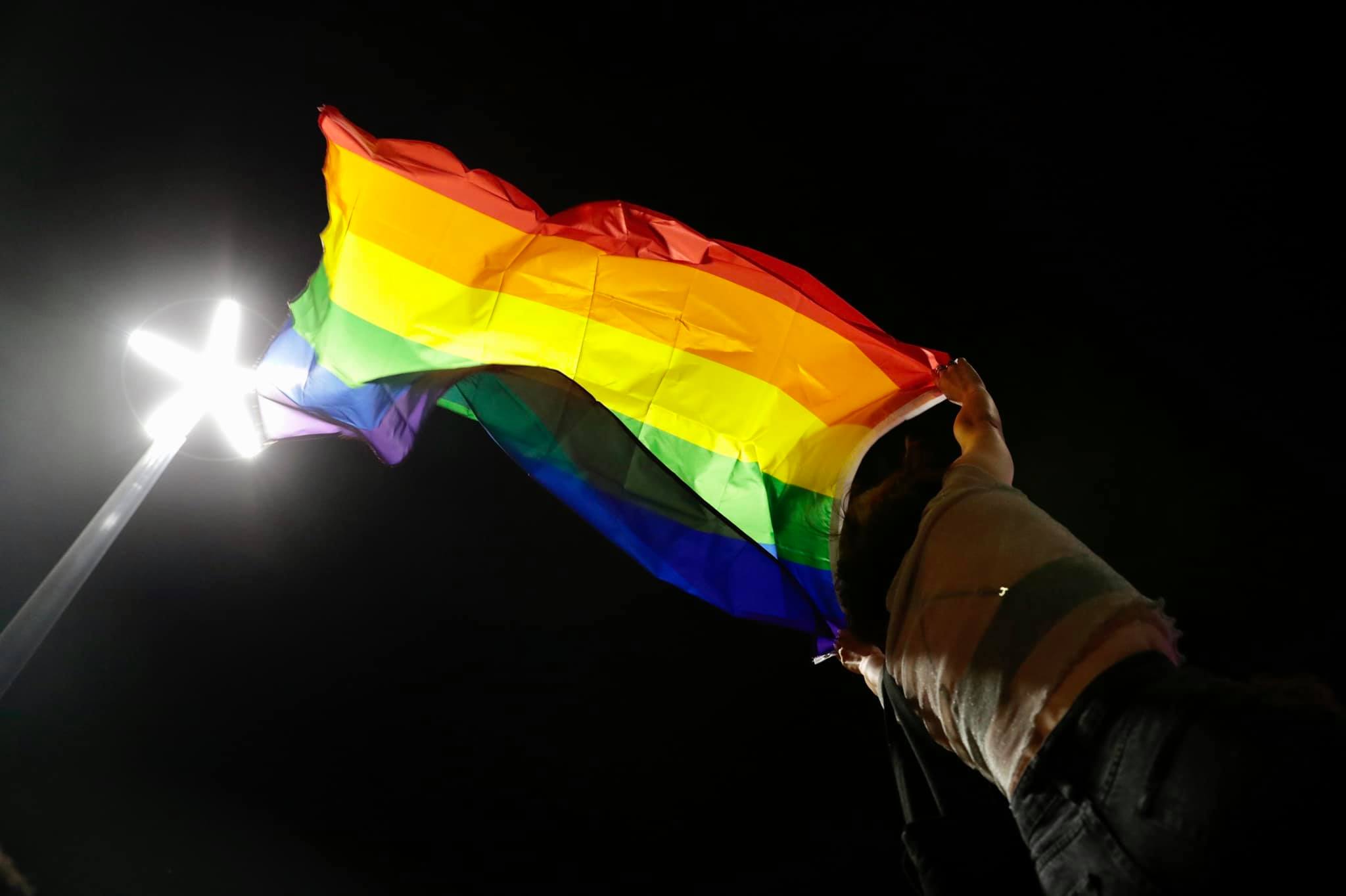
On June 26, the Venice Commission published its opinion on the draft constitutional law on the Protection of Family Values and Minors. The Commission calls on the Georgian government “reconsider this legislative proposal entirely and to not proceed with its adoption” or, if it proceeds with its adoption, to remove/modify some of the articles in a way that ensures non-discrimination of LGBTI people and compliance with the European Convention on Human Rights.
The Venice Commission notes that the ruling party initiated public consultations on the draft constitutional law in accordance with Article 125 of the Parliament’s Rules of Procedure. However, concerns have been raised about the inadequate notice given for these debates. Various stakeholders participated, including members of Parliament, academics, civil society and state agencies, but representatives of sexual and gender minorities were conspicuously absent. The majority reportedly supported the draft laws on family values and the interests of minors, but no participation figures or methods for determining the “absolute majority” were provided.
The Venice Commission underlines that the explanatory note of the draft law shows no involvement of governmental or non-governmental organizations, experts or international bodies in its drafting. It includes impact assessments on the legal status of children and gender equality, claiming benefits for minors and no negative impact on gender equality, but lacks supporting evidence or analysis. The note claims that the draft law is in line with EU law and international obligations without any detailed legal analysis.
An internal impact assessment was also mentioned during the discussions between the Georgian authorities and the Commission, but it wasn’t made public. The Commission stresses the need for transparency, inclusiveness and thorough analysis in the legislative process, especially for constitutional amendments, and recommends that all segments of society, including sexual and gender minorities, be involved and that the analysis be made public.
Among the articles mentioned in the draft laws, Article 1, which deals with marriage and adoption rights, raised concerns. It restricts “marriage-like relationships” to heterosexual couples and excludes legal recognition for same-sex couples, potentially violating Articles 14 and 8 of the ECHR. The draft also reserves adoption rights to married spouses or heterosexual persons, to the exclusion of unmarried or non-heterosexual persons, which could constitute discrimination.
Article 1.3 prohibits medical sex reassignment surgery, a provision that could violate Article 8 of the ECHR, which recognizes gender identity as part of personal identity. The Venice Commission recommends that this article be deleted.
Article 1.4 requires state and local documents to indicate sex based on genetic data, effectively barring legal recognition of gender transitions. This contradicts ECtHR requirements for legal recognition of gender and could lead to discrimination. The Venice Commission suggests removing the “genetic data” requirement and establishing clear procedures for gender marker changes.
Finally, the bill includes provisions restricting the use of gender-neutral language and the promotion of content related to non-heterosexual relationships, gender identity, and incest. These restrictions raise significant human rights concerns, particularly with respect to freedom of expression and association. The Venice Commission recommends that these provisions be clarified or removed to ensure compliance with non-discrimination principles.
The Venice Commission criticizes provisions in the draft constitutional law that group incest with sexual orientation and gender identity, impose broad restrictions on the assembly and distribution of related materials, and prohibit certain information in educational contexts. The Commission emphasizes that incest, defined as sexual relations between closely related individuals and often criminalized, has nothing to do with sexual orientation and gender identity, which are protected from discrimination. The recommendation is to separate the regulation of incest from issues of sexual orientation and gender identity.
The bill’s broad restrictions on assemblies and the distribution of materials related to sexual orientation and gender identity are considered violations of the freedoms of assembly, association and expression under the European Convention on Human Rights (ECHR). The Venice Commission highlights the vague and imprecise wording of the provisions, noting that legal restrictions must be clear and foreseeable. The Commission argues that these provisions do not serve a legitimate aim, such as the protection of family values or minors, and may instead reinforce stigma and prejudice against LGBTI people, contrary to democratic principles.
In the educational context, the bill’s prohibition of information on sexual orientation, gender identity and incest is also criticized. The inclusion of incest is considered inappropriate and should be regulated separately. The Commission points to the problematic vagueness of terms such as “provide information” and “aim to popularize” and the lack of clear consequences for violations. It stresses that information on sexuality, including non-heterosexual orientations, must be provided in an objective, non-discriminatory manner appropriate to the age and development of children. Blanket bans on such information are inconsistent with the right to education and international non-discrimination standards.
In conclusion, the Venice Commission recommends deleting problematic provisions, ensuring clarity and precision in legal restrictions, and avoiding blanket bans on sex education. Information provided should be age-appropriate and non-discriminatory, in line with international human rights standards.
In particular VC recomments:
- modifying Article 1.1 of the draft Constitutional Law in a way that allows for the legal recognition of same-sex couples.
- repealing the words “genetically” in Article 1.1. of the draft.
- replacing the word “heterosexual” with the term “single” or “individual” in Article 1.2 of the
draft Constitutional Law. - deleting Article 1.3 of the draft Constitutional Law.
- deleting the first phrase (in compliance with genetic data) of Article 1.4. of the draft
Constitutional Law and establishing a sufficiently detailed and precise law, providing
quick, transparent and accessible procedures for changing the registered sex marker of
transgender people. - deleting Article 1.5 of the draft Constitutional Law or rephrasing it to ensure compliance
with standards of non-discrimination. - deleting Articles 1.6, 1.7 and 1.8 of the draft Constitutional Law, while regulating incest
separately, under criminal law.
Also Read:
- 04/06/2024 – Parliament Speaker Presents Homophobic Legislation
- 06/03/2024 – Ruling Majority Tests Homophobia as Campaign Pillar
On the occasion of 26 June – Armed Forces Day, the marches of servicemen accompanied by military orchestras are organized on various streets and avenues of Baku, and in the cities of Ganja, Barda, and Shusha, according to Azerbaijan in Focus, reporting AzerTac.
First, the National Anthem of the Republic of Azerbaijan was performed.
The servicemen marched along the designated routes and were greeted with applause by the citizens. Military marches, performed by military orchestras aroused great interest.
The exemplary performances of military orchestras will continue today in the Heydar Aliyev Park (next to the Heydar Aliyev Palace), the Azadlig Square in the AzNeft circle, the Museum Center (in front of the Boulevard Fountain), Officers Park, Central Park, as well as other designated routes.


The post Soldiers marching in parade through Baku in Armed Forces Day celebration appeared first on Azerbaijan In Focus.
Prezident İlham Əliyevə İtaliyanın “Leonardo” şirkətinin istehsalı olan hərbi nəqliyyat təyyarəsi təqdim edilib YENİLƏNİB

İyunun 26-da Heydər Əliyev Beynəlxalq Aeroportunda Azərbaycan Respublikasının Prezidenti, Silahlı Qüvvələrin Ali Baş Komandanı İlham Əliyevə İtaliya Respublikasının “Leonardo” şirkətinin istehsalı olan “C-27J Spartan” tipli hərbi nəqliyyat təyyarəsi təqdim olunub.
Tədbirdə İtaliyanın müdafiə naziri Quido Krosetto, İtaliyanın xarici işlər və beynəlxalq əməkdaşlıq nazirinin müavini Edmondo Çirielli, “Leonardo” şirkətinin prezidenti Stefano Pontekorvo iştirak ediblər.
Azərbaycan Respublikasının müdafiə naziri general-polkovnik Zakir Həsənov Silahlı Qüvvələrin Ali Baş Komandanı İlham Əliyevə raport verdi.
Dövlətimizin başçısına təyyarənin taktiki-texniki xüsusiyyətləri, istismarı və digər göstəriciləri barədə məlumat verildi. Bildirildi ki, təyyarə mürəkkəb coğrafi relyef və əməliyyat şəraitində həm müdafiə, həm də mülki müdafiə tapşırıqlarını yerinə yetirməyə qadirdir.
“C-27J Spartan” tipli təyyarədən hərbi nəqliyyat, paraşütçülərin və yüklərin havadan atılması, eləcə də tibbi tapşırıqların yerinə yetirilməsi əməliyyatlarında istifadə olunacaq.
Prezident İlham Əliyevə İtaliyanın “Leonardo” şirkətinin istehsalı olan hərbi nəqliyyat təyyarəsi təqdim edilib YENİLƏNİB
Categories