Categories
South Caucasus News

Biden’s Blarney On Bank Fees – OpEd


Biden’s Blarney On Bank Fees – OpEd

By Kevin Van Elswyk

On January 14, the White House issued an emotionally charged bulletin on overdraft fees. It outdid itself, packing the release with vituperative claims that overdraft fees were sneaky, hidden, just plain wrong, and exploitative, that they raked in excessive profits for the wealthy and padded the banks’ bottom lines, all at the expense of hardworking families.

“Junk fees may not matter to the very wealthy, but they matter to most folks in homes like the one [Greek, Jewish, and Puerto Rican] I grew up in,” Joe Biden said in;March. “They add up to hundreds of dollars a month.”

In his homage to class warfare, and imaginary;ethnic experiences;as a child, Biden promised in a January 2024;presidential statement;to curb or slash junk fees in banking: “This is about companies that rip-off hardworking Americans simply because they can.”

He claimed that Republicans defend exploitative fees, give way to wealthy and big corporations, and undermine competition among banks, punishing hardworking families. It is an election year; expect more blathering.

The administration postulates that junk fees amalgamated with greedy profits are at the root of impoverished, oppressed Americans. The Consumer Financial Protection Bureau (CFPB) director Rohit Chopra;provided;this declaration of war: “Today’s rule ends the era of big credit card companies;hiding behind the excuse of inflation when they hike fees on borrowers and boost their own bottom lines.”

This inflation deflection is playbook propaganda. This is not a campaign trail whopper from President Pause, whose staff must clean up what he meant. This is an official communiqué of the White House, written by staff, reviewed before release, and echoed in other pronouncements. It is composed of four shameful lies and a storm of curated half-truths designed to condition headline grazers that federal intervention is necessary.

Anachronistic dialogue from the;2010 Consumer Protection Act, passed after the major recession, contained three invasive banking regulations. Senators Elizabeth Warren and Dick Durbin as well as their tribe imposed more regulations on banks. Debit card charges, credit card premiums, and banking fees came under attack. This recent bombast is taking thirteen-year-old banking practices and attacking them as current 2024 procedures. The next target is buy-now-pay-later offers from retailers.

A common, working definition of propaganda is the “dissemination of information—facts, arguments, rumors, half-truths, or lies—to influence;public opinion. It is conveyed through;mass media.”

Faustian reporting by;mass media;is the echo chamber for the lies and curated half-truths influencing;public opinion. Using headline news captions from this presidential statement,;main street media outlets parroted the allegations. MSNBC, CNN, Axios, the Associated Press, the;New York Times, CNBC,;Barron’s, and the;Wall Street Journal;reported “facts”;from the releasewithout comment at the time.

Four lies, or abject confusion, comprise the alleged savings for typical families.;The new rules would supposedly save a typical;family $150 a year for a total of $3.5 billion every year and encourage competition.

Reporters seeking a byline repeated logical impossibilities as factoids, inviting a click past the paywall.;The media stories all contain a “could” clause, which are word bunkers to hide in when information blows up the original statement. The claims were all modified in the last lines of the articles: CNN used “potentially, as much as”; Reuters said, “could save”; AP used “could lower”; CBS used “could limit”; and so on.Hannah Arendt;wrote in “Lying and Politics” that “the trouble with lying and deceiving is that their efficiency depends entirely upon a clear notion of the truth that the liar and deceiver wish to hide.;In early 2022, the CFPB published a report that families who pay “junk” fees pay $150 a year. The CFPB had isolated a cohort of families for this application. Typical families do not pay overdraft fees. The word “typical” substitutes for the report’s “who pay” phrase to imply broader perils to a larger cohort. This reworded statement is a lie.

The current overdraft charges are an average of twenty-seven dollars. To reach $150 for a typical family, it would need six violations. Claiming an average fee savings of $150 per year, the typical family rescued by the act gains three dollars a week.

The savings claimed are worth nine eggs a week at my grocery store, so tighten your belt for one less soufflé this week. It does not impact the 21 percent rise in the entire typical market basket for all typical consumers.

“Banks are hiking fees” is the second lie. According to the CFPB reports, bank fees have;decreased;over the last four years, dropping over;50 percent for the period of 2019–23.

The third lie is about the overdraft and nonsufficient-funds charges. Account holders claim that the;charges are a surprise. Banks contract with consumers to cover insufficient funds. This is not an arbitrary action by the bank. All banks use CFPB wording in their contracts. Account holders agree to overdraft actions instead of an exchange refusal. Overdraft fees have dropped in two years from thirty-three to twenty-six dollars, and further reductions will occur.

That Republicans undermine bank competition is the fourth lie. Major banks have adopted features that prevent overdrafts. The more common service is waiving fees or reducing them to ten dollars if there is a linked account (savings) to the checking or debit account. This benefit is offered by eight of the top ten banks. Multiple overdraft charges for the same day are waived. Other banks allow a dollar amount overdraft, most often fifty dollars.

These improvements are from competition between banks. Banks also compete on banking services such as phone apps, interbank cash machine costs, and maintenance fees. This competition will continue to cut costs as the recent charges are adopted by more of the banking community.

In;Weapons of Math Destruction, Cathy O’Neil addresses bellicose campaign fallacies. She posits that comparisons and conclusions drawn from sloppy math are destructive. We need to view the remainder of this campaign fallacy in the context of;Weapons of Math Destruction: “Problematic mathematical tools share three key features: they are;opacity (opaque), scale (difficult to contest) and damage.”

The greatest weapon is using curated data to create “averages.” The widespread repetition by the media gives scale to the underlying fallacy, making it difficult to contest.

Opacity and unregulated analysis appear frequently, encouraging us to think the consumer is at the mercy of banks and needs federal rescue. By shifting the comparisons in CFPB databases, mathematical congruence between reports is impossible. We could try to relate the weaponized numbers to validate the claim of saving $3.5 billion. However, it is all;blarney. The purpose of these misstatements is to bewilder or condition the public to accept more controls.

Cohorts are contradictory. An estimated twenty-three million people;pay overdraft charges. The twenty-three million annual number is 27 percent of all families.A;later report;claimed that 9 percent of account holders who had more than ten overdrafts annually paid 80 percent of the combined fees, or $720 dollars each. Are overdrafts affecting a small or large subset of all families?

Comparison predicates are incongruent. CFPB used opaque comparisons of unregulated averages to report that a quarter of the eighty-three million families making less than $65,000 frequently pay overdraft fees.;Among households that made $30,000 or less, more than a third said that they had been;charged;an overdraft fee six or more times in 2022. Are those with lower income impacted, or are the fees profoundly affecting middle-income customers?

More confusion in propaganda supports a federal rescue.Fees and charges are dropping and will continue to shrink. The words “typical” and “average” will continue to misconstrue facts. Lies will resurface. Incongruent statements will suspend reason for emotive headlines.

Inflation squeezes the cash flow of lower-income and single families, pushing these families to overdrafts, but there is no relief in Biden’s baloney or Chopra’s calumny.

  • About the author: Kevin Van Elswyk is a graduate of Wheaton College (Illinois) with a BA in Literature and a minor in Philosophy. He received an MBA from City University and has completed post grad and certification courses over his career. After 36 executive years with International Commercial Casualty & Risk Management Companies Kevin retired in 2018. Kevin is a 10-year adjunct associate professor most recently with University of Maryland’s Global Campus. He lives in Brookfield Wisconsin and happily has time to read, think, write, and wait for fishing season.
  • Source: This article was published by the Mises Institute

Categories
South Caucasus News

Lost In The Labyrinth: Left And Right In Geopolitics – OpEd


Lost In The Labyrinth: Left And Right In Geopolitics – OpEd

Doors Choices Choose Decision Opportunity Choosing Labyrinth

The current ideological debate between the right (which normally defends private enterprise, market economies with minimal government interference, democratic forms of government and traditional family values) and the left (which supports social solidarity, government involvement in the economy, subordination of democratic forms to social priorities and defence of minority rights on social behaviour) is a struggle between opponents who are not necessarily true to themselves and therefore often do not seem to defend their interests. Therefore, it is worth asking whether there is still a genuine ideological dimension in this contest.

A key reason for this disorientation in the left versus right debate is unawareness of the current world geopolitical confrontation. This conflict is a struggle between an exclusivist vision of Western hegemonic dominance (based on its conviction that it offers a superior political, ethical and economic model because of its supposedly proven effectiveness in defeating antagonistic models and because it is the result of a millenary evolution of Western civilisation) and a multipolarity perception promoted by Russia and China, among other powers. The conflict between the West and the East (which certainly does not follow strict geographic boundaries) is not a recent phenomenon, but today it has new meaning because the division that existed between political, economic, and ideological economic systems from the time of the Russian Revolution of 1917 until the collapse of the Soviet Union in 1991 (in simple terms, capitalism versus communism) no longer exists.

The new geopolitical alignment (Western hegemonism versus multipolarity) has complex roots, but its most recent development is the fast consolidation of the BRICS group of countries as a consequence of the sanctions imposed by the West on Russia in the wake of the conflict in Ukraine. This new alignment does not respond to a division between opposing political or economic models of governance, but to a simple power struggle for the continuation of Western hegemonic primacy resisted by a growing majority of countries with diverse economic and political models. ;On the one hand, Western hegemonic power transcends political formulas and ignores or dispenses with them as it sees fit, for example in its interest in forging alliances with Arabian Gulf countries that do not follow democracy. On the other hand, the BRICS countries followed diverse political and economic models but have in common a paramount inclination to preserve cultural and social autonomy; Russia and China, for instance, strive to strike a balance between their authoritarian political models and the need to maintain stability among their diverse multi-ethnic groups.

Historically, most right-wing positions have had a strong affinity with Western hegemonic groups. Beyond a traditional ideological accommodation with their democratic ways, their positions reflect a strong cultural familiarity as well as familial, social, and economic ties with the West. There is also great complacency and comfort with the US security umbrella and a conceptual difficulty in understanding that today’s Russia is not the Soviet Union, let alone Tsarist Russia. The left, for its part, pretends to have less affinity with the US-led status quo but in practice much of its leadership has a strong economic dependence on the West as employees of non-governmental organisations (NGOs), international organisations or academic institutions funded directly or indirectly by Western governments.

These historical gravitations of the left and the right have created relations of dependency which, in the face of the new geopolitics, have led to great ideological distortion and confusion.; A good example is the antagonistic positions in some Latin American countries regarding legislative proposals to limit NGOs interference, initiatives supported from the right and rejected from the left.;Curiously, in the antipodean Republic of Georgia, an identical political contest has just ended with the approval of a law limiting NGOs foreign influence, a law that was fervently opposed by most Western governments and has led to sanctions against its proponents who are accused of being manipulated or directed by Russia. The opposition of official Western sectors to the Latin American initiatives have been less conspicuous but there is no doubt about their position, and in this debate the right, despite notable exceptions, mostly skirts the Western roots of this infiltration while the left ironically defends the Western establishment.

Another controversial issue with deeper dimensions is the discussion about transhumanism and its dangers. The right, while attacking transhumanism, claims that this phenomenon is part of a sinister agenda of international organisations promoting globalism, but it is ignored that transhumanism can be interpreted as a classic phenomenon inherent to the development of world capitalism in its quest for profit maximisation and whose primary forms (alienation, dehumanisation) were warned about many decades ago by Marx and his followers. The right, in seeking parallels between communist utopias and transhumanism, mistakenly sees globalism as a neo-Marxist, Gramscian cultural offensive and overlooks the leading role of Western power groups in this phenomenon. In the side discussion in defence of traditional family values, the right largely ignores the conservative character of the Russian government’s support for the nuclear family, which ironically has led a contemporary Russian philosopher to argue that Russia is the last bastion of the defence of traditional Western values.

The conflict in Ukraine is another strong example of this ideological distortion. ;With the exception of minority groups (e.g. sectors of the left traditionally sympathetic to Russia), there is almost unanimous condemnation of Russia from opposing positions that have nothing in common but ignorance of the roots of this conflict. ;The right criticises so called Russian authoritarianism and imperialism but ignores the growing anti- democratic manifestations in Ukraine through the persecution of religious groups aligned with the Russian Orthodox hierarchy, the absolute control of the Ukrainian press, and the suppression of presidential elections. ;The left, for its part, passively supports the geopolitical positions of the US Democratic administration and the EU bureaucracy and his repeatedly ignore the strong pro-nazi roots in Ukrainian nationalism.

The lack of understanding of the current state of the world economy prevents both the left and the right from defining clear ideological options that would allow them to develop solid and consistent political messages. There is an ignorance of key economic facts that have worsened the current geopolitical confrontation, including the declining economic importance of the West;vis-à-vis;the rest of the world, the increase in US public debt and its unsustainable financing through monetary issuance, the de-dollarisation of the world economic system as protection by many countries against possible US sanctions, and the continued importance of traditional energy sources in world economic development that renders the Western ecological agenda doubtful. The right seems to ignore that traditional communist economic models have been discarded in Russia and China. The left, in its rigid defence of the migration phenomenon in the West, disregards the fact that such patronage is a fundamental part of the globalist agenda.

The right’s staunch defence of the capitalist economic model as the standard-bearer of free enterprise belittles the growing role of the state in the West as the promoter and client of the military-industrial complex.;Some voices on the right have attempted to differentiate between the advantages of economic capitalism versus the pernicious character of cultural capitalism and question the current cultural message in the transformation and manipulation of the agents of economic capitalism. ;However, let’s not forget that cultural capitalism as a consequence of economic capitalism was explained by Marx as an inevitable development, who also asserted that the progress of economic capitalism requires a continuous ideological adaptation of economic agents.; The preponderance of the cultural capitalist message has been accentuated in recent decades by capitalism’s turning away from its traditional activities of market expansion, production, and trade, and its increasing ;concentration ;on ;lending ;and ;financial ;speculation, ;a ;phenomenon historically indicative of economic decline.

Regardless of their roots and objectives in the context of the Cold War, and despite growing convergence with leftist sectors, globalism and progressivism are firmly embedded in the current political leadership of the West. Needless to say, NGOs, for example, are precisely the opposite of their name, as they are organisations that design, coordinate and execute government agendas in the geopolitical interests of the West. Globalism is a weapon and a manifestation of the Western hegemonic power struggle and will likely continue regardless of the results of the upcoming US presidential election.

The aggravation of the geopolitical confrontation will sooner or later lead to a larger widening of positions on both the left and the right. An interesting case will be Argentina, with a government that claims to have conservative roots in defending the traditional family but which will necessarily have to compromise that position by persisting in its unconditional geopolitical alignment with the West.


Categories
South Caucasus News

Are Western Sanctions Against Russia Working? – Analysis


Are Western Sanctions Against Russia Working? – Analysis

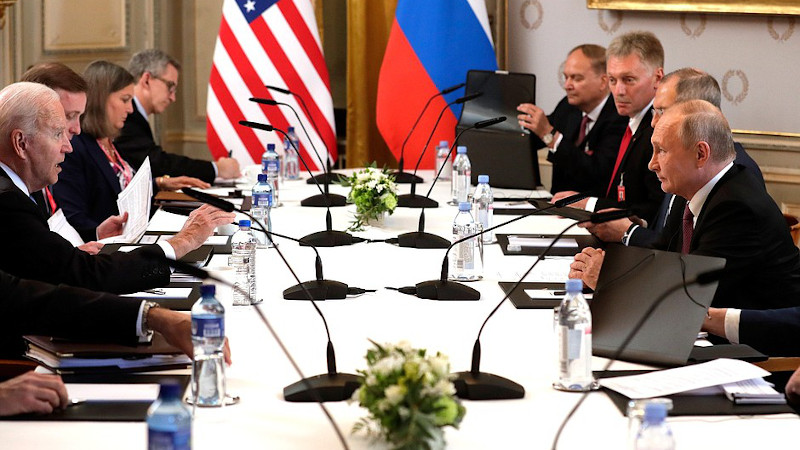
US President Joe Biden with Russia's President Vladimir Putin in Geneva Summit. Photo Credit: Tass, Kremlin.ru

By Rajoli Siddharth Jayaprakash

As the war stretches on in Eastern Europe into its third year, Russian forces have made some important advances. Ukrainian forces have been replenished with a United States (US) aid package worth US$60 million and an additional US$225 million in ammunition, along with the new aid packages received from three European Union countries and the United States, worth US$1 billion and US$1.5 billion, respectively.

The Geneva peace talks—to which Russia was not invited—have not yielded any considerable outcome. Along with the funds, Ukraine will receive 30 F-16 fighter jets from Belgium. This has resulted in the escalation of the conflict with Moscow, not ruling out the possibility of a nuclear escalation. Since the West cannot directly intervene in the defence of Ukraine by sending troops, economic warfare through sanctions has been employed by the West to drain the Kremlin coffers. 

The potency of sanctions is directly proportional to Russian aggression in Ukraine. The European Union is rolling out its 14th;round of sanctions, which, among other restrictions, outline sanctions on Russian Liquified Natural Gas, which is among Russia’s largest exports. Therefore, in light of the increasing number of sanctions against Russia, the question emerges: Are sanctions working against Russia?

Sanctions against Russia: An evolution

Russia is the most sanctioned country in the world, with more than 16,000;sanctions;imposed against it. And over time, the intensity of sanctions has varied. The first set of sanctions since 2014, after the annexation of Crimea, included visa restrictions on individuals, travel bans, asset freezes on the Kremlin elite, and limited restrictions on the Russian economy’s energy, defence, and financial sectors. Before the war in Ukraine, the compliance factor for these sanctions was not uniform and not easily enforceable. Not to mention;discriminatory; for instance, in the US, non-American firms were slapped with hefty fines in cases of sanctions non-compliance. American firms violating sanctions were fined marginally lower sums and were often contested in American courts.;

Since the invasion of Ukraine in February 2022, the sanctions slapped on Russia were much more intensive and aimed to financially cripple Russia from funding its war machine. Four major Russian;banks, VTB, Sovcombank, Novikombank, and Otkritie Financial Group, were sanctioned. Over time, several major Russian banks and their subsidiaries were hit with sanctions and were;excluded;from the SWIFT payment system. Export bans were put in place on critical-industry technology, software, and equipment, and asset freezes on the Kremlin elite and oligarchs. By December 2022, the G7 set up a price;cap;of US$60 on Russian oil. With export revenue shrinking because of sanctions and increasing imports, the ruble devalued in the middle of 2023. This did not radically alter the living standard as wages and pensions were hiked.;

The;11th;round;of EU sanctions included measures to prevent countries and companies from circumventing sanctions, which was strengthened in the following rounds, as companies partaking in the parallel import of electronic components were identified and sanctioned in the;13th;round;of sanctions in February 2024. The screws were further tightened as the EU even set minimum standards for criminal prosecution for the violation of sanctions. The death of Alexey Navalny in February this year resulted in the US imposing;500;additional sanctions on Russia.;

Sanctions on Russian LNG

The proposed;14th;round;of EU sanctions would be another blow for Moscow as it not only aims to sanction the transhipment of Russian LNG but would ban EU countries from re-exporting LNG through European terminals. In November last year, the US sanctioned;three;LNG projects: Arctic LNG-2, Ust-Luga, and Murmansk. This led to foreign stakeholders pulling out of these projects. Further sanctions were imposed on the Zvezda shipyard to curtail Russia’s ability to build icebreaking LNG carriers to export LNG. Recently. The US treasury department recently proposed;sanctioning;Obsky LNG, Arctic LNG-1, Arctic LNG-3, and companies building pipeline infrastructure for Murmansk LNG and Vostok oil and considering Russia’s limitations in pipeline technology and its reliance on the Western companies, sanctions could have an impact on the future Russian LNG projects.;

Since 2022, Europe has reduced natural gas consumption from Russia and now depends on LNG, which comes from Russia, Qatar, the US, and other sources. This has led to several European LNG terminal ports, such as Zeebrugge in the Netherlands, becoming the hub for receiving Russian LNG. Some European countries, such as Hungary, still purchase natural gas from Russia, whose energy value chains are embedded with Russia’s, as their domestic energy industry has heavily relied on Russia since Soviet times.

Figure 1.1: Arctic LNG 2’s monthly LNG production between December 2023 and February 2024

Source: OSW, Centre for Eastern Studies 

Have sanctions worked?

Sanctions have impacted Russia but not in the way expected. The Russian economy was configuring itself to work under sanctions. The government divided the economy into sectors: Profit-generating sectors—hydrocarbons, metals, minerals, agriculture, etc. and rent-dependent sectors—automobiles, aviation, shipbuilding, pensions, and equipment-intensive sectors—these sectors are import intensive. In 2015, import substitution policies were introduced across the sectors with targets for 2030. The global energy demand and the threat of price inflation in the commodities markets resulted in the West overlooking nations buying and refining Russian oil. Russia was able to find markets for its goods, but the margin of profits has been declining. Some sectors have been hit worse than others.

For instance, in aviation, a domestically produced aircraft, such as the Sukhoi Superjet 100 series, would require over 70 percent of its components to be imported from countries that have imposed sanctions on Russia. Despite these challenges, Russia has cushioned the impact of sanctions, as not all countries have joined the sanctions regime against Moscow. At the outset, all countries connected to the Western financial landscape comply with some forms of sanctions, such as financial sanctions or import restrictions on dual-use goods. Since early this year, Russia’s closest partner, Beijing, has stopped processing ruble transactions due to the threat of secondary sanctions. Despite sanctions, trade between Moscow and Beijing skyrocketed to US$240 billion last year. Similarly, with New Delhi, trade, which hovered around US$10-US$13 billion before the war, surged to US$65 billion in FY2023

Role of the central bank 

Secondly, the role of the central bank has been crucial in giving sanctions a soft landing in Russia. In the first months of the war, interest rates were temporarily hiked to 20 percent, and firms were restricted from transferring funds overseas, which arrested capital flight. Further, firms had to convert 80 percent of their foreign revenues into rubles. Such capital control laws led to the Ruble’s ability to absorb the shocks. According to Alexandra Prokopenko, a fellow from the Carnegie Russia Eurasia Centre, Putin is faced with three major;tasks: To continue financing the war while ensuring that the standard of living of the general population does not drop drastically, all while ensuring that the economy does not lose its macroeconomic balance. This is difficult to attain as these tasks contradict each other.

Even though sanctions persist, employment levels in the country have been at an all-time high; this is due to Russia’s economic re-configuration as a war economy and increasing industrial demand due to the Ukraine war. However, the increasing spending on enhancing the capabilities of the military-industrial complex and rebuilding the new regions in Ukraine will not only increase inflation but spur a kind of economic growth that will eventually stagnate the economy. The increasing tranches of sanctions on Russian LNG certainly can cause worry for Moscow, as it can potentially shrink its export;revenues;as its imports increase.

Conclusion

On 13 June, Germany expressed their;concerns;about implementing this sanctions package as a few German companies could be held liable for violating sanctions. Global energy markets work on supply and demand factors. Even if sanctions are imposed on LNG, the production capacity would have to rise to meet the demand. Qatar, a major gas exporter, does not have additional capabilities to export LNG to new buyers till;2027, and given that energy security is a national priority, ways are often found to circumvent sanctions or gain exemptions. Sanctions against Russia are working, but unlike Iran or North Korea, the elements of national power; population size, resource basket, and wealth—are in favour of Russia, which sustains its role as a global energy exporter. This means that the 45 countries that sanctioned Russia would have to globally isolate the latter first to make sanctions work. Since it is not likely to happen in the short term, the lives of ordinary Russians may not radically change just yet.;


  • About the author: Rajoli Siddharth Jayaprakash is a Research Assistant with the Strategic Studies Programme at the Observer Research Foundation.
  • Source: This article was published at the Observer Research Foundation.

Categories
South Caucasus News

NATO Plays It Safe On Next Secretary General – OpEd


NATO Plays It Safe On Next Secretary General – OpEd

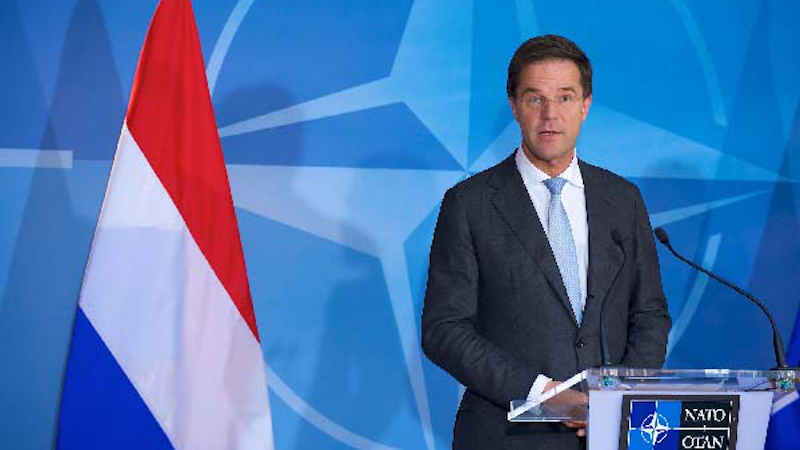
Prime Minister of The Netherlands Mark Rutte visits NATO. Photo: NATO North Atlantic Treaty Organization (CC BY-NC-ND 2.0)

By Alexander Brotman

After little speculation, Dutch Prime Minister Mark Rutte will succeed Jens Stoltenberg as NATO’s next Secretary General in October. Rutte was the leading candidate of the United States, UK, and other major NATO powers, with his only competitor being Klaus Iohannis, the president of Romania. In choosing Rutte, NATO has made a safe, but not a bold choice.

Rutte is more than qualified, having served as Dutch prime minister since 2010 and he is a vocal supporter of Ukraine. However, Rutte will be fourth NATO secretary general to hail from the Netherlands. This has not gone unnoticed by Estonian Prime Minister Kaja Kallas and other Central European leaders, who feel the strategic center of the alliance is moving eastwards and its leader should reflect this changing dynamic. While the Netherlands has just barely passed the threshold of spending 2% of its GDP on defense, Poland and the Baltic states are all in the 3-4% range with further increases likely in the years ahead. Thus, for Rutte to succeed in his position, he will have to balance the historical leadership role of Western Europe in NATO with the historical memories of the Baltic and Central European NATO member states who have long been the most principled in the face of Russian aggression.

Known for his ability to survive both political scandals and the fraught formation of coalition governments in the Netherlands, Rutte is also known to be a ‘Trump whisperer’ capable of forming a positive relationship with the former and possibly future president. While in office, Trump often railed against NATO member states to contribute their fair share to the alliance, and he has more recently;suggested;that US assistance must be contingent on allies reaching their 2% pledge. Partly in response to Trump but mainly in response to Russia’s full-scale invasion of Ukraine in 2022, NATO member states have stepped up, with 23 out of 32 now;spending;2% of their GDP on defense. As a result, Rutte will inherit a stronger and more unified alliance, albeit one with notable detractors like Hungary, which had to receive;assurances;from Rutte that ‘no Hungarian personnel will take part in the activities of NATO in Ukraine.’ This contrasts with President Macron who is pushing for a more active role for French forces in Ukraine yet is cognizant of the fact that the far-right National Rally may hold the prime minister post in France after upcoming legislative elections. Thus, there remain unknowns in both European and American politics, both before and after Rutte assumes his new role in October, with consequences for NATO’s long-term support for Ukraine.

As the alliance celebrates its 75th;anniversary in Washington DC next month, there is much for NATO leaders to celebrate but also to be wary of in the months and years ahead. NATO’s relevance is as strong as ever, but its boldness and confidence remain in question, namely from some member states more than others. At the upcoming Washington summit, NATO’s commitment to Ukraine is likely to remain a sticking point just as it was at the Vilnius summit last year. Washington and Berlin are;reportedly;eager to say Kyiv has a ‘bridge’ to joining NATO, while the UK, Poland, and Baltic states are determined to declare Kyiv’s path towards NATO as ‘irreversible.’ The United States and Germany remain the most cautious of extending NATO membership to Ukraine, with France and the UK also injecting more uncertainty into the equation dependent upon their respective election results.

As Rutte gets ready to take the helm of one of the world’s most successful defensive alliances, the main issue facing all member states is not whether to support Ukraine on its path to Euro-Atlantic integration, but to what extent. NATO will need to remain nimble yet ironclad simultaneously, drawing upon the strengths of new members as it faces its most strategically significant accession process since the former Soviet republics in the Baltics and the Warsaw Pact states joined in 1999 and 2004. Rutte will undoubtedly be as talented an administrator and a facilitator as Stoltenberg was, but for NATO to truly excel it must also be helmed by an innovator who is molded by, but not wedded to, history. This is Estonia’s strength and why Prime Minister Kaja Kallas has been such a transformative figure since Russia’s full-scale invasion of Ukraine over two years ago. NATO’s power center in the form of its secretary general may be staying in Western Europe but its moral center has undoubtedly shifted east. In order to effectively lead a dynamic alliance with Ukraine and Georgia on the road to becoming proud member states, Rutte should embrace this dynamic so that no enmity builds at a time when even the smallest crack can embolden Putin.

  • The views expressed in this article belong to the author(s) alone and do not necessarily reflect those of Geopoliticalmonitor.com.

Categories
South Caucasus News

Bayramov and Bono met – Radar Armenia


Bayramov and Bono met  Radar Armenia

Categories
South Caucasus News

SouthCaucasus: Georges Mikautadze ✨ via @BBCSport #GEOPOR #EURO2024 https://t.co/Cj93EUKYmE


Georges Mikautadze ✨ via @BBCSport #GEOPOR #EURO2024 pic.twitter.com/Cj93EUKYmE

— Notes from Georgia/South Caucasus (Hälbig, Ralph) (@SouthCaucasus) June 27, 2024


Categories
South Caucasus News

crehage: @CesareBarberis @SouthCaucasus so cool! chardin-related?


so cool! chardin-related?

— Christoph Rehage (@crehage) June 26, 2024


Categories
South Caucasus News

Christo42511488: @SouthCaucasus @Zourabichvili_S Who is she?


Who is she?

— Lakri (@Christo42511488) June 26, 2024


Categories
Audio Review - South Caucasus News

North Korea claims successful test of multiple warhead missile


seoul, south korea — North Korea has successfully conducted an important test aimed at developing missiles carrying multiple warheads, state media KCNA said on Thursday.  

The test was carried out on Wednesday using a first-stage engine equipped with a solid-fuel based intermediate and long-range ballistic missile, it said.  

The dispatch came a day after South Korea’s military said that North Korea launched what appeared to be a hypersonic missile off its east coast, but it exploded in midair.  

KCNA said the missile succeeded in separating warheads that were accurately guided to three preset targets. 

“The purpose was to secure the capability to destroy individual targets using multiple warheads,” it said.  

South Korea, the United States and Japan condemned the launch as a violation of United Nations Security Council resolutions and a serious threat. They also warned against additional provocations in the wake of last week’s summit between North Korean leader Kim Jong Un and Russian President Vladimir Putin.  

During Putin’s first visit to North Korea in 24 years, the two leaders signed a mutual defense pact, which Kim lauded as an alliance, but South Korean President Yoon Suk Yeol called it “anachronistic.” 

In another dispatch, North Korea’s defense minister Kang Sun Nam condemned Ukraine’s attack on Crimea with U.S.-supplied ATACMS missiles that killed at least four people and injured 151 as an “inexcusable, heinous act against humanity.”  

The attack highlighted how Washington has served as a “top-class state sponsor of terrorism,” he said, adding that any retaliation from Russia would make “the most justifiable defense.”  

The U.S. State Department said on Monday that Washington provided weapons to Ukraine so it could defend its sovereign territory, including Crimea. 


Categories
South Caucasus News

North Korea claims successful test of multiple warhead missile


seoul, south korea — North Korea has successfully conducted an important test aimed at developing missiles carrying multiple warheads, state media KCNA said on Thursday.  

The test was carried out on Wednesday using a first-stage engine equipped with a solid-fuel based intermediate and long-range ballistic missile, it said.  

The dispatch came a day after South Korea’s military said that North Korea launched what appeared to be a hypersonic missile off its east coast, but it exploded in midair.  

KCNA said the missile succeeded in separating warheads that were accurately guided to three preset targets. 

“The purpose was to secure the capability to destroy individual targets using multiple warheads,” it said.  

South Korea, the United States and Japan condemned the launch as a violation of United Nations Security Council resolutions and a serious threat. They also warned against additional provocations in the wake of last week’s summit between North Korean leader Kim Jong Un and Russian President Vladimir Putin.  

During Putin’s first visit to North Korea in 24 years, the two leaders signed a mutual defense pact, which Kim lauded as an alliance, but South Korean President Yoon Suk Yeol called it “anachronistic.” 

In another dispatch, North Korea’s defense minister Kang Sun Nam condemned Ukraine’s attack on Crimea with U.S.-supplied ATACMS missiles that killed at least four people and injured 151 as an “inexcusable, heinous act against humanity.”  

The attack highlighted how Washington has served as a “top-class state sponsor of terrorism,” he said, adding that any retaliation from Russia would make “the most justifiable defense.”  

The U.S. State Department said on Monday that Washington provided weapons to Ukraine so it could defend its sovereign territory, including Crimea.